Rearrange the words to define the two key terms
Key terms Urbanisation : an increasing proportion of a country’s population living in urban areas. MEDCs  during and following the Industrial Revolution (driven by economic development) LEDCs  since 1950 as a result of migration from rural areas and high rates of population growth in urban areas Mega city  -  a city with a population of more than ten million inhabitants
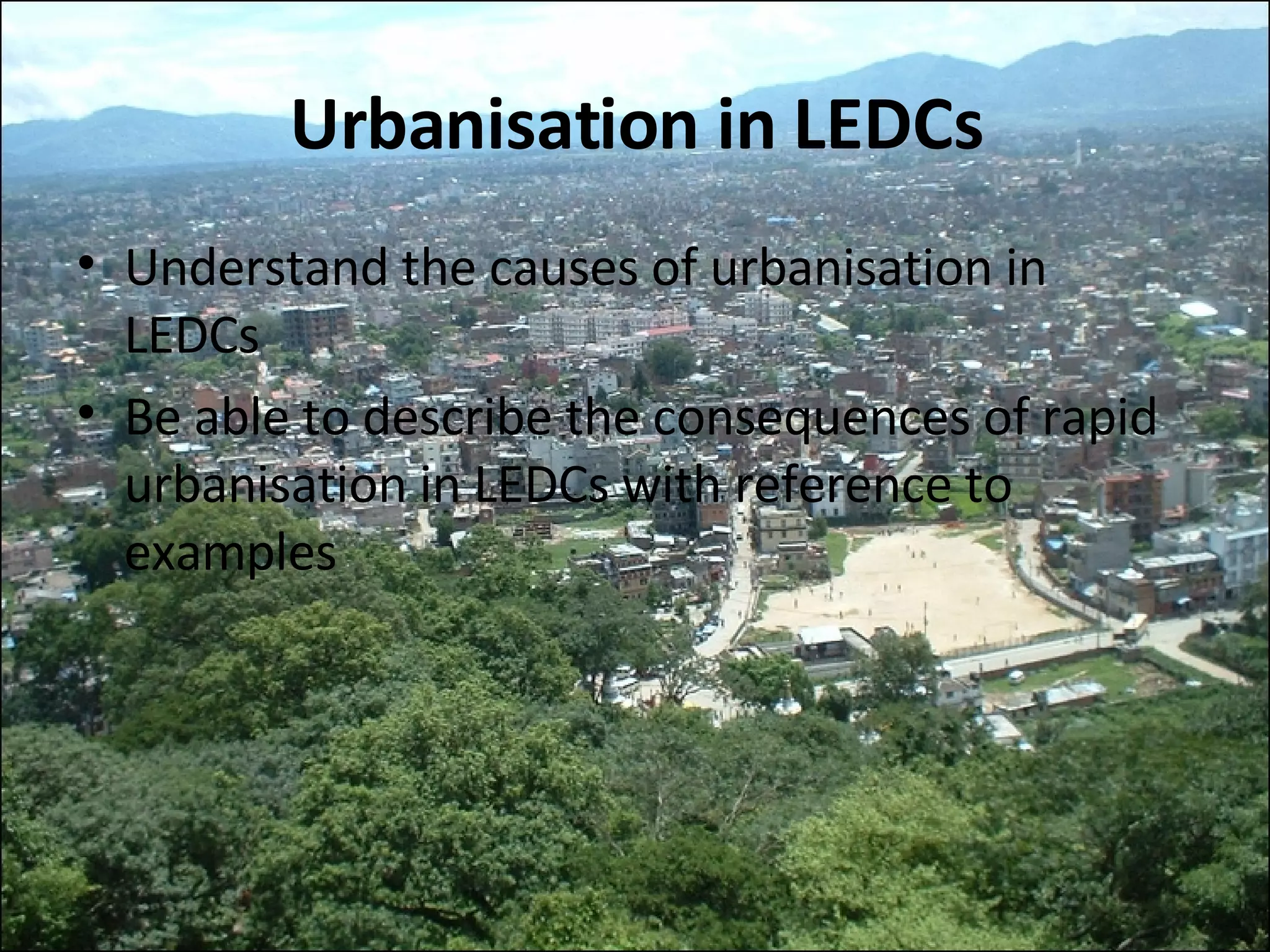
Urbanisation in LEDCs Understand the causes of urbanisation in LEDCs Be able to describe the consequences of rapid urbanisation in LEDCs with reference to examples
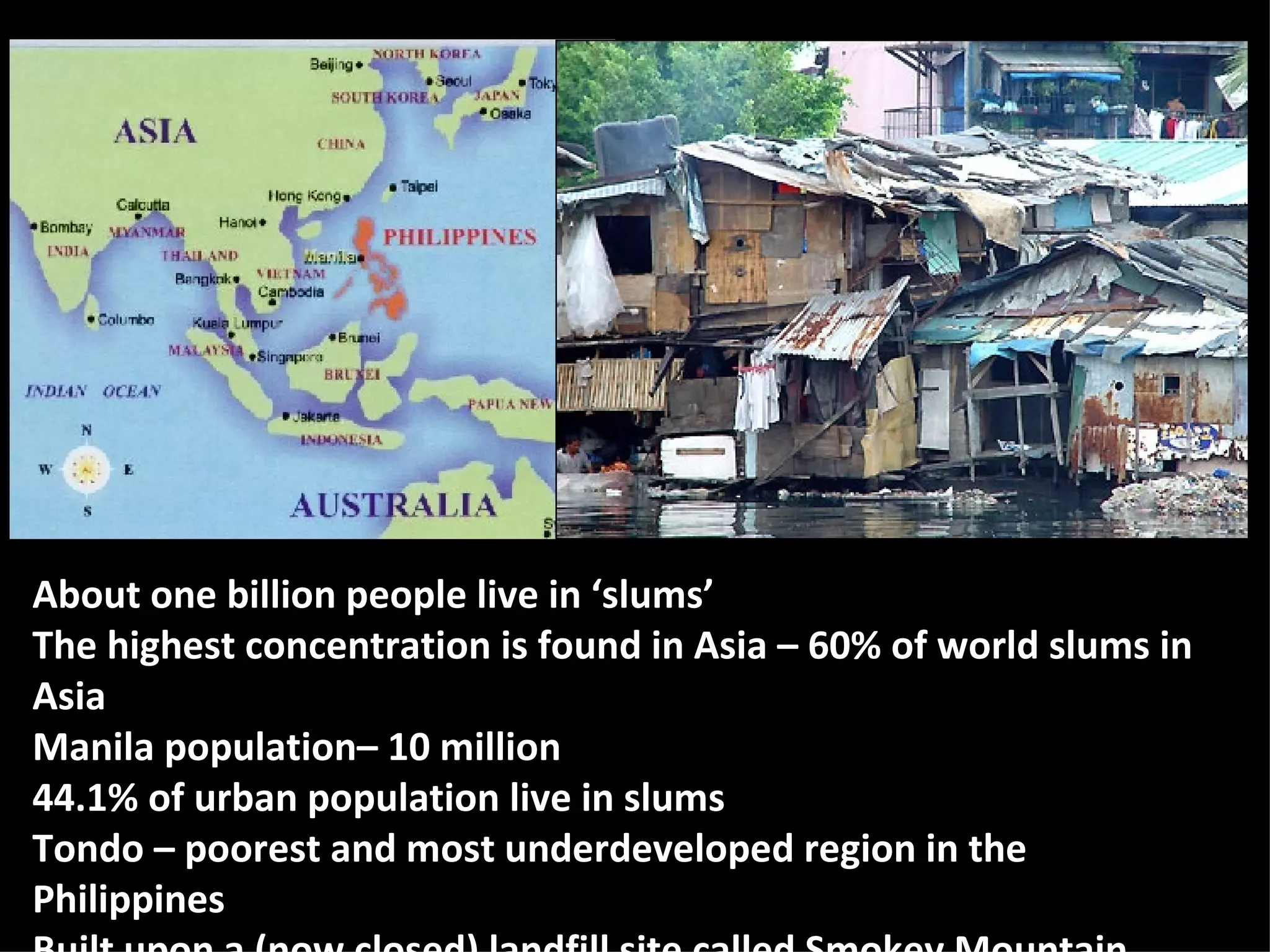
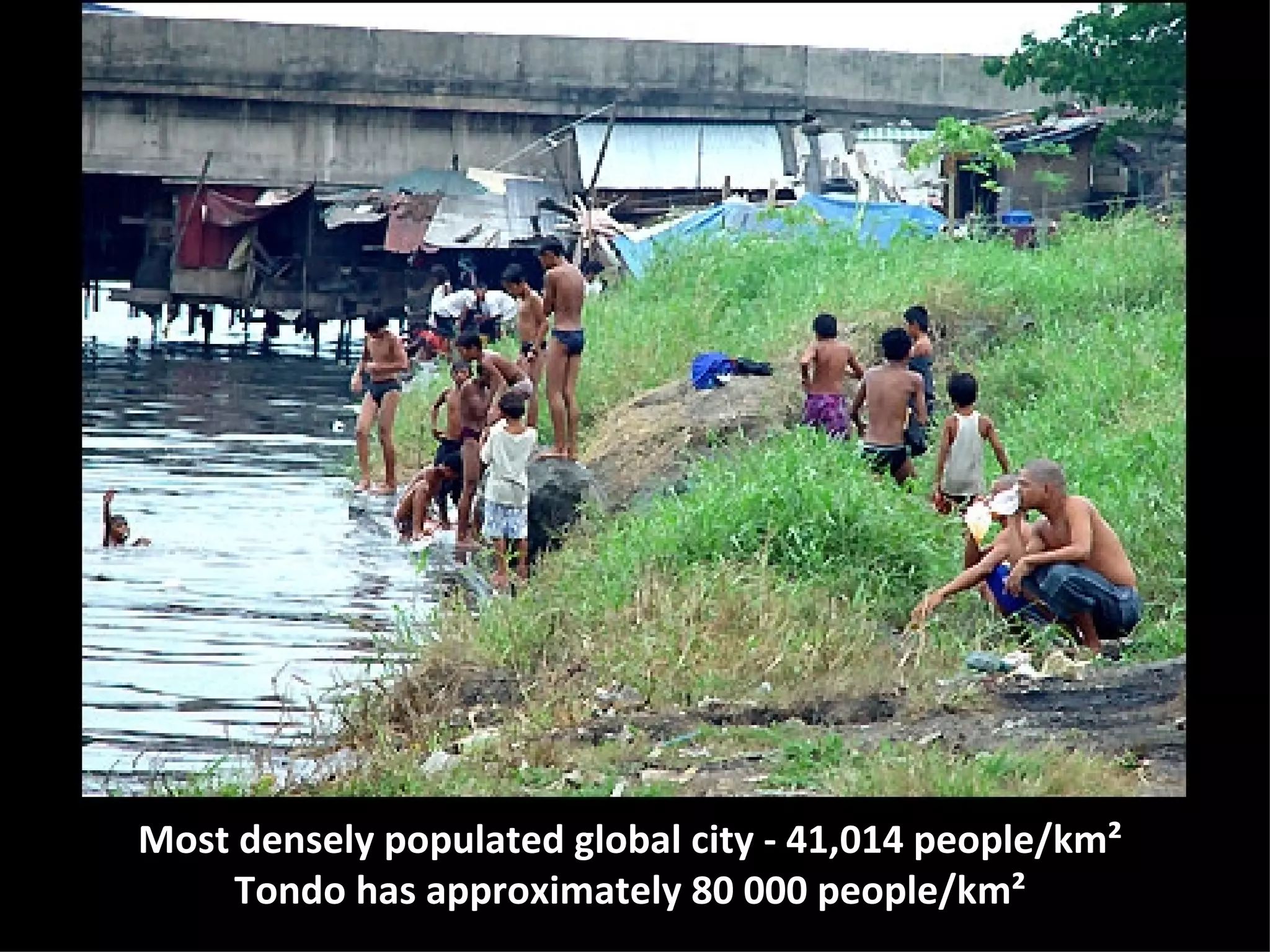
About one billion people live in ‘slums’ The highest concentration is found in Asia – 60% of world slums in Asia Manila population– 10 million 44.1% of urban population live in slums Tondo – poorest and most underdeveloped region in the Philippines Built upon a (now closed) landfill site called Smokey Mountain
Most densely populated global city - 41,014 people/km² Tondo has approximately 80 000 people/km²
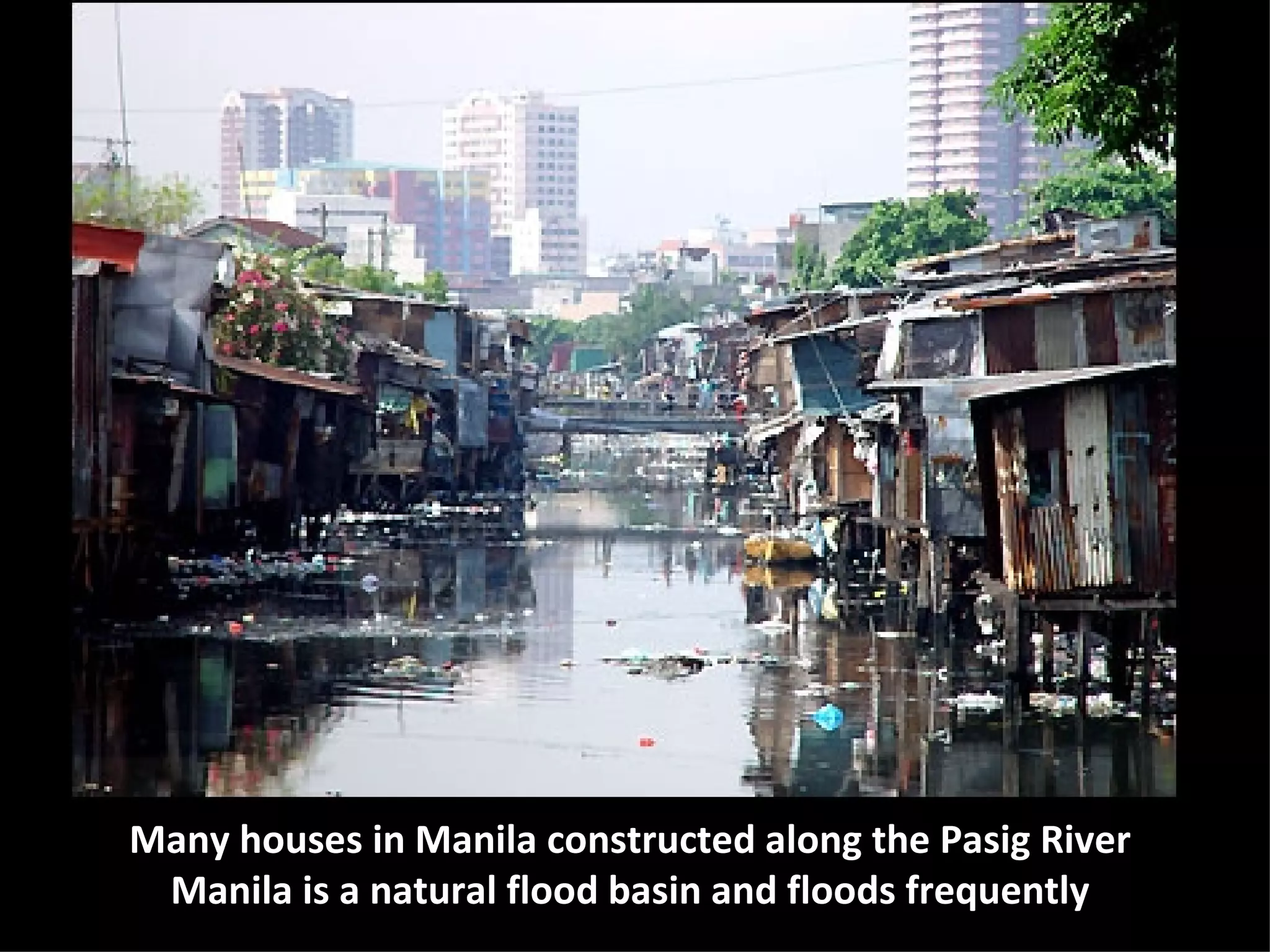
Many houses in Manila constructed along the Pasig River Manila is a natural flood basin and floods frequently
 
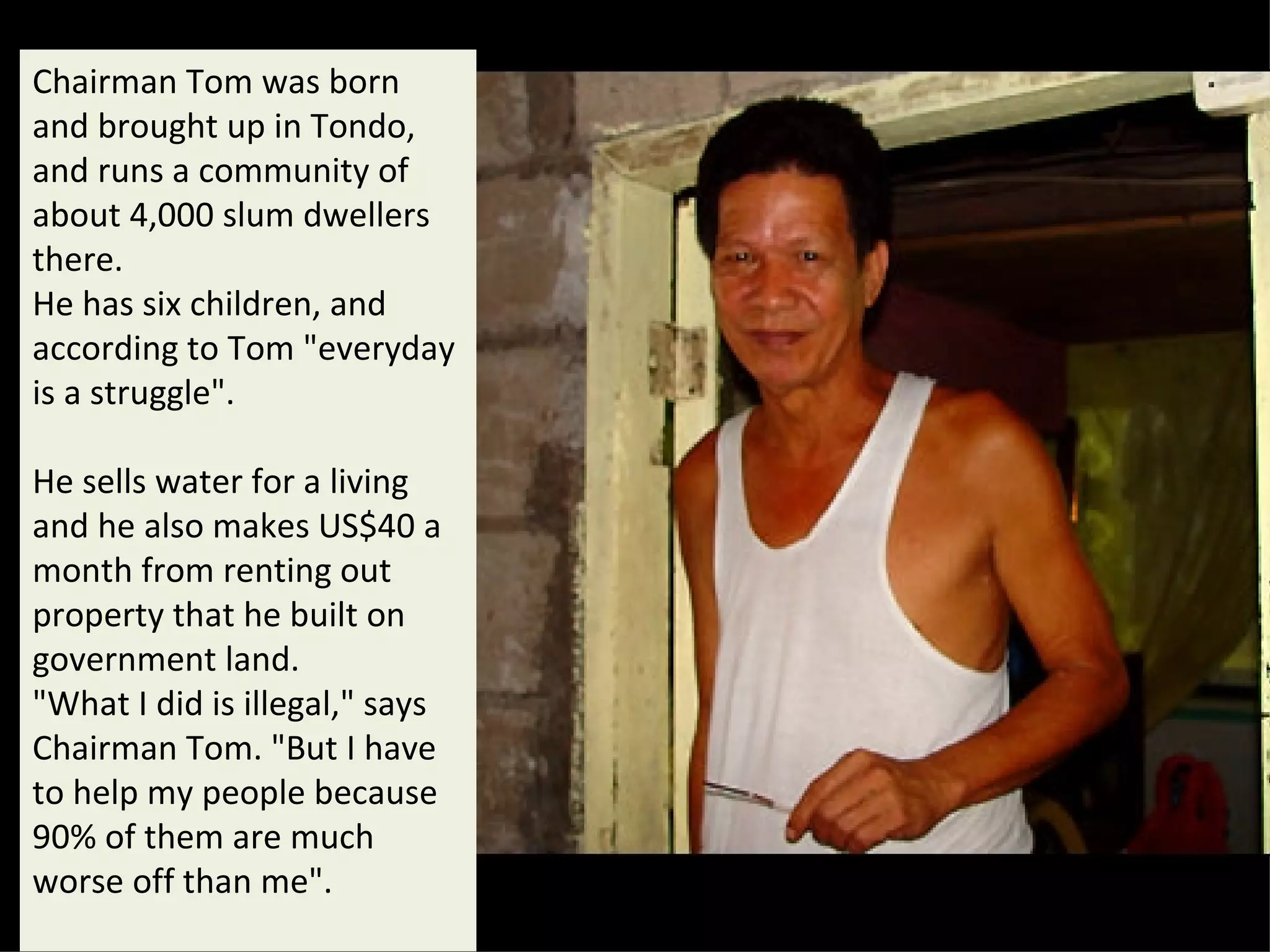
Chairman Tom was born and brought up in Tondo, and runs a community of about 4,000 slum dwellers there.  He has six children, and according to Tom "everyday is a struggle".  He sells water for a living and he also makes US$40 a month from renting out property that he built on government land.  "What I did is illegal," says Chairman Tom. "But I have to help my people because 90% of them are much worse off than me".
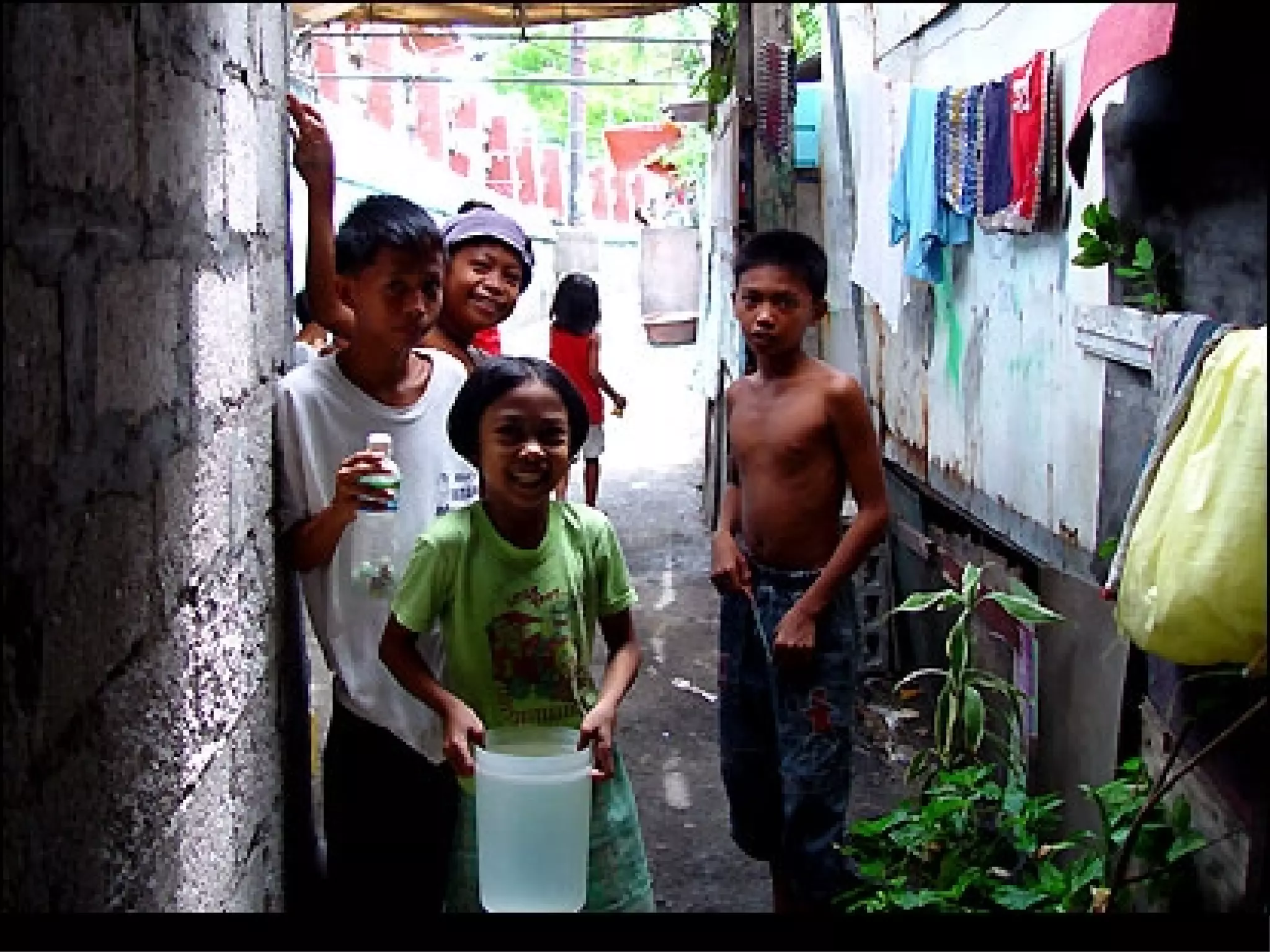
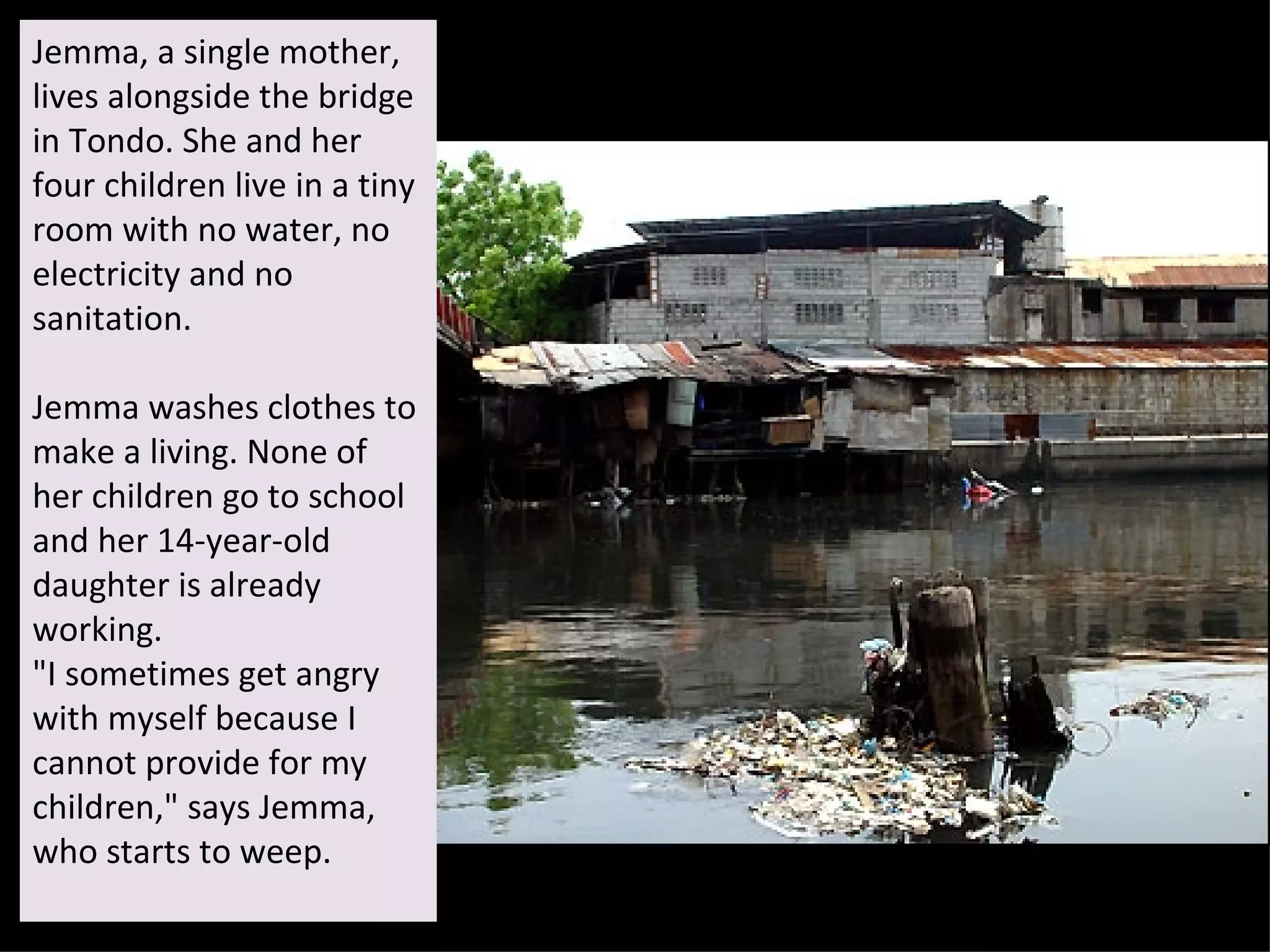
Jemma, a single mother, lives alongside the bridge in Tondo. She and her four children live in a tiny room with no water, no electricity and no sanitation.  Jemma washes clothes to make a living. None of her children go to school and her 14-year-old daughter is already working.  "I sometimes get angry with myself because I cannot provide for my children," says Jemma, who starts to weep.
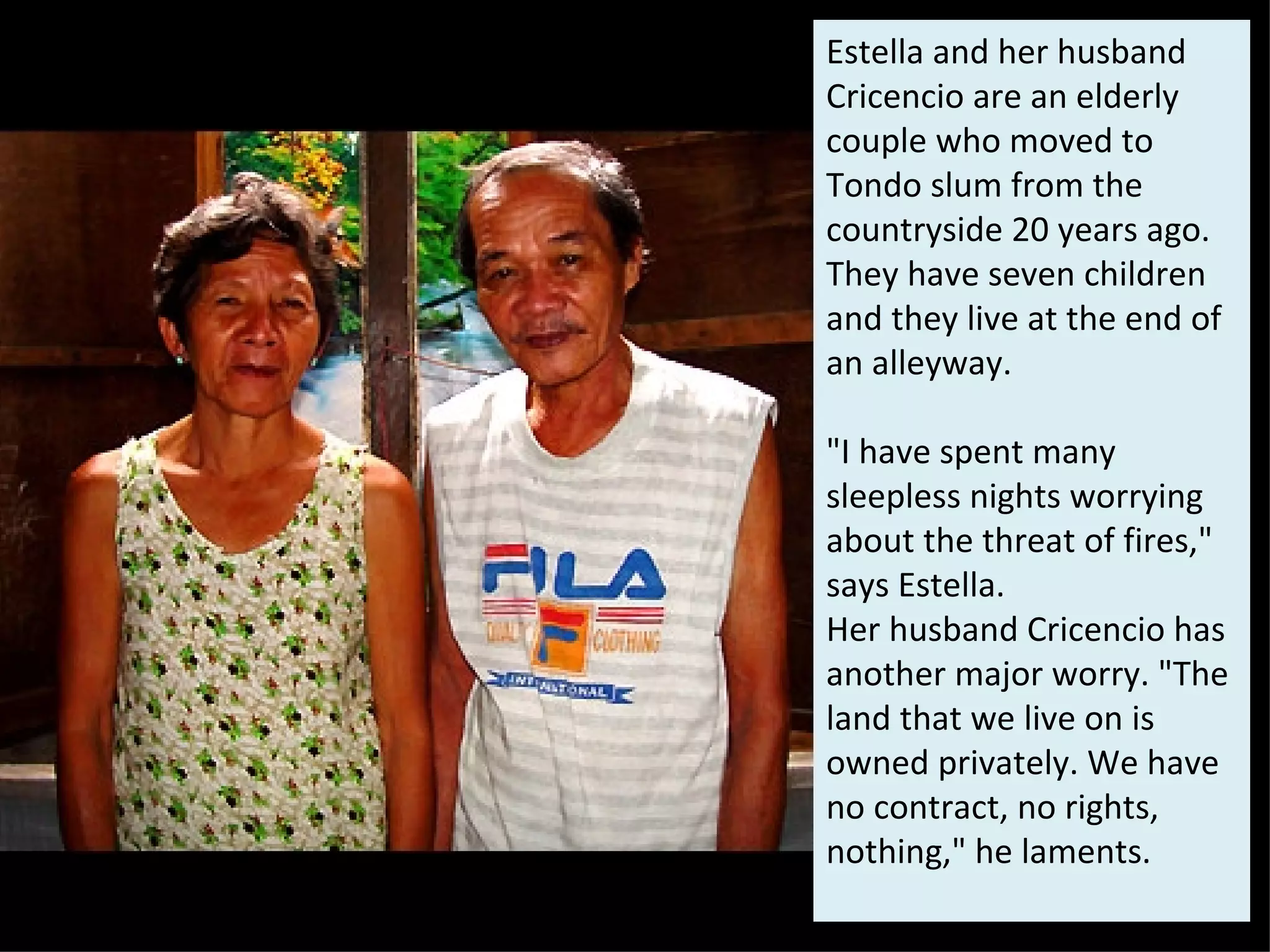
Estella and her husband Cricencio are an elderly couple who moved to Tondo slum from the countryside 20 years ago. They have seven children and they live at the end of an alleyway.  "I have spent many sleepless nights worrying about the threat of fires," says Estella.  Her husband Cricencio has another major worry. "The land that we live on is owned privately. We have no contract, no rights, nothing," he laments.
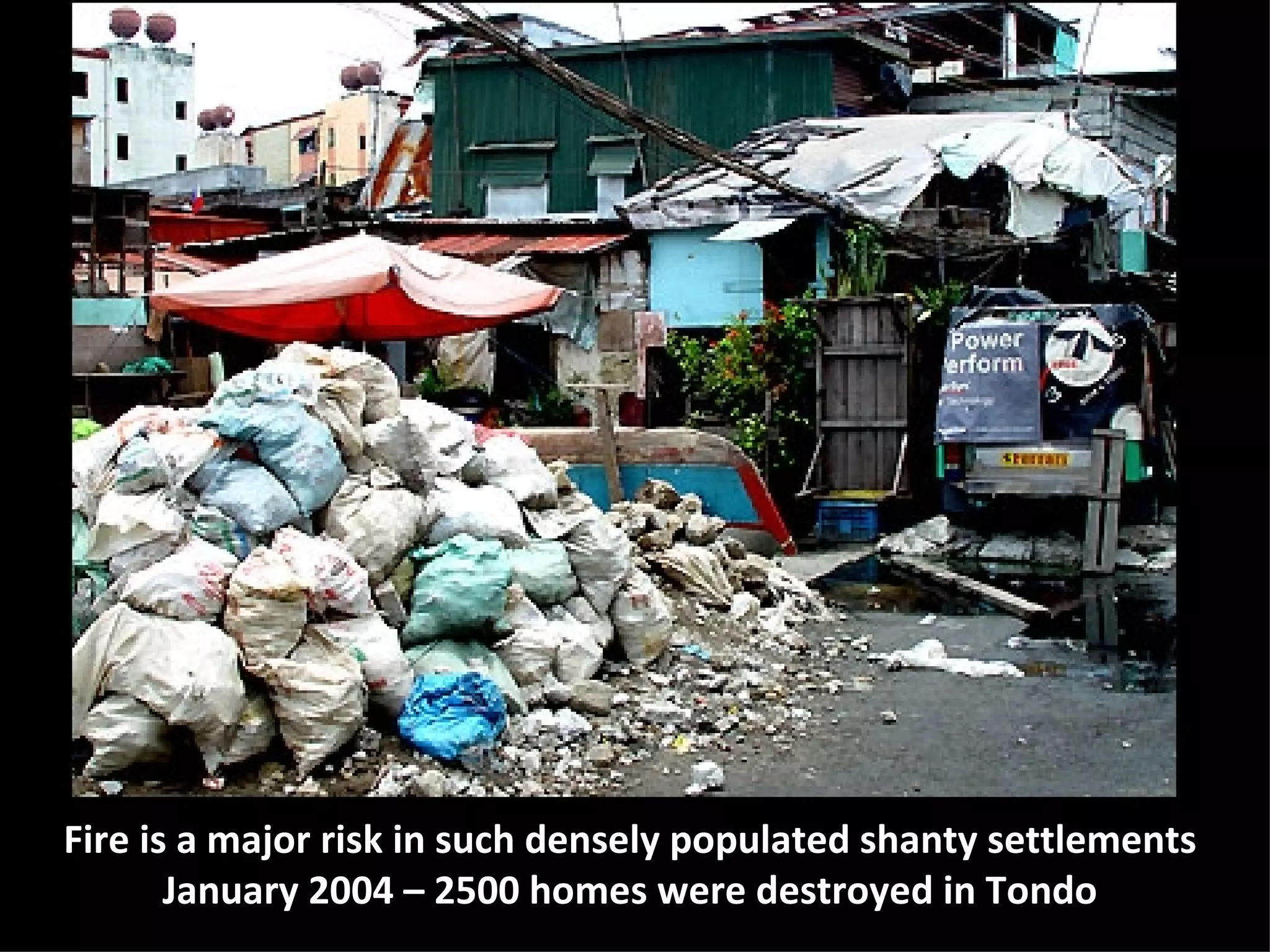
Fire is a major risk in such densely populated shanty settlements January 2004 – 2500 homes were destroyed in Tondo
 
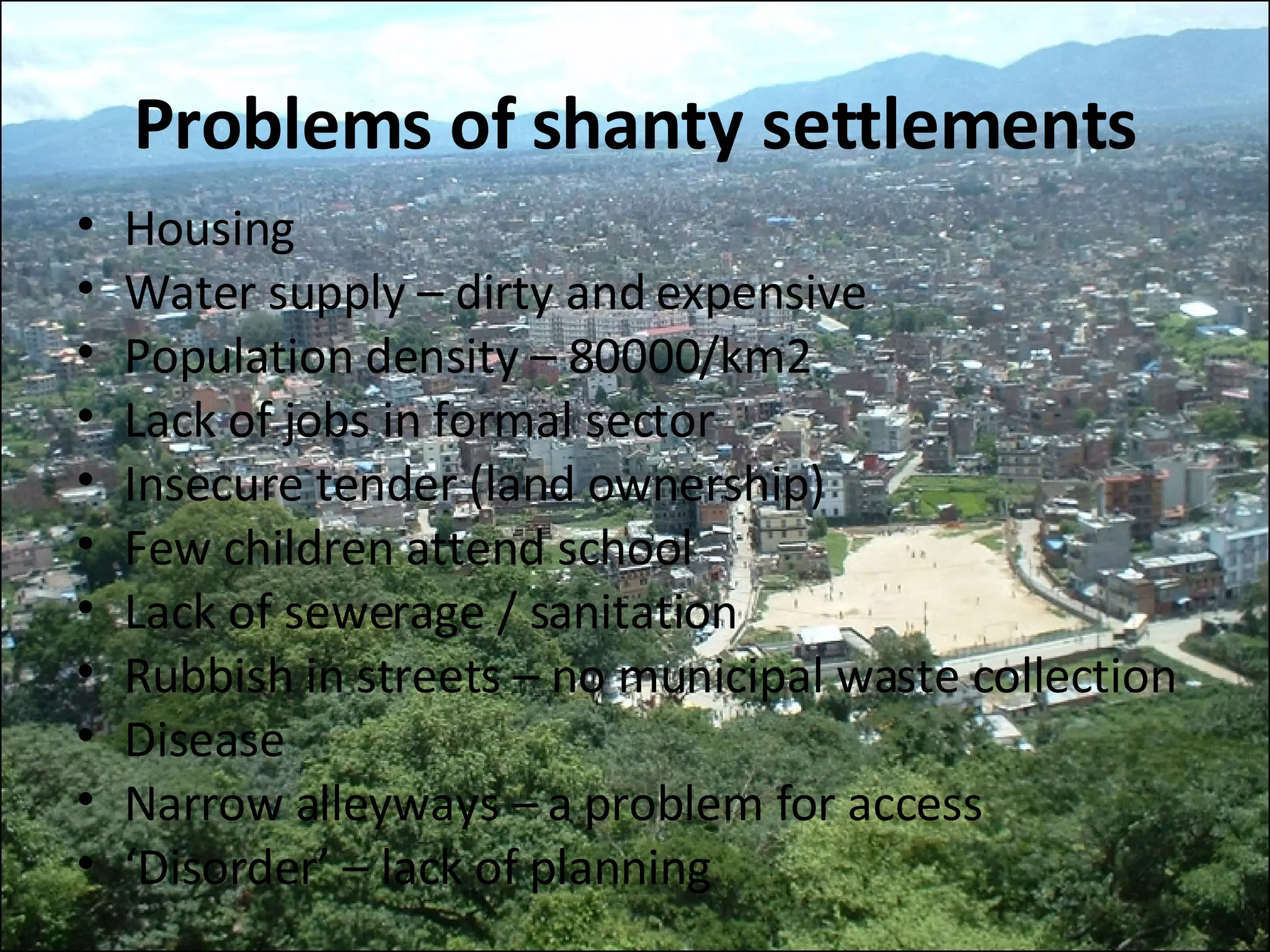
Problems of shanty settlements Housing Water supply – dirty and expensive Population density – 80000/km2 Lack of jobs in formal sector Insecure tender (land ownership) Few children attend school Lack of sewerage / sanitation Rubbish in streets – no municipal waste collection Disease Narrow alleyways – a problem for access ‘ Disorder’ – lack of planning
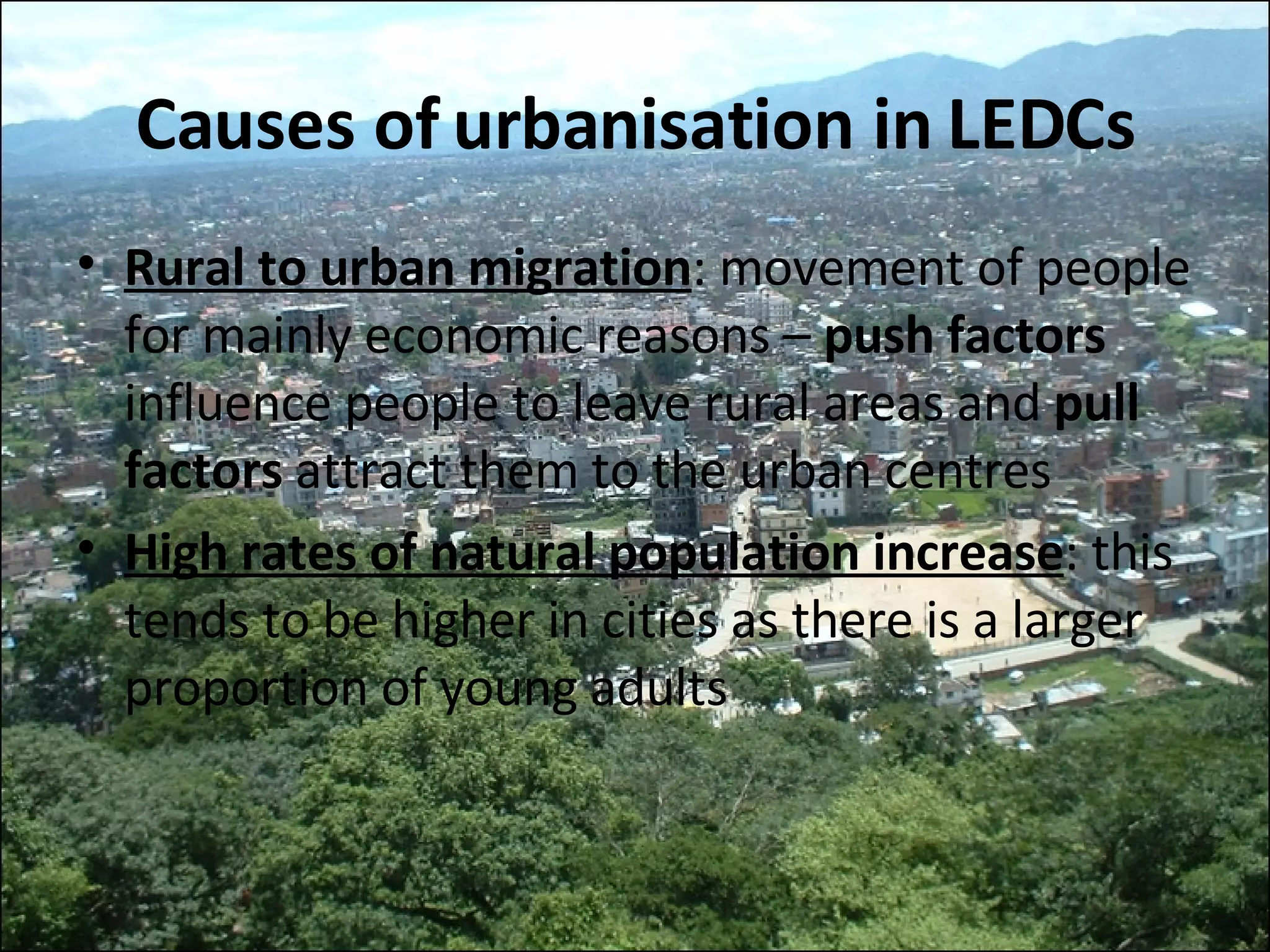
Causes of urbanisation in LEDCs Rural to urban migration : movement of people for mainly economic reasons –  push factors  influence people to leave rural areas and  pull factors  attract them to the urban centres High rates of natural population increase : this tends to be higher in cities as there is a larger proportion of young adults
 
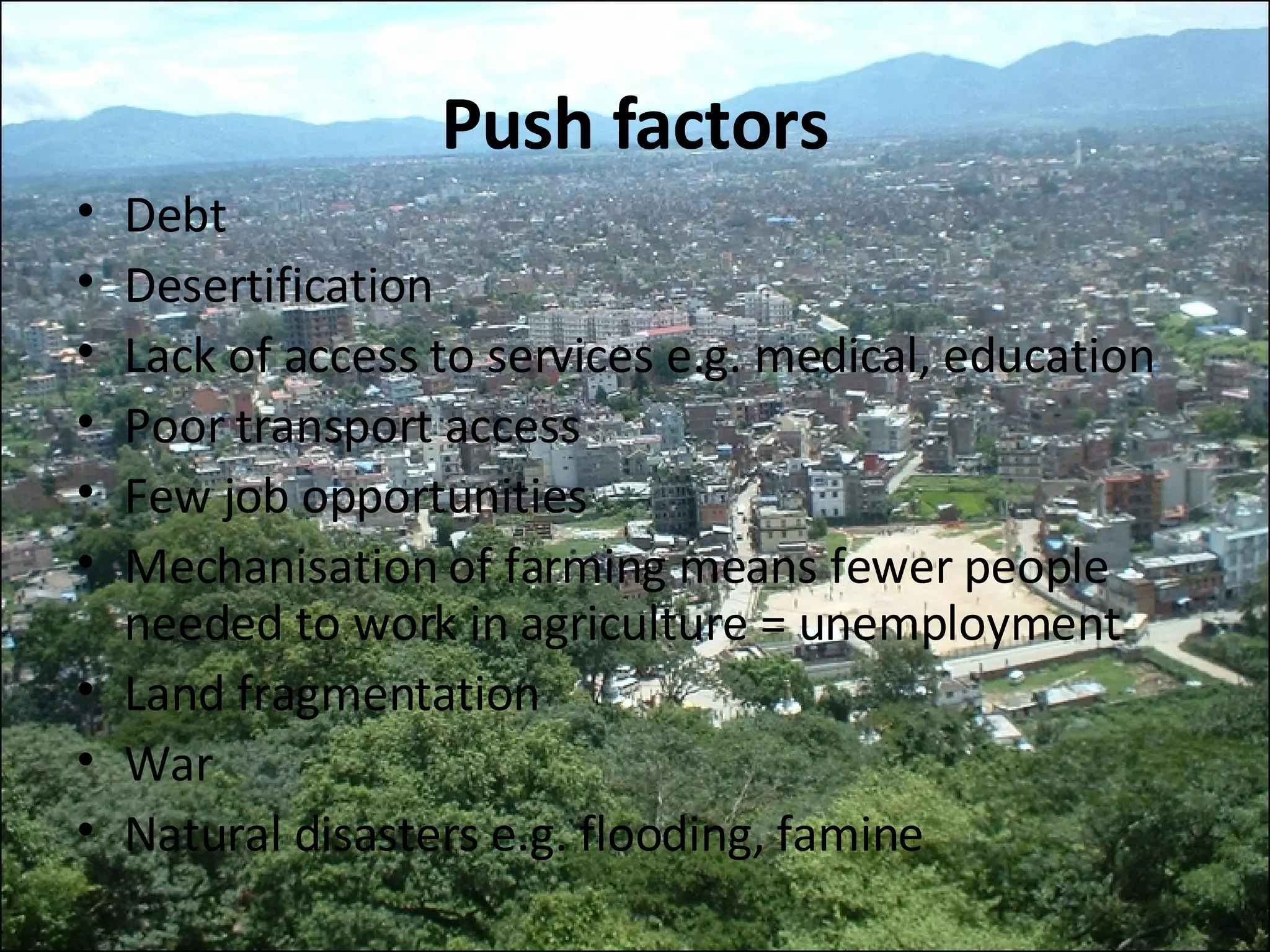
Push factors Debt Desertification Lack of access to services e.g. medical, education Poor transport access Few job opportunities Mechanisation of farming means fewer people needed to work in agriculture = unemployment Land fragmentation War Natural disasters e.g. flooding, famine
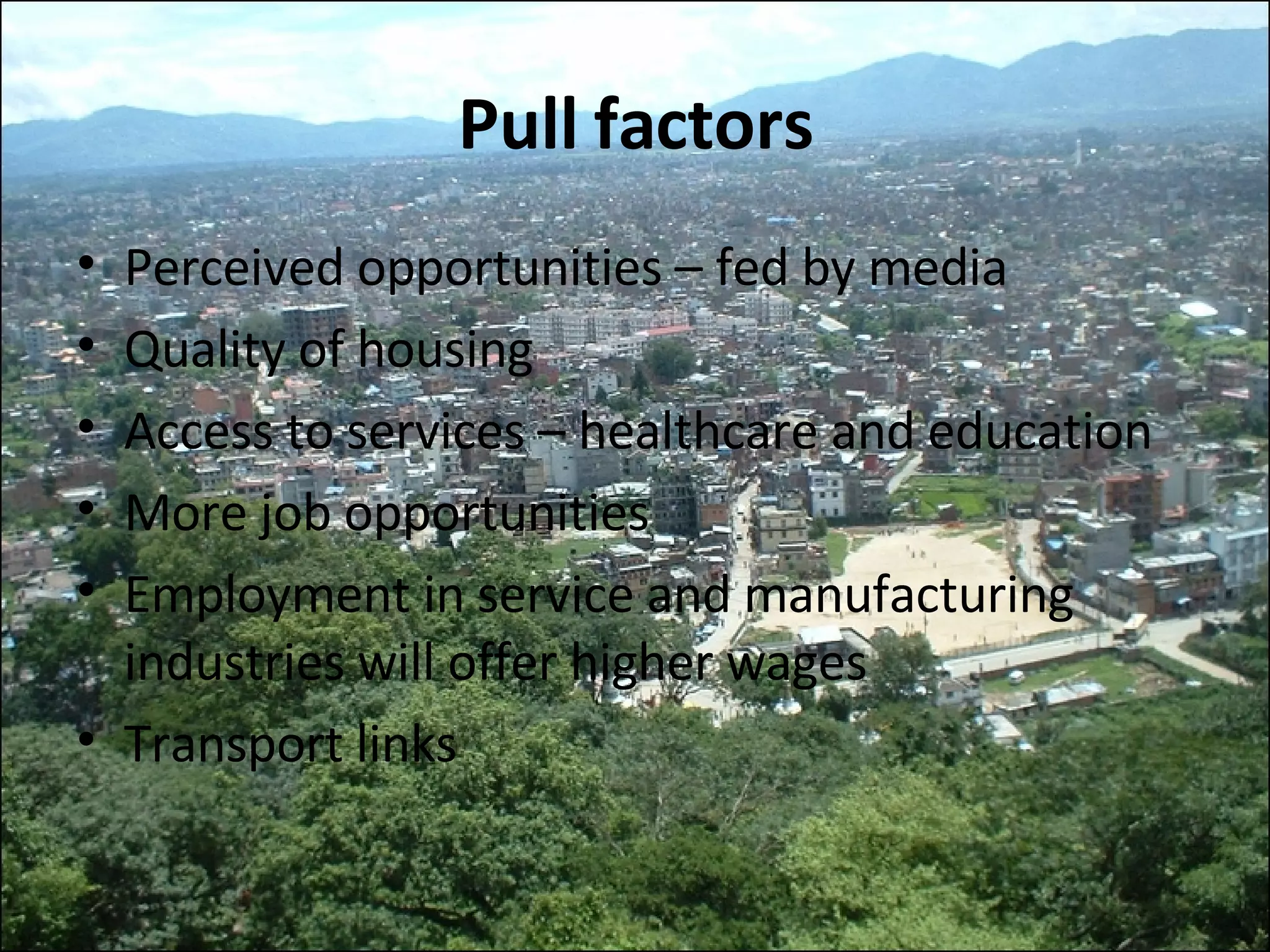
Pull factors Perceived opportunities – fed by media Quality of housing Access to services – healthcare and education More job opportunities Employment in service and manufacturing industries will offer higher wages Transport links
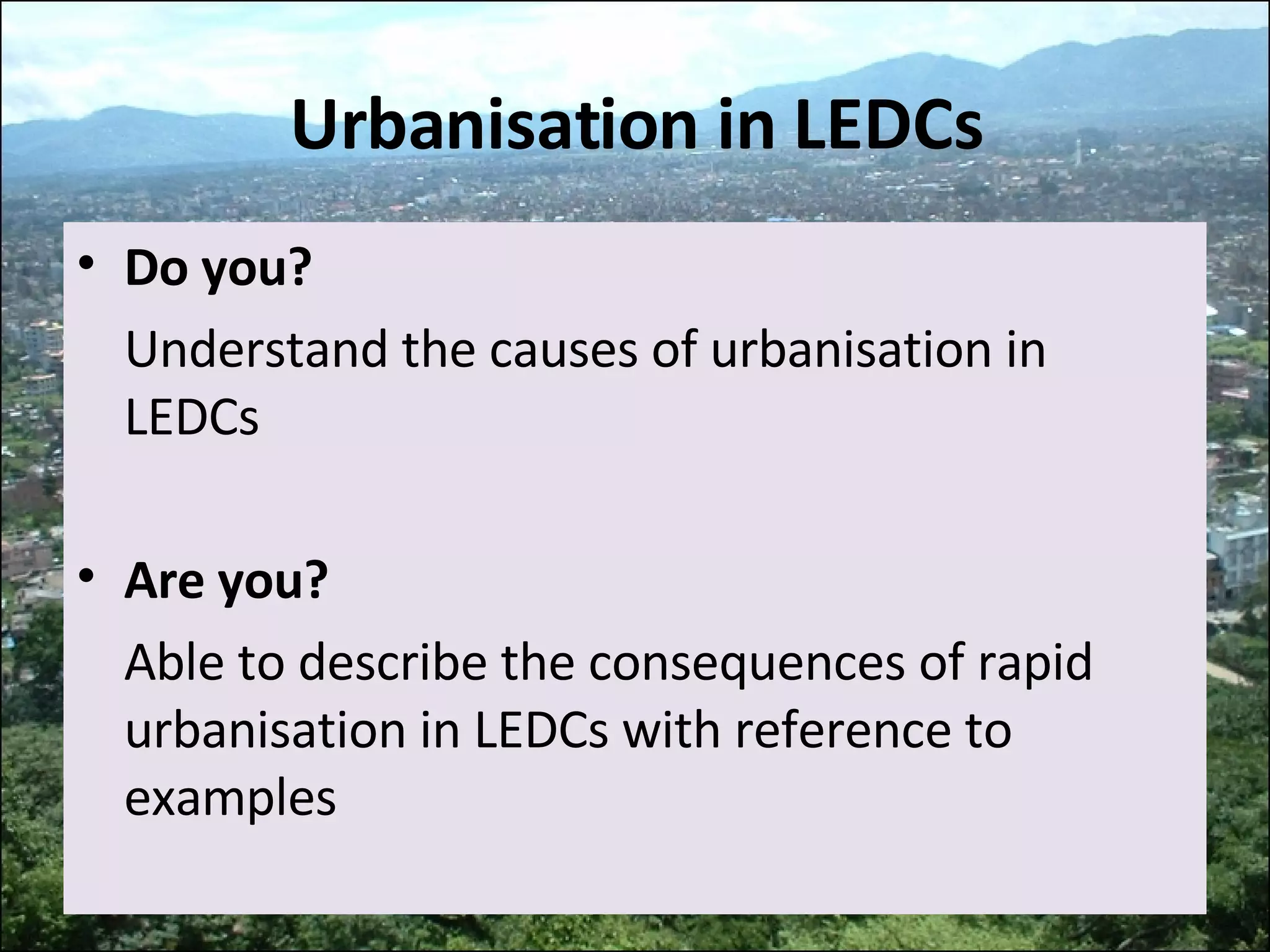
Urbanisation in LEDCs Do you? Understand the causes of urbanisation in LEDCs Are you? Able to describe the consequences of rapid urbanisation in LEDCs with reference to examples
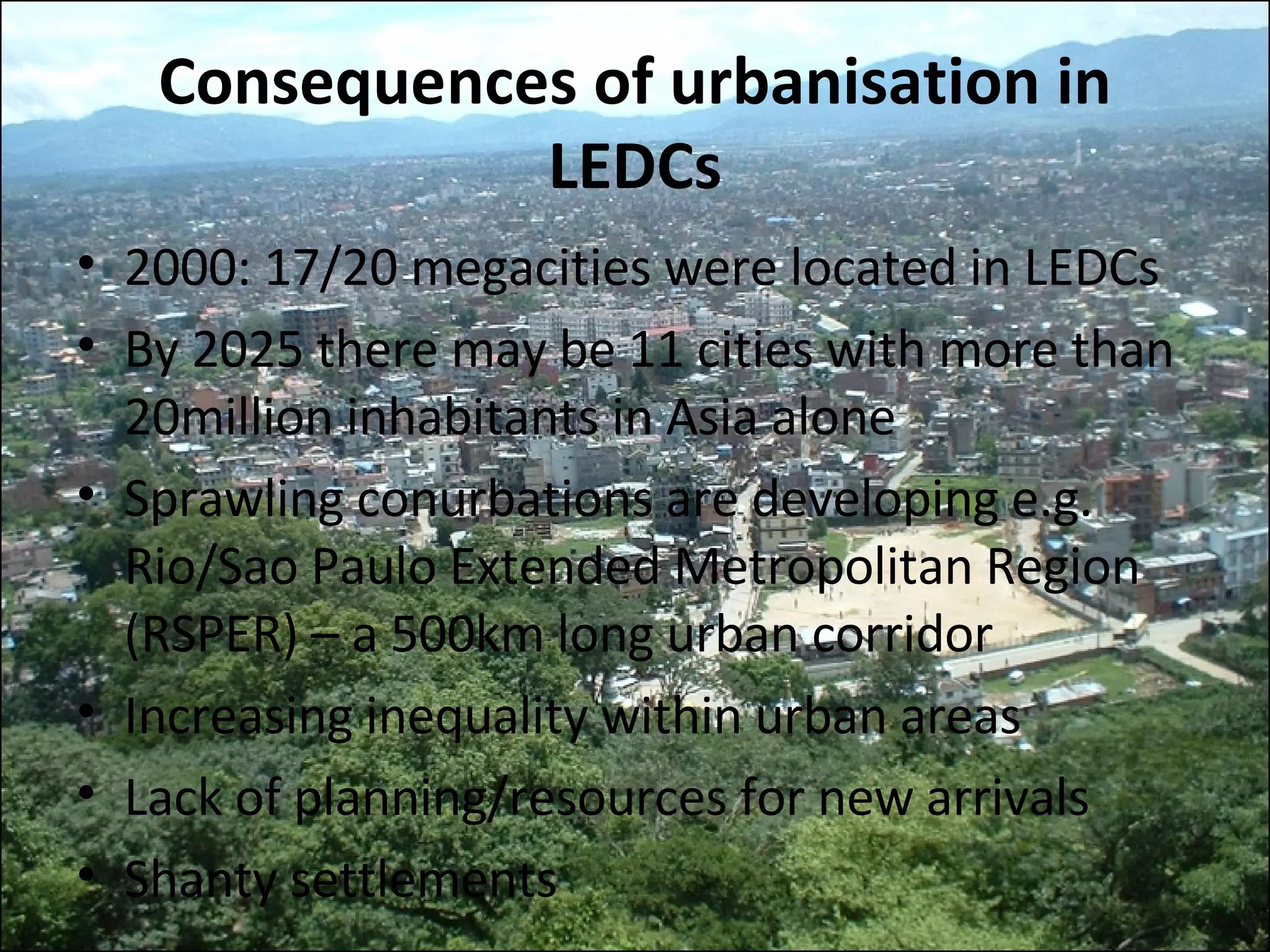
Consequences of urbanisation in LEDCs 2000: 17/20 megacities were located in LEDCs By 2025 there may be 11 cities with more than 20million inhabitants in Asia alone Sprawling conurbations are developing e.g. Rio/Sao Paulo Extended Metropolitan Region (RSPER) – a 500km long urban corridor Increasing inequality within urban areas Lack of planning/resources for new arrivals Shanty settlements
 
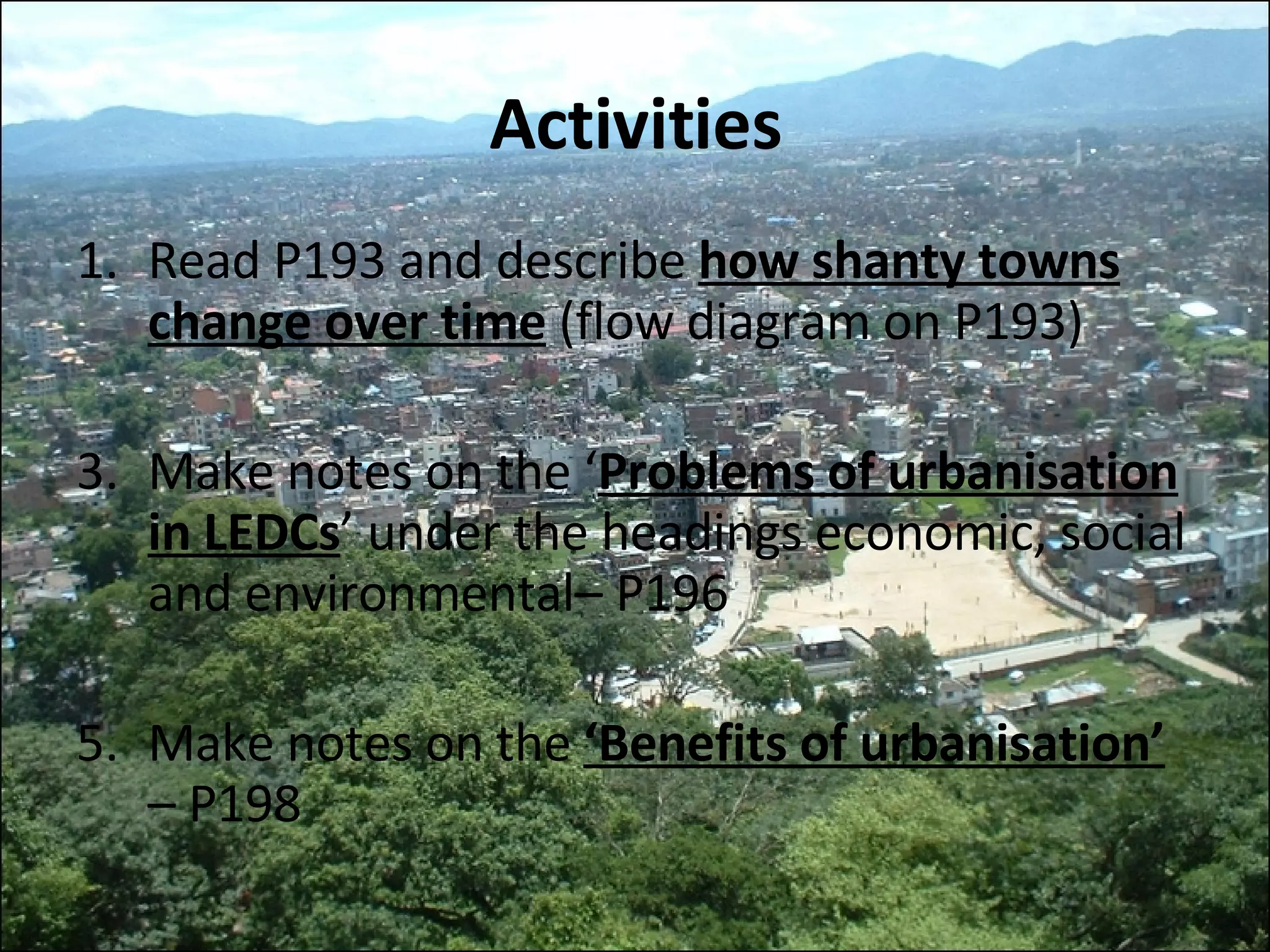
Activities Read P193 and describe  how shanty towns change over time   (flow diagram on P193) Make notes on the ‘ Problems of urbanisation in LEDCs ’ under the headings economic, social and environmental– P196 Make notes on the  ‘Benefits of urbanisation’  – P198

Lesson Two Urbanisation In L E D Cs

  • 1.
    Rearrange the wordsto define the two key terms
  • 2.
    Key terms Urbanisation: an increasing proportion of a country’s population living in urban areas. MEDCs during and following the Industrial Revolution (driven by economic development) LEDCs since 1950 as a result of migration from rural areas and high rates of population growth in urban areas Mega city - a city with a population of more than ten million inhabitants
  • 3.
    Urbanisation in LEDCsUnderstand the causes of urbanisation in LEDCs Be able to describe the consequences of rapid urbanisation in LEDCs with reference to examples
  • 4.
    About one billionpeople live in ‘slums’ The highest concentration is found in Asia – 60% of world slums in Asia Manila population– 10 million 44.1% of urban population live in slums Tondo – poorest and most underdeveloped region in the Philippines Built upon a (now closed) landfill site called Smokey Mountain
  • 5.
    Most densely populatedglobal city - 41,014 people/km² Tondo has approximately 80 000 people/km²
  • 6.
    Many houses inManila constructed along the Pasig River Manila is a natural flood basin and floods frequently
  • 7.
  • 8.
    Chairman Tom wasborn and brought up in Tondo, and runs a community of about 4,000 slum dwellers there. He has six children, and according to Tom "everyday is a struggle". He sells water for a living and he also makes US$40 a month from renting out property that he built on government land. "What I did is illegal," says Chairman Tom. "But I have to help my people because 90% of them are much worse off than me".
  • 9.
    Jemma, a singlemother, lives alongside the bridge in Tondo. She and her four children live in a tiny room with no water, no electricity and no sanitation. Jemma washes clothes to make a living. None of her children go to school and her 14-year-old daughter is already working. "I sometimes get angry with myself because I cannot provide for my children," says Jemma, who starts to weep.
  • 10.
    Estella and herhusband Cricencio are an elderly couple who moved to Tondo slum from the countryside 20 years ago. They have seven children and they live at the end of an alleyway. "I have spent many sleepless nights worrying about the threat of fires," says Estella. Her husband Cricencio has another major worry. "The land that we live on is owned privately. We have no contract, no rights, nothing," he laments.
  • 11.
    Fire is amajor risk in such densely populated shanty settlements January 2004 – 2500 homes were destroyed in Tondo
  • 12.
  • 13.
    Problems of shantysettlements Housing Water supply – dirty and expensive Population density – 80000/km2 Lack of jobs in formal sector Insecure tender (land ownership) Few children attend school Lack of sewerage / sanitation Rubbish in streets – no municipal waste collection Disease Narrow alleyways – a problem for access ‘ Disorder’ – lack of planning
  • 14.
    Causes of urbanisationin LEDCs Rural to urban migration : movement of people for mainly economic reasons – push factors influence people to leave rural areas and pull factors attract them to the urban centres High rates of natural population increase : this tends to be higher in cities as there is a larger proportion of young adults
  • 15.
  • 16.
    Push factors DebtDesertification Lack of access to services e.g. medical, education Poor transport access Few job opportunities Mechanisation of farming means fewer people needed to work in agriculture = unemployment Land fragmentation War Natural disasters e.g. flooding, famine
  • 17.
    Pull factors Perceivedopportunities – fed by media Quality of housing Access to services – healthcare and education More job opportunities Employment in service and manufacturing industries will offer higher wages Transport links
  • 18.
    Urbanisation in LEDCsDo you? Understand the causes of urbanisation in LEDCs Are you? Able to describe the consequences of rapid urbanisation in LEDCs with reference to examples
  • 19.
    Consequences of urbanisationin LEDCs 2000: 17/20 megacities were located in LEDCs By 2025 there may be 11 cities with more than 20million inhabitants in Asia alone Sprawling conurbations are developing e.g. Rio/Sao Paulo Extended Metropolitan Region (RSPER) – a 500km long urban corridor Increasing inequality within urban areas Lack of planning/resources for new arrivals Shanty settlements
  • 20.
  • 21.
    Activities Read P193and describe how shanty towns change over time (flow diagram on P193) Make notes on the ‘ Problems of urbanisation in LEDCs ’ under the headings economic, social and environmental– P196 Make notes on the ‘Benefits of urbanisation’ – P198