ARCHAEBACTERIA
By
NISHA KATARIA
ARCHAEBACTERIA
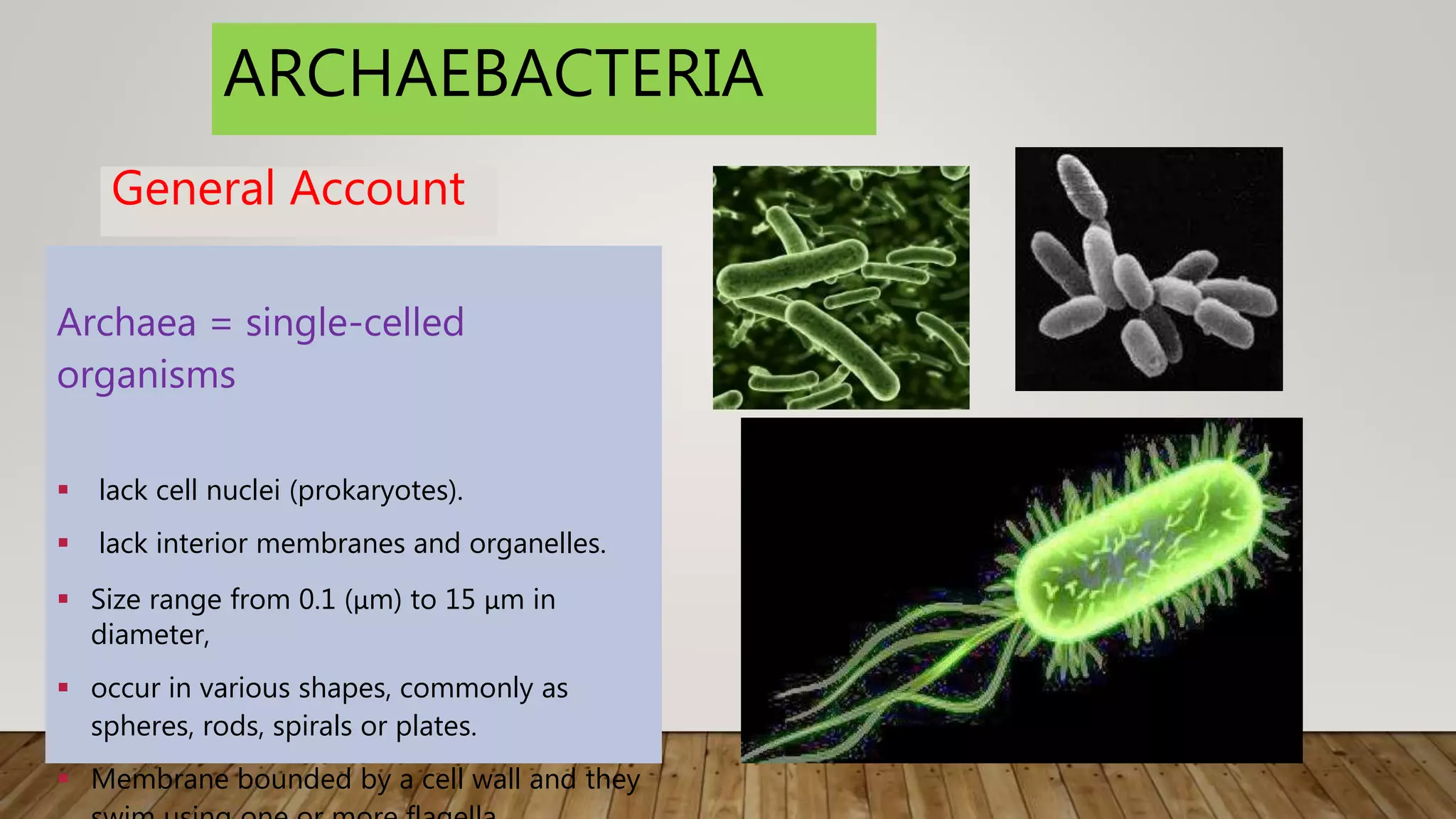
Archaea = single-celled
organisms
 lack cell nuclei (prokaryotes).
 lack interior membranes and organelles.
 Size range from 0.1 (μm) to 15 μm in
diameter,
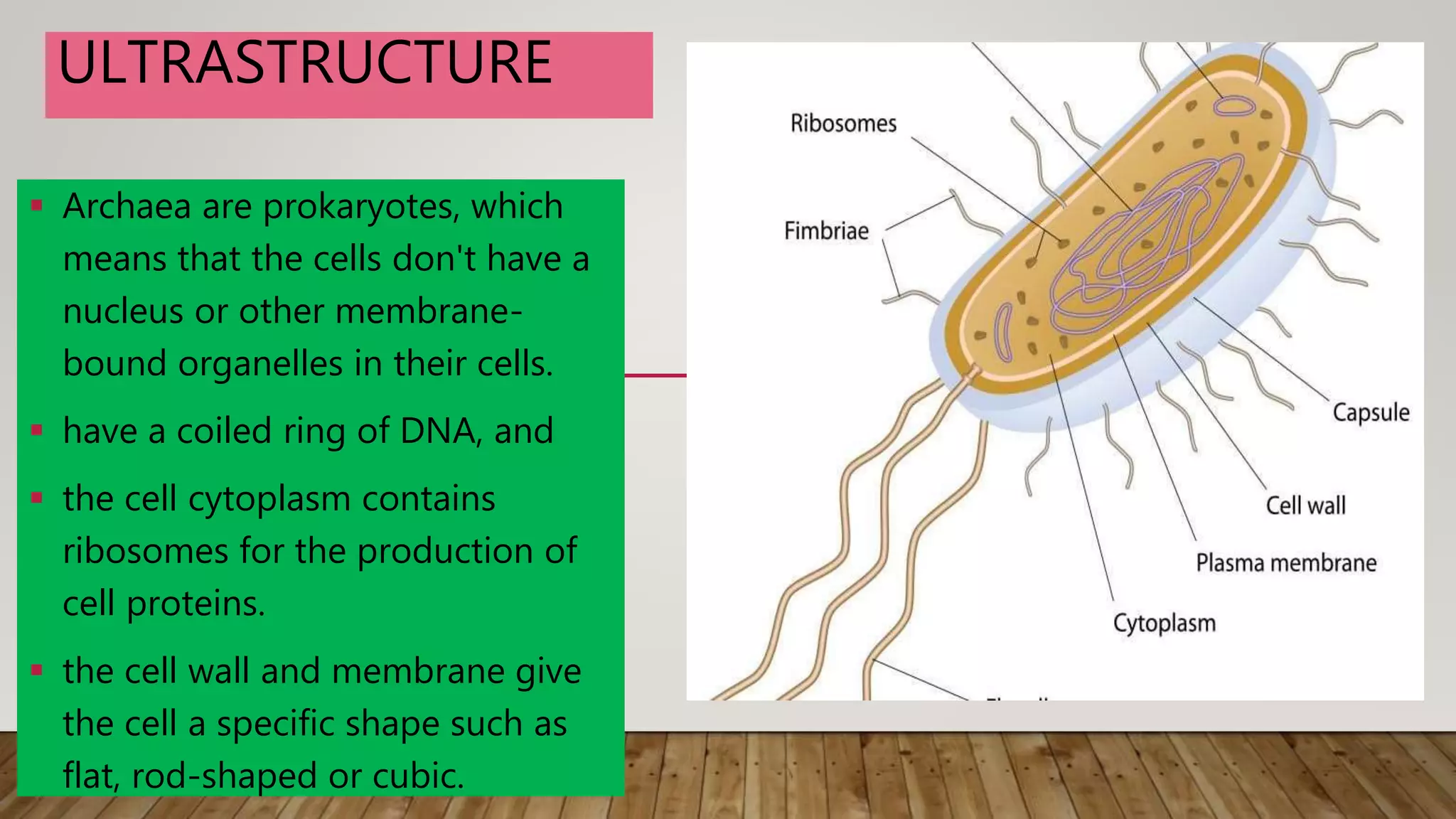
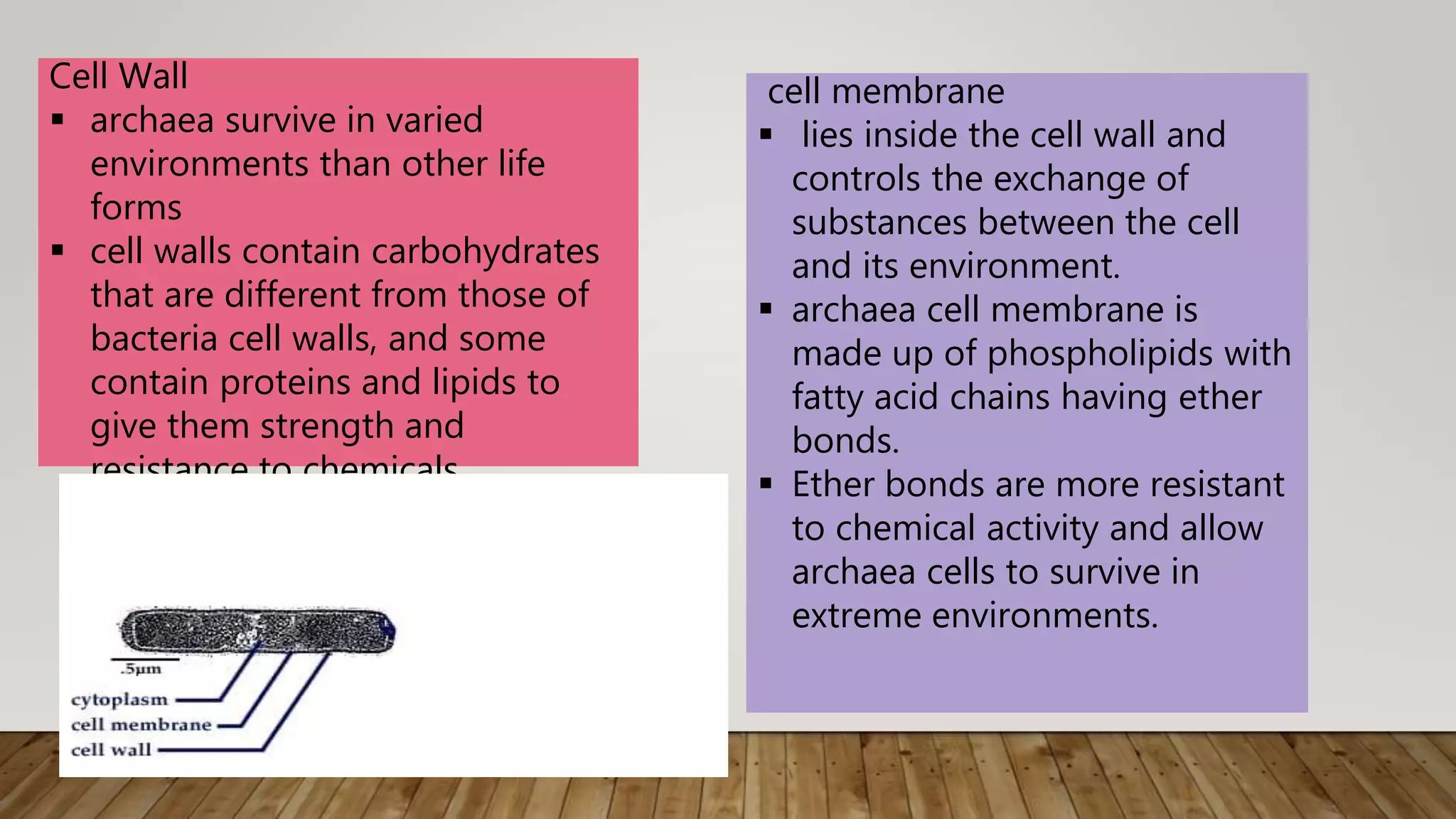
 occur in various shapes, commonly as
spheres, rods, spirals or plates.
 Membrane bounded by a cell wall and they
General Account
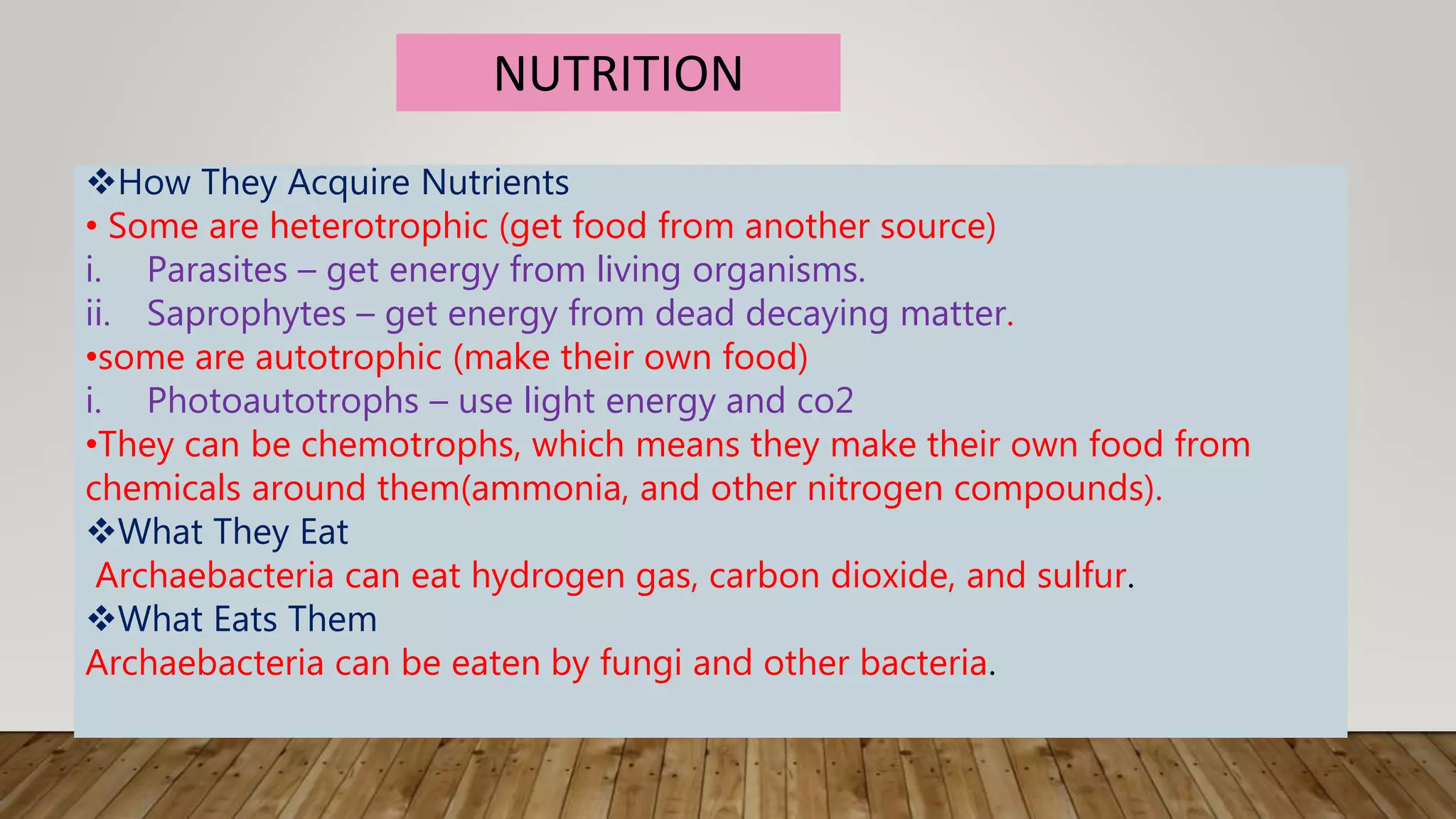
ULTRASTRUCTURE
 Archaea are prokaryotes, which
means that the cells don't have a
nucleus or other membrane-
bound organelles in their cells.
 have a coiled ring of DNA, and
 the cell cytoplasm contains
ribosomes for the production of
cell proteins.
 the cell wall and membrane give
the cell a specific shape such as
flat, rod-shaped or cubic.
Cell Wall
 archaea survive in varied
environments than other life
forms
 cell walls contain carbohydrates
that are different from those of
bacteria cell walls, and some
contain proteins and lipids to
give them strength and
resistance to chemicals.
cell membrane
 lies inside the cell wall and
controls the exchange of
substances between the cell
and its environment.
 archaea cell membrane is
made up of phospholipids with
fatty acid chains having ether
bonds.
 Ether bonds are more resistant
to chemical activity and allow
archaea cells to survive in
extreme environments.
Genes and Genetic
Information
 DNA is found in single circular
plasmids.
 the replication and translation
of DNA sequences takes place
as it does in eukaryotes.
Flagella
 flagella allow the archaea to
move.
 flagellum is a long stalk with
a base that can develop a
rotary action in conjunction
with the cell membrane.
 Flagella are useful in moving
cells toward food and in
spreading out after cell
division.
NUTRITION
How They Acquire Nutrients
• Some are heterotrophic (get food from another source)
i. Parasites – get energy from living organisms.
ii. Saprophytes – get energy from dead decaying matter.
•some are autotrophic (make their own food)
i. Photoautotrophs – use light energy and co2
•They can be chemotrophs, which means they make their own food from
chemicals around them(ammonia, and other nitrogen compounds).
What They Eat
Archaebacteria can eat hydrogen gas, carbon dioxide, and sulfur.
What Eats Them
Archaebacteria can be eaten by fungi and other bacteria.
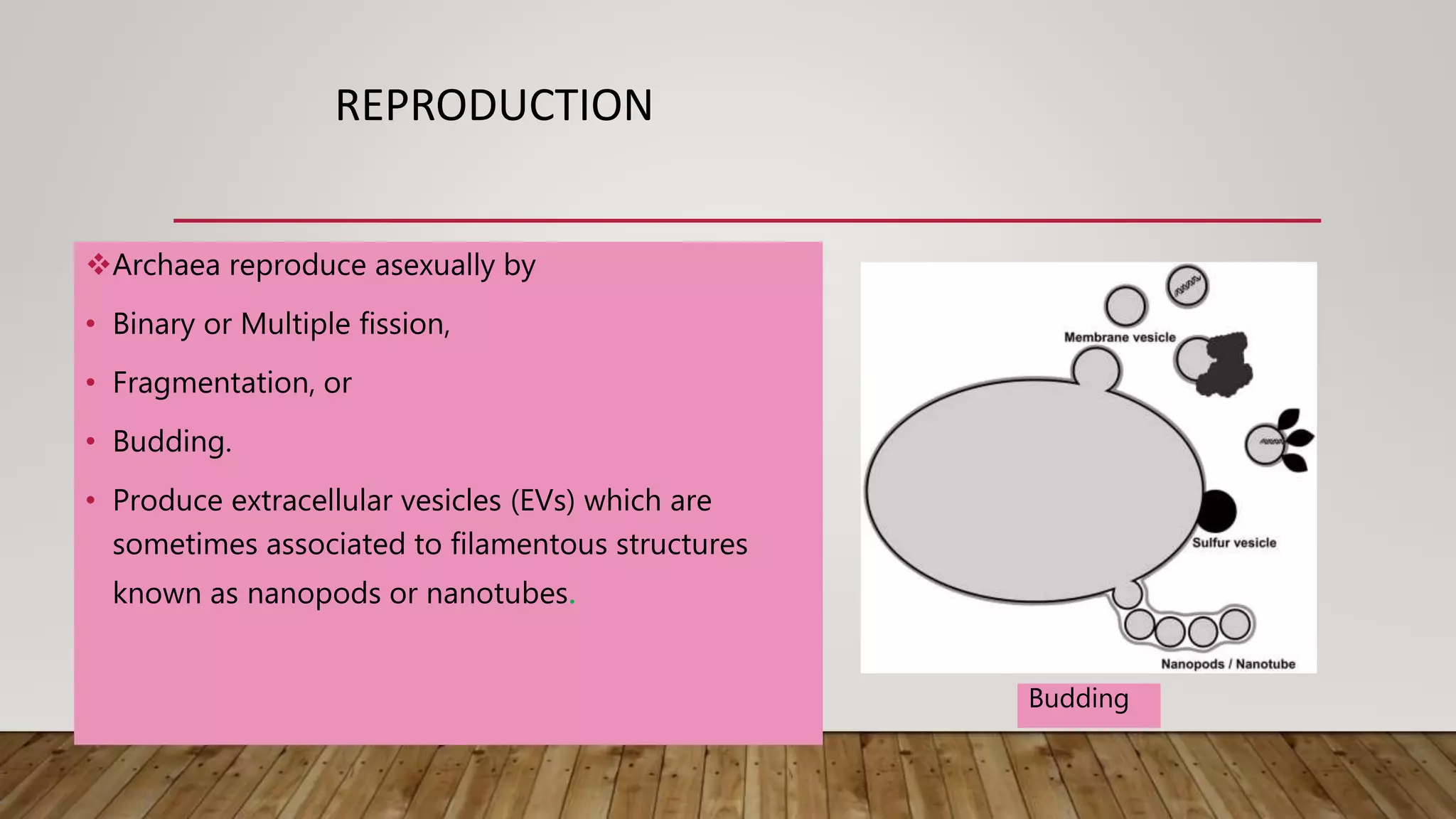
REPRODUCTION
Archaea reproduce asexually by
• Binary or Multiple fission,
• Fragmentation, or
• Budding.
• Produce extracellular vesicles (EVs) which are
sometimes associated to filamentous structures
known as nanopods or nanotubes.
Budding
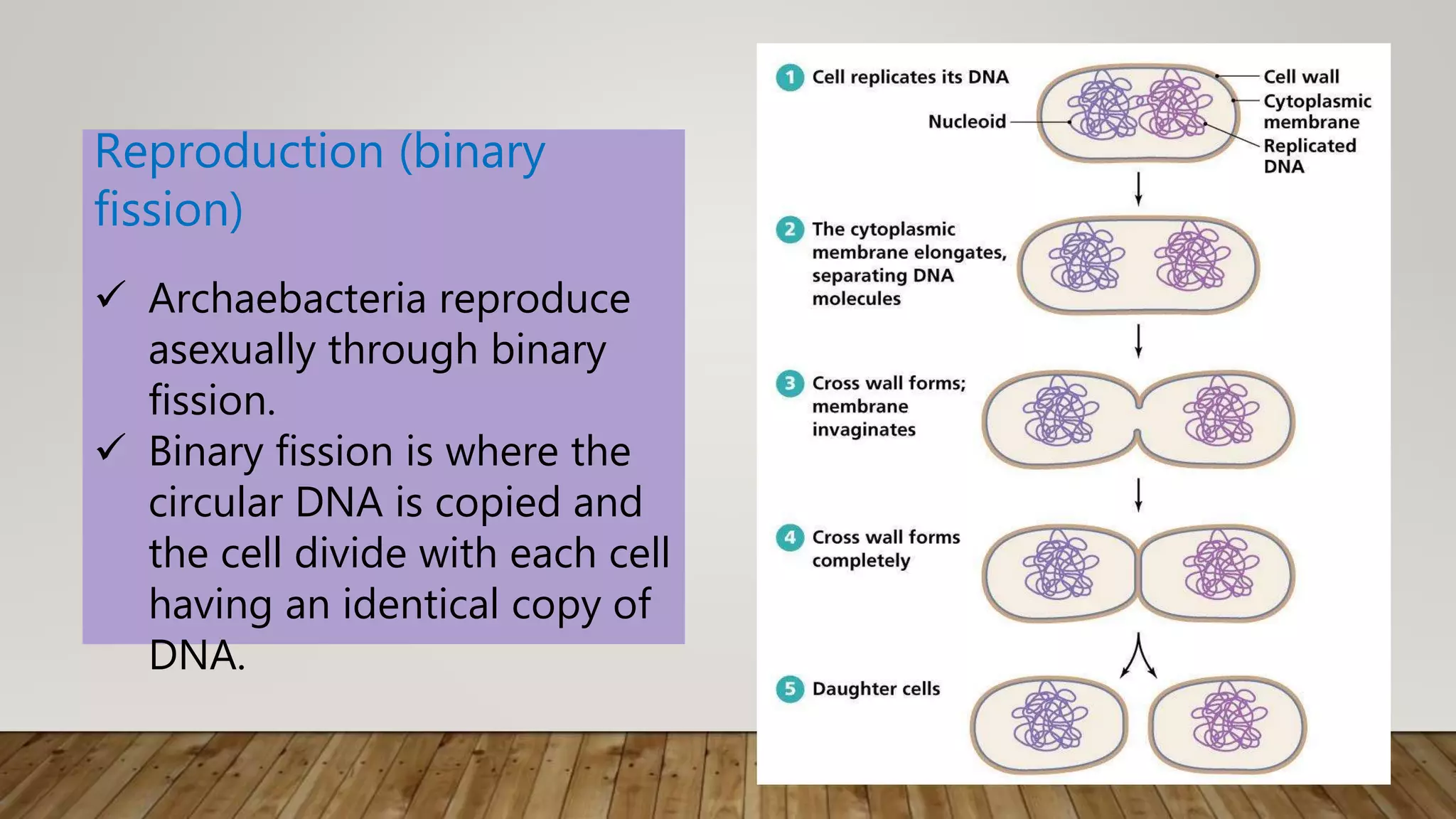
Reproduction (binary
fission)
 Archaebacteria reproduce
asexually through binary
fission.
 Binary fission is where the
circular DNA is copied and
the cell divide with each cell
having an identical copy of
DNA.
ECONOMIC IMPORTANCE
They are considered extremophiles which is
why they are so good for enzymes are proteins
which can function at extreme conditions.
 Archaebacteria known as Sulfolobus
acidocaldarius are known for their role in
bleaching purpose.
Methane gas is produced from the dung of
ruminants by the methanogens.
Methanogens are also involved in the
formation of biogas and sewage
treatment.
Archaebacteria are employed in the
production of gobar gas from dung and
sewage.
In ruminants, they cause fermentation
of cellulose.
ECONOMIC IMPORTANCE cont.
 Kingdom Archaebacteria (Microbiology)

Kingdom Archaebacteria (Microbiology)

  • 1.
  • 2.
    ARCHAEBACTERIA Archaea = single-celled organisms lack cell nuclei (prokaryotes).  lack interior membranes and organelles.  Size range from 0.1 (μm) to 15 μm in diameter,  occur in various shapes, commonly as spheres, rods, spirals or plates.  Membrane bounded by a cell wall and they General Account
  • 3.
    ULTRASTRUCTURE  Archaea areprokaryotes, which means that the cells don't have a nucleus or other membrane- bound organelles in their cells.  have a coiled ring of DNA, and  the cell cytoplasm contains ribosomes for the production of cell proteins.  the cell wall and membrane give the cell a specific shape such as flat, rod-shaped or cubic.
  • 4.
    Cell Wall  archaeasurvive in varied environments than other life forms  cell walls contain carbohydrates that are different from those of bacteria cell walls, and some contain proteins and lipids to give them strength and resistance to chemicals. cell membrane  lies inside the cell wall and controls the exchange of substances between the cell and its environment.  archaea cell membrane is made up of phospholipids with fatty acid chains having ether bonds.  Ether bonds are more resistant to chemical activity and allow archaea cells to survive in extreme environments.
  • 5.
    Genes and Genetic Information DNA is found in single circular plasmids.  the replication and translation of DNA sequences takes place as it does in eukaryotes. Flagella  flagella allow the archaea to move.  flagellum is a long stalk with a base that can develop a rotary action in conjunction with the cell membrane.  Flagella are useful in moving cells toward food and in spreading out after cell division.
  • 6.
    NUTRITION How They AcquireNutrients • Some are heterotrophic (get food from another source) i. Parasites – get energy from living organisms. ii. Saprophytes – get energy from dead decaying matter. •some are autotrophic (make their own food) i. Photoautotrophs – use light energy and co2 •They can be chemotrophs, which means they make their own food from chemicals around them(ammonia, and other nitrogen compounds). What They Eat Archaebacteria can eat hydrogen gas, carbon dioxide, and sulfur. What Eats Them Archaebacteria can be eaten by fungi and other bacteria.
  • 7.
    REPRODUCTION Archaea reproduce asexuallyby • Binary or Multiple fission, • Fragmentation, or • Budding. • Produce extracellular vesicles (EVs) which are sometimes associated to filamentous structures known as nanopods or nanotubes. Budding
  • 8.
    Reproduction (binary fission)  Archaebacteriareproduce asexually through binary fission.  Binary fission is where the circular DNA is copied and the cell divide with each cell having an identical copy of DNA.
  • 9.
    ECONOMIC IMPORTANCE They areconsidered extremophiles which is why they are so good for enzymes are proteins which can function at extreme conditions.  Archaebacteria known as Sulfolobus acidocaldarius are known for their role in bleaching purpose. Methane gas is produced from the dung of ruminants by the methanogens.
  • 10.
    Methanogens are alsoinvolved in the formation of biogas and sewage treatment. Archaebacteria are employed in the production of gobar gas from dung and sewage. In ruminants, they cause fermentation of cellulose. ECONOMIC IMPORTANCE cont.