Gondawana University, Gadchiroli
BRAMHAPURI, DIST. CHANDRAPUR
Seminar Topic
APOGAMY & APOSPORY
Presented By
M.Sc. – Ist (BOTANY) I st Sem.
Guided By
CONTENT
• Introduction
• Definition
• Difference Between Apospory and Apogamy
• Causes of Apogamy
• Causes of Apospory
• Similarities Between Apogamy and Apospory
INTRODUCTION
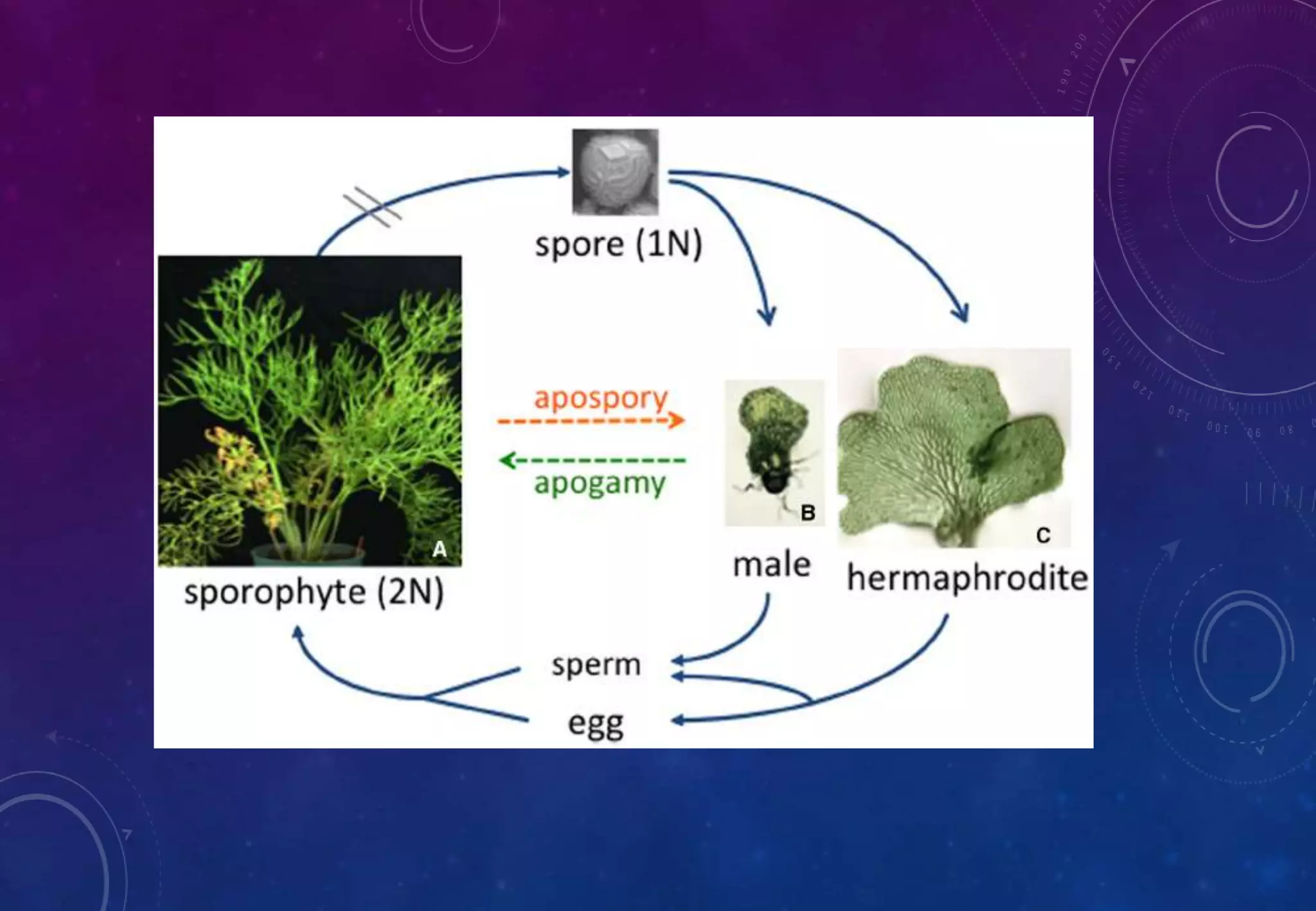
In apogamy, the sporophyte in some ferns
develops from the gametophyte.
In apospory, gametophyte develops directly
from the vegetative cells of the sporophyte.
Apogamy occurs without syngamy, therefore the
haploid gametophyte (n) develops into a haploid
sporophyte(n), instead of a diploid sporophyte
(2n).
DEFINITION
Apogamy :-
Apogamy is a unique process of asexual
reproduction in ferns, in which the
development of haploid sporophyte(n)
occurs from a haploid gametophyte(n)
without the fusion of gametes.
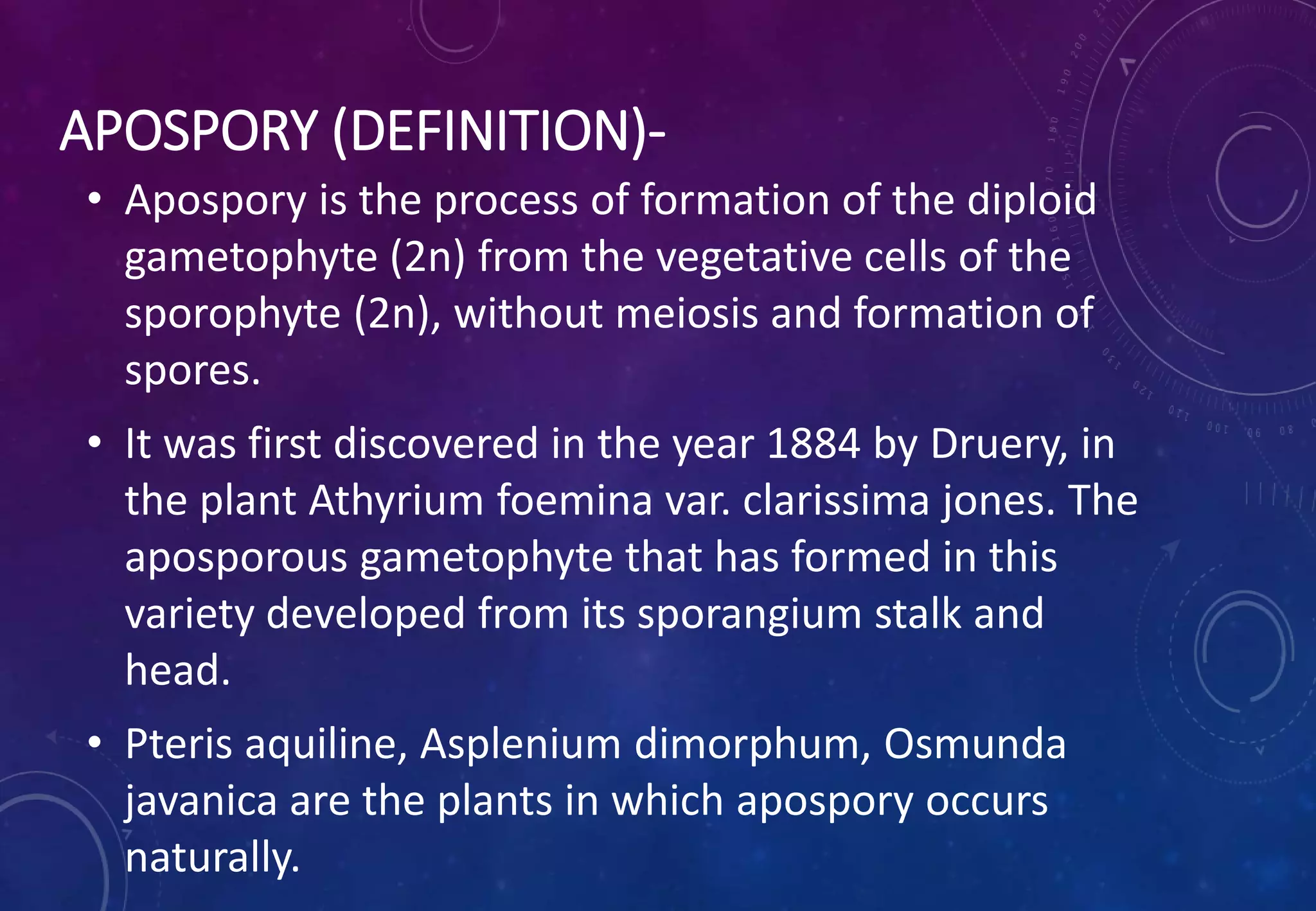
APOSPORY (DEFINITION)-
• Apospory is the process of formation of the diploid
gametophyte (2n) from the vegetative cells of the
sporophyte (2n), without meiosis and formation of
spores.
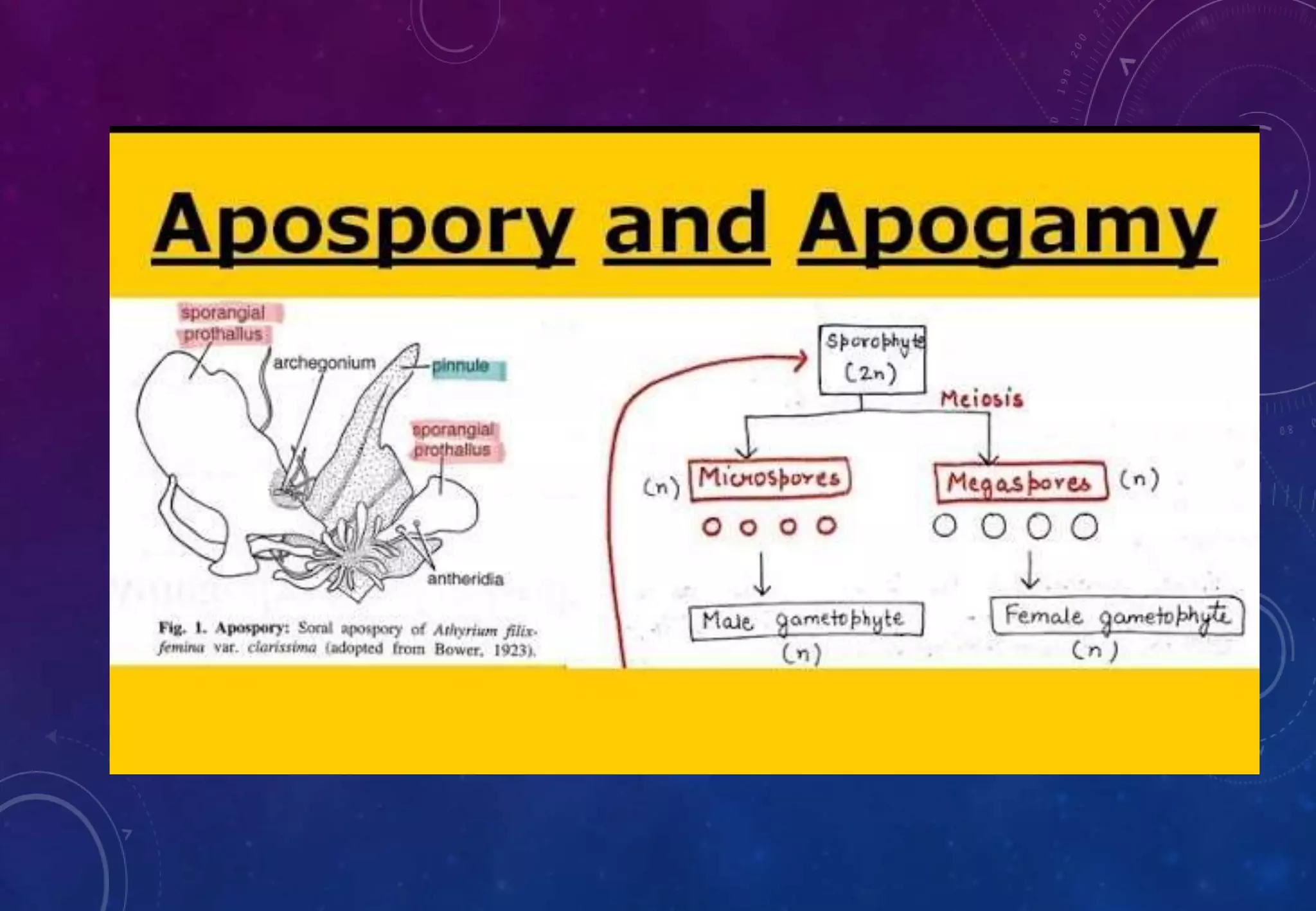
• It was first discovered in the year 1884 by Druery, in
the plant Athyrium foemina var. clarissima jones. The
aposporous gametophyte that has formed in this
variety developed from its sporangium stalk and
head.
• Pteris aquiline, Asplenium dimorphum, Osmunda
javanica are the plants in which apospory occurs
naturally.
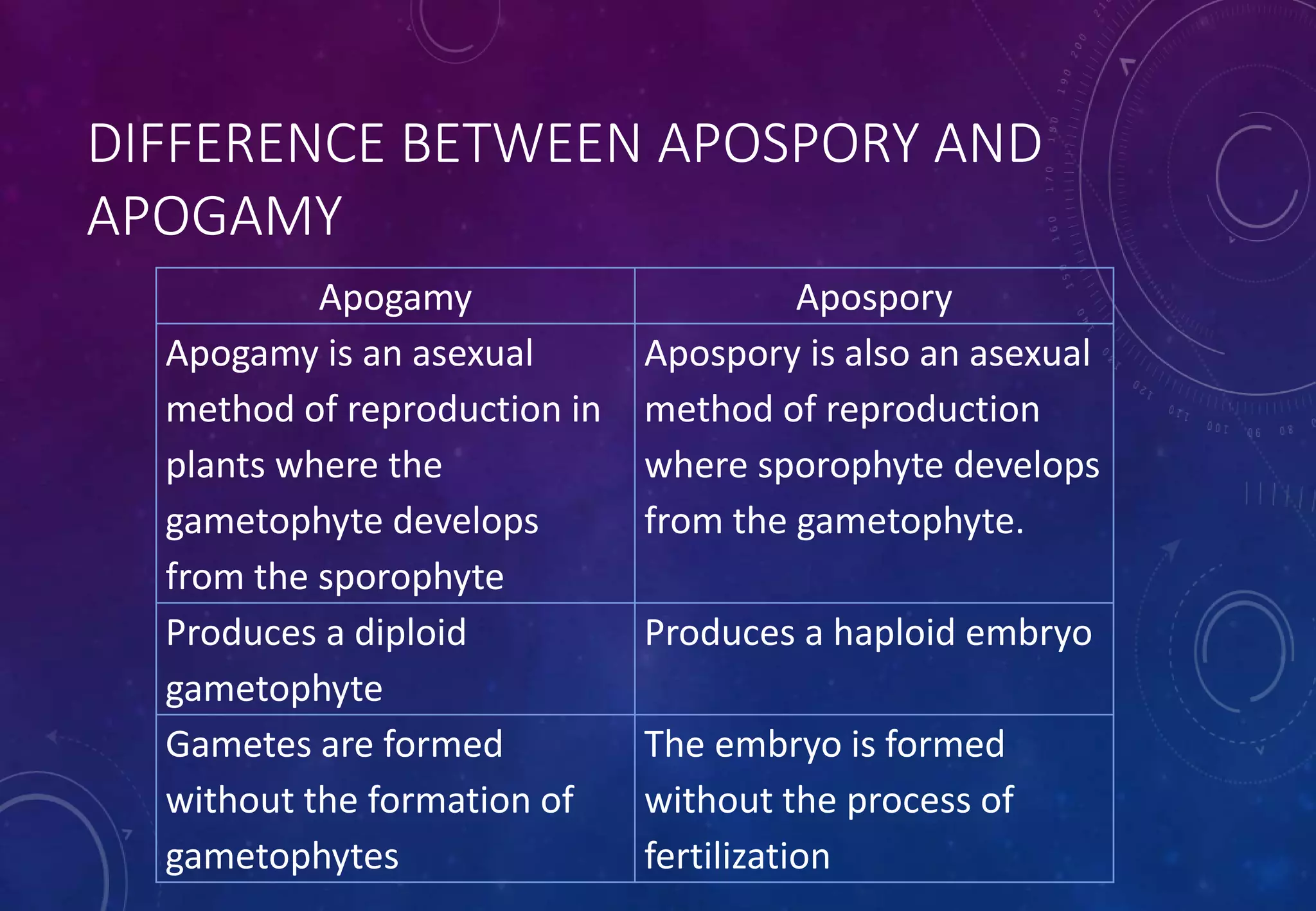
DIFFERENCE BETWEEN APOSPORY AND
APOGAMY
Apogamy Apospory
Apogamy is an asexual
method of reproduction in
plants where the
gametophyte develops
from the sporophyte
Apospory is also an asexual
method of reproduction
where sporophyte develops
from the gametophyte.
Produces a diploid
gametophyte
Produces a haploid embryo
Gametes are formed
without the formation of
gametophytes
The embryo is formed
without the process of
fertilization
CAUSES OF APOGAMY
• The chances of occurrence of apogamy are high in those
plants whose prothallus have aged.When the gametophyte
fails to produce gametes, there will be fewer chances for
fusion.
• Hence, Apogamy will occur in such a situation where the
failure of sex organ formation occurs.Apogamy happens in
those situations, when the plants fail to carry out normal
fertilisation (sexual reproduction), either due to certain
abnormal physiological conditions or environmental
conditions.
CAUSES OF APOSPORY
• Causes of Apospory occurs in those pteridophytes
who suffer from the deficiency of mineral nutrition
due to the lack of minerals in the soil.If the leaves of
pteridophyte develop under dim light, chances of
occurrence of apospory become high.
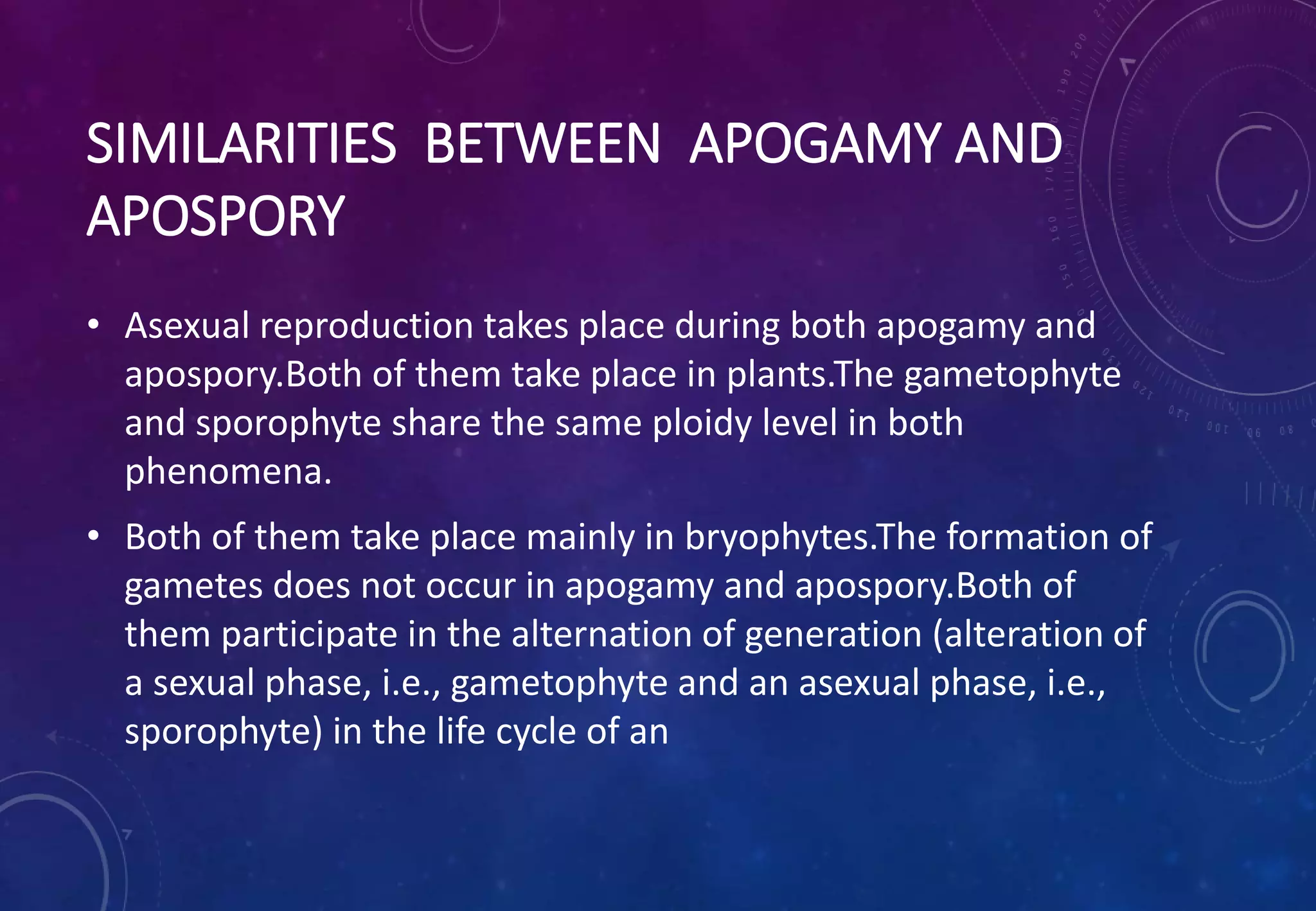
SIMILARITIES BETWEEN APOGAMY AND
APOSPORY
• Asexual reproduction takes place during both apogamy and
apospory.Both of them take place in plants.The gametophyte
and sporophyte share the same ploidy level in both
phenomena.
• Both of them take place mainly in bryophytes.The formation of
gametes does not occur in apogamy and apospory.Both of
them participate in the alternation of generation (alteration of
a sexual phase, i.e., gametophyte and an asexual phase, i.e.,
sporophyte) in the life cycle of an
APOGAMY & APOSPORY.pptx

APOGAMY & APOSPORY.pptx

  • 1.
    Gondawana University, Gadchiroli BRAMHAPURI,DIST. CHANDRAPUR Seminar Topic APOGAMY & APOSPORY Presented By M.Sc. – Ist (BOTANY) I st Sem. Guided By
  • 2.
    CONTENT • Introduction • Definition •Difference Between Apospory and Apogamy • Causes of Apogamy • Causes of Apospory • Similarities Between Apogamy and Apospory
  • 3.
    INTRODUCTION In apogamy, thesporophyte in some ferns develops from the gametophyte. In apospory, gametophyte develops directly from the vegetative cells of the sporophyte. Apogamy occurs without syngamy, therefore the haploid gametophyte (n) develops into a haploid sporophyte(n), instead of a diploid sporophyte (2n).
  • 4.
    DEFINITION Apogamy :- Apogamy isa unique process of asexual reproduction in ferns, in which the development of haploid sporophyte(n) occurs from a haploid gametophyte(n) without the fusion of gametes.
  • 5.
    APOSPORY (DEFINITION)- • Aposporyis the process of formation of the diploid gametophyte (2n) from the vegetative cells of the sporophyte (2n), without meiosis and formation of spores. • It was first discovered in the year 1884 by Druery, in the plant Athyrium foemina var. clarissima jones. The aposporous gametophyte that has formed in this variety developed from its sporangium stalk and head. • Pteris aquiline, Asplenium dimorphum, Osmunda javanica are the plants in which apospory occurs naturally.
  • 7.
    DIFFERENCE BETWEEN APOSPORYAND APOGAMY Apogamy Apospory Apogamy is an asexual method of reproduction in plants where the gametophyte develops from the sporophyte Apospory is also an asexual method of reproduction where sporophyte develops from the gametophyte. Produces a diploid gametophyte Produces a haploid embryo Gametes are formed without the formation of gametophytes The embryo is formed without the process of fertilization
  • 8.
    CAUSES OF APOGAMY •The chances of occurrence of apogamy are high in those plants whose prothallus have aged.When the gametophyte fails to produce gametes, there will be fewer chances for fusion. • Hence, Apogamy will occur in such a situation where the failure of sex organ formation occurs.Apogamy happens in those situations, when the plants fail to carry out normal fertilisation (sexual reproduction), either due to certain abnormal physiological conditions or environmental conditions.
  • 9.
    CAUSES OF APOSPORY •Causes of Apospory occurs in those pteridophytes who suffer from the deficiency of mineral nutrition due to the lack of minerals in the soil.If the leaves of pteridophyte develop under dim light, chances of occurrence of apospory become high.
  • 10.
    SIMILARITIES BETWEEN APOGAMYAND APOSPORY • Asexual reproduction takes place during both apogamy and apospory.Both of them take place in plants.The gametophyte and sporophyte share the same ploidy level in both phenomena. • Both of them take place mainly in bryophytes.The formation of gametes does not occur in apogamy and apospory.Both of them participate in the alternation of generation (alteration of a sexual phase, i.e., gametophyte and an asexual phase, i.e., sporophyte) in the life cycle of an