PHYTOPLASMA
N.H. SHANKAR REDDY
2ND PH.D. PLANT PATHOLOGY
ANNAMALAI UNIVERSITY
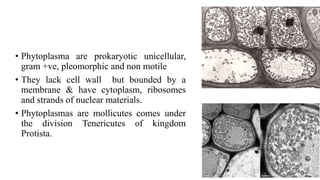
• Phytoplasma are prokaryotic unicellular,
gram +ve, pleomorphic and non motile
• They lack cell wall but bounded by a
membrane & have cytoplasm, ribosomes
and strands of nuclear materials.
• Phytoplasmas are mollicutes comes under
the division Tenericutes of kingdom
Protista.
• Discovered by Doi et al. (1967) in the phloem of mulberry plants and named as
MLO (mycoplasma like organism), later name changed to Phytoplasma in 10th
international congress of mycoplasmology.
Properties
• They belonging to the order Acholeplasmatales, and genus Phytoplasma, is at Candidatus
stage.
• Contains both DNA, RNA along with ribosomes as genetic material, size ranges from 0.17 –
0.25µm Genome size ranges from 530–1350 kb, with low G+C content of DNA (23–29.5
%).
• Generally, present in sap of phloem sieve tubes. It cannot be cultured on nutrient agar
medium, that why it referred called as ‘Candidatus Phytoplasma’ (candidatus means cannot
be cultured), but phytoplasma can grow in alimentary canal, haemolymph, salivary glands
and different body parts of their insect vectors.
 Phytoplasma have no flagella, and produce no spores. Cells can be differentiated
through bacteriological filter and Koch postulated have not been proved.
 Two common symptoms of phytoplasma infection are Phyllody (floral parts are
converted into leaf like structure), yellowing of leaves (colour of leaves due to
disrupt of transport of carbohydrates)
 Phytoplasma is mainly transmitted by leafhopper (family - Cicadellidae), but
plant hoppers (family - Fulgoridae) and psyllids are also been reported as
vectors.
 Detected by using PCR (based on 16sr DNA) and fluorescent staining with either
the DNA -specific stain 4,6-diamidino-2-phenylindole (DAPI) or the callose
specific stain aniline blue or Dienes’ stain.
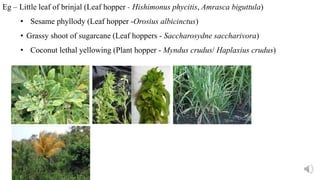
Eg – Little leaf of brinjal (Leaf hopper - Hishimonus phycitis, Amrasca biguttula)
• Sesame phyllody (Leaf hopper -Orosius albicinctus)
• Grassy shoot of sugarcane (Leaf hoppers - Saccharosydne saccharivora)
• Coconut lethal yellowing (Plant hopper - Myndus crudus/ Haplaxius crudus)
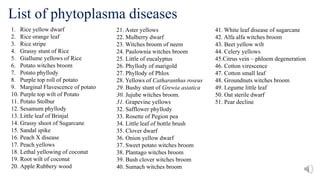
List of phytoplasma diseases
1. Rice yellow dwarf
2. Rice orange leaf
3. Rice stripe
4. Grassy stunt of Rice
5. Giallume yellows of Rice
6. Potato witches broom
7. Potato phyllody
8. Purple top roll of potato
9. Marginal Flavescence of potato
10. Purple top wilt of Potato
11. Potato Stolbur
12. Sesamum phyllody
13. Little leaf of Brinjal
14. Grassy shoot of Sugarcane
15. Sandal spike
16. Peach X disease
17. Peach yellows
18. Lethal yellowing of coconut
19. Root wilt of coconut
20. Apple Rubbery wood
21. Aster yellows
22. Mulberry dwarf
23. Witches broom of neem
24. Paulownia witches broom
25. Little of eucalyptus
26. Phyllody of marigold
27. Phyllody of Phlox
28. Yellows of Catharanthus roseus
29. Bushy stunt of Grewia asiatica
30. Jujube witches broom.
31. Grapevine yellows
32. Safflower phyllody
33. Rosette of Pegion pea
34. Little leaf of bottle brush
35. Clover dwarf
36. Onion yellow dwarf
37. Sweet potato witches broom
38. Plantago witches broom
39. Bush clover witches broom
40. Sumach witches broom
41. White leaf disease of sugarcane
42. Alfa alfa witches broom
43. Beet yellow wilt
44. Celery yellows
45.Citrus vein – phloem degeneration
46. Cotton virescence
47. Cotton small leaf
48. Groundnuts witches broom
49. Legume little leaf
50. Oat sterile dwarf
51. Pear decline

Phytoplasma

  • 1.
    PHYTOPLASMA N.H. SHANKAR REDDY 2NDPH.D. PLANT PATHOLOGY ANNAMALAI UNIVERSITY
  • 2.
    • Phytoplasma areprokaryotic unicellular, gram +ve, pleomorphic and non motile • They lack cell wall but bounded by a membrane & have cytoplasm, ribosomes and strands of nuclear materials. • Phytoplasmas are mollicutes comes under the division Tenericutes of kingdom Protista.
  • 3.
    • Discovered byDoi et al. (1967) in the phloem of mulberry plants and named as MLO (mycoplasma like organism), later name changed to Phytoplasma in 10th international congress of mycoplasmology.
  • 4.
    Properties • They belongingto the order Acholeplasmatales, and genus Phytoplasma, is at Candidatus stage. • Contains both DNA, RNA along with ribosomes as genetic material, size ranges from 0.17 – 0.25µm Genome size ranges from 530–1350 kb, with low G+C content of DNA (23–29.5 %). • Generally, present in sap of phloem sieve tubes. It cannot be cultured on nutrient agar medium, that why it referred called as ‘Candidatus Phytoplasma’ (candidatus means cannot be cultured), but phytoplasma can grow in alimentary canal, haemolymph, salivary glands and different body parts of their insect vectors.
  • 5.
     Phytoplasma haveno flagella, and produce no spores. Cells can be differentiated through bacteriological filter and Koch postulated have not been proved.  Two common symptoms of phytoplasma infection are Phyllody (floral parts are converted into leaf like structure), yellowing of leaves (colour of leaves due to disrupt of transport of carbohydrates)  Phytoplasma is mainly transmitted by leafhopper (family - Cicadellidae), but plant hoppers (family - Fulgoridae) and psyllids are also been reported as vectors.  Detected by using PCR (based on 16sr DNA) and fluorescent staining with either the DNA -specific stain 4,6-diamidino-2-phenylindole (DAPI) or the callose specific stain aniline blue or Dienes’ stain.
  • 6.
    Eg – Littleleaf of brinjal (Leaf hopper - Hishimonus phycitis, Amrasca biguttula) • Sesame phyllody (Leaf hopper -Orosius albicinctus) • Grassy shoot of sugarcane (Leaf hoppers - Saccharosydne saccharivora) • Coconut lethal yellowing (Plant hopper - Myndus crudus/ Haplaxius crudus)
  • 7.
    List of phytoplasmadiseases 1. Rice yellow dwarf 2. Rice orange leaf 3. Rice stripe 4. Grassy stunt of Rice 5. Giallume yellows of Rice 6. Potato witches broom 7. Potato phyllody 8. Purple top roll of potato 9. Marginal Flavescence of potato 10. Purple top wilt of Potato 11. Potato Stolbur 12. Sesamum phyllody 13. Little leaf of Brinjal 14. Grassy shoot of Sugarcane 15. Sandal spike 16. Peach X disease 17. Peach yellows 18. Lethal yellowing of coconut 19. Root wilt of coconut 20. Apple Rubbery wood 21. Aster yellows 22. Mulberry dwarf 23. Witches broom of neem 24. Paulownia witches broom 25. Little of eucalyptus 26. Phyllody of marigold 27. Phyllody of Phlox 28. Yellows of Catharanthus roseus 29. Bushy stunt of Grewia asiatica 30. Jujube witches broom. 31. Grapevine yellows 32. Safflower phyllody 33. Rosette of Pegion pea 34. Little leaf of bottle brush 35. Clover dwarf 36. Onion yellow dwarf 37. Sweet potato witches broom 38. Plantago witches broom 39. Bush clover witches broom 40. Sumach witches broom 41. White leaf disease of sugarcane 42. Alfa alfa witches broom 43. Beet yellow wilt 44. Celery yellows 45.Citrus vein – phloem degeneration 46. Cotton virescence 47. Cotton small leaf 48. Groundnuts witches broom 49. Legume little leaf 50. Oat sterile dwarf 51. Pear decline