What is key management?
 Key management is the set of techniques and procedures
supporting the establishment and maintenance of keying
relationships between authorized parties.
 A keying relationship is the state wherein communicating
entities share common data(keying material) to facilitate
cryptography techniques. This data may include public or
secret keys, initialization values, and additional non-secret
parameters.
 Key management encompasses techniques and
procedures supporting:
1. initialization of systems users within a domain;
2. generation, distribution, and installation of keying
material;
3. controlling the use of keying material;
4. update, revocation, and destruction of keying material;
and
5. storage, backup/recovery, and archival of keying
material.
Objectives
The objective of key management is to maintain
keying relationships and keying material in a
manner that counters relevant threats
In practice an additional objective is conformance to
a relevant security policy
Threats
1. compromise of confidentiality of secret keys
2. compromise of authenticity of secret or public keys.
3. unauthorized use of public or secret keys
Security Policy
Security policy explicitly or implicitly defines the
threats a system is intended to address
Security policy may affect the stringency of
cryptographic requirements, depending on the
susceptibility of the environment in questions to
various types of attack.
Key management techniques
 Public-key techniques
Primary advantages offered by public-key techniques for
applications related to key management include:
1. simplified key management
2. on-line trusted server not required
3. enhanced functionality
Key management techniques
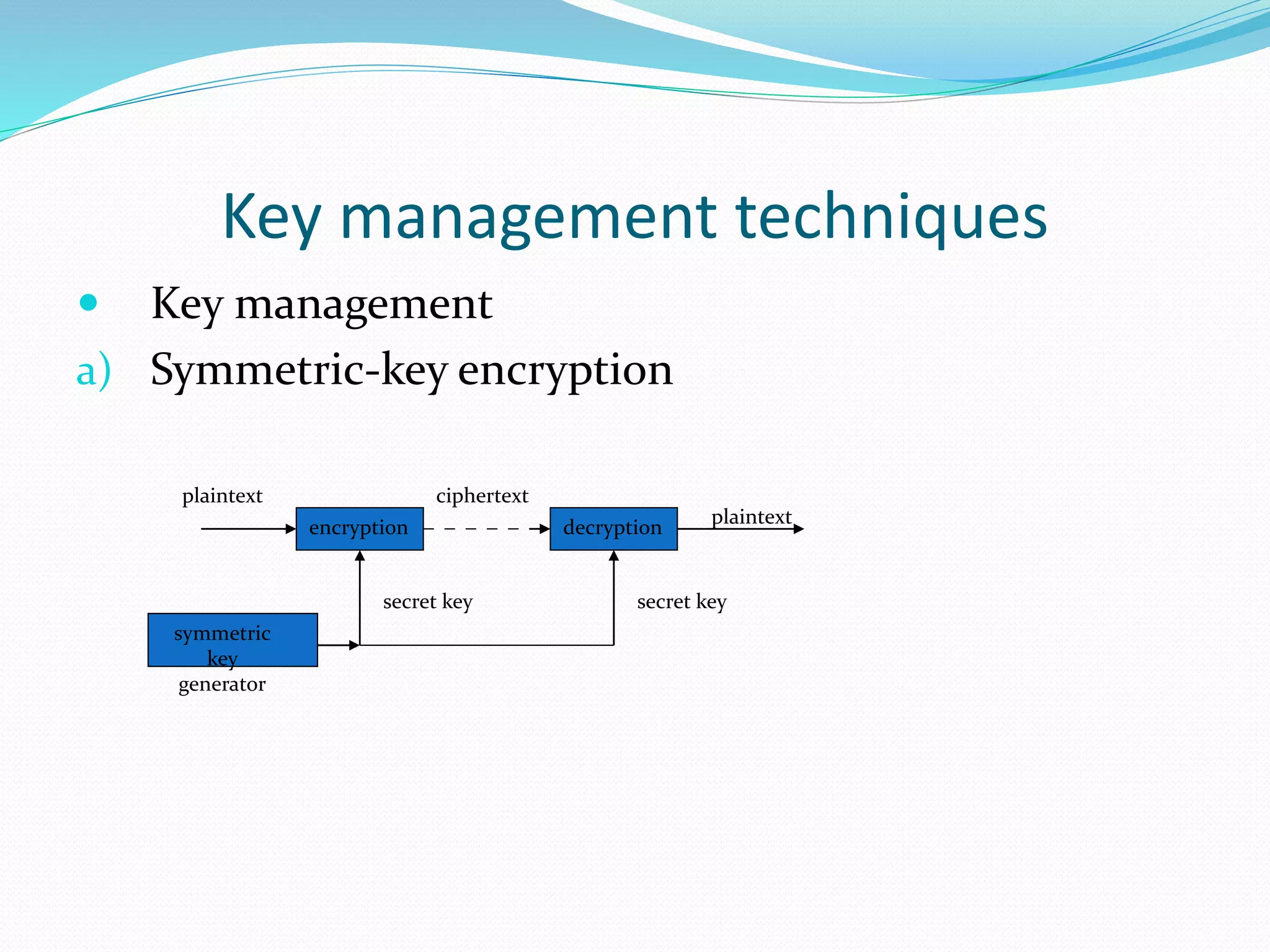
 Key management
a) Symmetric-key encryption
encryption decryption
plaintext
plaintext
symmetric
key
generator
secret key secret key
ciphertext
Key management techniques
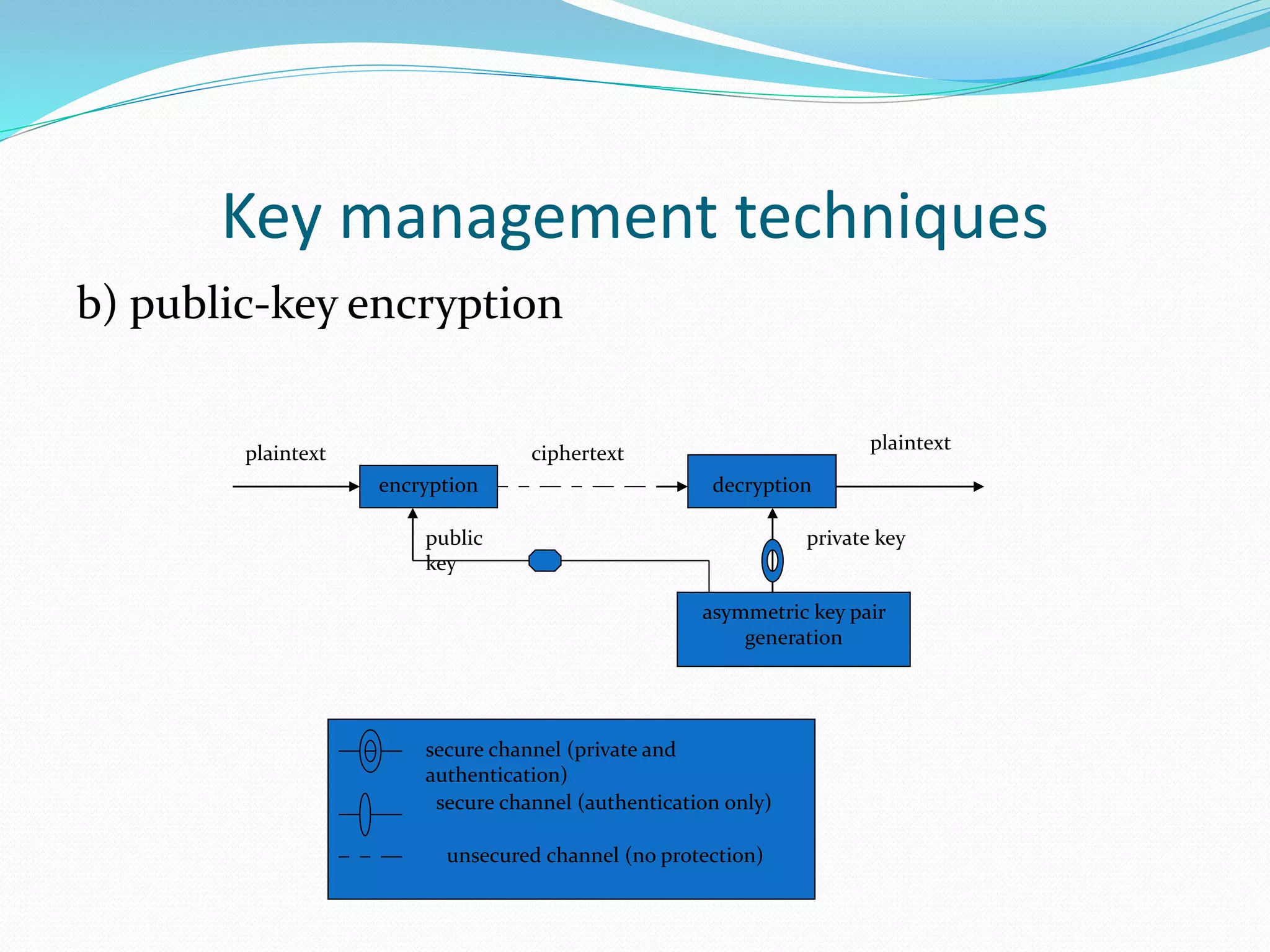
b) public-key encryption
encryption decryption
asymmetric key pair
generation
plaintext ciphertext
plaintext
public
key
private key
secure channel (private and
authentication)
secure channel (authentication only)
unsecured channel (no protection)
Key management techniques
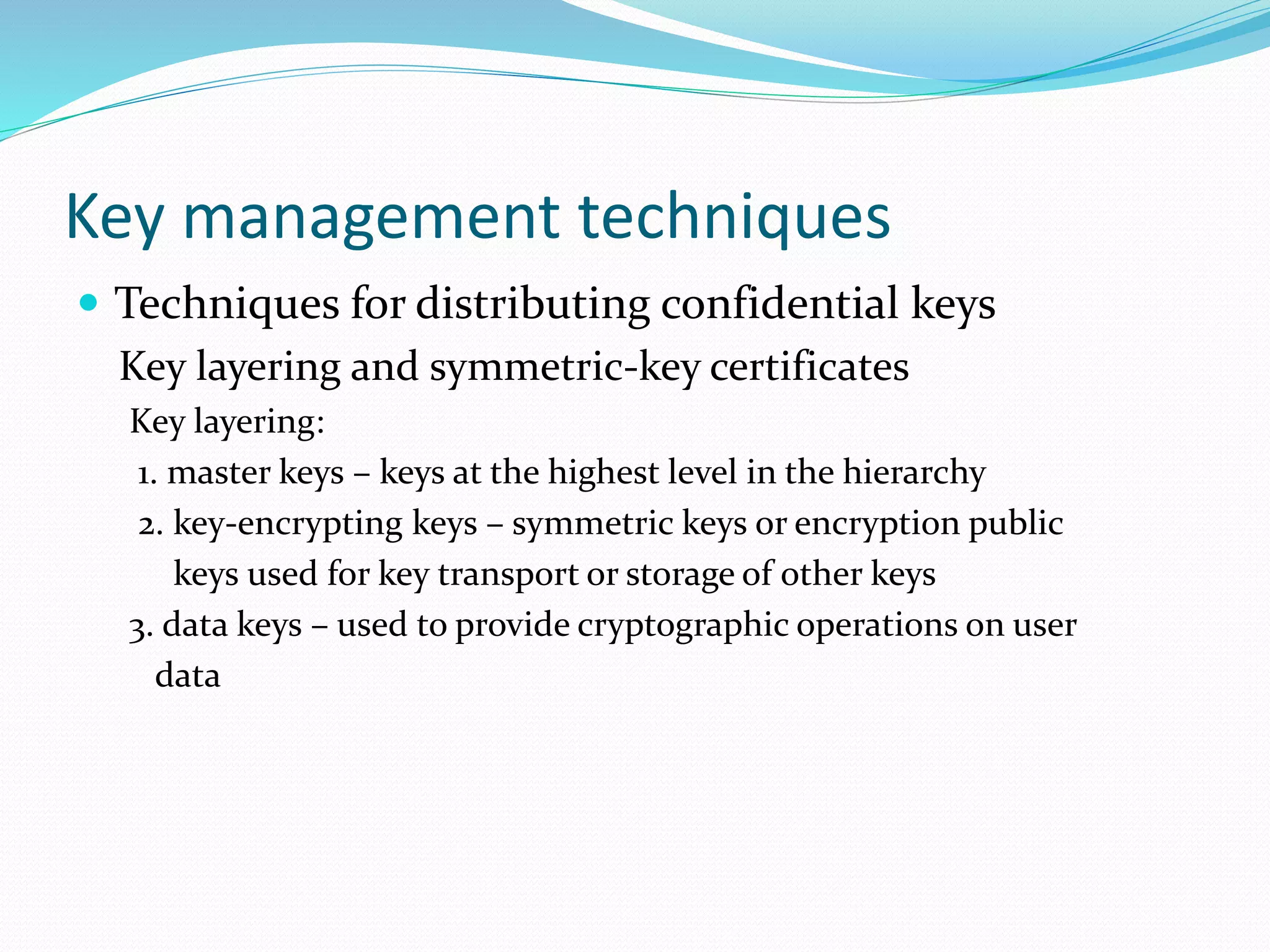
 Techniques for distributing confidential keys
Key layering and symmetric-key certificates
Key layering:
1. master keys – keys at the highest level in the hierarchy
2. key-encrypting keys – symmetric keys or encryption public
keys used for key transport or storage of other keys
3. data keys – used to provide cryptographic operations on user
data
Key management techniques
symmetric-key certificates:
Symmetric-key certificates provide a means for a KTC(Key Translation
Center) to avoid the requirement of either maintaining a secure
database of user secrets (or duplicating such a database for multiple
servers), or retrieving such keys from a database upon translation
requests.
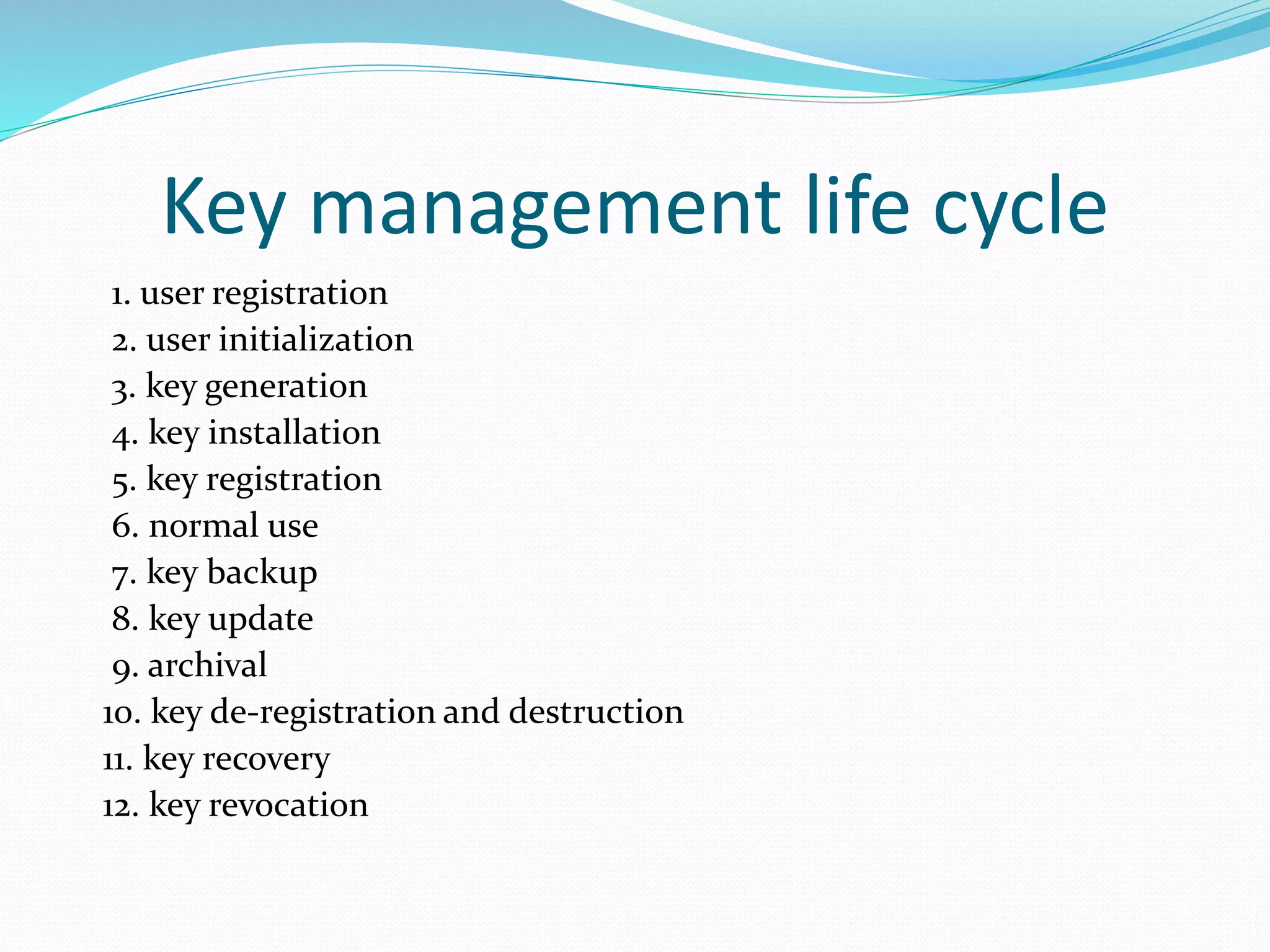
Key management life cycle
1. user registration
2. user initialization
3. key generation
4. key installation
5. key registration
6. normal use
7. key backup
8. key update
9. archival
10. key de-registration and destruction
11. key recovery
12. key revocation
Key Distribution
 given parties A and B have various key distribution
alternatives:
1. A can select key and physically deliver to B
2. third party can select & deliver key to A & B
3. if A & B have communicated previously can use
previous key to encrypt a new key
4. if A & B have secure communications with a third
party C, C can relay key between A & B
Key Distribution Task
Key Distribution Scenario
Key Distribution Issues
 hierarchies of KDC’s required for large networks, but
must trust each other
 session key lifetimes should be limited for greater
security
 use of automatic key distribution on behalf of users,
but must trust system
 use of decentralized key distribution
 controlling key usage
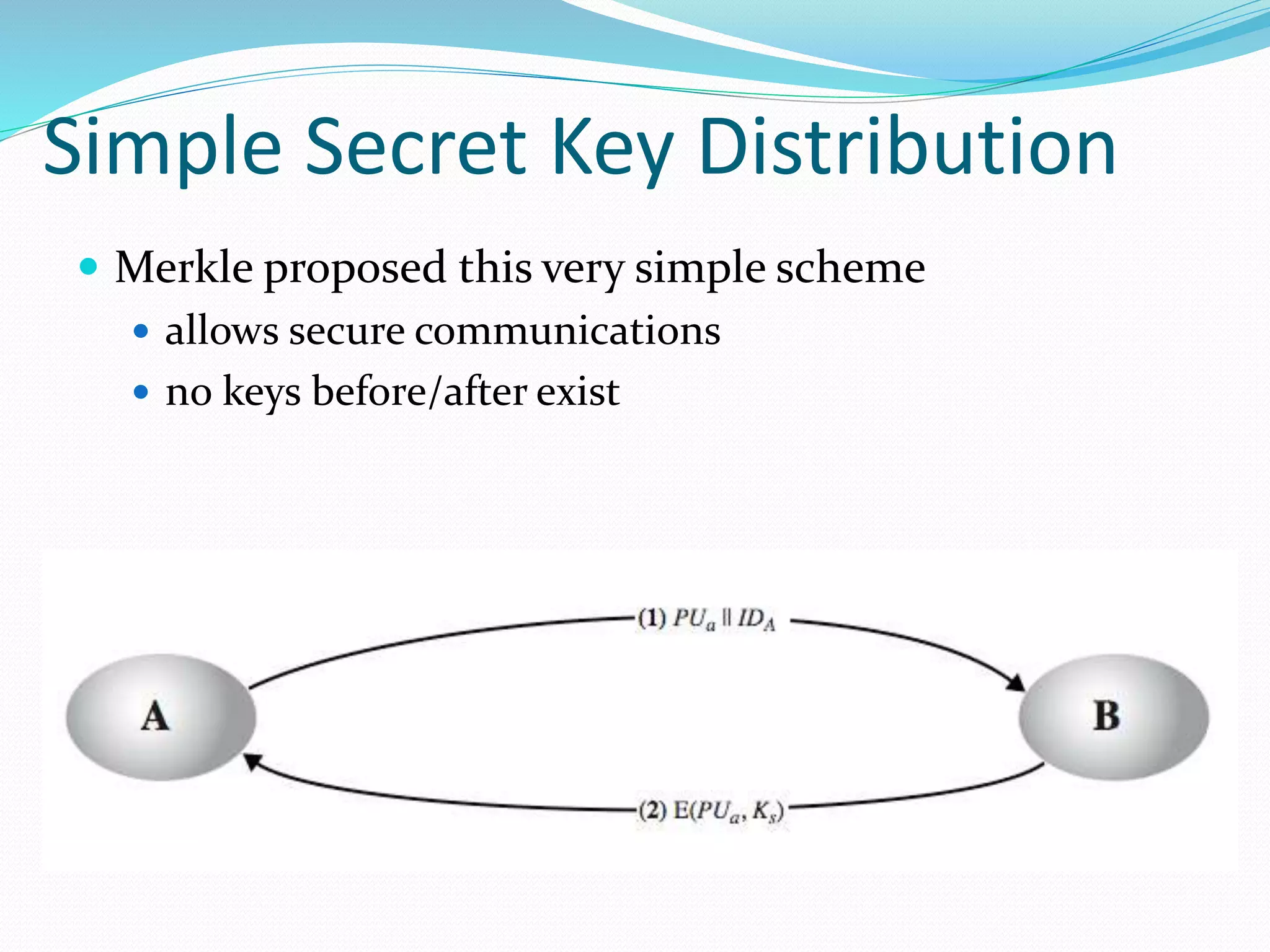
Simple Secret Key Distribution
 Merkle proposed this very simple scheme
 allows secure communications
 no keys before/after exist
Secret Key Distribution with
Confidentiality and Authentication
Distribution of Public Keys
 can be considered as using one of:
 public announcement
 publicly available directory
 public-key authority
 public-key certificates
Public Announcement
 users distribute public keys to recipients or broadcast
to community at large
 eg. append PGP keys to email messages or post to news
groups or email list
 major weakness is forgery
 anyone can create a key claiming to be someone else and
broadcast it
 until forgery is discovered can masquerade as claimed
user
Publicly Available Directory
 can obtain greater security by registering keys with a
public directory
 directory must be trusted with properties:
 contains {name,public-key} entries
 participants register securely with directory
 participants can replace key at any time
 directory is periodically published
 directory can be accessed electronically
 still vulnerable to tampering or forgery
Public-Key Authority improve security by tightening control over
distribution of keys from directory
 has properties of directory
 and requires users to know public key for the directory
 then users interact with directory to obtain any desired
public key securely
 does require real-time access to directory when keys are
needed
 may be vulnerable to tampering
Public-Key Authority
Public-Key Certificates
certificates allow key exchange without real-time
access to public-key authority
a certificate binds identity to public key
 usually with other info such as period of validity, rights
of use etc
with all contents signed by a trusted Public-Key or
Certificate Authority (CA)
can be verified by anyone who knows the public-key
authorities public-key
Public-Key Certificates

Key management and distribution

  • 2.
    What is keymanagement?  Key management is the set of techniques and procedures supporting the establishment and maintenance of keying relationships between authorized parties.  A keying relationship is the state wherein communicating entities share common data(keying material) to facilitate cryptography techniques. This data may include public or secret keys, initialization values, and additional non-secret parameters.
  • 3.
     Key managementencompasses techniques and procedures supporting: 1. initialization of systems users within a domain; 2. generation, distribution, and installation of keying material; 3. controlling the use of keying material; 4. update, revocation, and destruction of keying material; and 5. storage, backup/recovery, and archival of keying material.
  • 4.
    Objectives The objective ofkey management is to maintain keying relationships and keying material in a manner that counters relevant threats In practice an additional objective is conformance to a relevant security policy
  • 5.
    Threats 1. compromise ofconfidentiality of secret keys 2. compromise of authenticity of secret or public keys. 3. unauthorized use of public or secret keys
  • 6.
    Security Policy Security policyexplicitly or implicitly defines the threats a system is intended to address Security policy may affect the stringency of cryptographic requirements, depending on the susceptibility of the environment in questions to various types of attack.
  • 7.
    Key management techniques Public-key techniques Primary advantages offered by public-key techniques for applications related to key management include: 1. simplified key management 2. on-line trusted server not required 3. enhanced functionality
  • 8.
    Key management techniques Key management a) Symmetric-key encryption encryption decryption plaintext plaintext symmetric key generator secret key secret key ciphertext
  • 9.
    Key management techniques b)public-key encryption encryption decryption asymmetric key pair generation plaintext ciphertext plaintext public key private key secure channel (private and authentication) secure channel (authentication only) unsecured channel (no protection)
  • 10.
    Key management techniques Techniques for distributing confidential keys Key layering and symmetric-key certificates Key layering: 1. master keys – keys at the highest level in the hierarchy 2. key-encrypting keys – symmetric keys or encryption public keys used for key transport or storage of other keys 3. data keys – used to provide cryptographic operations on user data
  • 11.
    Key management techniques symmetric-keycertificates: Symmetric-key certificates provide a means for a KTC(Key Translation Center) to avoid the requirement of either maintaining a secure database of user secrets (or duplicating such a database for multiple servers), or retrieving such keys from a database upon translation requests.
  • 12.
    Key management lifecycle 1. user registration 2. user initialization 3. key generation 4. key installation 5. key registration 6. normal use 7. key backup 8. key update 9. archival 10. key de-registration and destruction 11. key recovery 12. key revocation
  • 13.
    Key Distribution  givenparties A and B have various key distribution alternatives: 1. A can select key and physically deliver to B 2. third party can select & deliver key to A & B 3. if A & B have communicated previously can use previous key to encrypt a new key 4. if A & B have secure communications with a third party C, C can relay key between A & B
  • 14.
  • 15.
  • 16.
    Key Distribution Issues hierarchies of KDC’s required for large networks, but must trust each other  session key lifetimes should be limited for greater security  use of automatic key distribution on behalf of users, but must trust system  use of decentralized key distribution  controlling key usage
  • 17.
    Simple Secret KeyDistribution  Merkle proposed this very simple scheme  allows secure communications  no keys before/after exist
  • 18.
    Secret Key Distributionwith Confidentiality and Authentication
  • 19.
    Distribution of PublicKeys  can be considered as using one of:  public announcement  publicly available directory  public-key authority  public-key certificates
  • 20.
    Public Announcement  usersdistribute public keys to recipients or broadcast to community at large  eg. append PGP keys to email messages or post to news groups or email list  major weakness is forgery  anyone can create a key claiming to be someone else and broadcast it  until forgery is discovered can masquerade as claimed user
  • 21.
    Publicly Available Directory can obtain greater security by registering keys with a public directory  directory must be trusted with properties:  contains {name,public-key} entries  participants register securely with directory  participants can replace key at any time  directory is periodically published  directory can be accessed electronically  still vulnerable to tampering or forgery
  • 22.
    Public-Key Authority improvesecurity by tightening control over distribution of keys from directory  has properties of directory  and requires users to know public key for the directory  then users interact with directory to obtain any desired public key securely  does require real-time access to directory when keys are needed  may be vulnerable to tampering
  • 23.
  • 24.
    Public-Key Certificates certificates allowkey exchange without real-time access to public-key authority a certificate binds identity to public key  usually with other info such as period of validity, rights of use etc with all contents signed by a trusted Public-Key or Certificate Authority (CA) can be verified by anyone who knows the public-key authorities public-key
  • 25.