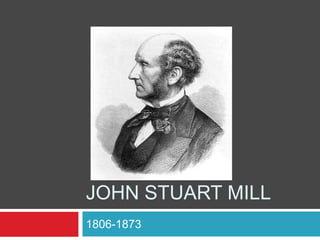
John Stuart Mill1806-1873
IntroductionDown with Tyranny!Fought against the tyranny of his father’s utilitarian educationThe father used Mill as a guinea pig for his theoriesForced him to have a nervous breakdownStunted his emotional developmentMill continued to fight against other types of tyranny throughout his life. Women’s rights, or lack-there-ofthe loss of individual freedoms in a democratic societyAlso reflects on his own inner struggle against a meaningless existence.
IntroductionAttacks the utilitarian’sinsistence on rationality:Among the “prime necessities of human well-being,” is attention to “the internal culture of the individual.” “The cultivation of the feelings became one of the cardinal points in [Mills]ethical and philosophical creed.”The importance of individual self-expression and the development of non-quantifiable human qualities are similarly emphasized. “Human nature is not a machine to be built after a model, and set to do exactly the work prescribed for it, but a tree, which requires to grow and develop itself on all sides, according to the tendency of the inward forces which make it a living thing,”
Subjection of WomenTheme: The subordination of women to men is a barbaric, outmoded practice.Mill’s argument is fairly straightforward, Focus on the radical nature of his statementsespecially in comparing marriage to slavery.
Subjection of WomenMill likens marriage to slavery:Similar view to the Romantic-era philosophers before himI.e: Mary WollstonecraftWomen are “compelled” into marriage:“alleged natural vocation,”Their culture feels it is a woman’s duty and they have internalized this belief to some extent.“all other doors” are closed against them. The “clue to the feelings of those men, who have a real antipathy to the equal freedom of women,” fear that if given the opportunity to support themselves, “all women of spirit and capacity should prefer doing almost anything else” than “degrading” themselves through marriage.

John Stuart Mill

  • 1.
  • 2.
    IntroductionDown with Tyranny!Foughtagainst the tyranny of his father’s utilitarian educationThe father used Mill as a guinea pig for his theoriesForced him to have a nervous breakdownStunted his emotional developmentMill continued to fight against other types of tyranny throughout his life. Women’s rights, or lack-there-ofthe loss of individual freedoms in a democratic societyAlso reflects on his own inner struggle against a meaningless existence.
  • 3.
    IntroductionAttacks the utilitarian’sinsistenceon rationality:Among the “prime necessities of human well-being,” is attention to “the internal culture of the individual.” “The cultivation of the feelings became one of the cardinal points in [Mills]ethical and philosophical creed.”The importance of individual self-expression and the development of non-quantifiable human qualities are similarly emphasized. “Human nature is not a machine to be built after a model, and set to do exactly the work prescribed for it, but a tree, which requires to grow and develop itself on all sides, according to the tendency of the inward forces which make it a living thing,”
  • 4.
    Subjection of WomenTheme:The subordination of women to men is a barbaric, outmoded practice.Mill’s argument is fairly straightforward, Focus on the radical nature of his statementsespecially in comparing marriage to slavery.
  • 5.
    Subjection of WomenMilllikens marriage to slavery:Similar view to the Romantic-era philosophers before himI.e: Mary WollstonecraftWomen are “compelled” into marriage:“alleged natural vocation,”Their culture feels it is a woman’s duty and they have internalized this belief to some extent.“all other doors” are closed against them. The “clue to the feelings of those men, who have a real antipathy to the equal freedom of women,” fear that if given the opportunity to support themselves, “all women of spirit and capacity should prefer doing almost anything else” than “degrading” themselves through marriage.