POLITICAL THOUGHT ON JUSTICE
PLATO
- Saumya Gupta
14120, VII
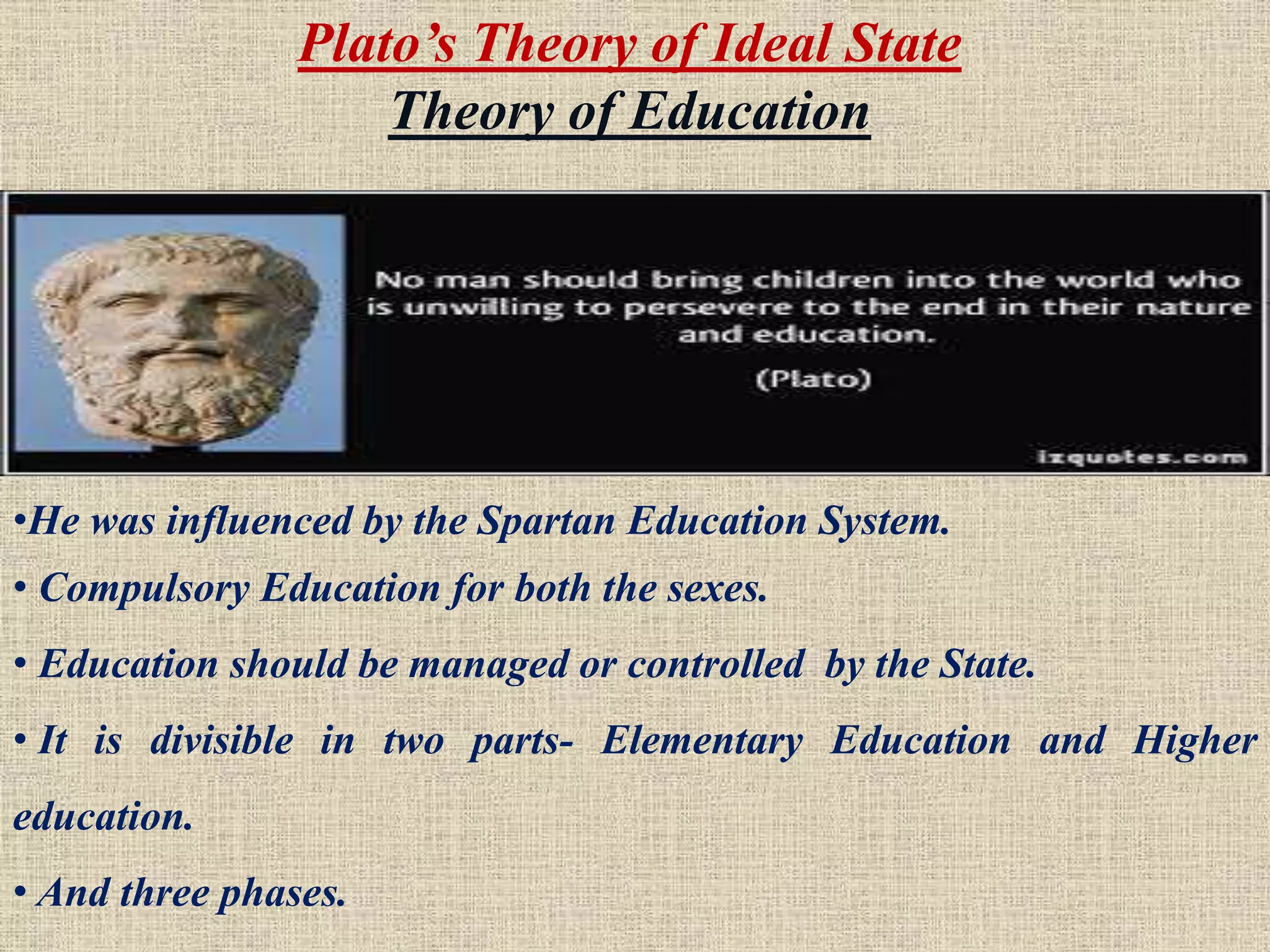
•He was influenced by the Spartan Education System.
• Compulsory Education for both the sexes.
• Education should be managed or controlled by the State.
• It is divisible in two parts- Elementary Education and Higher
education.
• And three phases.
Plato’s Theory of Ideal State
Theory of Education
3rd Phase
35-50 years
These people would be sent to abroad for better studies.
- Class of Gold
2nd Phase
21- 30 years, 30-35 years
Dialectics- The art of argument, Geography, Astronomy, other
branches or Maths and Literature continue.
1st Phase
0-7 years- Gymnastic & Music, 8-18 years- Mathematics is introduced
18-20- Compulsory military training
Test- Class of Iron
Test- Class of Silver
Theory of Communism
•Functional
Specializa-
tion
• Non-
interference
• Harmony
Theory of Justice
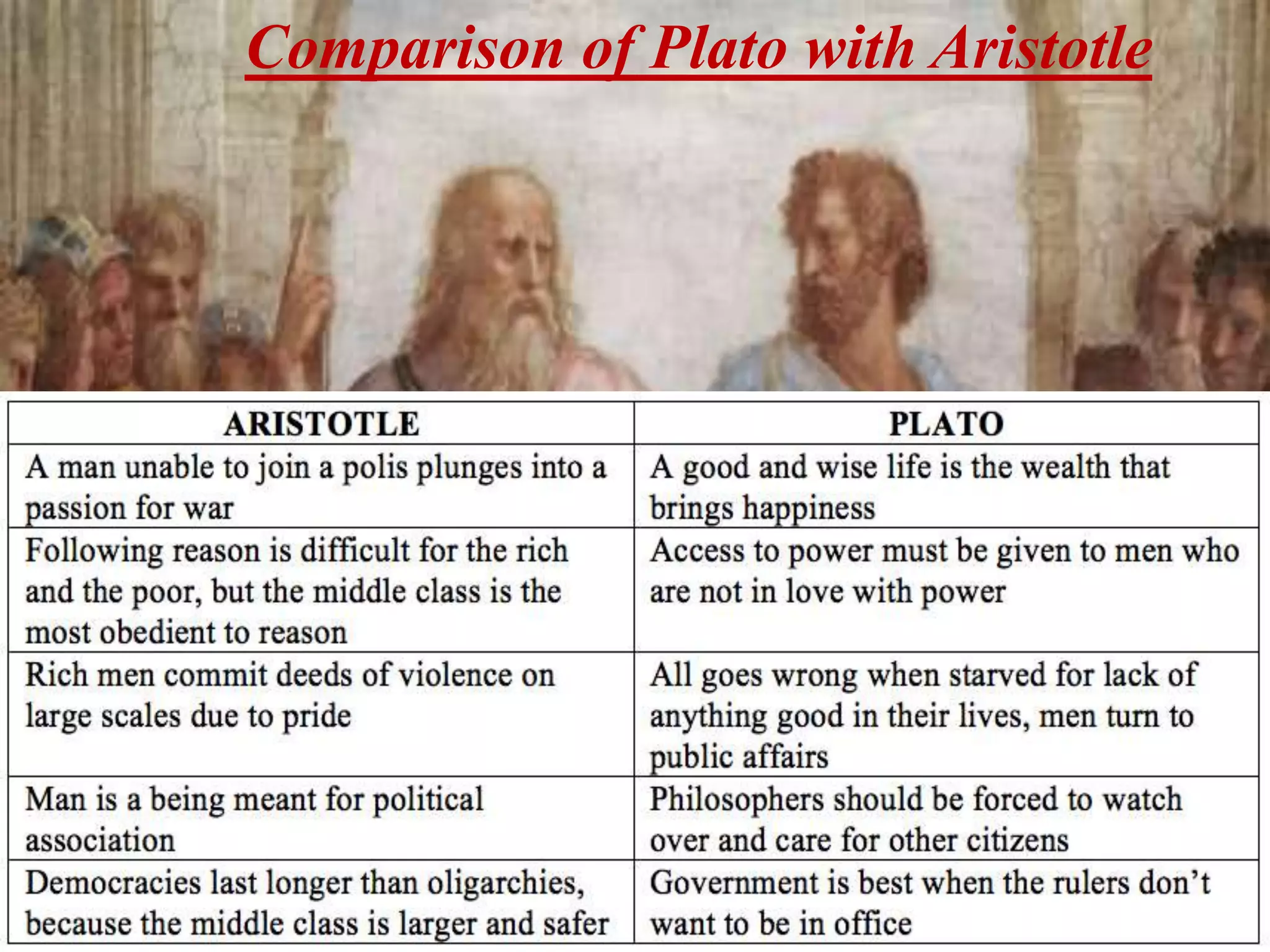
Comparison of Plato with Aristotle
Criticism of Theory of Justice
•Harmony and non- interference can’t exist together.
•How to differentiate between the importance of Harmony and
non- interference at particular times.
•Over dependent on Theory of Education.
•Over emphasizes on the three classes.
•Wasting of some aptitudes.
• Conflict can’t be only between classes , there can be conflict
within classes.
• No mechanism for ending the conflicts.
• There can be conflict within a man himself.
PLATO's political thought on Justice

PLATO's political thought on Justice

  • 1.
    POLITICAL THOUGHT ONJUSTICE PLATO - Saumya Gupta 14120, VII
  • 3.
    •He was influencedby the Spartan Education System. • Compulsory Education for both the sexes. • Education should be managed or controlled by the State. • It is divisible in two parts- Elementary Education and Higher education. • And three phases. Plato’s Theory of Ideal State Theory of Education
  • 4.
    3rd Phase 35-50 years Thesepeople would be sent to abroad for better studies. - Class of Gold 2nd Phase 21- 30 years, 30-35 years Dialectics- The art of argument, Geography, Astronomy, other branches or Maths and Literature continue. 1st Phase 0-7 years- Gymnastic & Music, 8-18 years- Mathematics is introduced 18-20- Compulsory military training Test- Class of Iron Test- Class of Silver
  • 6.
  • 7.
  • 8.
    Comparison of Platowith Aristotle Comparison of Plato with Aristotle
  • 9.
    Criticism of Theoryof Justice •Harmony and non- interference can’t exist together. •How to differentiate between the importance of Harmony and non- interference at particular times. •Over dependent on Theory of Education. •Over emphasizes on the three classes. •Wasting of some aptitudes. • Conflict can’t be only between classes , there can be conflict within classes. • No mechanism for ending the conflicts. • There can be conflict within a man himself.