Software
Development Life
Cycle
SDLC or
Water fall Model
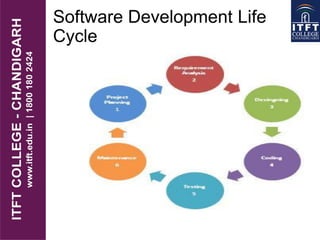
Software Development Life
Cycle
•SDLC stands for Software
Development Life Cycle.
•SDLC is the process consisting of a
series of planned activities to develop
the software products.
Software Development Life
Cycle
•There are following six
phases in every Software
development life cycle
model:
Software Development Life
Cycle
Requirement:
• Requirement gathering is
the first stage of any SDLC
model. This phase is
basically the brainstorming
phase and often consists of
sub-stages like Feasibility
Analysis to check how much
of the idea can be put into
action.
System Analysis:
• This is the second phase
of SDLC where the entire
system is defined in
detail. In fact, it this stage
wherein a detailed
blueprint of various
processes of the software
is developed. If needed
the system is divided into
smaller parts to make it
easier more manageable
for the developers,
designers, testers, project
managers and other
professionals who are
going to work on the
software in the latter
stages.
System Design:
• In this phase, the
physical system is
designed with the help
of the logical design
prepared by system
analysts. The analysts
and designers work
together and use
certain tools and
software to create the
overall system design,
including the probable
output.
Coding:
• As the name implies, in
this stage the software is
coded. A team of
programmers are
assigned by the company
to work on the software.
More often than not, the
work is sub-divided under
a sub-phase called Task
Allocation, where each
developer is assigned a
part of the work
depending on his or her
skill set(s). This helps
complete the coding
efficiently.
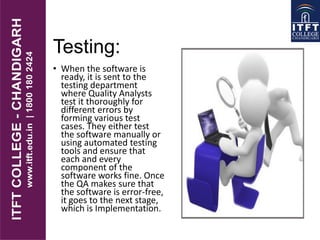
Testing:
• When the software is
ready, it is sent to the
testing department
where Quality Analysts
test it thoroughly for
different errors by
forming various test
cases. They either test
the software manually or
using automated testing
tools and ensure that
each and every
component of the
software works fine. Once
the QA makes sure that
the software is error-free,
it goes to the next stage,
which is Implementation.
Implementation:
• This is the final stage
of software
development life
cycle. In this stage, if
the software is run on
various systems by
users. If it runs
smoothly on these
systems without any
flaw, then it is
considered ready to
be launched.
Advantages Of Waterfall
Model
The waterfall model is the oldest and most widely
used model in the field of software development.
There are certain advantages of this model, which
makes it, one of the most widely used models as yet
:-
• Being a linear model, it is very simple to implement.
The amount of resources required to implement this
model are minimal.
• Documentation is produced at every stage of the
software’s development. This makes understanding
the product designing procedure, simpler.
• After every major stage of software coding, testing is
done to check the correct running of the code.
Disadvantages of Waterfall
Model
• Ironically, the biggest disadvantage is one of its greatest
advantages. You cannot go back a step; if the design phase
has gone wrong, things can get very complicated in the
implementation phase.
• Often, the client is not very clear of what he exactly wants
from the software. Any changes that he mentions in
between, may cause a lot of confusion.
• Small changes or errors that arise in the completed
software may cause a lot of problems.
• Until the final stage of the development cycle is complete,
a working model of the software does not lie in the hands
of the client. Thus, he is hardly in a position to inform the
developers, if what has been designed is exactly what he
had asked for.
•
To conclude
• Now that you know the basics of software
development life-cycle it will help you
develop software with perfection in the near
future. For more details, you can look up
various SDLC models and find the one that
will suit your software the most and put it
into practice. All the best!
THANK YOU

ITFT - Software development life cycle

  • 1.
  • 2.
    Software Development Life Cycle •SDLCstands for Software Development Life Cycle. •SDLC is the process consisting of a series of planned activities to develop the software products.
  • 3.
    Software Development Life Cycle •Thereare following six phases in every Software development life cycle model:
  • 4.
  • 5.
    Requirement: • Requirement gatheringis the first stage of any SDLC model. This phase is basically the brainstorming phase and often consists of sub-stages like Feasibility Analysis to check how much of the idea can be put into action.
  • 6.
    System Analysis: • Thisis the second phase of SDLC where the entire system is defined in detail. In fact, it this stage wherein a detailed blueprint of various processes of the software is developed. If needed the system is divided into smaller parts to make it easier more manageable for the developers, designers, testers, project managers and other professionals who are going to work on the software in the latter stages.
  • 7.
    System Design: • Inthis phase, the physical system is designed with the help of the logical design prepared by system analysts. The analysts and designers work together and use certain tools and software to create the overall system design, including the probable output.
  • 8.
    Coding: • As thename implies, in this stage the software is coded. A team of programmers are assigned by the company to work on the software. More often than not, the work is sub-divided under a sub-phase called Task Allocation, where each developer is assigned a part of the work depending on his or her skill set(s). This helps complete the coding efficiently.
  • 9.
    Testing: • When thesoftware is ready, it is sent to the testing department where Quality Analysts test it thoroughly for different errors by forming various test cases. They either test the software manually or using automated testing tools and ensure that each and every component of the software works fine. Once the QA makes sure that the software is error-free, it goes to the next stage, which is Implementation.
  • 10.
    Implementation: • This isthe final stage of software development life cycle. In this stage, if the software is run on various systems by users. If it runs smoothly on these systems without any flaw, then it is considered ready to be launched.
  • 11.
    Advantages Of Waterfall Model Thewaterfall model is the oldest and most widely used model in the field of software development. There are certain advantages of this model, which makes it, one of the most widely used models as yet :- • Being a linear model, it is very simple to implement. The amount of resources required to implement this model are minimal. • Documentation is produced at every stage of the software’s development. This makes understanding the product designing procedure, simpler. • After every major stage of software coding, testing is done to check the correct running of the code.
  • 12.
    Disadvantages of Waterfall Model •Ironically, the biggest disadvantage is one of its greatest advantages. You cannot go back a step; if the design phase has gone wrong, things can get very complicated in the implementation phase. • Often, the client is not very clear of what he exactly wants from the software. Any changes that he mentions in between, may cause a lot of confusion. • Small changes or errors that arise in the completed software may cause a lot of problems. • Until the final stage of the development cycle is complete, a working model of the software does not lie in the hands of the client. Thus, he is hardly in a position to inform the developers, if what has been designed is exactly what he had asked for. •
  • 13.
    To conclude • Nowthat you know the basics of software development life-cycle it will help you develop software with perfection in the near future. For more details, you can look up various SDLC models and find the one that will suit your software the most and put it into practice. All the best!
  • 14.