SDLC
a systematic and disciplined approach
to develope a software with low cost ,
superior quality and with no schedule
slippage
1. feasibility analysis
2.requirement analysis & specification
3. design
4. coding
5. testing
6.maintanence
FEASIBILITY ANALYSIS
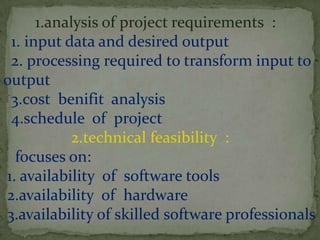
1.analysis of project requirements :
 1. input data and desired output
 2. processing required to transform input to
output
 3.cost benifit analysis
 4.schedule of project
            2.technical feasibility :
  focuses on:
1. availability of software tools
2.availability of hardware
3.availability of skilled software professionals
at the end of this phase a feasibility
report is generated.
1.an SRS ( software requirement specification)
document is generated.

 2. SRS is a formal document includes
performance, functional, software ,hardware and
network requirements of the project.

 3.it acts as an agreement between development
team and customer .
SRS requirement translated into a
raw and logical structure .
CODING
implementing the design specified in
design document to an executable
programming language code.
code is mapped against design document


  test plan involves:
1. test case generation
2. testing criteria
3. resourse allocation for testing
1. handling errors that may exist in
software even after testing phase


2. implementation of new requirements
after software is deployed at customer
location.
WATERFALL APPROACH
uses linear approach ,
 that means it provide no process
to go back to previous phase to
handle changes in the
requirement.
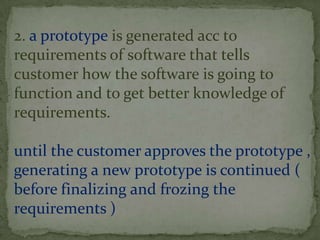
2. a prototype is generated acc to
requirements of software that tells
customer how the software is going to
function and to get better knowledge of
requirements.

until the customer approves the prototype ,
generating a new prototype is continued (
before finalizing and frozing the
requirements )
types of prototypes :
1. throwaway prototypes: those
    prototypes that are eventually
    discarded rather than becoming a
    part of finally delivered software.

2. evolutionary prototypes: are those
that evolve into the final system
through iterative incoorperation of
user(ustomer) feedback.
includes both iterative nature of
prototyping approach and linear
nature of waterfall approach.


example: evolution of windows
operating system from windows 3.1 to
windows 2000
here the concept is same as spiral
approach but also includes
  time of identifying
requirements,communication and
planning
there are number of functional units ,
each containing group of similar tasks.


 each functional unit is implemented
with an increment and final product is
acheived after all units are
implemented in the development
process.
limitation:


applicable only to large applications.
1. classes and objects

 classes: an abstract data type that
contains set of attributes and functions.
object: instance of class

all the objects share same copy of
member functions ,but maintain a
seperate copy of the member data.
2. inheritance :


 sharing of attributes and behaviours
among classes based upon hierarchial
relationship.
3. abstraction:

 focuses on essential inherent aspects of
an entity ignoring its implementation
detdails .
4. encapsulation:

also called information hiding .
it involves preventing access to non-
essential details .
5. polymorphism


 concept of using same operatiors or
functions in different ways depending
on what they are operating on.
ROLE OF OOAD IN SDLC
ooad is a tool used in sdlc to reduce
complexity of software

SDLC

  • 1.
  • 3.
    a systematic anddisciplined approach to develope a software with low cost , superior quality and with no schedule slippage
  • 5.
    1. feasibility analysis 2.requirementanalysis & specification 3. design 4. coding 5. testing 6.maintanence
  • 6.
  • 7.
    1.analysis of projectrequirements : 1. input data and desired output 2. processing required to transform input to output 3.cost benifit analysis 4.schedule of project 2.technical feasibility : focuses on: 1. availability of software tools 2.availability of hardware 3.availability of skilled software professionals
  • 8.
    at the endof this phase a feasibility report is generated.
  • 10.
    1.an SRS (software requirement specification) document is generated. 2. SRS is a formal document includes performance, functional, software ,hardware and network requirements of the project. 3.it acts as an agreement between development team and customer .
  • 12.
    SRS requirement translatedinto a raw and logical structure .
  • 13.
  • 14.
    implementing the designspecified in design document to an executable programming language code.
  • 16.
    code is mappedagainst design document test plan involves: 1. test case generation 2. testing criteria 3. resourse allocation for testing
  • 18.
    1. handling errorsthat may exist in software even after testing phase 2. implementation of new requirements after software is deployed at customer location.
  • 20.
  • 21.
    uses linear approach, that means it provide no process to go back to previous phase to handle changes in the requirement.
  • 23.
    2. a prototypeis generated acc to requirements of software that tells customer how the software is going to function and to get better knowledge of requirements. until the customer approves the prototype , generating a new prototype is continued ( before finalizing and frozing the requirements )
  • 24.
    types of prototypes: 1. throwaway prototypes: those prototypes that are eventually discarded rather than becoming a part of finally delivered software. 2. evolutionary prototypes: are those that evolve into the final system through iterative incoorperation of user(ustomer) feedback.
  • 26.
    includes both iterativenature of prototyping approach and linear nature of waterfall approach. example: evolution of windows operating system from windows 3.1 to windows 2000
  • 28.
    here the conceptis same as spiral approach but also includes time of identifying requirements,communication and planning
  • 30.
    there are numberof functional units , each containing group of similar tasks. each functional unit is implemented with an increment and final product is acheived after all units are implemented in the development process.
  • 31.
    limitation: applicable only tolarge applications.
  • 33.
    1. classes andobjects classes: an abstract data type that contains set of attributes and functions. object: instance of class all the objects share same copy of member functions ,but maintain a seperate copy of the member data.
  • 34.
    2. inheritance : sharing of attributes and behaviours among classes based upon hierarchial relationship.
  • 35.
    3. abstraction: focuseson essential inherent aspects of an entity ignoring its implementation detdails .
  • 36.
    4. encapsulation: also calledinformation hiding . it involves preventing access to non- essential details .
  • 37.
    5. polymorphism conceptof using same operatiors or functions in different ways depending on what they are operating on.
  • 38.
    ROLE OF OOADIN SDLC
  • 39.
    ooad is atool used in sdlc to reduce complexity of software