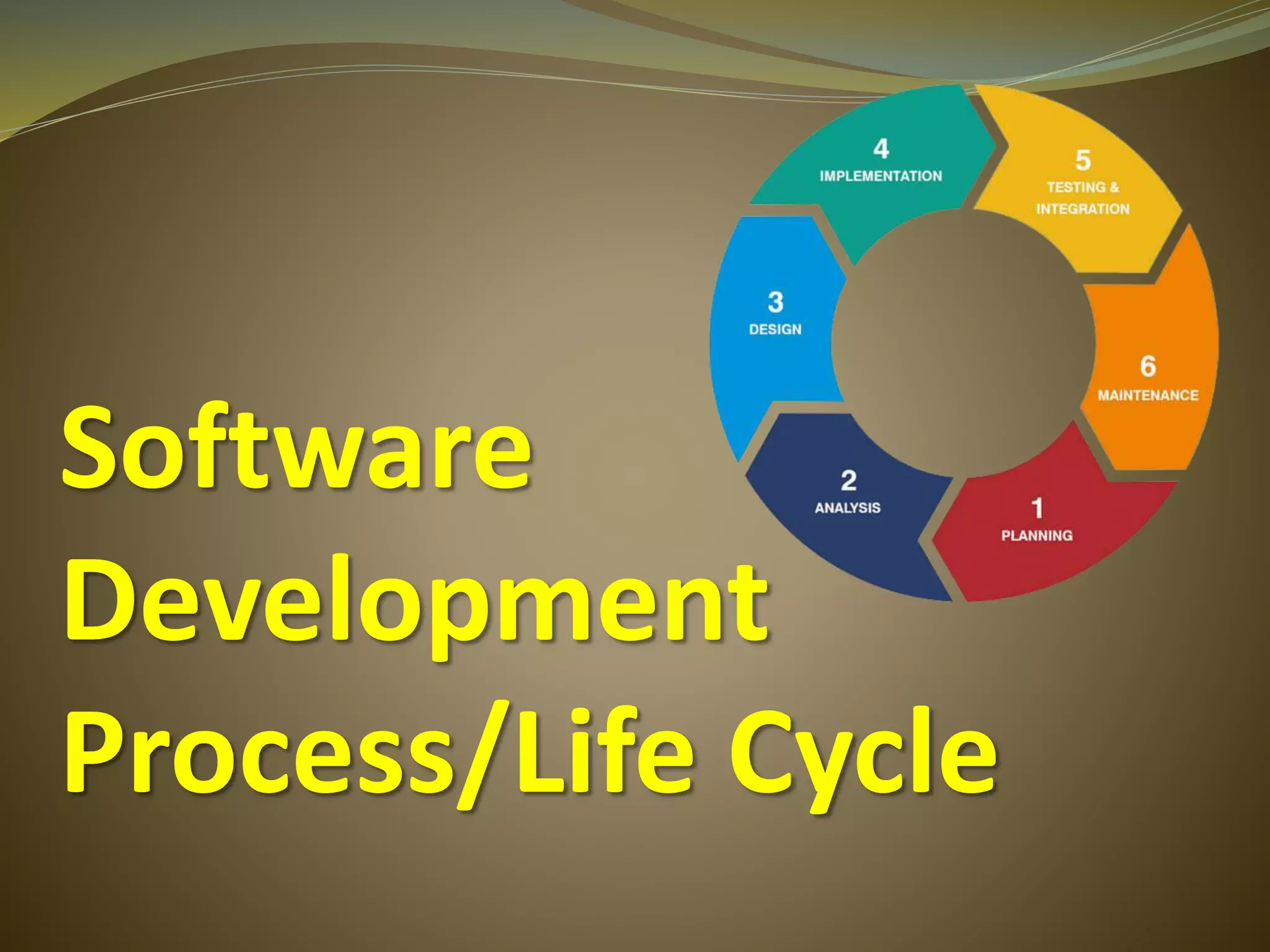
Software
Development
Process/Life Cycle
BY: Adeel Rasheed
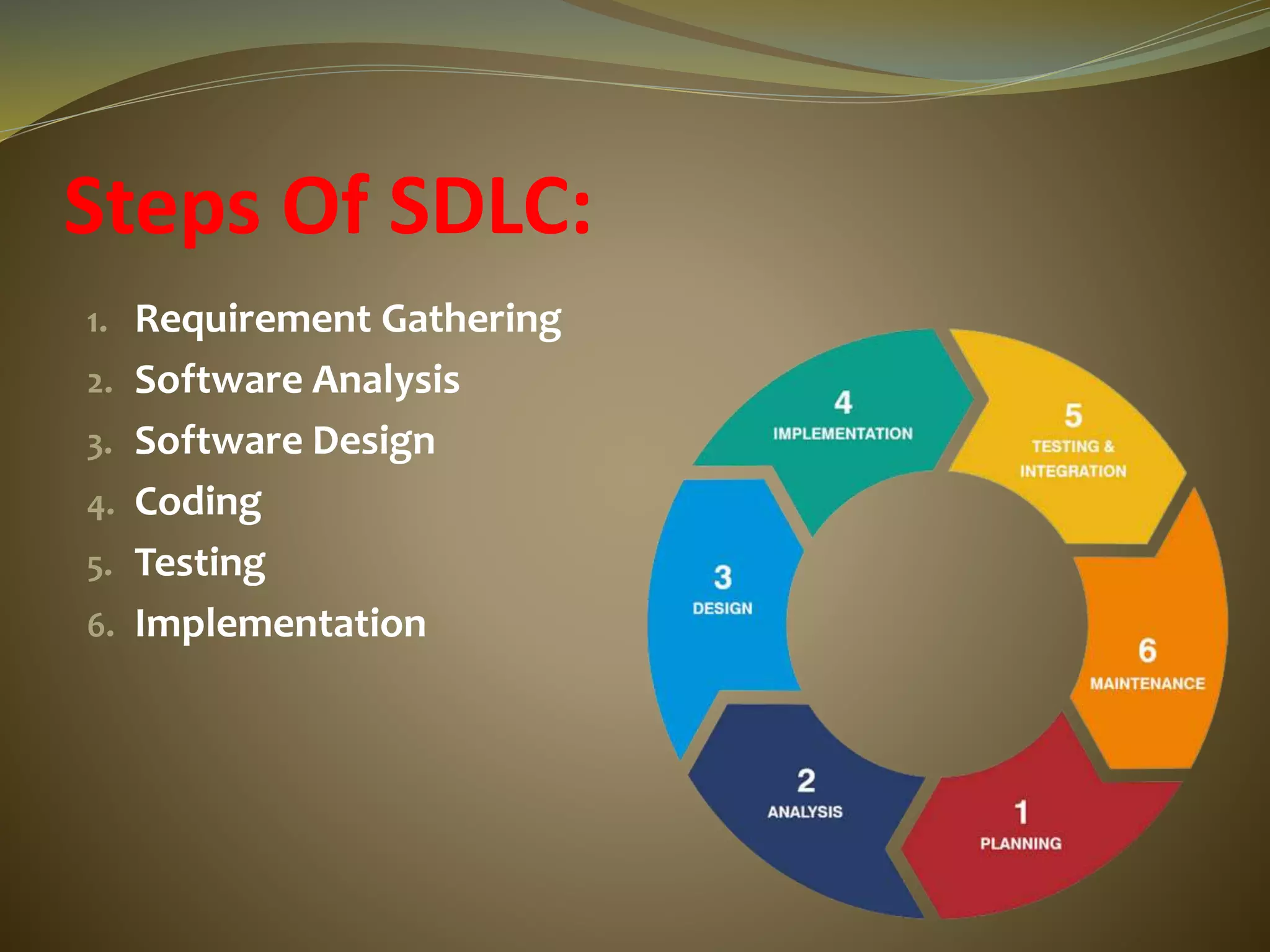
Steps Of SDLC:
1. Requirement Gathering
2. Software Analysis
3. Software Design
4. Coding
5. Testing
6. Implementation
Requirements Gathering:
 Requirement gathering and analysis is the first stage and
major stage of any SDLC model. This phase is basically the
brainstorming phase because it has the many sub stages
for like Feasibility Analysis Stages to check how much idea
can put into action for development.
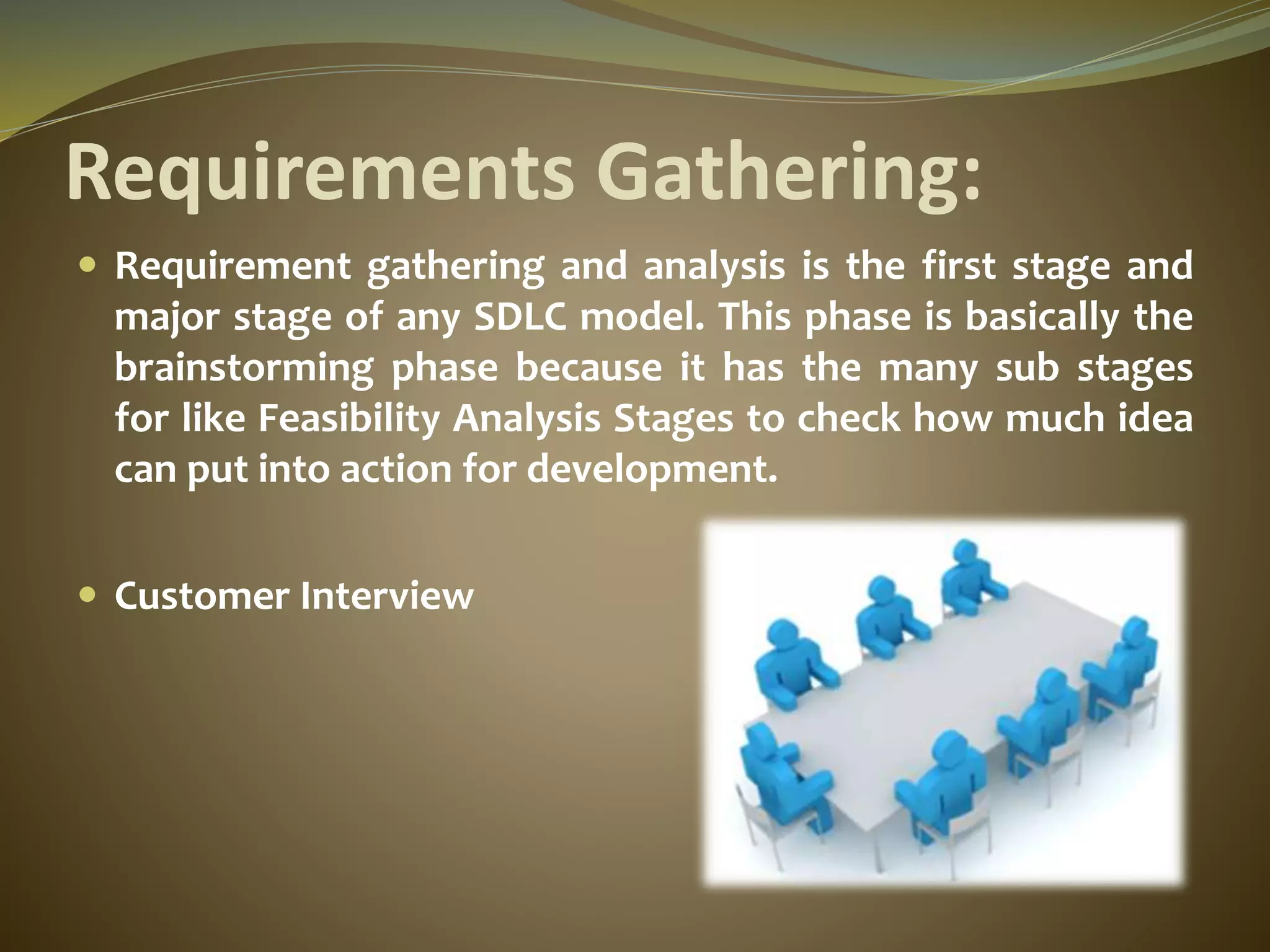
 Customer Interview
Basic Requirements:
 Feasibility
 Scalability
 Hardware
 Input
 Out
 Interface
 Fast Speed
 User Friendly
Analysis:
 At this stage the system is divided into smaller parts to
make it easier more manageable for the developers,
designers, testers, project managers and other
professionals who are going to work on the software in the
latter stages.
Analysis Steps:
Objective
Criteria
Review
Approval
Design:
 In this phase the design of the system is designed. The
Design is developed by The analysts and designers. The
System analyst design the logical design for the designers
and then designer get the basic idea of designing the
software design of Front end and back end both.
 Understandable Interface.
 User Friendly/Easy to Use.
 Fast Speed.
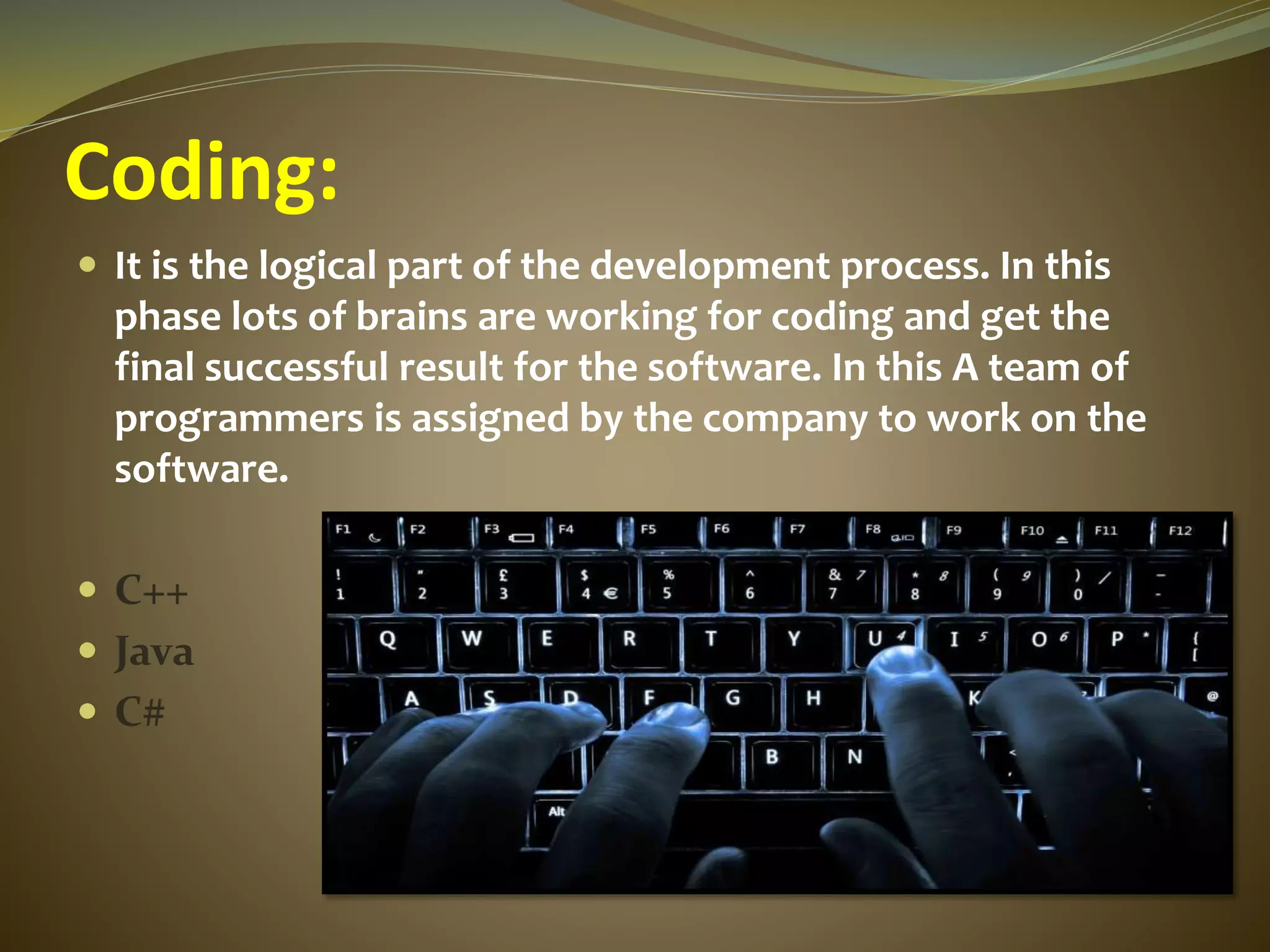
Coding:
 It is the logical part of the development process. In this
phase lots of brains are working for coding and get the
final successful result for the software. In this A team of
programmers is assigned by the company to work on the
software.
 C++
 Java
 C#
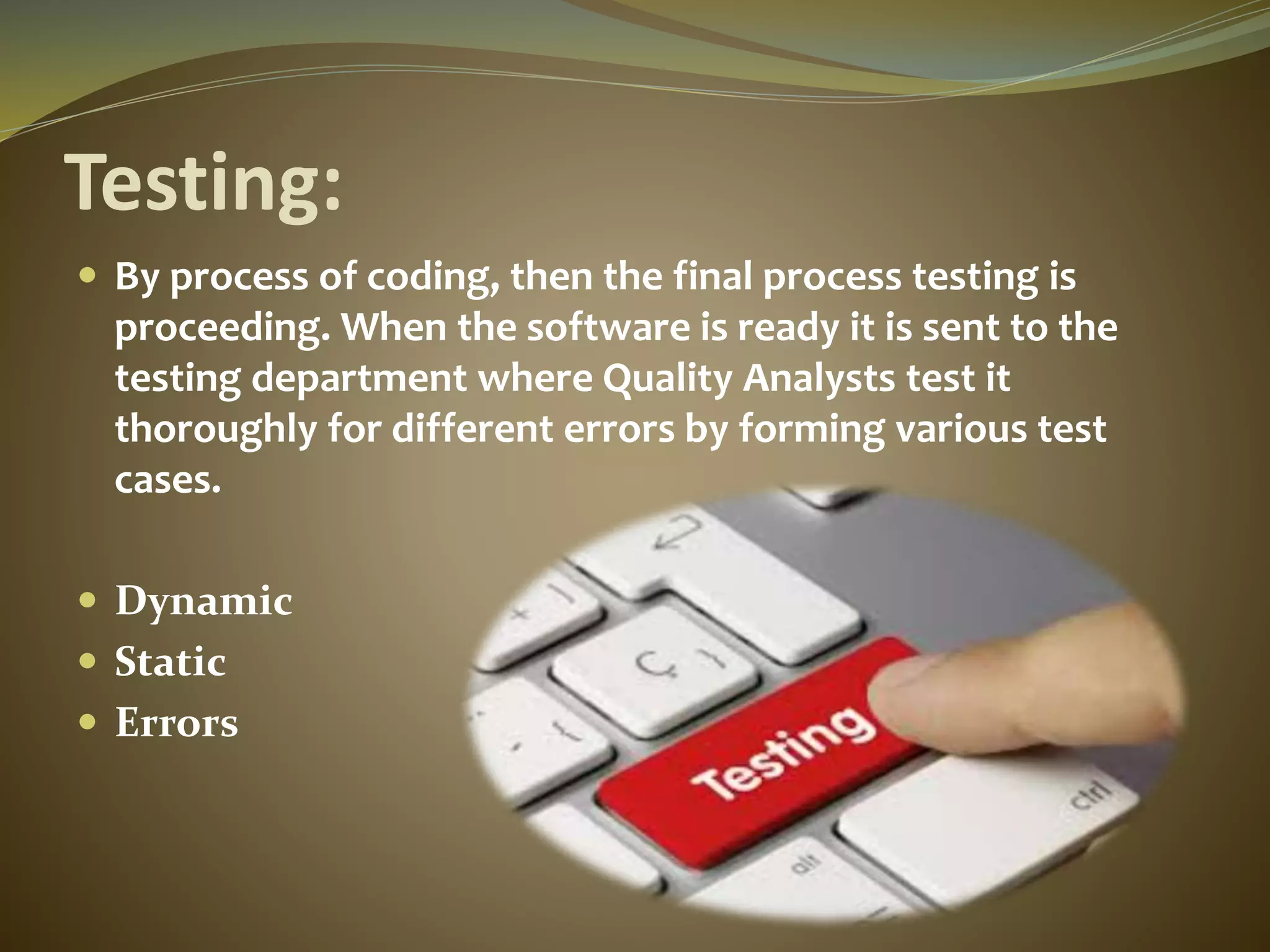
Testing:
 By process of coding, then the final process testing is
proceeding. When the software is ready it is sent to the
testing department where Quality Analysts test it
thoroughly for different errors by forming various test
cases.
 Dynamic
 Static
 Errors
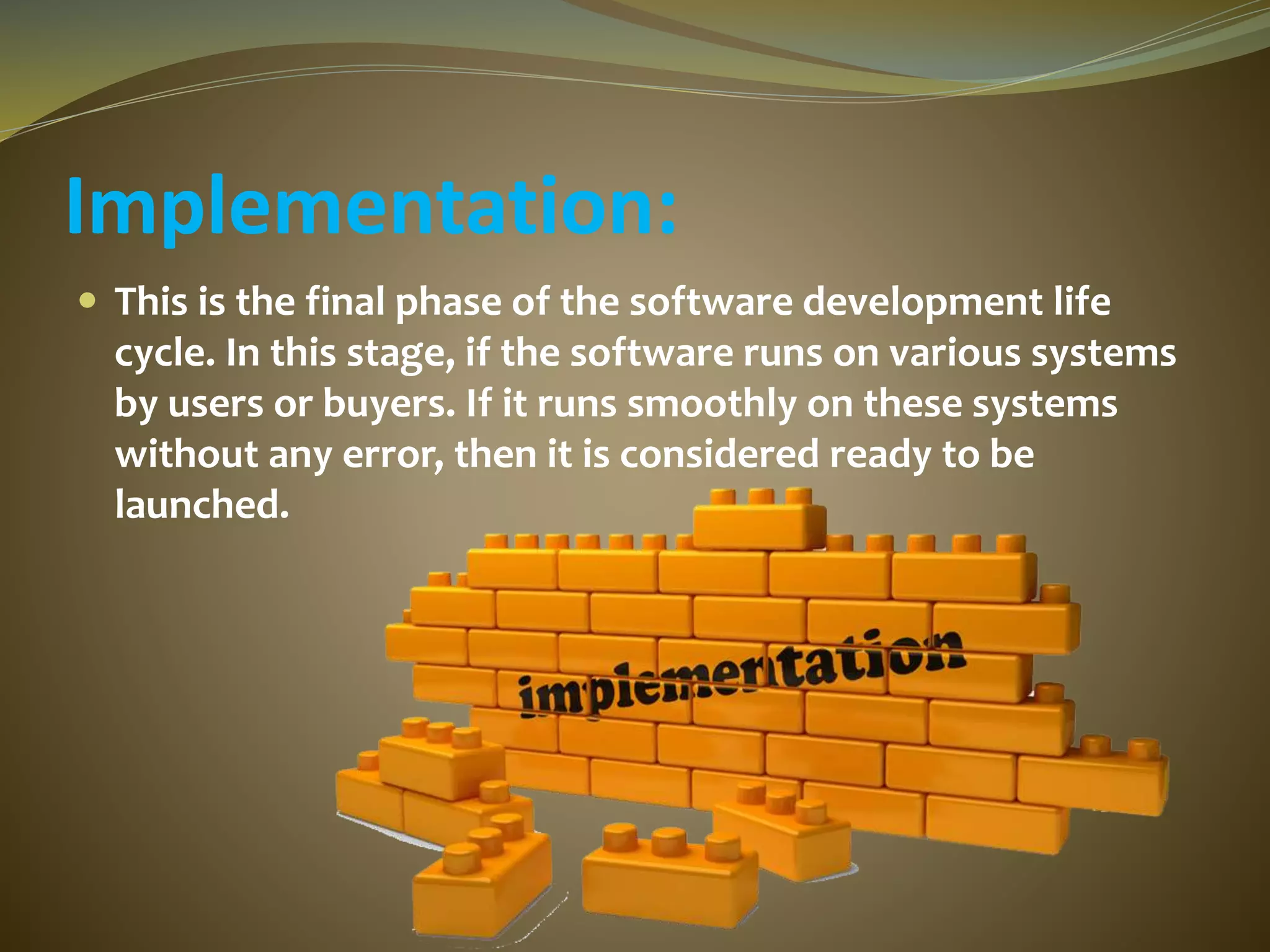
Implementation:
 This is the final phase of the software development life
cycle. In this stage, if the software runs on various systems
by users or buyers. If it runs smoothly on these systems
without any error, then it is considered ready to be
launched.
Advantages:
Increased development speed
Increased product quality
Improved tracking & control
Improved client relations
Decreased project risk
Decreased project management overhead
Example:
 Design Calculator For Customer.
Requirements Gathering.
Analysis.
Design.
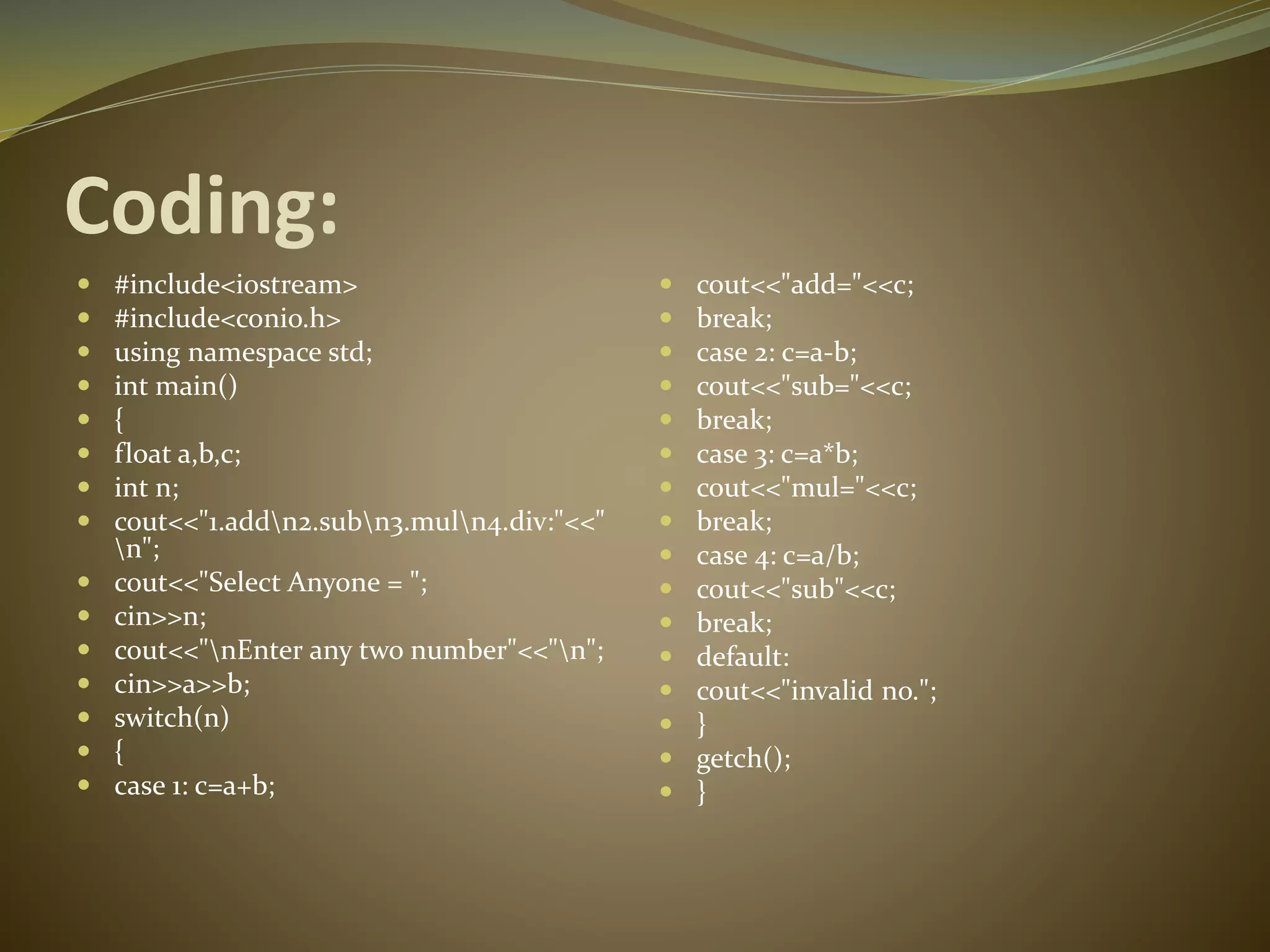
Coding:
 #include<iostream>
 #include<conio.h>
 using namespace std;
 int main()
 {
 float a,b,c;
 int n;
 cout<<"1.addn2.subn3.muln4.div:"<<"
n";
 cout<<"Select Anyone = ";
 cin>>n;
 cout<<"nEnter any two number"<<"n";
 cin>>a>>b;
 switch(n)
 {
 case 1: c=a+b;
 cout<<"add="<<c;
 break;
 case 2: c=a-b;
 cout<<"sub="<<c;
 break;
 case 3: c=a*b;
 cout<<"mul="<<c;
 break;
 case 4: c=a/b;
 cout<<"sub"<<c;
 break;
 default:
 cout<<"invalid no.";
 }
 getch();
 }
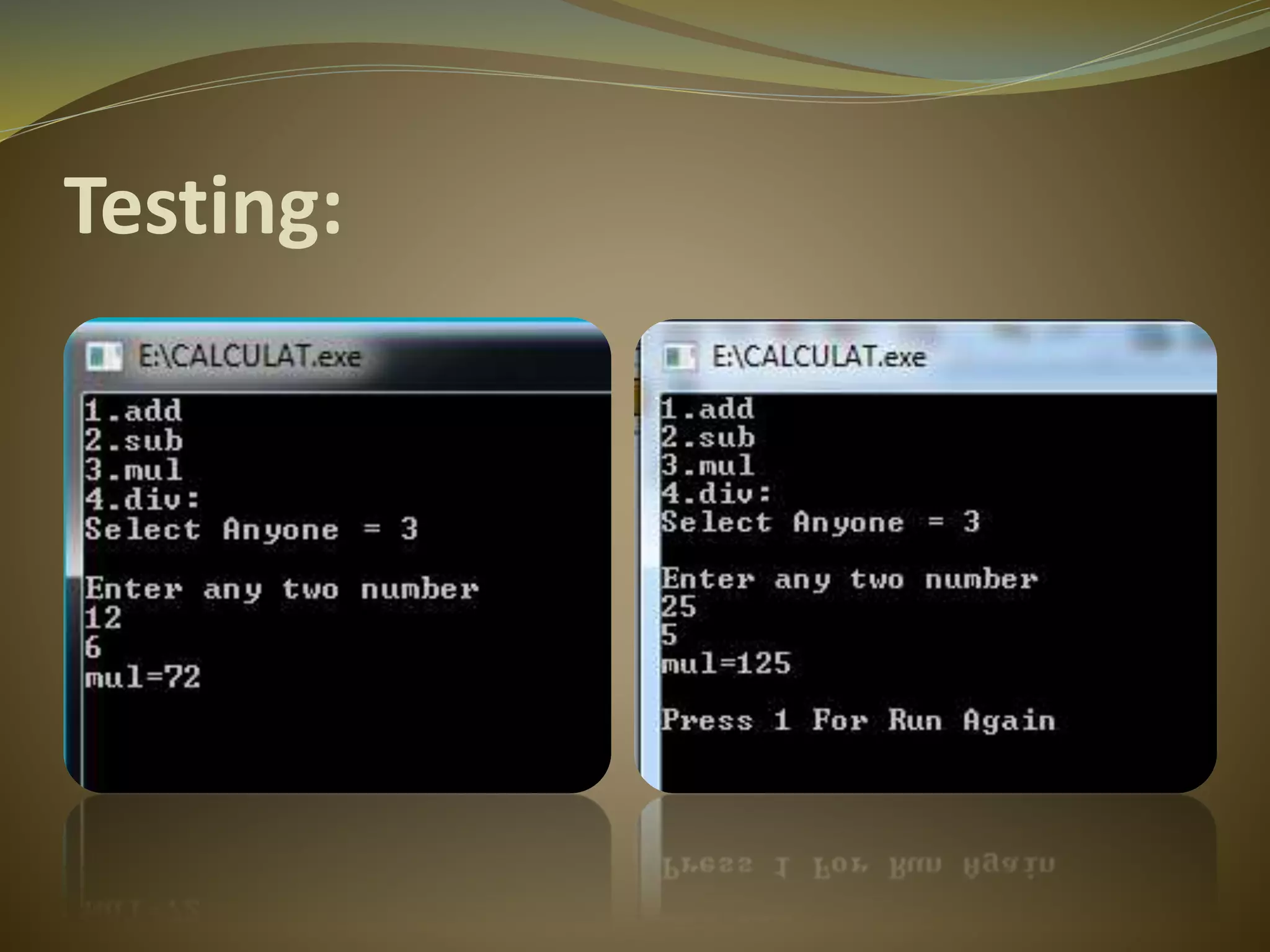
Testing:
Software Development Life Cycle-SDLC

Software Development Life Cycle-SDLC

  • 1.
  • 2.
  • 3.
    Steps Of SDLC: 1.Requirement Gathering 2. Software Analysis 3. Software Design 4. Coding 5. Testing 6. Implementation
  • 4.
    Requirements Gathering:  Requirementgathering and analysis is the first stage and major stage of any SDLC model. This phase is basically the brainstorming phase because it has the many sub stages for like Feasibility Analysis Stages to check how much idea can put into action for development.  Customer Interview
  • 5.
    Basic Requirements:  Feasibility Scalability  Hardware  Input  Out  Interface  Fast Speed  User Friendly
  • 6.
    Analysis:  At thisstage the system is divided into smaller parts to make it easier more manageable for the developers, designers, testers, project managers and other professionals who are going to work on the software in the latter stages.
  • 7.
  • 8.
    Design:  In thisphase the design of the system is designed. The Design is developed by The analysts and designers. The System analyst design the logical design for the designers and then designer get the basic idea of designing the software design of Front end and back end both.  Understandable Interface.  User Friendly/Easy to Use.  Fast Speed.
  • 11.
    Coding:  It isthe logical part of the development process. In this phase lots of brains are working for coding and get the final successful result for the software. In this A team of programmers is assigned by the company to work on the software.  C++  Java  C#
  • 12.
    Testing:  By processof coding, then the final process testing is proceeding. When the software is ready it is sent to the testing department where Quality Analysts test it thoroughly for different errors by forming various test cases.  Dynamic  Static  Errors
  • 13.
    Implementation:  This isthe final phase of the software development life cycle. In this stage, if the software runs on various systems by users or buyers. If it runs smoothly on these systems without any error, then it is considered ready to be launched.
  • 14.
    Advantages: Increased development speed Increasedproduct quality Improved tracking & control Improved client relations Decreased project risk Decreased project management overhead
  • 15.
    Example:  Design CalculatorFor Customer. Requirements Gathering. Analysis. Design.
  • 16.
    Coding:  #include<iostream>  #include<conio.h> using namespace std;  int main()  {  float a,b,c;  int n;  cout<<"1.addn2.subn3.muln4.div:"<<" n";  cout<<"Select Anyone = ";  cin>>n;  cout<<"nEnter any two number"<<"n";  cin>>a>>b;  switch(n)  {  case 1: c=a+b;  cout<<"add="<<c;  break;  case 2: c=a-b;  cout<<"sub="<<c;  break;  case 3: c=a*b;  cout<<"mul="<<c;  break;  case 4: c=a/b;  cout<<"sub"<<c;  break;  default:  cout<<"invalid no.";  }  getch();  }
  • 17.