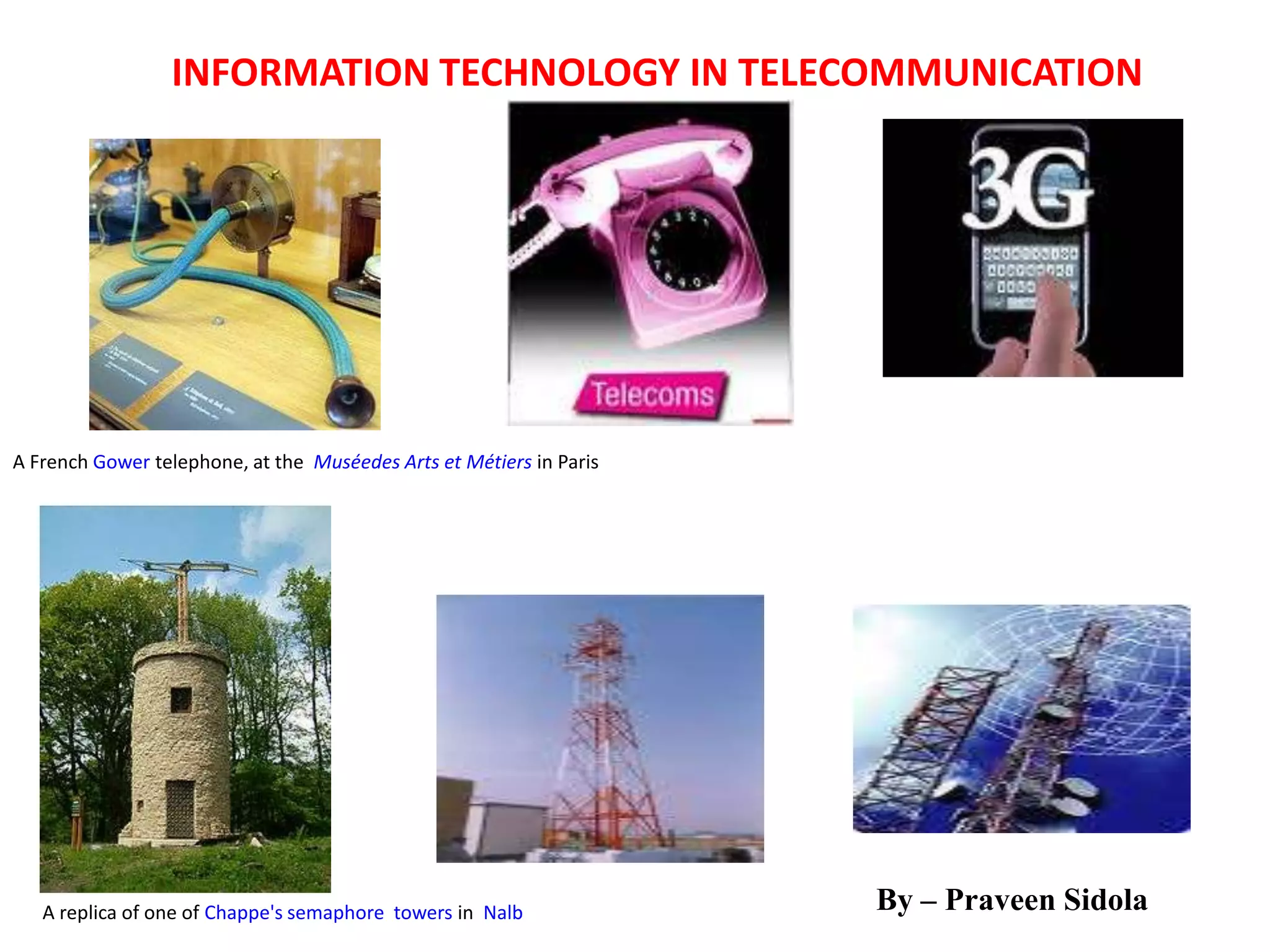

INFORMATION TECHNOLOGY IN TELECOMMUNICATION


A French Gower telephone, at the Muséedes Arts et Métiers in Paris


   A replica of one of Chappe's semaphore towers in Nalb             By – Praveen Sidola
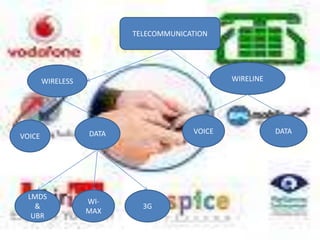
TELECOMMUNICATION


        WIRELESS                               WIRELINE


                   DATA                VOICE              DATA
VOICE


  LMDS
                   WI-
    &                       3G
                   MAX
   UBR
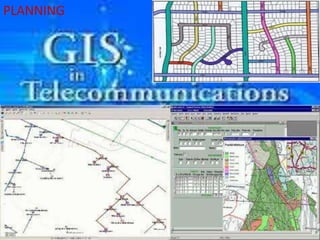
PLANNING
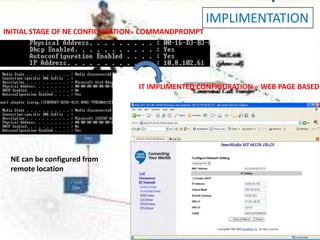
IMPLIMENTATION
INITIAL STAGE OF NE CONFIGURATION - COMMANDPROMPT


                                 IT IMPLIMENTED CONFIGURATION – WEB PAGE BASED


 NE can be configured from
 remote location
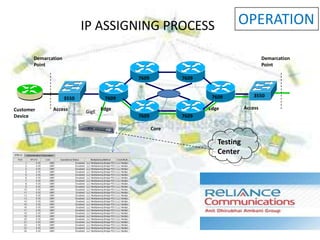
IP ASSIGNING PROCESS                         OPERATION

       Demarcation                                                                    Demarcation
       Point                                                                          Point

                                           7609          7609


                                                                 7609            3550
                     3550           7609

Customer      Access               Edge                         Edge         Access
                            GigE
Device                                     7609          7609

                                                  Core

                                                                   Testing
                                                                   Center
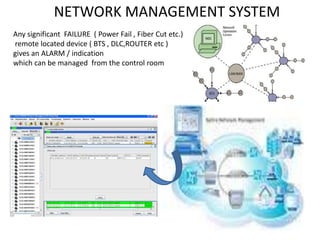
NETWORK MANAGEMENT SYSTEM
Any significant FAILURE ( Power Fail , Fiber Cut etc.)
remote located device ( BTS , DLC,ROUTER etc )
gives an ALARM / indication
which can be managed from the control room
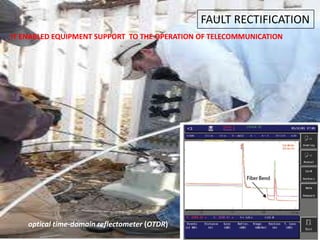
FAULT RECTIFICATION
IT ENABLED EQUIPMENT SUPPORT TO THE OPERATION OF TELECOMMUNICATION


    optical time-domain reflectometer (OTDR)
UMTS
UMTS (Universal Mobile Telecommunications Service) is a third-generation
(3G) broadband, packet-based transmission of text, digitized voice, video, and
multimedia data.

UMTS is based on the Global System for Mobile (GSM) communication standard

Once UMTS is fully available, computer and phone users can be constantly
attached to the Internet wherever they are.

 Users      will      have      access      through   a   combination      of
terrestrial wireless and satellite transmissions.

One of the main benefits of UMTS is its speed.
UMTS Architecture
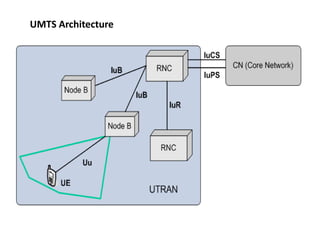
• A UMTS network consist of three interacting domains; Core Network
   (CN), UMTS Terrestrial Radio Access Network (UTRAN) and User
   Equipment (UE).


Core network:

• The main function of the core network is to provide switching, routing
   and transit for user traffic.

• Core network also contains the databases and network management
   functions.

• The basic Core Network architecture for UMTS is based on GSM network
   with GPRS.
UMTS Architecture
UTRAN:

•   (UMTS Terrestrial Radio Access Network), It provides the air interface access
    between the core network and the User Equipment.

•   The UTRAN contains the base stations, which are called Node Bs, and Radio
    Network Controllers (RNC).

The functions of Node-B:

•   Modulation / Demodulation

•   Error Handing

The functions of RNC:

•    Radio Resource Control

•    Admission Control

•    Channel Allocation
User Equipment:

•   This includes mobile phones and computers which are connected to the internet.


    UMTS went live as a network for the first time in Japan in 2001.

    Austria had its own network two years later.

    A handful of other European countries joined the UMTS bandwagon in the next
    two years, with South Africa and a few other African countries soon following
    suit.

    The U.S. has employed UMTS networks in several large cities, and the number is
    steadily growing.
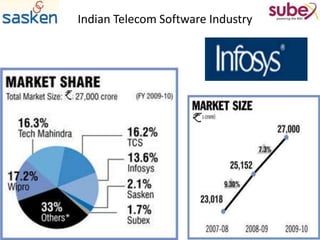
Indian Telecom Software Industry

• Wipro, which posted a turnover of Rs 4,631 crore,
  growing at 12% from last year and garnering a
  market share of around 17.2%. A part of its growth
  is attributed to the five-year contract that it has
  won from Atheeb Telecom.
• Tech Mahindra came second, posting a 3% growth.
  Its revenue stood at Rs 4,400 crore. The company
  has bagged major deals to provide customer care
  services to a service provider in India, which fired
  up its revenue for this year.
Indian Telecom Software Industry
• TCS, the third player in the rankings, posted a
  growth of 3.1%, posting a revenue of Rs 4,365
  crore. The vendor was awarded major deals
  from government's SWAN (state wide area
  network) project last year, a project that
  attributed much to its success.
• The need for software services within the
  telecom sector has been steadily increasing over
  the years, especially with the demand for
  telecommunication services.
Indian Telecom Software Industry
• Spending in the mobile service segment will increase
  each year as CSPs (Communication service
  providers)prepare to support mobile data growth and
  content based services. This is being driven by the
  availability of smartphones, the completion of 3G
  RAN upgrades and a rapid growth of subscribers
  signing long term contracts for data services.
• The main factors for the expected growth of the
  network management services, are the expected
  growth in mobile data and broadband services,
  emergence of new mobile technologies, continuing
  fierce competition and network transformations.
Indian Telecom Software Industry
Telecom            IT


          Thanks

IT & telecommunication

  • 1.
    INFORMATION TECHNOLOGY INTELECOMMUNICATION A French Gower telephone, at the Muséedes Arts et Métiers in Paris A replica of one of Chappe's semaphore towers in Nalb By – Praveen Sidola
  • 3.
    TELECOMMUNICATION WIRELESS WIRELINE DATA VOICE DATA VOICE LMDS WI- & 3G MAX UBR
  • 4.
  • 5.
    IMPLIMENTATION INITIAL STAGE OFNE CONFIGURATION - COMMANDPROMPT IT IMPLIMENTED CONFIGURATION – WEB PAGE BASED NE can be configured from remote location
  • 6.
    IP ASSIGNING PROCESS OPERATION Demarcation Demarcation Point Point 7609 7609 7609 3550 3550 7609 Customer Access Edge Edge Access GigE Device 7609 7609 Core Testing Center
  • 7.
    NETWORK MANAGEMENT SYSTEM Anysignificant FAILURE ( Power Fail , Fiber Cut etc.) remote located device ( BTS , DLC,ROUTER etc ) gives an ALARM / indication which can be managed from the control room
  • 8.
    FAULT RECTIFICATION IT ENABLEDEQUIPMENT SUPPORT TO THE OPERATION OF TELECOMMUNICATION optical time-domain reflectometer (OTDR)
  • 9.
    UMTS UMTS (Universal MobileTelecommunications Service) is a third-generation (3G) broadband, packet-based transmission of text, digitized voice, video, and multimedia data. UMTS is based on the Global System for Mobile (GSM) communication standard Once UMTS is fully available, computer and phone users can be constantly attached to the Internet wherever they are. Users will have access through a combination of terrestrial wireless and satellite transmissions. One of the main benefits of UMTS is its speed.
  • 10.
    UMTS Architecture • AUMTS network consist of three interacting domains; Core Network (CN), UMTS Terrestrial Radio Access Network (UTRAN) and User Equipment (UE). Core network: • The main function of the core network is to provide switching, routing and transit for user traffic. • Core network also contains the databases and network management functions. • The basic Core Network architecture for UMTS is based on GSM network with GPRS.
  • 11.
  • 12.
    UTRAN: • (UMTS Terrestrial Radio Access Network), It provides the air interface access between the core network and the User Equipment. • The UTRAN contains the base stations, which are called Node Bs, and Radio Network Controllers (RNC). The functions of Node-B: • Modulation / Demodulation • Error Handing The functions of RNC: • Radio Resource Control • Admission Control • Channel Allocation
  • 13.
    User Equipment: • This includes mobile phones and computers which are connected to the internet. UMTS went live as a network for the first time in Japan in 2001. Austria had its own network two years later. A handful of other European countries joined the UMTS bandwagon in the next two years, with South Africa and a few other African countries soon following suit. The U.S. has employed UMTS networks in several large cities, and the number is steadily growing.
  • 14.
    Indian Telecom SoftwareIndustry • Wipro, which posted a turnover of Rs 4,631 crore, growing at 12% from last year and garnering a market share of around 17.2%. A part of its growth is attributed to the five-year contract that it has won from Atheeb Telecom. • Tech Mahindra came second, posting a 3% growth. Its revenue stood at Rs 4,400 crore. The company has bagged major deals to provide customer care services to a service provider in India, which fired up its revenue for this year.
  • 15.
    Indian Telecom SoftwareIndustry • TCS, the third player in the rankings, posted a growth of 3.1%, posting a revenue of Rs 4,365 crore. The vendor was awarded major deals from government's SWAN (state wide area network) project last year, a project that attributed much to its success. • The need for software services within the telecom sector has been steadily increasing over the years, especially with the demand for telecommunication services.
  • 16.
    Indian Telecom SoftwareIndustry • Spending in the mobile service segment will increase each year as CSPs (Communication service providers)prepare to support mobile data growth and content based services. This is being driven by the availability of smartphones, the completion of 3G RAN upgrades and a rapid growth of subscribers signing long term contracts for data services. • The main factors for the expected growth of the network management services, are the expected growth in mobile data and broadband services, emergence of new mobile technologies, continuing fierce competition and network transformations.
  • 17.
  • 18.
    Telecom IT Thanks