
INTRODUCTION TO
CONTROL CHARTS
By,
S.Kavya Ravali
WHAT ARE CONTROL CHARTS?
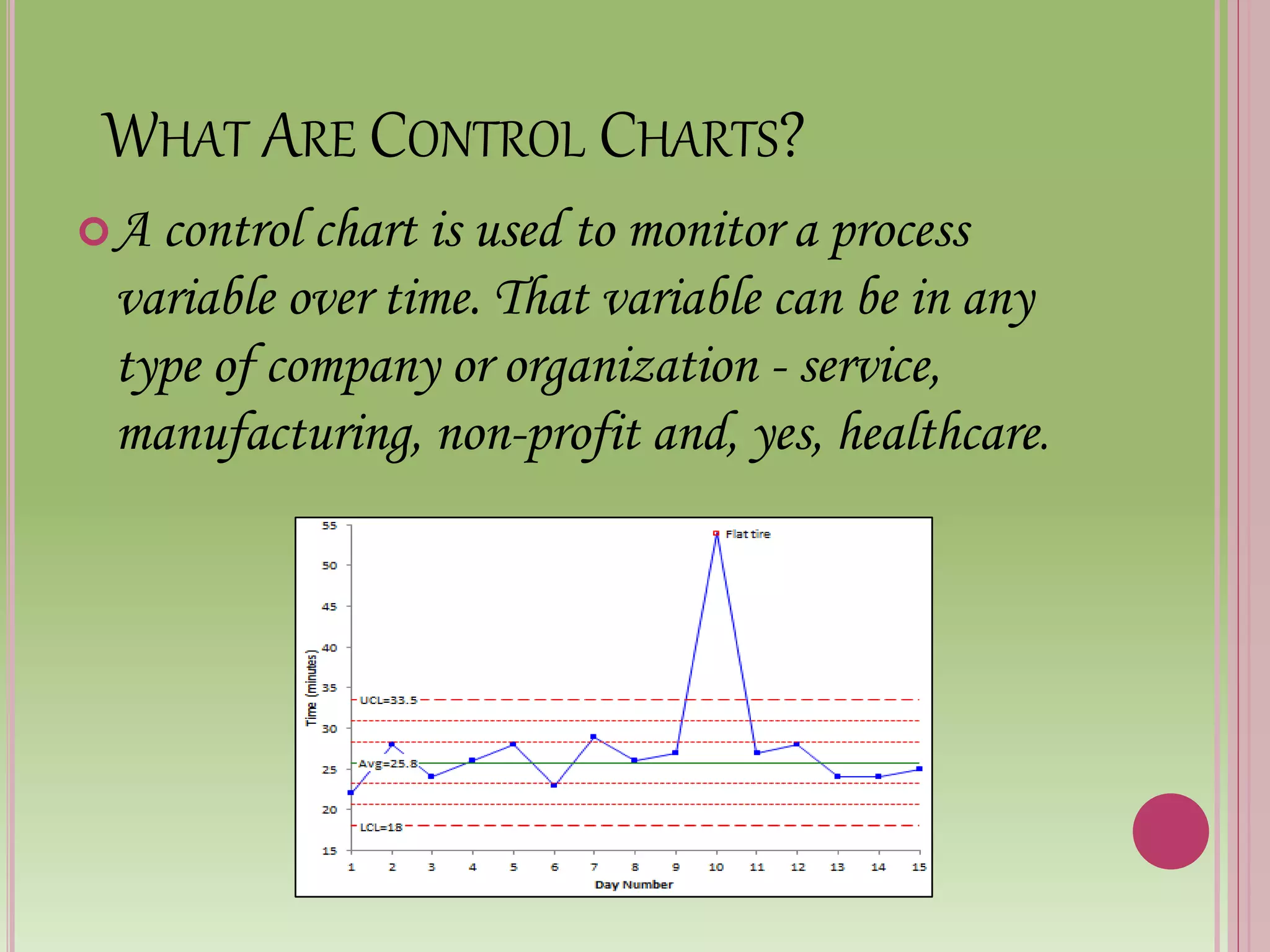
A control chart is used to monitor a process
variable over time. That variable can be in any
type of company or organization - service,
manufacturing, non-profit and, yes, healthcare.
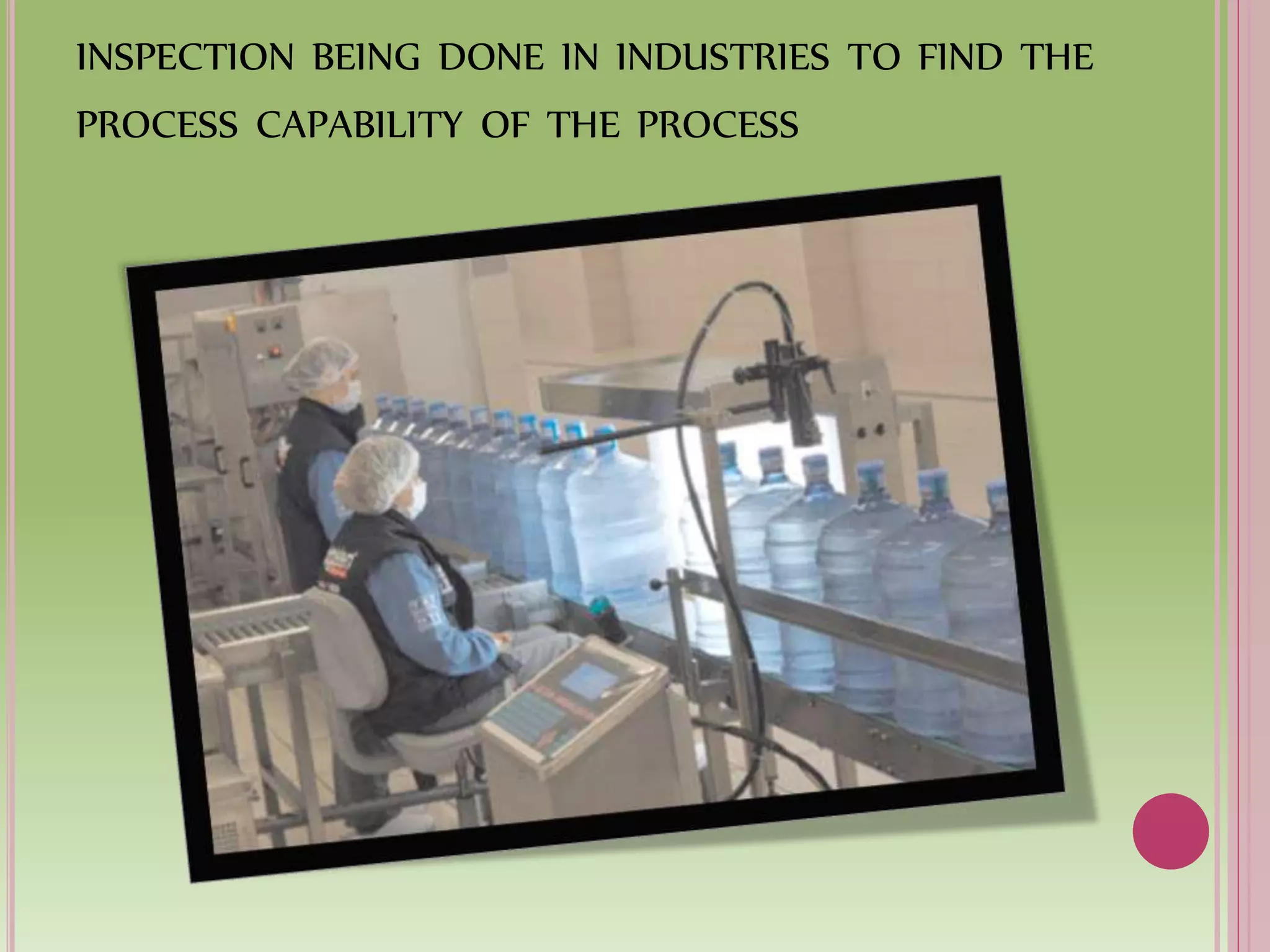
INSPECTION BEING DONE IN INDUSTRIES TO FIND THE
PROCESS CAPABILITY OF THE PROCESS
WHAT DO CONTROL CHARTS TELL US???
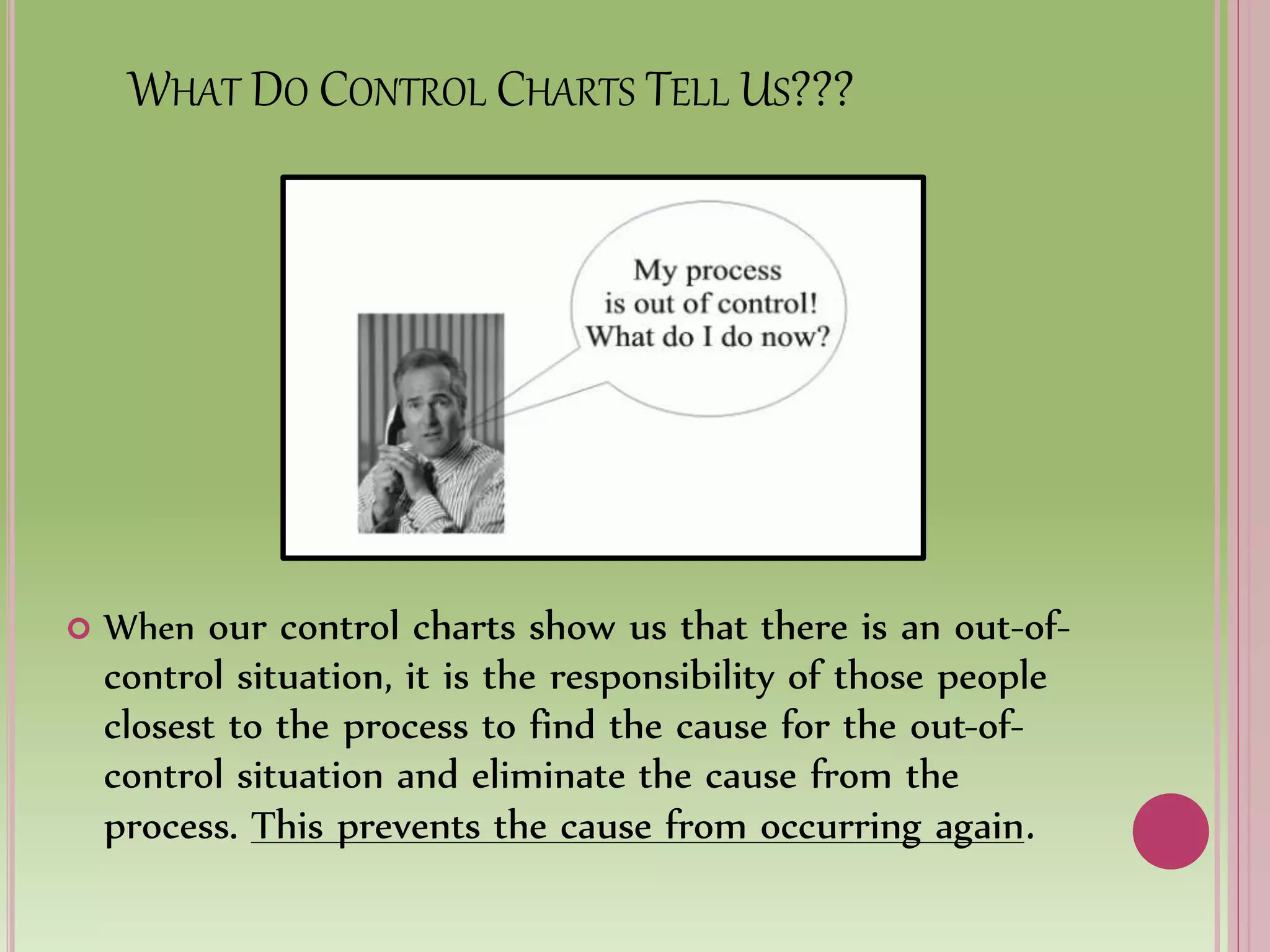
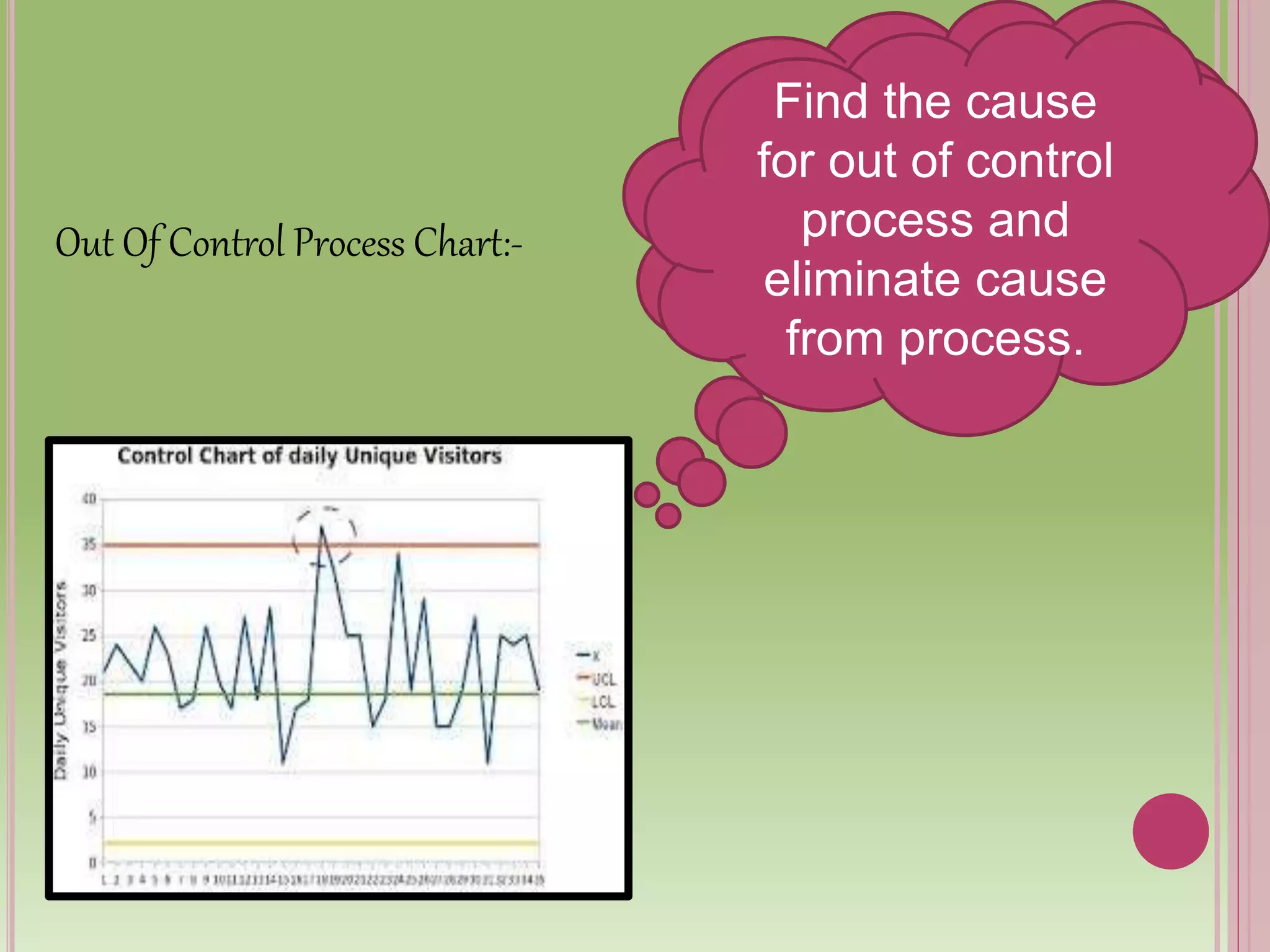
 When our control charts show us that there is an out-of-
control situation, it is the responsibility of those people
closest to the process to find the cause for the out-of-
control situation and eliminate the cause from the
process. This prevents the cause from occurring again.
WHY USE CONTROL CHARTS?
 Monitor process variation over time
 Differentiate between special cause and
common cause variation
 Assess effectiveness of changes
 Communicate process performance
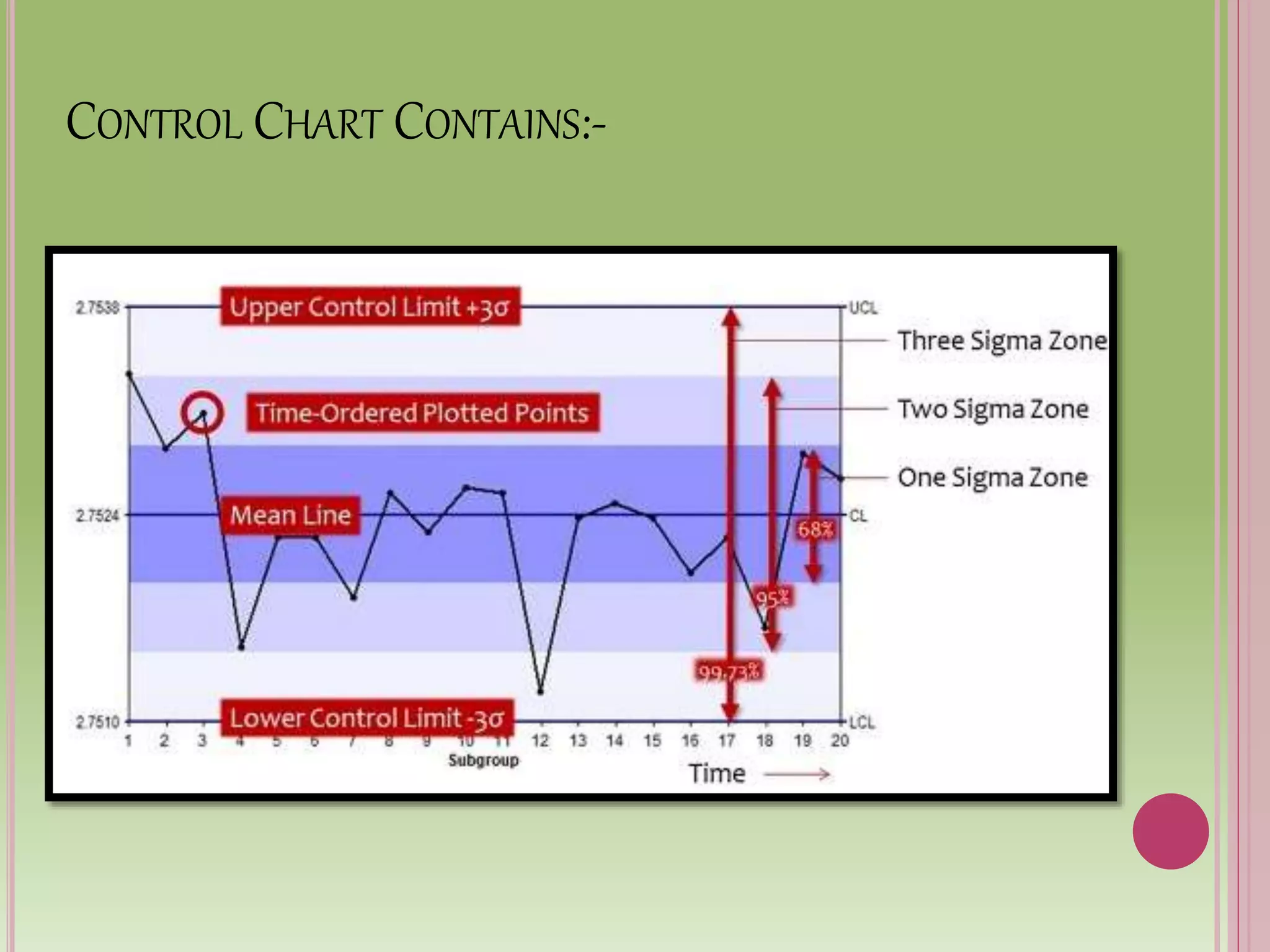
CONTROL CHART CONTAINS:-
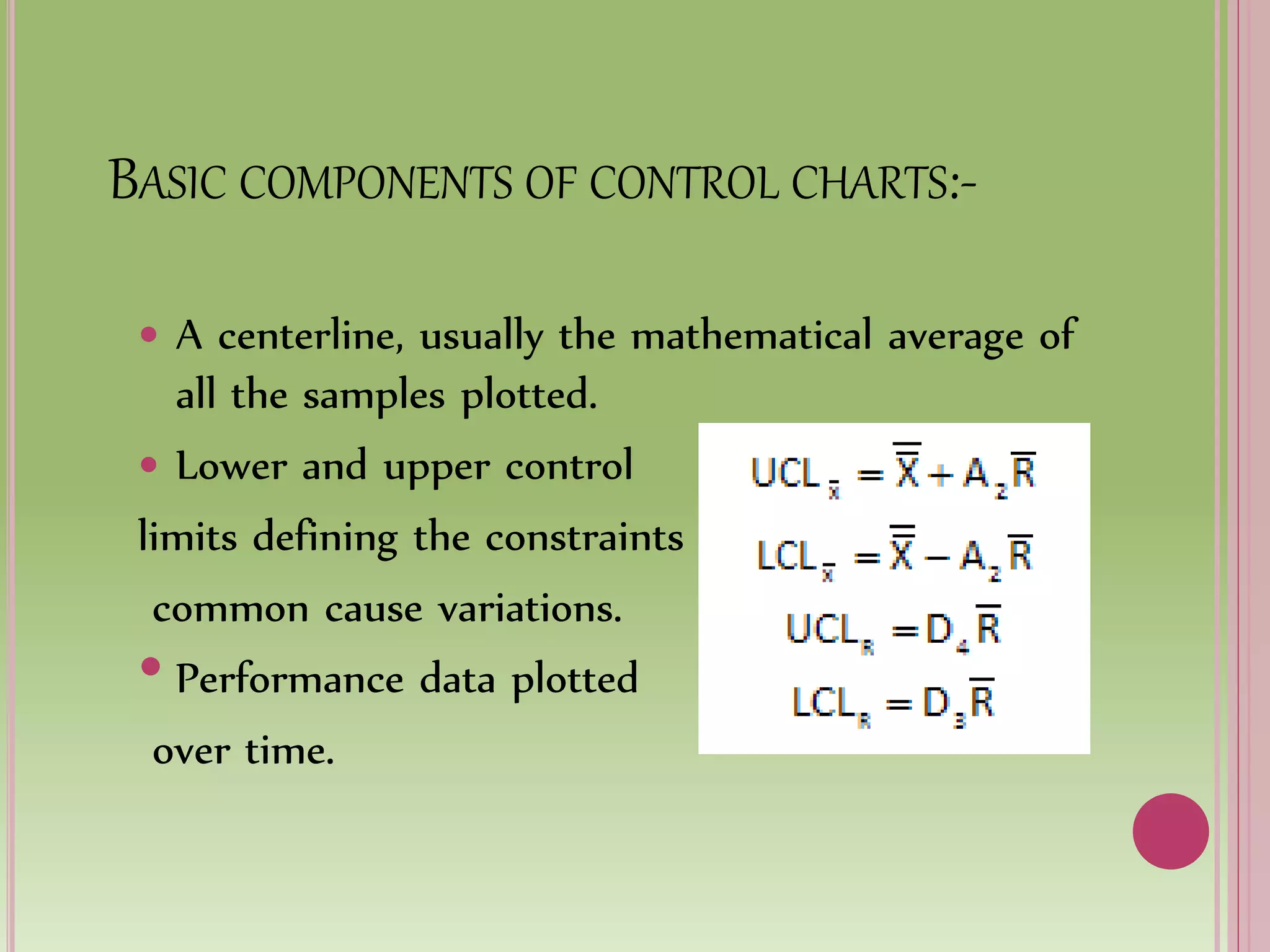
BASIC COMPONENTS OF CONTROL CHARTS:-
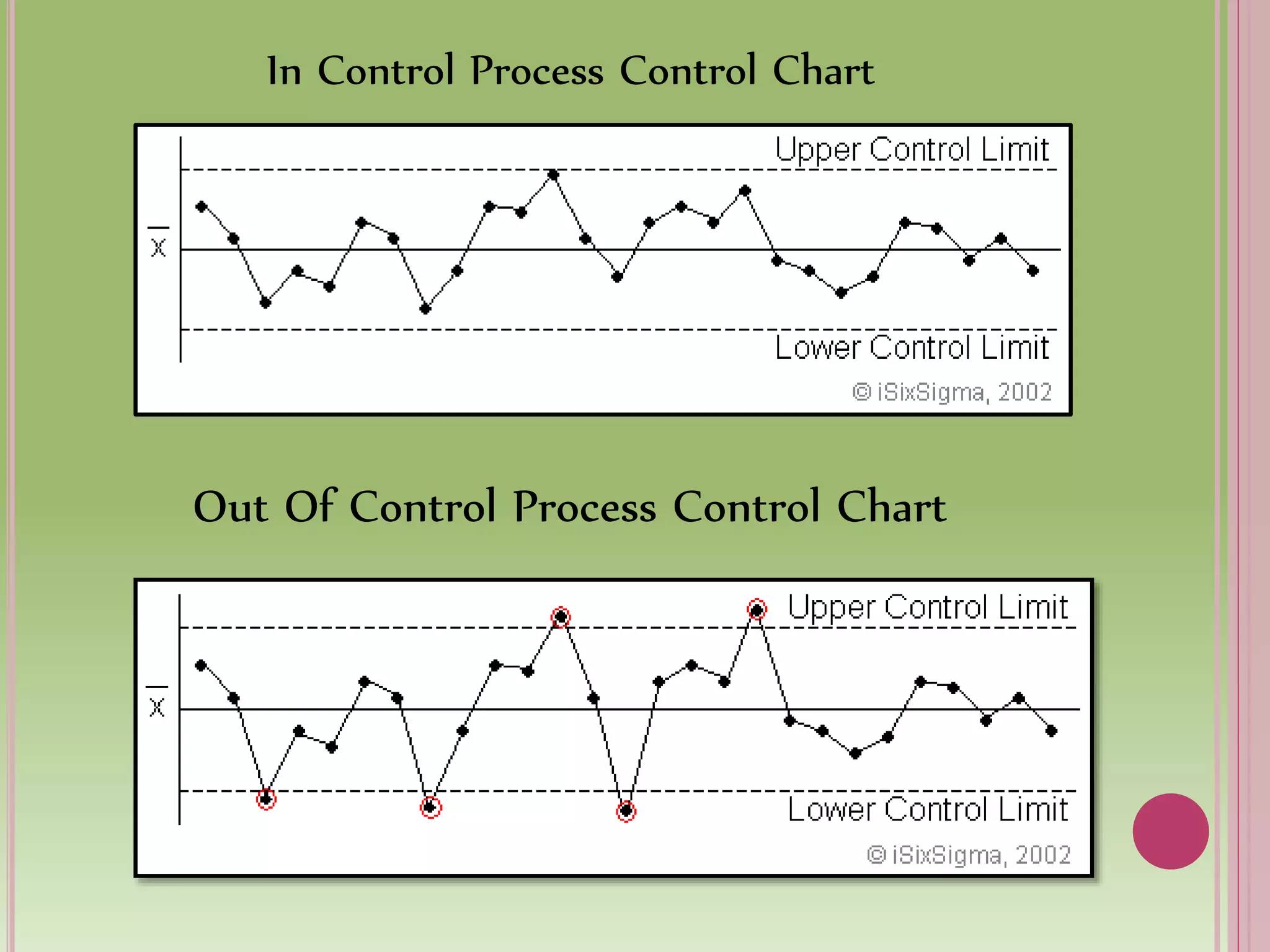
 A centerline, usually the mathematical average of
all the samples plotted.
 Lower and upper control
limits defining the constraints of
common cause variations.
• Performance data plotted
over time.
CONSTRUCTING A CONTROL CHART:-
 Select the process you would like to chart
 Determine your process sampling plan
 Collect data from your process
 Calculate the control chart specific statistics
 Calculate your control limits
 Construct your control chart
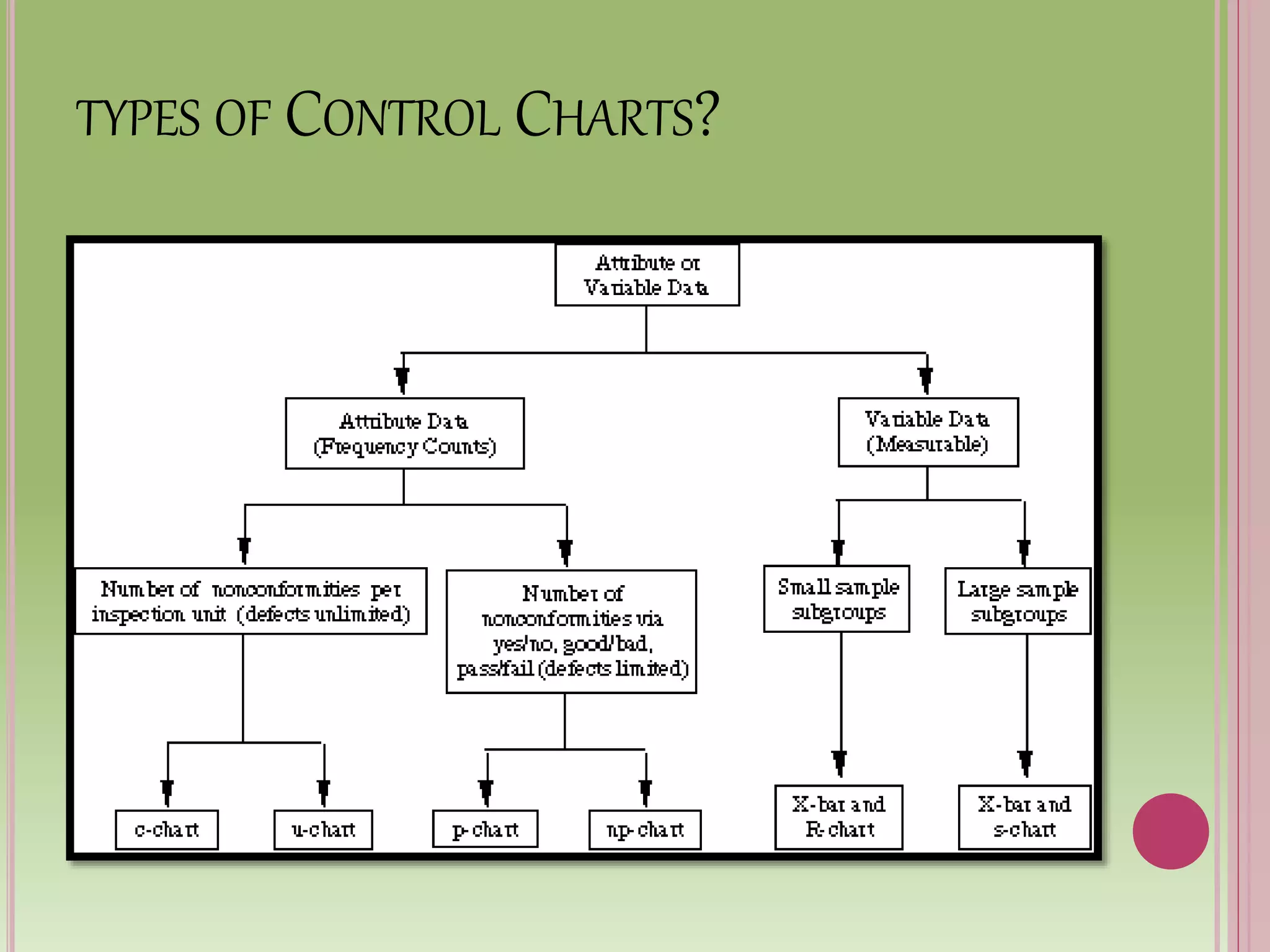
TYPES OF CONTROL CHARTS?
 Variables Data:
This category of Control Chart displays values
resulting from the measurement of a continuous variable.
Examples of variables data are elapsed time, temperature, and
radiation dose.
 Attribute Data:
This category of Control Chart displays data that result
from counting the number of occurrences or items in a
single category of similar items or occurrences. These “count”
data may be expressed as pass/fail, yes/no, or
presence/absence of a defect.
In Control Process Control Chart
Out Of Control Process Control Chart
Find the cause
for out of control
process and
eliminate cause
from process.
Out Of Control Process Chart:-
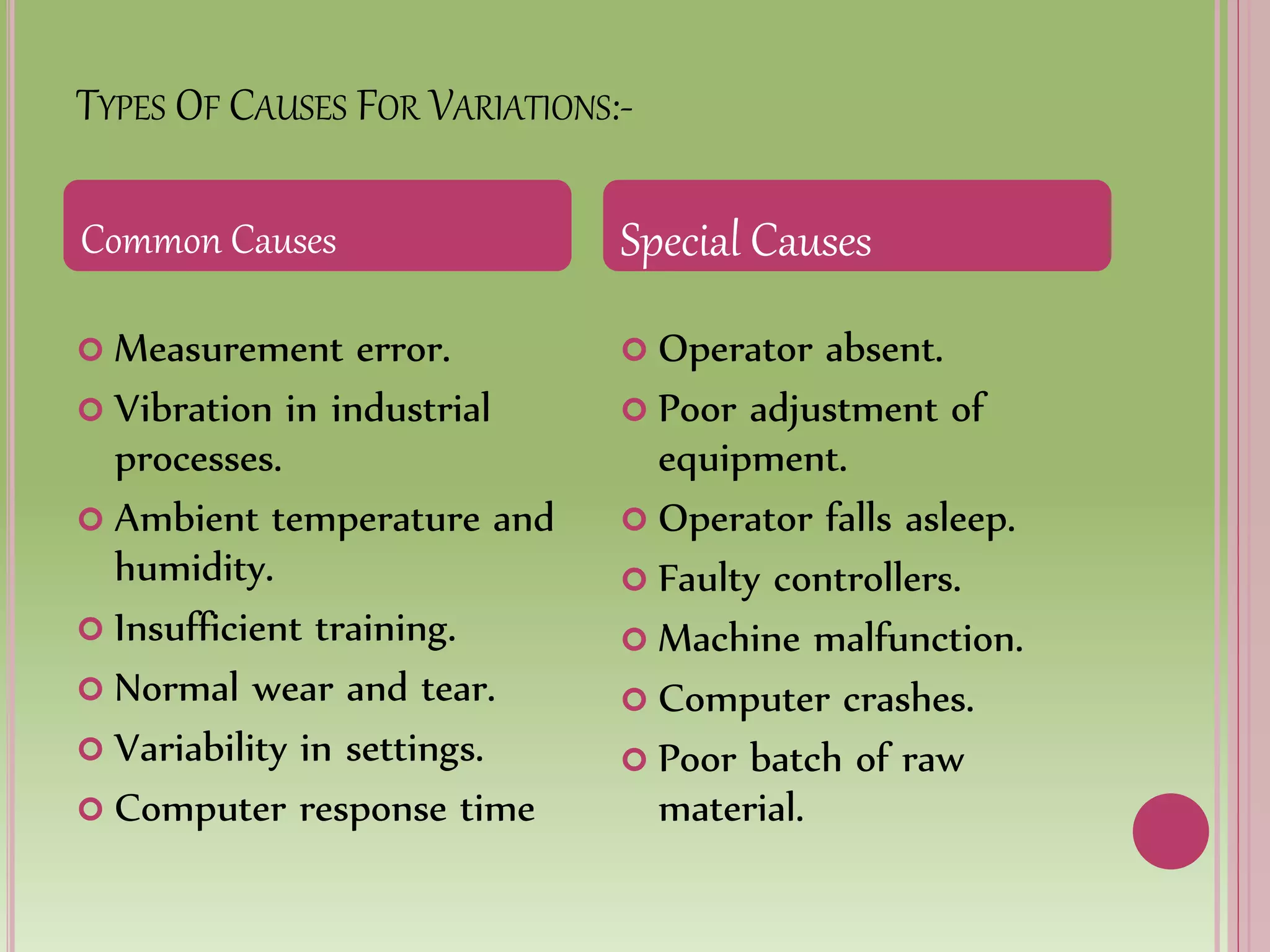
TYPES OF CAUSES FOR VARIATIONS:-
 Measurement error.
 Vibration in industrial
processes.
 Ambient temperature and
humidity.
 Insufficient training.
 Normal wear and tear.
 Variability in settings.
 Computer response time
 Operator absent.
 Poor adjustment of
equipment.
 Operator falls asleep.
 Faulty controllers.
 Machine malfunction.
 Computer crashes.
 Poor batch of raw
material.
Common Causes Special Causes
THANK YOU

Introduction to control charts

  • 1.
  • 2.
    WHAT ARE CONTROLCHARTS? A control chart is used to monitor a process variable over time. That variable can be in any type of company or organization - service, manufacturing, non-profit and, yes, healthcare.
  • 3.
    INSPECTION BEING DONEIN INDUSTRIES TO FIND THE PROCESS CAPABILITY OF THE PROCESS
  • 4.
    WHAT DO CONTROLCHARTS TELL US???  When our control charts show us that there is an out-of- control situation, it is the responsibility of those people closest to the process to find the cause for the out-of- control situation and eliminate the cause from the process. This prevents the cause from occurring again.
  • 5.
    WHY USE CONTROLCHARTS?  Monitor process variation over time  Differentiate between special cause and common cause variation  Assess effectiveness of changes  Communicate process performance
  • 6.
  • 7.
    BASIC COMPONENTS OFCONTROL CHARTS:-  A centerline, usually the mathematical average of all the samples plotted.  Lower and upper control limits defining the constraints of common cause variations. • Performance data plotted over time.
  • 8.
    CONSTRUCTING A CONTROLCHART:-  Select the process you would like to chart  Determine your process sampling plan  Collect data from your process  Calculate the control chart specific statistics  Calculate your control limits  Construct your control chart
  • 9.
  • 10.
     Variables Data: Thiscategory of Control Chart displays values resulting from the measurement of a continuous variable. Examples of variables data are elapsed time, temperature, and radiation dose.  Attribute Data: This category of Control Chart displays data that result from counting the number of occurrences or items in a single category of similar items or occurrences. These “count” data may be expressed as pass/fail, yes/no, or presence/absence of a defect.
  • 11.
    In Control ProcessControl Chart Out Of Control Process Control Chart
  • 12.
    Find the cause forout of control process and eliminate cause from process. Out Of Control Process Chart:-
  • 13.
    TYPES OF CAUSESFOR VARIATIONS:-  Measurement error.  Vibration in industrial processes.  Ambient temperature and humidity.  Insufficient training.  Normal wear and tear.  Variability in settings.  Computer response time  Operator absent.  Poor adjustment of equipment.  Operator falls asleep.  Faulty controllers.  Machine malfunction.  Computer crashes.  Poor batch of raw material. Common Causes Special Causes
  • 14.