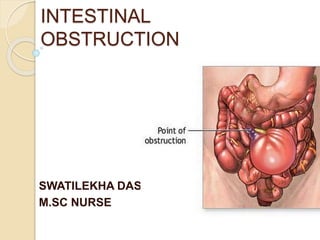

INTESTINAL
OBSTRUCTION
SWATILEKHA DAS
M.SC NURSE
INTRODUCTION
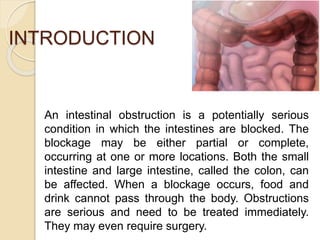
An intestinal obstruction is a potentially serious
condition in which the intestines are blocked. The
blockage may be either partial or complete,
occurring at one or more locations. Both the small
intestine and large intestine, called the colon, can
be affected. When a blockage occurs, food and
drink cannot pass through the body. Obstructions
are serious and need to be treated immediately.
They may even require surgery.
DEFINITION
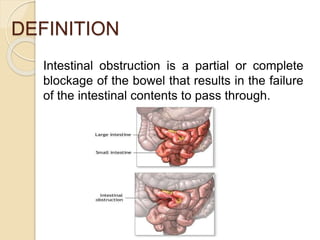
Intestinal obstruction is a partial or complete
blockage of the bowel that results in the failure
of the intestinal contents to pass through.
TYPES OF INTESTINAL OBSTRUCTION
1.Mechanical obstruction
Mechanical obstruction may be caused by an occlusion
of the lumen of the intestinal tract from pressure on the
intestinal walls.. Examples are intussusceptions,
polypoid, hernias, and abscess.
2.Functional obstruction
The intestinal musculature cannot propel the contents
along the bowel. Examples are amyloidosis, muscular
dystrophy , endocrine disorders such as diabetes
mellitus or neurologic disorders such as parkinson’s
disease.
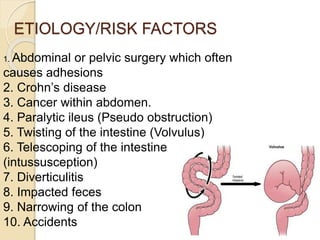
ETIOLOGY/RISK FACTORS
1. Abdominal or pelvic surgery which often
causes adhesions
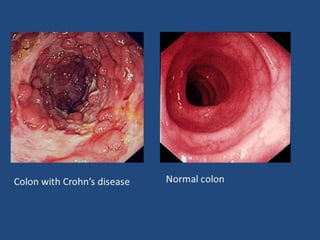
2. Crohn’s disease
3. Cancer within abdomen.
4. Paralytic ileus (Pseudo obstruction)
5. Twisting of the intestine (Volvulus)
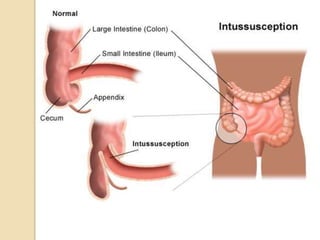
6. Telescoping of the intestine
(intussusception)
7. Diverticulitis
8. Impacted feces
9. Narrowing of the colon
10. Accidents
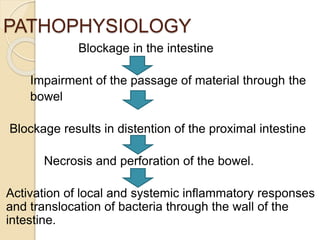
PATHOPHYSIOLOGY
Blockage in the intestine
Impairment of the passage of material through the
bowel
Blockage results in distention of the proximal intestine
Necrosis and perforation of the bowel.
Activation of local and systemic inflammatory responses
and translocation of bacteria through the wall of the
intestine.
CLINICAL MANIFESTATION
 Abdominal Fullness, Gas
 Abdominal pain and cramping
 Breath odor
 Constipation
 Diarrhea
 Vomiting
 Diarrhea
 Constipation
 Fever
 Failure to pass stool in case of
paralytic ileus
 Absence of flatus
 Fatigue
 Join pain
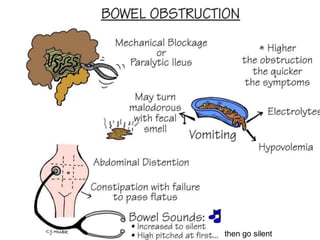
then go silent
DIAGNOSTIC EVALUATION
 A thorough history and physical
examination
 Abdominal X-rays or CT scans
 Complete blood count and serum
electrolyte amylase and blood Urea,
nitrogen
 Barium Enema
 Sigmoidoscopy/ Colonoscopy
MEDICAL MANAGEMENT
Collaborative Care:
 Treatment involves placing a nasogastric tube through
the nose into the stomach or intestine to help relieve
abdominal distention and vomiting
 Before surgery, IV infusions that contain normal saline
solution and potassium should be given to maintain
fluid and electrolyte balance.
 Sigmoidoscopy may successfully reduce a sigmoid
volvulus. Colon decompression catheters may be
passed through partially obstructed areas via
colonoscope to decompress the bowel before surgery.
SURGICAL MANAGEMENT
 If constricting bands or
adhesions are found, they
are cut and it may be
necessary to resect the
occluded bowel and to
anastomose the remaining
segments.
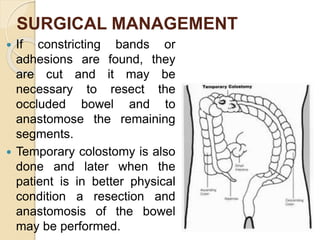
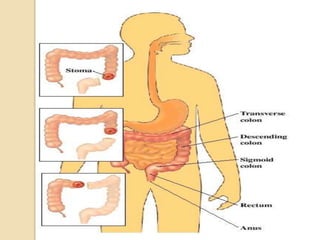
 Temporary colostomy is also
done and later when the
patient is in better physical
condition a resection and
anastomosis of the bowel
may be performed.
COMPLICATION
 Dehydration
 Electrolyte imbalance
 Infection
 Jaundice
 Perforation(hole) in the intestine
 Peritonitis
 Sepsis
NURSING ASSESSMENT
Take a careful history to obtain
information about current symptoms and
previous disease manifestations.
1. NURSING DIAGNOSIS
Acute pain related to abdominal distension and
increased peristalsis.
GOAL
To relief pain
PLAN OF INTERVENTION
 Assess the level of pain, location, intensity, duration.
 Provide comfortable position and promote restful
environment.
 Administer analgesics as advised by the physician.
EXPECTED OUTCOME
Pain will be reduced
2. NURSING DIAGNOSIS
Deficient fluid volume related to decrease in intestinal
fluid absorption and loss of fluids secondary to
vomiting.
GOAL
To maintain the fluid volume.
PLAN OF INTERVENTION
 Monitor patient for signs of dehydration and electrolyte
imbalance
 A strict intake and output record should be maintain
 Fluids should be administered as ordered.
EXPECTED OUTCOME
Fluid volume will be maintained.
3. NURSING DIAGNOSIS
Imbalanced nutrition less than body requirements
related to intestinal obstruction and vomiting.
GOAL
To maintain the nutritional status.
PLAN OF INTERVENTION
 Nasogastric tube is inserted for feeding
 Provide liquid diet rich in protein and high caloric diet.
 Encourage patient and assist in doing oral care
 Monitor intake and output chart
EXPECTED OUTCOME
Nutritional status will be maintained.
4. NURSING DIAGNOSIS
Anxiety related to lack of knowledge about the disease
process as evidence by asking questions.
GOAL
To reduce the anxiety level.
PLAN OF INTERVENTION
 Assess the anxiety level of the patient.
 Explain about the disease condition at the level of their
understanding.
 Encourage to ventilate feelings and clear doubts if any.
 Provide psychological support.
EXPECTED OUTCOME
Anxiety level will be reduced.
HEALTH EDUCATION
1. For sudden pain abdomen-
 Advice to avoid carbonate beverages
 Avoid chewing gum or sucking candies
 Avoid drinking through straw or sipping
surface of hot beverage
2. Irritable bowel syndrome
 Decrease emotional stress
 Increase dietary fiber
 Go for health check-up
3. Demonstrate ostomy care, including
wound cleaning if colostomy is done
4. High standard of personal hygiene at
home and environment sanitation.
Intestinal obstruction with Nursing Management

Intestinal obstruction with Nursing Management

  • 1.
  • 2.
    INTRODUCTION An intestinal obstructionis a potentially serious condition in which the intestines are blocked. The blockage may be either partial or complete, occurring at one or more locations. Both the small intestine and large intestine, called the colon, can be affected. When a blockage occurs, food and drink cannot pass through the body. Obstructions are serious and need to be treated immediately. They may even require surgery.
  • 3.
    DEFINITION Intestinal obstruction isa partial or complete blockage of the bowel that results in the failure of the intestinal contents to pass through.
  • 4.
    TYPES OF INTESTINALOBSTRUCTION 1.Mechanical obstruction Mechanical obstruction may be caused by an occlusion of the lumen of the intestinal tract from pressure on the intestinal walls.. Examples are intussusceptions, polypoid, hernias, and abscess. 2.Functional obstruction The intestinal musculature cannot propel the contents along the bowel. Examples are amyloidosis, muscular dystrophy , endocrine disorders such as diabetes mellitus or neurologic disorders such as parkinson’s disease.
  • 5.
    ETIOLOGY/RISK FACTORS 1. Abdominalor pelvic surgery which often causes adhesions 2. Crohn’s disease 3. Cancer within abdomen. 4. Paralytic ileus (Pseudo obstruction) 5. Twisting of the intestine (Volvulus) 6. Telescoping of the intestine (intussusception) 7. Diverticulitis 8. Impacted feces 9. Narrowing of the colon 10. Accidents
  • 8.
    PATHOPHYSIOLOGY Blockage in theintestine Impairment of the passage of material through the bowel Blockage results in distention of the proximal intestine Necrosis and perforation of the bowel. Activation of local and systemic inflammatory responses and translocation of bacteria through the wall of the intestine.
  • 9.
    CLINICAL MANIFESTATION  AbdominalFullness, Gas  Abdominal pain and cramping  Breath odor  Constipation  Diarrhea  Vomiting  Diarrhea  Constipation  Fever  Failure to pass stool in case of paralytic ileus  Absence of flatus  Fatigue  Join pain
  • 10.
  • 11.
    DIAGNOSTIC EVALUATION  Athorough history and physical examination  Abdominal X-rays or CT scans  Complete blood count and serum electrolyte amylase and blood Urea, nitrogen  Barium Enema  Sigmoidoscopy/ Colonoscopy
  • 12.
    MEDICAL MANAGEMENT Collaborative Care: Treatment involves placing a nasogastric tube through the nose into the stomach or intestine to help relieve abdominal distention and vomiting  Before surgery, IV infusions that contain normal saline solution and potassium should be given to maintain fluid and electrolyte balance.  Sigmoidoscopy may successfully reduce a sigmoid volvulus. Colon decompression catheters may be passed through partially obstructed areas via colonoscope to decompress the bowel before surgery.
  • 13.
    SURGICAL MANAGEMENT  Ifconstricting bands or adhesions are found, they are cut and it may be necessary to resect the occluded bowel and to anastomose the remaining segments.  Temporary colostomy is also done and later when the patient is in better physical condition a resection and anastomosis of the bowel may be performed.
  • 15.
    COMPLICATION  Dehydration  Electrolyteimbalance  Infection  Jaundice  Perforation(hole) in the intestine  Peritonitis  Sepsis
  • 16.
    NURSING ASSESSMENT Take acareful history to obtain information about current symptoms and previous disease manifestations.
  • 17.
    1. NURSING DIAGNOSIS Acutepain related to abdominal distension and increased peristalsis. GOAL To relief pain PLAN OF INTERVENTION  Assess the level of pain, location, intensity, duration.  Provide comfortable position and promote restful environment.  Administer analgesics as advised by the physician. EXPECTED OUTCOME Pain will be reduced
  • 18.
    2. NURSING DIAGNOSIS Deficientfluid volume related to decrease in intestinal fluid absorption and loss of fluids secondary to vomiting. GOAL To maintain the fluid volume. PLAN OF INTERVENTION  Monitor patient for signs of dehydration and electrolyte imbalance  A strict intake and output record should be maintain  Fluids should be administered as ordered. EXPECTED OUTCOME Fluid volume will be maintained.
  • 19.
    3. NURSING DIAGNOSIS Imbalancednutrition less than body requirements related to intestinal obstruction and vomiting. GOAL To maintain the nutritional status. PLAN OF INTERVENTION  Nasogastric tube is inserted for feeding  Provide liquid diet rich in protein and high caloric diet.  Encourage patient and assist in doing oral care  Monitor intake and output chart EXPECTED OUTCOME Nutritional status will be maintained.
  • 20.
    4. NURSING DIAGNOSIS Anxietyrelated to lack of knowledge about the disease process as evidence by asking questions. GOAL To reduce the anxiety level. PLAN OF INTERVENTION  Assess the anxiety level of the patient.  Explain about the disease condition at the level of their understanding.  Encourage to ventilate feelings and clear doubts if any.  Provide psychological support. EXPECTED OUTCOME Anxiety level will be reduced.
  • 21.
    HEALTH EDUCATION 1. Forsudden pain abdomen-  Advice to avoid carbonate beverages  Avoid chewing gum or sucking candies  Avoid drinking through straw or sipping surface of hot beverage 2. Irritable bowel syndrome  Decrease emotional stress  Increase dietary fiber  Go for health check-up 3. Demonstrate ostomy care, including wound cleaning if colostomy is done 4. High standard of personal hygiene at home and environment sanitation.