NEPHROTIC
SYNDROME
Rajalakshmi.S
Lecturer
Josco College of Nursing
Edappon, Mavelikkara
INTRODUCTION
The Nephrotic syndrome is a clinical state
characterized by proteinuria, hypoalbuminemia,
hyperlipidemia and edema, sometimes accompanied
by hematuria, hypertension and reduced glomerular
filtration rate.
DEFINITION
 Nephrotic syndrome is clinical manifestation of a
large number of glomerular disorders. It is
characterized by massive proteinuria,
hypoalbuminemia, hyperlipidemia and edema
which generalized and also known as anasarca or
dropsy.
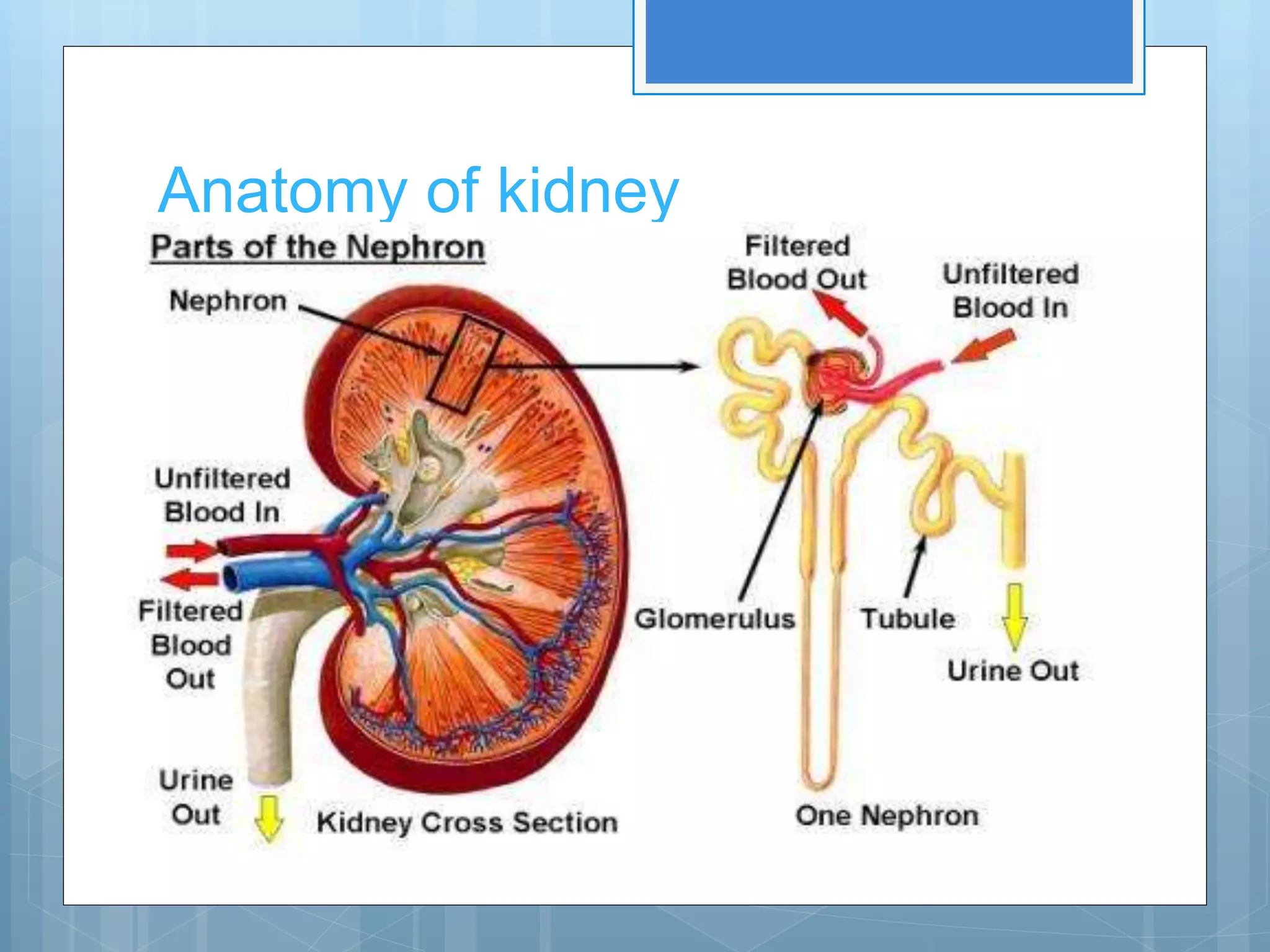
Anatomy of kidney
INCIDENCE
 It is common among children in the age group of
2-6 years.
 It is more common in males than females.
ETIOLOGY
1.Primary renal cause
 Minimal change nephropathy
 Glomerulosclerosis
 Accute post stretococal glomerulonephritis
 Immune complex glomerulonephritis
2.Systemic causes
 Infection
 Toxins
 Allergies
 Cardiovascular –sickle cell diseases
 Malignancies –Leukemia
 Others –Amyloidosis, systemic lupus
 Erythematous etc.
CLASSIFICATION
 Primary nephrotic syndrome/ minimal change
nephrotic syndrome(MCNS)/ idiopathic nephrosis /
childhood nephrosis : result from the disorder within
the glomerulus
 Secondary disorder- result from secondary to
systemic disease such as hepatitis, systemic lupus
erythematosus. Heavy metal poisoning, or cancer
 Congenital form inherited as an autosomal
recessive disorder
PATHOPHYSIOLOGY
.
Due to metabolic, pathologic, biochemical, physiochemical, or
immune mediated disturbances
Alteration in glomerular basement membrane
Increasingly permeable to protein
Decreased colloidal pressure
Increase secretion
of aldosterone
Edema
Tubular Na+ and
H2O
reabsorption
Decreased
vascular vollume
Decreased renal
blood flow
CLINICAL FEATURES
 Edema around eyes,
legs and labia
 Anasarca
 Ascites
 Hydrothorax and
hydrocele
 Decreased urine output
frothy urine, increased
specific gravity
 Hematuria
 Fever , rash, joint pain
 Pallor
 Irritability
 Loss of appetite but
weight gain
 Susceptibility to
infections
DIAGNOSTIC EVALUATION
 24 urine protein measurement
 Blood test – lipid profile, electrolytes, urea,
creatinine
 Imaging of kidney
 Auto immune markers and Ultrasound of whole
abdomen
MEDICAL MANAGEMENT
 The goal of medical management is reduction of protein
excretion
 PREDNISOLONE – 2mg/kg/day – orally- divided doses
for 6 weeks , thereafter 1.5 mg/ kg as single dose on
alternate days for 6 weeks , after discontinued
 Protenuria disappears within the first week of therapy and
negative dipstick test for 2 consecutive days shows
positive response to treatment.
 Frequent relapses are treated by alkylating agent
such as CYCLOPHOSPHAMIDE ( 2mg/kg daily
for 12 weeks ), NITROGEN MUSTARD,
CYLOSPORINE OR LEVAMISOLE
 Diuretic and salt poor albumin may be indicated in
presence of severe edema. FURESEMIDE ( 1-4
mg/kg/ day in 2 divided doses) along with
aldosterone antagonist spironolactone ( 2-3 mg/kg/
day in 2 divided doses ) may be prescribed
 Well balanced diet rich in protein.
 Restrict sodium when marked edema is present
 Water restriction – if decreasing salt intake does
not control edema.
NURSING DIAGNOSIS
 Risk for impaired skin integrity related to edema and
decreased circulation
 Risk for infection related to urinary loss of gamma
globulins and immunosuppressive therapy
 Risk for deficient fluid volume( intra vascular)
related to protenuria, edema, effects of diuretics
 Excess fluid volume related decreased excretion of
sodium and fluid retension
 Anxiety (parental ) related to hospitalization of
child and caring for a child with a chronic disease
 Deficient knowledge about home management
related to anxiety or incomplete understanding
Nursing management
 Care during hospitalization
 Administer the prescribed medications
 Maintain fluid and electrolyte balance
 Prevention of infection
 Promote rest
 Provide emotional support
 Discharge planning and home care teaching
Care during hospitalization
 Educate importance of hospitalization
 Involve the parents for caring the child during
hospitalization
 Regularly monitor the vital signs
 Monitor the signs of infection
 Detailed charting of intake output
 Daily urine examination for albumin
Administer the prescribed
medications
 Child is receiving steroids, so the nurse must be
aware about the side effects of theses drugs
 Patients should be observed for gastrointestinal
bleeding, gastrointestinal ulcers, hyperglycemia
and cataract
Maintain fluid and electrolyte
balance
 Monitor serum sodium level of the child
 Fluid intake either oral/ IV should be strictly
monitored
 Assess for venous stasis, ascites and pulmonary
edema
 Accurately document the daily weight
Prevention of infection
 Use strict aseptic technique during invasive
procedure
 Monitor vital signs to detect early signs of
infection
 Isolate the child as he is immunosuppressive
therapy
Promote rest
 Provide passive play to the child as tolerated
 Allow a period of rest after activities
 Limit visitors during acute phase of illness
Provide emotional support
 Explain parents about disease and its treatment
 Allow the parents and child to express their
feelings, due to sudden weight gain and disturbed
body image
Discharge planning and home care
teaching
 Explain to the parents about treatment program,
follow-up and risk of relapse
 Encourage the parents to measure child’s weight
weekly
 Tell them to contact doctor if any unusual
symptoms appear
 Explain about the medications to be continued at
home.
 Dietary modification
 Advise them to reduce sodium intake 1-2gm daily
 Food should be avoided
• salt used in cooking and at table
•Seasoning blends ( garlic salt, season salt )
•Canned soups
•Canned vegetable containing salt
•Prepared food
•Fast foods
•Soya sauce
•Ketchup
•Salad dressing etc .
 Child can eat moderate amount of high protein animal
food( lean cuts of meat, fish, poultry)
Ask them to avoid saturated fats ( Butter, Cheese, Fried
foods, Fatty cuts of red meat and egg yolk )
Ask to increase unsaturated fat intake ( olive oil, canola oil,
peanut butter and nuts)
The child can eat low fat desserts.
 Increase intake of fruits and vegetables
 No potassium or phosphorus restriction is
necessary
 Monitor fluid intake includes all fluids and foods
that are liquid at room temperature.
COMPLICATIONS
 Acute renal failure, renal vein thrombosis
 Atherosclerosis and related heart disease
 Chronic kidney disease
 Fluid overload, congestive heart failure,
pulmonary edema
 Infections, including pneumococcal pneumonia
REFERENCE
 Hockenberry Marilyn J Hockenberry, Wilson David,
Rodgers Cheryl C. Wong’s essentials of peadiatric
nursing; 10th ed, Elsevier publications, New delhi; 2017
 James Rowen Susan; Nursing care of children:
Principles and practice; 2nd ed;elsevier publishers,
London; 2002
 Sharma Rimple; Essentials of peadiatric nursing,
2nd ed;2017, Jaypee brothers medical
publishers(p) Ltd, New delhi
Nephrotic  syndrome

Nephrotic syndrome

  • 1.
  • 2.
    INTRODUCTION The Nephrotic syndromeis a clinical state characterized by proteinuria, hypoalbuminemia, hyperlipidemia and edema, sometimes accompanied by hematuria, hypertension and reduced glomerular filtration rate.
  • 3.
    DEFINITION  Nephrotic syndromeis clinical manifestation of a large number of glomerular disorders. It is characterized by massive proteinuria, hypoalbuminemia, hyperlipidemia and edema which generalized and also known as anasarca or dropsy.
  • 4.
  • 5.
    INCIDENCE  It iscommon among children in the age group of 2-6 years.  It is more common in males than females.
  • 6.
    ETIOLOGY 1.Primary renal cause Minimal change nephropathy  Glomerulosclerosis  Accute post stretococal glomerulonephritis  Immune complex glomerulonephritis
  • 7.
    2.Systemic causes  Infection Toxins  Allergies  Cardiovascular –sickle cell diseases  Malignancies –Leukemia  Others –Amyloidosis, systemic lupus  Erythematous etc.
  • 8.
    CLASSIFICATION  Primary nephroticsyndrome/ minimal change nephrotic syndrome(MCNS)/ idiopathic nephrosis / childhood nephrosis : result from the disorder within the glomerulus  Secondary disorder- result from secondary to systemic disease such as hepatitis, systemic lupus erythematosus. Heavy metal poisoning, or cancer  Congenital form inherited as an autosomal recessive disorder
  • 9.
    PATHOPHYSIOLOGY . Due to metabolic,pathologic, biochemical, physiochemical, or immune mediated disturbances Alteration in glomerular basement membrane Increasingly permeable to protein Decreased colloidal pressure Increase secretion of aldosterone Edema Tubular Na+ and H2O reabsorption Decreased vascular vollume Decreased renal blood flow
  • 10.
    CLINICAL FEATURES  Edemaaround eyes, legs and labia  Anasarca  Ascites  Hydrothorax and hydrocele  Decreased urine output frothy urine, increased specific gravity
  • 11.
     Hematuria  Fever, rash, joint pain  Pallor  Irritability  Loss of appetite but weight gain  Susceptibility to infections
  • 12.
    DIAGNOSTIC EVALUATION  24urine protein measurement  Blood test – lipid profile, electrolytes, urea, creatinine  Imaging of kidney  Auto immune markers and Ultrasound of whole abdomen
  • 13.
    MEDICAL MANAGEMENT  Thegoal of medical management is reduction of protein excretion  PREDNISOLONE – 2mg/kg/day – orally- divided doses for 6 weeks , thereafter 1.5 mg/ kg as single dose on alternate days for 6 weeks , after discontinued  Protenuria disappears within the first week of therapy and negative dipstick test for 2 consecutive days shows positive response to treatment.
  • 14.
     Frequent relapsesare treated by alkylating agent such as CYCLOPHOSPHAMIDE ( 2mg/kg daily for 12 weeks ), NITROGEN MUSTARD, CYLOSPORINE OR LEVAMISOLE  Diuretic and salt poor albumin may be indicated in presence of severe edema. FURESEMIDE ( 1-4 mg/kg/ day in 2 divided doses) along with aldosterone antagonist spironolactone ( 2-3 mg/kg/ day in 2 divided doses ) may be prescribed
  • 15.
     Well balanceddiet rich in protein.  Restrict sodium when marked edema is present  Water restriction – if decreasing salt intake does not control edema.
  • 16.
    NURSING DIAGNOSIS  Riskfor impaired skin integrity related to edema and decreased circulation  Risk for infection related to urinary loss of gamma globulins and immunosuppressive therapy  Risk for deficient fluid volume( intra vascular) related to protenuria, edema, effects of diuretics  Excess fluid volume related decreased excretion of sodium and fluid retension
  • 17.
     Anxiety (parental) related to hospitalization of child and caring for a child with a chronic disease  Deficient knowledge about home management related to anxiety or incomplete understanding
  • 18.
    Nursing management  Careduring hospitalization  Administer the prescribed medications  Maintain fluid and electrolyte balance  Prevention of infection  Promote rest  Provide emotional support  Discharge planning and home care teaching
  • 19.
    Care during hospitalization Educate importance of hospitalization  Involve the parents for caring the child during hospitalization  Regularly monitor the vital signs  Monitor the signs of infection  Detailed charting of intake output  Daily urine examination for albumin
  • 20.
    Administer the prescribed medications Child is receiving steroids, so the nurse must be aware about the side effects of theses drugs  Patients should be observed for gastrointestinal bleeding, gastrointestinal ulcers, hyperglycemia and cataract
  • 21.
    Maintain fluid andelectrolyte balance  Monitor serum sodium level of the child  Fluid intake either oral/ IV should be strictly monitored  Assess for venous stasis, ascites and pulmonary edema  Accurately document the daily weight
  • 22.
    Prevention of infection Use strict aseptic technique during invasive procedure  Monitor vital signs to detect early signs of infection  Isolate the child as he is immunosuppressive therapy
  • 23.
    Promote rest  Providepassive play to the child as tolerated  Allow a period of rest after activities  Limit visitors during acute phase of illness
  • 24.
    Provide emotional support Explain parents about disease and its treatment  Allow the parents and child to express their feelings, due to sudden weight gain and disturbed body image
  • 25.
    Discharge planning andhome care teaching  Explain to the parents about treatment program, follow-up and risk of relapse  Encourage the parents to measure child’s weight weekly  Tell them to contact doctor if any unusual symptoms appear  Explain about the medications to be continued at home.
  • 27.
     Dietary modification Advise them to reduce sodium intake 1-2gm daily  Food should be avoided • salt used in cooking and at table •Seasoning blends ( garlic salt, season salt ) •Canned soups •Canned vegetable containing salt •Prepared food
  • 28.
    •Fast foods •Soya sauce •Ketchup •Saladdressing etc .  Child can eat moderate amount of high protein animal food( lean cuts of meat, fish, poultry) Ask them to avoid saturated fats ( Butter, Cheese, Fried foods, Fatty cuts of red meat and egg yolk ) Ask to increase unsaturated fat intake ( olive oil, canola oil, peanut butter and nuts) The child can eat low fat desserts.
  • 29.
     Increase intakeof fruits and vegetables  No potassium or phosphorus restriction is necessary  Monitor fluid intake includes all fluids and foods that are liquid at room temperature.
  • 30.
    COMPLICATIONS  Acute renalfailure, renal vein thrombosis  Atherosclerosis and related heart disease  Chronic kidney disease  Fluid overload, congestive heart failure, pulmonary edema  Infections, including pneumococcal pneumonia
  • 31.
    REFERENCE  Hockenberry MarilynJ Hockenberry, Wilson David, Rodgers Cheryl C. Wong’s essentials of peadiatric nursing; 10th ed, Elsevier publications, New delhi; 2017  James Rowen Susan; Nursing care of children: Principles and practice; 2nd ed;elsevier publishers, London; 2002
  • 32.
     Sharma Rimple;Essentials of peadiatric nursing, 2nd ed;2017, Jaypee brothers medical publishers(p) Ltd, New delhi