INTESTINAL OBSTRUCTION
DEFINITION:
Bowel obstruction is a mechanical or functional
obstruction of the intestines, preventing the
normal transit of the products of digestion.
INCIDENCE:
1 in 1,500 live births.
ETIOLOGY:
Small bowel obstruction:
1. Adhesions from previous injury
2. Crohn’s disease
3. Volvulus
4. Intussusception
5. Intestinal atresia
Large bowel obstruction:
1. Inflammatory bowel disease
2. Constipation
3. Colon atresia
4. Endometriosis
PATHOPHYSIOLOGY:
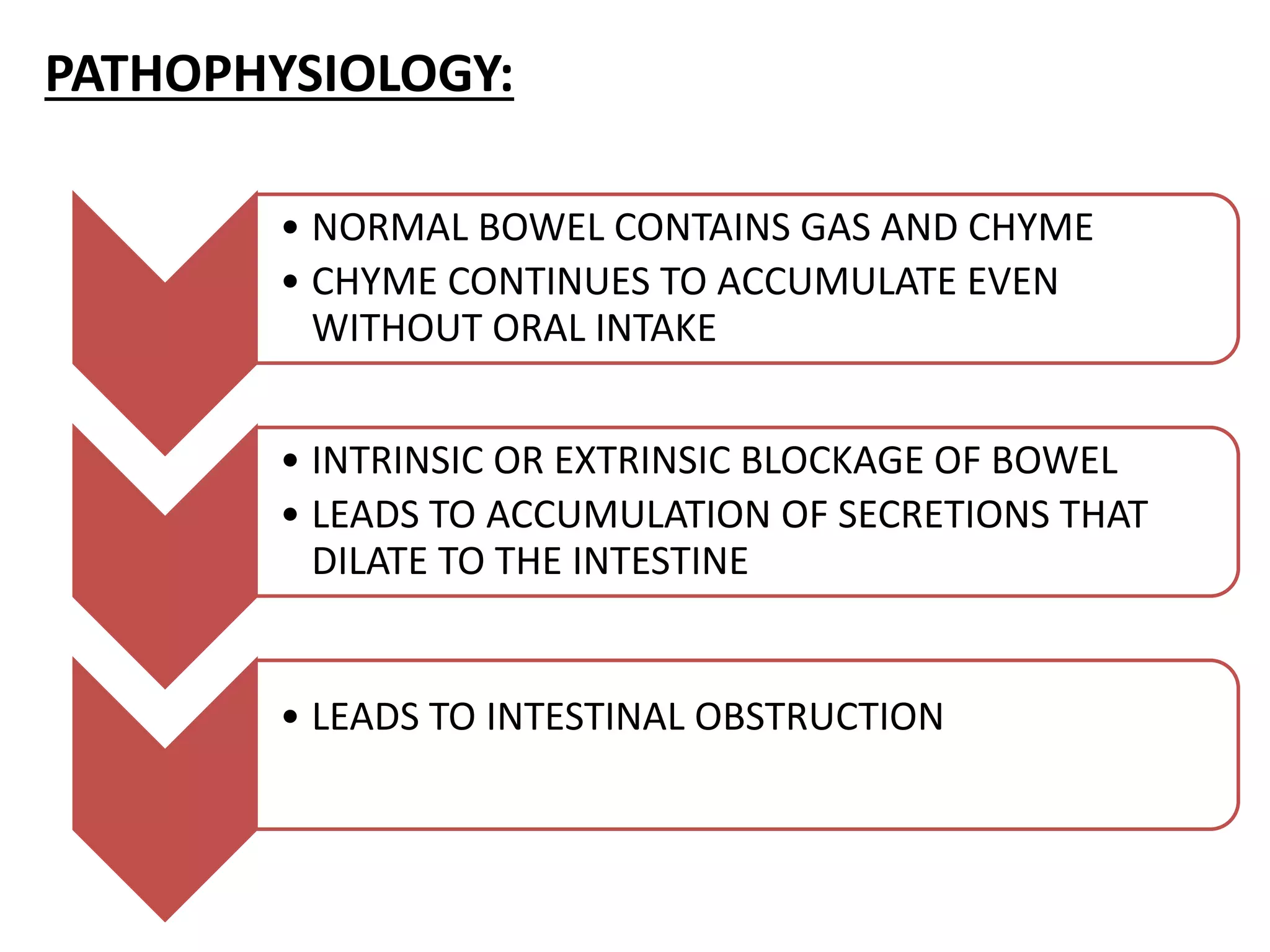
• NORMAL BOWEL CONTAINS GAS AND CHYME
• CHYME CONTINUES TO ACCUMULATE EVEN
WITHOUT ORAL INTAKE
• INTRINSIC OR EXTRINSIC BLOCKAGE OF BOWEL
• LEADS TO ACCUMULATION OF SECRETIONS THAT
DILATE TO THE INTESTINE
• LEADS TO INTESTINAL OBSTRUCTION
CLINICAL FEATURES:
Abdominal pain
Abdominal distention
Vomiting (biliary or fecal)
Constipation
Dehydration and Electrolyte abnormalities
Respiratory distress
DIAGNOSTIC EVALUATION:
1. Blood investigations
2. Urinalysis
3. Stool for occult blood
4. Abdominal Computed Tomography Scan
5. Ultrasonography
MANAGEMENT:
Surgical management:
 Temporary Colostomy later on followed by end-
to- end anastomosis.
INTUSSUSCEPTION
DEFINITION:
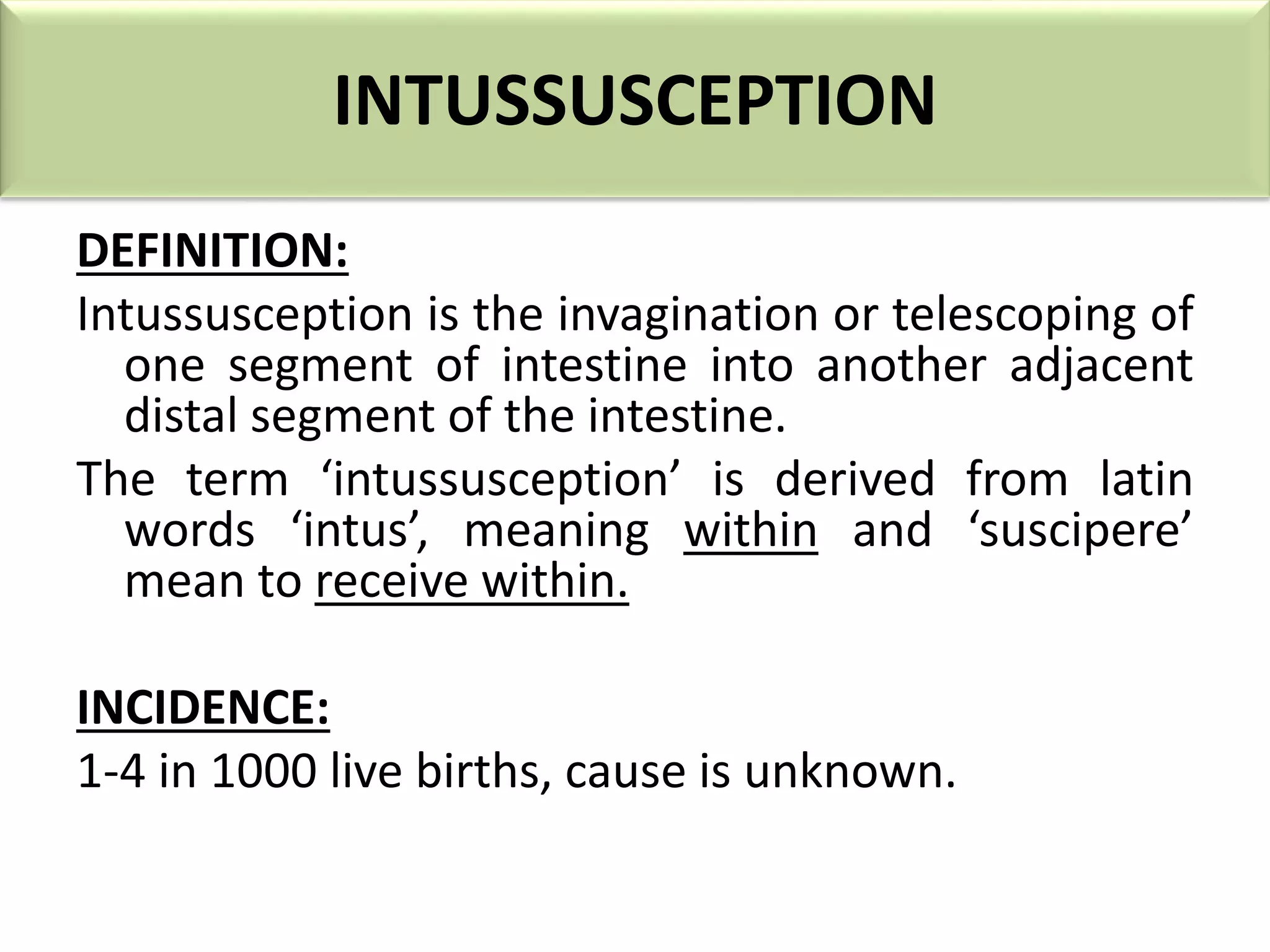
Intussusception is the invagination or telescoping of
one segment of intestine into another adjacent
distal segment of the intestine.
The term ‘intussusception’ is derived from latin
words ‘intus’, meaning within and ‘suscipere’
mean to receive within.
INCIDENCE:
1-4 in 1000 live births, cause is unknown.
CLASSIFICATION:
It can be of three types:
1. Ileocolic: ileum invaginates into caecum.
2. Cecocolic: caecum invaginate into colon.
3. Ileoileal: one portion of ileum invaginates into
other portion of ileum.
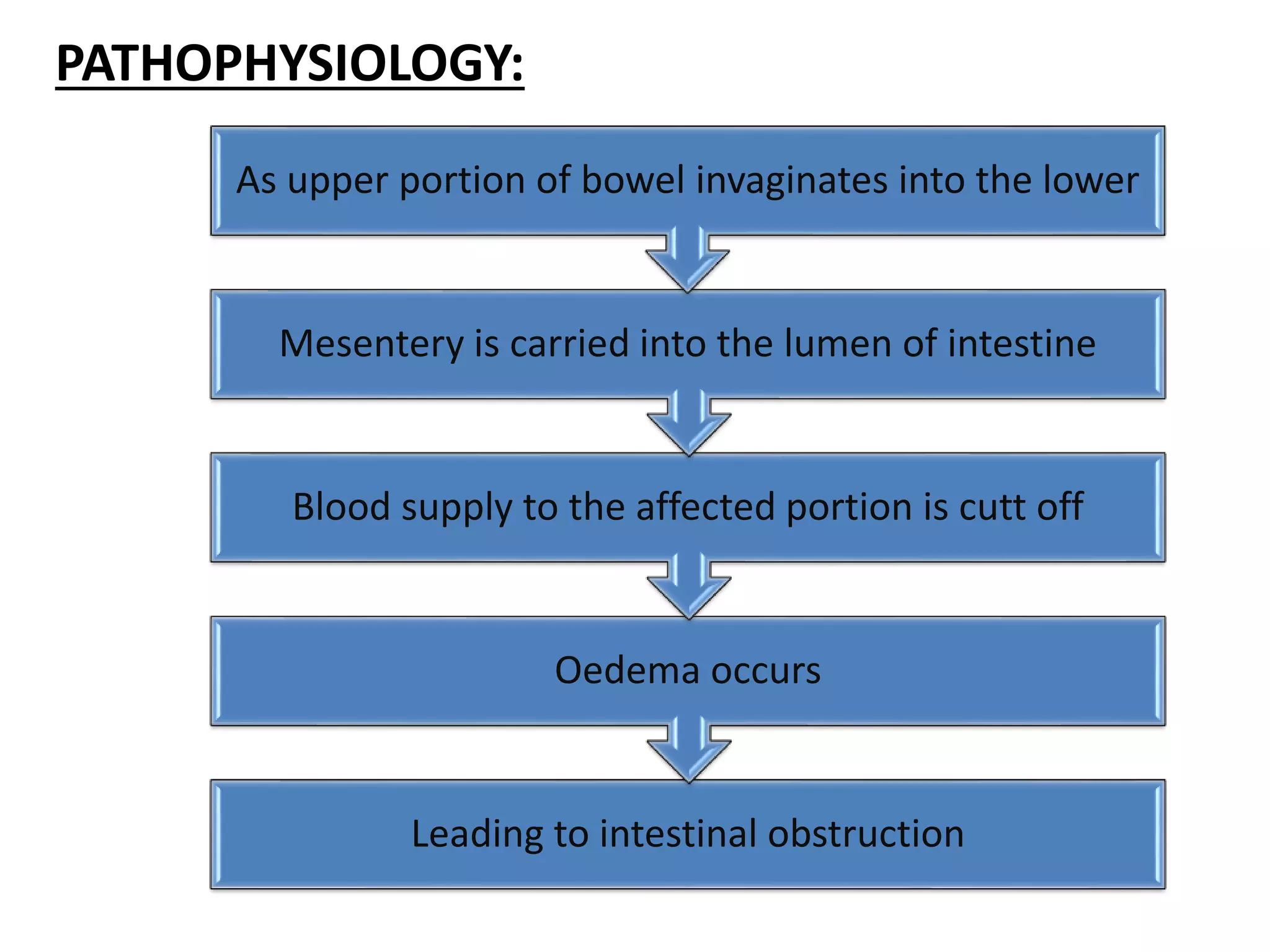
PATHOPHYSIOLOGY:
Leading to intestinal obstruction
Oedema occurs
Blood supply to the affected portion is cutt off
Mesentery is carried into the lumen of intestine
As upper portion of bowel invaginates into the lower
CLINICAL FEATURES:
Triad of symptoms (Colicky abdominal pain,
Bilious vomiting, “Currant jelly” like stool).
Abdominal pain
Lethargic and fever
Vomiting
DIAGNOSTIC EVALUATION:
Barium enema
Abdominal ultrasound
NURSING MANAGEMENT:
A. Pre-operative nursing care:
 Withhold oral fluids 6-8 hours prior to surgery.
 Administer I/V fluids.
 Nasogastric suction for decompress of bowel.
 I/O chart to be maintained.
 Adminsiter antibiotics to treat infection.
B. Post- operative nursing care:
 Monitor vital signs
 Observe the incision site
 Dressing the incision site
 Monitor abdominal girth
 Gastrointestinal suctioning is done to keep the
stomach and intestine empty.
 Monitor urine output
 Auscultate the bowel sounds.
Intestinal obstruction

Intestinal obstruction

  • 1.
    INTESTINAL OBSTRUCTION DEFINITION: Bowel obstructionis a mechanical or functional obstruction of the intestines, preventing the normal transit of the products of digestion. INCIDENCE: 1 in 1,500 live births.
  • 3.
    ETIOLOGY: Small bowel obstruction: 1.Adhesions from previous injury 2. Crohn’s disease 3. Volvulus 4. Intussusception 5. Intestinal atresia Large bowel obstruction: 1. Inflammatory bowel disease 2. Constipation 3. Colon atresia 4. Endometriosis
  • 4.
    PATHOPHYSIOLOGY: • NORMAL BOWELCONTAINS GAS AND CHYME • CHYME CONTINUES TO ACCUMULATE EVEN WITHOUT ORAL INTAKE • INTRINSIC OR EXTRINSIC BLOCKAGE OF BOWEL • LEADS TO ACCUMULATION OF SECRETIONS THAT DILATE TO THE INTESTINE • LEADS TO INTESTINAL OBSTRUCTION
  • 5.
    CLINICAL FEATURES: Abdominal pain Abdominaldistention Vomiting (biliary or fecal) Constipation Dehydration and Electrolyte abnormalities Respiratory distress
  • 6.
    DIAGNOSTIC EVALUATION: 1. Bloodinvestigations 2. Urinalysis 3. Stool for occult blood 4. Abdominal Computed Tomography Scan 5. Ultrasonography
  • 7.
    MANAGEMENT: Surgical management:  TemporaryColostomy later on followed by end- to- end anastomosis.
  • 8.
    INTUSSUSCEPTION DEFINITION: Intussusception is theinvagination or telescoping of one segment of intestine into another adjacent distal segment of the intestine. The term ‘intussusception’ is derived from latin words ‘intus’, meaning within and ‘suscipere’ mean to receive within. INCIDENCE: 1-4 in 1000 live births, cause is unknown.
  • 9.
    CLASSIFICATION: It can beof three types: 1. Ileocolic: ileum invaginates into caecum. 2. Cecocolic: caecum invaginate into colon. 3. Ileoileal: one portion of ileum invaginates into other portion of ileum.
  • 11.
    PATHOPHYSIOLOGY: Leading to intestinalobstruction Oedema occurs Blood supply to the affected portion is cutt off Mesentery is carried into the lumen of intestine As upper portion of bowel invaginates into the lower
  • 12.
    CLINICAL FEATURES: Triad ofsymptoms (Colicky abdominal pain, Bilious vomiting, “Currant jelly” like stool). Abdominal pain Lethargic and fever Vomiting DIAGNOSTIC EVALUATION: Barium enema Abdominal ultrasound
  • 13.
    NURSING MANAGEMENT: A. Pre-operativenursing care:  Withhold oral fluids 6-8 hours prior to surgery.  Administer I/V fluids.  Nasogastric suction for decompress of bowel.  I/O chart to be maintained.  Adminsiter antibiotics to treat infection.
  • 14.
    B. Post- operativenursing care:  Monitor vital signs  Observe the incision site  Dressing the incision site  Monitor abdominal girth  Gastrointestinal suctioning is done to keep the stomach and intestine empty.  Monitor urine output  Auscultate the bowel sounds.