
DEFINITION
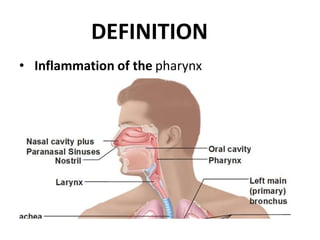
• Inflammation of the pharynx
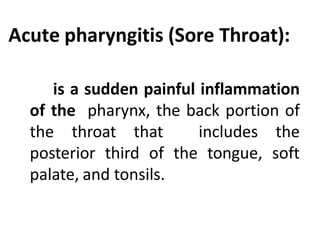
Acute pharyngitis (Sore Throat):
is a sudden painful inflammation
of the pharynx, the back portion of
the throat that includes the
posterior third of the tongue, soft
palate, and tonsils.
Causes
• environmental exposure to viral agents -
adenovirus, influenza virus, Epstein-Barr
virus, and herpes simplex virus
• Bacterial infection - Ten percent of adults
with pharyngitis have group A beta-
hemolytic streptococcus (GABHS), which is
commonly referred to as group A
streptococcus (GAS) or streptococcal
pharyngitis.
• When GAS causes acute pharyngitis, the
condition is known as strep
throat
• Other bacterias - Mycoplasma
pneumoniae, Neisseria gonorrhoeae, H.
influenzae type B
• Poorly ventilated rooms,
• viral pharyngitis peaks during winter
and early spring
• Viral pharyngitis spreads easily in the
droplets of coughs and sneezes
• unclean hands that have been
exposed to the contaminated fluids.
CLINICAL FEATURES
• Pain – Body, swallowing
• Dry cough
• Fever
• Vasodilation
• Edema
• Redness and swelling in the tonsillar pillars,
uvula, and soft palate.
• A creamy exudate may be present in the tonsillar
pillars
• Lymph node enlargement
DIAGNOSIS
• History Collection
• Physical examination
• Culture & sensitivity test
• Blood investigation
• Rapid streptococcal antigen test [RSAT]
Treatment
• Antibiotics – Doxycycline 100 mg twice
daily – 5-7 days
• Once-daily azithromycin may be given for
only 3 days due to its long half-life.
• A 5- or 10-day course of cephalosporin
may be prescribed. Five-day
administration of cefpodoxime and
cefuroxime has also been successful in
producing bacteriologic cures.
• Anti inflammatory-ibuprofen
• Pottasium permonganate gargles
• Soft, bland and warm diet
Nutritional Therapy
• A liquid or soft diet.
• Cool beverages, warm liquids, and flavored frozen
desserts such as Popsicles are often soothing.
Occasionally, the throat is so sore that liquids
cannot be taken in adequate amounts by mouth.
• In severe situations, intravenous (IV) fluids may
be needed.
• Otherwise, the patient is encouraged to drink as
much fluid as possible (at least 2 to 3 L per day).
CHRONIC PHARYNGITIS
• Chronic pharyngitis is a persistent
inflammation of the pharynx. Charecterised by
multiple, white elongated keratinized
epithelial outgrowths project from the surface
of tonsil, base of tongue or posterior
pharyngeal wall.
• It is common in adults who work in dusty
surroundings, use their voice to excess, suffer
from chronic cough
• Habitually use alcohol and tobacco.
TYPES OF CHRONIC PHARYNGITIS:
• Hypertrophic: characterized by general
thickening and congestion of the pharyngeal
mucous membrane
• Atrophic: probably a late stage of the first type
(the membrane is thin, whitish, glistening, and
at times wrinkled)
• Chronic granular (“clergyman’s sore throat”),
characterized by numerous swollen lymph
follicles on the pharyngeal wall
Clinical Manifestations
• Foreign body sensation
• Constant sense of irritation or fullness in the
throat, mucus that collects in the throat and
can be expelled by coughing, and difficulty
swallowing.
• A sore throat that is worse with swallowing in
the absence of pharyngitis suggests the
possibility of thyroiditis.
Medical Management
• Relieving symptoms- avoiding
exposure to irritants, and
correcting any upper Respiratory
infection
• Nasal congestion may be relieved by
short-term use of nasal sprays or
medications containing ephedrine
sulfate(Kondon’s Nasal) or
phenylephrine hydrochloride (Neo-
Synephrine).
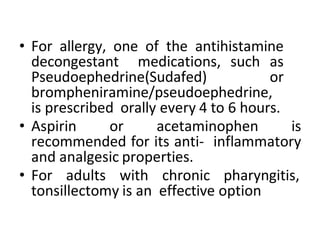
• For allergy, one of the antihistamine
decongestant medications, such as
Pseudoephedrine(Sudafed) or
brompheniramine/pseudoephedrine,
is prescribed orally every 4 to 6 hours.
• Aspirin or acetaminophen is
recommended for its anti- inflammatory
and analgesic properties.
• For adults with chronic pharyngitis,
tonsillectomy is an effective option
THANK YOU