Interpersonal
Communication

       By:

       Aksh Vasishth
       Karambir Singh Nain
       Naman Sharma
       Kushang Sharma
Process that we use

  ?at   to communicate our
        ideas, thoughts and
        feelings to another
Wh

        person.

         Includes everyday exchange
        (formal or informal) by means of
        words, sounds, facial expression,
        gestures and postures.
Importance
● Face-to-face interaction between
  individuals.
● Can get immediate feedback.
● Clarifies and emphasize many points
  through your expressions, gestures
  and voice.
● Increases the communicator’s self-
  concept.
Is Communication

‘’What a speaker says’’
           OR
‘’What a listener hears’’
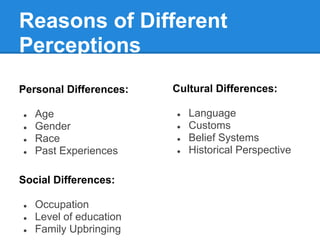
Reasons of Different
Perceptions
Personal Differences:    Cultural Differences:

●   Age                  ●   Language
●   Gender               ●   Customs
●   Race                 ●   Belief Systems
●   Past Experiences     ●   Historical Perspective

Social Differences:

●   Occupation
●   Level of education
●   Family Upbringing
Principles
        of
    Effective
 Interpersonal
Communication
That we treat each other with
respect
That we do not interrupt
one another
That we have the right to
pass
That we do not volunteer
others
That we speak but
not too often
or
for too long
That we challenge the
behaviour and not the
person
That we respect
confidentiality
That it is ok   to make
mistakes
Points
       to
    Improve

 Interpersonal
communication
Be Knowledgeable,
Know it
The people with the best interpersonal
communication skills usually have extensive
knowledge of the subject, through a
combination of real life experiences combined
with an all-inclusive knowledge of the
principles involved in interpersonal
communication.
Be Skilled

It is not sufficient to simply know the principles
of interpersonal communication. You will have
to be practice it in real life too before you can
internalise it.
Be Motivated

You will need to be and remain motivated in
order to develop your new interpersonal skills.
Be Flexible

Each situation is unique with many different
variables to consider. Thus it is important to be
flexible in the application of the principles of
interpersonal communication.
Be Other-Oriented

Focusing on others means to consider the
needs and interests of the other person above
our own, and will help you become a better
interpersonal communicator.
Technology's Effect
        on Interpersonal Communication

● With the invent of internet, the world has
  effectively become an interconnected global
  village.

● Email and instant messaging has
  established itself as a fast, free and
  convenient method to send messages,
  replacing traditional mail in the process.
But...
● Convenience of emails and video
  conferences, just cannot entirely replace the
  feeling and warmth of a person's
  handshake or presence.

  ○
● This has reduced the communication
  between parents and their children due to
  the lack of quality time spend together.
Thank You

Interpersonal communication

  • 1.
    Interpersonal Communication By: Aksh Vasishth Karambir Singh Nain Naman Sharma Kushang Sharma
  • 2.
    Process that weuse ?at to communicate our ideas, thoughts and feelings to another Wh person. Includes everyday exchange (formal or informal) by means of words, sounds, facial expression, gestures and postures.
  • 3.
    Importance ● Face-to-face interactionbetween individuals. ● Can get immediate feedback. ● Clarifies and emphasize many points through your expressions, gestures and voice. ● Increases the communicator’s self- concept.
  • 4.
    Is Communication ‘’What aspeaker says’’ OR ‘’What a listener hears’’
  • 5.
    Reasons of Different Perceptions PersonalDifferences: Cultural Differences: ● Age ● Language ● Gender ● Customs ● Race ● Belief Systems ● Past Experiences ● Historical Perspective Social Differences: ● Occupation ● Level of education ● Family Upbringing
  • 6.
    Principles of Effective Interpersonal Communication
  • 7.
    That we treateach other with respect
  • 8.
    That we donot interrupt one another
  • 9.
    That we havethe right to pass
  • 10.
    That we donot volunteer others
  • 11.
    That we speakbut not too often or for too long
  • 12.
    That we challengethe behaviour and not the person
  • 13.
  • 14.
    That it isok to make mistakes
  • 15.
    Points to Improve Interpersonal communication
  • 16.
    Be Knowledgeable, Know it Thepeople with the best interpersonal communication skills usually have extensive knowledge of the subject, through a combination of real life experiences combined with an all-inclusive knowledge of the principles involved in interpersonal communication.
  • 17.
    Be Skilled It isnot sufficient to simply know the principles of interpersonal communication. You will have to be practice it in real life too before you can internalise it.
  • 18.
    Be Motivated You willneed to be and remain motivated in order to develop your new interpersonal skills.
  • 19.
    Be Flexible Each situationis unique with many different variables to consider. Thus it is important to be flexible in the application of the principles of interpersonal communication.
  • 20.
    Be Other-Oriented Focusing onothers means to consider the needs and interests of the other person above our own, and will help you become a better interpersonal communicator.
  • 21.
    Technology's Effect on Interpersonal Communication ● With the invent of internet, the world has effectively become an interconnected global village. ● Email and instant messaging has established itself as a fast, free and convenient method to send messages, replacing traditional mail in the process.
  • 22.
    But... ● Convenience ofemails and video conferences, just cannot entirely replace the feeling and warmth of a person's handshake or presence. ○ ● This has reduced the communication between parents and their children due to the lack of quality time spend together.
  • 23.