


PRINCIPLES OF EFFECTIVE
COMMUNICATION
Let’s Play!!
OBJECTIVES
   To understand the different principles of effective
    communication

   To understand the barriers to communication and
    how to overcome them

   To understand different Types and Styles of
    Communication
PRINCIPLES OF EFFECTIVE
COMMUNICATION
 Principle   of Objective

 Principle   of Understanding the receiver

 Principle   of Clarity

 Principle   of feedback
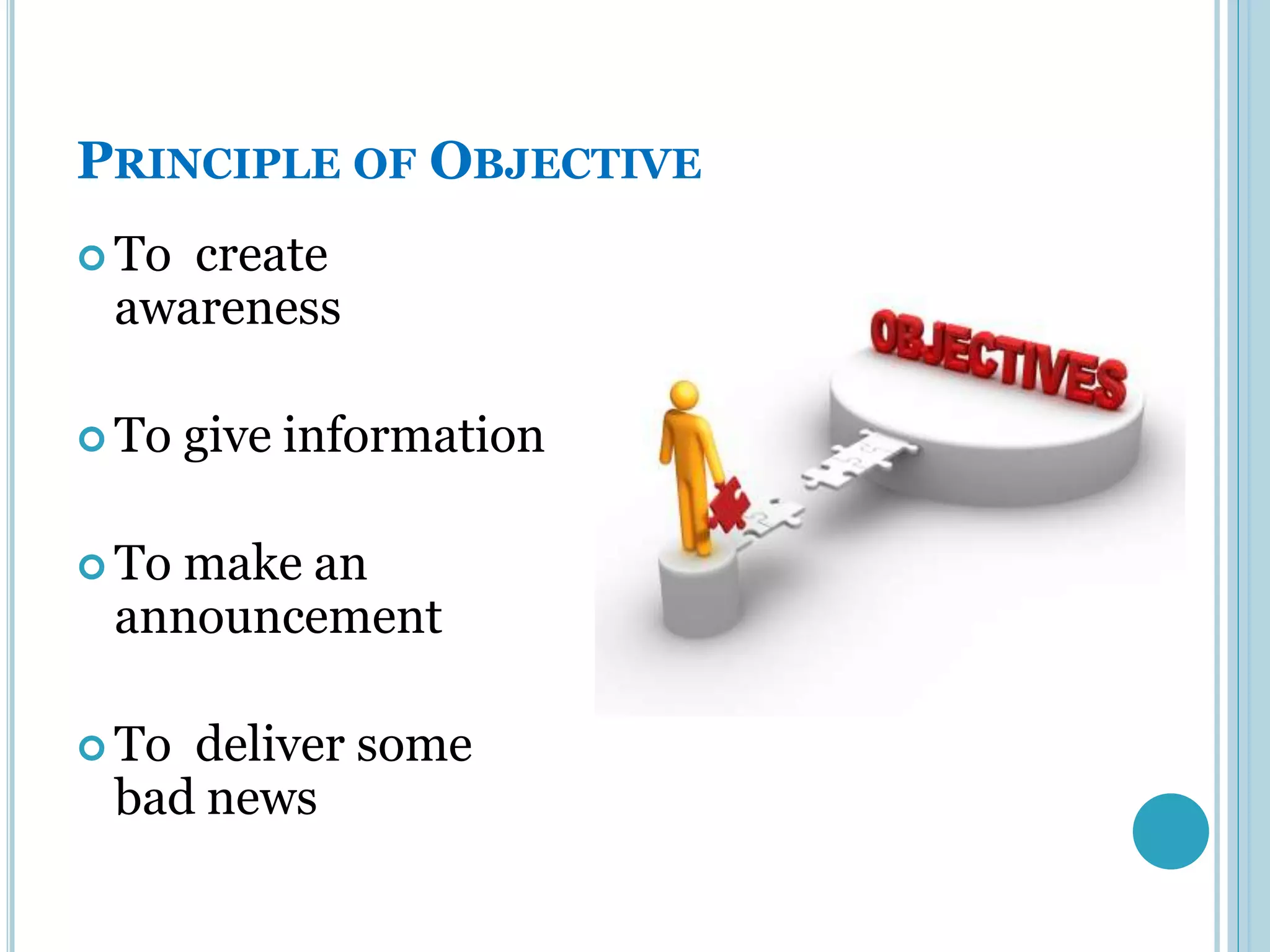
PRINCIPLE OF OBJECTIVE
 Tocreate
 awareness

 To   give information

 Tomake an
 announcement

 Todeliver some
 bad news
ESSAY WRITING !
   Write an essay on Education System
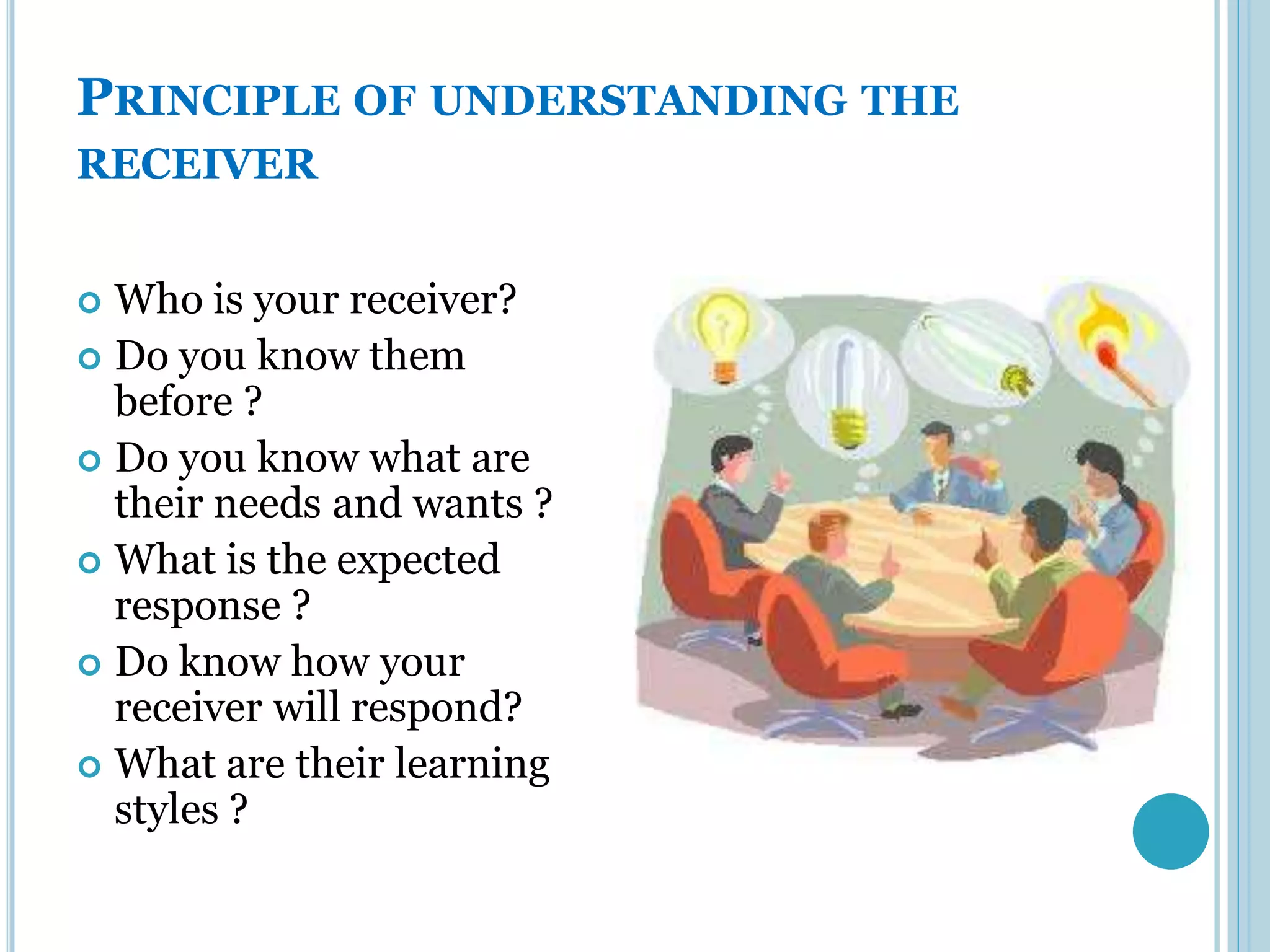
PRINCIPLE OF UNDERSTANDING THE
RECEIVER


 Who is your receiver?
 Do you know them
  before ?
 Do you know what are
  their needs and wants ?
 What is the expected
  response ?
 Do know how your
  receiver will respond?
 What are their learning
  styles ?
ACTIVITY TIME
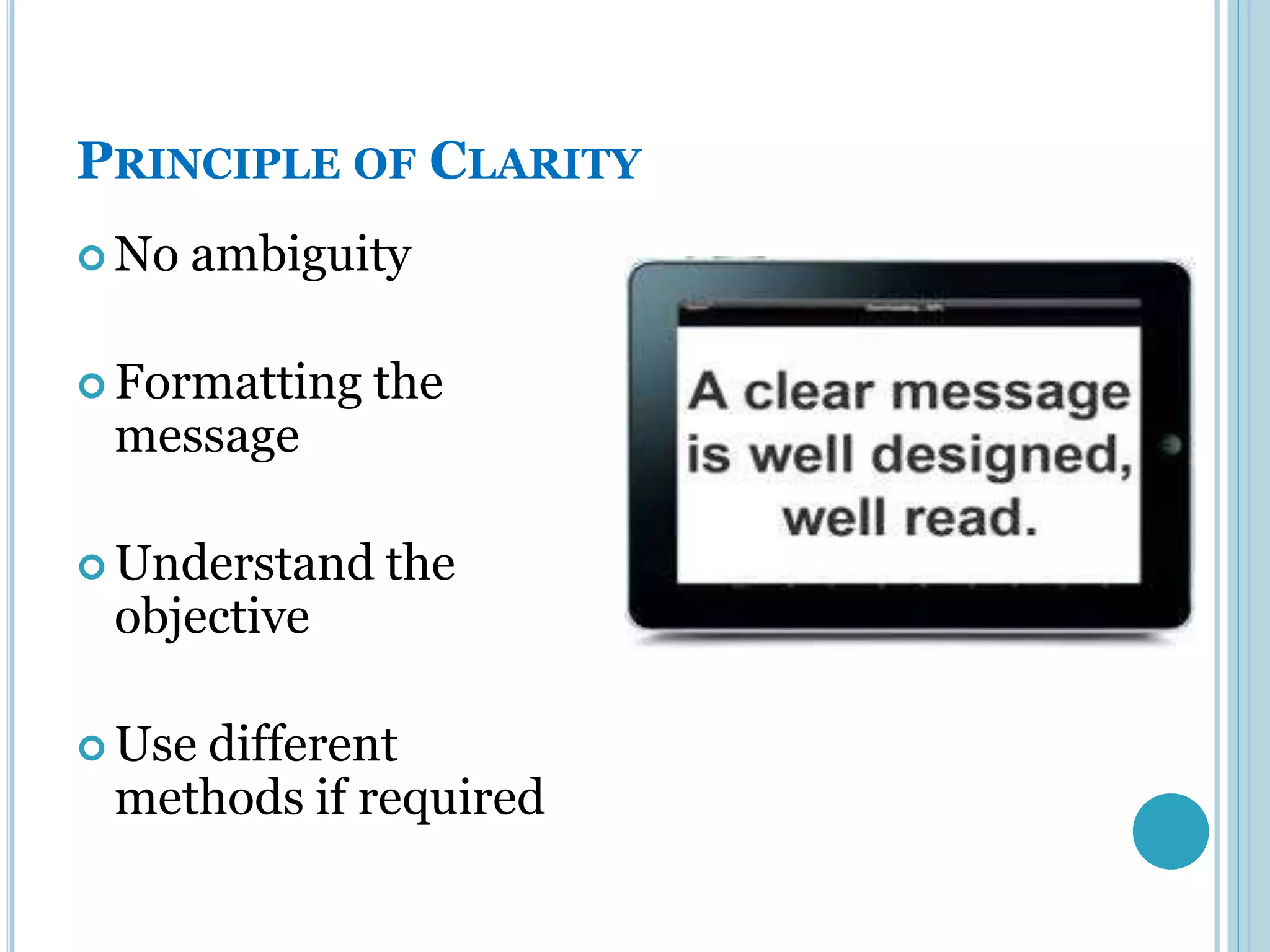
PRINCIPLE OF CLARITY
 No   ambiguity

 Formatting   the
 message

 Understand   the
 objective

 Use
    different
 methods if required
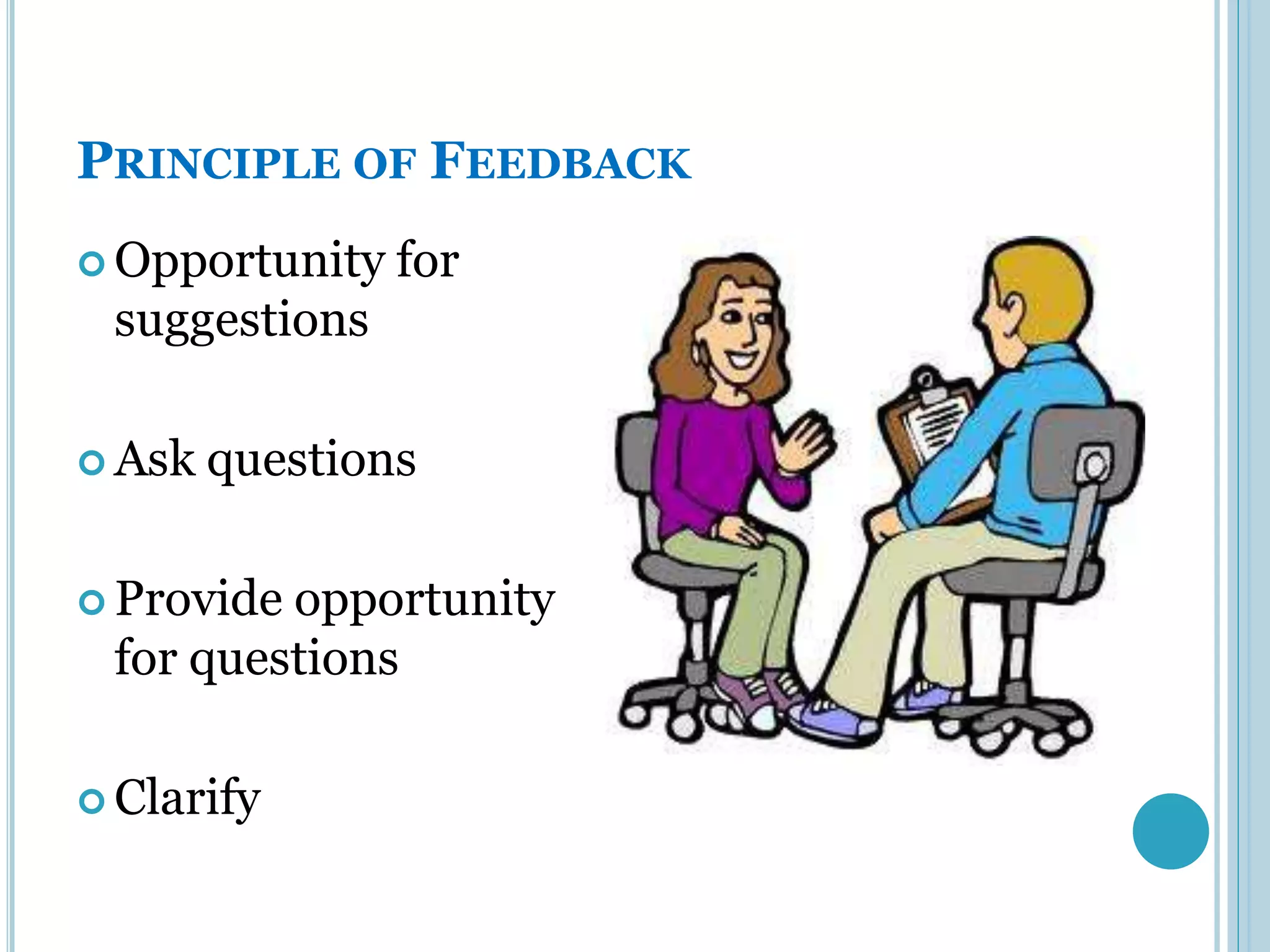
PRINCIPLE OF FEEDBACK
 Opportunity   for
 suggestions

 Ask   questions

 Provideopportunity
 for questions

 Clarify
PICTURE IT!
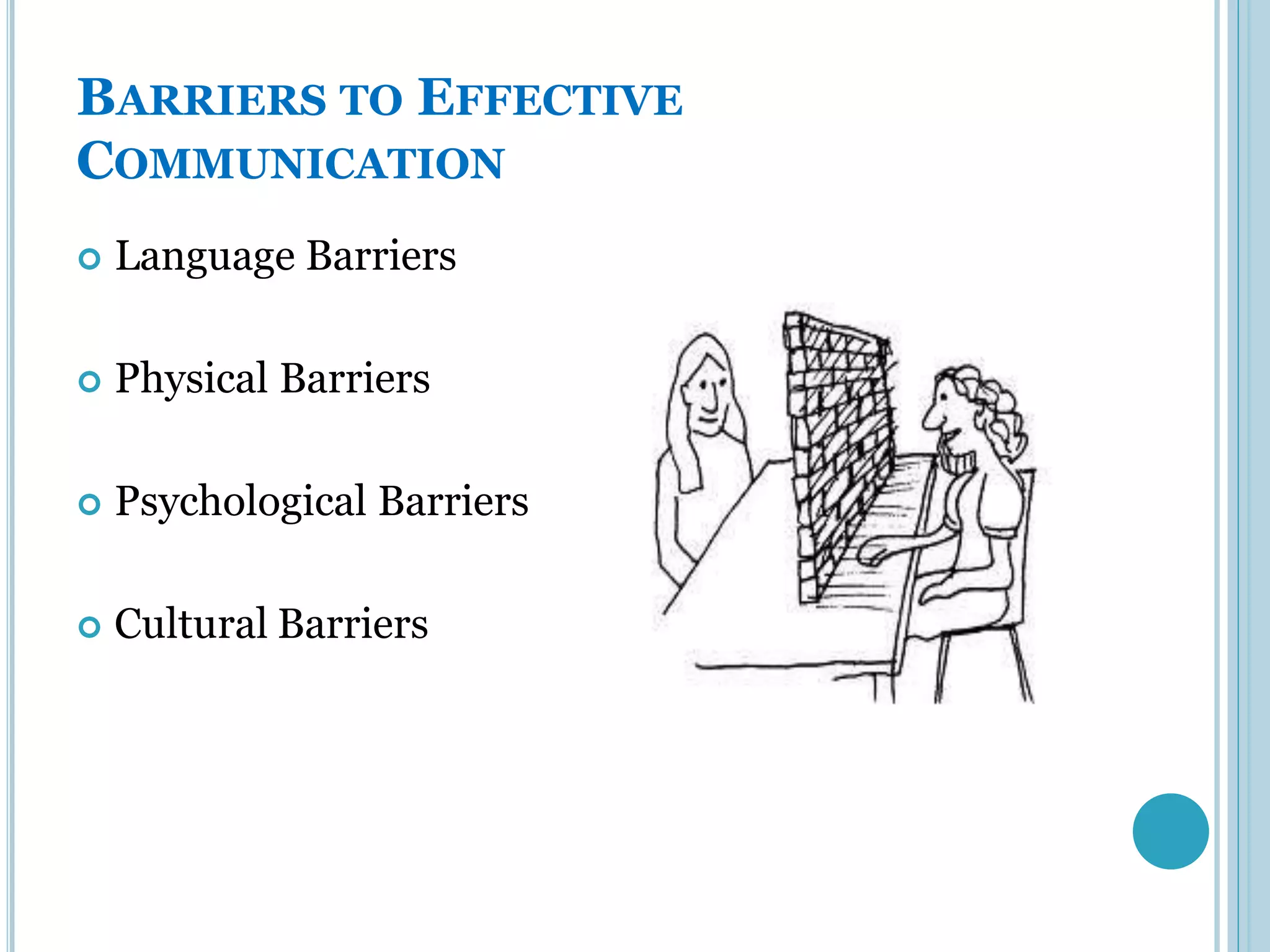
BARRIERS TO EFFECTIVE
COMMUNICATION
   Language Barriers

   Physical Barriers

   Psychological Barriers

   Cultural Barriers
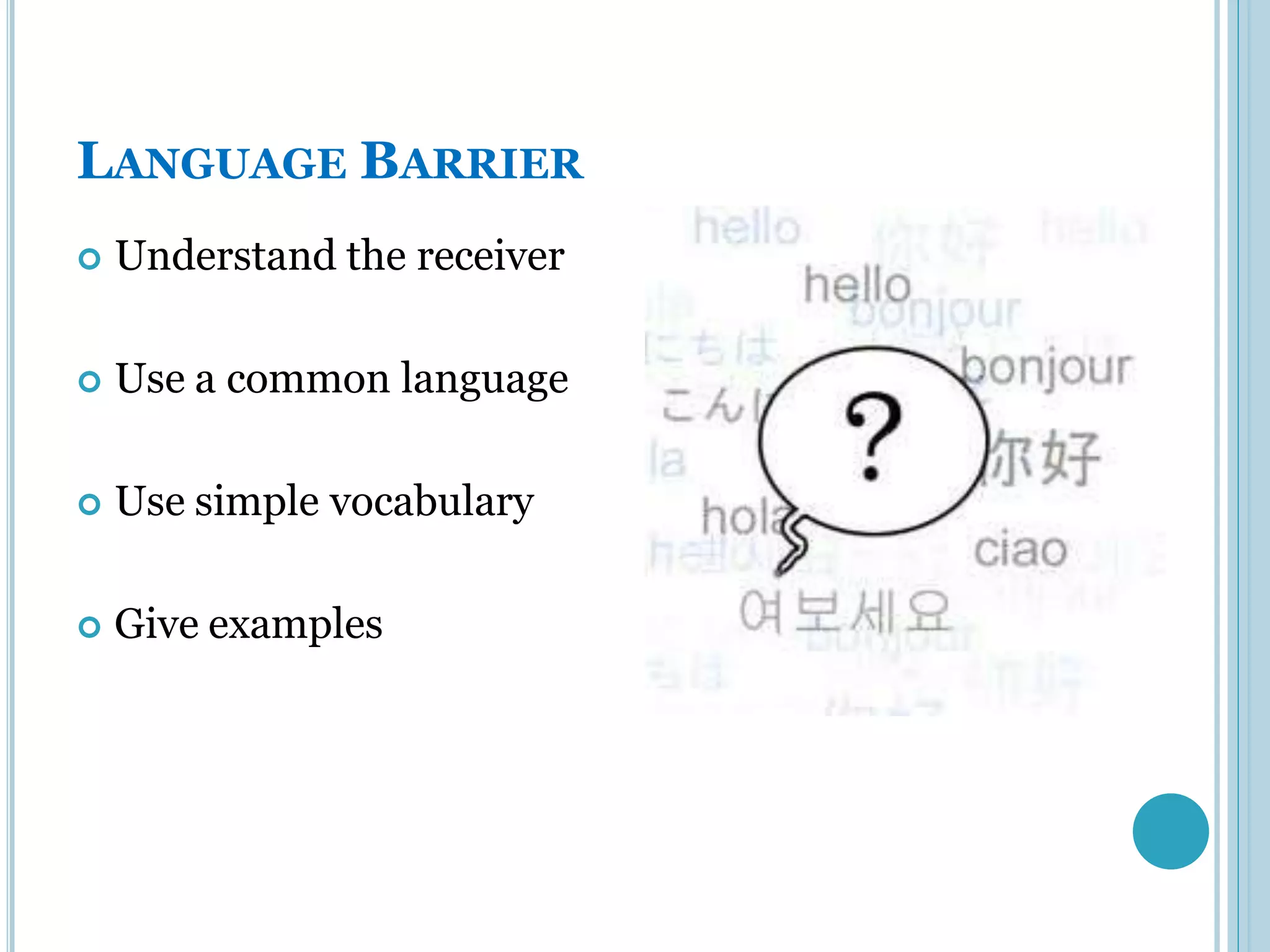
LANGUAGE BARRIER
   Understand the receiver

   Use a common language

   Use simple vocabulary

   Give examples
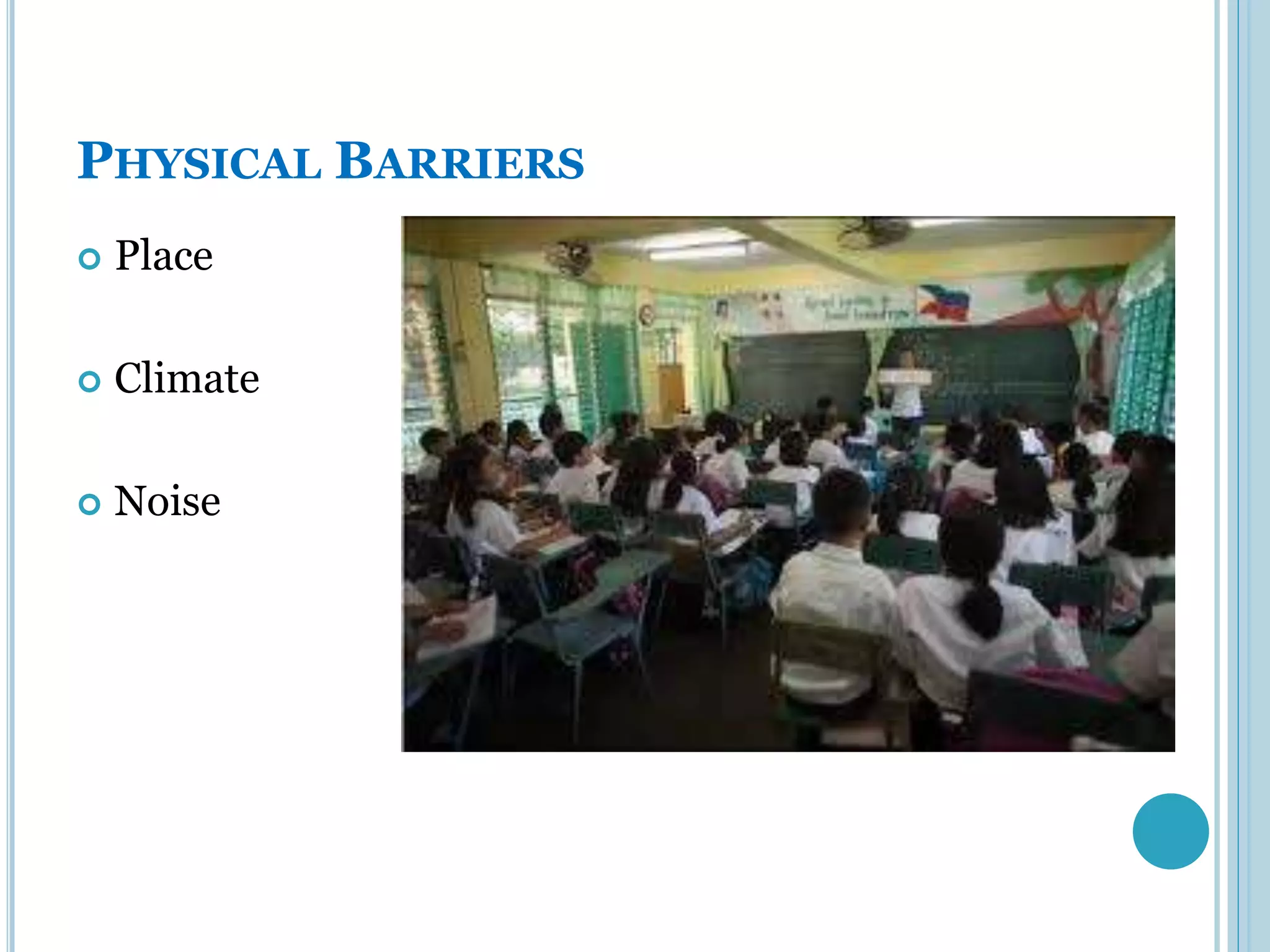
PHYSICAL BARRIERS
   Place

   Climate

   Noise
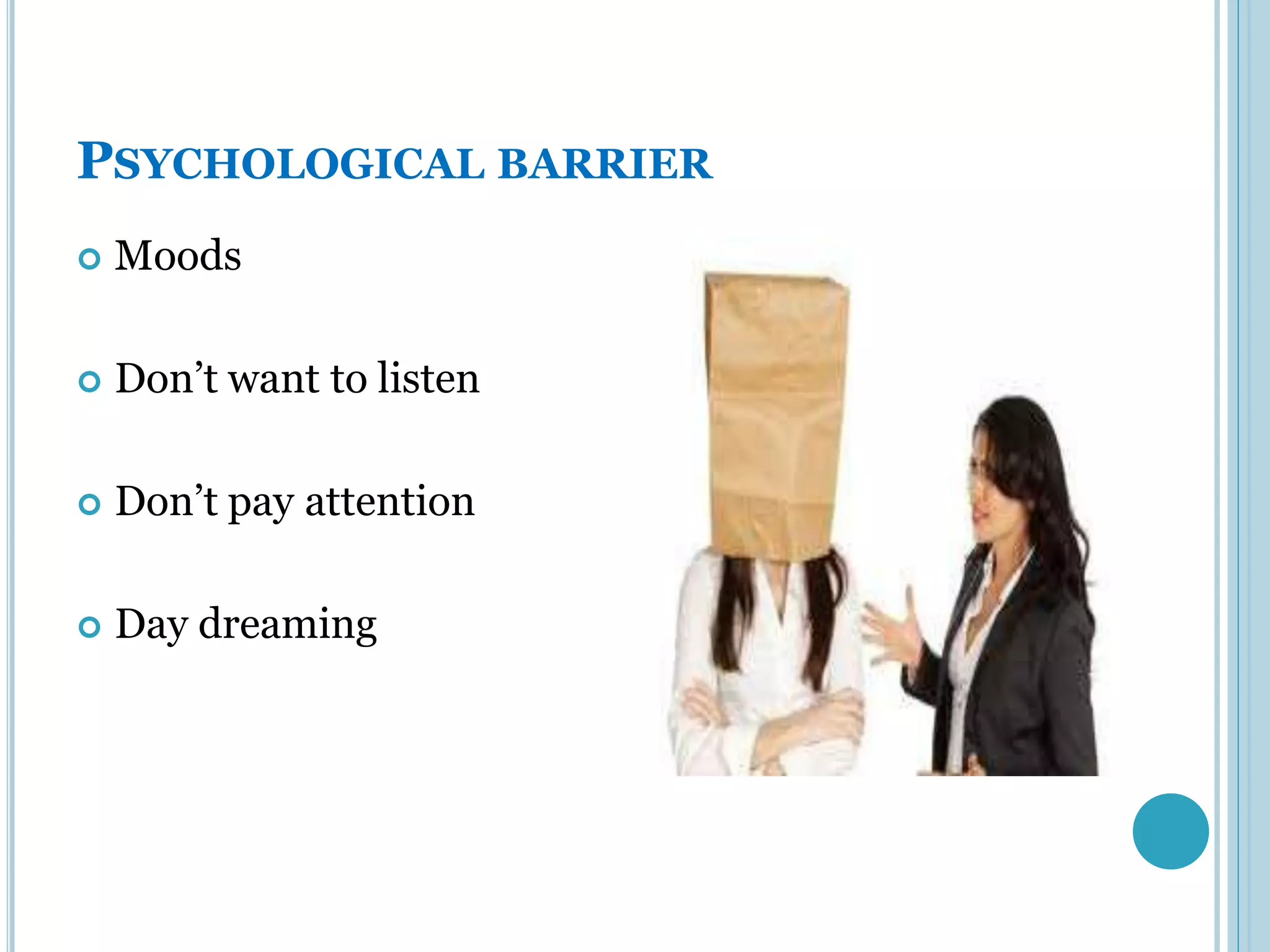
PSYCHOLOGICAL BARRIER
   Moods

   Don’t want to listen

   Don’t pay attention

   Day dreaming
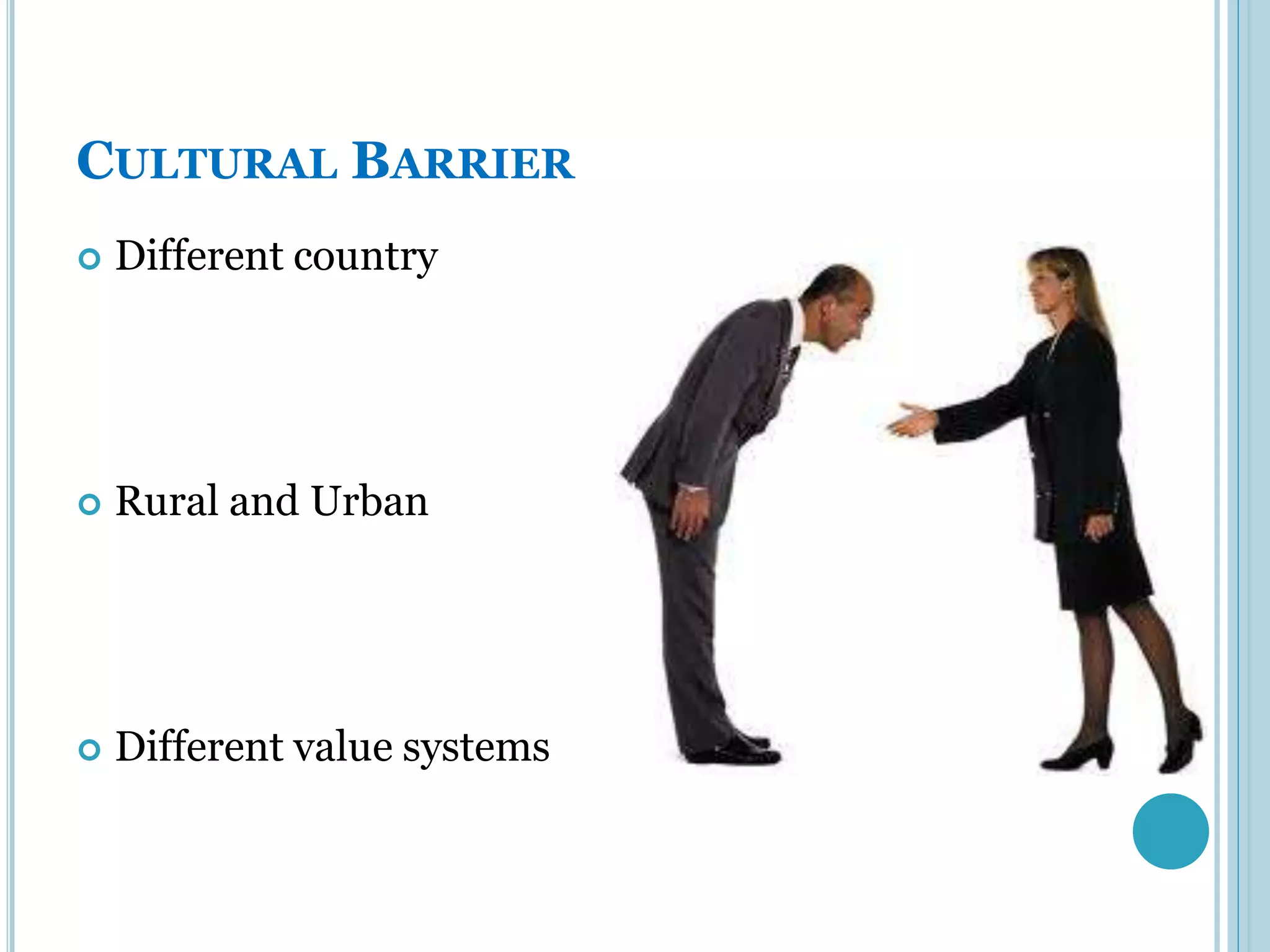
CULTURAL BARRIER
   Different country


   Rural and Urban


   Different value systems
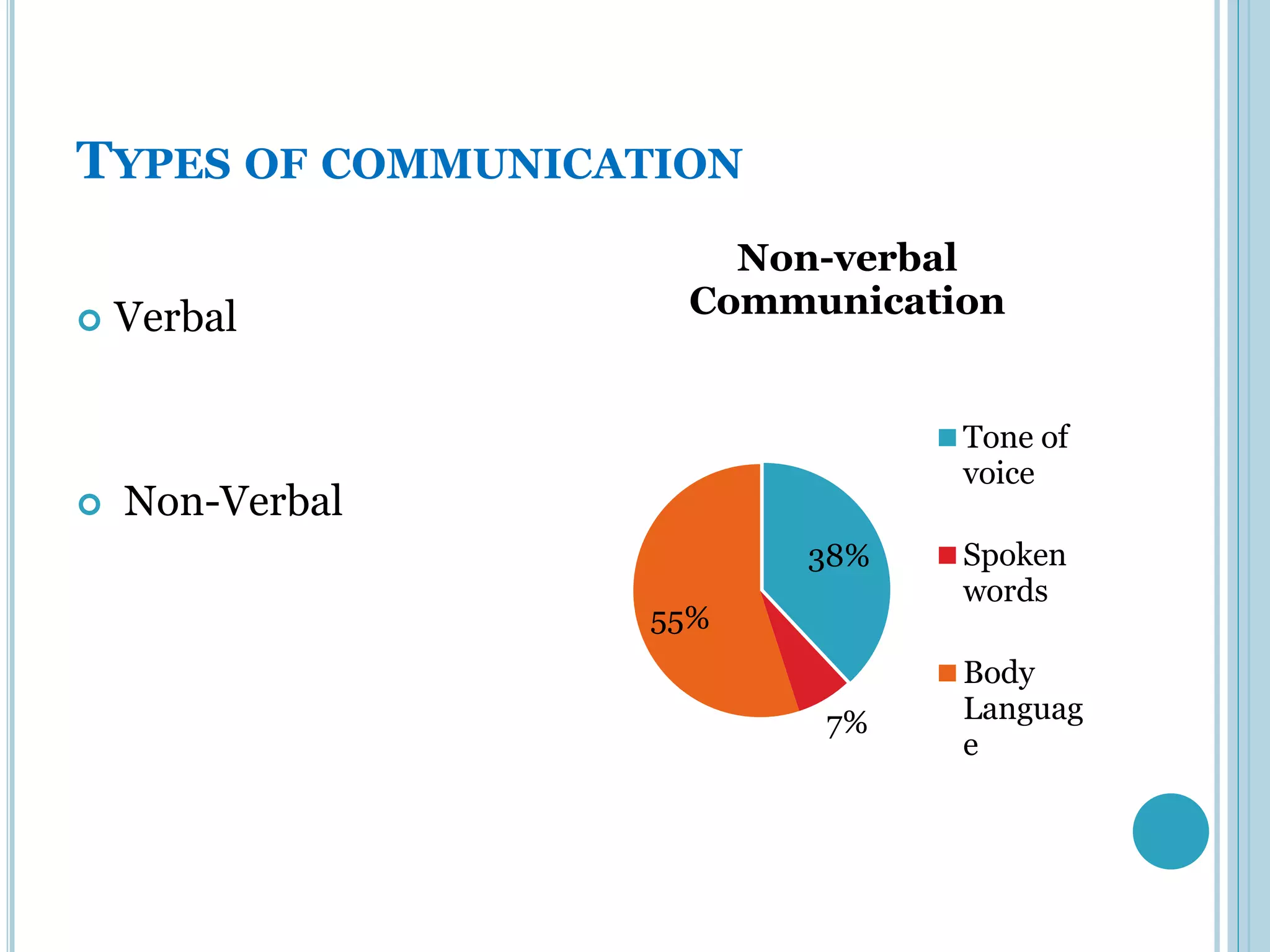
TYPES OF COMMUNICATION
                      Non-verbal
   Verbal          Communication


                               Tone of
                               voice
   Non-Verbal
                         38%   Spoken
                               words
                  55%
                               Body
                         7%    Languag
                               e
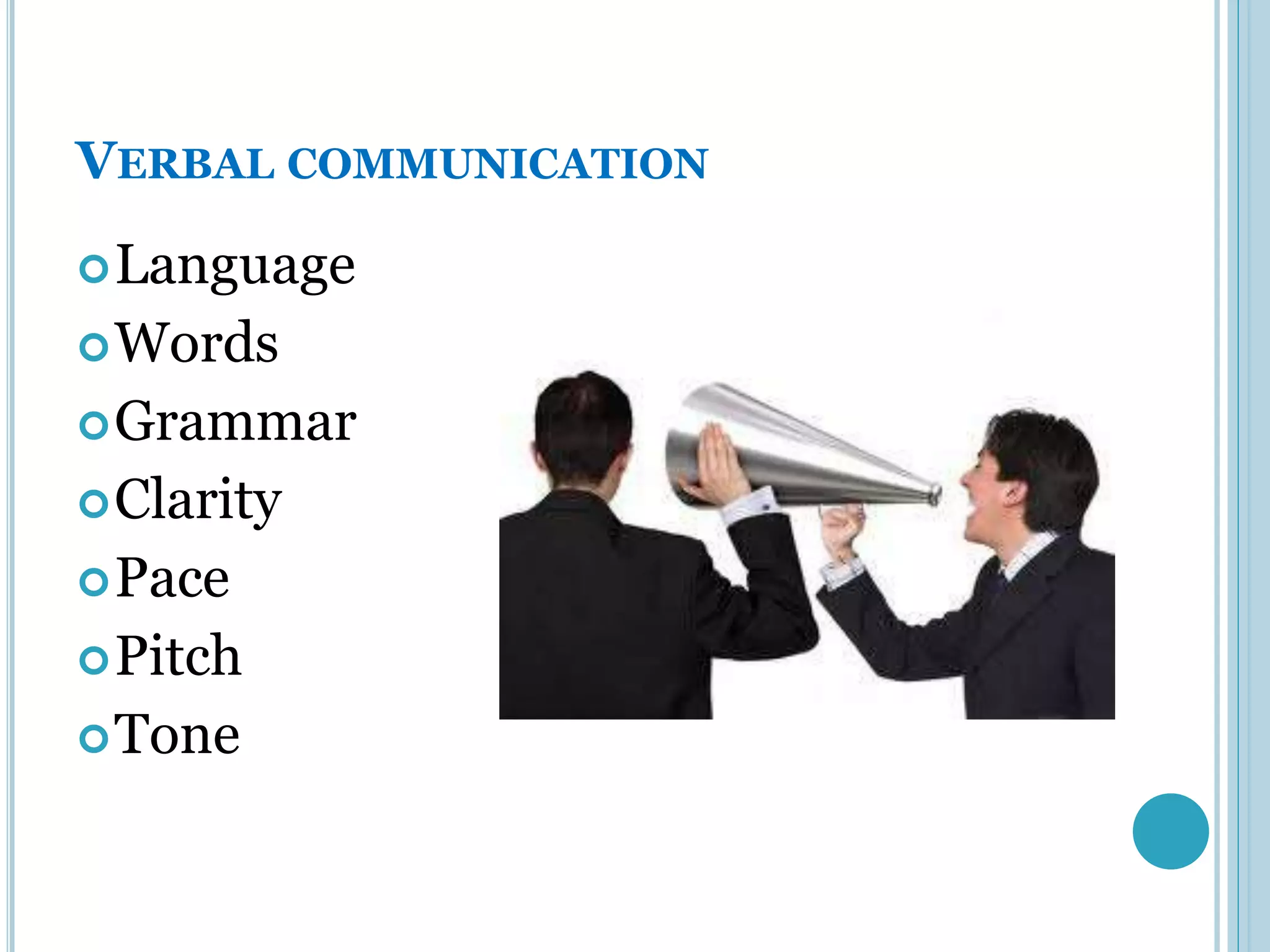
VERBAL COMMUNICATION
 Language
 Words
 Grammar
 Clarity
 Pace
 Pitch
 Tone
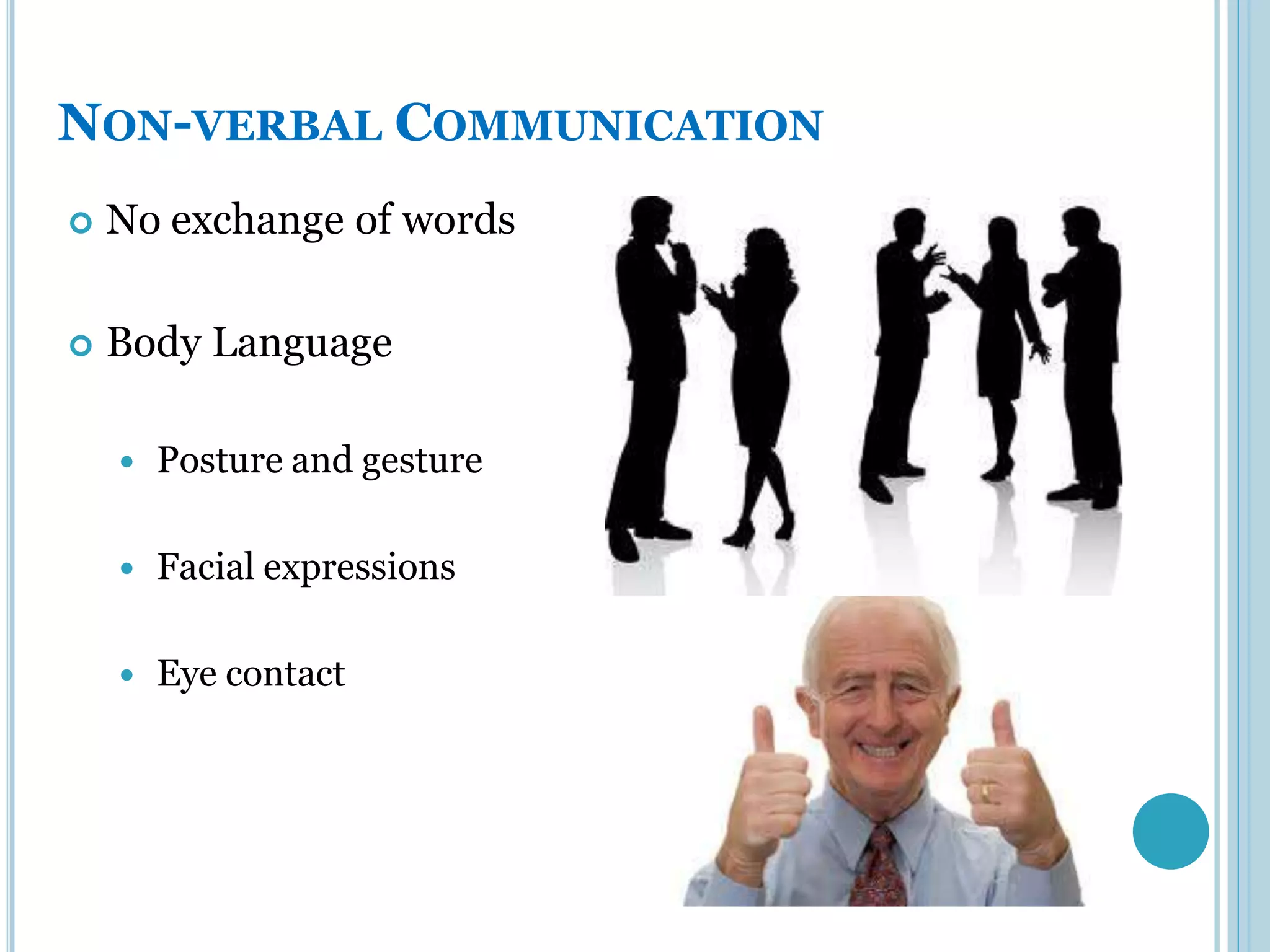
NON-VERBAL COMMUNICATION
   No exchange of words

   Body Language

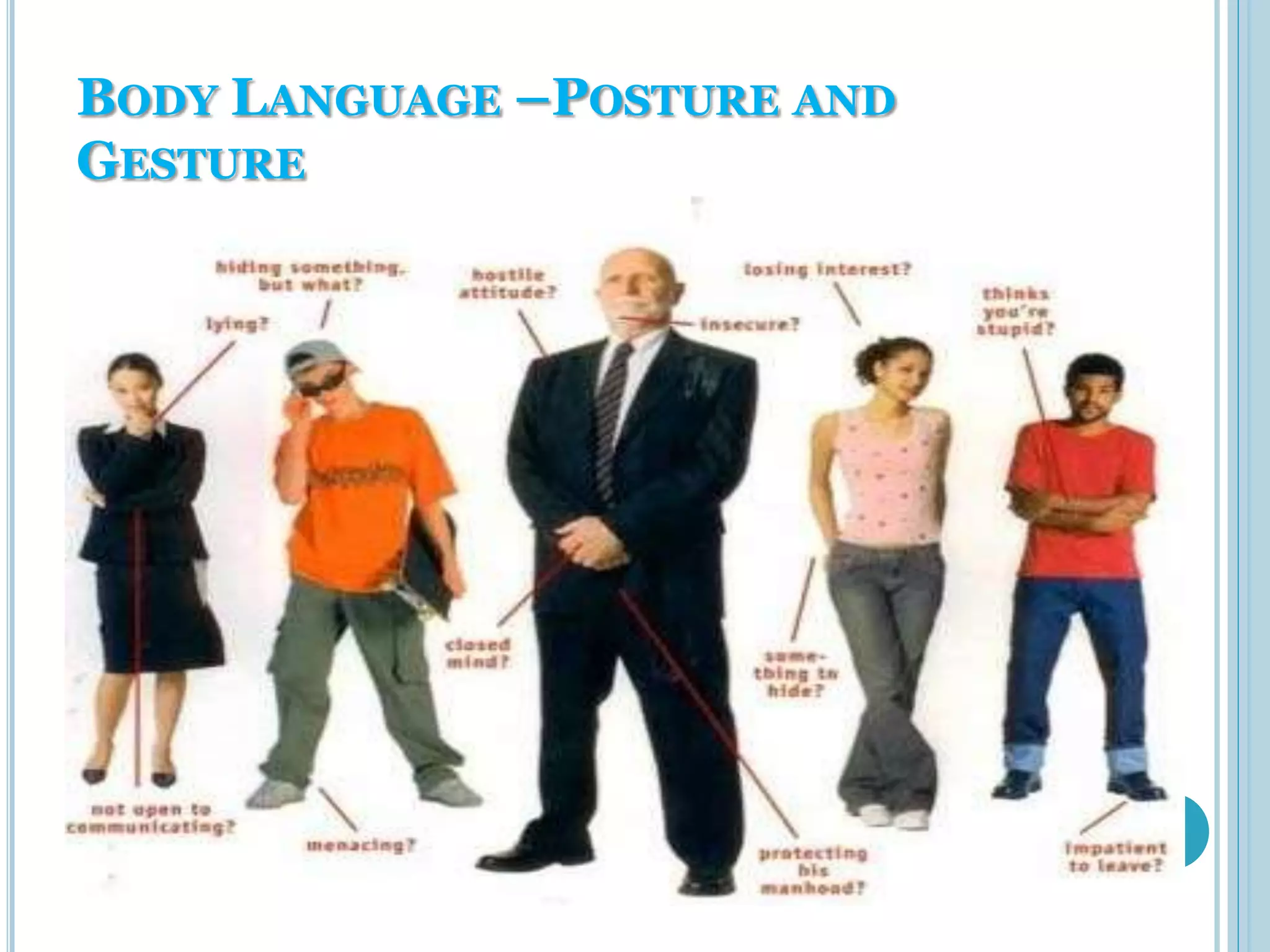
       Posture and gesture

       Facial expressions

       Eye contact
BODY LANGUAGE –POSTURE AND
GESTURE
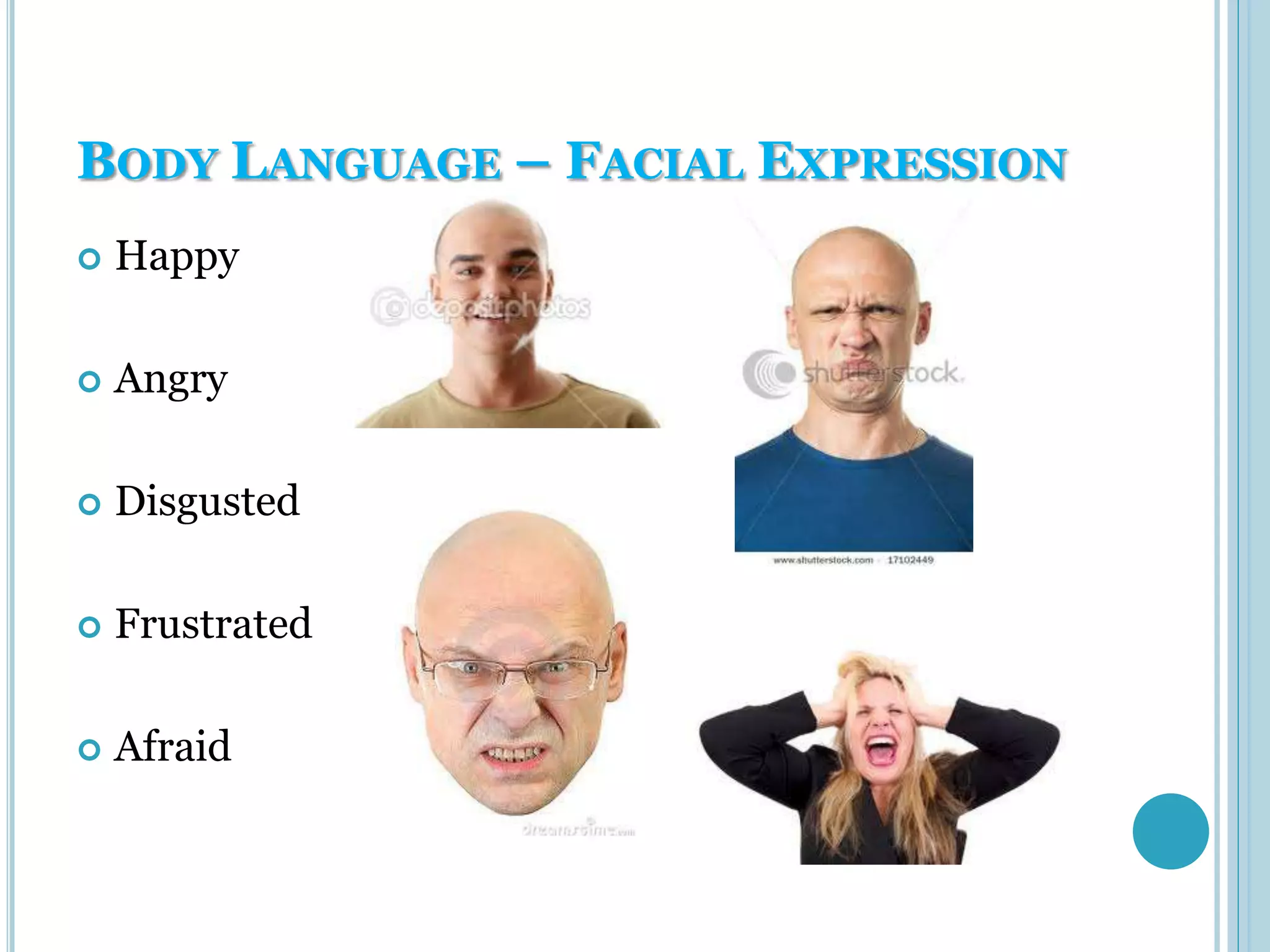
BODY LANGUAGE – FACIAL EXPRESSION
   Happy

   Angry

   Disgusted

   Frustrated

   Afraid
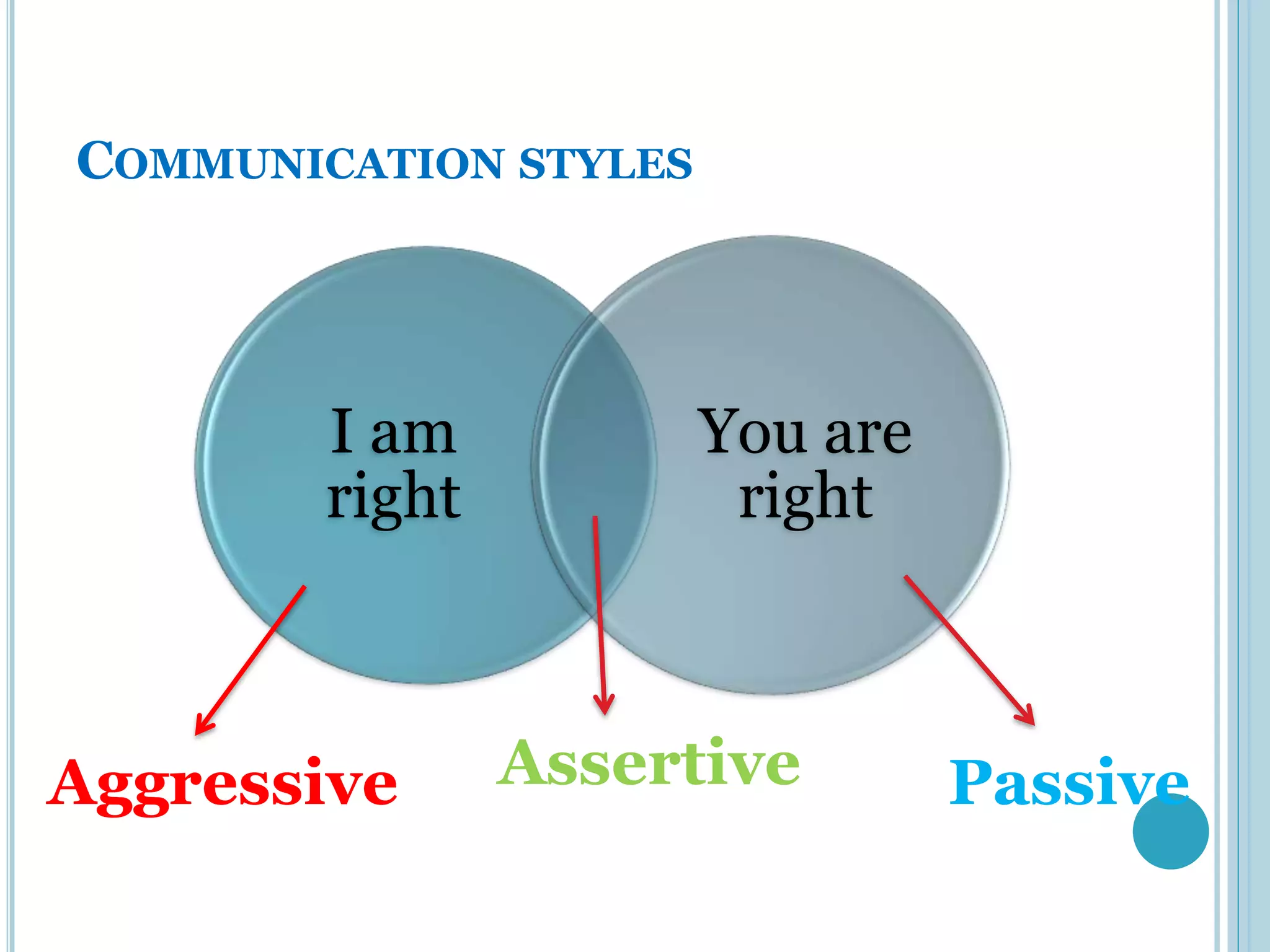
COMMUNICATION STYLES


        I am           You are
        right           right


Aggressive      Assertive        Passive
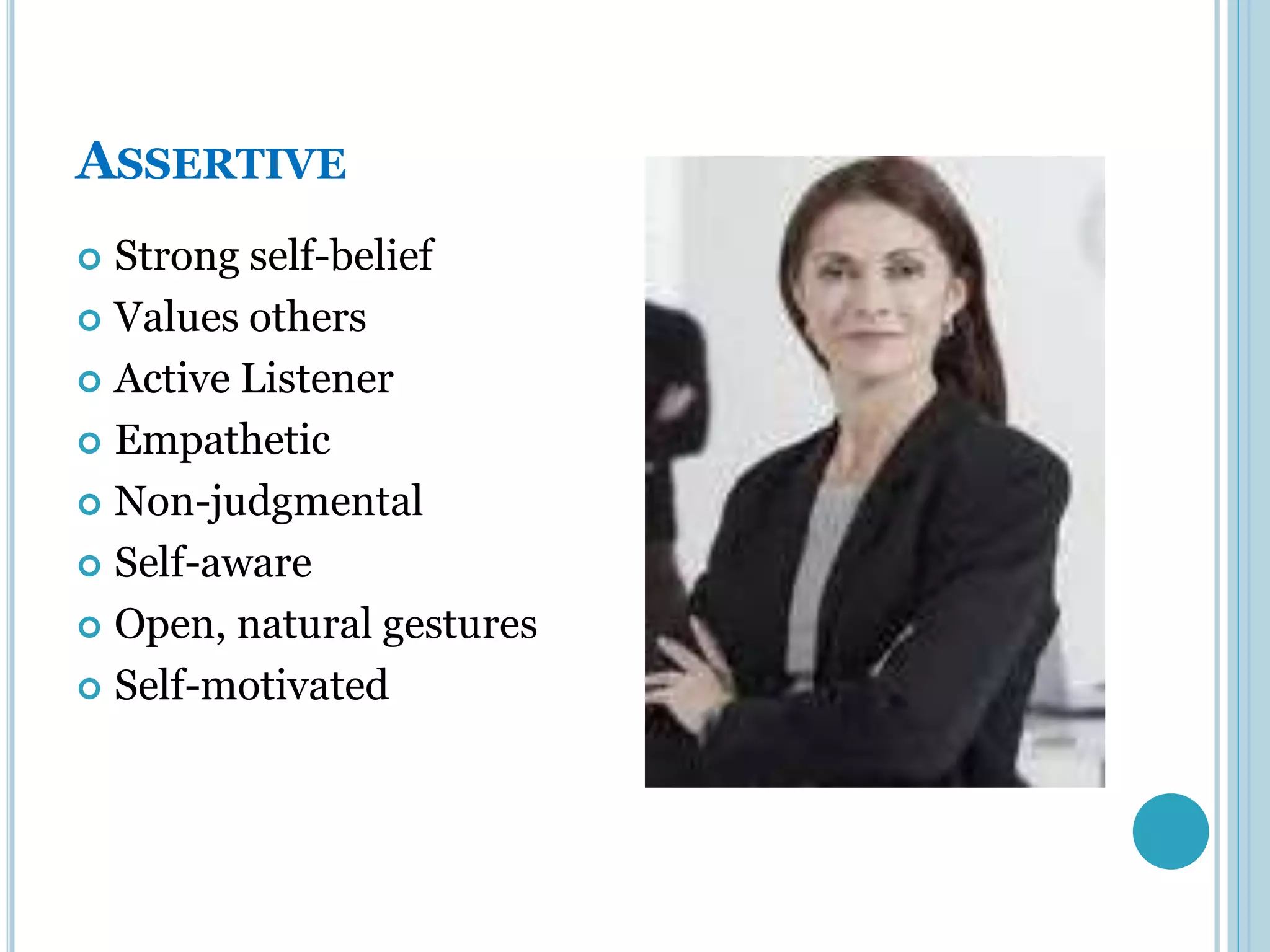
ASSERTIVE
 Strong self-belief
 Values others

 Active Listener

 Empathetic

 Non-judgmental

 Self-aware

 Open, natural gestures

 Self-motivated
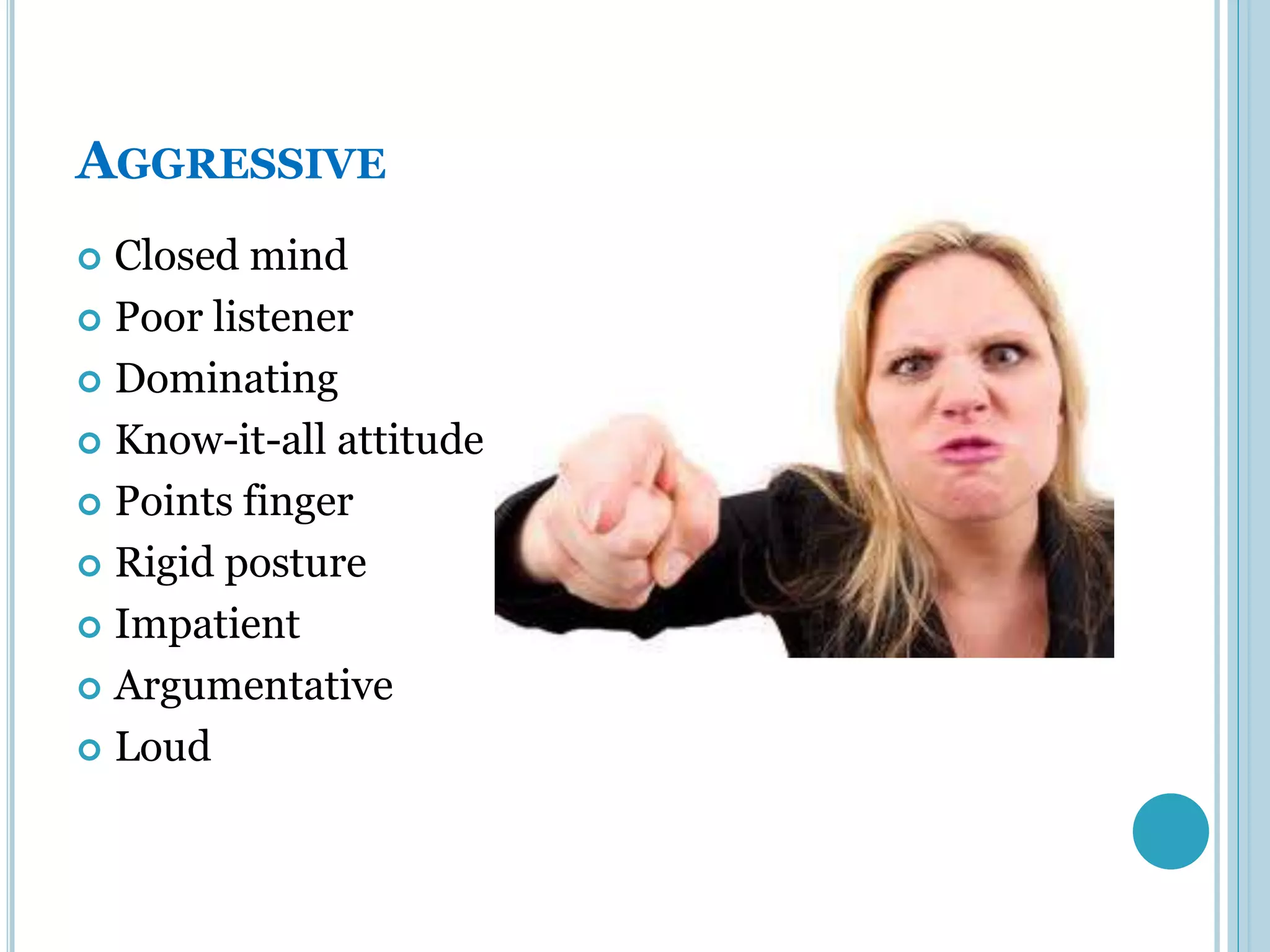
AGGRESSIVE
 Closed mind
 Poor listener

 Dominating

 Know-it-all attitude

 Points finger

 Rigid posture

 Impatient

 Argumentative

 Loud
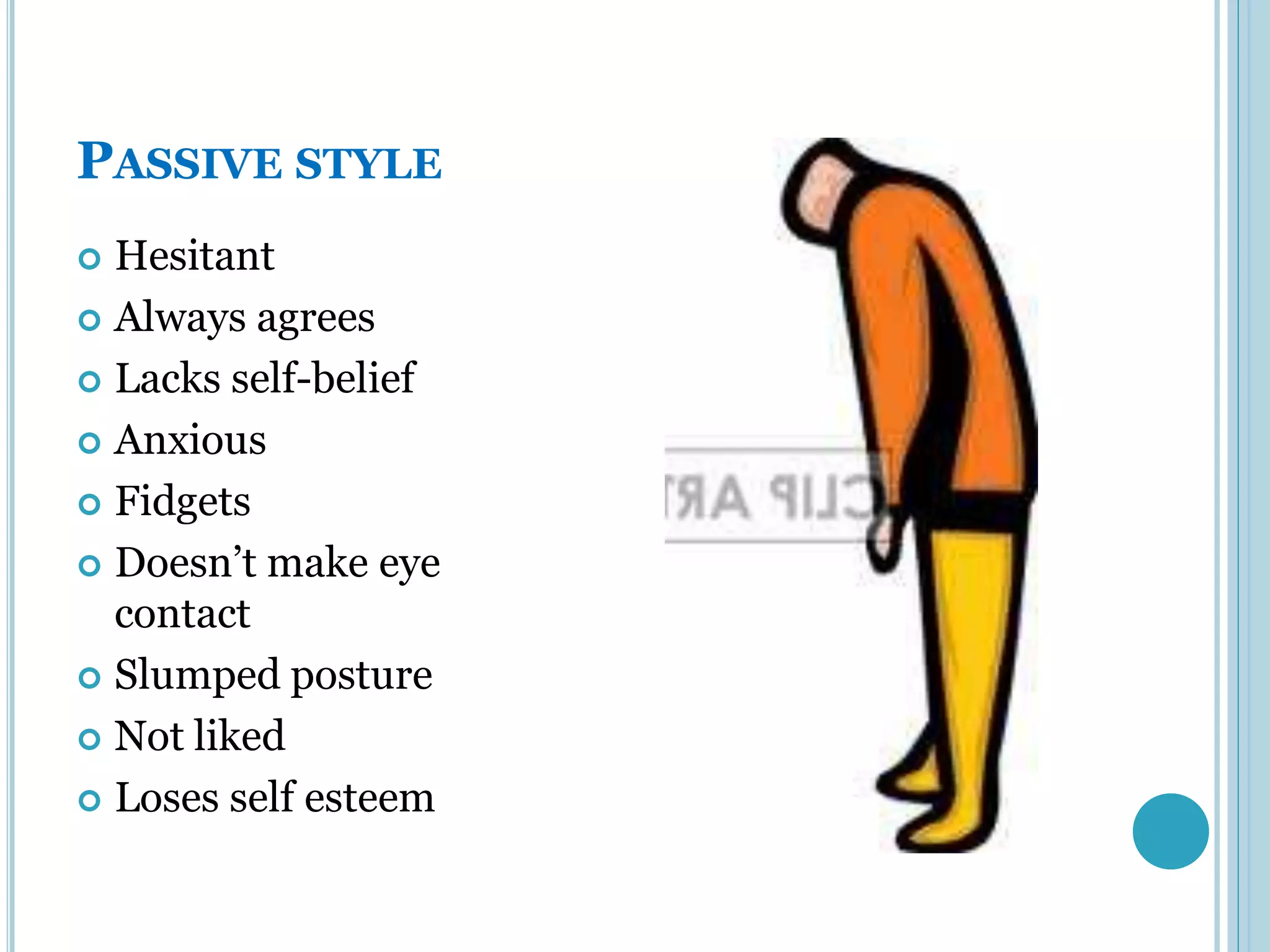
PASSIVE STYLE
 Hesitant
 Always agrees

 Lacks self-belief

 Anxious

 Fidgets

 Doesn’t make eye
  contact
 Slumped posture

 Not liked

 Loses self esteem
RECAP
   Effective communication

   Principles of Effective Communication

   Barriers to Effective Communication

   Communication Styles
Principles of effective communication

Principles of effective communication