SARATH PRAKASH.V
MECHANICAL
GPTC KALAMASSERY
CONTENTS
 Introduction
 Development
 Components
 Functions
 Summary
What is an intelligent parking
assist system?
 An Intelligent parking assist system(IPAS) or
Advanced parking guidance system(APGS) is the
technology assists drivers in parking their vehicle.
 On vehicle equipped with the intelligent parking
assist system(IPAS), via an in-dash screen and
button controls, the car can steer itself into a
parking space with little input from the user.
Development
 The initial version of the intelligent parking assist system,
launched in 2003, was designed for reverse parallel parking.
Driver intervention was not required, as the system estimated
the size of the parking space and maneuvered the vehicle
appropriately.
 This was done by an onboard computer which used a
camera built into the forward and rear of the car. Sensors
located at the similar locations detected the proximity of
nearby vehicles. The dashboard displayed an image of the
lot, and the driver would then have to determine the exact
position that the vehicle in the lot via the arrows which
appeared on the screen on the IPAS. When satisfied, the
user pressed the "Set" button, which then activated the IPAS.
 Early versions of this system had difficulty detecting objects,
including cats, baby prams and pedestrians.
DEVELOPMENT
Development
 Secondly when the driver activated the system in a too small
a space, the system constantly flashed warning signals
to inform the user of the danger of hitting the vehicle.
 In 2005, an upgraded version added recognition
capability for parking stripes. A later version of this
parking technology, launched in 2006, added integration
with parking sensors. This latest version could calculate
the steering maneuvers needed for parallel or reverse
parking, and help determine that the car has enough
clearance for a particular space with colored screen
displays which indicated adequate or inadequate space.
Components
IPAS
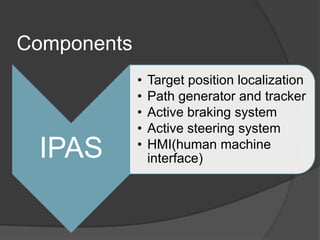
• Target position localization
• Path generator and tracker
• Active braking system
• Active steering system
• HMI(human machine
interface)
Target position localization
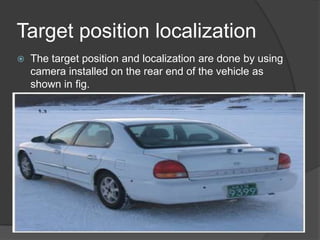
 The target position and localization are done by using
camera installed on the rear end of the vehicle as
shown in fig.
Path generator and tracker
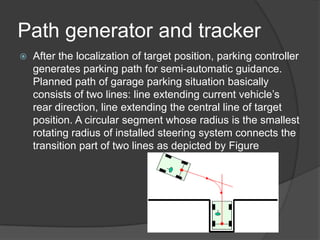
 After the localization of target position, parking controller
generates parking path for semi-automatic guidance.
Planned path of garage parking situation basically
consists of two lines: line extending current vehicle’s
rear direction, line extending the central line of target
position. A circular segment whose radius is the smallest
rotating radius of installed steering system connects the
transition part of two lines as depicted by Figure
Active steering system
 The IPAS/APGS use computer processors which
are tied to the vehicle's feature, backup camera
and two additional forward sensors on the front
side fenders. The active sensor includes multiple
sensors on the forward and rear bumpers which
detect obstacles, allowing the vehicle to sound
warnings and calculate optimum steering angles
during regular parking
 When the parking sensors feature is used, the
processor(s) calculate steering angle data which
are displayed on the navigation/camera touch
screen along with obstacle information.
Functions
The parking functions are classified into two;
 Parallel parking
 Reverse parking
Parallel parking
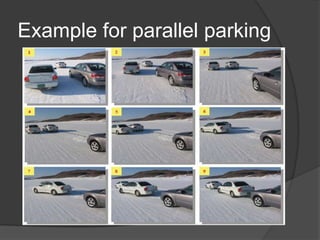
 When parallel parking with the system, drivers first pull
up alongside the parking space. They move forward
until the vehicle's rear bumper passes the rear wheel of
the car parked in front of the open space. Then, shifting
to reverse automatically activates the backup camera
system, and the car's rear view appears on dash
navigation/camera display. The driver's selection of the
parallel park guidance button on the navigation/camera
touch screen causes a grid to appear
Example for parallel parking
Reverse parking
 The reverse parking procedure is virtually identical
to the parallel parking procedure. The driver
approaches the parking space, moving forward
and turning, positioning the car in place for
backing into the reverse parking spot. The vehicle
rear has to be facing the reverse parking spot,
allowing the backup camera to 'see' the parking
area. Shifting to reverse automatically activates
the backup camera system, and the driver selects
the reverse park guidance button
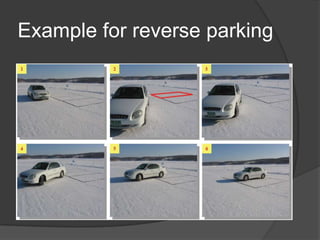
Example for reverse parking
Summary
An Intelligent parking assist system(IPAS) or Advanced parking
guidance system(APGS) is the technology assists drivers in parking
their vehicle.
On vehicle equipped with the intelligent parking assist system(IPAS),
via an in-dash screen and button controls, the car can steer itself into a
parking space with little input from the user.
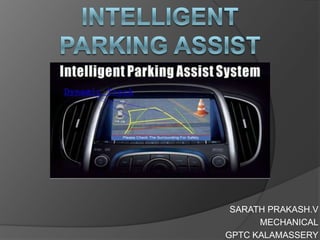
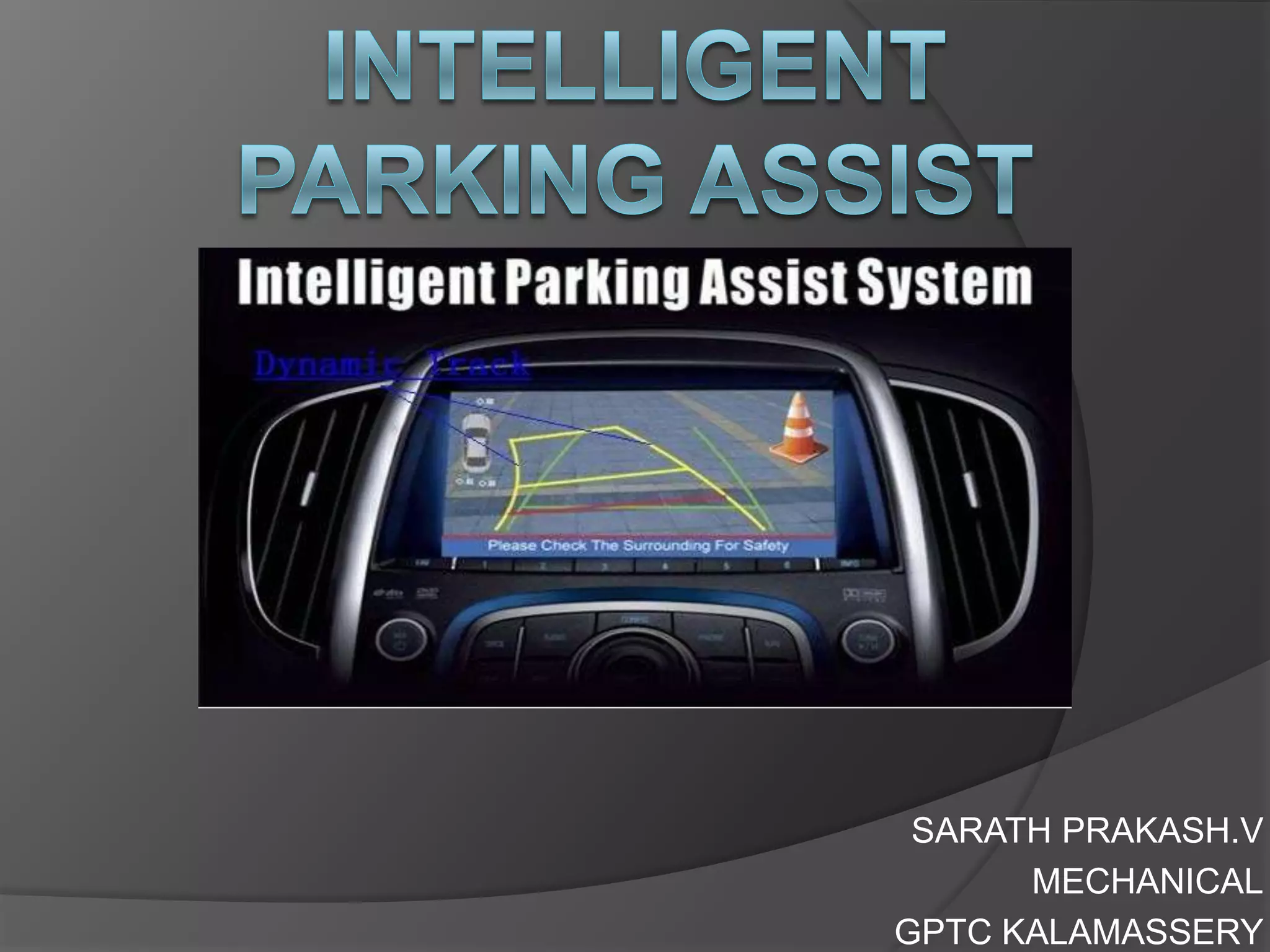
The Intelligent Parking Assist System has several outstanding
characteristics, such as intelligent prompts for parking dynamic track,
reading the data of original parking, giving reference to the car exact
position itself, Static Track displayed for final destination as always.
But also display dynamic track provided by radar or camera to follow
up continuously. As you are parking your car, the two dynamic tracks
are displayed in the screen of DVD navigation, which can follow up the
steering wheel action , and exactly describing the parking exact status .
Intelligent parking assist system

Intelligent parking assist system

  • 1.
  • 2.
    CONTENTS  Introduction  Development Components  Functions  Summary
  • 3.
    What is anintelligent parking assist system?  An Intelligent parking assist system(IPAS) or Advanced parking guidance system(APGS) is the technology assists drivers in parking their vehicle.  On vehicle equipped with the intelligent parking assist system(IPAS), via an in-dash screen and button controls, the car can steer itself into a parking space with little input from the user.
  • 4.
    Development  The initialversion of the intelligent parking assist system, launched in 2003, was designed for reverse parallel parking. Driver intervention was not required, as the system estimated the size of the parking space and maneuvered the vehicle appropriately.  This was done by an onboard computer which used a camera built into the forward and rear of the car. Sensors located at the similar locations detected the proximity of nearby vehicles. The dashboard displayed an image of the lot, and the driver would then have to determine the exact position that the vehicle in the lot via the arrows which appeared on the screen on the IPAS. When satisfied, the user pressed the "Set" button, which then activated the IPAS.  Early versions of this system had difficulty detecting objects, including cats, baby prams and pedestrians.
  • 5.
    DEVELOPMENT Development  Secondly whenthe driver activated the system in a too small a space, the system constantly flashed warning signals to inform the user of the danger of hitting the vehicle.  In 2005, an upgraded version added recognition capability for parking stripes. A later version of this parking technology, launched in 2006, added integration with parking sensors. This latest version could calculate the steering maneuvers needed for parallel or reverse parking, and help determine that the car has enough clearance for a particular space with colored screen displays which indicated adequate or inadequate space.
  • 6.
    Components IPAS • Target positionlocalization • Path generator and tracker • Active braking system • Active steering system • HMI(human machine interface)
  • 7.
    Target position localization The target position and localization are done by using camera installed on the rear end of the vehicle as shown in fig.
  • 8.
    Path generator andtracker  After the localization of target position, parking controller generates parking path for semi-automatic guidance. Planned path of garage parking situation basically consists of two lines: line extending current vehicle’s rear direction, line extending the central line of target position. A circular segment whose radius is the smallest rotating radius of installed steering system connects the transition part of two lines as depicted by Figure
  • 9.
    Active steering system The IPAS/APGS use computer processors which are tied to the vehicle's feature, backup camera and two additional forward sensors on the front side fenders. The active sensor includes multiple sensors on the forward and rear bumpers which detect obstacles, allowing the vehicle to sound warnings and calculate optimum steering angles during regular parking  When the parking sensors feature is used, the processor(s) calculate steering angle data which are displayed on the navigation/camera touch screen along with obstacle information.
  • 10.
    Functions The parking functionsare classified into two;  Parallel parking  Reverse parking
  • 11.
    Parallel parking  Whenparallel parking with the system, drivers first pull up alongside the parking space. They move forward until the vehicle's rear bumper passes the rear wheel of the car parked in front of the open space. Then, shifting to reverse automatically activates the backup camera system, and the car's rear view appears on dash navigation/camera display. The driver's selection of the parallel park guidance button on the navigation/camera touch screen causes a grid to appear
  • 12.
  • 13.
    Reverse parking  Thereverse parking procedure is virtually identical to the parallel parking procedure. The driver approaches the parking space, moving forward and turning, positioning the car in place for backing into the reverse parking spot. The vehicle rear has to be facing the reverse parking spot, allowing the backup camera to 'see' the parking area. Shifting to reverse automatically activates the backup camera system, and the driver selects the reverse park guidance button
  • 14.
  • 15.
    Summary An Intelligent parkingassist system(IPAS) or Advanced parking guidance system(APGS) is the technology assists drivers in parking their vehicle. On vehicle equipped with the intelligent parking assist system(IPAS), via an in-dash screen and button controls, the car can steer itself into a parking space with little input from the user. The Intelligent Parking Assist System has several outstanding characteristics, such as intelligent prompts for parking dynamic track, reading the data of original parking, giving reference to the car exact position itself, Static Track displayed for final destination as always. But also display dynamic track provided by radar or camera to follow up continuously. As you are parking your car, the two dynamic tracks are displayed in the screen of DVD navigation, which can follow up the steering wheel action , and exactly describing the parking exact status .