STABILI
TY
CONTRO
L
BY:- G SAI MANOHAR
ROLL NO:- 18311A0315
COURSE/YEAR:- BTECH/3RD
YEAR
CLASS/SEC:- ME-B1
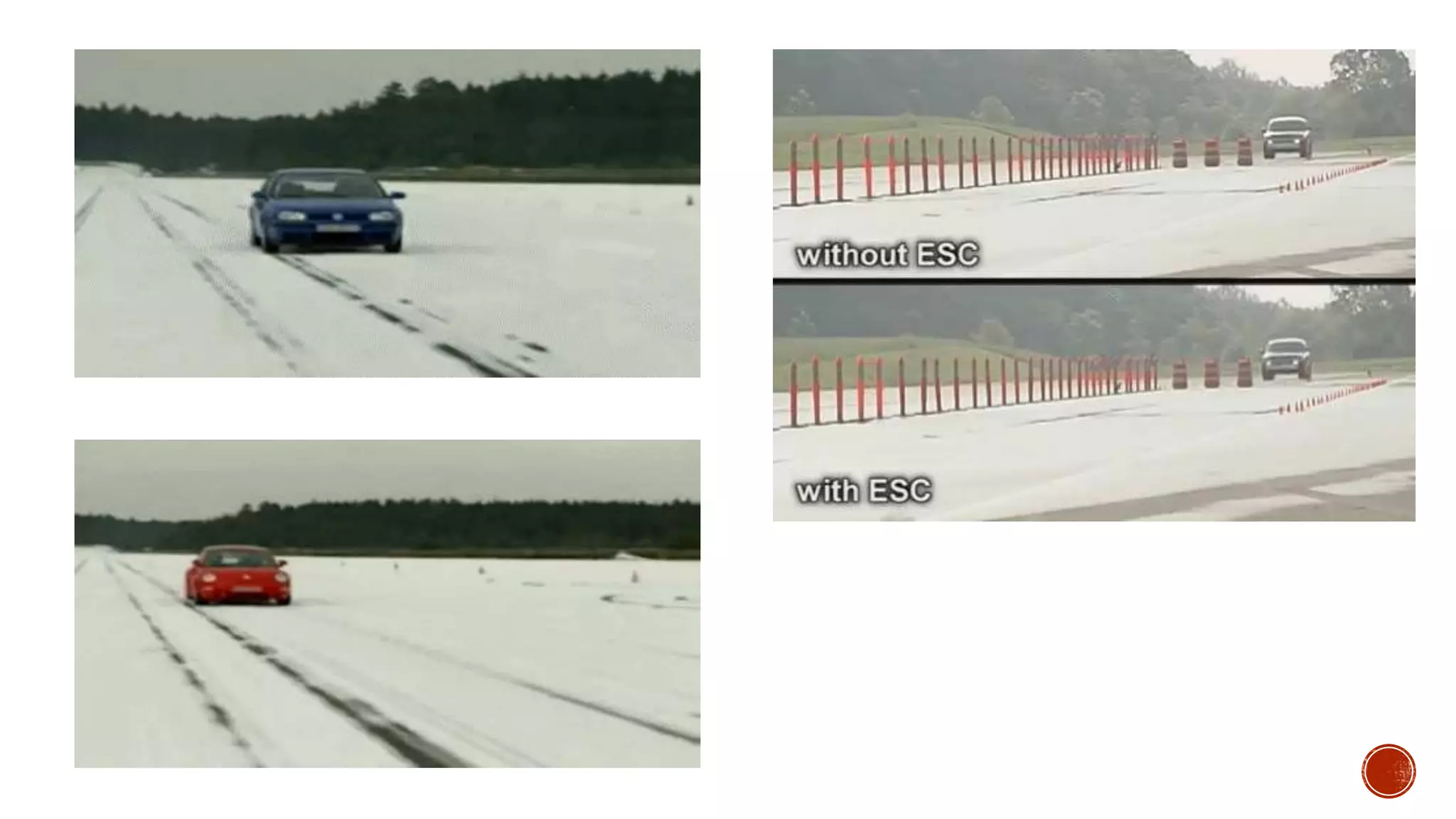
 The ESC helps prevent loss of control in curves and emergency
steering maneuvers by stabilizing your car when it begins to veer off
your intended path.
 Helps vehicle directional stability by applying and adjusting
individual wheel brakes to help bring the vehicle back to the
intended direction.
 Uses sensors to determine when the vehicle is not under control.
 First iteration made by 1980 by BMW
 Mercedes benz in 1992 with ABS,ETS,ASR
 Toyota in 1995 with VSC
 Wheel speed sensor
 Vehicle speed sensor
 Steering wheel sensor
 Yaw sensor
 Control modulator
 Master cylinder
 Brake force controllers
 FORD
ECOSPORT
 HYUNDAI
I20
 RENAULT
DUSTER
 ESC can control one-third of the fatal accidents from taking place.
 The sensors present in the system are programmed to respond post
any detection of loss of control.
 In a few ESC systems, the engine power can also be reduced.
 Every new vehicle with ESC must pass a double lane change
maneuver test prescribed by the National Highway Traffic Safety
Administration (NHTSA).
 Increased reckless driving.
 Developing of newer algorithms to tackle problems like trailer sway,
in the effect of vehicle towing.
 Life saving technology
 An aid to human, not a substitute to human
 Safe driving habits are must
Electronic stability control

Electronic stability control

  • 1.
    STABILI TY CONTRO L BY:- G SAIMANOHAR ROLL NO:- 18311A0315 COURSE/YEAR:- BTECH/3RD YEAR CLASS/SEC:- ME-B1
  • 2.
     The ESChelps prevent loss of control in curves and emergency steering maneuvers by stabilizing your car when it begins to veer off your intended path.
  • 3.
     Helps vehicledirectional stability by applying and adjusting individual wheel brakes to help bring the vehicle back to the intended direction.  Uses sensors to determine when the vehicle is not under control.
  • 4.
     First iterationmade by 1980 by BMW  Mercedes benz in 1992 with ABS,ETS,ASR  Toyota in 1995 with VSC
  • 6.
     Wheel speedsensor  Vehicle speed sensor  Steering wheel sensor  Yaw sensor  Control modulator  Master cylinder  Brake force controllers
  • 10.
  • 11.
     ESC cancontrol one-third of the fatal accidents from taking place.  The sensors present in the system are programmed to respond post any detection of loss of control.  In a few ESC systems, the engine power can also be reduced.
  • 12.
     Every newvehicle with ESC must pass a double lane change maneuver test prescribed by the National Highway Traffic Safety Administration (NHTSA).  Increased reckless driving.
  • 13.
     Developing ofnewer algorithms to tackle problems like trailer sway, in the effect of vehicle towing.
  • 16.
     Life savingtechnology  An aid to human, not a substitute to human  Safe driving habits are must