SEMINAR ON


HY-WIRE TECHNOLOGY


           SARATH PRAKASH.V
           MECHANICAL ENGINEERING
           G.P.T.C KALAMASSERY
INTRODUCTION
 Cars are immensely complicated
  machines, but they do an incredibly simple
  job.
 Most of the complex stuff in a car is
  decided to turning wheel
 The two basic elements that largely dictate
  car design today are
     1. The internal combustion engine
     2. Mechanical and hydraulic linkages
HY-WIRE BASICS

 The defining characteristic of the Hy-wire
  is that it doesn’t have either of those two
  things: engine and mechanical and
  hydraulic linkages
 Instead of an engine, it has a fuel cell
  stack
 Instead of mechanical and hydraulic
  linkages, it has a drive by wire system
FUEL CELL –ON HY-WIRE
 A fuel cell is an electrochemical energy
  conversion device that converts hydrogen
  and oxygen into water, producing
  electricity and heat in the process.

 It provides a DC (direct current) voltage

 It can continually recharge a fuel cell by
  adding chemical fuel- hydrogen for an
  onboard storage tank
Proton exchange membrane
             fuel-cell
 The type of fuel cell that is used in the
  Hy-wire car is the Proton exchange
  membrane fuel cell.
 The four basic elements of a PEM fuel cell
  are:-

      The anode, the negative post of the fuel cell

      The cathode, the positive post of the fuel cell
 Electrolyte
      It is the proton exchange membrane .
      It blocks electrons .


 The catalyst
     It is a special material that facilitates the reaction of
      oxygen and hydrogen.
     It is usually made of platinum powder very thinly
      coated onto carbon paper or cloth.
     It is rough and porous .
     The platinum-coated side of the catalyst faces the
      PEM.
The working of PEMFC
 Chemistry of a Fuel Cell
          Anode side:
          2H2            => 4H+     + 4e-


          Cathode side:
          O2 + 4H+ +4e- => 2H2O

          Net reaction:
          2H2 + O2        => 2H2O
DRIVE BY WIRE TECHNOLOGY
 The ‘brain’ of Hy-Wire is a central computer
  housed in the middle of the chassis.
 It sends electronic signals to
     The motor control unit to vary the speed.
     The steering mechanism to maneuver the car.
  
      The braking system to slow the car down .
 It is connected to an array of advanced sensors.
 The computer is connected to the body’s
  electronics through universal docking ports.
X-Drive
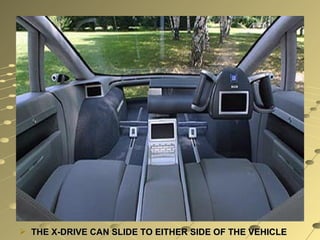
 X-drive is the driver’s control unit .
 It has two ergonomic groups , positioned to the
  left and right of a small LCD monitor.
 The color monitor in the center of the controller
  displays speed, mileage, fuel level and the rear-
  view images from video cameras on the sides
  and back of the car, in place of conventional
  mirrors.
 A second monitor, on a console beside the
  driver, shows you stereo, climate control and
  navigation information.
 THE X-DRIVE CAN SLIDE TO EITHER SIDE OF THE VEHICLE
Fuel-Cell stack
 It is made up of 200 individual cells connected in
  series.

 It collectively provide 94 kilowatts of continuous
  power and 129 kilowatts at peak power.

 It is kept cool by a conventional radiator system

 It delivers DC voltage ranging from 125 to 200
  volts
THE HYDROGEN TANKS AND FUEL-CELL STACK IN THE HY-WIRE
ADVANTAGES
 1. Fuel efficient - a fuel cell vehicle could
 provide twice the fuel efficiency of a comparably
 sized conventional vehicle

 2. Environment friendly - the only bi-product
 formed is water, which is a non-pollutant.

 3. High stability - a low center of gravity, gives
  the architecture both a high stability and superior
  handling .
 4. Highly spacious - As there are no
  linkages and engine lot of legroom space
  is available for the passengers.

 5. Driver friendly –
     X-Drive can be taken to anywhere inside the car
     Gives the driver a clear view of the road and thus
      increases the drivability.
 6. Freedom of individual expression –
     freedom of individual expression
DISADVANTAGES
 1. Low safety -An electrical failure would mean
 total loss of control.

 2. Storage and transportation of hydrogen
  fuels – production , transportation and storage
  of hydrogen for the on board fuel cell stack.

 3. Pricing - With the current status of
 development, manufacturing of the Hy-wire cars
 on a mass scale would not at all be economical.
FUTURE OF HY-WIRE
 Fuel cells offer a promising alternative

 They need to be compelling, affordable,
  and profitable.

 The main challenge is in the field of
  storage of hydrogen
CONCLUSION
 The Hy-wire concept has so profoundly
  brought about changes in the automotive
  industry
 GM and other auto makers are planning
  to launch such a vehicle for the public
  usage by the year 2020.
THANK YOU

Hy wire-car

  • 1.
    SEMINAR ON HY-WIRE TECHNOLOGY SARATH PRAKASH.V MECHANICAL ENGINEERING G.P.T.C KALAMASSERY
  • 2.
    INTRODUCTION  Cars areimmensely complicated machines, but they do an incredibly simple job.  Most of the complex stuff in a car is decided to turning wheel  The two basic elements that largely dictate car design today are 1. The internal combustion engine 2. Mechanical and hydraulic linkages
  • 3.
    HY-WIRE BASICS  Thedefining characteristic of the Hy-wire is that it doesn’t have either of those two things: engine and mechanical and hydraulic linkages  Instead of an engine, it has a fuel cell stack  Instead of mechanical and hydraulic linkages, it has a drive by wire system
  • 4.
    FUEL CELL –ONHY-WIRE  A fuel cell is an electrochemical energy conversion device that converts hydrogen and oxygen into water, producing electricity and heat in the process.  It provides a DC (direct current) voltage  It can continually recharge a fuel cell by adding chemical fuel- hydrogen for an onboard storage tank
  • 5.
    Proton exchange membrane fuel-cell  The type of fuel cell that is used in the Hy-wire car is the Proton exchange membrane fuel cell.  The four basic elements of a PEM fuel cell are:-  The anode, the negative post of the fuel cell  The cathode, the positive post of the fuel cell
  • 6.
     Electrolyte  It is the proton exchange membrane .  It blocks electrons .  The catalyst It is a special material that facilitates the reaction of oxygen and hydrogen. It is usually made of platinum powder very thinly coated onto carbon paper or cloth. It is rough and porous . The platinum-coated side of the catalyst faces the PEM.
  • 7.
  • 8.
     Chemistry ofa Fuel Cell Anode side: 2H2 => 4H+ + 4e- Cathode side: O2 + 4H+ +4e- => 2H2O Net reaction: 2H2 + O2 => 2H2O
  • 9.
    DRIVE BY WIRETECHNOLOGY  The ‘brain’ of Hy-Wire is a central computer housed in the middle of the chassis.  It sends electronic signals to  The motor control unit to vary the speed.  The steering mechanism to maneuver the car.  The braking system to slow the car down .  It is connected to an array of advanced sensors.  The computer is connected to the body’s electronics through universal docking ports.
  • 11.
    X-Drive  X-drive isthe driver’s control unit .  It has two ergonomic groups , positioned to the left and right of a small LCD monitor.  The color monitor in the center of the controller displays speed, mileage, fuel level and the rear- view images from video cameras on the sides and back of the car, in place of conventional mirrors.  A second monitor, on a console beside the driver, shows you stereo, climate control and navigation information.
  • 12.
     THE X-DRIVECAN SLIDE TO EITHER SIDE OF THE VEHICLE
  • 13.
    Fuel-Cell stack  Itis made up of 200 individual cells connected in series.  It collectively provide 94 kilowatts of continuous power and 129 kilowatts at peak power.  It is kept cool by a conventional radiator system  It delivers DC voltage ranging from 125 to 200 volts
  • 14.
    THE HYDROGEN TANKSAND FUEL-CELL STACK IN THE HY-WIRE
  • 16.
    ADVANTAGES  1. Fuelefficient - a fuel cell vehicle could provide twice the fuel efficiency of a comparably sized conventional vehicle  2. Environment friendly - the only bi-product formed is water, which is a non-pollutant.  3. High stability - a low center of gravity, gives the architecture both a high stability and superior handling .
  • 17.
     4. Highlyspacious - As there are no linkages and engine lot of legroom space is available for the passengers.  5. Driver friendly – X-Drive can be taken to anywhere inside the car Gives the driver a clear view of the road and thus increases the drivability.  6. Freedom of individual expression – freedom of individual expression
  • 18.
    DISADVANTAGES  1. Lowsafety -An electrical failure would mean total loss of control.  2. Storage and transportation of hydrogen fuels – production , transportation and storage of hydrogen for the on board fuel cell stack.  3. Pricing - With the current status of development, manufacturing of the Hy-wire cars on a mass scale would not at all be economical.
  • 19.
    FUTURE OF HY-WIRE Fuel cells offer a promising alternative  They need to be compelling, affordable, and profitable.  The main challenge is in the field of storage of hydrogen
  • 20.
    CONCLUSION  The Hy-wireconcept has so profoundly brought about changes in the automotive industry  GM and other auto makers are planning to launch such a vehicle for the public usage by the year 2020.
  • 21.