Intelligent Transportation
Systems for Parking
Michigan Transportation Engineering Conference
December 2, 2015
Presented by Andrew J. Vidor
Presentation Summary
Automated parking guidance systems (APGS), are a form of ITS. APGS have varying
levels of technology that can be deployed depending on the circumstance. The
most basic is facility availability counts which can be displayed at entrance to a
parking facility or along the roadway network. These systems are also used for on-
street parking, whereas, the parking availability on any block can be viewed via an
app. These systems, in the transportation industry can reduce traffic congestion,
vehicle emissions and search time for a parking space. The presentation provides
an overview of the varying types of automated parking guidance systems and their
benefits to the transportation industry.
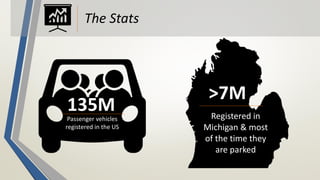
The Stats
135M
Passenger vehicles
registered in the US
>7M
Registered in
Michigan & most
of the time they
are parked
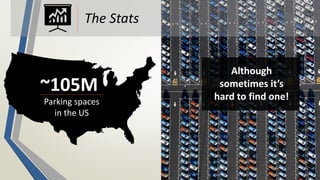
The Stats
~105M
Parking spaces
in the US
Although
sometimes it’s
hard to find one!
Today’s Discussion
Types of automated parking guidance systems
How the systems work
Benefits to transportation industry
An automated parking guidance system (APGS) is an intelligent transportation
system technology whereas the presence of parked vehicles is monitored in real-
time. The information is then communicated to drivers through a serves of dynamic
messaging signs.
Automated Parking Guidance System
Definition
Helping drivers find a place to park quicker and more conveniently.
What its used for
Driver Benefits
Less hassle parking
Less vehicle congestion Increased convenience
Reduced cruising
Drivers can choose parking in advance of arriving at
facility based on availability
Quicker start to the purpose of the trip
(shopping, catching a flight, preparing for a meeting)
Shorter time to park
Less stress placed on parking
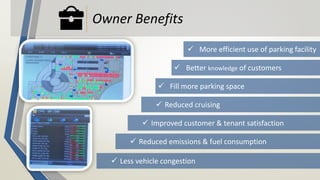
Owner Benefits
 More efficient use of parking facility
 Better knowledge of customers
 Fill more parking space
 Reduced cruising
 Improved customer & tenant satisfaction
 Reduced emissions & fuel consumption
 Less vehicle congestion
Transportation Industry Benefits
 Less vehicle congestion
 Reduced cruising
 Reduced emissions
 Reduced fuel consumption
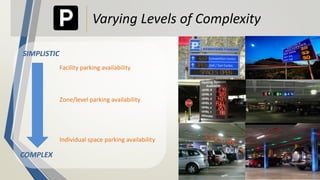
Facility parking availability
Zone/level parking availability
Individual space parking availability
SIMPLISTIC
COMPLEX
Varying Levels of Complexity
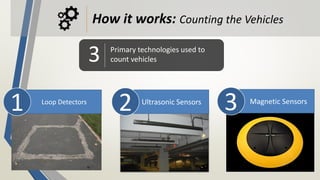
How it works: Counting the Vehicles
Primary technologies used to
count vehicles3
Loop Detectors Ultrasonic Sensors
21 Magnetic Sensors
3
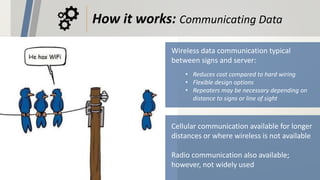
How it works: Communicating Data
Wireless data communication typical
between signs and server:
• Reduces cost compared to hard wiring
• Flexible design options
• Repeaters may be necessary depending on
distance to signs or line of sight
Cellular communication available for longer
distances or where wireless is not available
Radio communication also available;
however, not widely used
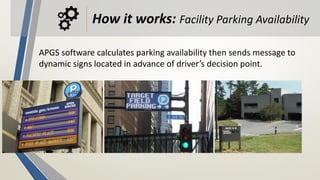
APGS software calculates parking availability then sends message to
dynamic signs located in advance of driver’s decision point.
How it works: Facility Parking Availability
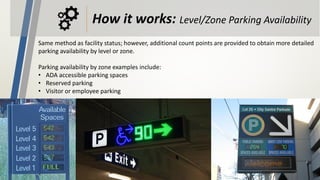
Same method as facility status; however, additional count points are provided to obtain more detailed
parking availability by level or zone.
Parking availability by zone examples include:
• ADA accessible parking spaces
• Reserved parking
• Visitor or employee parking
How it works: Level/Zone Parking Availability
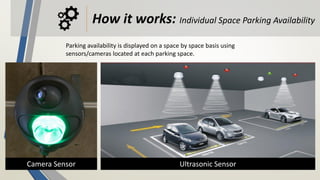
Parking availability is displayed on a space by space basis using
sensors/cameras located at each parking space.
Ultrasonic Sensor
How it works: Individual Space Parking Availability
Camera Sensor
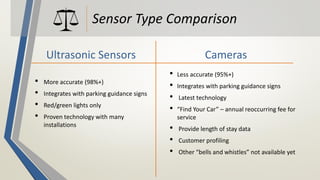
• Less accurate (95%+)
• Integrates with parking guidance signs
• Latest technology
• “Find Your Car” – annual reoccurring fee for
service
• Provide length of stay data
• Customer profiling
• Other “bells and whistles” not available yet
• More accurate (98%+)
• Integrates with parking guidance signs
• Red/green lights only
• Proven technology with many
installations
Sensor Type Comparison
Ultrasonic Sensors Cameras
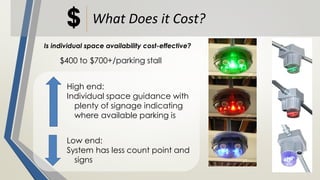
What Does it Cost?
Is individual space availability cost-effective?
$400 to $700+/parking stall
Low end:
System has less count point and
signs
High end:
Individual space guidance with
plenty of signage indicating
where available parking is
$
Does it Work??
YES! But…
It Does... It Does not...
• Depend upon drivers
• Seeing the sign
• Believing the message
• Following the directions
• Work best with high turn-over
facilities, complex search patterns or
when every space needs to be filled
• Requires regular maintenance and
calibration; If not calibrated,
patrons lose confidence and system
is ultimately ignored
• Correct poor wayfinding of a
poor design
Questions
Andrew
J. Vidor
andrew.vidor@walkerparking.com
Walker Parking Consultants
2121 Hudson Ave
Kalamazoo, MI 49008
810.265.2639

Intelligent Transportation Systems for Parking

  • 1.
    Intelligent Transportation Systems forParking Michigan Transportation Engineering Conference December 2, 2015 Presented by Andrew J. Vidor
  • 2.
    Presentation Summary Automated parkingguidance systems (APGS), are a form of ITS. APGS have varying levels of technology that can be deployed depending on the circumstance. The most basic is facility availability counts which can be displayed at entrance to a parking facility or along the roadway network. These systems are also used for on- street parking, whereas, the parking availability on any block can be viewed via an app. These systems, in the transportation industry can reduce traffic congestion, vehicle emissions and search time for a parking space. The presentation provides an overview of the varying types of automated parking guidance systems and their benefits to the transportation industry.
  • 3.
    The Stats 135M Passenger vehicles registeredin the US >7M Registered in Michigan & most of the time they are parked
  • 4.
    The Stats ~105M Parking spaces inthe US Although sometimes it’s hard to find one!
  • 5.
    Today’s Discussion Types ofautomated parking guidance systems How the systems work Benefits to transportation industry
  • 6.
    An automated parkingguidance system (APGS) is an intelligent transportation system technology whereas the presence of parked vehicles is monitored in real- time. The information is then communicated to drivers through a serves of dynamic messaging signs. Automated Parking Guidance System Definition Helping drivers find a place to park quicker and more conveniently. What its used for
  • 7.
    Driver Benefits Less hassleparking Less vehicle congestion Increased convenience Reduced cruising Drivers can choose parking in advance of arriving at facility based on availability Quicker start to the purpose of the trip (shopping, catching a flight, preparing for a meeting) Shorter time to park Less stress placed on parking
  • 8.
    Owner Benefits  Moreefficient use of parking facility  Better knowledge of customers  Fill more parking space  Reduced cruising  Improved customer & tenant satisfaction  Reduced emissions & fuel consumption  Less vehicle congestion
  • 9.
    Transportation Industry Benefits Less vehicle congestion  Reduced cruising  Reduced emissions  Reduced fuel consumption
  • 10.
    Facility parking availability Zone/levelparking availability Individual space parking availability SIMPLISTIC COMPLEX Varying Levels of Complexity
  • 11.
    How it works:Counting the Vehicles Primary technologies used to count vehicles3 Loop Detectors Ultrasonic Sensors 21 Magnetic Sensors 3
  • 12.
    How it works:Communicating Data Wireless data communication typical between signs and server: • Reduces cost compared to hard wiring • Flexible design options • Repeaters may be necessary depending on distance to signs or line of sight Cellular communication available for longer distances or where wireless is not available Radio communication also available; however, not widely used
  • 13.
    APGS software calculatesparking availability then sends message to dynamic signs located in advance of driver’s decision point. How it works: Facility Parking Availability
  • 14.
    Same method asfacility status; however, additional count points are provided to obtain more detailed parking availability by level or zone. Parking availability by zone examples include: • ADA accessible parking spaces • Reserved parking • Visitor or employee parking How it works: Level/Zone Parking Availability
  • 15.
    Parking availability isdisplayed on a space by space basis using sensors/cameras located at each parking space. Ultrasonic Sensor How it works: Individual Space Parking Availability Camera Sensor
  • 16.
    • Less accurate(95%+) • Integrates with parking guidance signs • Latest technology • “Find Your Car” – annual reoccurring fee for service • Provide length of stay data • Customer profiling • Other “bells and whistles” not available yet • More accurate (98%+) • Integrates with parking guidance signs • Red/green lights only • Proven technology with many installations Sensor Type Comparison Ultrasonic Sensors Cameras
  • 17.
    What Does itCost? Is individual space availability cost-effective? $400 to $700+/parking stall Low end: System has less count point and signs High end: Individual space guidance with plenty of signage indicating where available parking is $
  • 18.
    Does it Work?? YES!But… It Does... It Does not... • Depend upon drivers • Seeing the sign • Believing the message • Following the directions • Work best with high turn-over facilities, complex search patterns or when every space needs to be filled • Requires regular maintenance and calibration; If not calibrated, patrons lose confidence and system is ultimately ignored • Correct poor wayfinding of a poor design
  • 19.
    Questions Andrew J. Vidor andrew.vidor@walkerparking.com Walker ParkingConsultants 2121 Hudson Ave Kalamazoo, MI 49008 810.265.2639