Evaluate Your Research
Quality Check
This lesson reviews what we have learned.
It’s time to double check and make sure that
your information is current, factual, and
authoritative
Look over the information that you have
gathered and ask some questions.
• Who wrote it?
• What is the scope?
• Where was it published?
• When was it written?
• How is the information presented?
Who wrote that article?
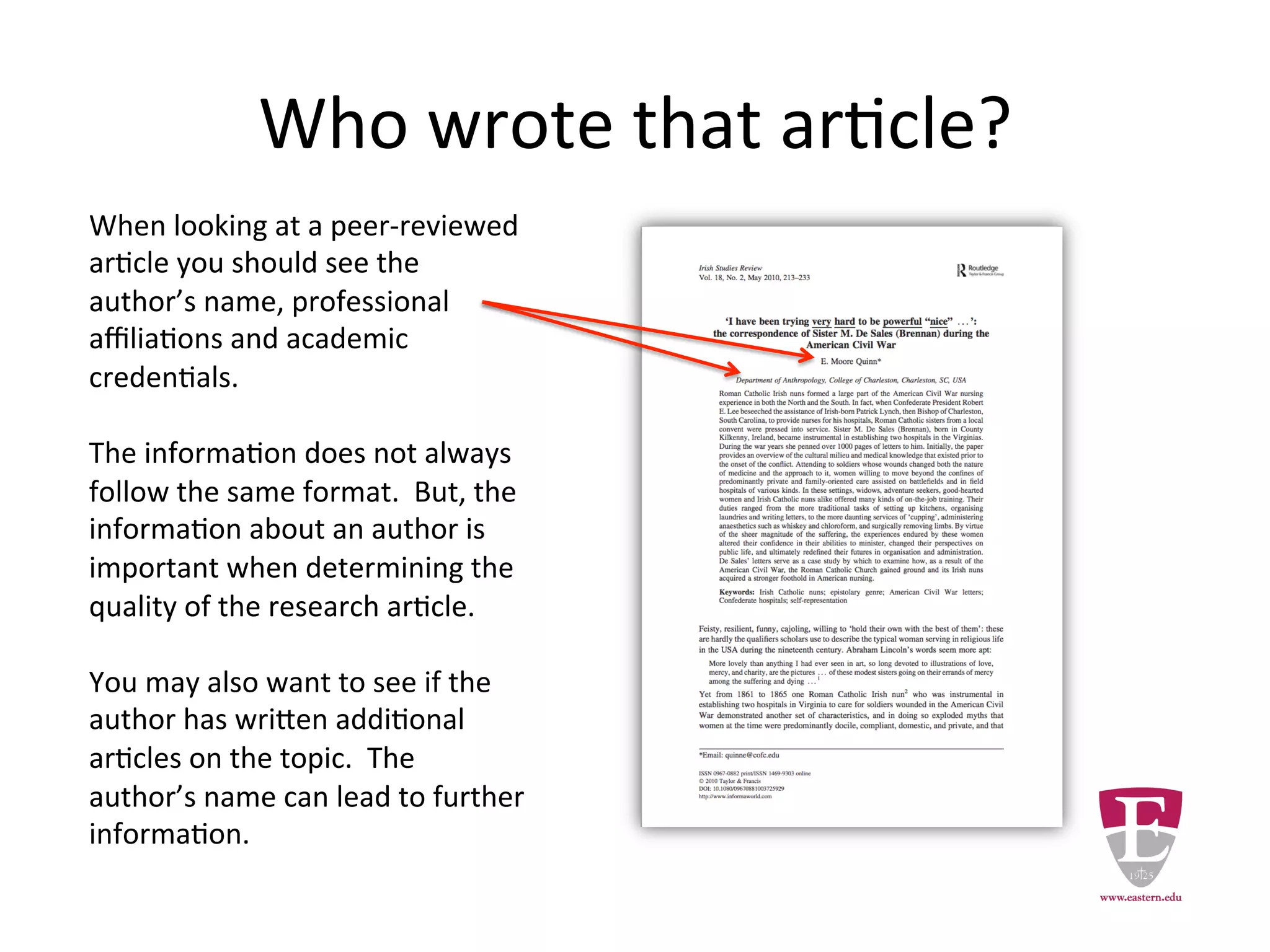
When looking at a peer-reviewed
article you should see the author’s
name, professional affiliations and
academic credentials.
The information does not always
follow the same format. But, the
information about an author is
important when determining the
quality of the research article.
You may also want to see if the
author has written additional
articles on the topic. The author’s
name can lead to additional
relevant information.
Check the Reference List
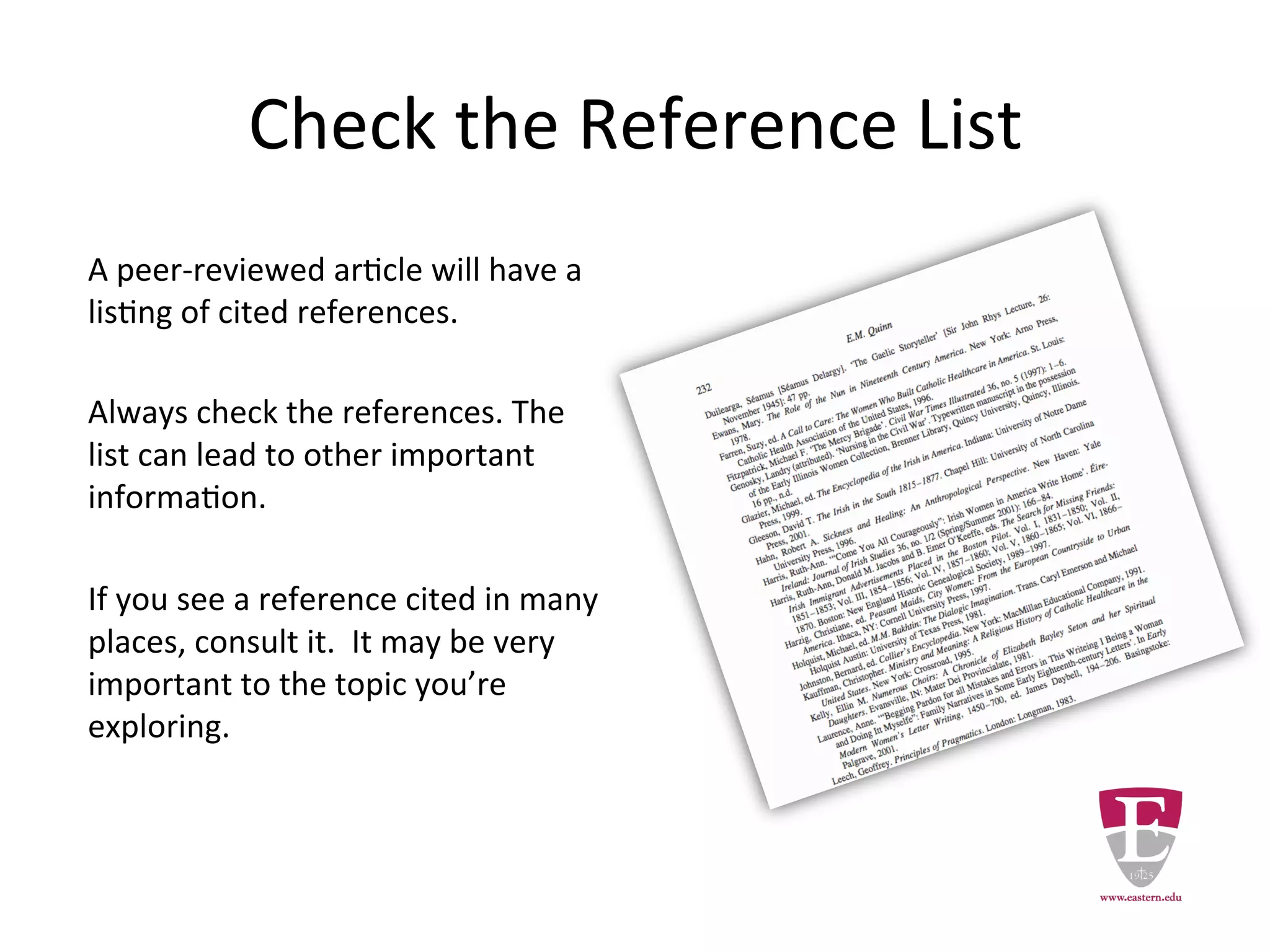
A peer-reviewed article will have a
listing of cited references.
Always check the references. The
list can lead to other important
information.
If you see a reference cited in many
places, consult it. It may be very
important to the topic you’re
exploring.
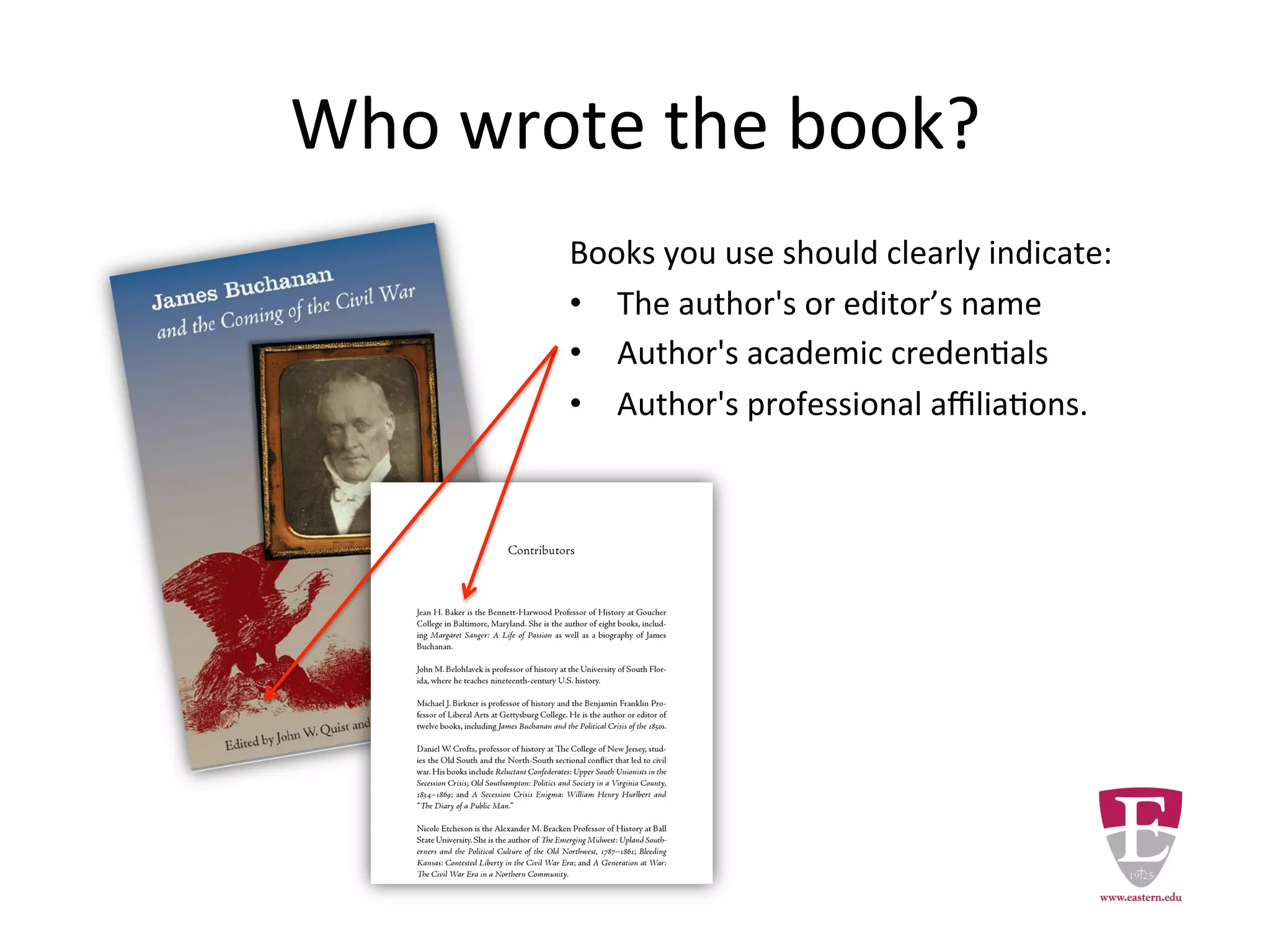
Who wrote the book?
Scholarly books you use should clearly
indicate:
• The author's or editor’s name
• Author's academic credentials
• Author's professional affiliations.
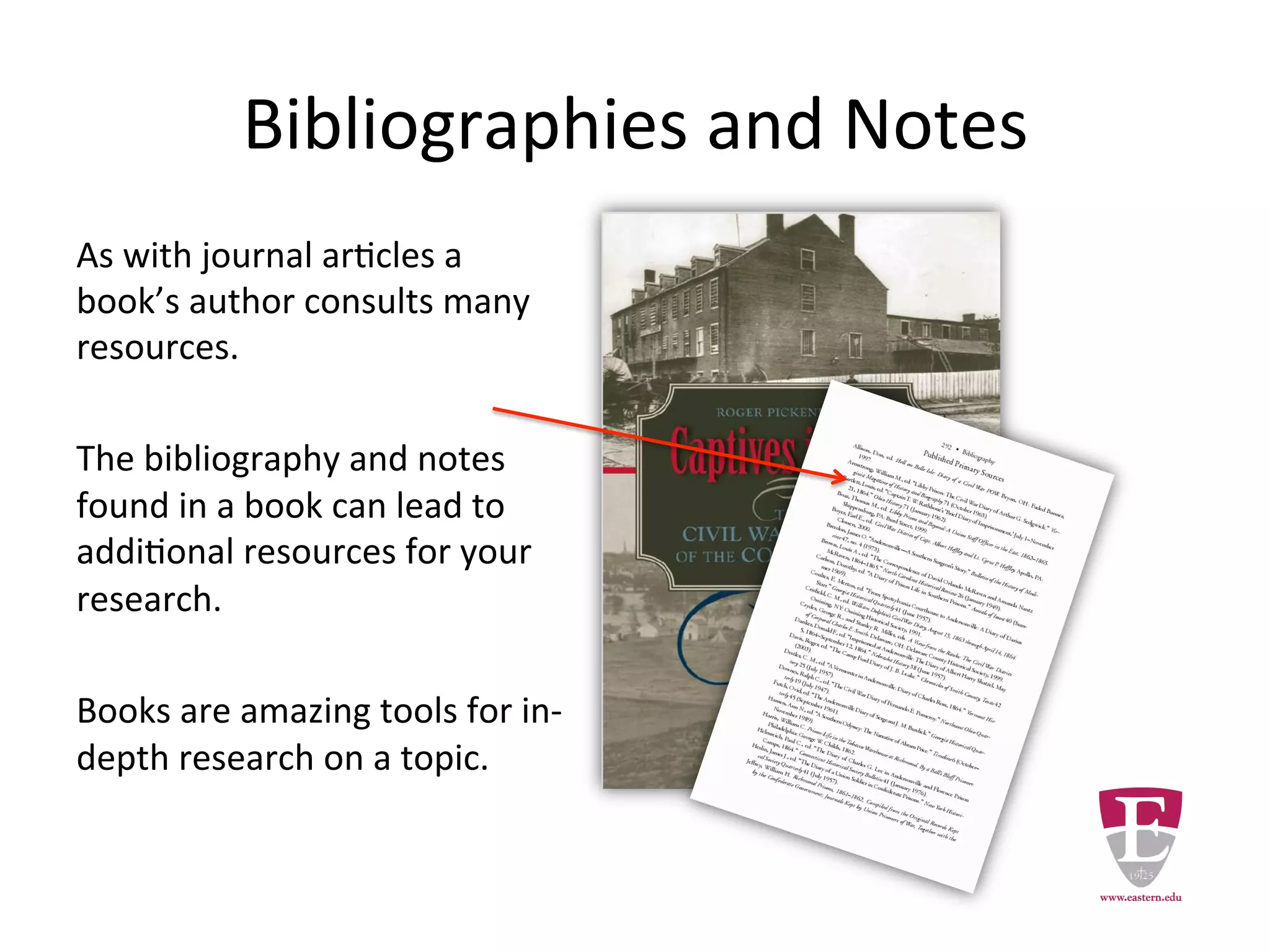
Bibliographies and Notes
As with journal articles a book’s
author consults many resources.
The bibliography and notes
found in a book can lead to
additional resources for your
research.
Books are amazing tools for in-
depth research on a topic.
Determine the Scope of a Publication
The scope is the extent or breadth of the subject
matter that a publication covers or to which it is
relevant.
The scope of a publication is usually defined at the
beginning.
For books it’s discussed in the introduction.
For journal articles the scope is found in the
abstract or the introduction.
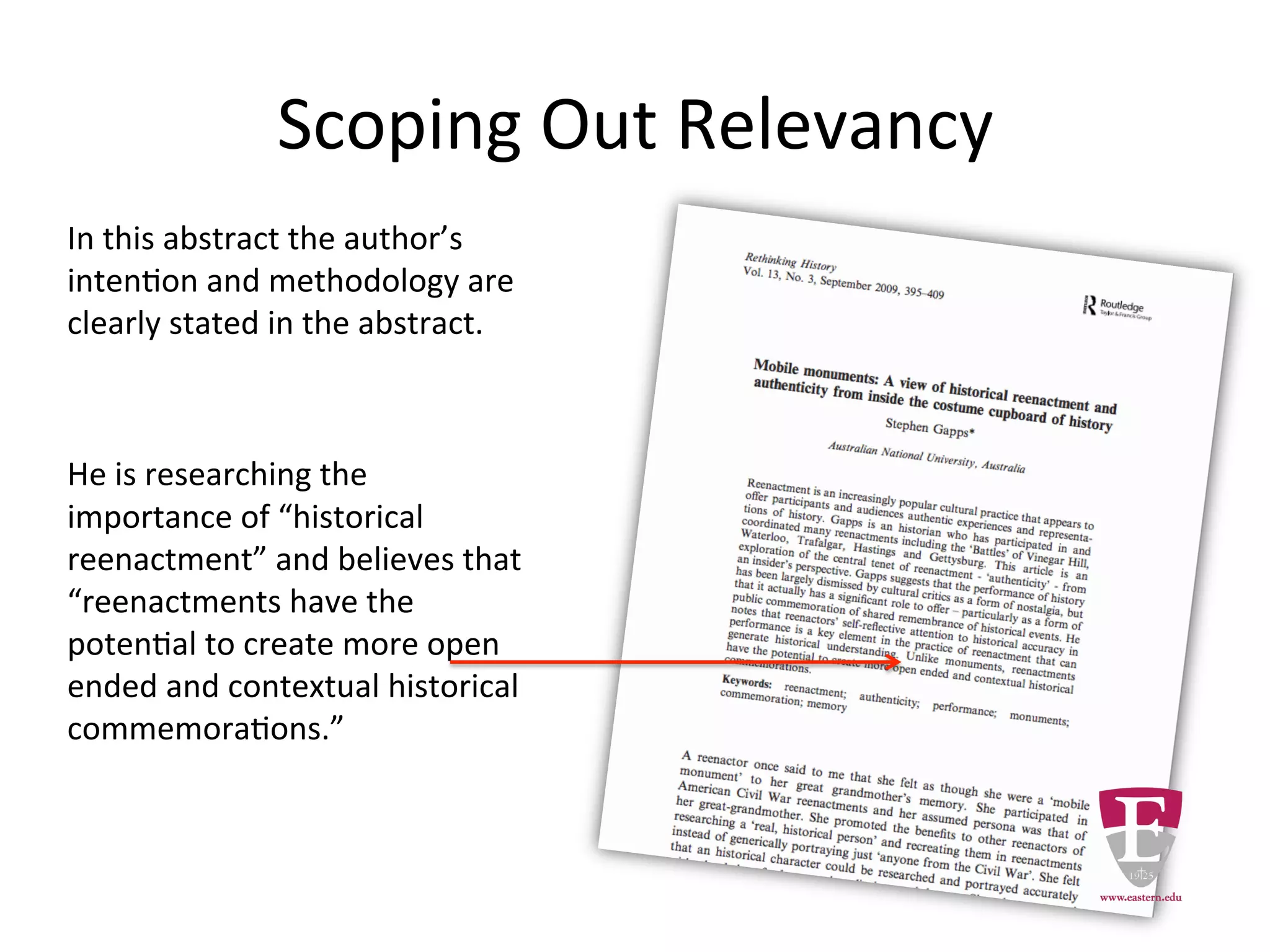
Scoping Out Relevancy
The author’s intention and
methodology are clearly stated
in this abstract.
The author wrote about the
importance of “historical
reenactment” and believes that
“reenactments have the
potential to create more open
ended and contextual historical
commemorations.”
Looking for Bias
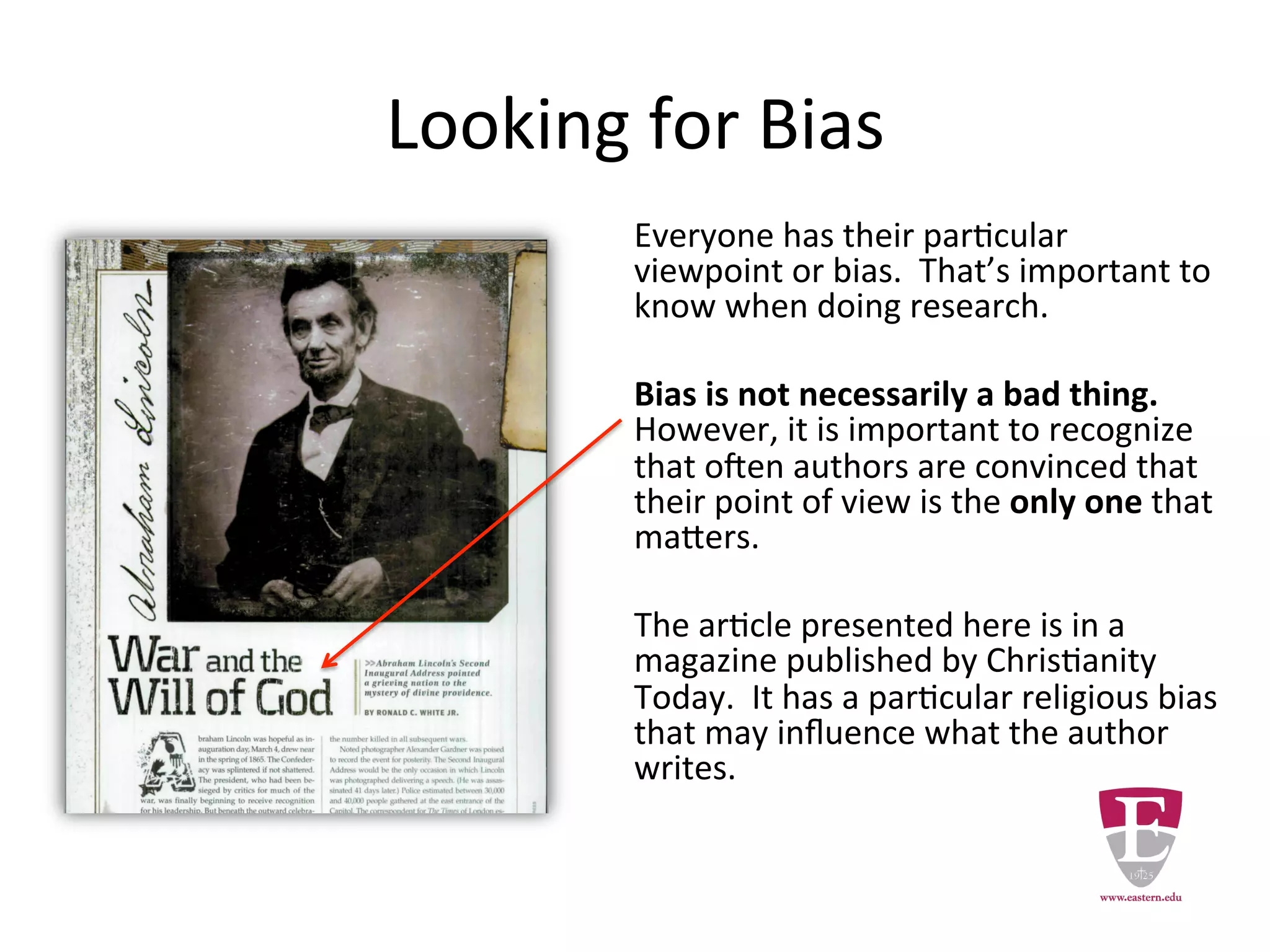
Everyone has their particular viewpoint
or bias. This is important to note when
you are doing research.
Bias is not necessarily a bad thing.
However, it is important to recognize
bias in your research.
The authors in the Christianity Today
may have a partiality that is reflected
in the articles they write.
Checking Up on Bias
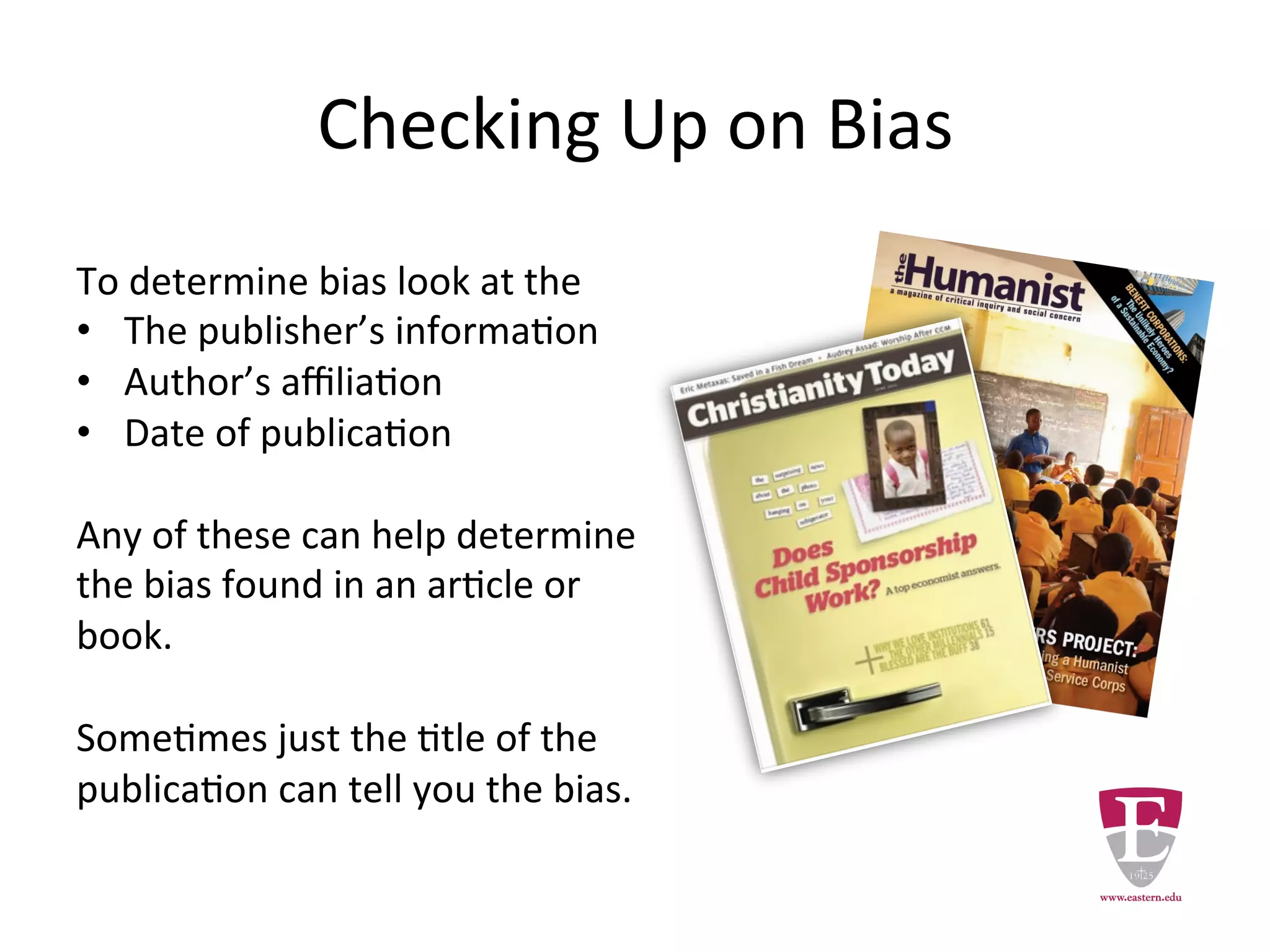
To determine bias look at the
• The publisher’s information.
• Author’s affiliation.
• Date of publication.
Any of these can help determine
the bias found in an article or book.
Sometimes just the title of a
publication can reveal its bias.
Currency
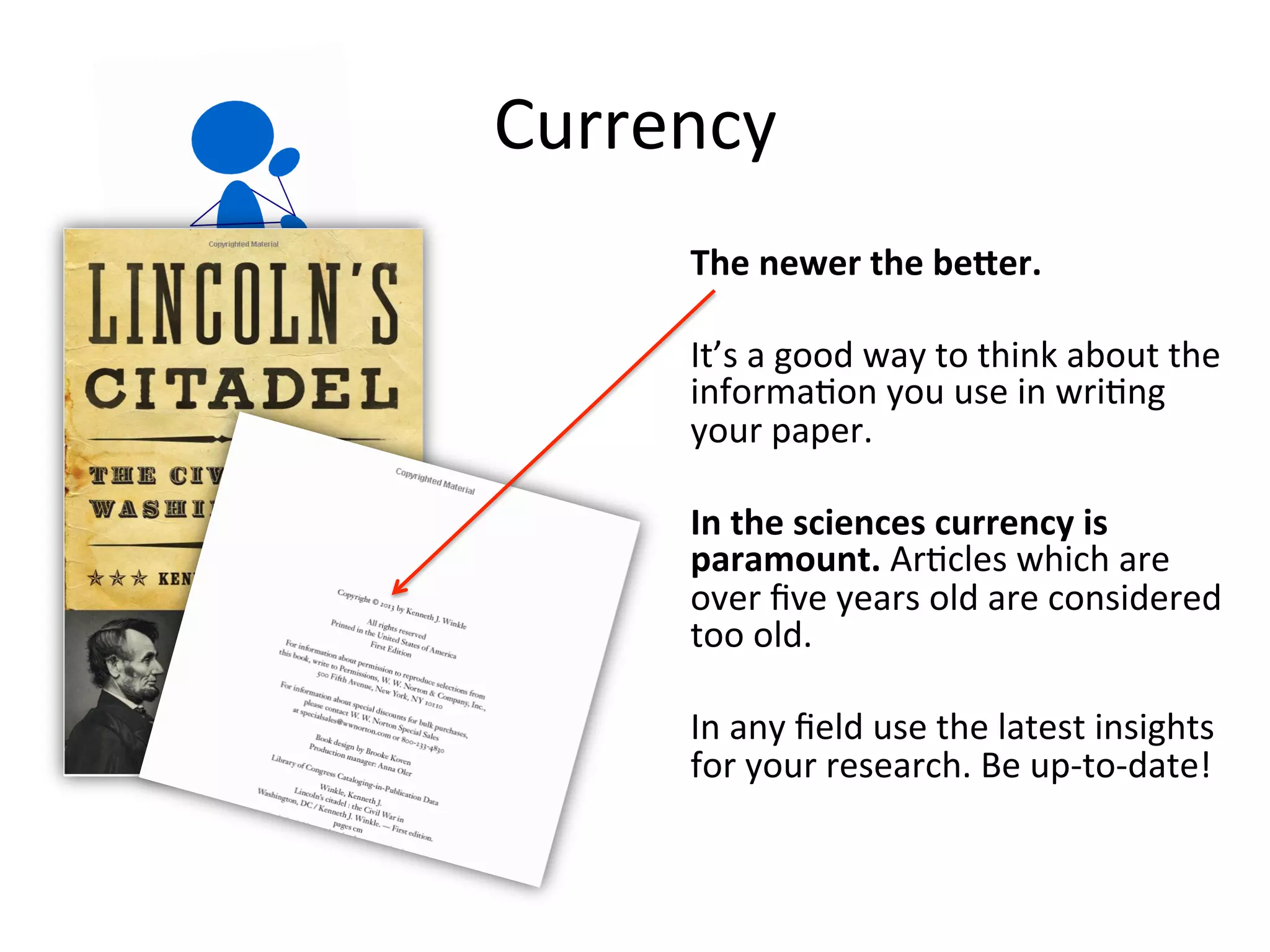
The more recent the publication date
the better.
It’s a good way to think about the
information you use in writing your
paper.
In the sciences currency is paramount.
Usually books which are over five years
old are considered too old.
In any field use the latest insights for
your research. Be up-to-date!
Can you follow the evidence trail?
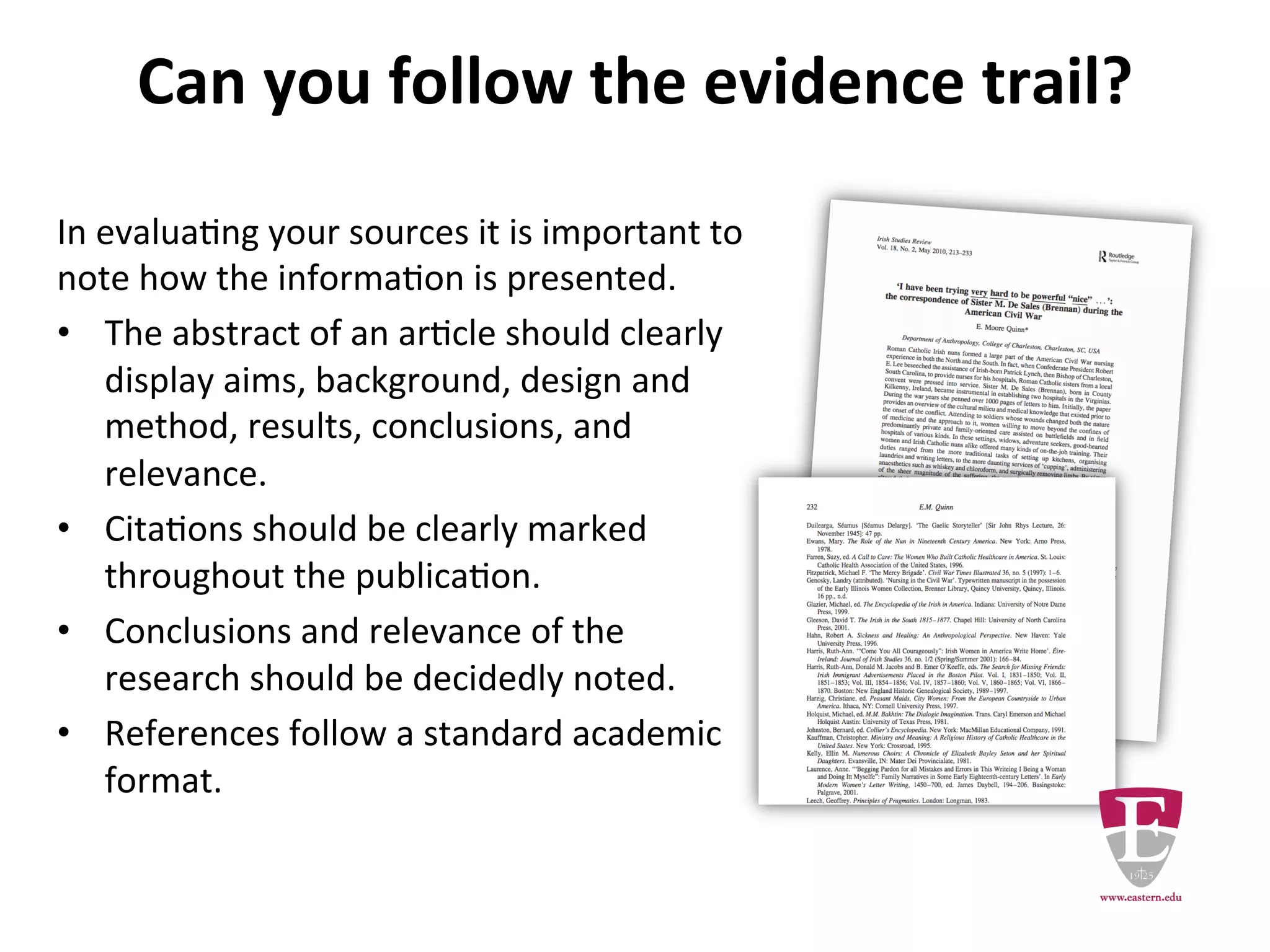
In evaluating your sources it is important to note how
the information is presented.
The abstract of an article should clearly discuss the
aims, background, design and method, results,
conclusions, and relevance.
Citations should be clearly marked throughout the
publication.
Conclusions and relevance of the research should be
plainly stated.
References follow a standard academic format.
Next we’ll look at formatting your paper. In the academic
world research papers must follow standards in format.
Do the student activity for this lesson.
After that proceed to the next lesson.
Revised Wednesday, February 5, 15.

Evaluate Your Research

  • 1.
  • 2.
    Quality Check This lessonreviews what we have learned. It’s time to double check and make sure that your information is current, factual, and authoritative Look over the information that you have gathered and ask some questions. • Who wrote it? • What is the scope? • Where was it published? • When was it written? • How is the information presented?
  • 3.
    Who wrote thatarticle? When looking at a peer-reviewed article you should see the author’s name, professional affiliations and academic credentials. The information does not always follow the same format. But, the information about an author is important when determining the quality of the research article. You may also want to see if the author has written additional articles on the topic. The author’s name can lead to additional relevant information.
  • 4.
    Check the ReferenceList A peer-reviewed article will have a listing of cited references. Always check the references. The list can lead to other important information. If you see a reference cited in many places, consult it. It may be very important to the topic you’re exploring.
  • 5.
    Who wrote thebook? Scholarly books you use should clearly indicate: • The author's or editor’s name • Author's academic credentials • Author's professional affiliations.
  • 6.
    Bibliographies and Notes Aswith journal articles a book’s author consults many resources. The bibliography and notes found in a book can lead to additional resources for your research. Books are amazing tools for in- depth research on a topic.
  • 7.
    Determine the Scopeof a Publication The scope is the extent or breadth of the subject matter that a publication covers or to which it is relevant. The scope of a publication is usually defined at the beginning. For books it’s discussed in the introduction. For journal articles the scope is found in the abstract or the introduction.
  • 8.
    Scoping Out Relevancy Theauthor’s intention and methodology are clearly stated in this abstract. The author wrote about the importance of “historical reenactment” and believes that “reenactments have the potential to create more open ended and contextual historical commemorations.”
  • 9.
    Looking for Bias Everyonehas their particular viewpoint or bias. This is important to note when you are doing research. Bias is not necessarily a bad thing. However, it is important to recognize bias in your research. The authors in the Christianity Today may have a partiality that is reflected in the articles they write.
  • 10.
    Checking Up onBias To determine bias look at the • The publisher’s information. • Author’s affiliation. • Date of publication. Any of these can help determine the bias found in an article or book. Sometimes just the title of a publication can reveal its bias.
  • 11.
    Currency The more recentthe publication date the better. It’s a good way to think about the information you use in writing your paper. In the sciences currency is paramount. Usually books which are over five years old are considered too old. In any field use the latest insights for your research. Be up-to-date!
  • 12.
    Can you followthe evidence trail? In evaluating your sources it is important to note how the information is presented. The abstract of an article should clearly discuss the aims, background, design and method, results, conclusions, and relevance. Citations should be clearly marked throughout the publication. Conclusions and relevance of the research should be plainly stated. References follow a standard academic format.
  • 13.
    Next we’ll lookat formatting your paper. In the academic world research papers must follow standards in format. Do the student activity for this lesson. After that proceed to the next lesson. Revised Wednesday, February 5, 15.