Induction Of Labor
Dr Attiya
Assisstant Professor
M.C.P.S ,F.C.P.S
Induction of labour
• An intervention designed to artificially
initiate uterine contractions leading to
progressive dilatation and effacement of
the cervix.
Is the planned initiation of labor prior to
the onset of spontaneous labor. It is an
obstetric intervention that should be
used when elective birth beneficial to
mother and baby.
Objectives
At the end of this presentation, you should be:
• Aware of the indications and contraindications
for induction of labor
• Aware of the different methods of induction of
labor
• Able to select the appropriate method of labor
induction for an individual patient.
Indications for induction of labor:
• Maternal indications
•
•
•
•
•
•
•
•
•

Post-term (main indication]
P.I.H (Timing depend )on the[ severity]
Diabetes Mellitus (increase risk
of baby loss and mortality rate)
Medical conditions (as renal, respiratory and
cardiac diseases)
Placenta insufficiency (as moderate or sever
placenta abruption but commonly C.S)
Prolonged pre-labor rupture of membranes.
Rheuses isoimmunization.
Maternal request.
Indications for Induction of Labor
cond..
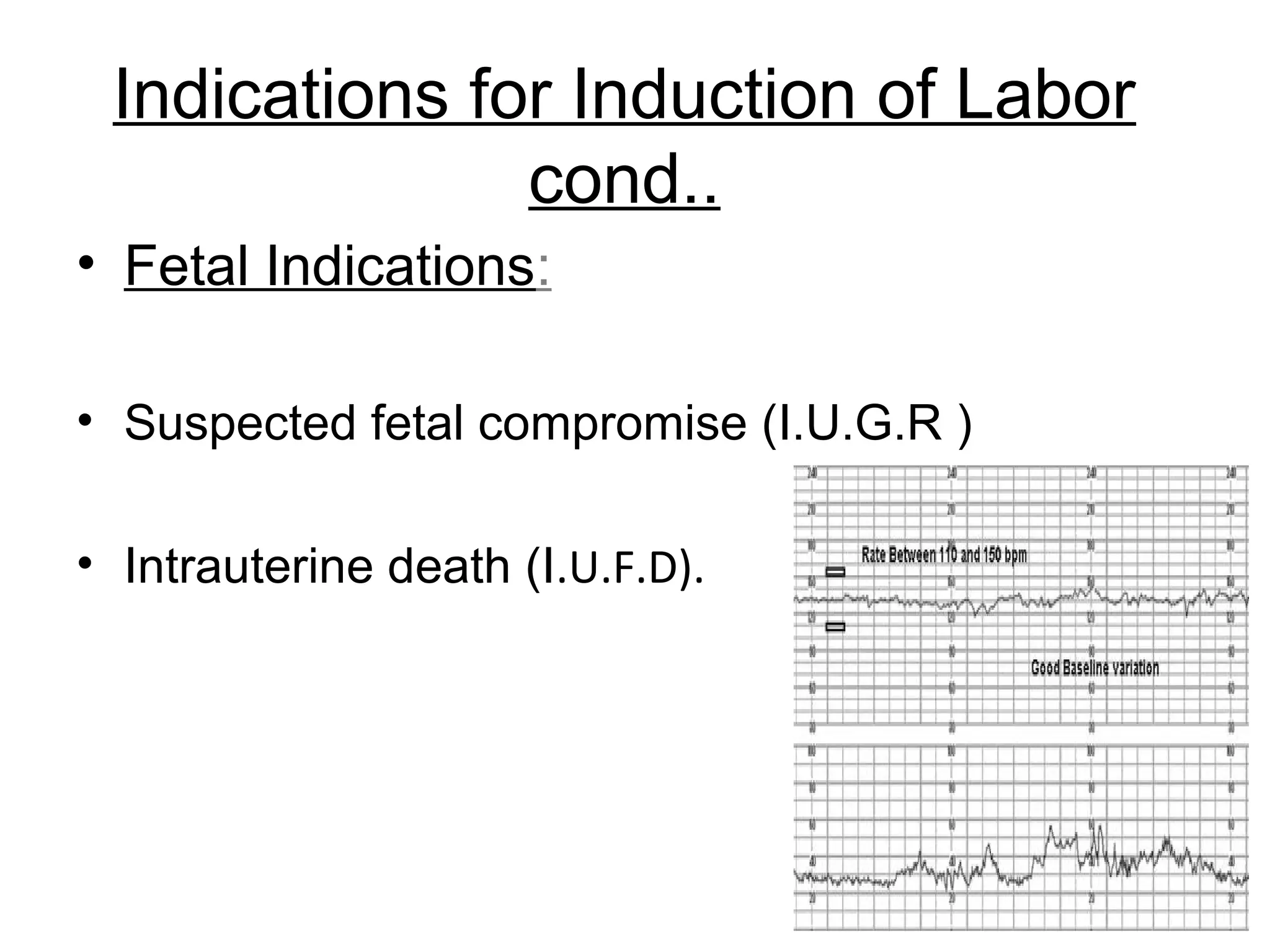
• Fetal Indications:
• Suspected fetal compromise (I.U.G.R )
• Intrauterine death (I.U.F.D).
Contraindications
• Placenta previa and vasa previa
• Abnormal fetal lie / presentation. e.g. transverse lie and
breech presentation
• Umbilical cord prolapse and fetal distress
• Previous classical Cesarean section or other transfundal
uterine surgery
• Active herpes infection
• Pelvic structural abnormality
• Invasive cervical cancer
• Contraindicaton specific to the inducing drug used.
Augmentation of labor:
• Is refers to intervention to correct slow progress
in labor.
• Correction of ineffective uterine contraction
includes Amniotomy and/or Oxytocin infusion.
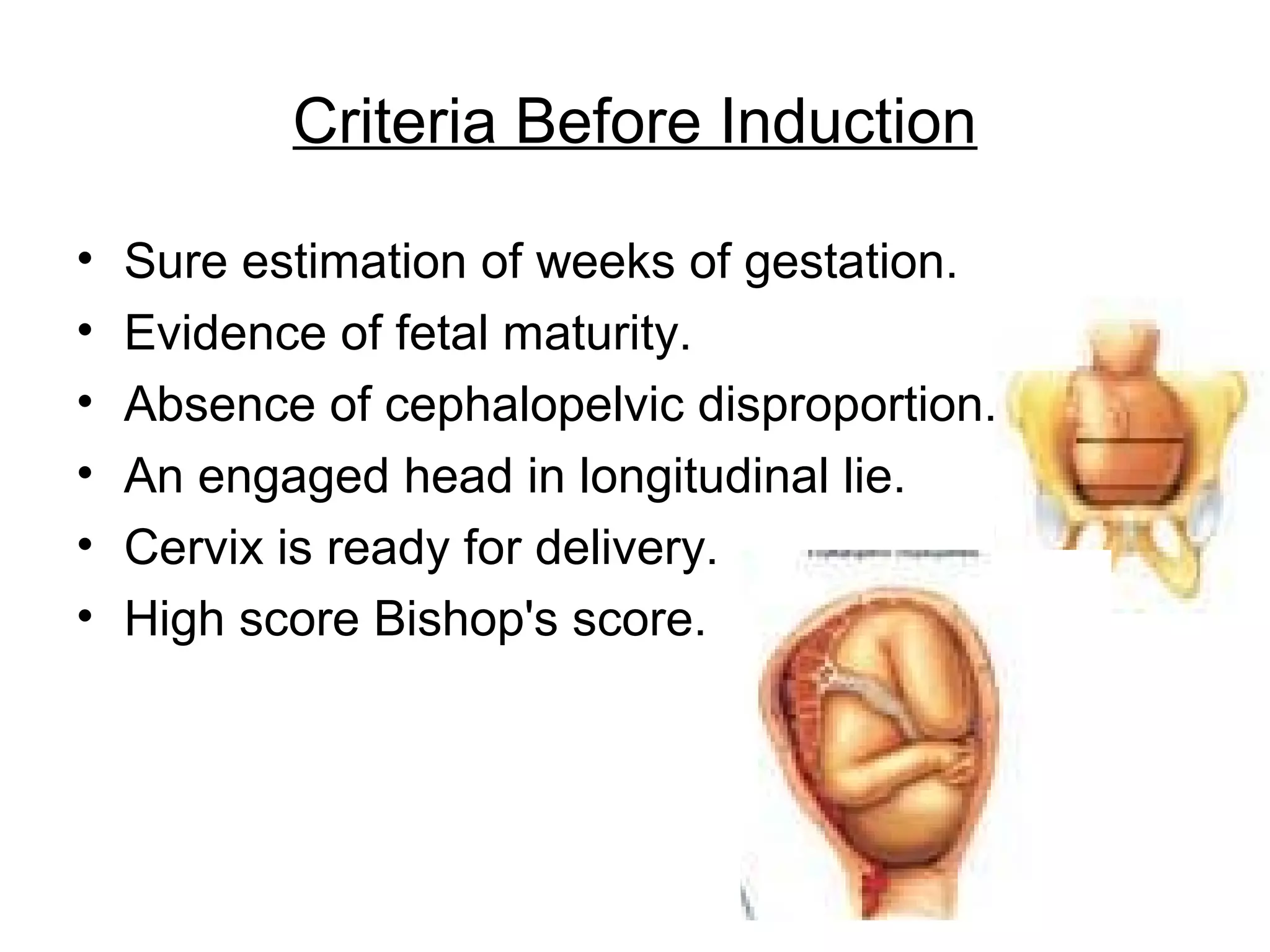
Criteria Before Induction
•
•
•
•
•
•

Sure estimation of weeks of gestation.
Evidence of fetal maturity.
Absence of cephalopelvic disproportion.
An engaged head in longitudinal lie.
Cervix is ready for delivery.
High score Bishop's score.
Induction with caution
• Multiple pregnancy.
• Hydraminos.
• Grand parity.
• Maternal age of >35years.
• Previous cesarean section.
*Those conditions are at risk for ruptured of uterus.
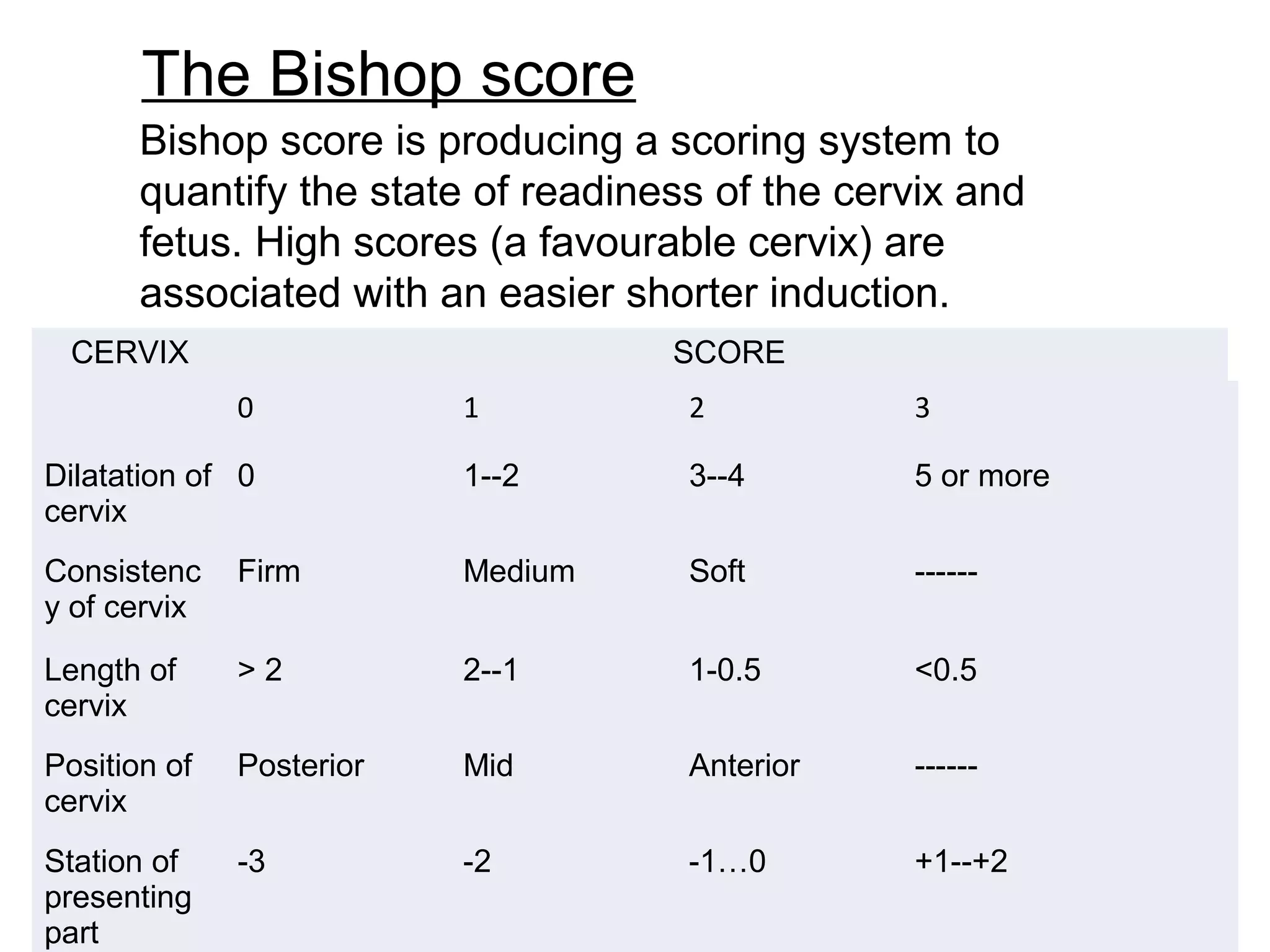
The Bishop score
Bishop score is producing a scoring system to
quantify the state of readiness of the cervix and
fetus. High scores (a favourable cervix) are
associated with an easier shorter induction.
CERVIX

SCORE
0

1

2

3

Dilatation of 0
cervix

1--2

3--4

5 or more

Consistenc
y of cervix

Firm

Medium

Soft

------

Length of
cervix

>2

2--1

1-0.5

<0.5

Position of
cervix

Posterior

Mid

Anterior

------

Station of
presenting
part

-3

-2

-1…0

+1--+2
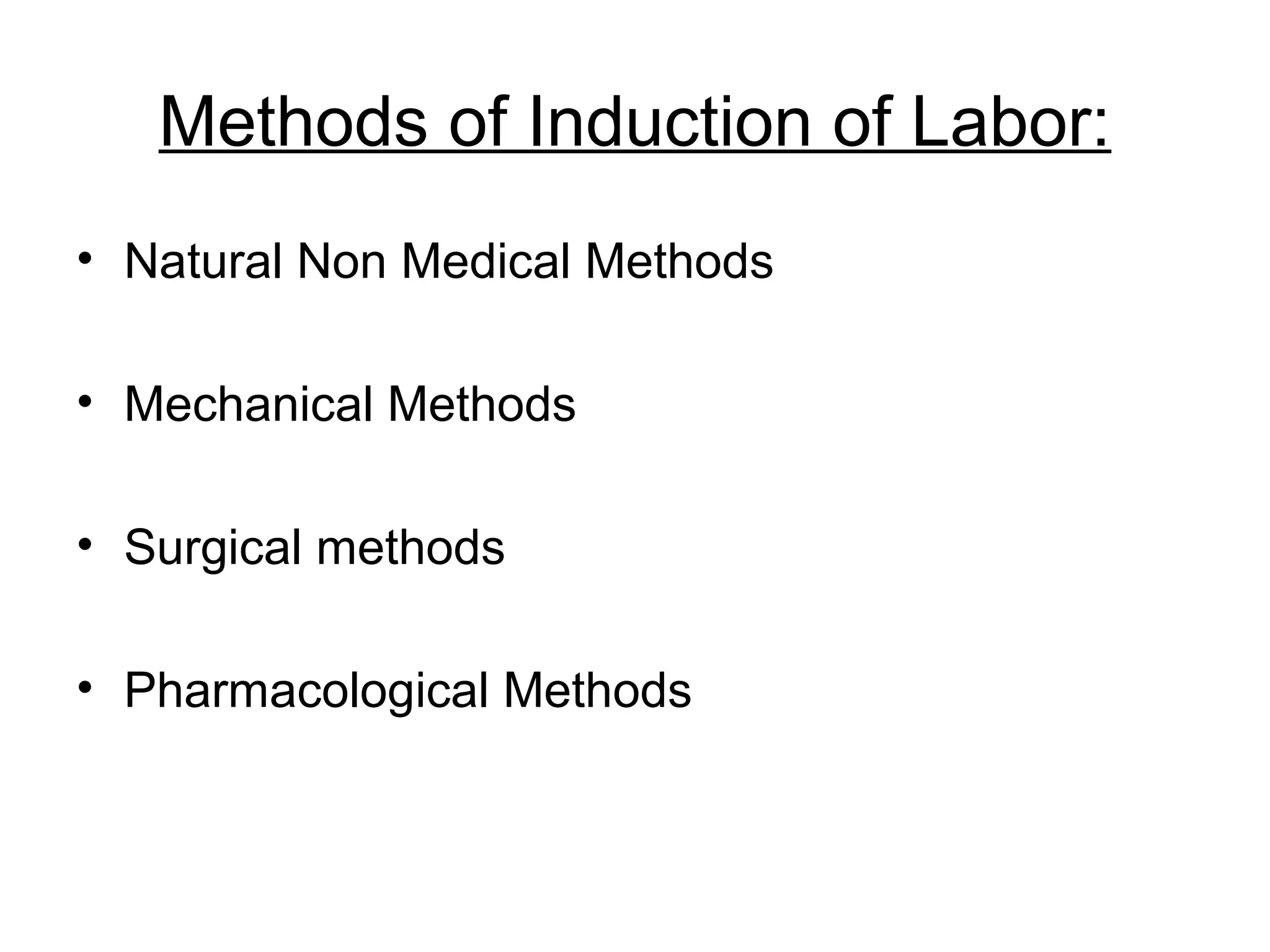
Methods of Induction of Labor:
• Natural Non Medical Methods
• Mechanical Methods
• Surgical methods
• Pharmacological Methods
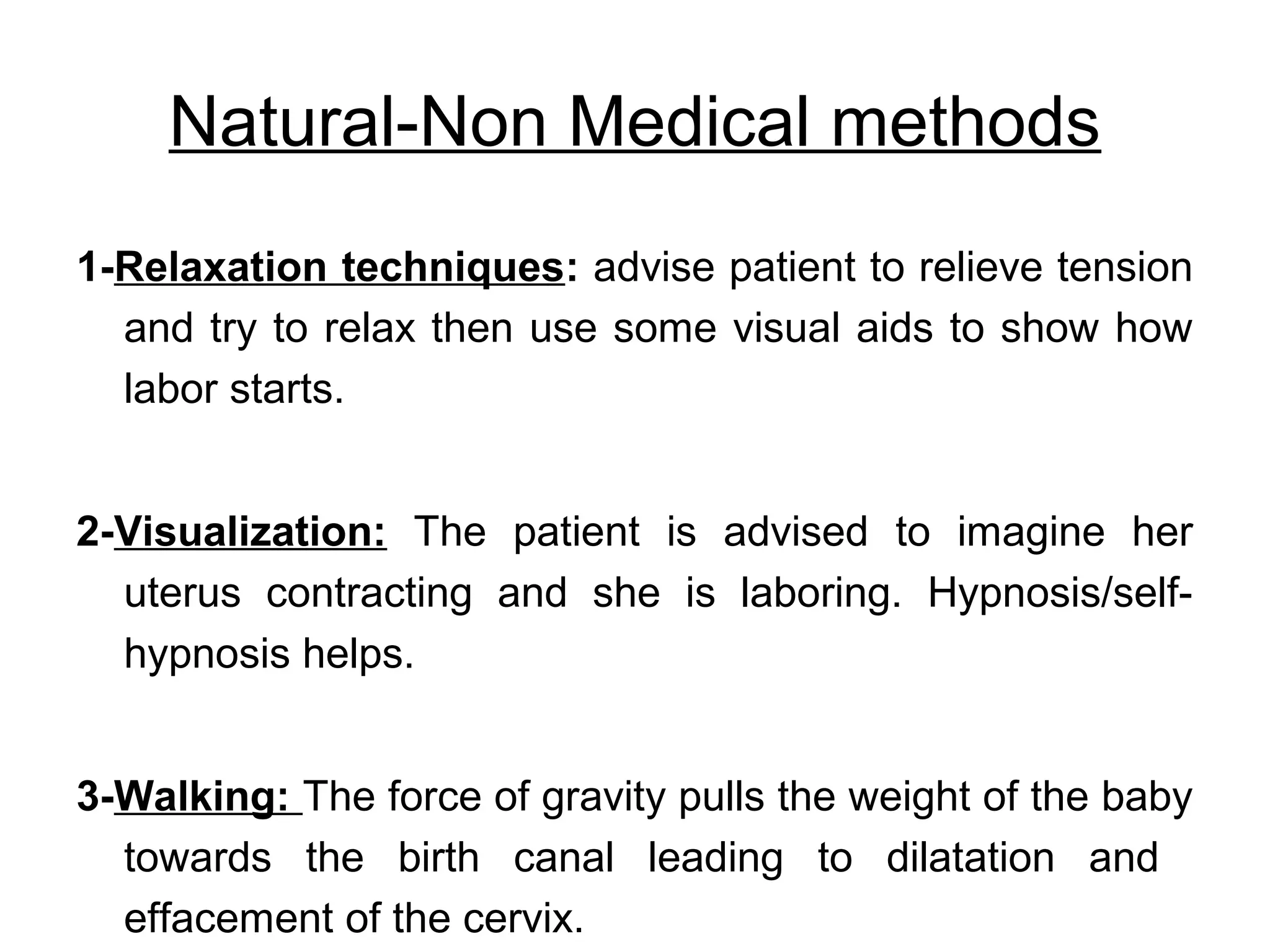
Natural-Non Medical methods
1-Relaxation techniques: advise patient to relieve tension
and try to relax then use some visual aids to show how
labor starts.
2-Visualization: The patient is advised to imagine her
uterus contracting and she is laboring. Hypnosis/selfhypnosis helps.
3-Walking: The force of gravity pulls the weight of the baby
towards the birth canal leading to dilatation and
effacement of the cervix.
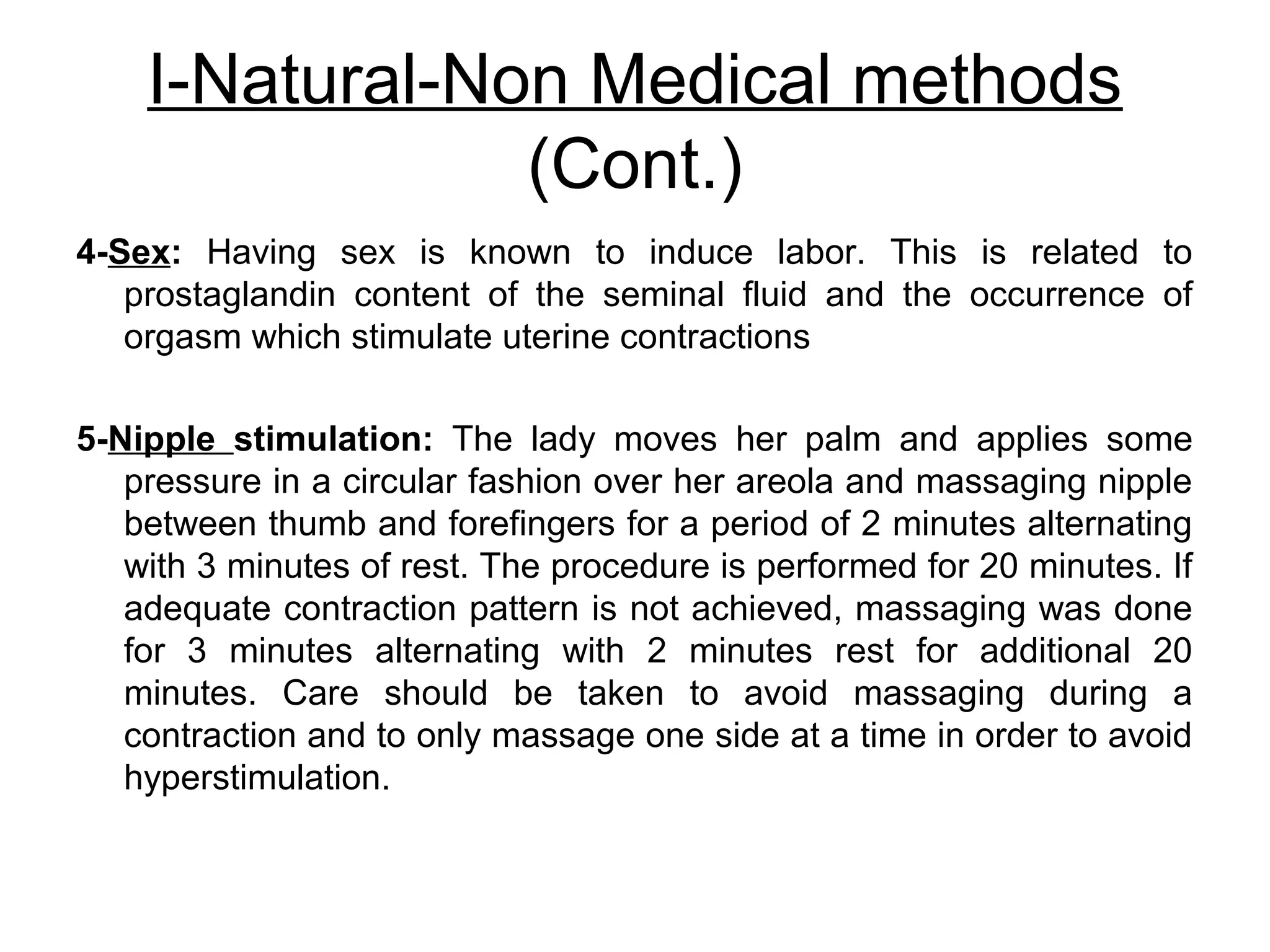
I-Natural-Non Medical methods
(Cont.)
4-Sex: Having sex is known to induce labor. This is related to
prostaglandin content of the seminal fluid and the occurrence of
orgasm which stimulate uterine contractions
5-Nipple stimulation: The lady moves her palm and applies some
pressure in a circular fashion over her areola and massaging nipple
between thumb and forefingers for a period of 2 minutes alternating
with 3 minutes of rest. The procedure is performed for 20 minutes. If
adequate contraction pattern is not achieved, massaging was done
for 3 minutes alternating with 2 minutes rest for additional 20
minutes. Care should be taken to avoid massaging during a
contraction and to only massage one side at a time in order to avoid
hyperstimulation.
I-Natural-Non Medical methods
(Cont.)
8-Cumin Tea: Used by midwives in Latino cultures.
Sugar or honey may be added to lessen its bitter
taste
9-Several herbs: Labor-enhancing herbs include
blue Cohosh, black Cohosh, Squawvine and Dong
Quai. Evening primrose oil also ripens the cervix.
It is given internally 5 gel caps up against the
cervix daily.
I-Natural-Non Medical methods
(Cont.)
10-Acupressure:
Few health personnel claim an association
between some acupressure points in the body and
increased uterine contractions. One point is
located deep in the webbing between thumb and
forefinger. Massaging this point in a circular
motion for 1-5 minutes stimulates labor pain and
induce labor. (Reference 1 - Evidence level B,
systematic review of non-RCTs )
II-Mechanical methods
1-Hygroscopic dilators
They absorb endocervical and local tissue fluids, causing
the device to expand within the endocervix and provide
mechanical pressure. These dilators are either natural
osmotic dilators (e.g., Laminaria japonicum) or synthetic
osmotic dilators (e.g., Lamicel).
Advantages: 1- Outpatient placement
fetal monitoring
Risks: fetal and/or maternal infection

2- No need for
II-Mechanical methods (Cont.)
1-Hygroscopic dilators:
Technique of insertion:
-The perineum and vagina are sterilized with antiseptic
sol & the patient is drapped.
-Using a sterile speculum, the dilator is introduced into
the endocervix.
-Dilators are progressively placed until the endocervix
is full.
-A sterile gauze pad is placed in the vagina to maintain
the position of the dilators.
II-Mechanical methods (Cont.)
2- Placement of Balloon Dilators after 42 weeks gestation:
A fluid filled balloon is inserted inside the cervix. The Balloon
provide mechanical pressure directly on the cervix which
respond by ripening and dilation. A Foley catheter (26 Fr) or
specifically designed balloon devices can be used.
Technique of balloon placement:
1- After sterilization and draping, the catheter is introduced into
the endocervix either by direct visualization or blindly by
sliding it over fingers through the endocervix into the potential
space between the amniotic membrane & the lower uterine
segment.
II-Mechanical methods (Cont.)
The balloon is inflated with 30 to 50 mL of normal saline and is
retracted so that it rests on the internal os.
3- Constant pressure may be applied over the catheter. e.g. a bag filled
with 1 L of fluid may be attached to the catheter end. An intermittent
pressure may also be exerted on the catheter end 2 -4 times per
hour.
4-Catheter is removed at the time of rupture of membranes or may be
expelled spontaneously which indicate a cervical dilataion of 3-4
Centimeter.
(References 2-6 - Evidence level B, systematic review of non-RCTs)
III-Surgical Methods
1-Stripping the membranes:
-

Stripping the membranes mechanically dilates the cervix which releases
prostaglandins. The membranes are stripped by inserting the examining
finger through the internal os & moving it in a circular direction to detach the
inferior pole of the membranes from the lower uterine segment.

-

Risks include patient’s discomfort, infection, bleeding from undiagnosed
placenta previa or low lying placenta,and accidental ROM.

-

The Cochrane reviewers concluded that stripping the membranes, when
used as an adjunct, decreases the mean dose of oxytocin needed and
increases the rate of normal vaginal deliveries. (Ref 7 - Evidence level A
III-Surgical Methods (Cont.)
2-Amniotomy - Technique:
-The FHR is recorded before the procedure.
-A pelvic examination is performed to evaluate the cervix &
station of the presenting part. The presenting part should be
well fitted to the cervix.
-The membranes are identified and a kocher is inserted through
the cervical os by sliding it along the hand & fingers &
membranes are ruptured.
-Nature of the amniotic fluid is recorded
[clear,bloody,thick,thin,or meconium]
-The FHR is recorded after the procedure.
Amniotomy (ARM):Contd…
• Why?
performed to induce labor, to augment
contractions, to shortening the duration of labor,
to visualize the color of the liquor, or to attach a
fetal scalp electrode for the fetal heart rate.
• When?
ARM done when the cervix is favorable (high
Bishop's score)
III-Surgical Methods (Cont.)
Risks of amniotomy:
1- Prolapse of the umbilical cord (0.5%)
2- Chorioamnionitis: Risk increases with prolonged
induction delivery interval
3- Postpartum hemorrhage: Risk is doubled
compared with women with spontaneous onset of
labor
4- Rupture of vasa previa
5- Neonatal hyperbilirubinemia
IV-Pharmacologic Induction of
Labor
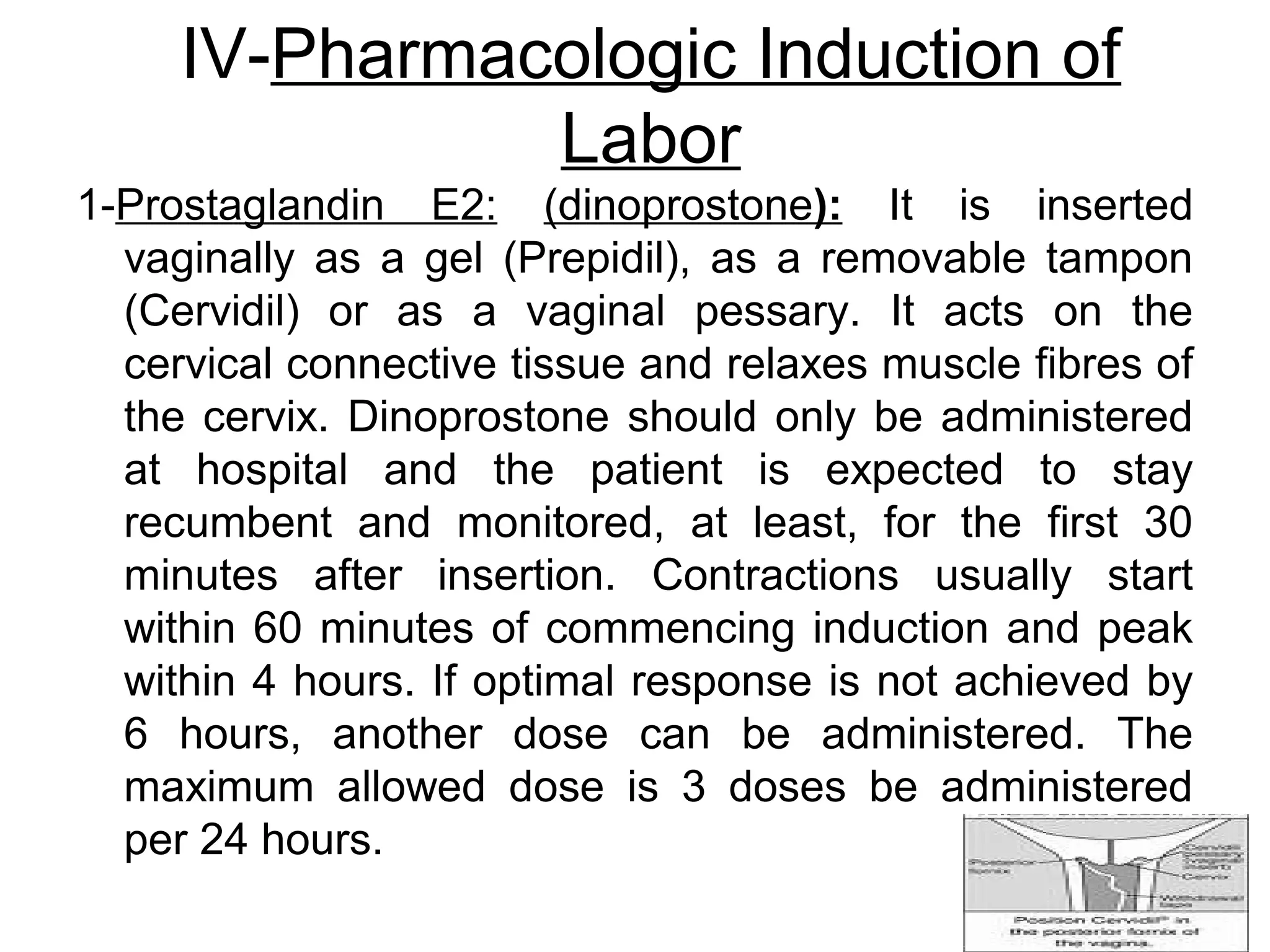
1-Prostaglandin E2: (dinoprostone): It is inserted
vaginally as a gel (Prepidil), as a removable tampon
(Cervidil) or as a vaginal pessary. It acts on the
cervical connective tissue and relaxes muscle fibres of
the cervix. Dinoprostone should only be administered
at hospital and the patient is expected to stay
recumbent and monitored, at least, for the first 30
minutes after insertion. Contractions usually start
within 60 minutes of commencing induction and peak
within 4 hours. If optimal response is not achieved by
6 hours, another dose can be administered. The
maximum allowed dose is 3 doses be administered
per 24 hours.
IV-Pharmacologic Induction of
Labor (Cont.)
Cervidil contains 10 mg of dinoprostone and
provides a lower constant release of medication
(0.3 mg per hour) than Prepidil does. Cervidil have
the advantage of being removed more easily if
uterine hyperstimulation occurs. In addition, it
does not require refrigeration.

PGE2 can cause uterine hyperstimulation, fetal
distress and Cesarean section.
Before Interventions:
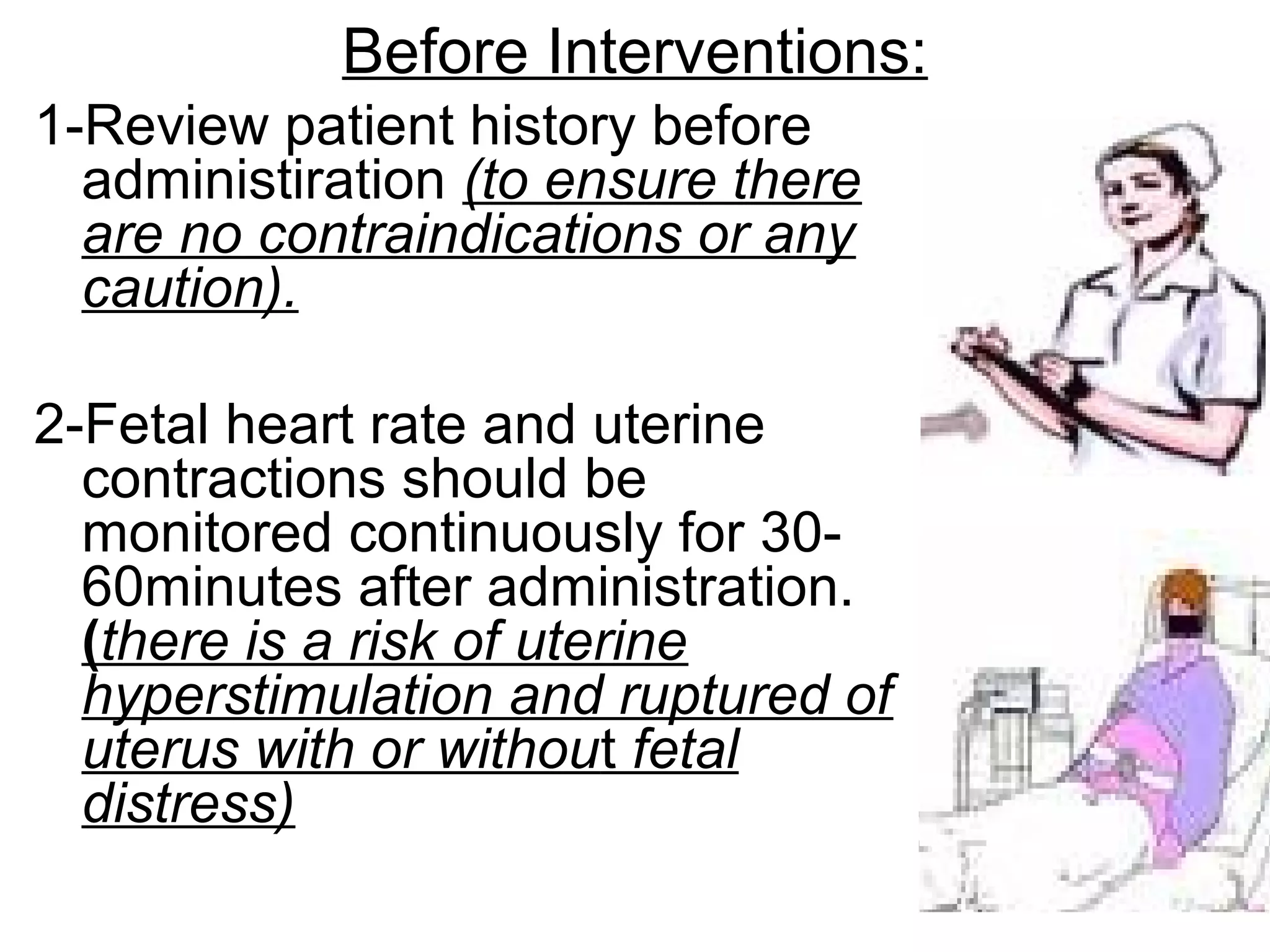
1-Review patient history before
administiration (to ensure there
are no contraindications or any
caution).
2-Fetal heart rate and uterine
contractions should be
monitored continuously for 3060minutes after administration.
(there is a risk of uterine
hyperstimulation and ruptured of
uterus with or without fetal
distress)
Before Interventions:Contd..
• Instruct woman to pass urine before
administering prostaglandin (because
she will stay for long time in bed)
• The mother should remain in lateral or
supine position with hip tilt for 30 to
60minutes after administration of gel, for
2 hours after insertion of vaginal tablets.
(to minimize leakage and improve
effectiveness).
Before Interventions:Contd
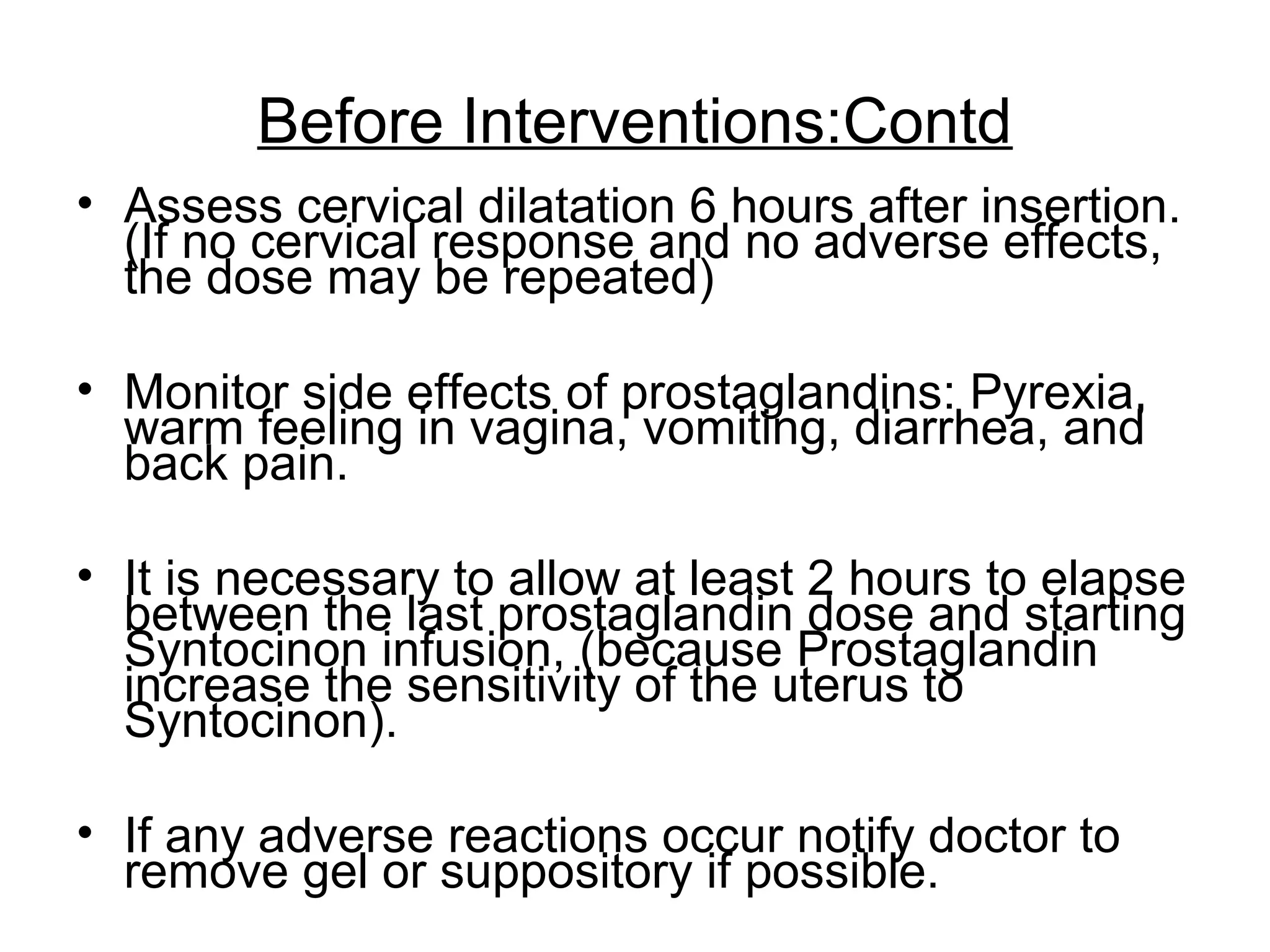
• Assess cervical dilatation 6 hours after insertion.
(If no cervical response and no adverse effects,
the dose may be repeated)
• Monitor side effects of prostaglandins: Pyrexia,
warm feeling in vagina, vomiting, diarrhea, and
back pain.
• It is necessary to allow at least 2 hours to elapse
between the last prostaglandin dose and starting
Syntocinon infusion, (because Prostaglandin
increase the sensitivity of the uterus to
Syntocinon).
• If any adverse reactions occur notify doctor to
remove gel or suppository if possible.
IV-Pharmacologic Induction of
Labor
2- Misoprostol:
Pharmacokinetics:
• Route of administration: Oral, vaginal and sublingual
route for induction. Rectal route is used to prevent and
treat postpartum hemorrhage.
• Bioavailability: Extensively absorbed from the GIT
• Metabolism: De-esterified to prostaglandin F analogs
• Half life: 20–40 minutes
• Excretion: Mainly renal 80%, remainder is fecal: 15%
IV-Pharmacologic Induction of
Labor (Cont.)
2-Misoprostol:
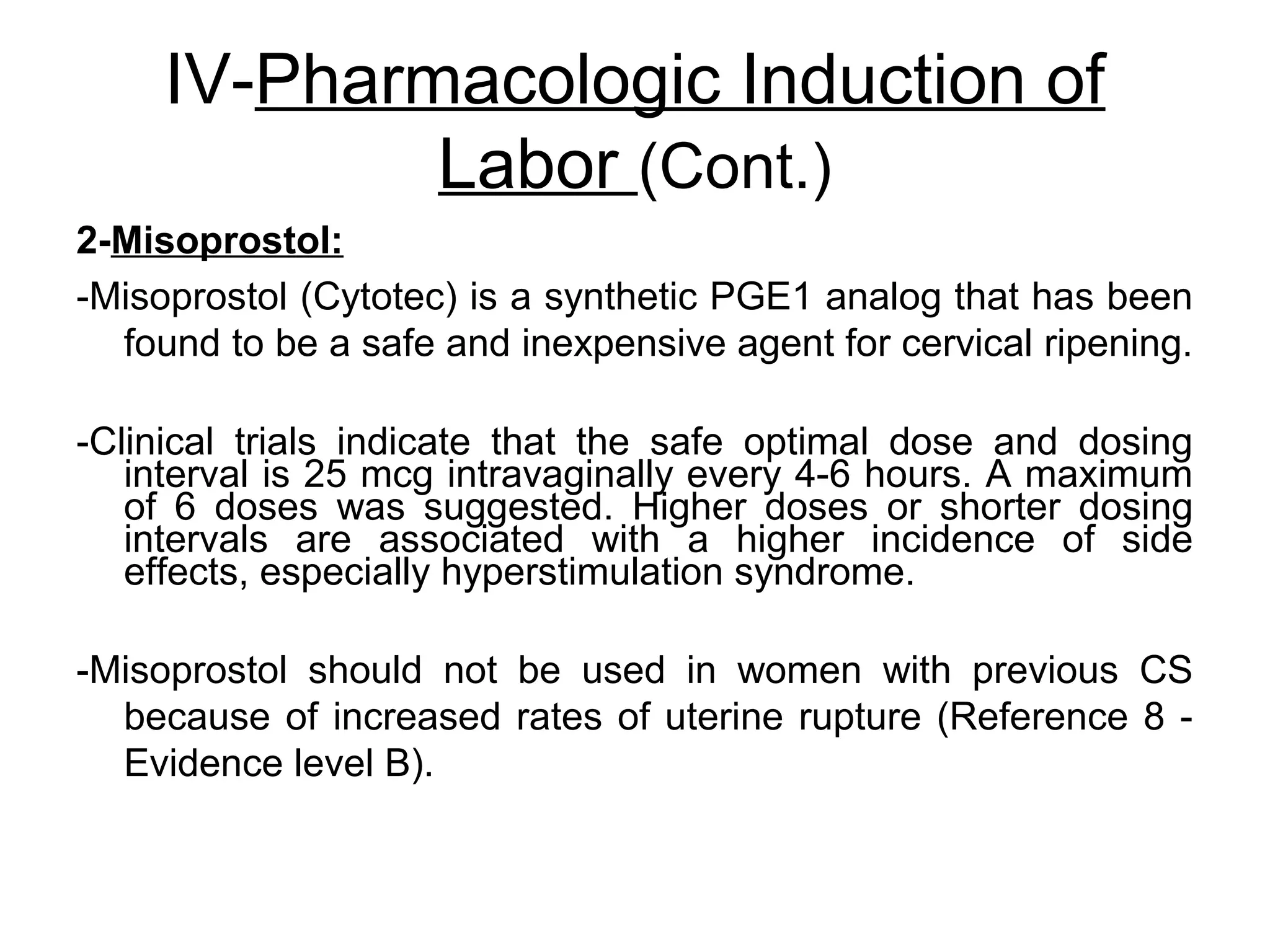
-Misoprostol (Cytotec) is a synthetic PGE1 analog that has been
found to be a safe and inexpensive agent for cervical ripening.
-Clinical trials indicate that the safe optimal dose and dosing
interval is 25 mcg intravaginally every 4-6 hours. A maximum
of 6 doses was suggested. Higher doses or shorter dosing
intervals are associated with a higher incidence of side
effects, especially hyperstimulation syndrome.
-Misoprostol should not be used in women with previous CS
because of increased rates of uterine rupture (Reference 8 Evidence level B).
IV-Pharmacologic Induction of
Labor (Cont.)
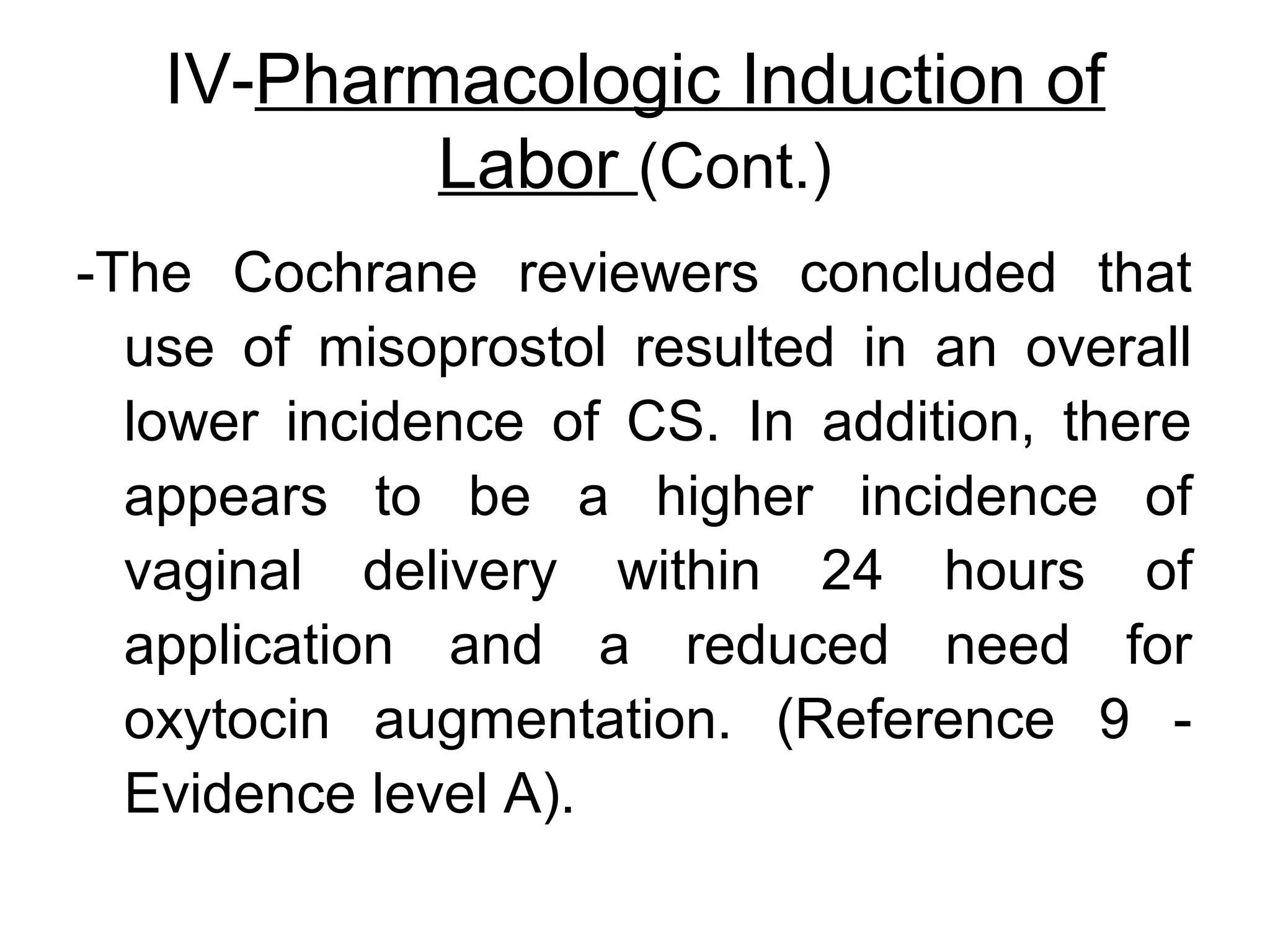
-The Cochrane reviewers concluded that
use of misoprostol resulted in an overall
lower incidence of CS. In addition, there
appears to be a higher incidence of
vaginal delivery within 24 hours of
application and a reduced need for
oxytocin augmentation. (Reference 9 Evidence level A).
IV-Pharmacologic Induction of
Labor (Cont.)
-The Cochrane reviewers concluded that
use of misoprostol resulted in an overall
lower incidence of CS. In addition, there
appears to be a higher incidence of
vaginal delivery within 24 hours of
application and a reduced need for
oxytocin augmentation. (Reference 9 Evidence level A).
IV-Pharmacologic Induction of
Labor (Cont.)
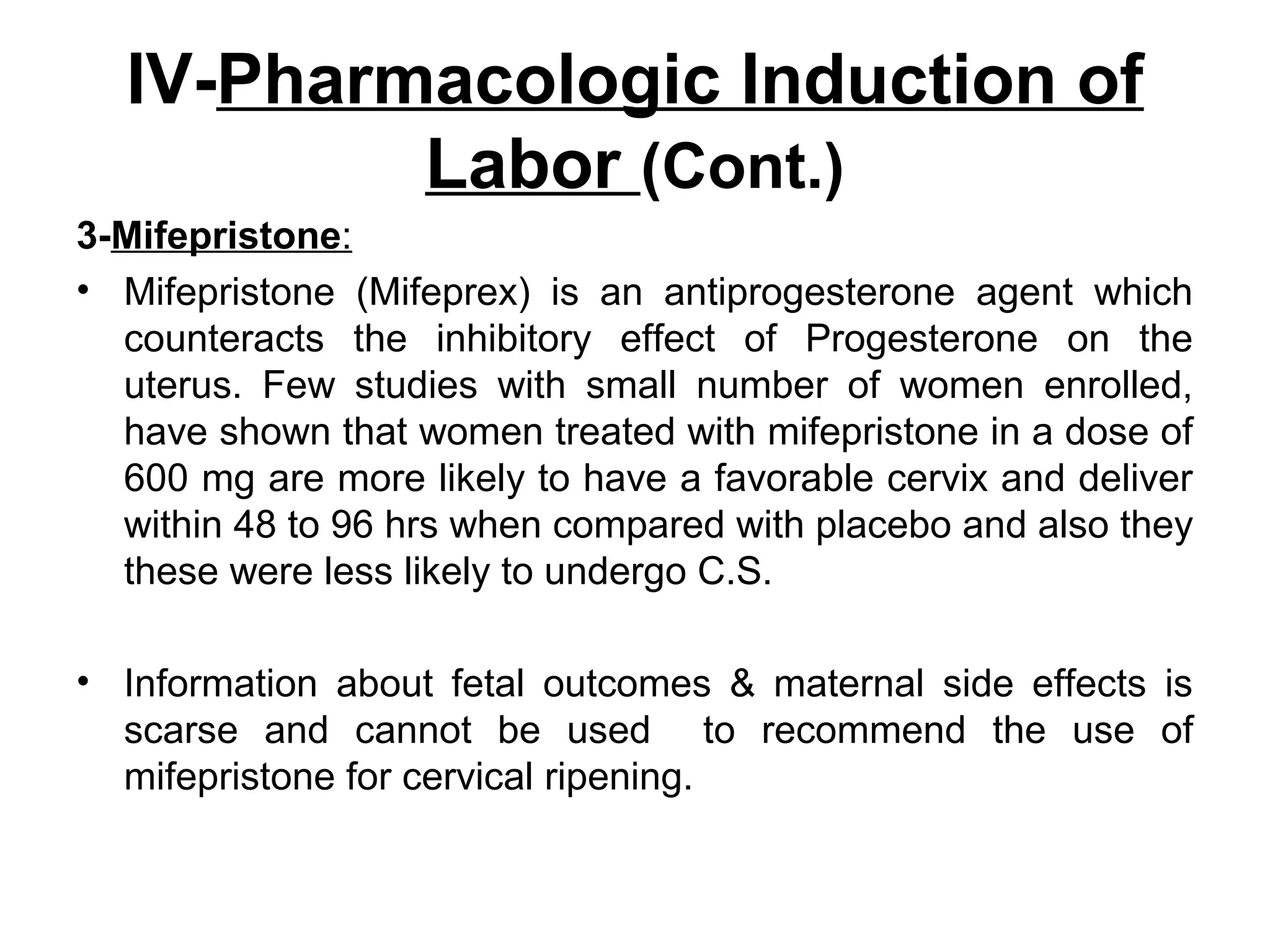
3-Mifepristone:
• Mifepristone (Mifeprex) is an antiprogesterone agent which
counteracts the inhibitory effect of Progesterone on the
uterus. Few studies with small number of women enrolled,
have shown that women treated with mifepristone in a dose of
600 mg are more likely to have a favorable cervix and deliver
within 48 to 96 hrs when compared with placebo and also they
these were less likely to undergo C.S.
• Information about fetal outcomes & maternal side effects is
scarse and cannot be used to recommend the use of
mifepristone for cervical ripening.
IV-Pharmacologic Induction of
Labor (Cont.)
High Dose Protocol:
1-Prepare15 IU of oxytocin/500 mL 5% dextrose.
2-Start IV solution infusion at a rate of 4.5-6
mU/minute (9-12 mL/hour) and increased by 4.5
mU/minute every 30 minutes for a maximum of 40
milliunits per minute.
3-This protocol have the advantage of shorter
induction delivery interval but with more
hyperstimulation
IV-Pharmacologic Induction of Labor (Cont.)
Oxytocin Protocol
-If infusion volumes were found to be excessive, prepare double
strength solution.
-If no progress occurred after 8–12 hours of starting induction, either
discontinue the oxytocin and reapply a cervical ripening agent or reinitiate oxytocin the next day.
-Continuous electronic FHR monitoring during induction is essential to
monitor fetal response to labor and uterine response to the inducing
agent. If severe FHR abnormalities or hyperstimulation occurred,
decrease/discontinue the oxytocin infusion.
C)-Oxytocin Infusion:
• Oytocin infusion in an isotonic solution is
used to stimulate uterine contractions
after rupture of the membranes. The dose
and increasing rate depend on each
agency protocols.
IV-Pharmacologic Induction of Labor (Cont.)
Side effects of oxytocin use:
1-Uterine hyperstimulation and subsequent FHR abnormalities.
2-Abruptio placentae and uterine rupture.
3-Water intoxication may occur with high concentrations of oxytocin
infused with large quantities of hypotonic solutions. Therefore;
prolonged administration with doses higher than 40 mu of oxytocin
per minute and infusion of fluids in any 10 hours should not excced
1500 ml. A rapid intravenous injection of oxytocin may cause
hypotension.
Before Interventions
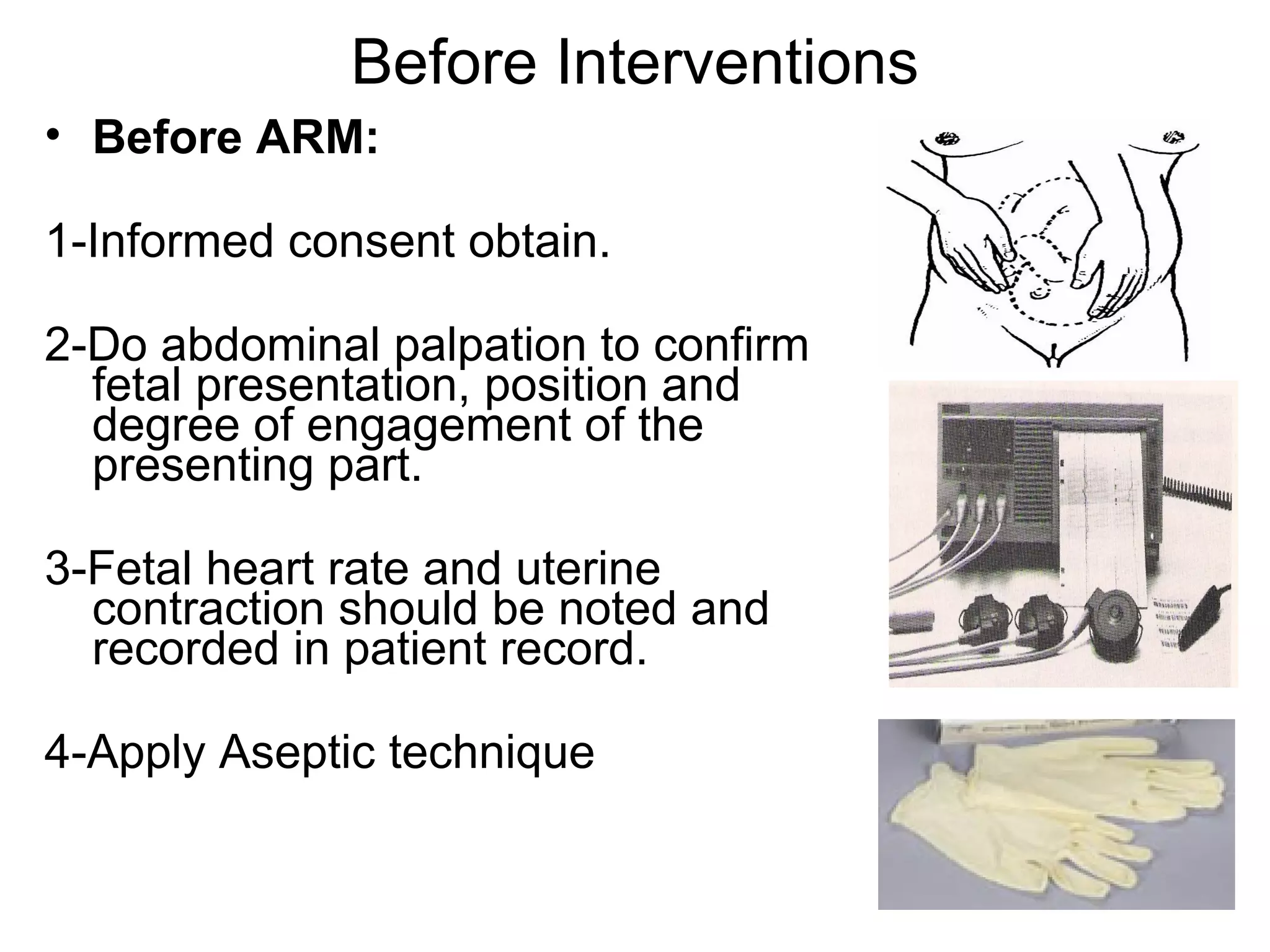
• Before ARM:
1-Informed consent obtain.
2-Do abdominal palpation to confirm
fetal presentation, position and
degree of engagement of the
presenting part.
3-Fetal heart rate and uterine
contraction should be noted and
recorded in patient record.
4-Apply Aseptic technique
Before Intervention Cont..
• After ARM:
1-The midwife or dr should exclude the presence of cord
prolapse.
2-Note color, odor, consistency, and quantity of amniotic
fluid (to identify if there is any meconium or blood in
liquor).
3-Note presentation, position and station.
4-Monitor temperature q2h (to detect developing
infection).
Oxytocin (Syntocinon):
Action

Side effects

Nursing role

Acts directly on
myofibrils,
producing
uterine
contraction.
Stimulate milk
ejection by the
breast.

Hypo- or
hyper-tention,
dysrhythmia,
Abruptio
placenta,
decreases
uterine blood
flow,
convulsions,
nausea,
vomiting,
Asphyxia for
baby.

1-Assess:
-respiration, BP, Pulse,
-length, intensity, duration
of contraction.
-FHR (acceleration,
deceleration, distress)
-Signs of water
intoxication: (confusion,
anuria, drowsiness,
headache.
2-Teach patient to: report
increase blood loss,
abdominal cramp, fever,
foul-smelling lochia.
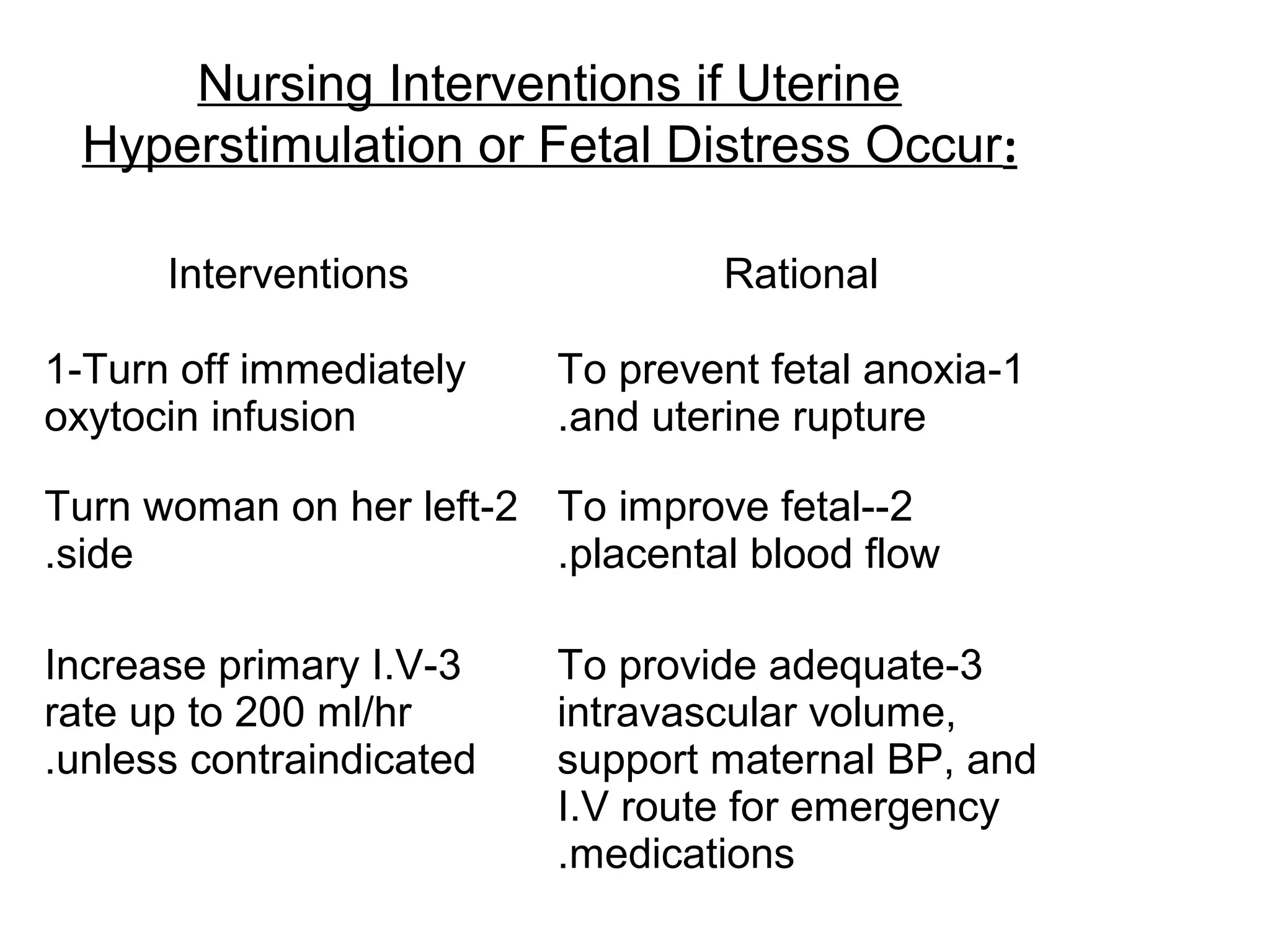
Nursing Interventions if Uterine
Hyperstimulation or Fetal Distress Occur:
Interventions
1-Turn off immediately
oxytocin infusion

Rational
To prevent fetal anoxia-1
.and uterine rupture

Turn woman on her left-2 To improve fetal--2
.side
.placental blood flow
Increase primary I.V-3
rate up to 200 ml/hr
.unless contraindicated

To provide adequate-3
intravascular volume,
support maternal BP, and
I.V route for emergency
.medications
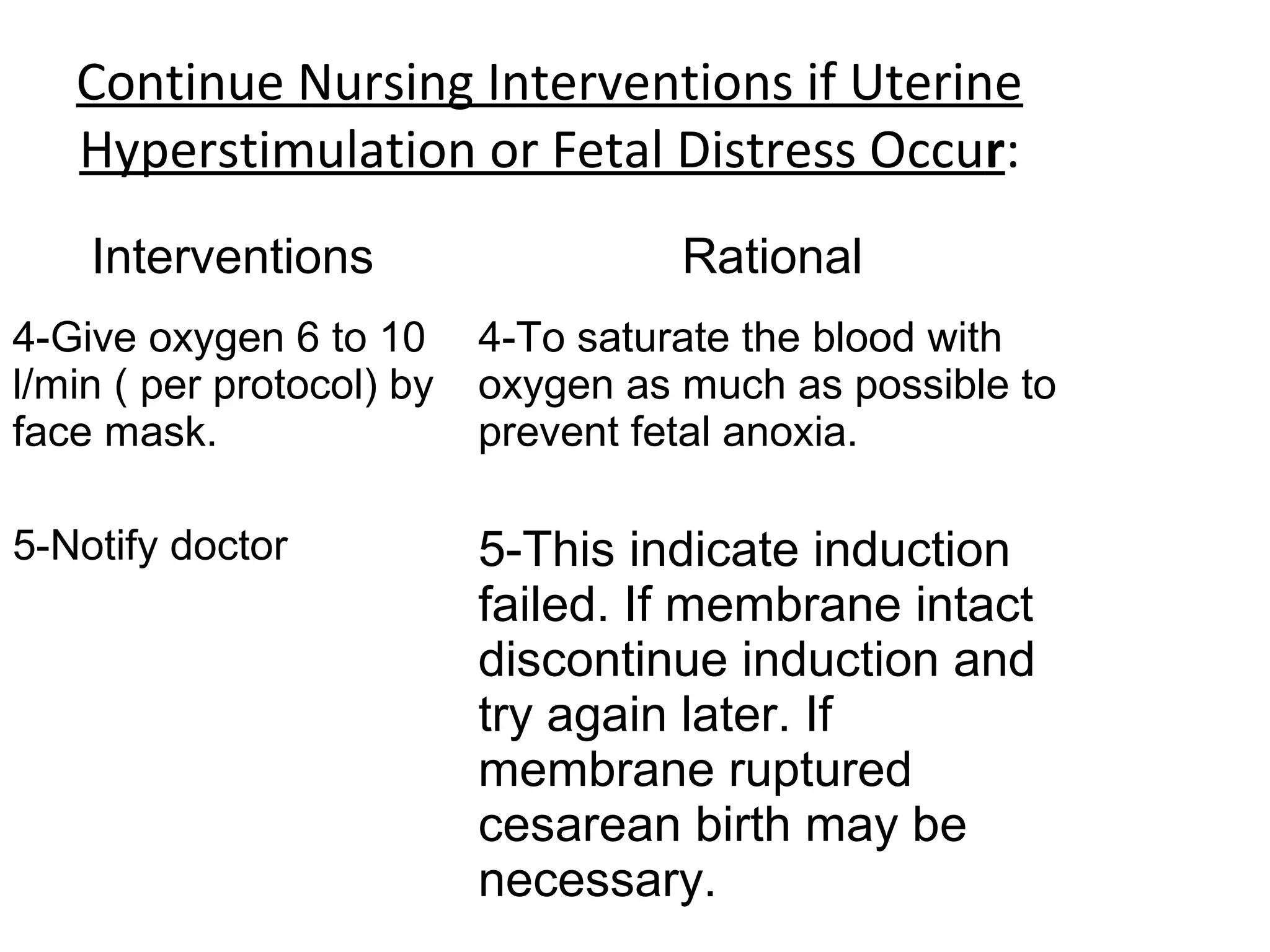
Continue Nursing Interventions if Uterine
Hyperstimulation or Fetal Distress Occur:
Interventions

Rational

4-Give oxygen 6 to 10
l/min ( per protocol) by
face mask.

4-To saturate the blood with
oxygen as much as possible to
prevent fetal anoxia.

5-Notify doctor

5-This indicate induction
failed. If membrane intact
discontinue induction and
try again later. If
membrane ruptured
cesarean birth may be
necessary.
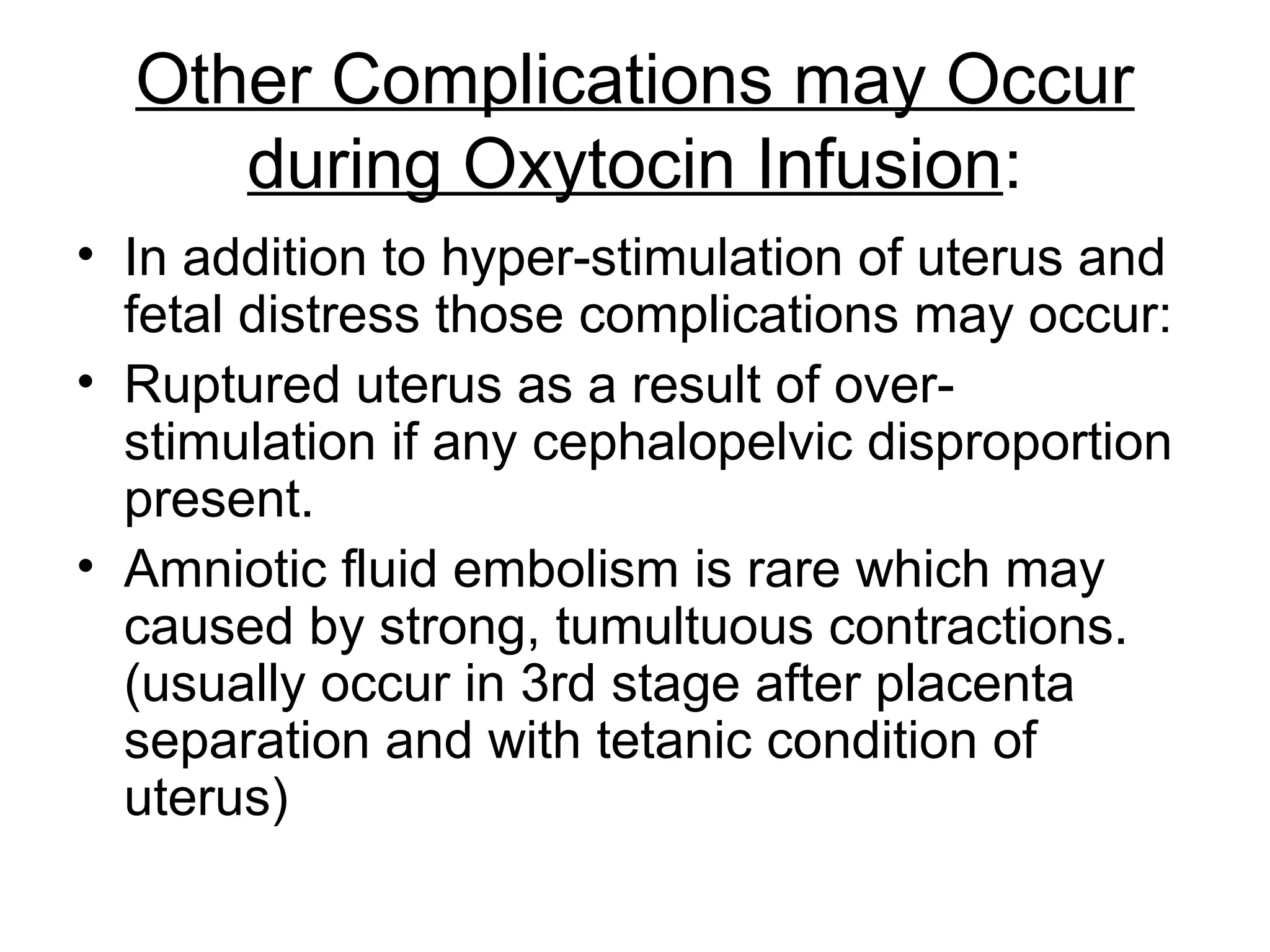
Other Complications may Occur
during Oxytocin Infusion:
• In addition to hyper-stimulation of uterus and
fetal distress those complications may occur:
• Ruptured uterus as a result of overstimulation if any cephalopelvic disproportion
present.
• Amniotic fluid embolism is rare which may
caused by strong, tumultuous contractions.
(usually occur in 3rd stage after placenta
separation and with tetanic condition of
uterus)
Signs of Hyperstimulation of the uterus:
•

Contraction occur more frequently than every 2 minutes.

•

Duration of contraction is longer than 90 seconds.

•

Elevation of resting tone of uterus is greater than 15 to 20 mmHg over her
baseline of intrauterine pressure.

•

Blood pressure increases when contractions increase in frequency, duration,
and intensity because of decrease in uteroplacental circulation.

•

Client experience increasing pain because of increased frequency, duration,
and intensity of contractions.

•

Sustained tetanic contractions occur.
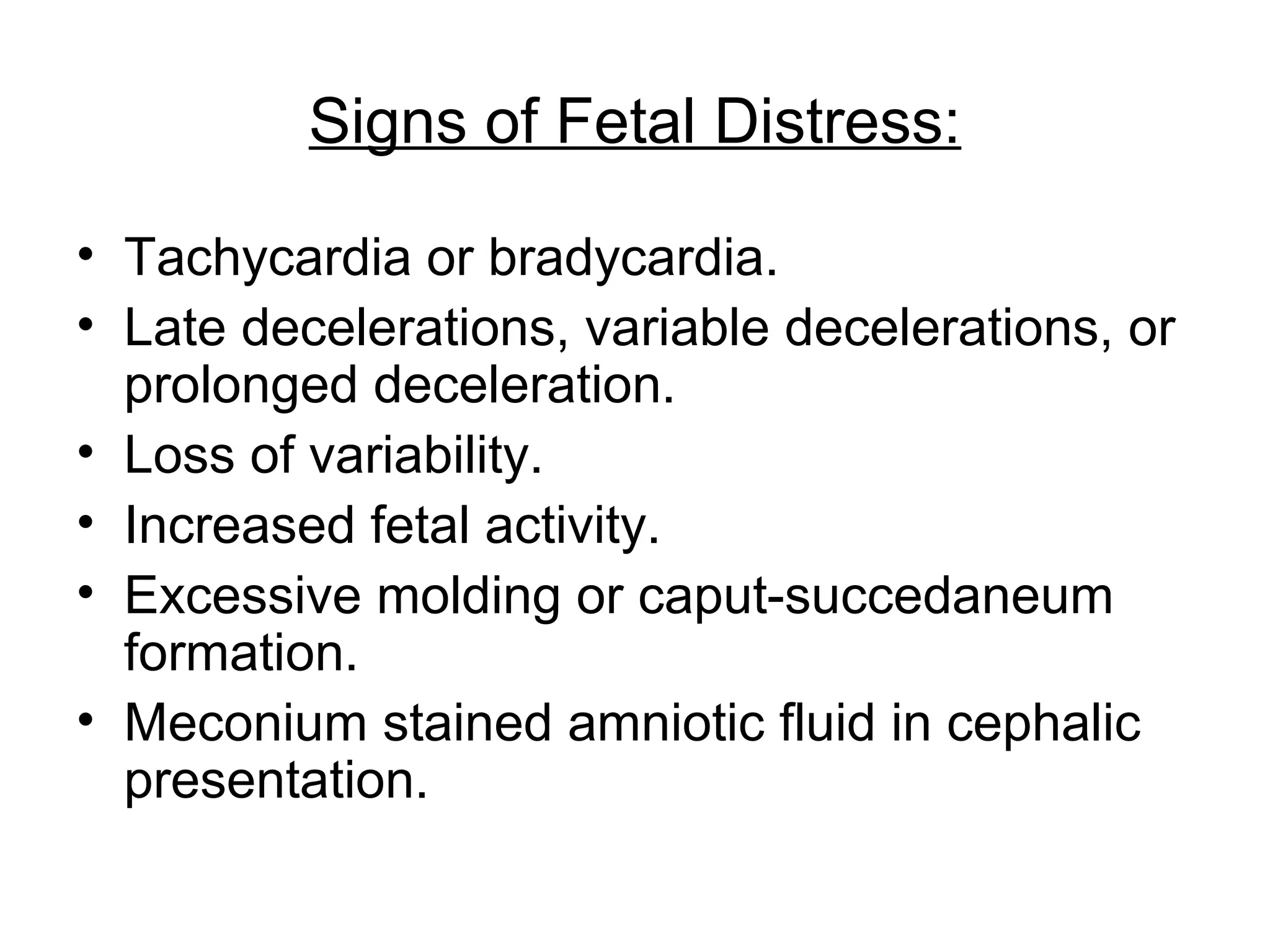
Signs of Fetal Distress:
• Tachycardia or bradycardia.
• Late decelerations, variable decelerations, or
prolonged deceleration.
• Loss of variability.
• Increased fetal activity.
• Excessive molding or caput-succedaneum
formation.
• Meconium stained amniotic fluid in cephalic
presentation.
Thank you!

Induction of labor

  • 1.
    Induction Of Labor DrAttiya Assisstant Professor M.C.P.S ,F.C.P.S
  • 2.
    Induction of labour •An intervention designed to artificially initiate uterine contractions leading to progressive dilatation and effacement of the cervix. Is the planned initiation of labor prior to the onset of spontaneous labor. It is an obstetric intervention that should be used when elective birth beneficial to mother and baby.
  • 3.
    Objectives At the endof this presentation, you should be: • Aware of the indications and contraindications for induction of labor • Aware of the different methods of induction of labor • Able to select the appropriate method of labor induction for an individual patient.
  • 4.
    Indications for inductionof labor: • Maternal indications • • • • • • • • • Post-term (main indication] P.I.H (Timing depend )on the[ severity] Diabetes Mellitus (increase risk of baby loss and mortality rate) Medical conditions (as renal, respiratory and cardiac diseases) Placenta insufficiency (as moderate or sever placenta abruption but commonly C.S) Prolonged pre-labor rupture of membranes. Rheuses isoimmunization. Maternal request.
  • 5.
    Indications for Inductionof Labor cond.. • Fetal Indications: • Suspected fetal compromise (I.U.G.R ) • Intrauterine death (I.U.F.D).
  • 6.
    Contraindications • Placenta previaand vasa previa • Abnormal fetal lie / presentation. e.g. transverse lie and breech presentation • Umbilical cord prolapse and fetal distress • Previous classical Cesarean section or other transfundal uterine surgery • Active herpes infection • Pelvic structural abnormality • Invasive cervical cancer • Contraindicaton specific to the inducing drug used.
  • 7.
    Augmentation of labor: •Is refers to intervention to correct slow progress in labor. • Correction of ineffective uterine contraction includes Amniotomy and/or Oxytocin infusion.
  • 8.
    Criteria Before Induction • • • • • • Sureestimation of weeks of gestation. Evidence of fetal maturity. Absence of cephalopelvic disproportion. An engaged head in longitudinal lie. Cervix is ready for delivery. High score Bishop's score.
  • 9.
    Induction with caution •Multiple pregnancy. • Hydraminos. • Grand parity. • Maternal age of >35years. • Previous cesarean section. *Those conditions are at risk for ruptured of uterus.
  • 10.
    The Bishop score Bishopscore is producing a scoring system to quantify the state of readiness of the cervix and fetus. High scores (a favourable cervix) are associated with an easier shorter induction. CERVIX SCORE 0 1 2 3 Dilatation of 0 cervix 1--2 3--4 5 or more Consistenc y of cervix Firm Medium Soft ------ Length of cervix >2 2--1 1-0.5 <0.5 Position of cervix Posterior Mid Anterior ------ Station of presenting part -3 -2 -1…0 +1--+2
  • 11.
    Methods of Inductionof Labor: • Natural Non Medical Methods • Mechanical Methods • Surgical methods • Pharmacological Methods
  • 12.
    Natural-Non Medical methods 1-Relaxationtechniques: advise patient to relieve tension and try to relax then use some visual aids to show how labor starts. 2-Visualization: The patient is advised to imagine her uterus contracting and she is laboring. Hypnosis/selfhypnosis helps. 3-Walking: The force of gravity pulls the weight of the baby towards the birth canal leading to dilatation and effacement of the cervix.
  • 13.
    I-Natural-Non Medical methods (Cont.) 4-Sex:Having sex is known to induce labor. This is related to prostaglandin content of the seminal fluid and the occurrence of orgasm which stimulate uterine contractions 5-Nipple stimulation: The lady moves her palm and applies some pressure in a circular fashion over her areola and massaging nipple between thumb and forefingers for a period of 2 minutes alternating with 3 minutes of rest. The procedure is performed for 20 minutes. If adequate contraction pattern is not achieved, massaging was done for 3 minutes alternating with 2 minutes rest for additional 20 minutes. Care should be taken to avoid massaging during a contraction and to only massage one side at a time in order to avoid hyperstimulation.
  • 14.
    I-Natural-Non Medical methods (Cont.) 8-CuminTea: Used by midwives in Latino cultures. Sugar or honey may be added to lessen its bitter taste 9-Several herbs: Labor-enhancing herbs include blue Cohosh, black Cohosh, Squawvine and Dong Quai. Evening primrose oil also ripens the cervix. It is given internally 5 gel caps up against the cervix daily.
  • 15.
    I-Natural-Non Medical methods (Cont.) 10-Acupressure: Fewhealth personnel claim an association between some acupressure points in the body and increased uterine contractions. One point is located deep in the webbing between thumb and forefinger. Massaging this point in a circular motion for 1-5 minutes stimulates labor pain and induce labor. (Reference 1 - Evidence level B, systematic review of non-RCTs )
  • 16.
    II-Mechanical methods 1-Hygroscopic dilators Theyabsorb endocervical and local tissue fluids, causing the device to expand within the endocervix and provide mechanical pressure. These dilators are either natural osmotic dilators (e.g., Laminaria japonicum) or synthetic osmotic dilators (e.g., Lamicel). Advantages: 1- Outpatient placement fetal monitoring Risks: fetal and/or maternal infection 2- No need for
  • 17.
    II-Mechanical methods (Cont.) 1-Hygroscopicdilators: Technique of insertion: -The perineum and vagina are sterilized with antiseptic sol & the patient is drapped. -Using a sterile speculum, the dilator is introduced into the endocervix. -Dilators are progressively placed until the endocervix is full. -A sterile gauze pad is placed in the vagina to maintain the position of the dilators.
  • 18.
    II-Mechanical methods (Cont.) 2-Placement of Balloon Dilators after 42 weeks gestation: A fluid filled balloon is inserted inside the cervix. The Balloon provide mechanical pressure directly on the cervix which respond by ripening and dilation. A Foley catheter (26 Fr) or specifically designed balloon devices can be used. Technique of balloon placement: 1- After sterilization and draping, the catheter is introduced into the endocervix either by direct visualization or blindly by sliding it over fingers through the endocervix into the potential space between the amniotic membrane & the lower uterine segment.
  • 19.
    II-Mechanical methods (Cont.) Theballoon is inflated with 30 to 50 mL of normal saline and is retracted so that it rests on the internal os. 3- Constant pressure may be applied over the catheter. e.g. a bag filled with 1 L of fluid may be attached to the catheter end. An intermittent pressure may also be exerted on the catheter end 2 -4 times per hour. 4-Catheter is removed at the time of rupture of membranes or may be expelled spontaneously which indicate a cervical dilataion of 3-4 Centimeter. (References 2-6 - Evidence level B, systematic review of non-RCTs)
  • 20.
    III-Surgical Methods 1-Stripping themembranes: - Stripping the membranes mechanically dilates the cervix which releases prostaglandins. The membranes are stripped by inserting the examining finger through the internal os & moving it in a circular direction to detach the inferior pole of the membranes from the lower uterine segment. - Risks include patient’s discomfort, infection, bleeding from undiagnosed placenta previa or low lying placenta,and accidental ROM. - The Cochrane reviewers concluded that stripping the membranes, when used as an adjunct, decreases the mean dose of oxytocin needed and increases the rate of normal vaginal deliveries. (Ref 7 - Evidence level A
  • 21.
    III-Surgical Methods (Cont.) 2-Amniotomy- Technique: -The FHR is recorded before the procedure. -A pelvic examination is performed to evaluate the cervix & station of the presenting part. The presenting part should be well fitted to the cervix. -The membranes are identified and a kocher is inserted through the cervical os by sliding it along the hand & fingers & membranes are ruptured. -Nature of the amniotic fluid is recorded [clear,bloody,thick,thin,or meconium] -The FHR is recorded after the procedure.
  • 22.
    Amniotomy (ARM):Contd… • Why? performedto induce labor, to augment contractions, to shortening the duration of labor, to visualize the color of the liquor, or to attach a fetal scalp electrode for the fetal heart rate. • When? ARM done when the cervix is favorable (high Bishop's score)
  • 23.
    III-Surgical Methods (Cont.) Risksof amniotomy: 1- Prolapse of the umbilical cord (0.5%) 2- Chorioamnionitis: Risk increases with prolonged induction delivery interval 3- Postpartum hemorrhage: Risk is doubled compared with women with spontaneous onset of labor 4- Rupture of vasa previa 5- Neonatal hyperbilirubinemia
  • 24.
    IV-Pharmacologic Induction of Labor 1-ProstaglandinE2: (dinoprostone): It is inserted vaginally as a gel (Prepidil), as a removable tampon (Cervidil) or as a vaginal pessary. It acts on the cervical connective tissue and relaxes muscle fibres of the cervix. Dinoprostone should only be administered at hospital and the patient is expected to stay recumbent and monitored, at least, for the first 30 minutes after insertion. Contractions usually start within 60 minutes of commencing induction and peak within 4 hours. If optimal response is not achieved by 6 hours, another dose can be administered. The maximum allowed dose is 3 doses be administered per 24 hours.
  • 25.
    IV-Pharmacologic Induction of Labor(Cont.) Cervidil contains 10 mg of dinoprostone and provides a lower constant release of medication (0.3 mg per hour) than Prepidil does. Cervidil have the advantage of being removed more easily if uterine hyperstimulation occurs. In addition, it does not require refrigeration. PGE2 can cause uterine hyperstimulation, fetal distress and Cesarean section.
  • 26.
    Before Interventions: 1-Review patienthistory before administiration (to ensure there are no contraindications or any caution). 2-Fetal heart rate and uterine contractions should be monitored continuously for 3060minutes after administration. (there is a risk of uterine hyperstimulation and ruptured of uterus with or without fetal distress)
  • 27.
    Before Interventions:Contd.. • Instructwoman to pass urine before administering prostaglandin (because she will stay for long time in bed) • The mother should remain in lateral or supine position with hip tilt for 30 to 60minutes after administration of gel, for 2 hours after insertion of vaginal tablets. (to minimize leakage and improve effectiveness).
  • 28.
    Before Interventions:Contd • Assesscervical dilatation 6 hours after insertion. (If no cervical response and no adverse effects, the dose may be repeated) • Monitor side effects of prostaglandins: Pyrexia, warm feeling in vagina, vomiting, diarrhea, and back pain. • It is necessary to allow at least 2 hours to elapse between the last prostaglandin dose and starting Syntocinon infusion, (because Prostaglandin increase the sensitivity of the uterus to Syntocinon). • If any adverse reactions occur notify doctor to remove gel or suppository if possible.
  • 29.
    IV-Pharmacologic Induction of Labor 2-Misoprostol: Pharmacokinetics: • Route of administration: Oral, vaginal and sublingual route for induction. Rectal route is used to prevent and treat postpartum hemorrhage. • Bioavailability: Extensively absorbed from the GIT • Metabolism: De-esterified to prostaglandin F analogs • Half life: 20–40 minutes • Excretion: Mainly renal 80%, remainder is fecal: 15%
  • 30.
    IV-Pharmacologic Induction of Labor(Cont.) 2-Misoprostol: -Misoprostol (Cytotec) is a synthetic PGE1 analog that has been found to be a safe and inexpensive agent for cervical ripening. -Clinical trials indicate that the safe optimal dose and dosing interval is 25 mcg intravaginally every 4-6 hours. A maximum of 6 doses was suggested. Higher doses or shorter dosing intervals are associated with a higher incidence of side effects, especially hyperstimulation syndrome. -Misoprostol should not be used in women with previous CS because of increased rates of uterine rupture (Reference 8 Evidence level B).
  • 31.
    IV-Pharmacologic Induction of Labor(Cont.) -The Cochrane reviewers concluded that use of misoprostol resulted in an overall lower incidence of CS. In addition, there appears to be a higher incidence of vaginal delivery within 24 hours of application and a reduced need for oxytocin augmentation. (Reference 9 Evidence level A).
  • 32.
    IV-Pharmacologic Induction of Labor(Cont.) -The Cochrane reviewers concluded that use of misoprostol resulted in an overall lower incidence of CS. In addition, there appears to be a higher incidence of vaginal delivery within 24 hours of application and a reduced need for oxytocin augmentation. (Reference 9 Evidence level A).
  • 33.
    IV-Pharmacologic Induction of Labor(Cont.) 3-Mifepristone: • Mifepristone (Mifeprex) is an antiprogesterone agent which counteracts the inhibitory effect of Progesterone on the uterus. Few studies with small number of women enrolled, have shown that women treated with mifepristone in a dose of 600 mg are more likely to have a favorable cervix and deliver within 48 to 96 hrs when compared with placebo and also they these were less likely to undergo C.S. • Information about fetal outcomes & maternal side effects is scarse and cannot be used to recommend the use of mifepristone for cervical ripening.
  • 34.
    IV-Pharmacologic Induction of Labor(Cont.) High Dose Protocol: 1-Prepare15 IU of oxytocin/500 mL 5% dextrose. 2-Start IV solution infusion at a rate of 4.5-6 mU/minute (9-12 mL/hour) and increased by 4.5 mU/minute every 30 minutes for a maximum of 40 milliunits per minute. 3-This protocol have the advantage of shorter induction delivery interval but with more hyperstimulation
  • 35.
    IV-Pharmacologic Induction ofLabor (Cont.) Oxytocin Protocol -If infusion volumes were found to be excessive, prepare double strength solution. -If no progress occurred after 8–12 hours of starting induction, either discontinue the oxytocin and reapply a cervical ripening agent or reinitiate oxytocin the next day. -Continuous electronic FHR monitoring during induction is essential to monitor fetal response to labor and uterine response to the inducing agent. If severe FHR abnormalities or hyperstimulation occurred, decrease/discontinue the oxytocin infusion.
  • 36.
    C)-Oxytocin Infusion: • Oytocininfusion in an isotonic solution is used to stimulate uterine contractions after rupture of the membranes. The dose and increasing rate depend on each agency protocols.
  • 37.
    IV-Pharmacologic Induction ofLabor (Cont.) Side effects of oxytocin use: 1-Uterine hyperstimulation and subsequent FHR abnormalities. 2-Abruptio placentae and uterine rupture. 3-Water intoxication may occur with high concentrations of oxytocin infused with large quantities of hypotonic solutions. Therefore; prolonged administration with doses higher than 40 mu of oxytocin per minute and infusion of fluids in any 10 hours should not excced 1500 ml. A rapid intravenous injection of oxytocin may cause hypotension.
  • 38.
    Before Interventions • BeforeARM: 1-Informed consent obtain. 2-Do abdominal palpation to confirm fetal presentation, position and degree of engagement of the presenting part. 3-Fetal heart rate and uterine contraction should be noted and recorded in patient record. 4-Apply Aseptic technique
  • 39.
    Before Intervention Cont.. •After ARM: 1-The midwife or dr should exclude the presence of cord prolapse. 2-Note color, odor, consistency, and quantity of amniotic fluid (to identify if there is any meconium or blood in liquor). 3-Note presentation, position and station. 4-Monitor temperature q2h (to detect developing infection).
  • 40.
    Oxytocin (Syntocinon): Action Side effects Nursingrole Acts directly on myofibrils, producing uterine contraction. Stimulate milk ejection by the breast. Hypo- or hyper-tention, dysrhythmia, Abruptio placenta, decreases uterine blood flow, convulsions, nausea, vomiting, Asphyxia for baby. 1-Assess: -respiration, BP, Pulse, -length, intensity, duration of contraction. -FHR (acceleration, deceleration, distress) -Signs of water intoxication: (confusion, anuria, drowsiness, headache. 2-Teach patient to: report increase blood loss, abdominal cramp, fever, foul-smelling lochia.
  • 41.
    Nursing Interventions ifUterine Hyperstimulation or Fetal Distress Occur: Interventions 1-Turn off immediately oxytocin infusion Rational To prevent fetal anoxia-1 .and uterine rupture Turn woman on her left-2 To improve fetal--2 .side .placental blood flow Increase primary I.V-3 rate up to 200 ml/hr .unless contraindicated To provide adequate-3 intravascular volume, support maternal BP, and I.V route for emergency .medications
  • 42.
    Continue Nursing Interventionsif Uterine Hyperstimulation or Fetal Distress Occur: Interventions Rational 4-Give oxygen 6 to 10 l/min ( per protocol) by face mask. 4-To saturate the blood with oxygen as much as possible to prevent fetal anoxia. 5-Notify doctor 5-This indicate induction failed. If membrane intact discontinue induction and try again later. If membrane ruptured cesarean birth may be necessary.
  • 43.
    Other Complications mayOccur during Oxytocin Infusion: • In addition to hyper-stimulation of uterus and fetal distress those complications may occur: • Ruptured uterus as a result of overstimulation if any cephalopelvic disproportion present. • Amniotic fluid embolism is rare which may caused by strong, tumultuous contractions. (usually occur in 3rd stage after placenta separation and with tetanic condition of uterus)
  • 44.
    Signs of Hyperstimulationof the uterus: • Contraction occur more frequently than every 2 minutes. • Duration of contraction is longer than 90 seconds. • Elevation of resting tone of uterus is greater than 15 to 20 mmHg over her baseline of intrauterine pressure. • Blood pressure increases when contractions increase in frequency, duration, and intensity because of decrease in uteroplacental circulation. • Client experience increasing pain because of increased frequency, duration, and intensity of contractions. • Sustained tetanic contractions occur.
  • 45.
    Signs of FetalDistress: • Tachycardia or bradycardia. • Late decelerations, variable decelerations, or prolonged deceleration. • Loss of variability. • Increased fetal activity. • Excessive molding or caput-succedaneum formation. • Meconium stained amniotic fluid in cephalic presentation.
  • 46.