INDUCTION &
AUGUMENTATION OF LABOUR.
Dr. Nakiwunga Noor
MBChB, MMED OBS&GYN
Lecturer Habib Medical School
Definitions.
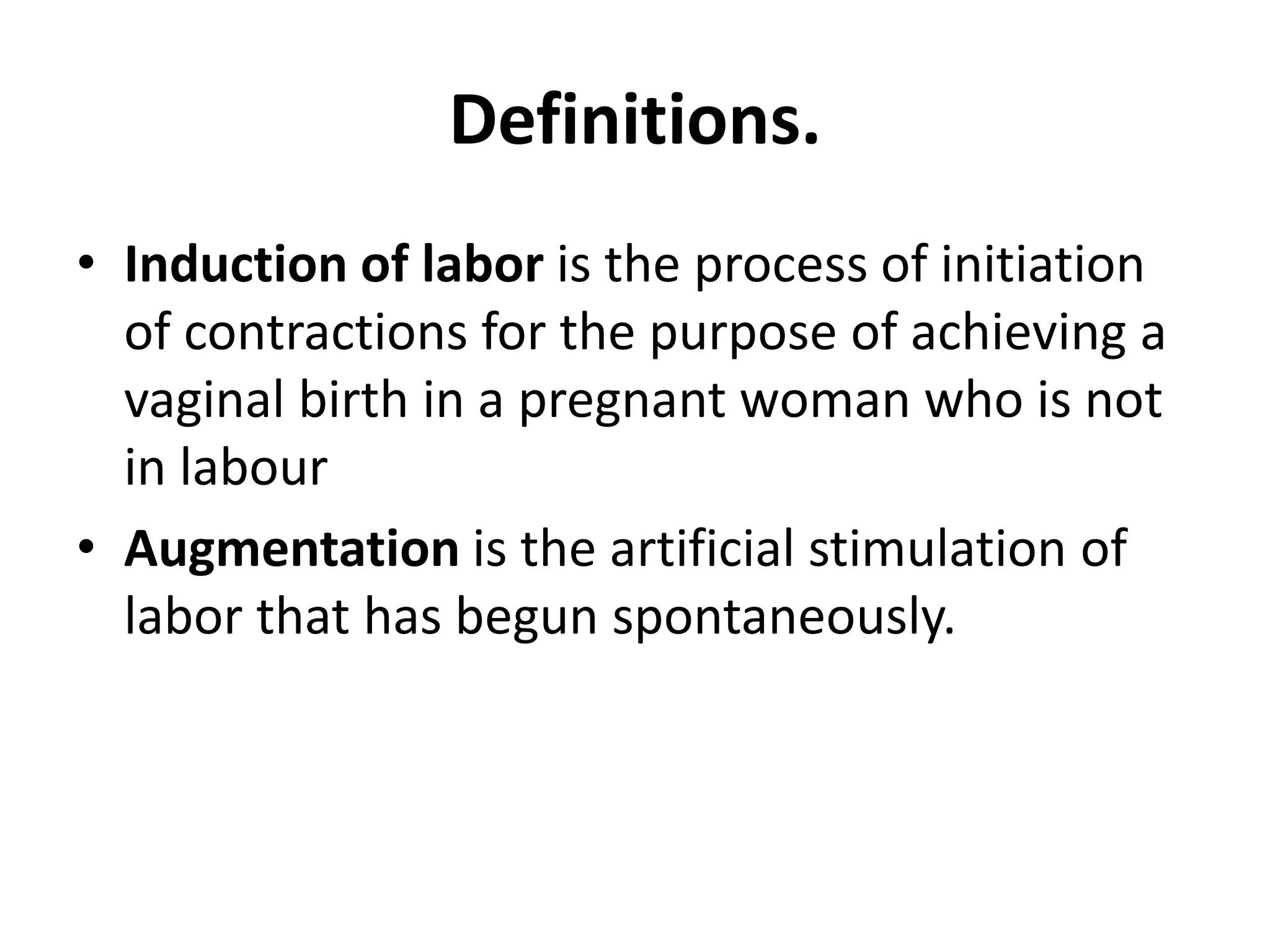
• Induction of labor is the process of initiation
of contractions for the purpose of achieving a
vaginal birth in a pregnant woman who is not
in labour
• Augmentation is the artificial stimulation of
labor that has begun spontaneously.
Definitions cont…..
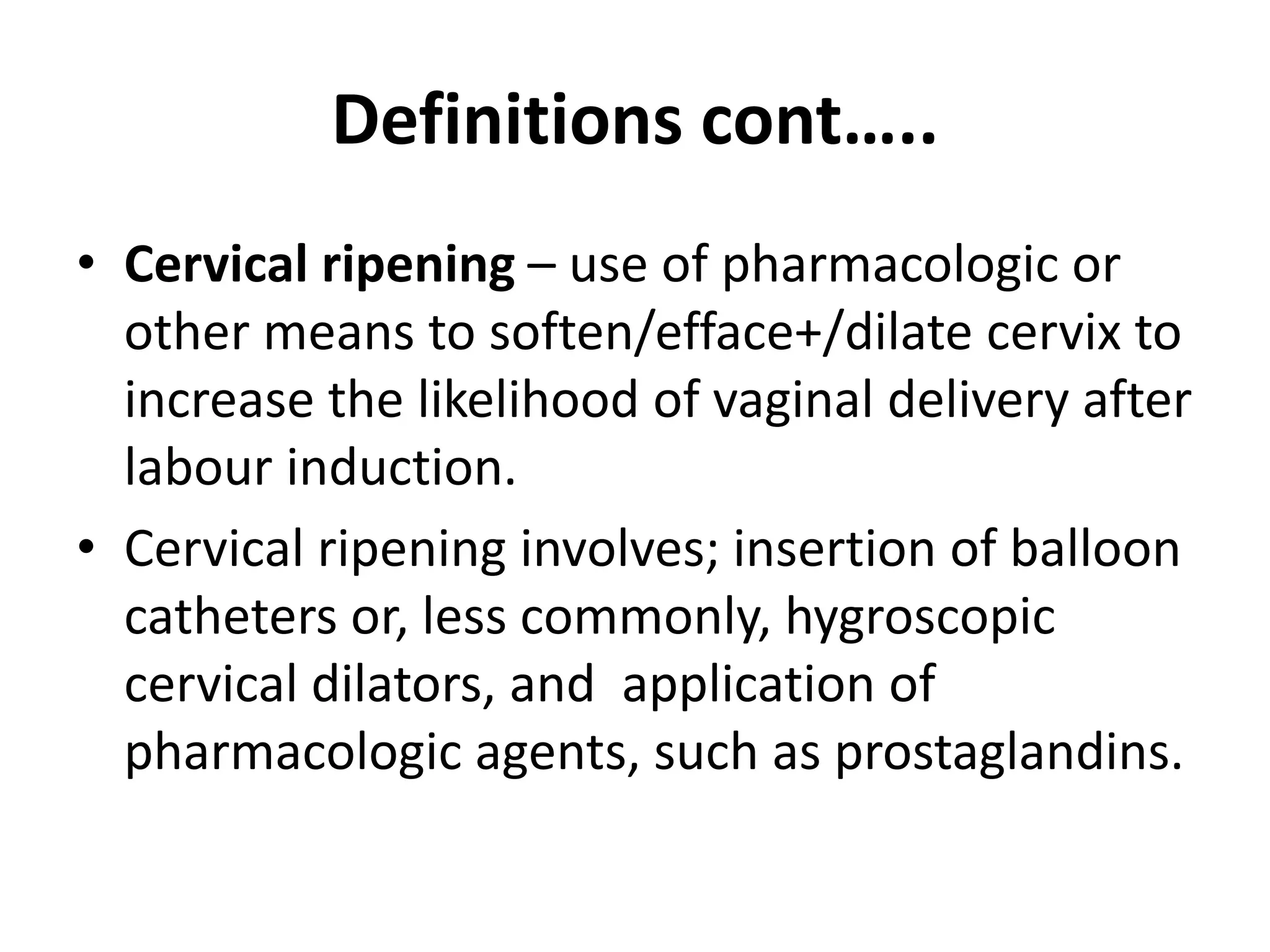
• Cervical ripening – use of pharmacologic or
other means to soften/efface+/dilate cervix to
increase the likelihood of vaginal delivery after
labour induction.
• Cervical ripening involves; insertion of balloon
catheters or, less commonly, hygroscopic
cervical dilators, and application of
pharmacologic agents, such as prostaglandins.
Introduction
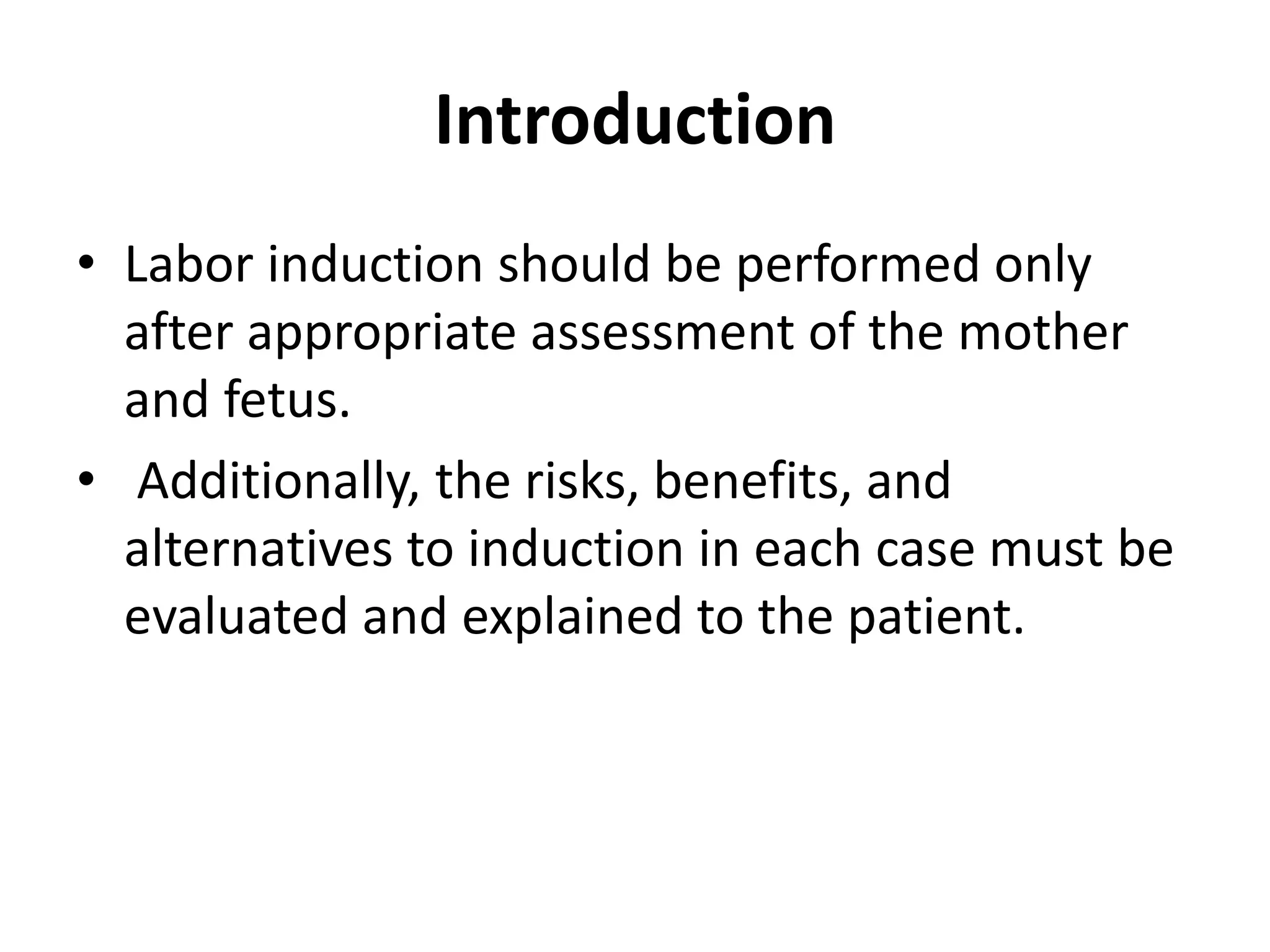
• Labor induction should be performed only
after appropriate assessment of the mother
and fetus.
• Additionally, the risks, benefits, and
alternatives to induction in each case must be
evaluated and explained to the patient.
Introduction cont…….
• Generally, induction should be done in
response to specific indications and should
not be done electively prior to 39 weeks
gestational age.
• Induction should however be individualized.
Indications for induction of labor
The following are common indications for induction
of labor:
1. Maternal
• Pre-eclampsia
• diabetes mellitus,
• heart disease.
• Abruptio placenta with a dead fetus
• Chorioamnionitis
• PROM
2. Fetal indications
• Prolonged pregnancy
• Rh incompatibility
• fetal abnormality
• chorioamnionitis
• placental insufficiency
• suspected intrauterine growth restriction
Contraindications to induction of
labor
Absolute contraindications
• contracted pelvis
• placenta previa
• previous classical caesarean section, previous
myomectomy, hysterotomy
• transverse lie
• Active genital herpes
• Hypersensitivity to inducing agent
Relative contraindications of labor
induction
• breech presentation
• oligohydromnios
• multiple gestation
• grand multiparity
• previous caesarean section with transverse
scar
• prematurity
• suspected fetal Macrosomia.
Complications of labor induction
1. Mother
• Maternal distress.
• failure of induction with increased risk of
caesarean delivery
• uterine inertia and prolonged labor
• tetanic contractions of the uterus, causing
premature separation of the placenta, rupture of
the uterus, and laceration of the cervix
• intrauterine infection
• postpartum hemorrhage
Fetal complications
• Risk of prematurity if the LNMP is unknown.
• Precipitous delivery may result in physical
injury
• Prolapse of the cord may follow amniotomy.
• Injudicious administration of oxytocin or
inadequate observation during induction
could lead to fetal heart rate abnormalities or
delivery of a baby with poor Apgar scores.
Pre-induction assessment
• Establish indication clearly
• Informed consent
• Confirmation of gestational age
• Assessment of fetal size & presentation
• Pelvic assessment
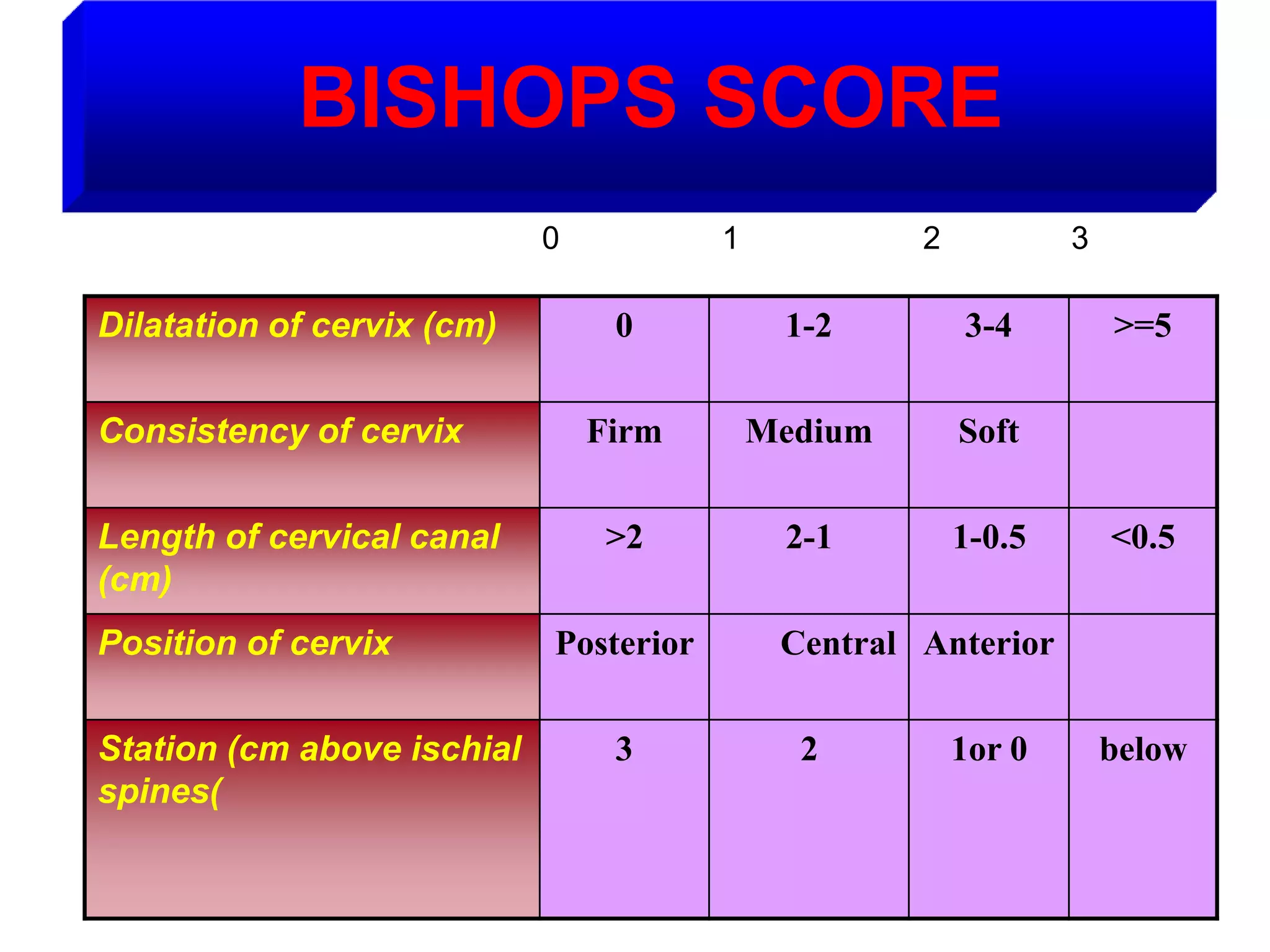
• Cervical assessment (BISHOP score)
• Availability of trained personnel and
monitoring tools.
BISHOPS SCORE
>=5
3-4
1-2
0
Dilatation of cervix (cm)
Soft
Medium
Firm
Consistency of cervix
<0.5
1-0.5
2-1
>2
Length of cervical canal
(cm)
Anterior
Central
Posterior
Position of cervix
below
1or 0
2
3
Station (cm above ischial
spines)
0 1 2 3
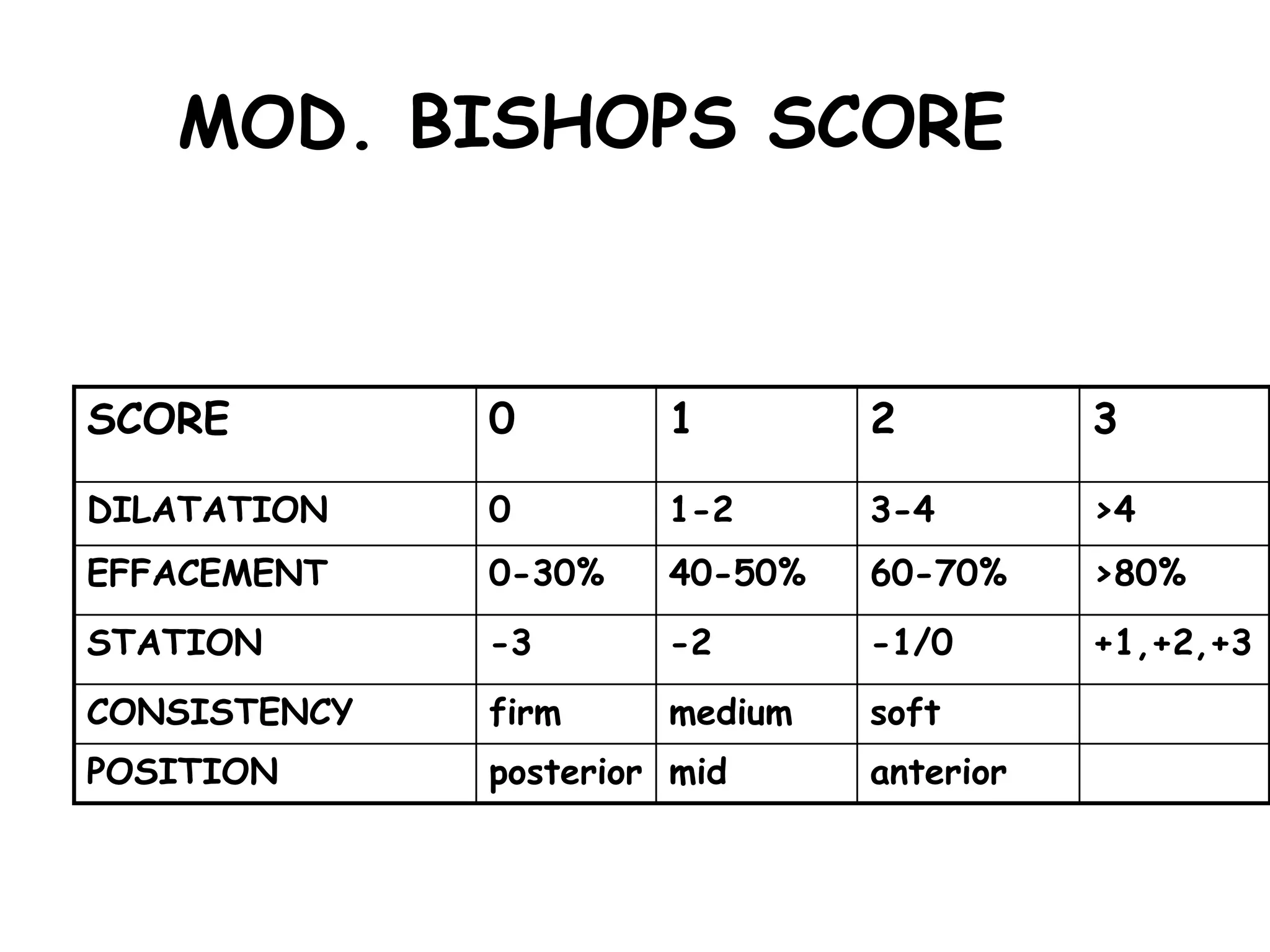
MOD. BISHOPS SCORE
SCORE 0 1 2 3
DILATATION 0 1-2 3-4 >4
EFFACEMENT 0-30% 40-50% 60-70% >80%
STATION -3 -2 -1/0 +1,+2,+3
CONSISTENCY firm medium soft
POSITION posterior mid anterior
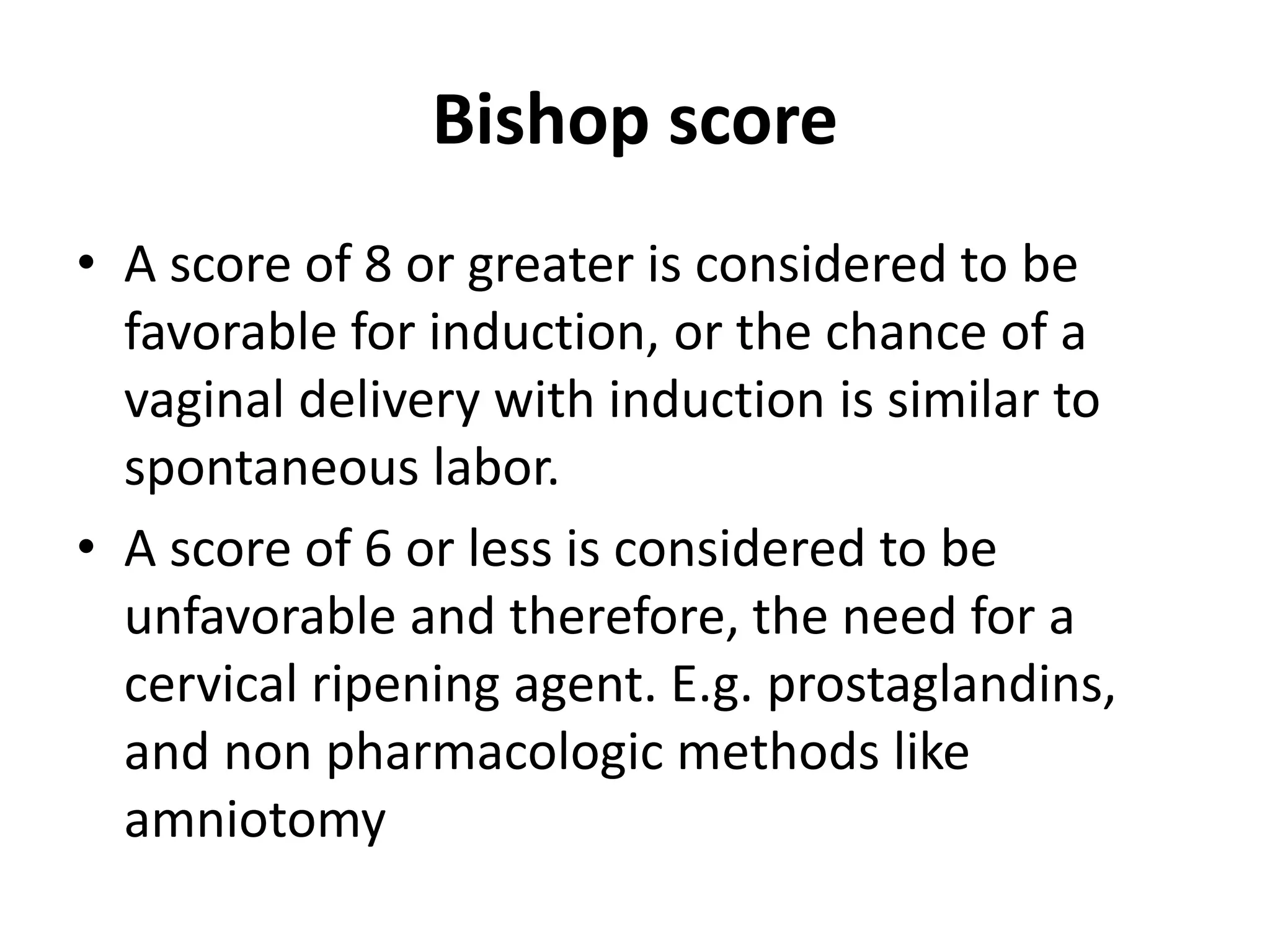
Bishop score
• A score of 8 or greater is considered to be
favorable for induction, or the chance of a
vaginal delivery with induction is similar to
spontaneous labor.
• A score of 6 or less is considered to be
unfavorable and therefore, the need for a
cervical ripening agent. E.g. prostaglandins,
and non pharmacologic methods like
amniotomy
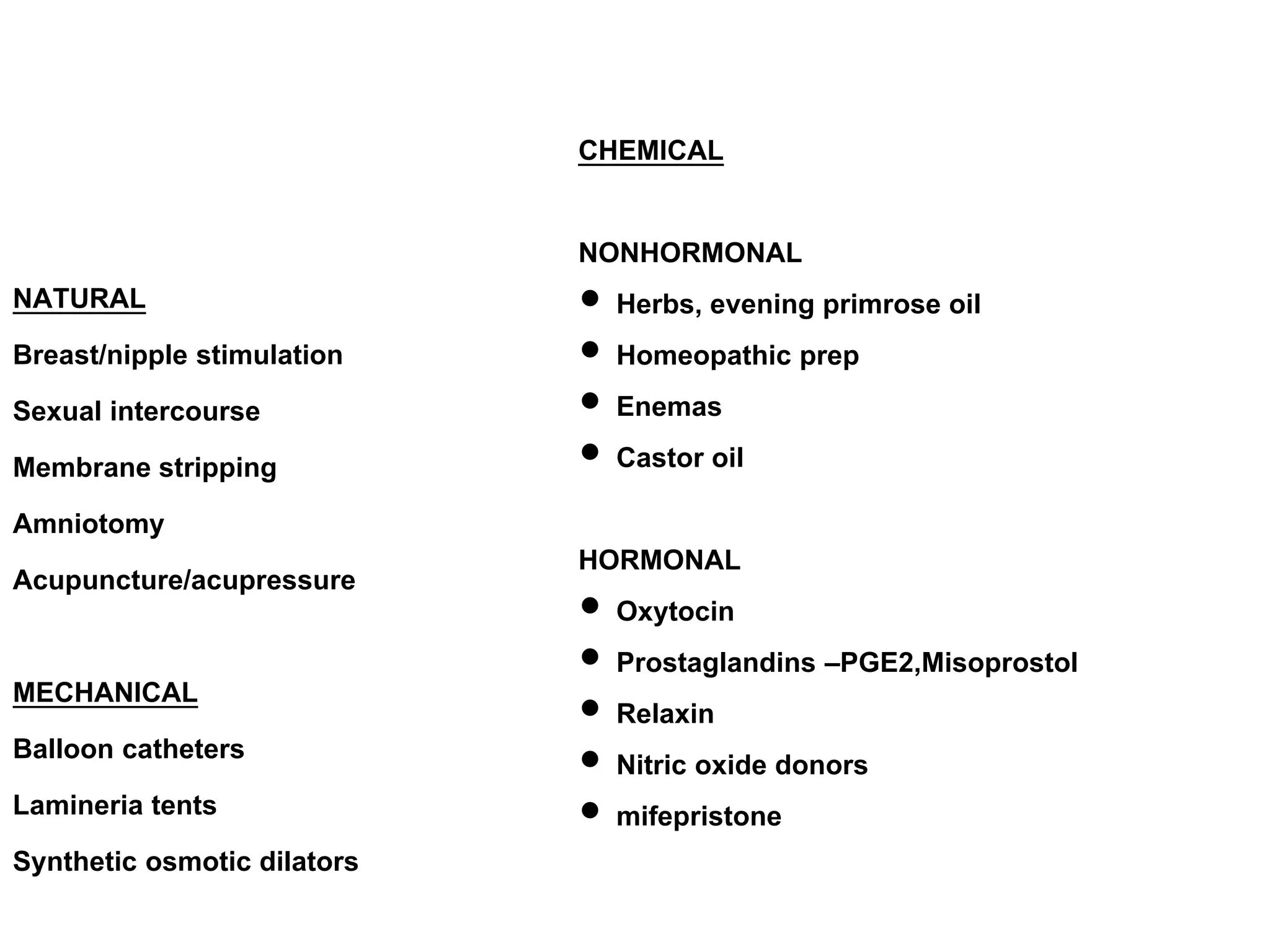
NATURAL
Breast/nipple stimulation
Sexual intercourse
Membrane stripping
Amniotomy
Acupuncture/acupressure
MECHANICAL
Balloon catheters
Lamineria tents
Synthetic osmotic dilators
CHEMICAL
NONHORMONAL
 Herbs, evening primrose oil
 Homeopathic prep
 Enemas
 Castor oil
HORMONAL
 Oxytocin
 Prostaglandins –PGE2,Misoprostol
 Relaxin
 Nitric oxide donors
 mifepristone
Stripping of the Membranes
• Stripping of the membranes causes an
increase in the activity of phospholipase and
PGs as well as causing mechanical dilation of
the cervix, which releases prostaglandins.
• The membranes are stripped by inserting the
examining finger through the internal cervical
os and moving it in a circular direction to
detach the inferior pole of the membranes
from the lower uterine segment.
contd.
• Risks of this technique include:-
infection,
bleeding,
accidental rupture of the membranes,
patient discomfort.
The Cochrane reviewers concluded that stripping of the
membranes alone does not seem to produce
clinically important benefits.
Amniotomy.
It is hypothesized that amniotomy increases the
production of, or causes a release of PGs locally.
• Risks associated with this procedure include:-
-umbilical cord prolapse or compression,
-maternal or neonatal infection,
-FHR deceleration,
-bleeding from placenta previa or low-lying
placenta,
-possible fetal injury.
Amniotomy.
• The membranes should be ruptured with an
amniohook.
• Because amniotomy has not been proven
effective in augmenting labor uniformly, it is
recommended that the active phase of labor
be entered before performing amniotomy for
augmentation.
Prostaglandins
• Two forms of prostaglandins are commonly
used for cervical ripening before induction at
term: misoprostol (PGE1 ) and Dinoprostone
(PGE2 ).
• Dinoprostone- commercially available as
Dinoprostone gel (CERVIPRIME: 0.5 mg ) and Dinoprostone
inserts (PRIMIPROST :10 mg ).
NOTE
• The approved indication for misoprostol is
treatment and prevention of gastric ulcer
disease related to chronic NSAIDS drug use.
• Administration of this drug for cervical
ripening and labor induction is considered an
off-label use in the United States.
• ACOG has approved its use in labor induction
and augmentation.
MOA of Prostaglandins
• Act on the cervix to enable ripening by a
number of different mechanisms.
They alter the extracellular ground substance
of the cervix, and increases the activity of
collagenase.
They cause an increase in elastase,
glycosaminoglycan, dermatan sulfate, and
hyaluronic acid levels
MOA of Prostaglandins cont….
. A relaxation of cervical smooth muscle
facilitates dilation.
 They allow for an increase in intracellular
calcium levels, causing contraction of
myometrial muscle.
Note.
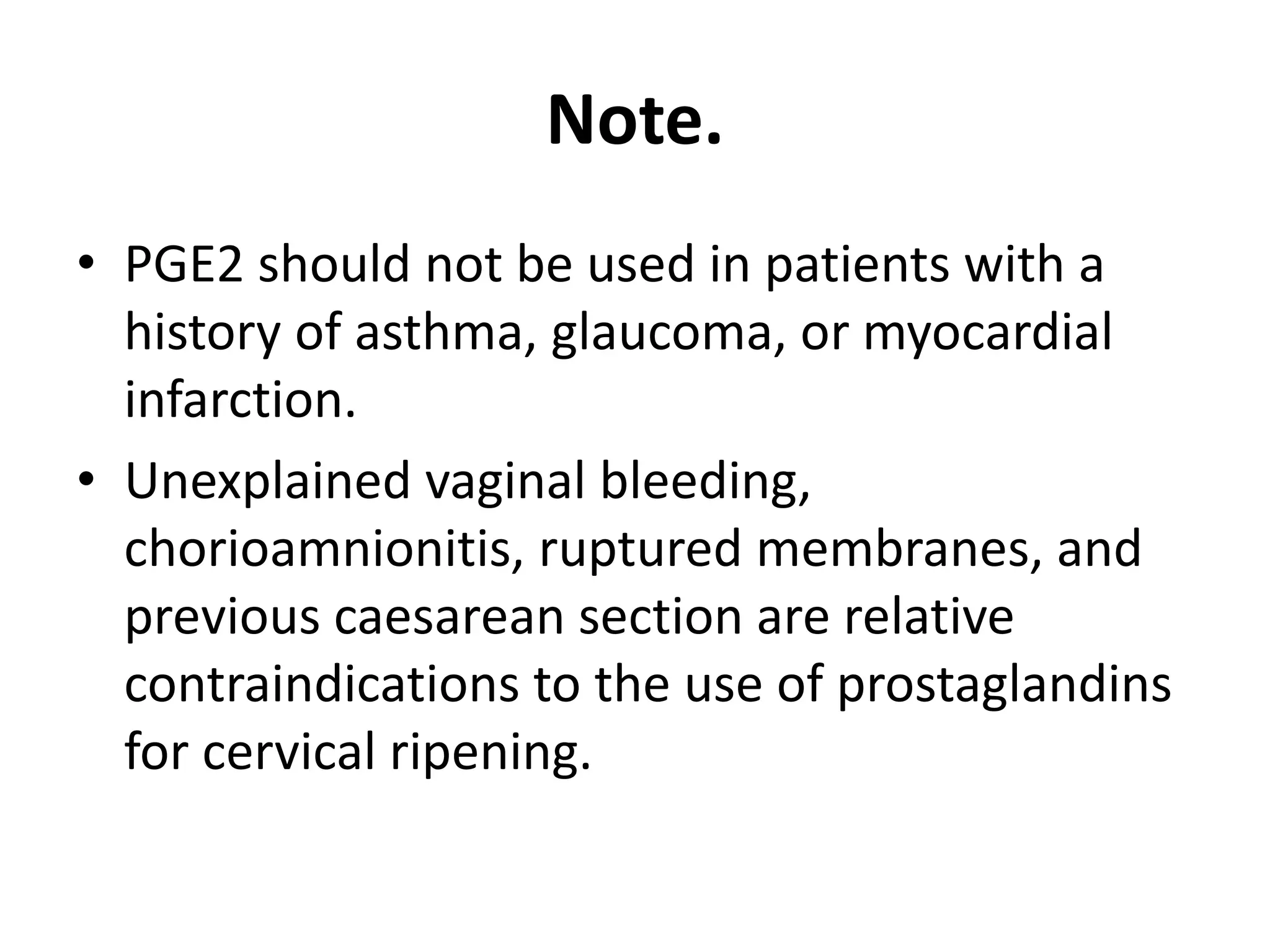
• PGE2 should not be used in patients with a
history of asthma, glaucoma, or myocardial
infarction.
• Unexplained vaginal bleeding,
chorioamnionitis, ruptured membranes, and
previous caesarean section are relative
contraindications to the use of prostaglandins
for cervical ripening.
Dosages.
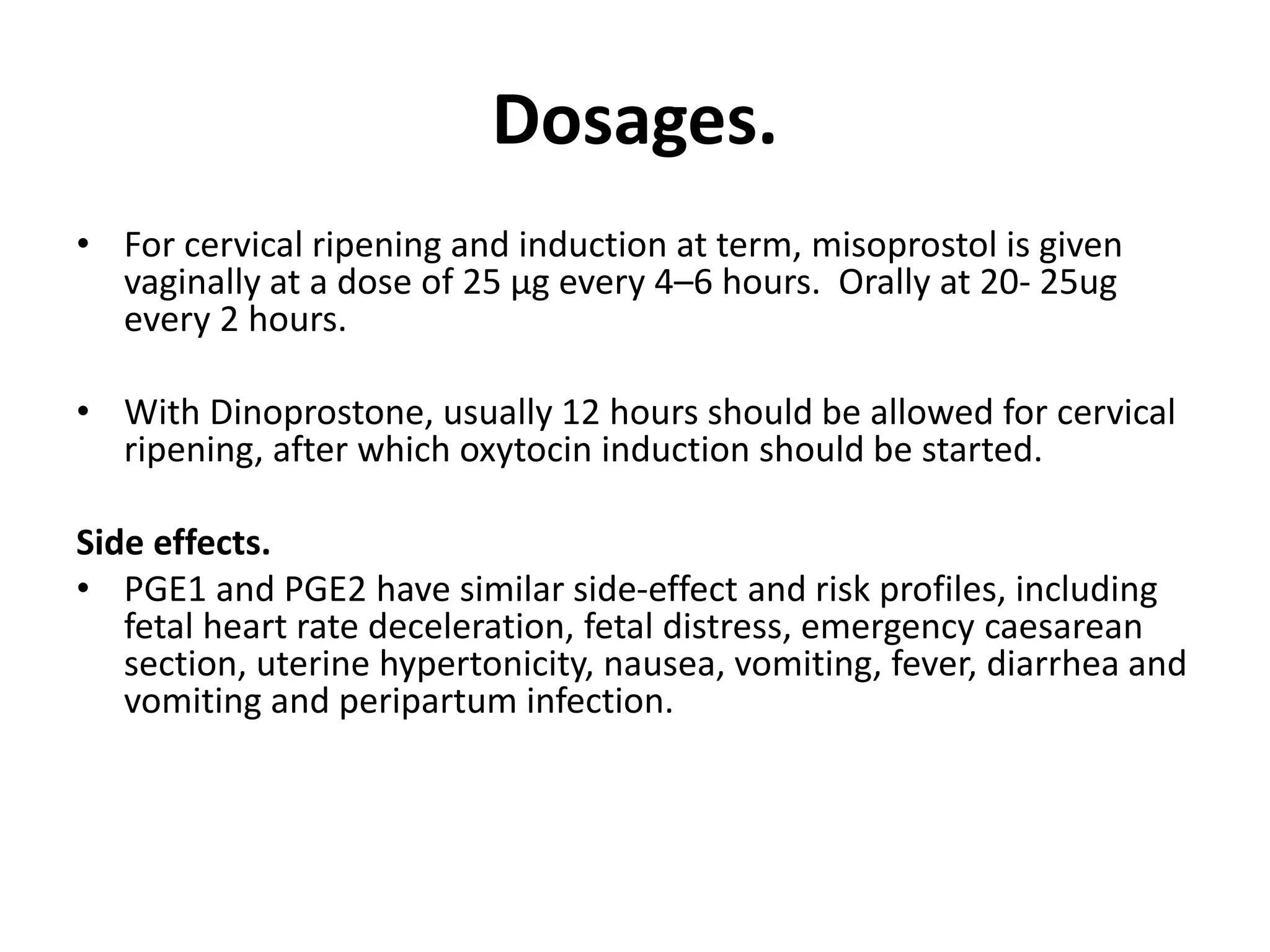
• For cervical ripening and induction at term, misoprostol is given
vaginally at a dose of 25 μg every 4–6 hours. Orally at 20- 25ug
every 2 hours.
• With Dinoprostone, usually 12 hours should be allowed for cervical
ripening, after which oxytocin induction should be started.
Side effects.
• PGE1 and PGE2 have similar side-effect and risk profiles, including
fetal heart rate deceleration, fetal distress, emergency caesarean
section, uterine hypertonicity, nausea, vomiting, fever, diarrhea and
vomiting and peripartum infection.
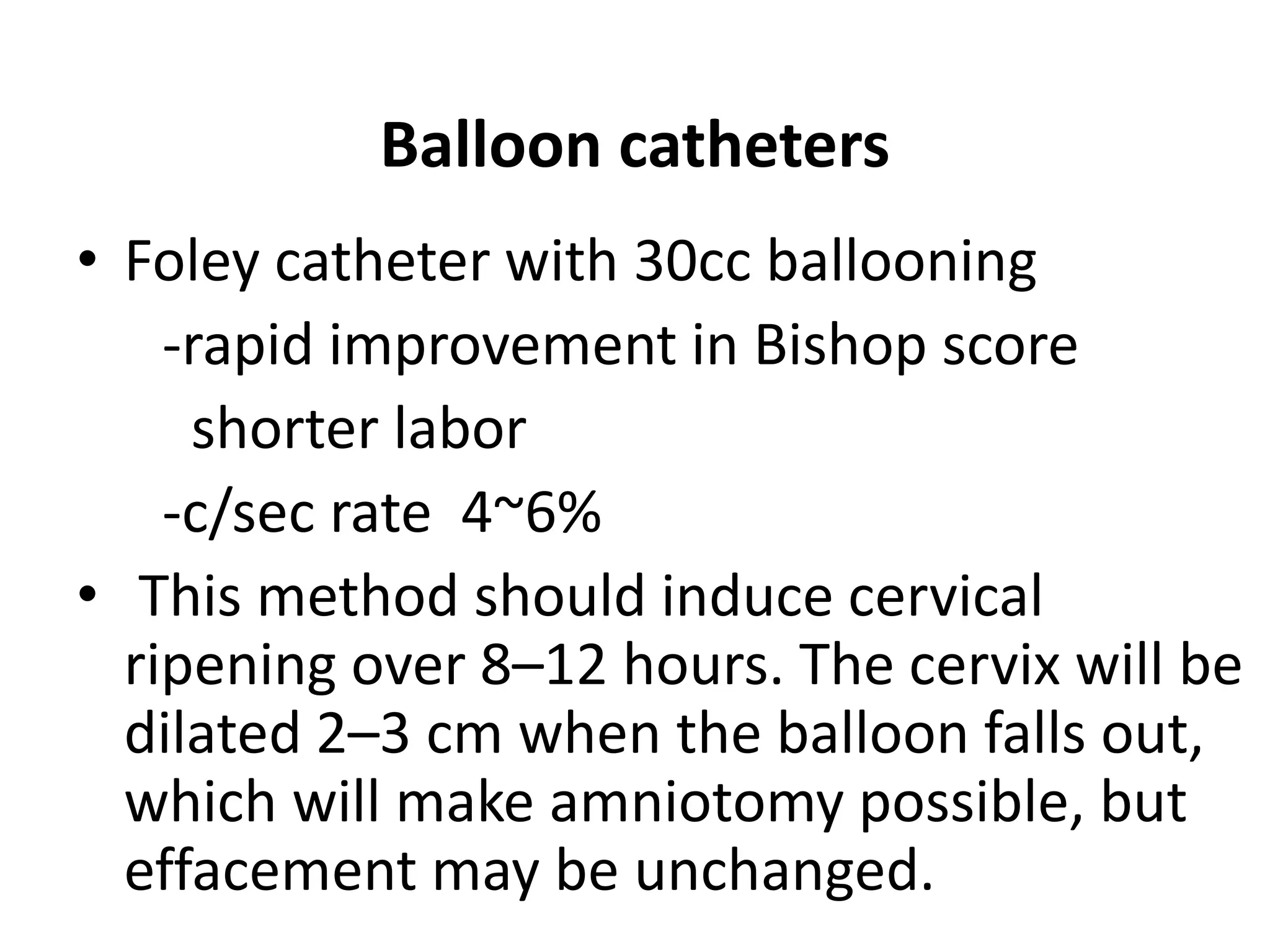
Balloon catheters
• Foley catheter with 30cc ballooning
-rapid improvement in Bishop score
shorter labor
-c/sec rate 4~6%
• This method should induce cervical
ripening over 8–12 hours. The cervix will be
dilated 2–3 cm when the balloon falls out,
which will make amniotomy possible, but
effacement may be unchanged.
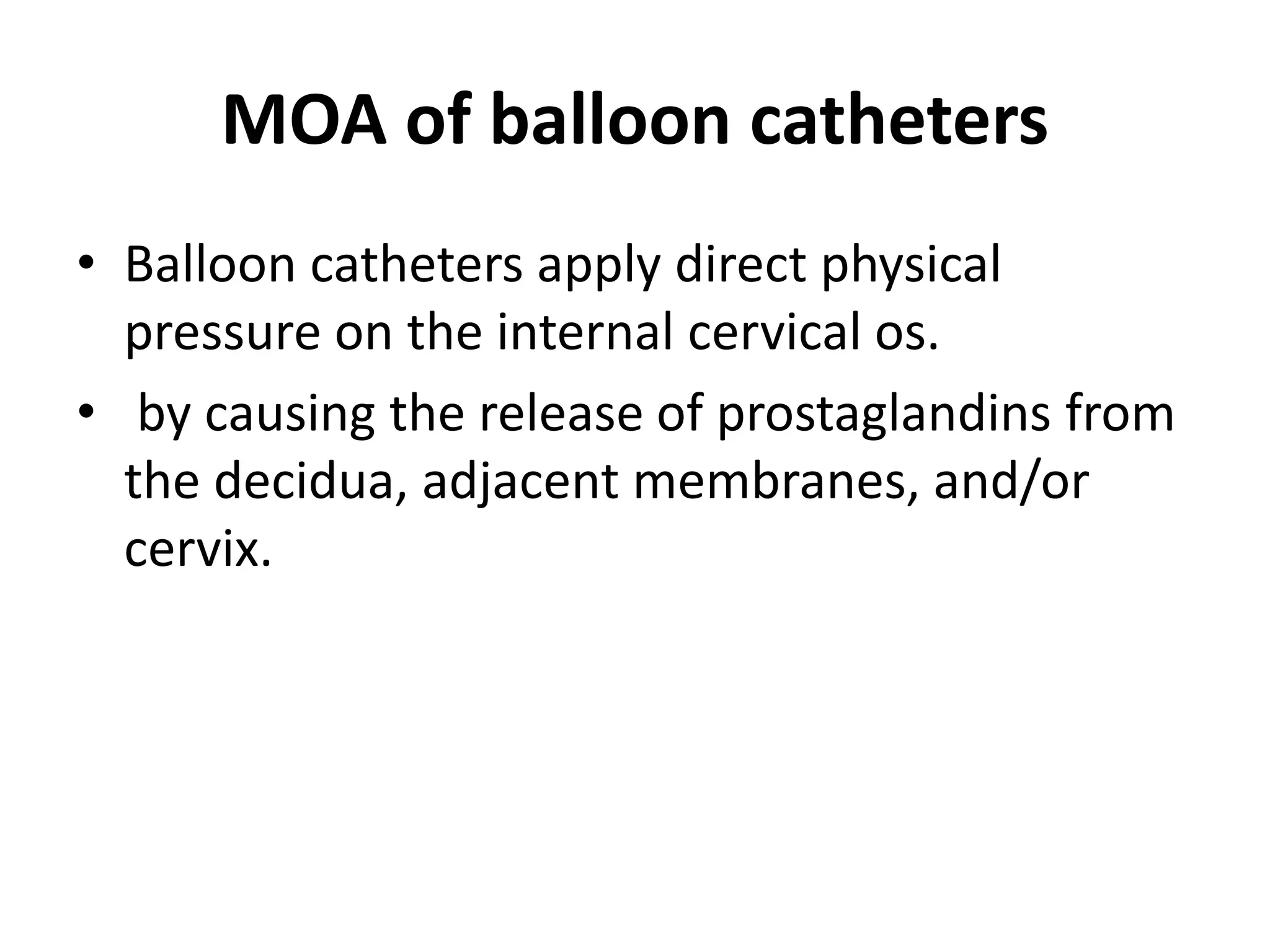
MOA of balloon catheters
• Balloon catheters apply direct physical
pressure on the internal cervical os.
• by causing the release of prostaglandins from
the decidua, adjacent membranes, and/or
cervix.
Hygroscopic cervical dilators
• When placed in the endocervix for 6–12 hours, the
laminaria increases in diameter 3- to 4- fold by
extracting water from cervical tissues, gradually swelling
and expanding the cervical canal.
• rapid improvement of cervical status
• low cost, ease of placement, quickly removed
• some benefit for initiation for cervical dilation
Labor induction and augmentation with
oxytocin
• Oxytocin
: first polypeptide hormone synthesized to induce or
augment labor.
: The goal is:-
- produce cervical change.
-fetal descent.
-Safe vaginal delivery.
-Avoiding hyperstimulation.
(hyperstimulation: >5 in 10 mins or >7 in 15 mins )
Oxytocin
methods – diluted into 500ml of Normal saline.
by infusion pump
avoid bolus
only IV route
 typically, 10 to 20 unit in 1000 ml
(10,000~20,000mU → 10~20 mU/ml)
Oxytocin
oxytocin is avoided
-abnormal fetal presentation
-uterine over distention (hydramnios, large fetus,
or multiple fetus)
-high parity ( >6 )
-previous uterine scar
not contraindication
-prior cesarean delivery
-dead fetus unless CPD
Dose of Oxytocin
• IV Pitocin
For induction of labor in
1. Prime Gravida
10IU in 500ml of N/S
Acceleration titration start with
15,30,45,60drops/min
Tradition titration start
with10,20,30,40,50,60drops/min
Dose of Oxytocin
2. Multigravida
IV Pitocin 2.5IU in 500ml of N/S
With above titration until labor is established i.e
3 contractions10 min then stop.
Maximum dose 120iu24hrs
NOTE
Oytocin is usually given 4hours after the last
dose of misoprostol if at all we are to
combine the methods.
Risk versus benefits
• Uterine rupture
• Water intoxication
-oxytocin is similar to arginine vasopressin
-antidiuretic action
-renal free water clearance decrease
References.
• Current Diagnosis and Treatment Obstetrics
and Gynecology 11th Edition.
• Uptodate.
INDUCTION & AUGUMENTATION OF LABOUR.ppt

INDUCTION & AUGUMENTATION OF LABOUR.ppt

  • 1.
    INDUCTION & AUGUMENTATION OFLABOUR. Dr. Nakiwunga Noor MBChB, MMED OBS&GYN Lecturer Habib Medical School
  • 2.
    Definitions. • Induction oflabor is the process of initiation of contractions for the purpose of achieving a vaginal birth in a pregnant woman who is not in labour • Augmentation is the artificial stimulation of labor that has begun spontaneously.
  • 3.
    Definitions cont….. • Cervicalripening – use of pharmacologic or other means to soften/efface+/dilate cervix to increase the likelihood of vaginal delivery after labour induction. • Cervical ripening involves; insertion of balloon catheters or, less commonly, hygroscopic cervical dilators, and application of pharmacologic agents, such as prostaglandins.
  • 4.
    Introduction • Labor inductionshould be performed only after appropriate assessment of the mother and fetus. • Additionally, the risks, benefits, and alternatives to induction in each case must be evaluated and explained to the patient.
  • 5.
    Introduction cont……. • Generally,induction should be done in response to specific indications and should not be done electively prior to 39 weeks gestational age. • Induction should however be individualized.
  • 6.
    Indications for inductionof labor The following are common indications for induction of labor: 1. Maternal • Pre-eclampsia • diabetes mellitus, • heart disease. • Abruptio placenta with a dead fetus • Chorioamnionitis • PROM
  • 7.
    2. Fetal indications •Prolonged pregnancy • Rh incompatibility • fetal abnormality • chorioamnionitis • placental insufficiency • suspected intrauterine growth restriction
  • 8.
    Contraindications to inductionof labor Absolute contraindications • contracted pelvis • placenta previa • previous classical caesarean section, previous myomectomy, hysterotomy • transverse lie • Active genital herpes • Hypersensitivity to inducing agent
  • 9.
    Relative contraindications oflabor induction • breech presentation • oligohydromnios • multiple gestation • grand multiparity • previous caesarean section with transverse scar • prematurity • suspected fetal Macrosomia.
  • 10.
    Complications of laborinduction 1. Mother • Maternal distress. • failure of induction with increased risk of caesarean delivery • uterine inertia and prolonged labor • tetanic contractions of the uterus, causing premature separation of the placenta, rupture of the uterus, and laceration of the cervix • intrauterine infection • postpartum hemorrhage
  • 11.
    Fetal complications • Riskof prematurity if the LNMP is unknown. • Precipitous delivery may result in physical injury • Prolapse of the cord may follow amniotomy. • Injudicious administration of oxytocin or inadequate observation during induction could lead to fetal heart rate abnormalities or delivery of a baby with poor Apgar scores.
  • 12.
    Pre-induction assessment • Establishindication clearly • Informed consent • Confirmation of gestational age • Assessment of fetal size & presentation • Pelvic assessment • Cervical assessment (BISHOP score) • Availability of trained personnel and monitoring tools.
  • 13.
    BISHOPS SCORE >=5 3-4 1-2 0 Dilatation ofcervix (cm) Soft Medium Firm Consistency of cervix <0.5 1-0.5 2-1 >2 Length of cervical canal (cm) Anterior Central Posterior Position of cervix below 1or 0 2 3 Station (cm above ischial spines) 0 1 2 3
  • 14.
    MOD. BISHOPS SCORE SCORE0 1 2 3 DILATATION 0 1-2 3-4 >4 EFFACEMENT 0-30% 40-50% 60-70% >80% STATION -3 -2 -1/0 +1,+2,+3 CONSISTENCY firm medium soft POSITION posterior mid anterior
  • 15.
    Bishop score • Ascore of 8 or greater is considered to be favorable for induction, or the chance of a vaginal delivery with induction is similar to spontaneous labor. • A score of 6 or less is considered to be unfavorable and therefore, the need for a cervical ripening agent. E.g. prostaglandins, and non pharmacologic methods like amniotomy
  • 16.
    NATURAL Breast/nipple stimulation Sexual intercourse Membranestripping Amniotomy Acupuncture/acupressure MECHANICAL Balloon catheters Lamineria tents Synthetic osmotic dilators CHEMICAL NONHORMONAL  Herbs, evening primrose oil  Homeopathic prep  Enemas  Castor oil HORMONAL  Oxytocin  Prostaglandins –PGE2,Misoprostol  Relaxin  Nitric oxide donors  mifepristone
  • 17.
    Stripping of theMembranes • Stripping of the membranes causes an increase in the activity of phospholipase and PGs as well as causing mechanical dilation of the cervix, which releases prostaglandins. • The membranes are stripped by inserting the examining finger through the internal cervical os and moving it in a circular direction to detach the inferior pole of the membranes from the lower uterine segment.
  • 18.
    contd. • Risks ofthis technique include:- infection, bleeding, accidental rupture of the membranes, patient discomfort. The Cochrane reviewers concluded that stripping of the membranes alone does not seem to produce clinically important benefits.
  • 19.
    Amniotomy. It is hypothesizedthat amniotomy increases the production of, or causes a release of PGs locally. • Risks associated with this procedure include:- -umbilical cord prolapse or compression, -maternal or neonatal infection, -FHR deceleration, -bleeding from placenta previa or low-lying placenta, -possible fetal injury.
  • 20.
    Amniotomy. • The membranesshould be ruptured with an amniohook. • Because amniotomy has not been proven effective in augmenting labor uniformly, it is recommended that the active phase of labor be entered before performing amniotomy for augmentation.
  • 21.
    Prostaglandins • Two formsof prostaglandins are commonly used for cervical ripening before induction at term: misoprostol (PGE1 ) and Dinoprostone (PGE2 ). • Dinoprostone- commercially available as Dinoprostone gel (CERVIPRIME: 0.5 mg ) and Dinoprostone inserts (PRIMIPROST :10 mg ).
  • 22.
    NOTE • The approvedindication for misoprostol is treatment and prevention of gastric ulcer disease related to chronic NSAIDS drug use. • Administration of this drug for cervical ripening and labor induction is considered an off-label use in the United States. • ACOG has approved its use in labor induction and augmentation.
  • 23.
    MOA of Prostaglandins •Act on the cervix to enable ripening by a number of different mechanisms. They alter the extracellular ground substance of the cervix, and increases the activity of collagenase. They cause an increase in elastase, glycosaminoglycan, dermatan sulfate, and hyaluronic acid levels
  • 24.
    MOA of Prostaglandinscont…. . A relaxation of cervical smooth muscle facilitates dilation.  They allow for an increase in intracellular calcium levels, causing contraction of myometrial muscle.
  • 25.
    Note. • PGE2 shouldnot be used in patients with a history of asthma, glaucoma, or myocardial infarction. • Unexplained vaginal bleeding, chorioamnionitis, ruptured membranes, and previous caesarean section are relative contraindications to the use of prostaglandins for cervical ripening.
  • 26.
    Dosages. • For cervicalripening and induction at term, misoprostol is given vaginally at a dose of 25 μg every 4–6 hours. Orally at 20- 25ug every 2 hours. • With Dinoprostone, usually 12 hours should be allowed for cervical ripening, after which oxytocin induction should be started. Side effects. • PGE1 and PGE2 have similar side-effect and risk profiles, including fetal heart rate deceleration, fetal distress, emergency caesarean section, uterine hypertonicity, nausea, vomiting, fever, diarrhea and vomiting and peripartum infection.
  • 27.
    Balloon catheters • Foleycatheter with 30cc ballooning -rapid improvement in Bishop score shorter labor -c/sec rate 4~6% • This method should induce cervical ripening over 8–12 hours. The cervix will be dilated 2–3 cm when the balloon falls out, which will make amniotomy possible, but effacement may be unchanged.
  • 28.
    MOA of ballooncatheters • Balloon catheters apply direct physical pressure on the internal cervical os. • by causing the release of prostaglandins from the decidua, adjacent membranes, and/or cervix.
  • 29.
    Hygroscopic cervical dilators •When placed in the endocervix for 6–12 hours, the laminaria increases in diameter 3- to 4- fold by extracting water from cervical tissues, gradually swelling and expanding the cervical canal. • rapid improvement of cervical status • low cost, ease of placement, quickly removed • some benefit for initiation for cervical dilation
  • 30.
    Labor induction andaugmentation with oxytocin • Oxytocin : first polypeptide hormone synthesized to induce or augment labor. : The goal is:- - produce cervical change. -fetal descent. -Safe vaginal delivery. -Avoiding hyperstimulation. (hyperstimulation: >5 in 10 mins or >7 in 15 mins )
  • 31.
    Oxytocin methods – dilutedinto 500ml of Normal saline. by infusion pump avoid bolus only IV route  typically, 10 to 20 unit in 1000 ml (10,000~20,000mU → 10~20 mU/ml)
  • 32.
    Oxytocin oxytocin is avoided -abnormalfetal presentation -uterine over distention (hydramnios, large fetus, or multiple fetus) -high parity ( >6 ) -previous uterine scar not contraindication -prior cesarean delivery -dead fetus unless CPD
  • 33.
    Dose of Oxytocin •IV Pitocin For induction of labor in 1. Prime Gravida 10IU in 500ml of N/S Acceleration titration start with 15,30,45,60drops/min Tradition titration start with10,20,30,40,50,60drops/min
  • 34.
    Dose of Oxytocin 2.Multigravida IV Pitocin 2.5IU in 500ml of N/S With above titration until labor is established i.e 3 contractions10 min then stop. Maximum dose 120iu24hrs NOTE Oytocin is usually given 4hours after the last dose of misoprostol if at all we are to combine the methods.
  • 35.
    Risk versus benefits •Uterine rupture • Water intoxication -oxytocin is similar to arginine vasopressin -antidiuretic action -renal free water clearance decrease
  • 36.
    References. • Current Diagnosisand Treatment Obstetrics and Gynecology 11th Edition. • Uptodate.