+
Preterm Premature
Rupture Of Membranes
Abdullatiff Sami Al-Rashed
Block 4.3 (Life Cycle III)
College of Medicine, King Faisal University
Al-Asha, Saudi Arabia
+
Definition
 PPROM is rupture of fetal membranes prior to 37 weeks’
gestation.
 It is a leading cause of neonatal morbidity and mortality and is
associated with approximately 30% of preterm deliveries.
+
Etiology & Risk Factors
Intrauterine
infection
STDs Prior
PPROM
Smoking
(risk of
PPROM is
doubled in
mothers
who smoke
during
pregnancy)
Multiple
Gestation
Other
+
Signs & Symptoms
Other symptoms includes flecks of meconium in
the fluid, decrease in the size of the uterus or
change in color and consistency of fluid coming
out of the vagina.
The main symptom is sudden painless gush of
fluid leaks out of the vagina or a steady leakage
of small amounts of watery fluid.
+
Diagnosis
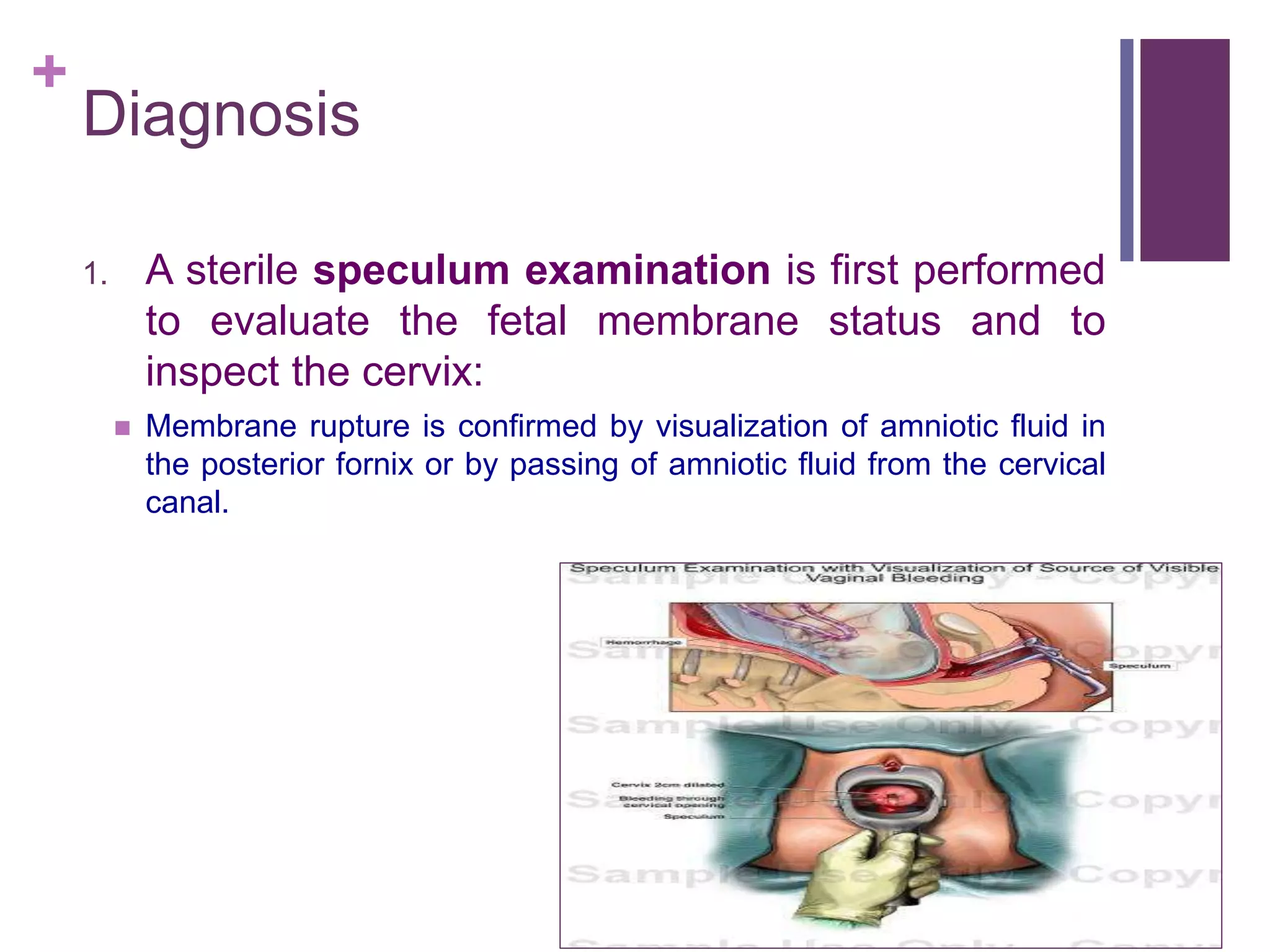
1. A sterile speculum examination is first performed
to evaluate the fetal membrane status and to
inspect the cervix:
 Membrane rupture is confirmed by visualization of amniotic fluid in
the posterior fornix or by passing of amniotic fluid from the cervical
canal.
+
Diagnosis
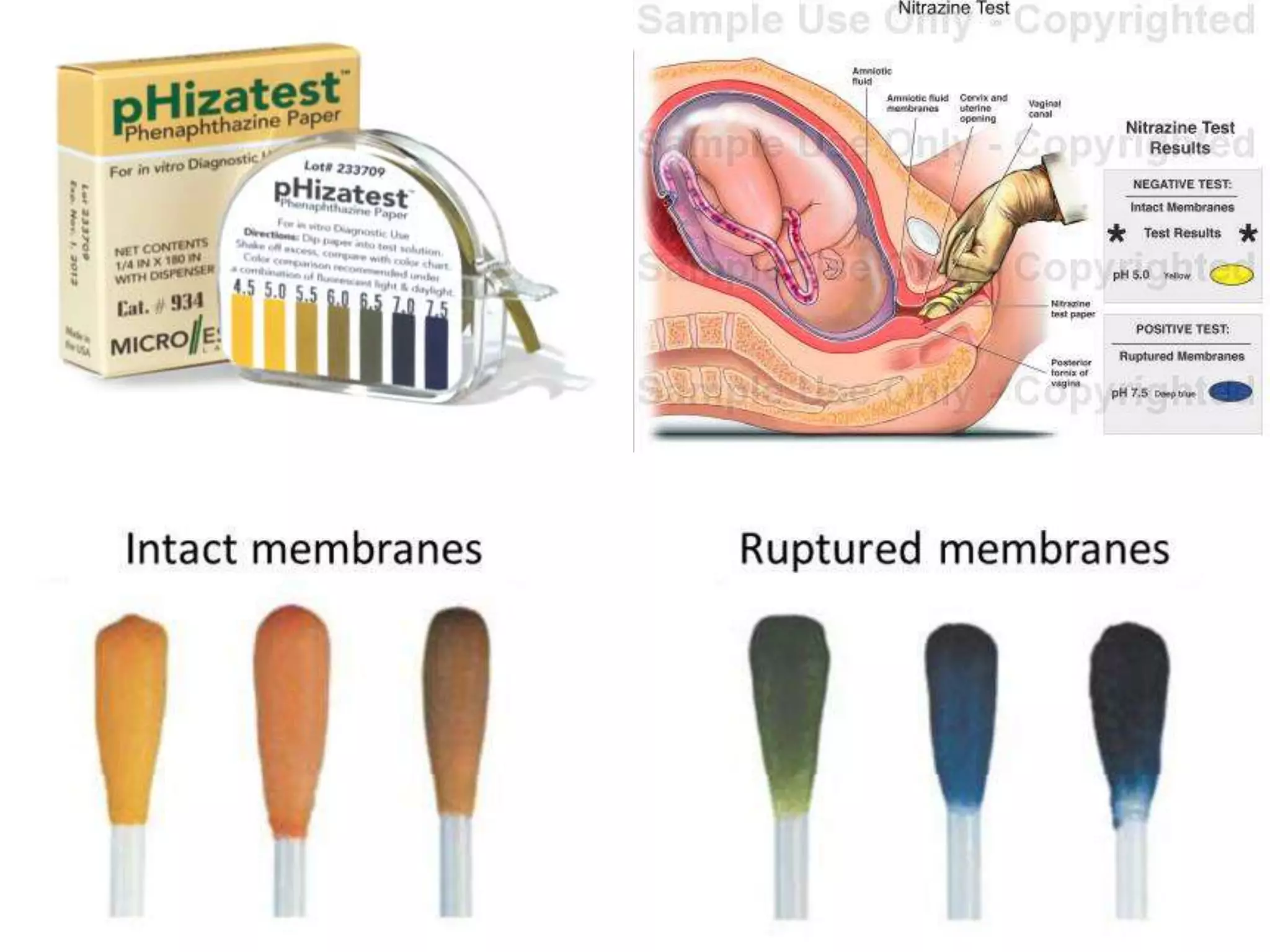
2. Nitrazine Test:
 The nitrazine test uses pH to distinguish amniotic fluid from urine
and vaginal secretions.
 Amniotic fluid is alkaline, having a pH above 7.1; vaginal secretions
have a pH of 4.5 to 6.0, and urine has a pH of ≤6.0.
 To perform the nitrazine test, a sample of fluid obtained from the
vagina during a speculum examination is placed on a strip of paper
or swab impregnated with nitrazine. If the pH is 7.1 to 7.3, reflecting
that of amniotic fluid, the paper or swab turns dark blue.
+
Diagnosis
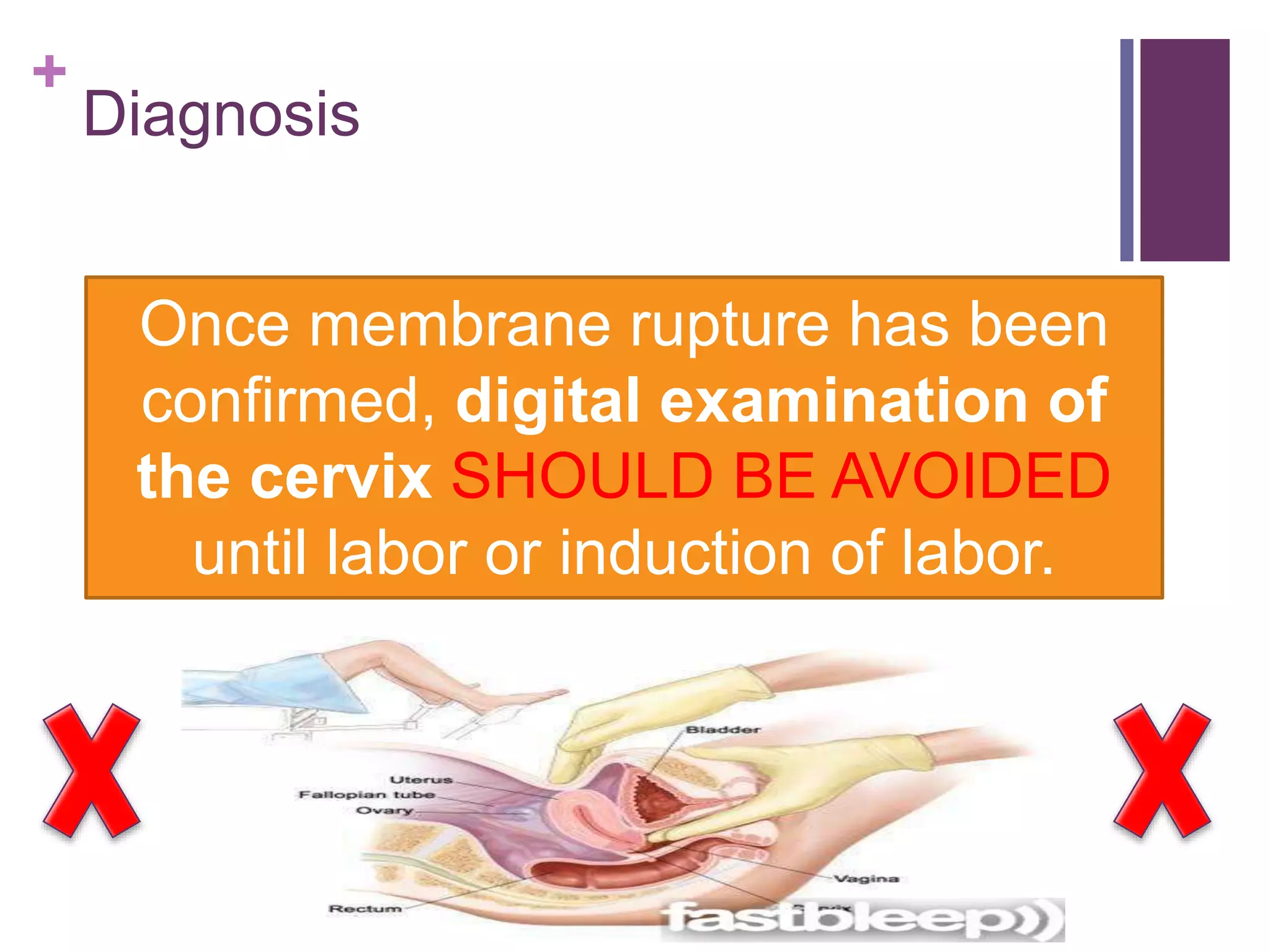
Once membrane rupture has been
confirmed, digital examination of
the cervix SHOULD BE AVOIDED
until labor or induction of labor.
+
Diagnosis
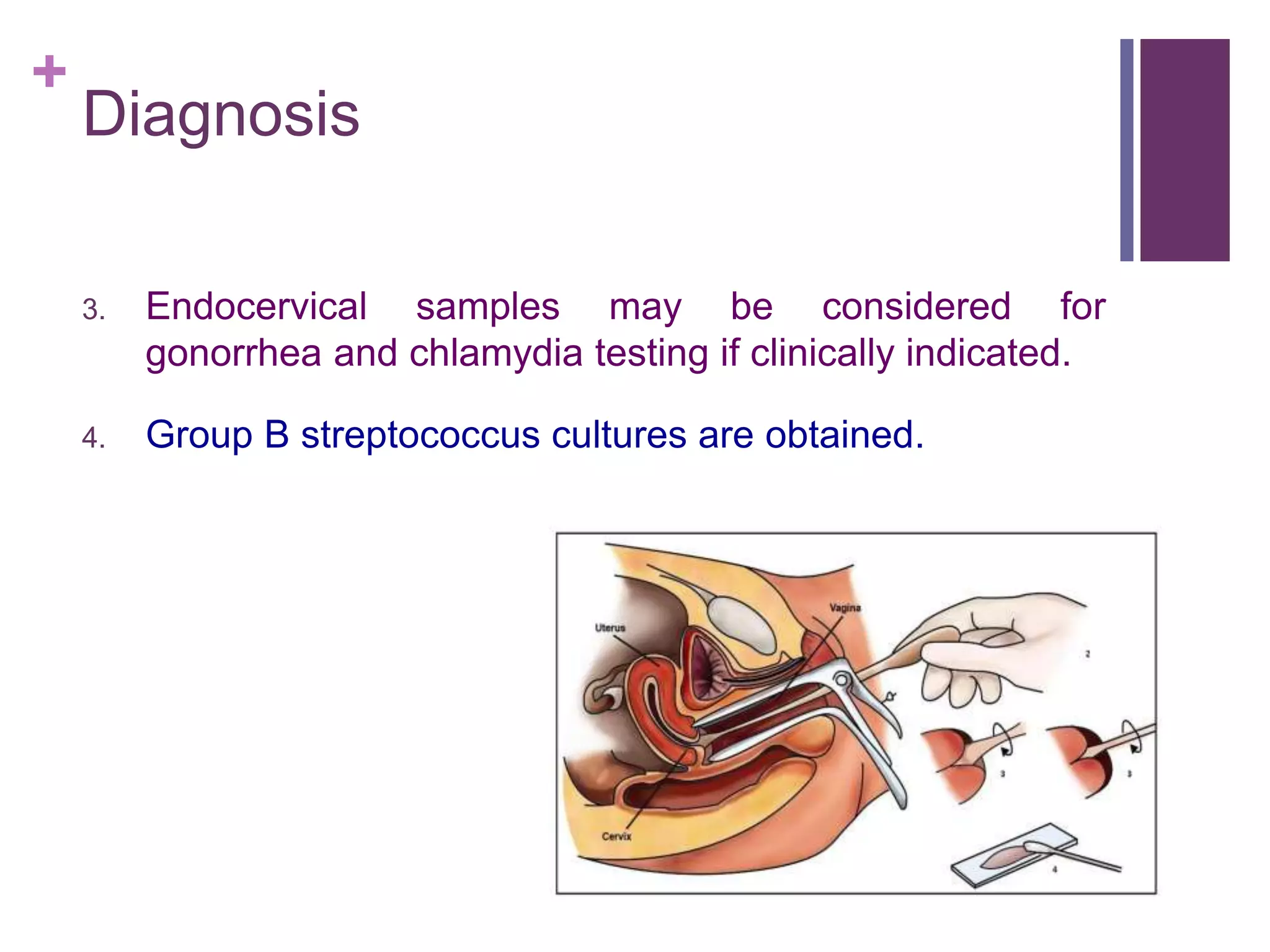
3. Endocervical samples may be considered for
gonorrhea and chlamydia testing if clinically indicated.
4. Group B streptococcus cultures are obtained.
+
Diagnosis
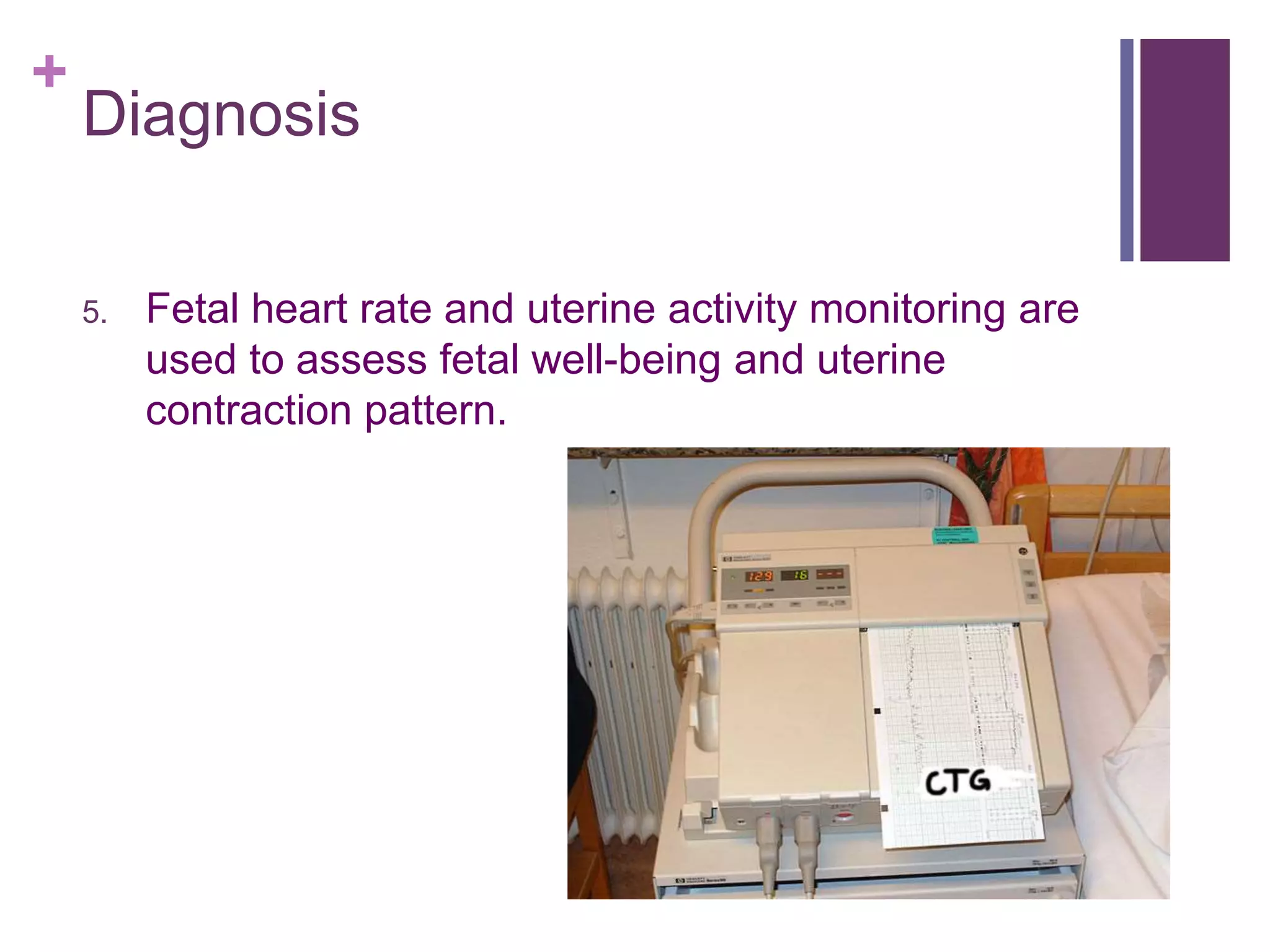
5. Fetal heart rate and uterine activity monitoring are
used to assess fetal well-being and uterine
contraction pattern.
+
Diagnosis
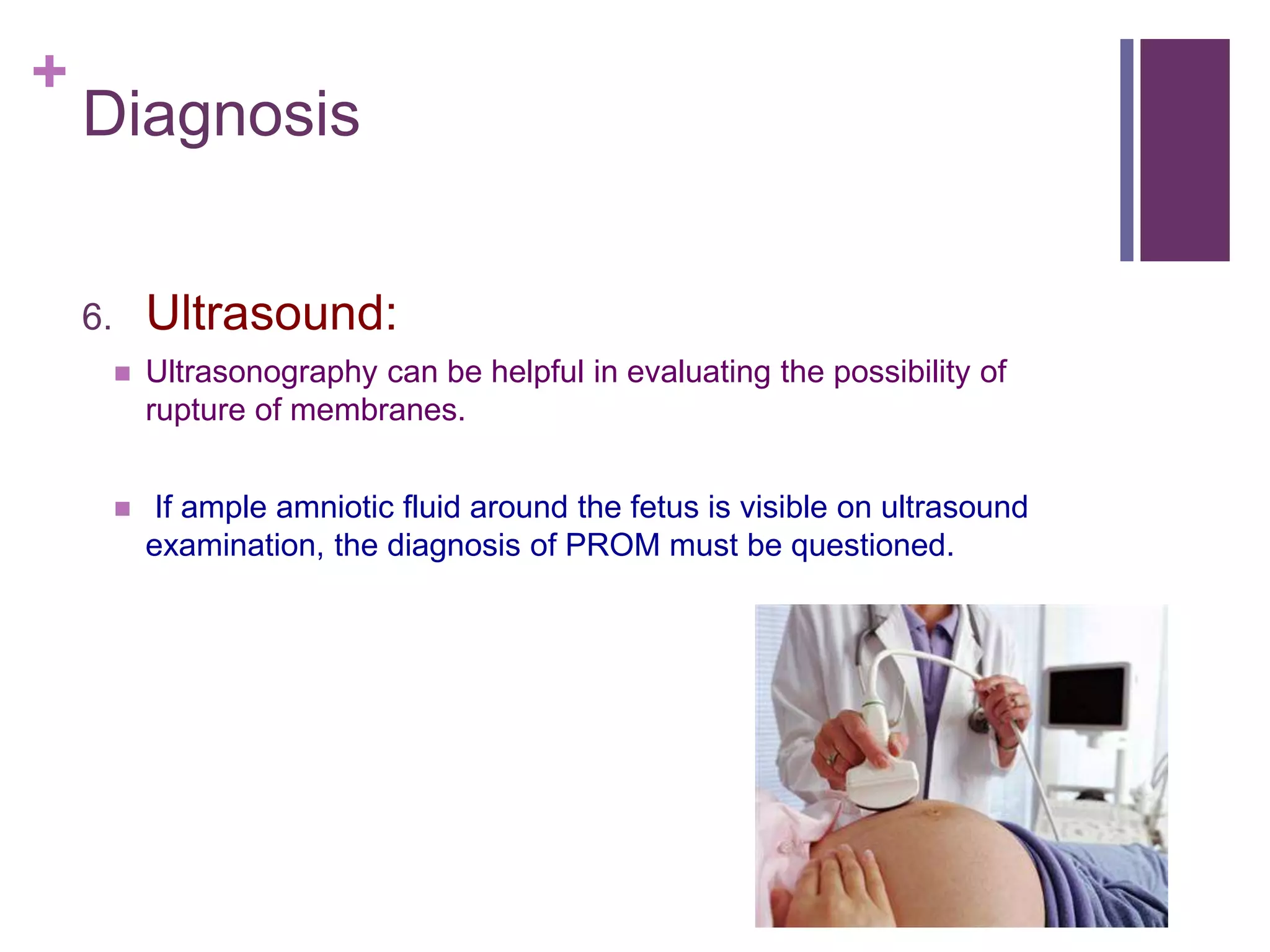
6. Ultrasound:
 Ultrasonography can be helpful in evaluating the possibility of
rupture of membranes.
 If ample amniotic fluid around the fetus is visible on ultrasound
examination, the diagnosis of PROM must be questioned.
+
Differential Diagnosis
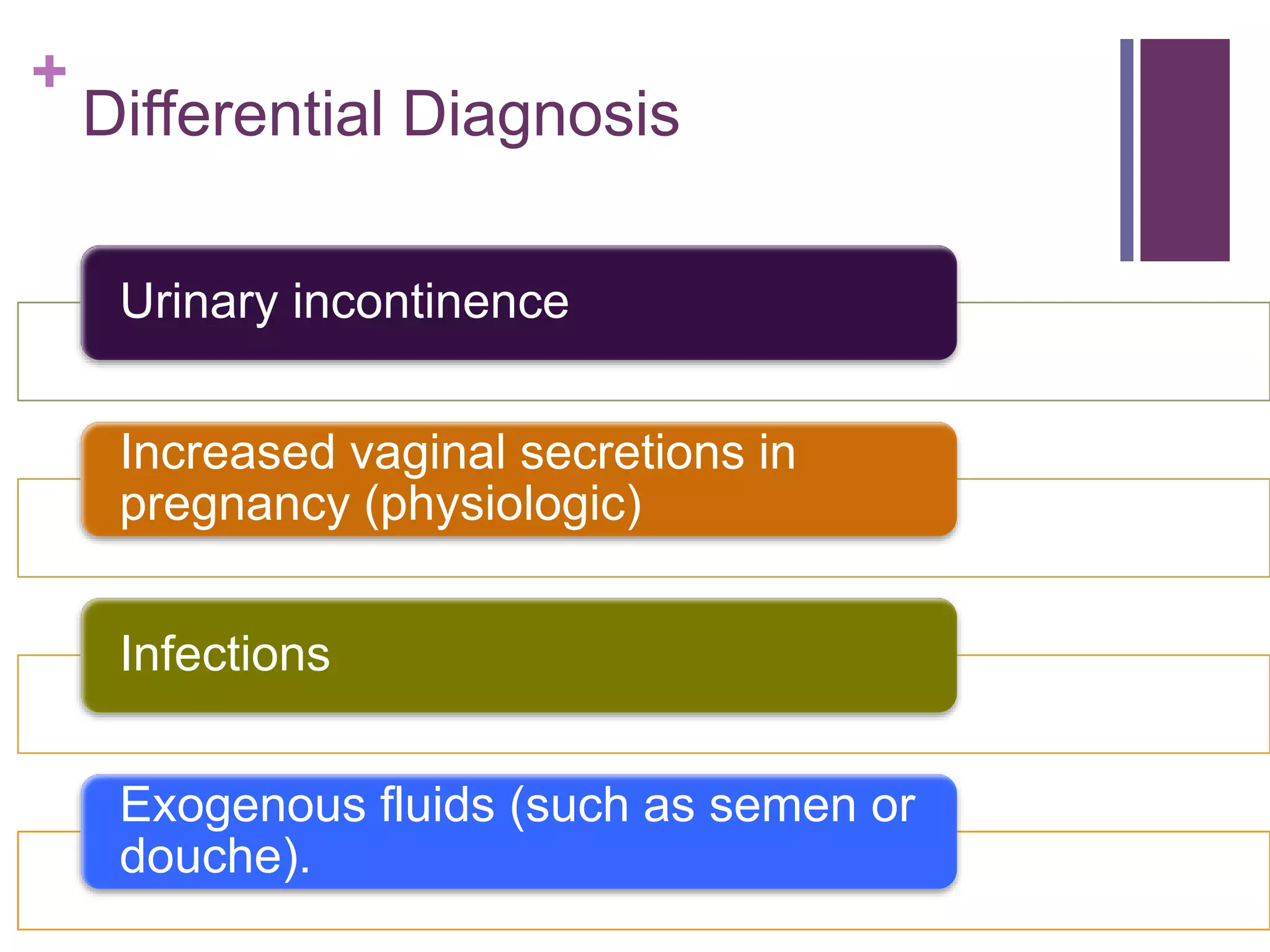
 The differential diagnoses for PROM include:Urinary incontinence
Increased vaginal secretions in
pregnancy (physiologic)
Infections
Exogenous fluids (such as semen or
douche).
+
Complications
+
Management
+
References
Preterm Premature Rupture Of Membranes (PPROM)

Preterm Premature Rupture Of Membranes (PPROM)

  • 1.
    + Preterm Premature Rupture OfMembranes Abdullatiff Sami Al-Rashed Block 4.3 (Life Cycle III) College of Medicine, King Faisal University Al-Asha, Saudi Arabia
  • 2.
    + Definition  PPROM isrupture of fetal membranes prior to 37 weeks’ gestation.  It is a leading cause of neonatal morbidity and mortality and is associated with approximately 30% of preterm deliveries.
  • 3.
    + Etiology & RiskFactors Intrauterine infection STDs Prior PPROM Smoking (risk of PPROM is doubled in mothers who smoke during pregnancy) Multiple Gestation Other
  • 4.
    + Signs & Symptoms Othersymptoms includes flecks of meconium in the fluid, decrease in the size of the uterus or change in color and consistency of fluid coming out of the vagina. The main symptom is sudden painless gush of fluid leaks out of the vagina or a steady leakage of small amounts of watery fluid.
  • 5.
    + Diagnosis 1. A sterilespeculum examination is first performed to evaluate the fetal membrane status and to inspect the cervix:  Membrane rupture is confirmed by visualization of amniotic fluid in the posterior fornix or by passing of amniotic fluid from the cervical canal.
  • 6.
    + Diagnosis 2. Nitrazine Test: The nitrazine test uses pH to distinguish amniotic fluid from urine and vaginal secretions.  Amniotic fluid is alkaline, having a pH above 7.1; vaginal secretions have a pH of 4.5 to 6.0, and urine has a pH of ≤6.0.  To perform the nitrazine test, a sample of fluid obtained from the vagina during a speculum examination is placed on a strip of paper or swab impregnated with nitrazine. If the pH is 7.1 to 7.3, reflecting that of amniotic fluid, the paper or swab turns dark blue.
  • 8.
    + Diagnosis Once membrane rupturehas been confirmed, digital examination of the cervix SHOULD BE AVOIDED until labor or induction of labor.
  • 9.
    + Diagnosis 3. Endocervical samplesmay be considered for gonorrhea and chlamydia testing if clinically indicated. 4. Group B streptococcus cultures are obtained.
  • 10.
    + Diagnosis 5. Fetal heartrate and uterine activity monitoring are used to assess fetal well-being and uterine contraction pattern.
  • 11.
    + Diagnosis 6. Ultrasound:  Ultrasonographycan be helpful in evaluating the possibility of rupture of membranes.  If ample amniotic fluid around the fetus is visible on ultrasound examination, the diagnosis of PROM must be questioned.
  • 12.
    + Differential Diagnosis  Thedifferential diagnoses for PROM include:Urinary incontinence Increased vaginal secretions in pregnancy (physiologic) Infections Exogenous fluids (such as semen or douche).
  • 13.
  • 14.
  • 16.