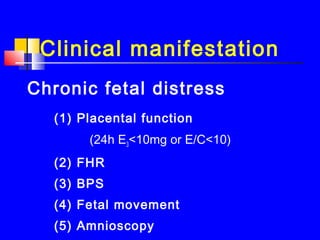
Fetal distress is defined as a state of hypoxia and acidosis during pregnancy caused by depletion of oxygen and accumulation of carbon dioxide in the fetus. It can be caused by maternal factors like preeclampsia, anemia, bleeding, or infection, as well as placental or umbilical cord issues that obstruct blood flow. This leads to respiratory acidosis in the fetus and changes in fetal heart rate. Chronic fetal distress can cause intrauterine growth retardation. Clinical manifestations include meconium staining, abnormal fetal heart rate and movement patterns, and acidosis shown on fetal blood samples. Management involves addressing the cause, correcting acidosis, and potentially terminating the pregnancy through forceps delivery or c-section depending on severity of