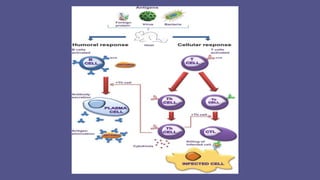
Humoral immunity and
Cellular immunity
B. Lokeshwari
1st M.Sc Microbiology
Deparment of Microbiology
Sacred Heart College (Autonomous), Tirupathur
IMMUNITY
1. Immunity is the ability of the body to protect against all types
of foreign bodies like bacteria, virus, toxic substances, etc.
which enter the body.
2. Immunity is also called Disease resistance.
3. The lack of immunity is known as Susceptibility.
4. There are 2 types of Immunity. They are
1. Innate Immunity
2. Acquired Immunity.
INNATE IMMUNITY
1. Innate immunity is the defenses against infection that can be
activated immediately once a pathogen attacks (Body’s first
line of defense).
2. Innate Immunity is an immunity that occurs naturally as a
result of a person’s Genetic constitution or Physiology and
does not arise from a previous infection or Vaccination.
3. Innate Immunity is also called as Natural immunity or Non –
specific immunity or Genetic immunity or Inherent
immunity.
ACQUIRED IMMUNITY
1. The immunity that an individual acquires after the birth is
called acquired or adaptive or specific immunity.
2. Acquired immunity is the immunity produced by exposure of
an organism to antigens, which stimulates the production of
antibodies.
3. It is specific and mediated by antibodies or lymphocytes or
both which make the antigen harmless.
COMPONENTS OF ACQUIRED IMMUNITY
 Acquired immunity has two components. They are
(i) Humoral Immunity or Antibody mediated immune system
(ii) Cellular Immunity or Cell mediated immune system
Humoral immunity or Antibody mediated immunity
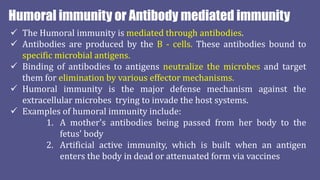
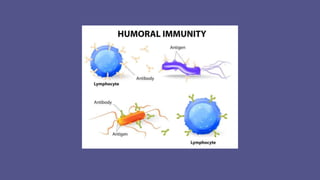
 The Humoral immunity is mediated through antibodies.
 Antibodies are produced by the B - cells. These antibodies bound to
specific microbial antigens.
 Binding of antibodies to antigens neutralize the microbes and target
them for elimination by various effector mechanisms.
 Humoral immunity is the major defense mechanism against the
extracellular microbes trying to invade the host systems.
 Examples of humoral immunity include:
1. A mother's antibodies being passed from her body to the
fetus' body
2. Artificial active immunity, which is built when an antigen
enters the body in dead or attenuated form via vaccines
Cell - mediated immunity or Cellular immunity
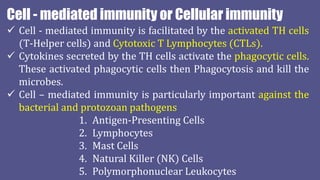
 Cell - mediated immunity is facilitated by the activated TH cells
(T-Helper cells) and Cytotoxic T Lymphocytes (CTLs).
 Cytokines secreted by the TH cells activate the phagocytic cells.
These activated phagocytic cells then Phagocytosis and kill the
microbes.
 Cell – mediated immunity is particularly important against the
bacterial and protozoan pathogens
1. Antigen-Presenting Cells
2. Lymphocytes
3. Mast Cells
4. Natural Killer (NK) Cells
5. Polymorphonuclear Leukocytes
IMMUNITY (CELL MEDIATED IMMUNITY AND CELLULAR IMMUNITY)

IMMUNITY (CELL MEDIATED IMMUNITY AND CELLULAR IMMUNITY)

  • 1.
    Humoral immunity and Cellularimmunity B. Lokeshwari 1st M.Sc Microbiology Deparment of Microbiology Sacred Heart College (Autonomous), Tirupathur
  • 2.
    IMMUNITY 1. Immunity isthe ability of the body to protect against all types of foreign bodies like bacteria, virus, toxic substances, etc. which enter the body. 2. Immunity is also called Disease resistance. 3. The lack of immunity is known as Susceptibility. 4. There are 2 types of Immunity. They are 1. Innate Immunity 2. Acquired Immunity.
  • 3.
    INNATE IMMUNITY 1. Innateimmunity is the defenses against infection that can be activated immediately once a pathogen attacks (Body’s first line of defense). 2. Innate Immunity is an immunity that occurs naturally as a result of a person’s Genetic constitution or Physiology and does not arise from a previous infection or Vaccination. 3. Innate Immunity is also called as Natural immunity or Non – specific immunity or Genetic immunity or Inherent immunity.
  • 4.
    ACQUIRED IMMUNITY 1. Theimmunity that an individual acquires after the birth is called acquired or adaptive or specific immunity. 2. Acquired immunity is the immunity produced by exposure of an organism to antigens, which stimulates the production of antibodies. 3. It is specific and mediated by antibodies or lymphocytes or both which make the antigen harmless.
  • 5.
    COMPONENTS OF ACQUIREDIMMUNITY  Acquired immunity has two components. They are (i) Humoral Immunity or Antibody mediated immune system (ii) Cellular Immunity or Cell mediated immune system
  • 6.
    Humoral immunity orAntibody mediated immunity  The Humoral immunity is mediated through antibodies.  Antibodies are produced by the B - cells. These antibodies bound to specific microbial antigens.  Binding of antibodies to antigens neutralize the microbes and target them for elimination by various effector mechanisms.  Humoral immunity is the major defense mechanism against the extracellular microbes trying to invade the host systems.  Examples of humoral immunity include: 1. A mother's antibodies being passed from her body to the fetus' body 2. Artificial active immunity, which is built when an antigen enters the body in dead or attenuated form via vaccines
  • 8.
    Cell - mediatedimmunity or Cellular immunity  Cell - mediated immunity is facilitated by the activated TH cells (T-Helper cells) and Cytotoxic T Lymphocytes (CTLs).  Cytokines secreted by the TH cells activate the phagocytic cells. These activated phagocytic cells then Phagocytosis and kill the microbes.  Cell – mediated immunity is particularly important against the bacterial and protozoan pathogens 1. Antigen-Presenting Cells 2. Lymphocytes 3. Mast Cells 4. Natural Killer (NK) Cells 5. Polymorphonuclear Leukocytes