ANTIBIOTIC SENSITIVITY
TEST
LOKESHWARI B
1ST M.Sc. MICROBIOLOGY
DEPARTMENT OF MICROBIOLOGY
SACRED HEART COLLEGE(AUTONOMOUS)
TIRUPATTUR.
AIM/OBJECTIVE
• Growth of an organisms determines the ability of
antibiotics to inhibit the growth of Micro-organisms.
• Determines the sensitivity of antibiotics against bacterial
pathogens.
INTRODUCTION
• Test done to check the effectiveness of a bacterium and also selects the
best drug that acting against bacterium.
• Otherwise known as Antibiotic susceptibility test(AST)
• It’s a in vitro test which determines the sensitivity or the resistance of
the bacteria to specific antibiotics.
• Susceptibility of the bacteria to the antibiotics.
• Testing for antibiotic sensitivity is often done by ;
1. Diffusion methods (Kirby Bauer method)
2. Dilution methods for Minimum inhibitory concentration (MIC)
3. Diffusion and dilution method (Epsilometer test)
KIRBY – BAUER TEST
• Also called as Disc diffusion test
• Developed in the years 1950s by W. Kirby and A. Bauer
• Standardized by World health Organization in 1961.
• This test is used to determine the resistance or sensitivity of the
aerobes or facultative anaerobes to certain chemicals.
• Used by clinician for treatment of patients with bacterial infections.
• The presence or absence of an inhibitory area around the discs
identifies the bacterial sensitivity to the drug.
PRINICIPLE
• Antibiotics are placed in the paper disks and then placed in
the Mullon hintor agar plate by using sterile forceps.
• Plates were then incubated for 16-18 hours
• Diameter of zone of inhibition is measured.
• Inhibition zone edge: shows the susceptibility/ resistance of a
particular bacterium.
• Diameter of zone of inhibition is measured using a ruler
MATERIALS NEEDED
1. 24 Hours culture of Bacteria
2. Muller hinton agar
3. Antibiotic disks
4. Petridishes
5. Sterile cotton swabs
6. Glass wares
7. Bunsen burner
8. Sterile forceps
9. Metric ruler or caliper
METHODOLOGY
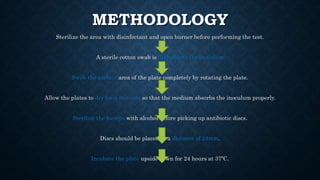
Sterilize the area with disinfectant and open burner before performing the test.
A sterile cotton swab is dipped into the inoculum
Swab the surface area of the plate completely by rotating the plate.
Allow the plates to dry for 5 minutes so that the medium absorbs the inoculum properly.
Sterilize the forceps with alcohol before picking up antibiotic discs.
Discs should be placed at a distance of 24mm.
Incubate the plate upside down for 24 hours at 37ºC.
RESULTS
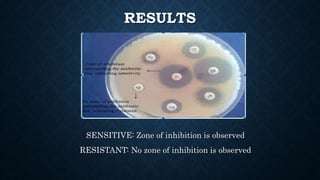
SENSITIVE: Zone of inhibition is observed
RESISTANT: No zone of inhibition is observed
USES OF KIRBY- BAUER
METHOD
• Antibiotic susceptibility testing is a very important test to
monitor antimicrobial resistance.
• Best antimicrobial agent.
• Acquires information on microorganisms of the public
health importance.
ADVANTAGES
• This test is used in determining the antibiotics to treat an
infection.
• It can be useful in monitoring antimicrobials.
• Selection of proper antibacterial agents.
• It doesn’t require special equipment to perform.
• It costs less to perform AST.
• Helps to identify bacteria that have constant pattern.
LIMITATIONS
• Not all slow or fastidious organisms can be tested
accurately.
• Used only for screening the susceptibility pattern of the
organisms according to the CLSI guidelines.
• Minimum inhibitory concentration (MIC) cannot been
determined.
• Fasticidous organisms can be tested accurately.
THANK YOU

ANTIMICROBIAL SUSCEPIBILITY TEST (AST TEST)

  • 1.
    ANTIBIOTIC SENSITIVITY TEST LOKESHWARI B 1STM.Sc. MICROBIOLOGY DEPARTMENT OF MICROBIOLOGY SACRED HEART COLLEGE(AUTONOMOUS) TIRUPATTUR.
  • 2.
    AIM/OBJECTIVE • Growth ofan organisms determines the ability of antibiotics to inhibit the growth of Micro-organisms. • Determines the sensitivity of antibiotics against bacterial pathogens.
  • 3.
    INTRODUCTION • Test doneto check the effectiveness of a bacterium and also selects the best drug that acting against bacterium. • Otherwise known as Antibiotic susceptibility test(AST) • It’s a in vitro test which determines the sensitivity or the resistance of the bacteria to specific antibiotics. • Susceptibility of the bacteria to the antibiotics. • Testing for antibiotic sensitivity is often done by ; 1. Diffusion methods (Kirby Bauer method) 2. Dilution methods for Minimum inhibitory concentration (MIC) 3. Diffusion and dilution method (Epsilometer test)
  • 4.
    KIRBY – BAUERTEST • Also called as Disc diffusion test • Developed in the years 1950s by W. Kirby and A. Bauer • Standardized by World health Organization in 1961. • This test is used to determine the resistance or sensitivity of the aerobes or facultative anaerobes to certain chemicals. • Used by clinician for treatment of patients with bacterial infections. • The presence or absence of an inhibitory area around the discs identifies the bacterial sensitivity to the drug.
  • 5.
    PRINICIPLE • Antibiotics areplaced in the paper disks and then placed in the Mullon hintor agar plate by using sterile forceps. • Plates were then incubated for 16-18 hours • Diameter of zone of inhibition is measured. • Inhibition zone edge: shows the susceptibility/ resistance of a particular bacterium. • Diameter of zone of inhibition is measured using a ruler
  • 6.
    MATERIALS NEEDED 1. 24Hours culture of Bacteria 2. Muller hinton agar 3. Antibiotic disks 4. Petridishes 5. Sterile cotton swabs 6. Glass wares 7. Bunsen burner 8. Sterile forceps 9. Metric ruler or caliper
  • 7.
    METHODOLOGY Sterilize the areawith disinfectant and open burner before performing the test. A sterile cotton swab is dipped into the inoculum Swab the surface area of the plate completely by rotating the plate. Allow the plates to dry for 5 minutes so that the medium absorbs the inoculum properly. Sterilize the forceps with alcohol before picking up antibiotic discs. Discs should be placed at a distance of 24mm. Incubate the plate upside down for 24 hours at 37ºC.
  • 8.
    RESULTS SENSITIVE: Zone ofinhibition is observed RESISTANT: No zone of inhibition is observed
  • 9.
    USES OF KIRBY-BAUER METHOD • Antibiotic susceptibility testing is a very important test to monitor antimicrobial resistance. • Best antimicrobial agent. • Acquires information on microorganisms of the public health importance.
  • 10.
    ADVANTAGES • This testis used in determining the antibiotics to treat an infection. • It can be useful in monitoring antimicrobials. • Selection of proper antibacterial agents. • It doesn’t require special equipment to perform. • It costs less to perform AST. • Helps to identify bacteria that have constant pattern.
  • 11.
    LIMITATIONS • Not allslow or fastidious organisms can be tested accurately. • Used only for screening the susceptibility pattern of the organisms according to the CLSI guidelines. • Minimum inhibitory concentration (MIC) cannot been determined. • Fasticidous organisms can be tested accurately.
  • 12.