MHC
19 July 2021 Abhijit Debnath BP605T and Biotech Unit-1 1
CO1.1
Noida Institute of Engineering and Technology
(Pharmacy Institute) Greater Noida
Abhijit Debnath
Asst. Professor
NIET, Pharmacy
Institute
Unit: 3
Subject Name: Biotechnology
(BP605T)
Course Details
(B. Pharm 6th Sem)
19 July 2021 Abhijit Debnath BP605T and Biotech Unit-1 2
 Antigen-presenting cells
 Major Histocompatibility Complex (MHC)
 Structure Of MHC
 MHC Working Pathway
 MHC Associated Genes
 Similarities Between MHC Class I & MHC Class II
 Differences Between MHC Class I & MHC Class II
 Cytokines
 Interleukins (IL)
 Interferons (IFN)
 Chemokines
Lecture 20
Noida Institute of Engineering and Technology
(Pharmacy Institute) Greater Noida
19 July 2021
Abhijit Debnath BP605T and
Biotech Unit-3
3
ANTIGEN-PRESENTING CELLS
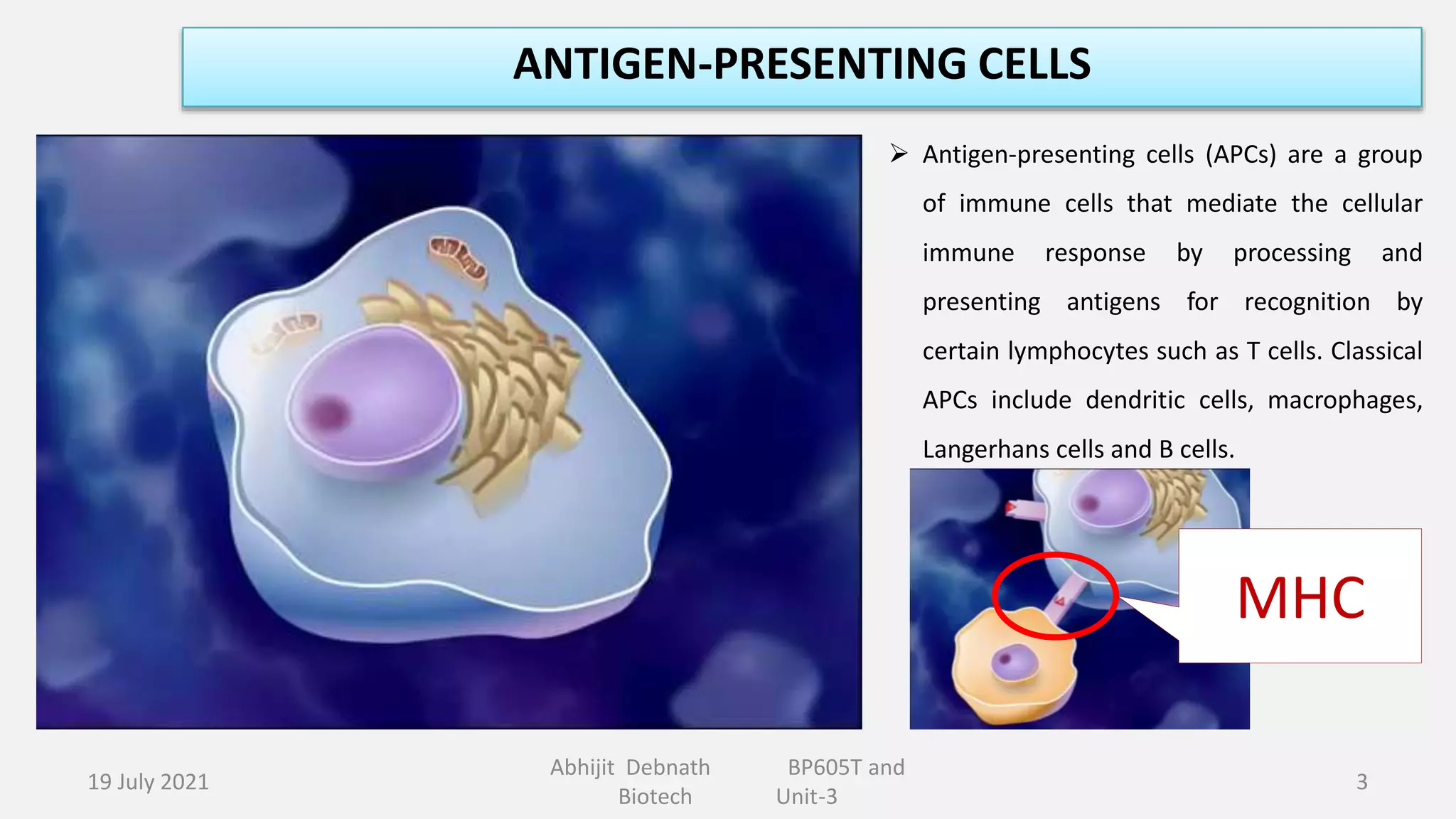
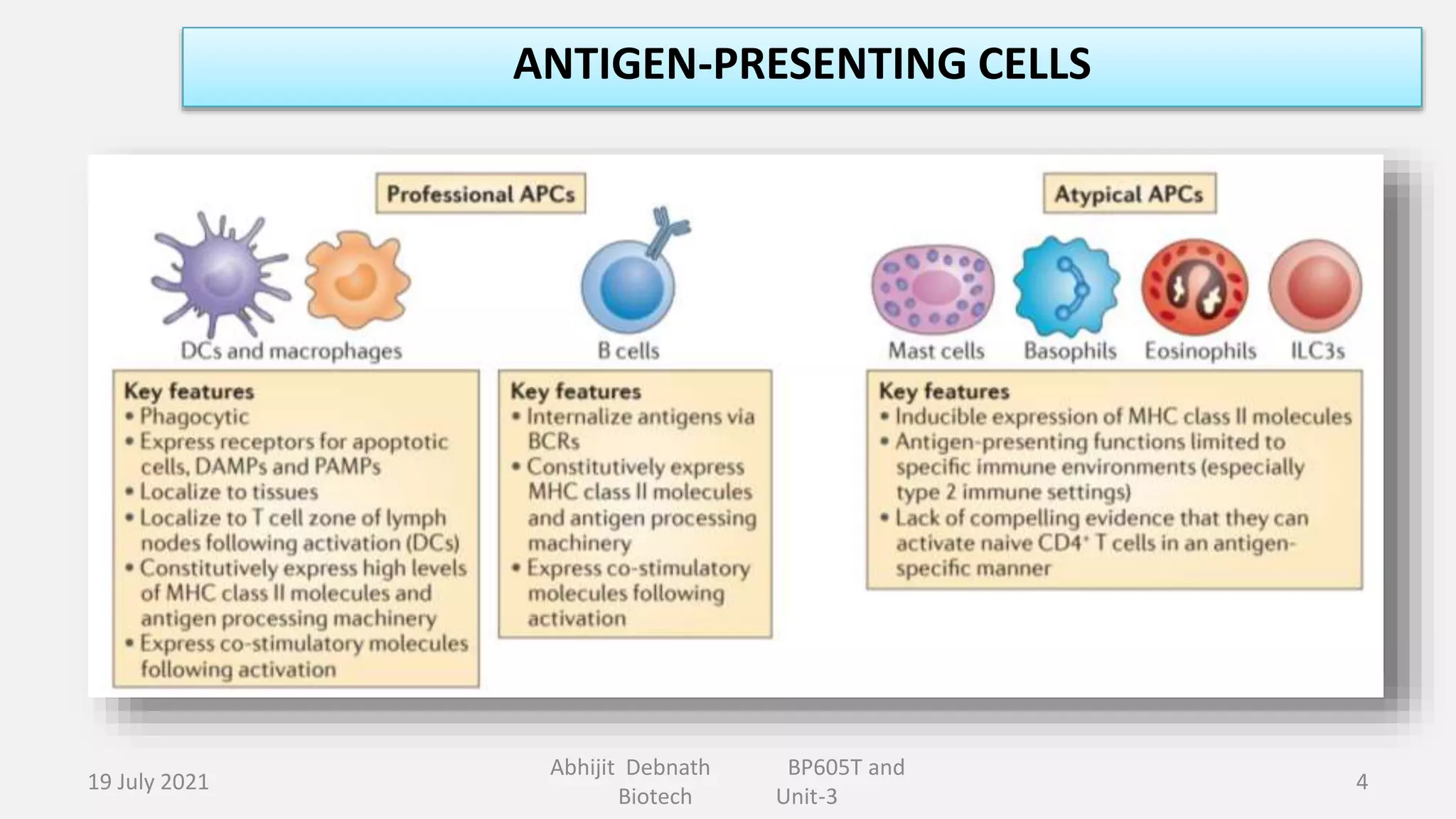
 Antigen-presenting cells (APCs) are a group
of immune cells that mediate the cellular
immune response by processing and
presenting antigens for recognition by
certain lymphocytes such as T cells. Classical
APCs include dendritic cells, macrophages,
Langerhans cells and B cells.
MHC
19 July 2021
Abhijit Debnath BP605T and
Biotech Unit-3
4
ANTIGEN-PRESENTING CELLS
19 July 2021 Abhijit Debnath BP605T and
Biotech Unit-3
5
MAJOR HISTOCOMPATIBILITY COMPLEX
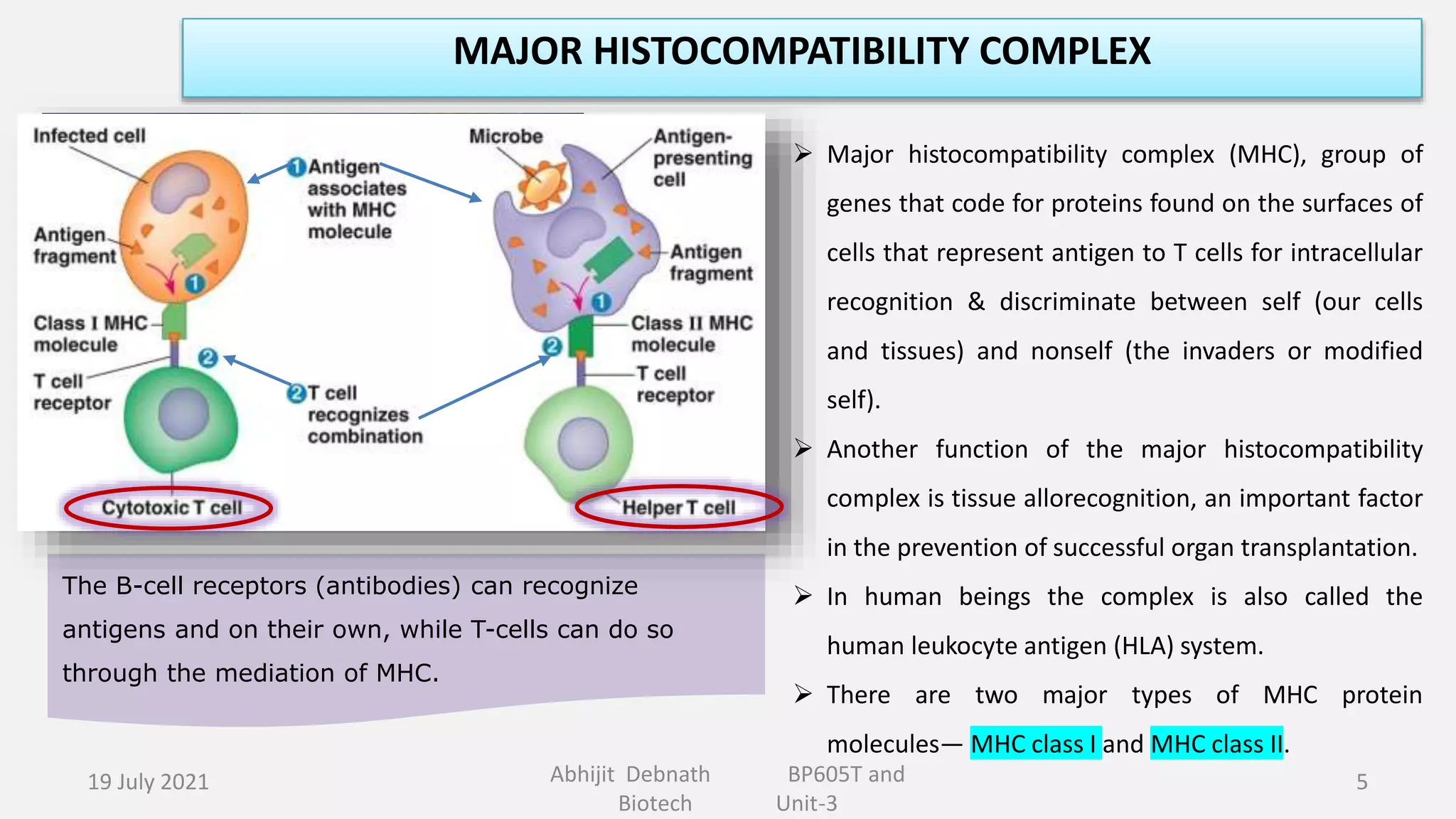
 Major histocompatibility complex (MHC), group of
genes that code for proteins found on the surfaces of
cells that represent antigen to T cells for intracellular
recognition & discriminate between self (our cells
and tissues) and nonself (the invaders or modified
self).
 Another function of the major histocompatibility
complex is tissue allorecognition, an important factor
in the prevention of successful organ transplantation.
 In human beings the complex is also called the
human leukocyte antigen (HLA) system.
 There are two major types of MHC protein
molecules— MHC class I and MHC class II.
The B-cell receptors (antibodies) can recognize
antigens and on their own, while T-cells can do so
through the mediation of MHC.
MHC
19 July 2021
Abhijit Debnath BP605T and
Biotech Unit-3
6
STRUCTURE OF MHC
MHC Class I molecules are found on almost all the nucleated cells of
the body.
MHC Class I molecules are found on almost all Antigen Presenting
cells like macrophages, B cells and dendritic cells.
MHC Class I MHC Class II
19 July 2021
Abhijit Debnath BP605T and
Biotech Unit-3
7
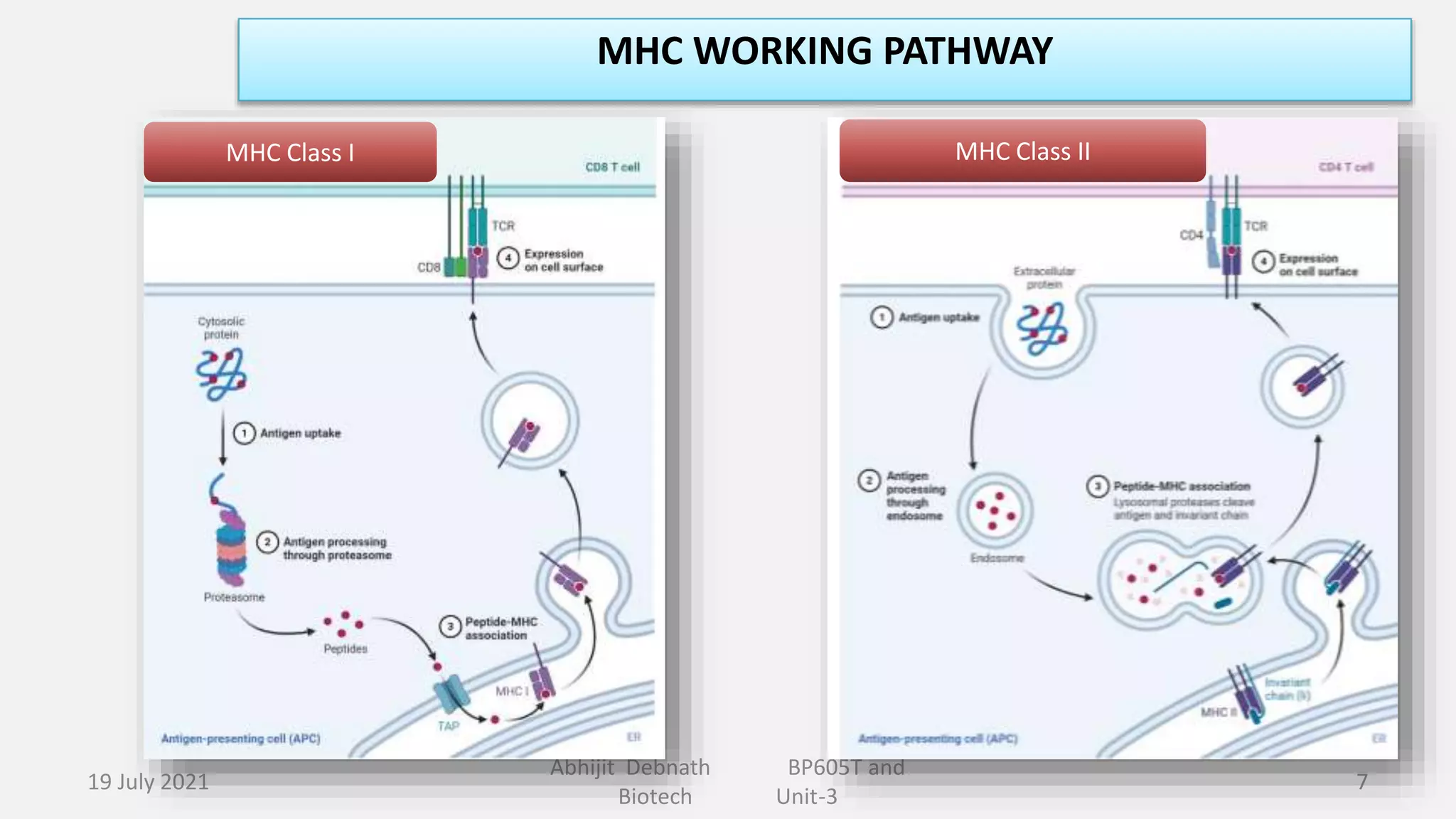
MHC WORKING PATHWAY
MHC Class I MHC Class II
19 July 2021
Abhijit Debnath BP605T and
Biotech Unit-3
8
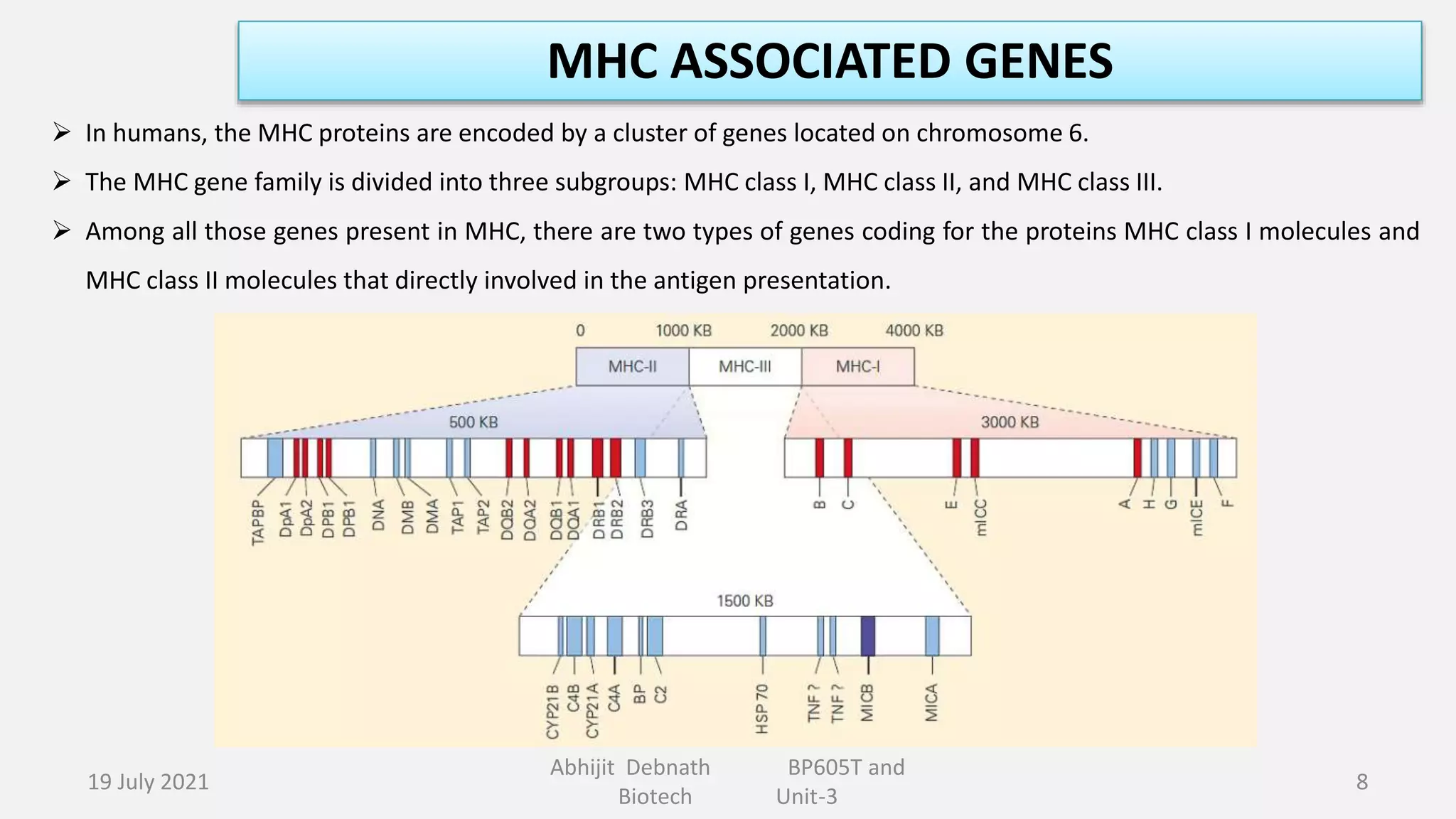
 In humans, the MHC proteins are encoded by a cluster of genes located on chromosome 6.
 The MHC gene family is divided into three subgroups: MHC class I, MHC class II, and MHC class III.
 Among all those genes present in MHC, there are two types of genes coding for the proteins MHC class I molecules and
MHC class II molecules that directly involved in the antigen presentation.
MHC ASSOCIATED GENES
19 July 2021
Abhijit Debnath BP605T and
Biotech Unit-3
9
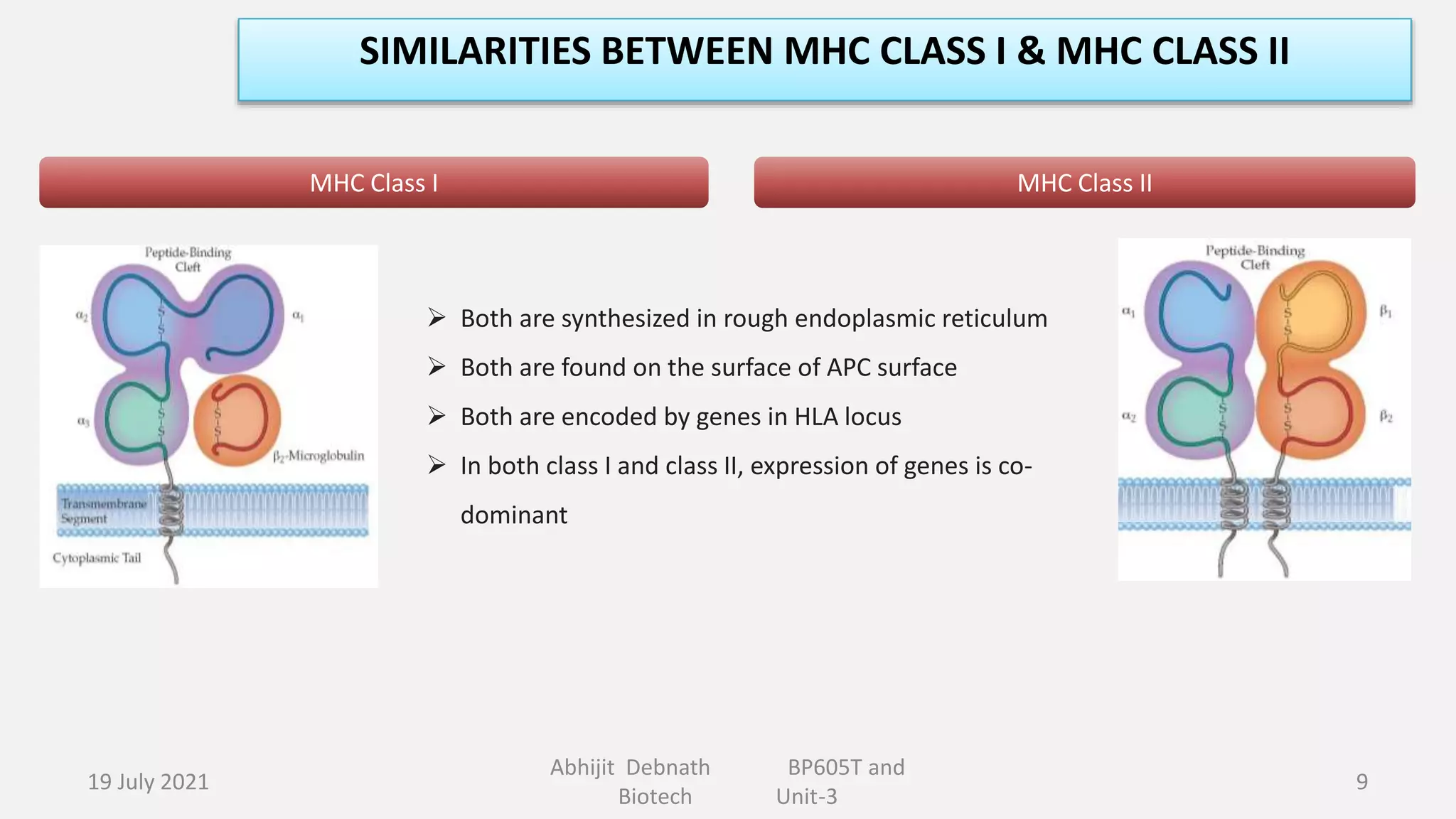
SIMILARITIES BETWEEN MHC CLASS I & MHC CLASS II
 Both are synthesized in rough endoplasmic reticulum
 Both are found on the surface of APC surface
 Both are encoded by genes in HLA locus
 In both class I and class II, expression of genes is co-
dominant
MHC Class I MHC Class II
19 July 2021
Abhijit Debnath BP605T and
Biotech Unit-3
10
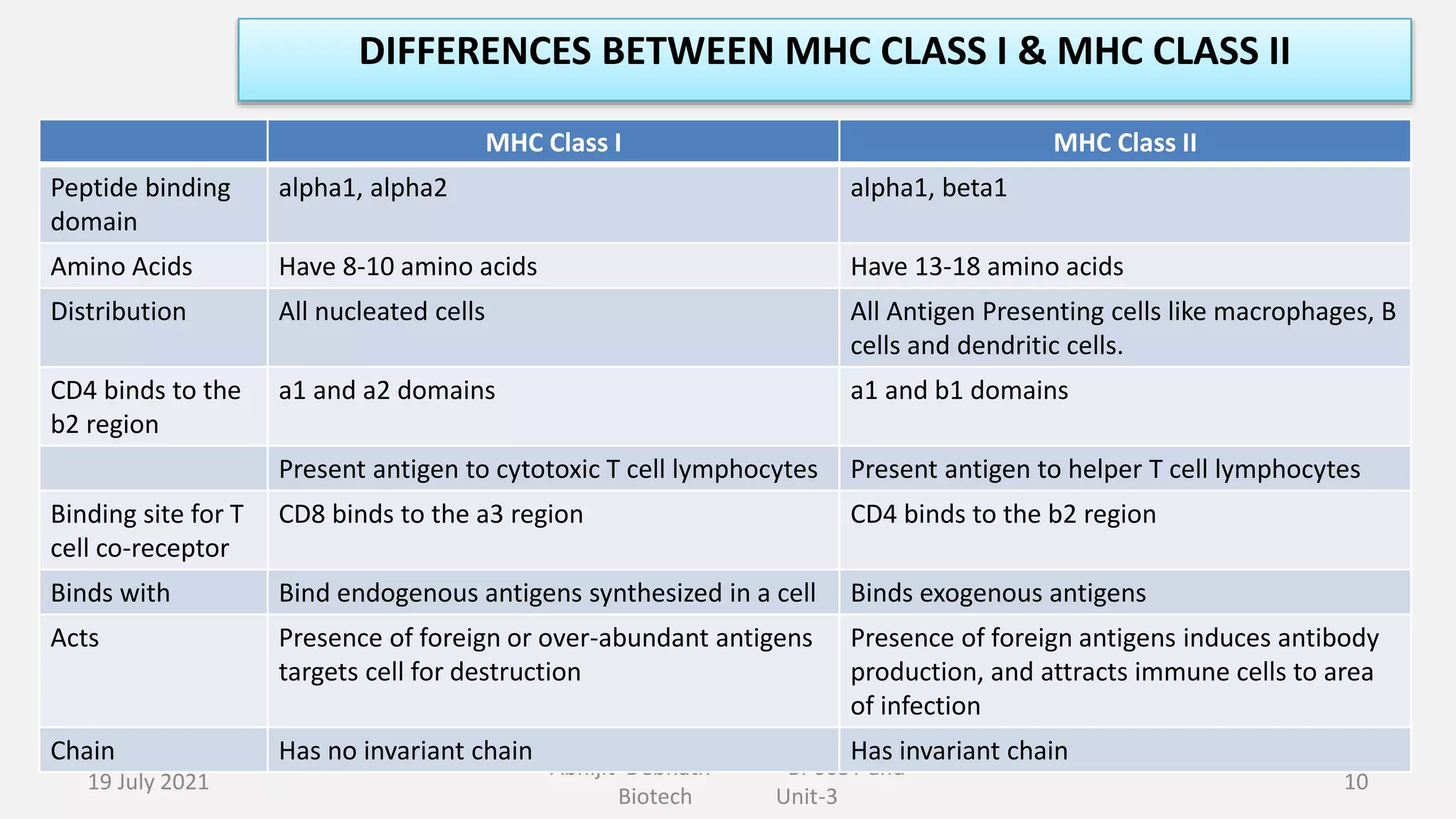
DIFFERENCES BETWEEN MHC CLASS I & MHC CLASS II
MHC Class I MHC Class II
Peptide binding
domain
alpha1, alpha2 alpha1, beta1
Amino Acids Have 8-10 amino acids Have 13-18 amino acids
Distribution All nucleated cells All Antigen Presenting cells like macrophages, B
cells and dendritic cells.
CD4 binds to the
b2 region
a1 and a2 domains a1 and b1 domains
Present antigen to cytotoxic T cell lymphocytes Present antigen to helper T cell lymphocytes
Binding site for T
cell co-receptor
CD8 binds to the a3 region CD4 binds to the b2 region
Binds with Bind endogenous antigens synthesized in a cell Binds exogenous antigens
Acts Presence of foreign or over-abundant antigens
targets cell for destruction
Presence of foreign antigens induces antibody
production, and attracts immune cells to area
of infection
Chain Has no invariant chain Has invariant chain
19 July 2021
Abhijit Debnath BP605T and
Biotech Unit-3
11
Cytokines
Small soluble molecules
19 July 2021
Abhijit Debnath BP605T and
Biotech Unit-3
12
CYTOKINES
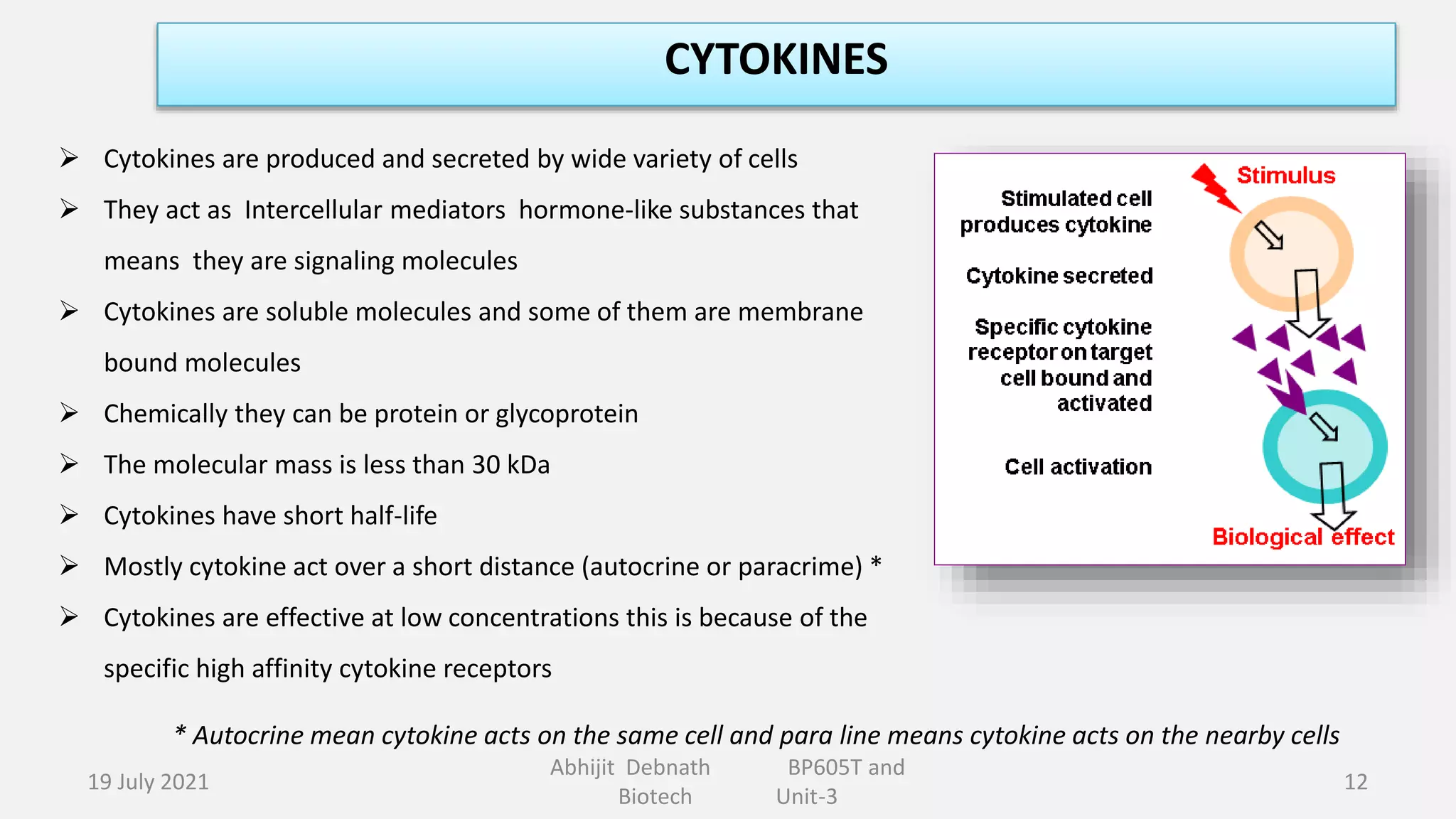
* Autocrine mean cytokine acts on the same cell and para line means cytokine acts on the nearby cells
 Cytokines are produced and secreted by wide variety of cells
 They act as Intercellular mediators hormone-like substances that
means they are signaling molecules
 Cytokines are soluble molecules and some of them are membrane
bound molecules
 Chemically they can be protein or glycoprotein
 The molecular mass is less than 30 kDa
 Cytokines have short half-life
 Mostly cytokine act over a short distance (autocrine or paracrime) *
 Cytokines are effective at low concentrations this is because of the
specific high affinity cytokine receptors
19 July 2021
Abhijit Debnath BP605T and
Biotech Unit-3
13
CYTOKINES
 Cytokines Strom in Covid-19
19 July 2021
Abhijit Debnath BP605T and
Biotech Unit-3
14
Important cytokines which are involved in signaling between cells of the immune system are
 Interleukins (IL)
 Interferons (IFN)
 Chemokines
CYTOKINES
 Interleukins are a subset of a larger group
of cellular messenger molecules called
cytokines, which are modulators of cellular
behaviour.
 Like other cytokines, interleukins are not
stored within cells but are instead secreted
rapidly, and briefly, in response to a
stimulus, such as an infectious agent.
19 July 2021
Abhijit Debnath BP605T and
Biotech Unit-3
15
INTERLEUKINS (IL)
19 July 2021
Abhijit Debnath BP605T and
Biotech Unit-3
16
INTERLEUKINS (IL)
Courtesy: Frank Lectures
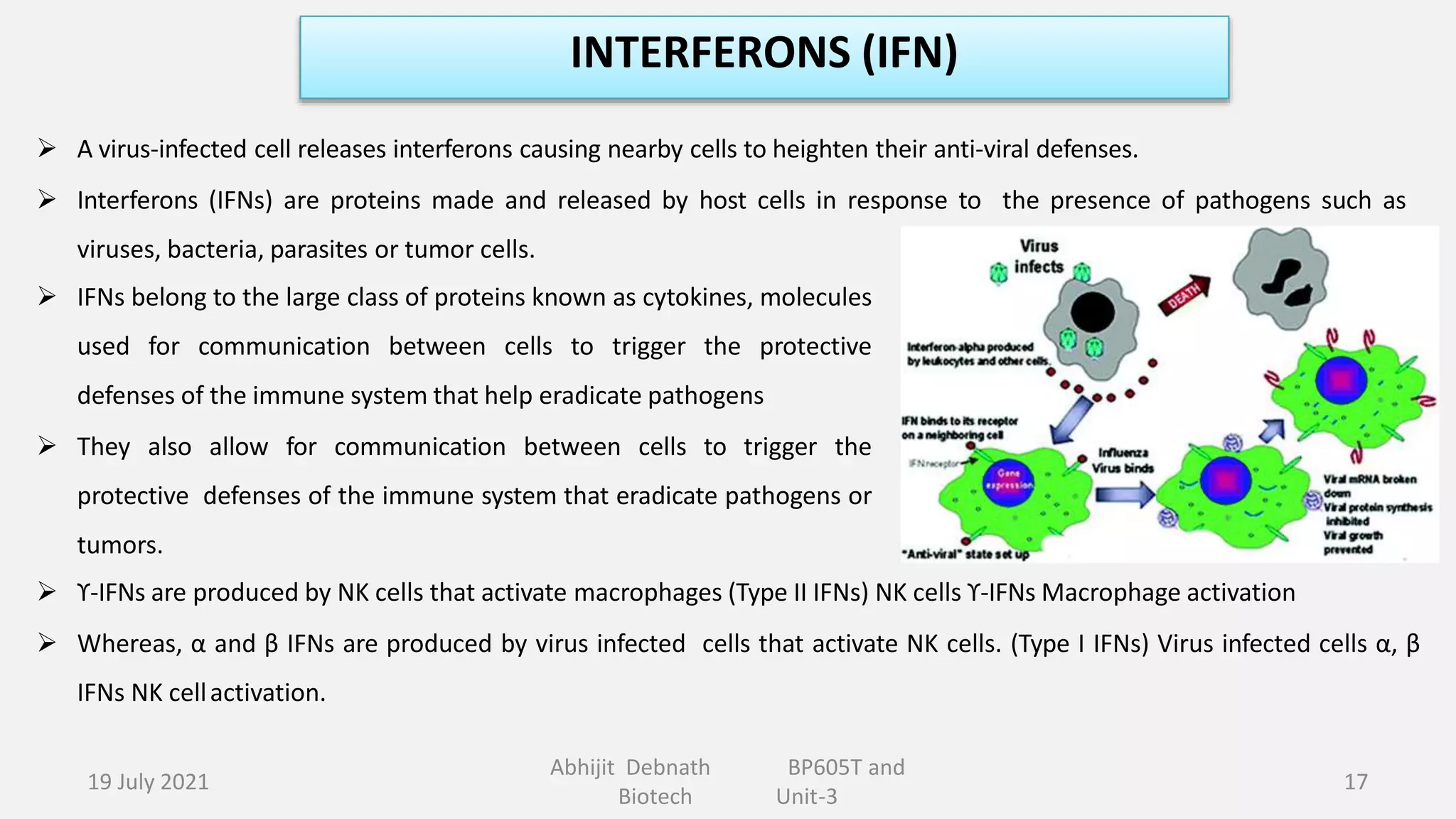
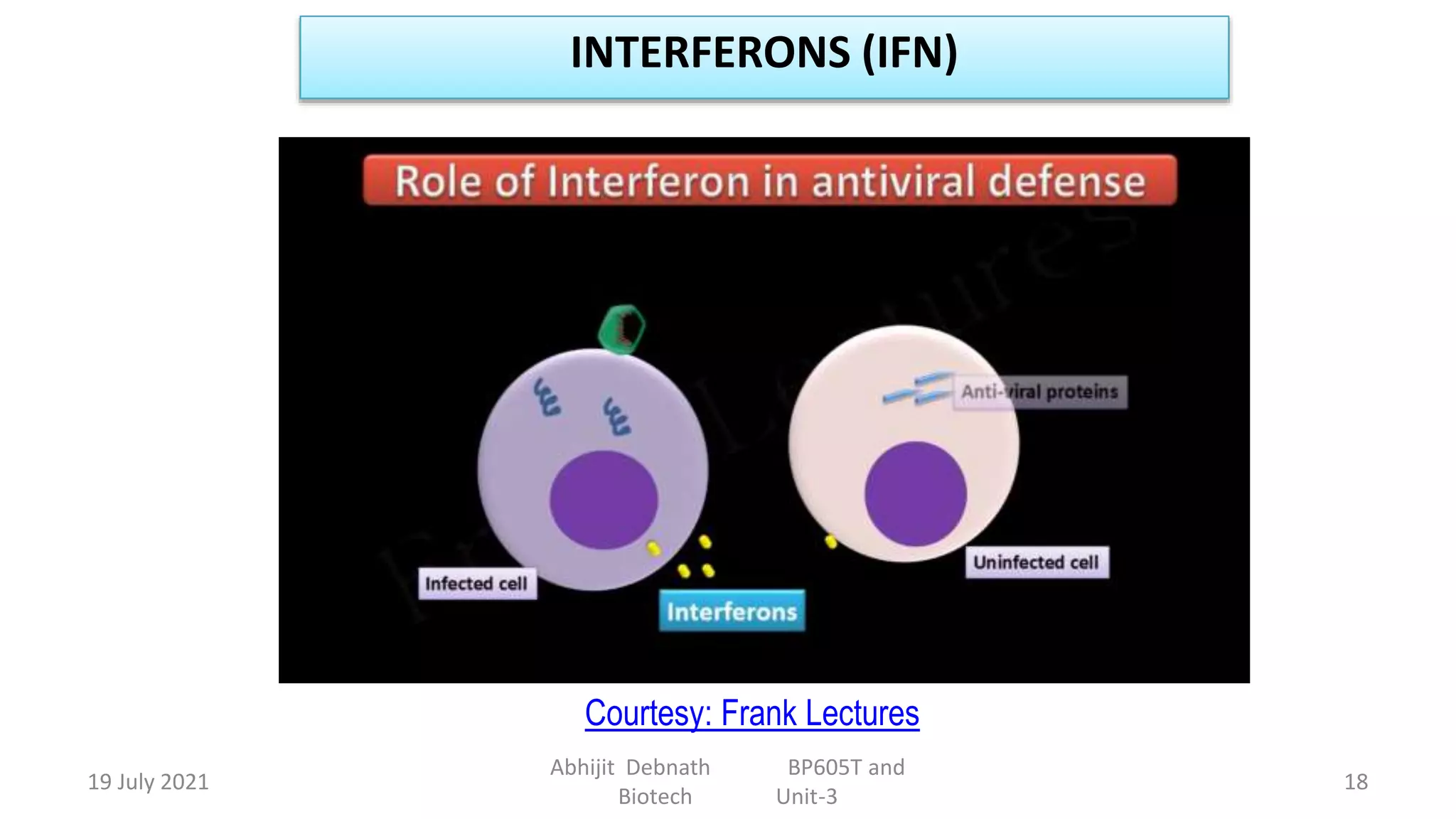
 A virus-infected cell releases interferons causing nearby cells to heighten their anti-viral defenses.
 Interferons (IFNs) are proteins made and released by host cells in response to the presence of pathogens such as
viruses, bacteria, parasites or tumor cells.
19 July 2021
Abhijit Debnath BP605T and
Biotech Unit-3
17
INTERFERONS (IFN)
 IFNs belong to the large class of proteins known as cytokines, molecules
used for communication between cells to trigger the protective
defenses of the immune system that help eradicate pathogens
 They also allow for communication between cells to trigger the
protective defenses of the immune system that eradicate pathogens or
tumors.
 ϒ-IFNs are produced by NK cells that activate macrophages (Type II IFNs) NK cells ϒ-IFNs Macrophage activation
 Whereas, α and β IFNs are produced by virus infected cells that activate NK cells. (Type I IFNs) Virus infected cells α, β
IFNs NK cellactivation.
19 July 2021
Abhijit Debnath BP605T and
Biotech Unit-3
18
Courtesy: Frank Lectures
INTERFERONS (IFN)
19 July 2021
Abhijit Debnath BP605T and
Biotech Unit-3
19
TYPES OF INTERFERONS
 Chemokines, are a family of small, secreted, and structurally related cytokines with a crucial role in inflammation and
immunity.
19 July 2021
Abhijit Debnath BP605T and
Biotech Unit-3
20
CHEMOKINES
 They are also key mediators of cancer
related inflammation being present at
tumor site for pre-existing chronic
inflammatory conditions but also being
target of oncogenic pathways
 Play role in determining the
composition of tumor stroma, they
were found able to directly affect
cancer cell proliferation and metastasis
19 July 2021
Abhijit Debnath BP605T and
Biotech Unit-3
21
Courtesy: Frank Lectures
CHEMOKINES
THANK YOU

Structure and Function of MHC

  • 1.
    MHC 19 July 2021Abhijit Debnath BP605T and Biotech Unit-1 1 CO1.1 Noida Institute of Engineering and Technology (Pharmacy Institute) Greater Noida Abhijit Debnath Asst. Professor NIET, Pharmacy Institute Unit: 3 Subject Name: Biotechnology (BP605T) Course Details (B. Pharm 6th Sem)
  • 2.
    19 July 2021Abhijit Debnath BP605T and Biotech Unit-1 2  Antigen-presenting cells  Major Histocompatibility Complex (MHC)  Structure Of MHC  MHC Working Pathway  MHC Associated Genes  Similarities Between MHC Class I & MHC Class II  Differences Between MHC Class I & MHC Class II  Cytokines  Interleukins (IL)  Interferons (IFN)  Chemokines Lecture 20 Noida Institute of Engineering and Technology (Pharmacy Institute) Greater Noida
  • 3.
    19 July 2021 AbhijitDebnath BP605T and Biotech Unit-3 3 ANTIGEN-PRESENTING CELLS  Antigen-presenting cells (APCs) are a group of immune cells that mediate the cellular immune response by processing and presenting antigens for recognition by certain lymphocytes such as T cells. Classical APCs include dendritic cells, macrophages, Langerhans cells and B cells. MHC
  • 4.
    19 July 2021 AbhijitDebnath BP605T and Biotech Unit-3 4 ANTIGEN-PRESENTING CELLS
  • 5.
    19 July 2021Abhijit Debnath BP605T and Biotech Unit-3 5 MAJOR HISTOCOMPATIBILITY COMPLEX  Major histocompatibility complex (MHC), group of genes that code for proteins found on the surfaces of cells that represent antigen to T cells for intracellular recognition & discriminate between self (our cells and tissues) and nonself (the invaders or modified self).  Another function of the major histocompatibility complex is tissue allorecognition, an important factor in the prevention of successful organ transplantation.  In human beings the complex is also called the human leukocyte antigen (HLA) system.  There are two major types of MHC protein molecules— MHC class I and MHC class II. The B-cell receptors (antibodies) can recognize antigens and on their own, while T-cells can do so through the mediation of MHC. MHC
  • 6.
    19 July 2021 AbhijitDebnath BP605T and Biotech Unit-3 6 STRUCTURE OF MHC MHC Class I molecules are found on almost all the nucleated cells of the body. MHC Class I molecules are found on almost all Antigen Presenting cells like macrophages, B cells and dendritic cells. MHC Class I MHC Class II
  • 7.
    19 July 2021 AbhijitDebnath BP605T and Biotech Unit-3 7 MHC WORKING PATHWAY MHC Class I MHC Class II
  • 8.
    19 July 2021 AbhijitDebnath BP605T and Biotech Unit-3 8  In humans, the MHC proteins are encoded by a cluster of genes located on chromosome 6.  The MHC gene family is divided into three subgroups: MHC class I, MHC class II, and MHC class III.  Among all those genes present in MHC, there are two types of genes coding for the proteins MHC class I molecules and MHC class II molecules that directly involved in the antigen presentation. MHC ASSOCIATED GENES
  • 9.
    19 July 2021 AbhijitDebnath BP605T and Biotech Unit-3 9 SIMILARITIES BETWEEN MHC CLASS I & MHC CLASS II  Both are synthesized in rough endoplasmic reticulum  Both are found on the surface of APC surface  Both are encoded by genes in HLA locus  In both class I and class II, expression of genes is co- dominant MHC Class I MHC Class II
  • 10.
    19 July 2021 AbhijitDebnath BP605T and Biotech Unit-3 10 DIFFERENCES BETWEEN MHC CLASS I & MHC CLASS II MHC Class I MHC Class II MHC Class I MHC Class II Peptide binding domain alpha1, alpha2 alpha1, beta1 Amino Acids Have 8-10 amino acids Have 13-18 amino acids Distribution All nucleated cells All Antigen Presenting cells like macrophages, B cells and dendritic cells. CD4 binds to the b2 region a1 and a2 domains a1 and b1 domains Present antigen to cytotoxic T cell lymphocytes Present antigen to helper T cell lymphocytes Binding site for T cell co-receptor CD8 binds to the a3 region CD4 binds to the b2 region Binds with Bind endogenous antigens synthesized in a cell Binds exogenous antigens Acts Presence of foreign or over-abundant antigens targets cell for destruction Presence of foreign antigens induces antibody production, and attracts immune cells to area of infection Chain Has no invariant chain Has invariant chain
  • 11.
    19 July 2021 AbhijitDebnath BP605T and Biotech Unit-3 11 Cytokines Small soluble molecules
  • 12.
    19 July 2021 AbhijitDebnath BP605T and Biotech Unit-3 12 CYTOKINES * Autocrine mean cytokine acts on the same cell and para line means cytokine acts on the nearby cells  Cytokines are produced and secreted by wide variety of cells  They act as Intercellular mediators hormone-like substances that means they are signaling molecules  Cytokines are soluble molecules and some of them are membrane bound molecules  Chemically they can be protein or glycoprotein  The molecular mass is less than 30 kDa  Cytokines have short half-life  Mostly cytokine act over a short distance (autocrine or paracrime) *  Cytokines are effective at low concentrations this is because of the specific high affinity cytokine receptors
  • 13.
    19 July 2021 AbhijitDebnath BP605T and Biotech Unit-3 13 CYTOKINES  Cytokines Strom in Covid-19
  • 14.
    19 July 2021 AbhijitDebnath BP605T and Biotech Unit-3 14 Important cytokines which are involved in signaling between cells of the immune system are  Interleukins (IL)  Interferons (IFN)  Chemokines CYTOKINES
  • 15.
     Interleukins area subset of a larger group of cellular messenger molecules called cytokines, which are modulators of cellular behaviour.  Like other cytokines, interleukins are not stored within cells but are instead secreted rapidly, and briefly, in response to a stimulus, such as an infectious agent. 19 July 2021 Abhijit Debnath BP605T and Biotech Unit-3 15 INTERLEUKINS (IL)
  • 16.
    19 July 2021 AbhijitDebnath BP605T and Biotech Unit-3 16 INTERLEUKINS (IL) Courtesy: Frank Lectures
  • 17.
     A virus-infectedcell releases interferons causing nearby cells to heighten their anti-viral defenses.  Interferons (IFNs) are proteins made and released by host cells in response to the presence of pathogens such as viruses, bacteria, parasites or tumor cells. 19 July 2021 Abhijit Debnath BP605T and Biotech Unit-3 17 INTERFERONS (IFN)  IFNs belong to the large class of proteins known as cytokines, molecules used for communication between cells to trigger the protective defenses of the immune system that help eradicate pathogens  They also allow for communication between cells to trigger the protective defenses of the immune system that eradicate pathogens or tumors.  ϒ-IFNs are produced by NK cells that activate macrophages (Type II IFNs) NK cells ϒ-IFNs Macrophage activation  Whereas, α and β IFNs are produced by virus infected cells that activate NK cells. (Type I IFNs) Virus infected cells α, β IFNs NK cellactivation.
  • 18.
    19 July 2021 AbhijitDebnath BP605T and Biotech Unit-3 18 Courtesy: Frank Lectures INTERFERONS (IFN)
  • 19.
    19 July 2021 AbhijitDebnath BP605T and Biotech Unit-3 19 TYPES OF INTERFERONS
  • 20.
     Chemokines, area family of small, secreted, and structurally related cytokines with a crucial role in inflammation and immunity. 19 July 2021 Abhijit Debnath BP605T and Biotech Unit-3 20 CHEMOKINES  They are also key mediators of cancer related inflammation being present at tumor site for pre-existing chronic inflammatory conditions but also being target of oncogenic pathways  Play role in determining the composition of tumor stroma, they were found able to directly affect cancer cell proliferation and metastasis
  • 21.
    19 July 2021 AbhijitDebnath BP605T and Biotech Unit-3 21 Courtesy: Frank Lectures CHEMOKINES
  • 22.