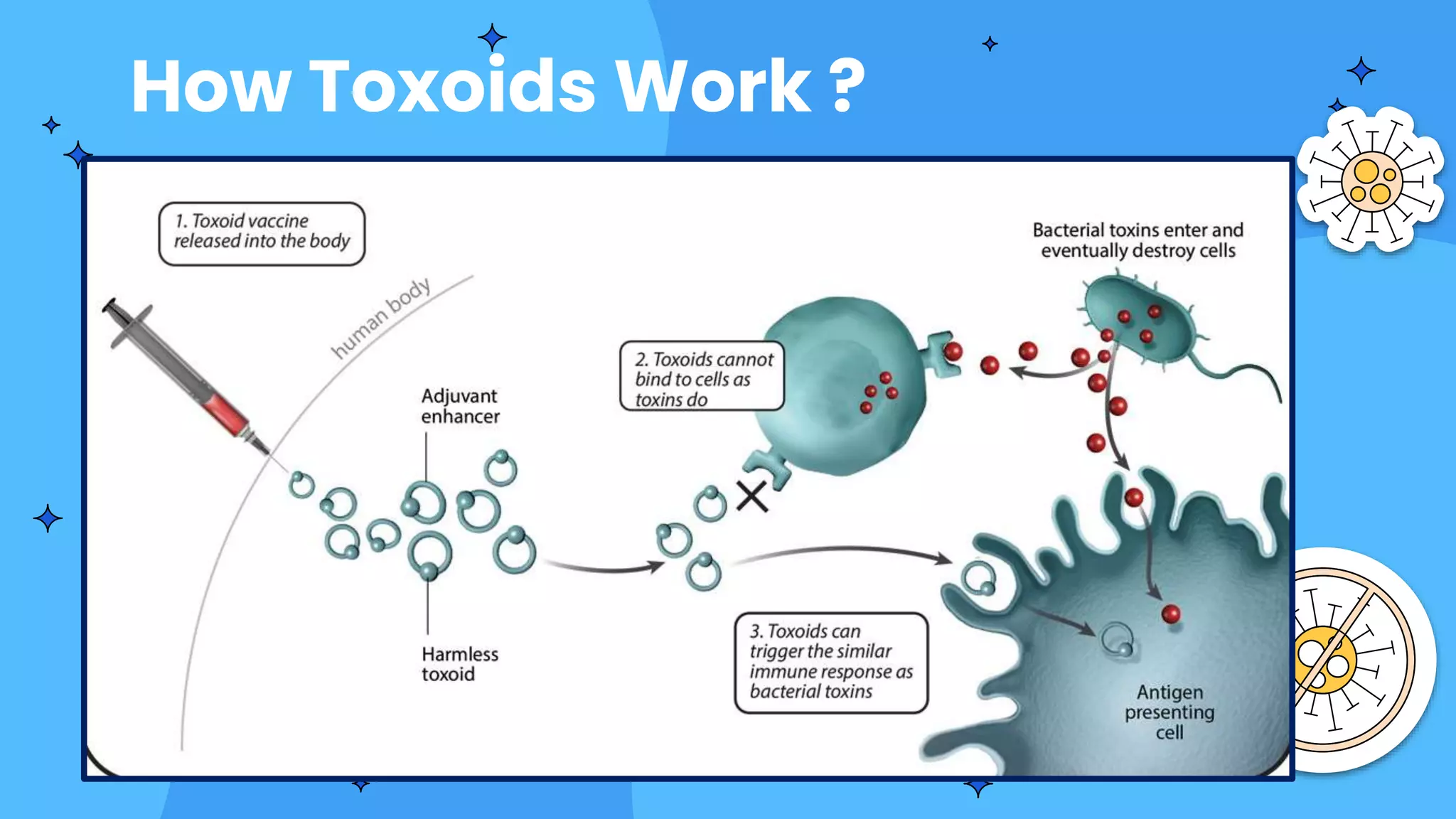
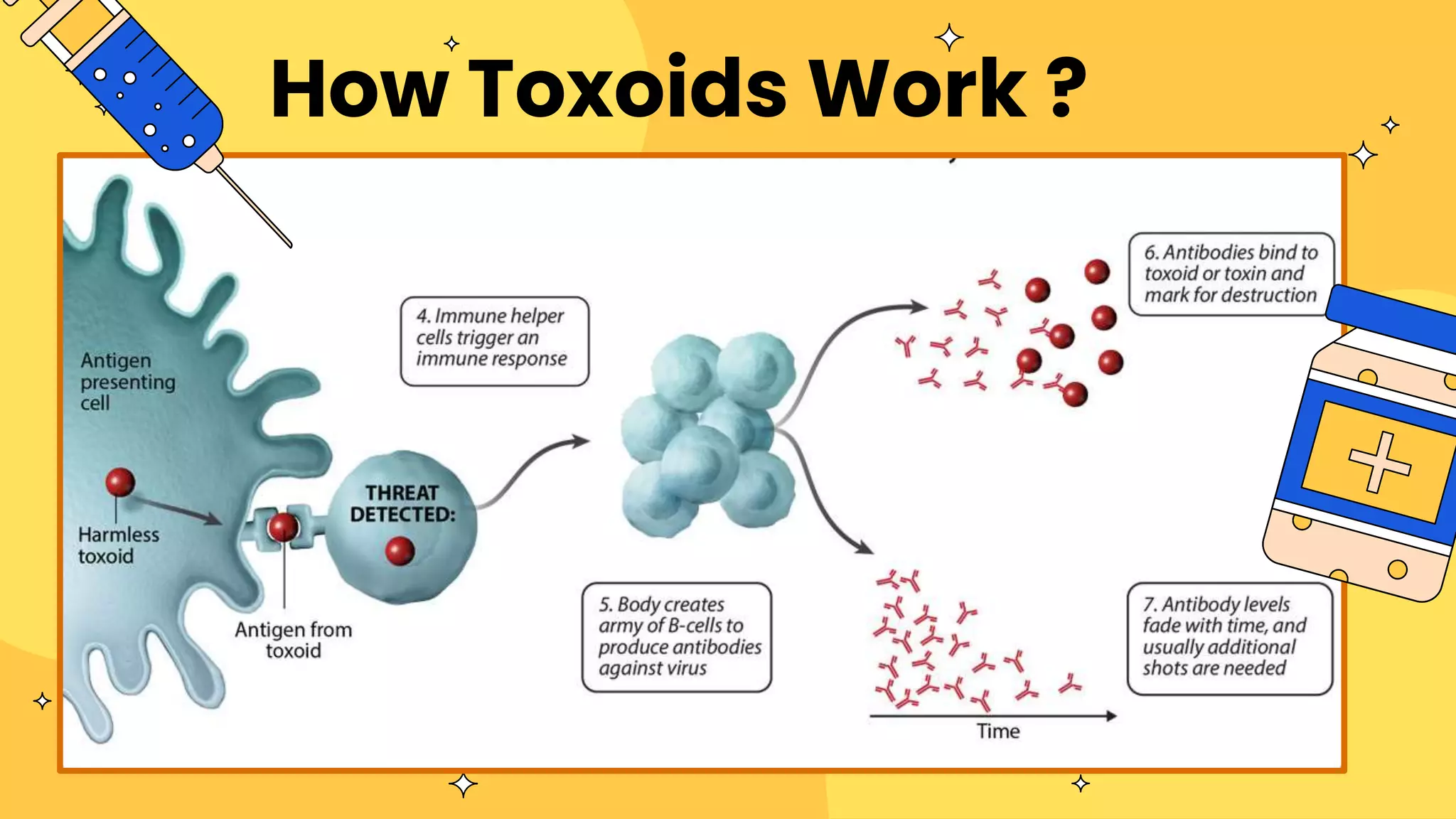
Toxoids are vaccines created from bacterial toxins that have been inactivated through chemical or heat treatment. This process removes the toxins' ability to cause disease but maintains their ability to provoke an immune response. To make a toxoid vaccine, the toxin is first isolated from the pathogen's culture and then inactivated using formaldehyde and heat. This inactivated toxin can then trigger antibody production without causing illness. Common commercially available toxoids include those protecting against tetanus, diphtheria, and pertussis. Different combinations of these toxoids in vaccines like Tdap, DTaP, Td, and DT provide protection against the corresponding diseases at different stages of life.
WHAT ARE TOXOIDS?
● Toxoid are are a class of vaccine
● Toxoids are vaccines that contain inactivated toxins produced by a strain of
microorganism
● The toxin (usually an exotoxin) whose toxicity has been suppressed either by chemical or
heat treatment, while other properties, typically immunogenicity, are maintained
4.
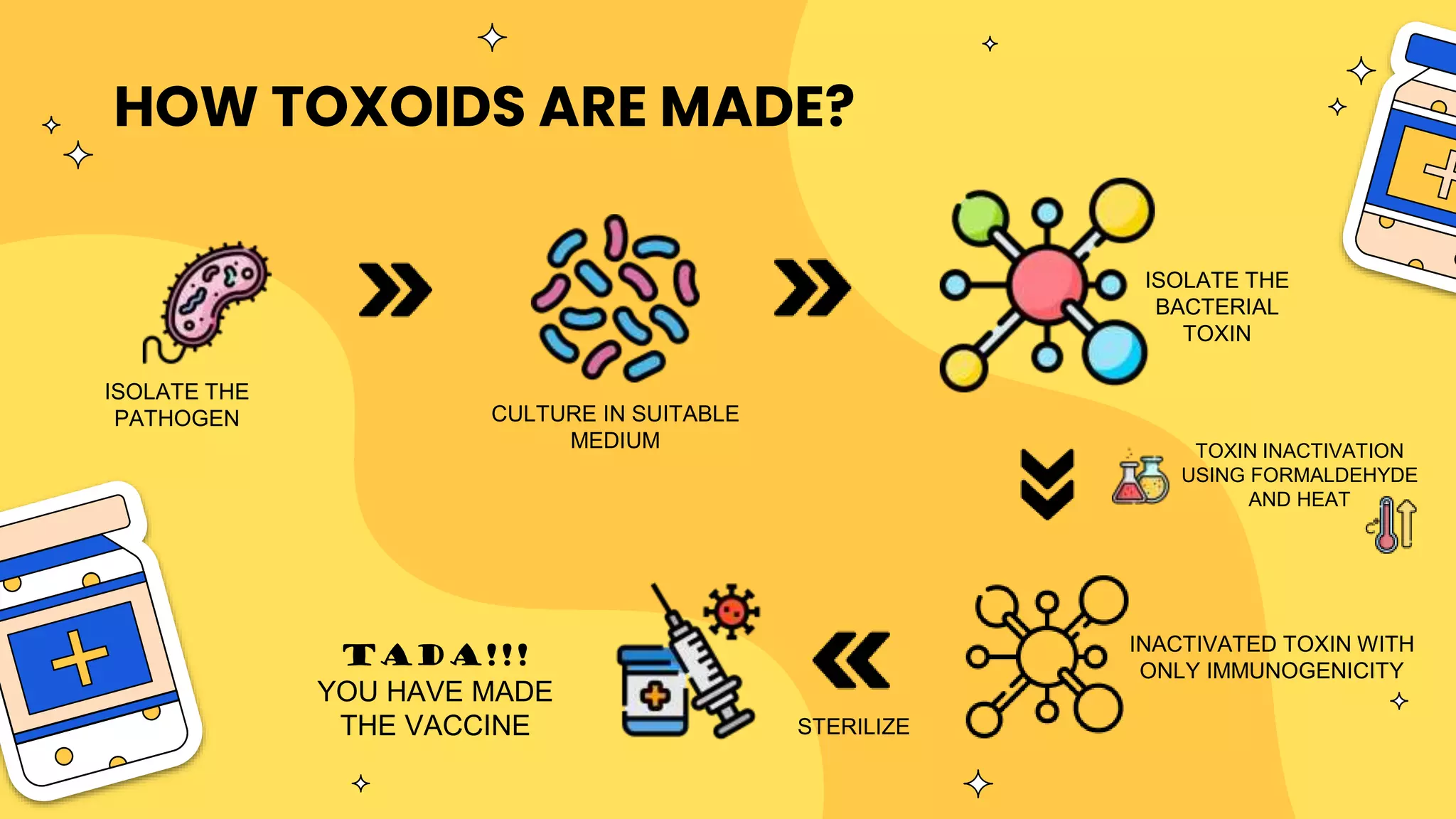
HOW TOXOIDS AREMADE?
ISOLATE THE
PATHOGEN CULTURE IN SUITABLE
MEDIUM
ISOLATE THE
BACTERIAL
TOXIN
TOXIN INACTIVATION
USING FORMALDEHYDE
AND HEAT
INACTIVATED TOXIN WITH
ONLY IMMUNOGENICITY
TADA!!!
YOU HAVE MADE
THE VACCINE STERILIZE
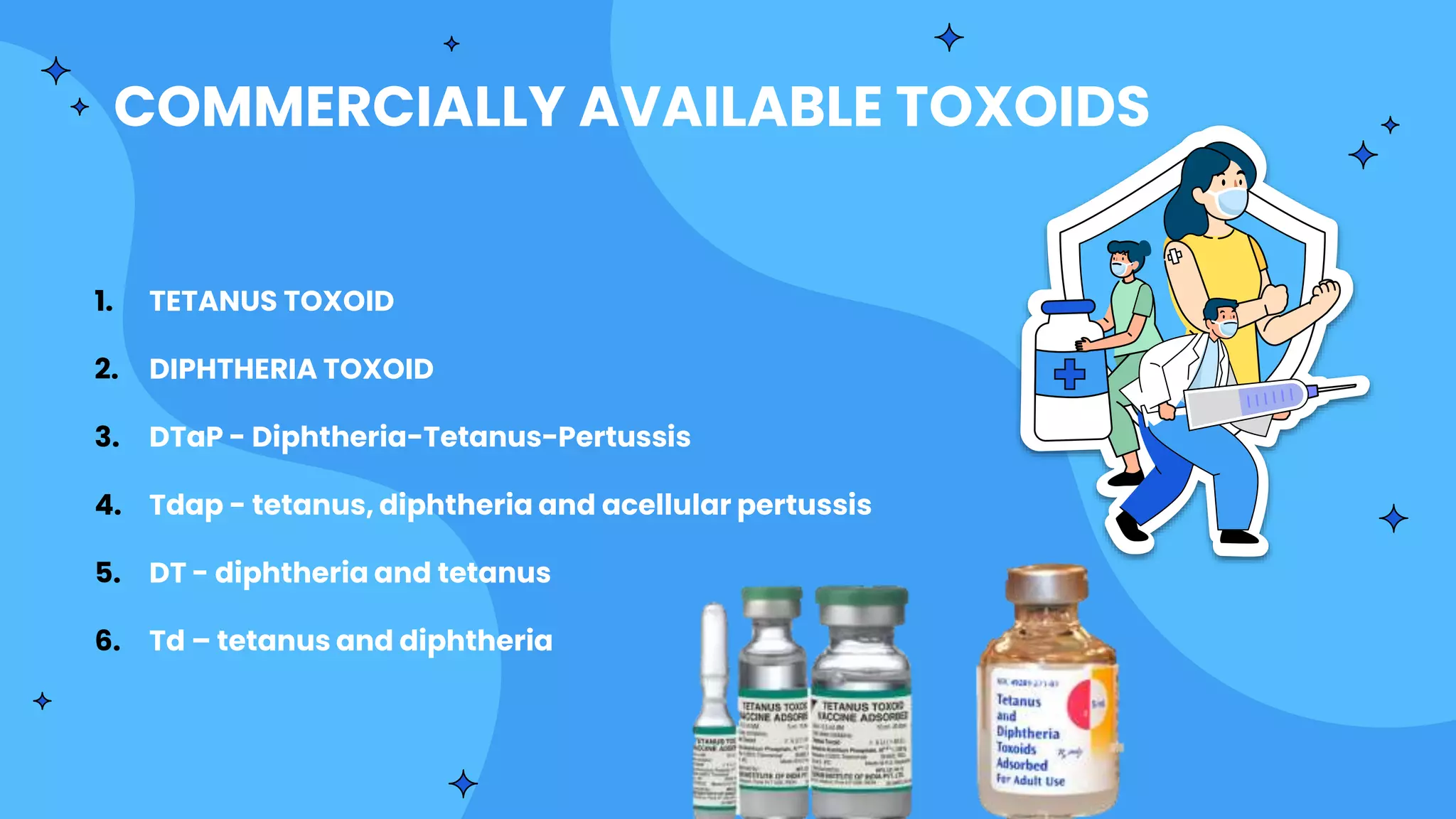
COMMERCIALLY AVAILABLE TOXOIDS
1.TETANUS TOXOID
2. DIPHTHERIA TOXOID
3. DTaP - Diphtheria-Tetanus-Pertussis
4. Tdap - tetanus, diphtheria and acellular pertussis
5. DT - diphtheria and tetanus
6. Td – tetanus and diphtheria
8.
Tdap, DTaP, Td,DT… What are
all these letters?!
The “a” in Tdap and DTaP stands for acellular.
Many vaccines contain the entire virus or bacteria that it is protecting the body from, but
in some cases, certain parts of the virus or bacteria are used instead of the whole
component
so in Tdap, the pertussis bacteria is being partially used. The capitalized letters in both
vaccines mark the bacteria that has a higher level than the lower-case letters
DTaP contains high levels of all 3 bacteria while Tdap contains a higher level of tetanus
compared to diphtheria and pertussis
Td contains more tetanus than diphtheria and DT contains high levels of both diphtheria
and tetanus.
9.
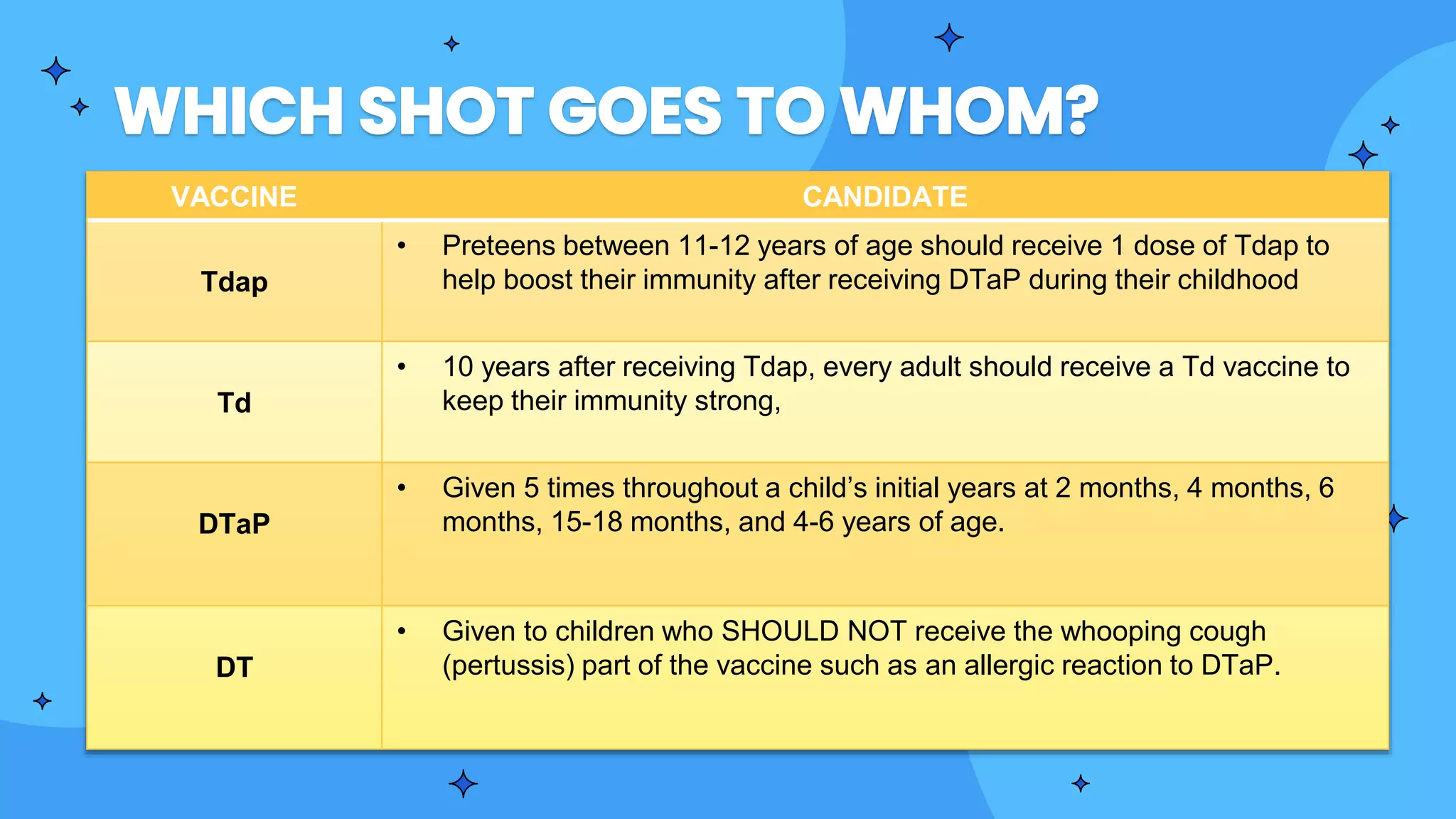
VACCINE CANDIDATE
Tdap
• Preteensbetween 11-12 years of age should receive 1 dose of Tdap to
help boost their immunity after receiving DTaP during their childhood
Td
• 10 years after receiving Tdap, every adult should receive a Td vaccine to
keep their immunity strong,
DTaP
• Given 5 times throughout a child’s initial years at 2 months, 4 months, 6
months, 15-18 months, and 4-6 years of age.
DT
• Given to children who SHOULD NOT receive the whooping cough
(pertussis) part of the vaccine such as an allergic reaction to DTaP.