Major Histocompatibility Complex
(MHC): Structure and functions
Akshat Uniyal, Ph.D.,
Microbiology
HNBGU, Srinagar (G), Uttrakhand
MHC Molecules: Structure and function
1. First described by Peter Gorer (1936), as a blood group locus that
controls the presence of Ag on the surface of Mouse erythrocytes
2. MHC, is a group of genes that code for protein found on the surface
of cells that helps the immune system to recognize foreign substances
3. It is a surface glycoprotein expressed by nearly all nucleated cells,
plays a crucial role in graft rejection and organ transplant and most
important factor which determines the compatibility of tissues
4. Participates in the development of both humoral and cell mediated
immunity
5. In humans it is also known as HLA (Human leukocyte antigen) and
in mice it is called H2 complex
7. The MHC is located in chromosome no. 6 in humans and chromose
no.17 in mice
8. Each gene has an unusually large no. of alleles, thus its very rare for
two individuals to have the same set of molecules which is
collectively called tissue type
9. Nearly 10-15% MHC is identical in different individuals (Mono-
zygotic twins express more then 90% identical MHC)
10. Two main types that code surface glycoprotein are, MHC-I &MHC-
II
11. MHC also encodes a variety of protein such as compliment system,
cytokines and enzymes that are called MHC-III
Image source: Conference Paper in Proceedings of the IEEE Symposium on Computer-Based Medical Systems · February 2006 DOI: 10.1109/CBMS.2006.115· Source:
IEEE Xplore
12. Gene map of the human leukocyte antigen (HLA) region
13. The HLA region spans 4×10 6 nucleotides on chromosome 6p21.1
to p21.3, with class II, class III and class I genes located from
the centromeric to the telomeric end
14. MHC-I is encoded by K & D regions in mice and
by the A, B and C loci in humans
15. The two chains of the class II MHC mol. are
encoded by the IA and IE regions in mice
and by DP, DQ and DR regions in humans
16. Class I & II have common structural features,
while Class-III MHC is flanked by the class
I and II region, and encodes molecules that
are uncommon with class-I &II
Organization of MHC in Human & Mice
Properties
1. Genetic polymorphism-Multiple alleles are present for MHC
-Diversity in MHC is due to polymorphism
2. Co-dominant in nature- Both maternal and paternal alleles are
equally expressed -No-concept of dominant and recessive allele
-One functional unit of MHC is known as
haplotype (One from mother and one from father)
3. Representation of peptide Ag
- Express antigenic peptides which interacts with
T-lymphocytes
Types of MHC
MHC genes are organized into regions encoding three class
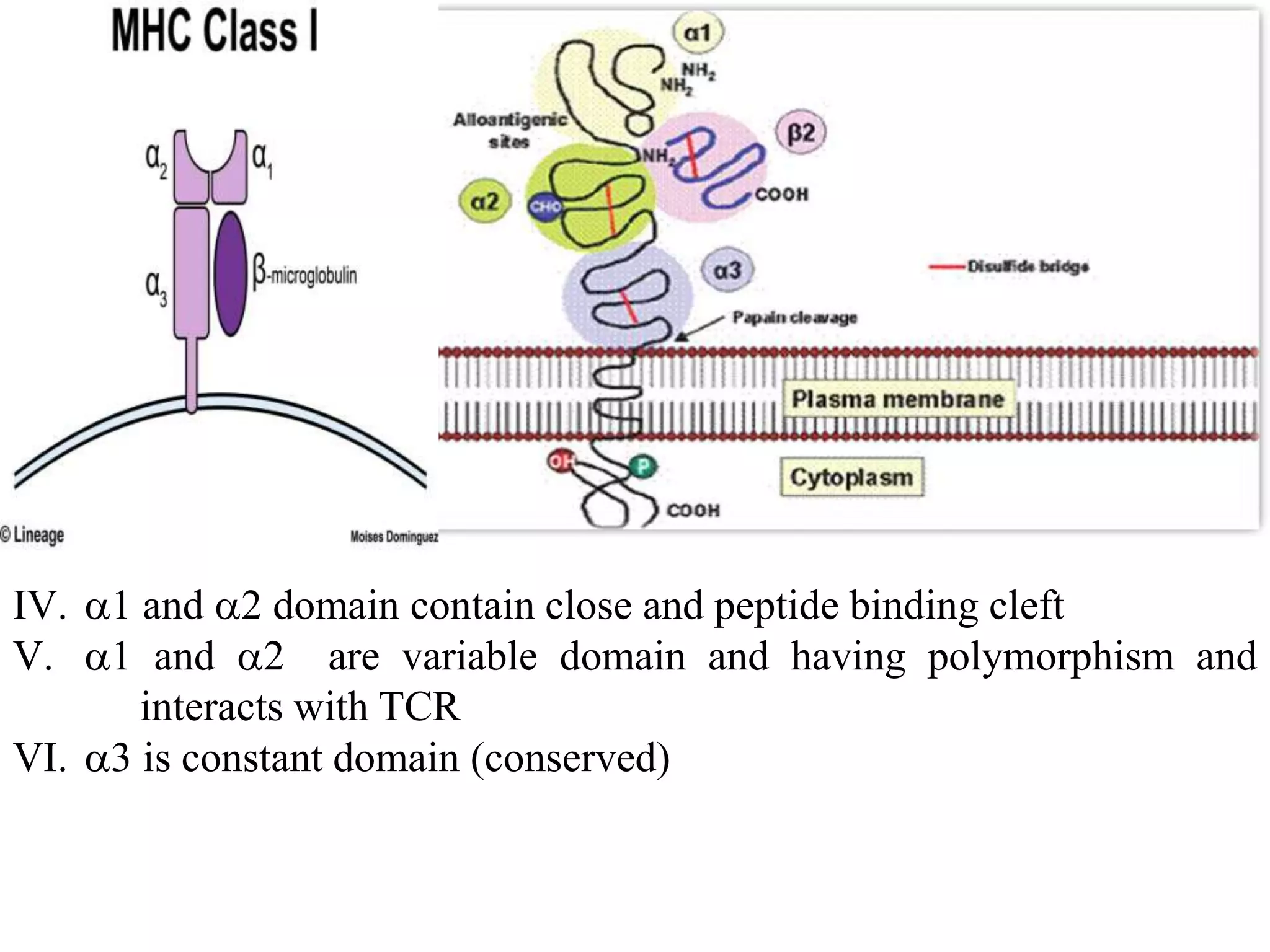
1. MHC-I
I. It encodes glycoprotein expressed on the surface of all nucleated
cells, the gene product or MHC-I molecule’s function is
presentation of peptide Ag to Tc cells
II. In humans it includes 3 alleles, HLA-A, B & C
III. The gene product is made up of 45 kD -heavy chain and a 12 kD
β2-microglobulin (β2 M- it is a non-MHC gene product,
required for stability of molecule)
IV. 1 and 2 domain contain close and peptide binding cleft
V. 1 and 2 are variable domain and having polymorphism and
interacts with TCR
VI. 3 is constant domain (conserved)
VII.3 interacts with CD8 molecule of Tc cells
VIII.2 is glycosylated
IX. 8-10 amino acids long peptide is expressed by MHC-I
X. Hydrophobic residues should be present at C-terminal end of the
peptide
XI. Viral infection down-regulate β2M expression and therefore affects
MHC-I expression
XII.Endogenous Ag like cellular proteins, viral proteins is expressed by
MHC-I
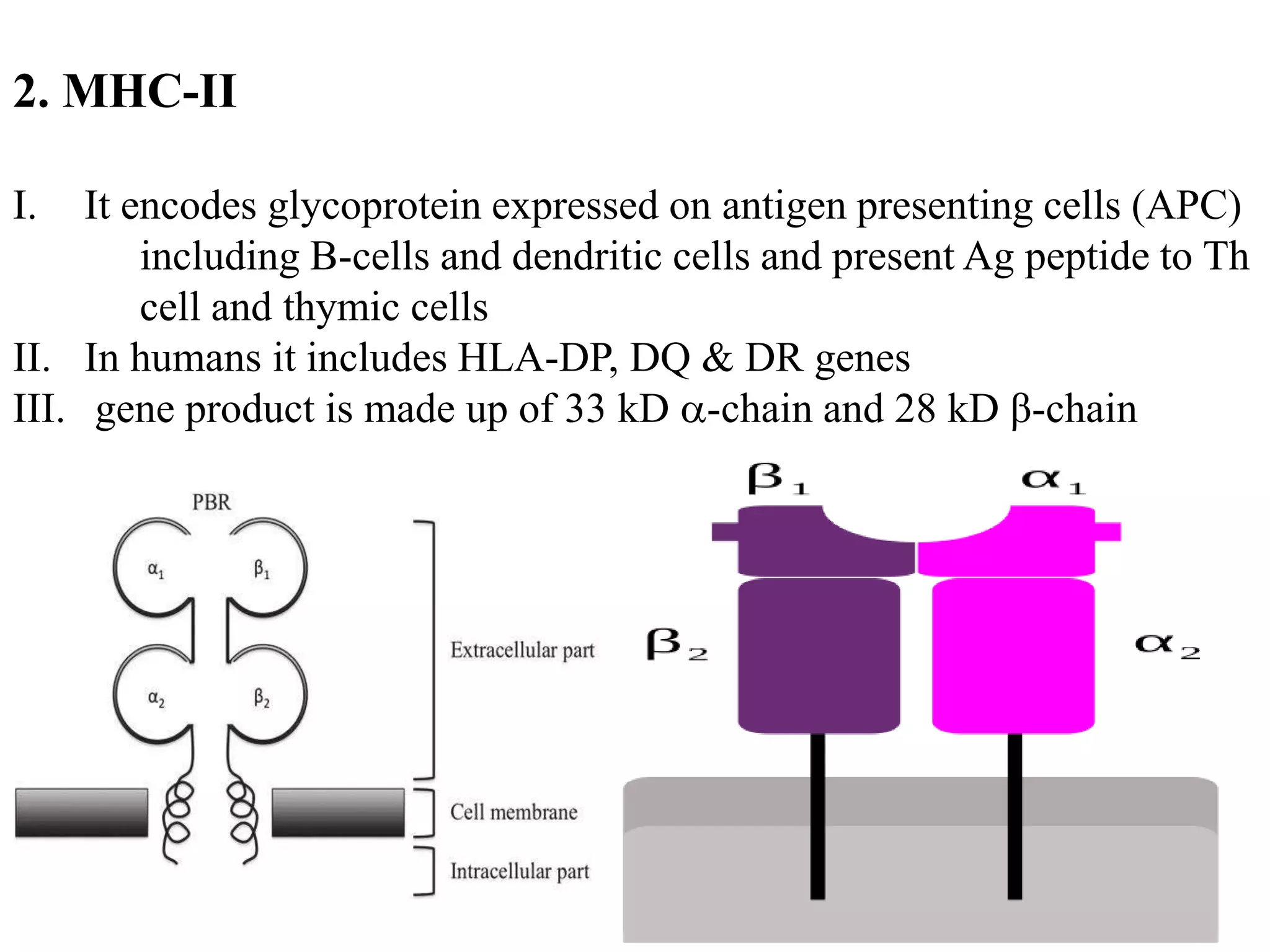
2. MHC-II
I. It encodes glycoprotein expressed on antigen presenting cells (APC)
including B-cells and dendritic cells and present Ag peptide to Th
cell and thymic cells
II. In humans it includes HLA-DP, DQ & DR genes
III. gene product is made up of 33 kD -chain and 28 kD β-chain
IV. 1 and β1 are polymorphic (variable regions)
V. 2 and β2 are constant or conserved
VI. 1 and β1 contains open and peptide binding clefts, it interacts
with 13-18 amino acid long peptides Ag
VII.Hydrophobic residues are present in throughout the peptides
VIII.Β2 interacts with CD4 molecule of Th cell
IX. 1, 2 and β1 are glycosylated (exogenous Ag like secretor protein,
membrane protein, bacterial toxins is represented by MHC-II)
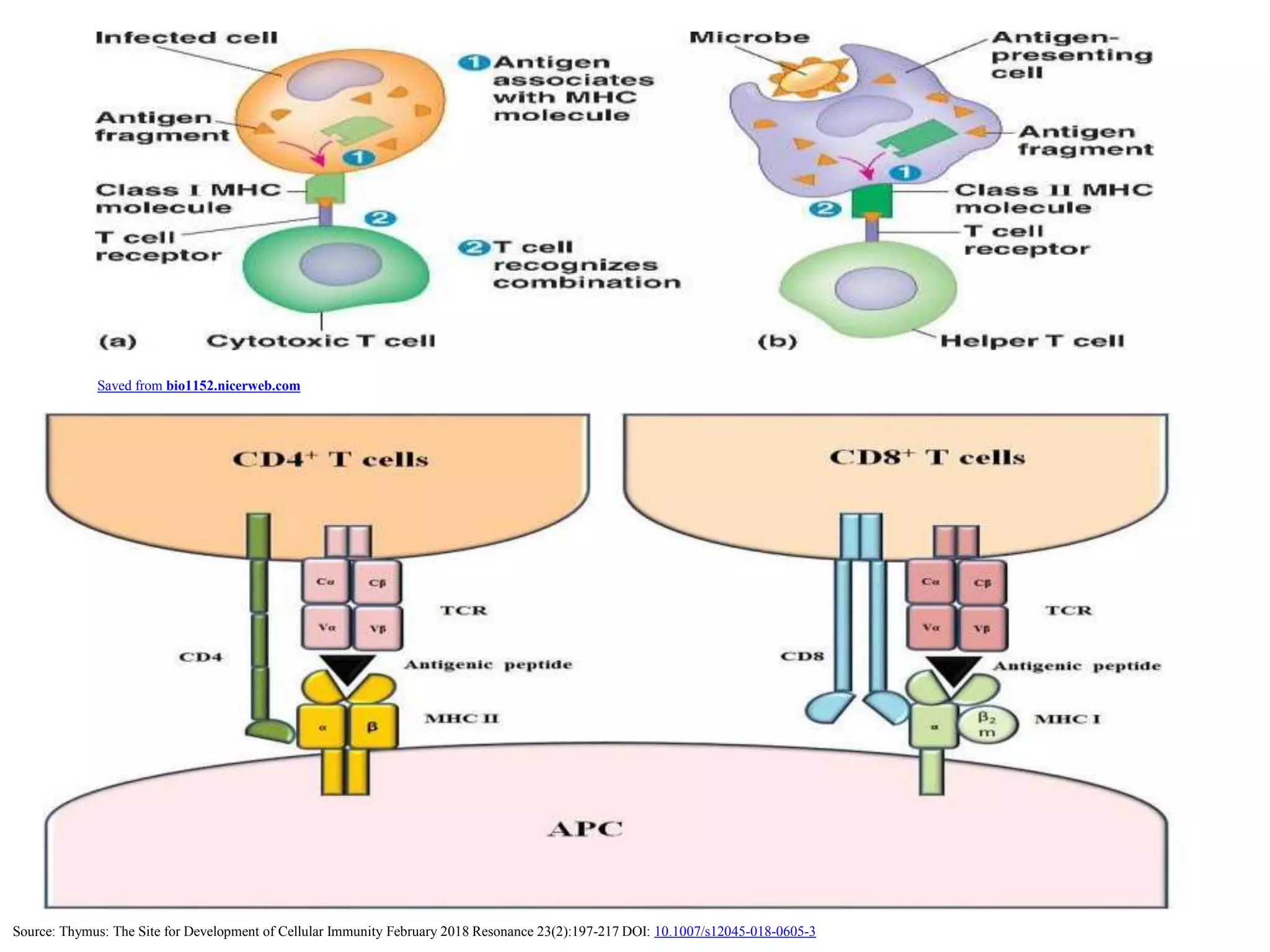
Source: Thymus: The Site for Development of Cellular Immunity February 2018 Resonance 23(2):197-217 DOI: 10.1007/s12045-018-0605-3
Saved from bio1152.nicerweb.com
[Bellanti, JA (Ed). Immunology IV: Clinical Applications in Health and Disease. I Care Press, Bethesda, MD, 2012]
Interaction of MHC with peptide Ag
3. MHC-III
i. It does not participate in Ag presentation
ii. MHC-III genes encodes compliment proteins, heat shock proteins,
cytokines, TNF- etc.
iii. It is highly expressed in hepatocytes
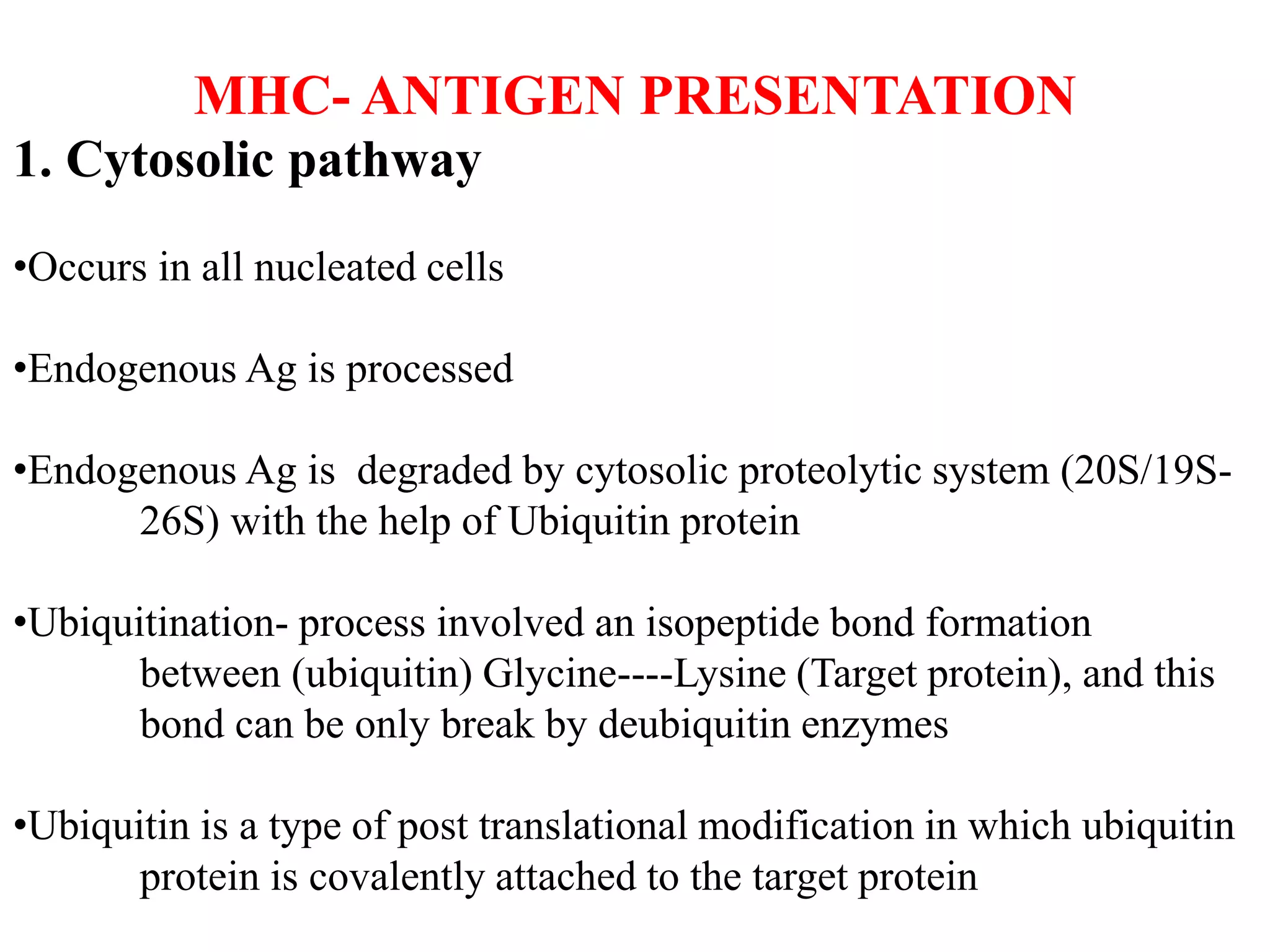
MHC- ANTIGEN PRESENTATION
1. Cytosolic pathway
•Occurs in all nucleated cells
•Endogenous Ag is processed
•Endogenous Ag is degraded by cytosolic proteolytic system (20S/19S-
26S) with the help of Ubiquitin protein
•Ubiquitination- process involved an isopeptide bond formation
between (ubiquitin) Glycine----Lysine (Target protein), and this
bond can be only break by deubiquitin enzymes
•Ubiquitin is a type of post translational modification in which ubiquitin
protein is covalently attached to the target protein
It’s a three step process
1) E-1 Activating enzymes
• E1s are ubiquitin-activating enzymes
that activate Ub in an ATP-dependent
manner, resulting in the formation of a thioester linkage between Ub and
the E1 protein
• Cleaves ubiquitin to expose Glycine residues
2) E-2 conjugating enzyme transfer the Ub from the E1 to the E2 itself and
bring target protein closer to each other
3) E-3 Ligase confer substrate specificity and responsible for ligating
ubiquitin on traget Ag
Source: DOI: 10.5897/IJMMS2013.0890
•After ubiquitination target protein is degraded by proteosomal complex
made up of Lmp2, 7 and 10
Source: DOI: 10.1159/000068624
•Ubiquitination of protein is responsible for degradation but it can also
alter the actvity of subcellular localization of target protein
•Generated fragments of peptides moves towards the ER
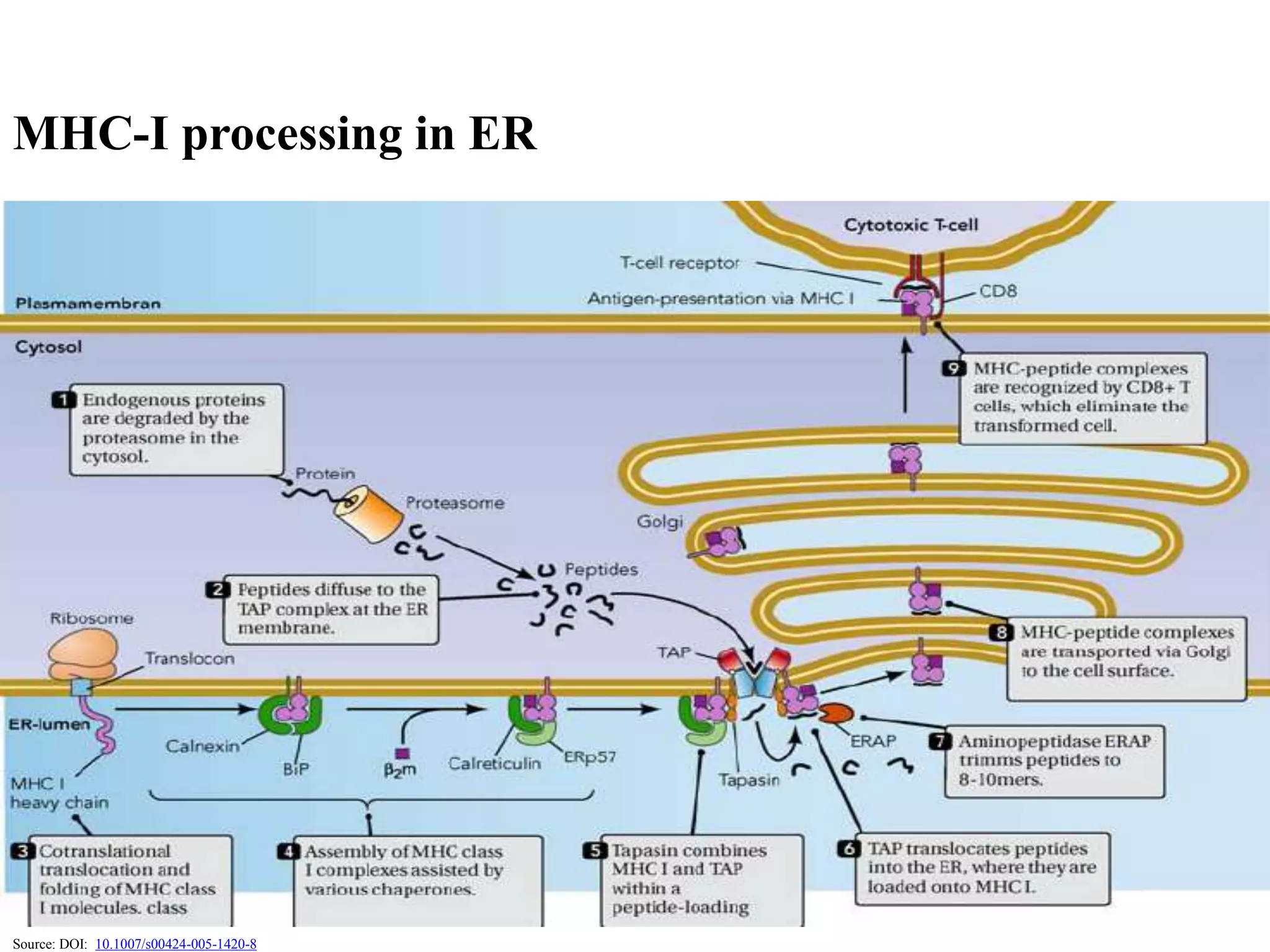
MHC-I processing in ER
Source: DOI: 10.1007/s00424-005-1420-8
1. In the ER lumen - heavy chain interact with calnexin (promote
proper folding of the -polypeptide )
2. -2 macroglobulin interacts with -chain and Calnexin is replaced
with calreticulin. (Calreticulin also cause proper folding)
3. ABC transporter known as TAP (trasporter associated with Ag
processing) is present on the ER membrane and interacts with
incoming peptides having hydrophobic residues on C-terminal
end
4. TAPASIN helps in MHC interaction with TAP, whereas ERP-57
stabilizes MHC-I interaction
5. MHC-I acquires incoming peptides and is later expressed on the
surface of Ag-presenting cells
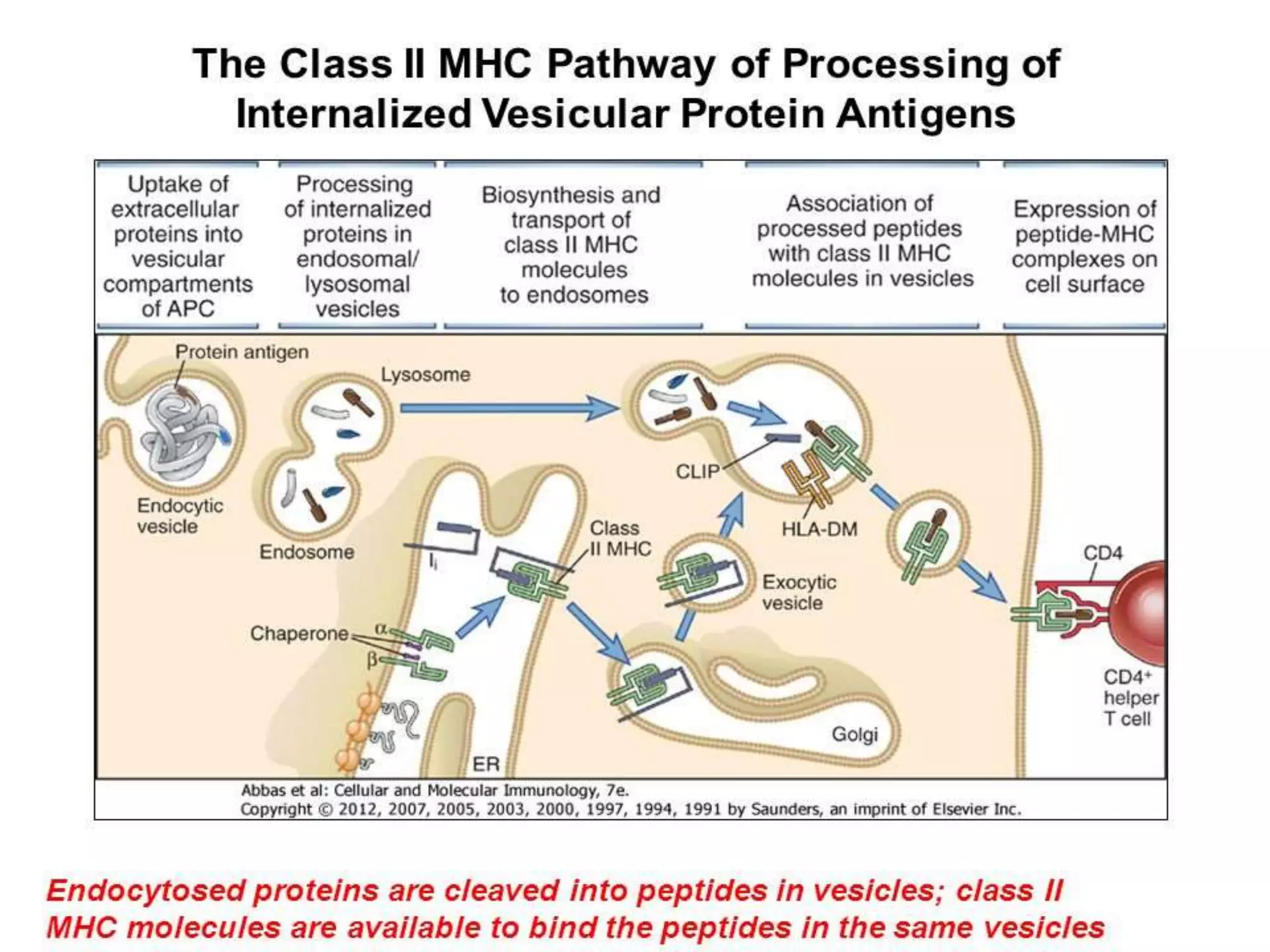
2. Endocytic pathway
•Occurs in professional APC and thymic epithelial cells
•Exogenous Ag. i.e Bacterial toxin, plasma membrane protein, secreted
proteins etc
•Endocytic pathway is pH dependent processing of Ag
•Ag is transported to lysosome by endocytosis
•In lysosome Ag is degraded by proteases
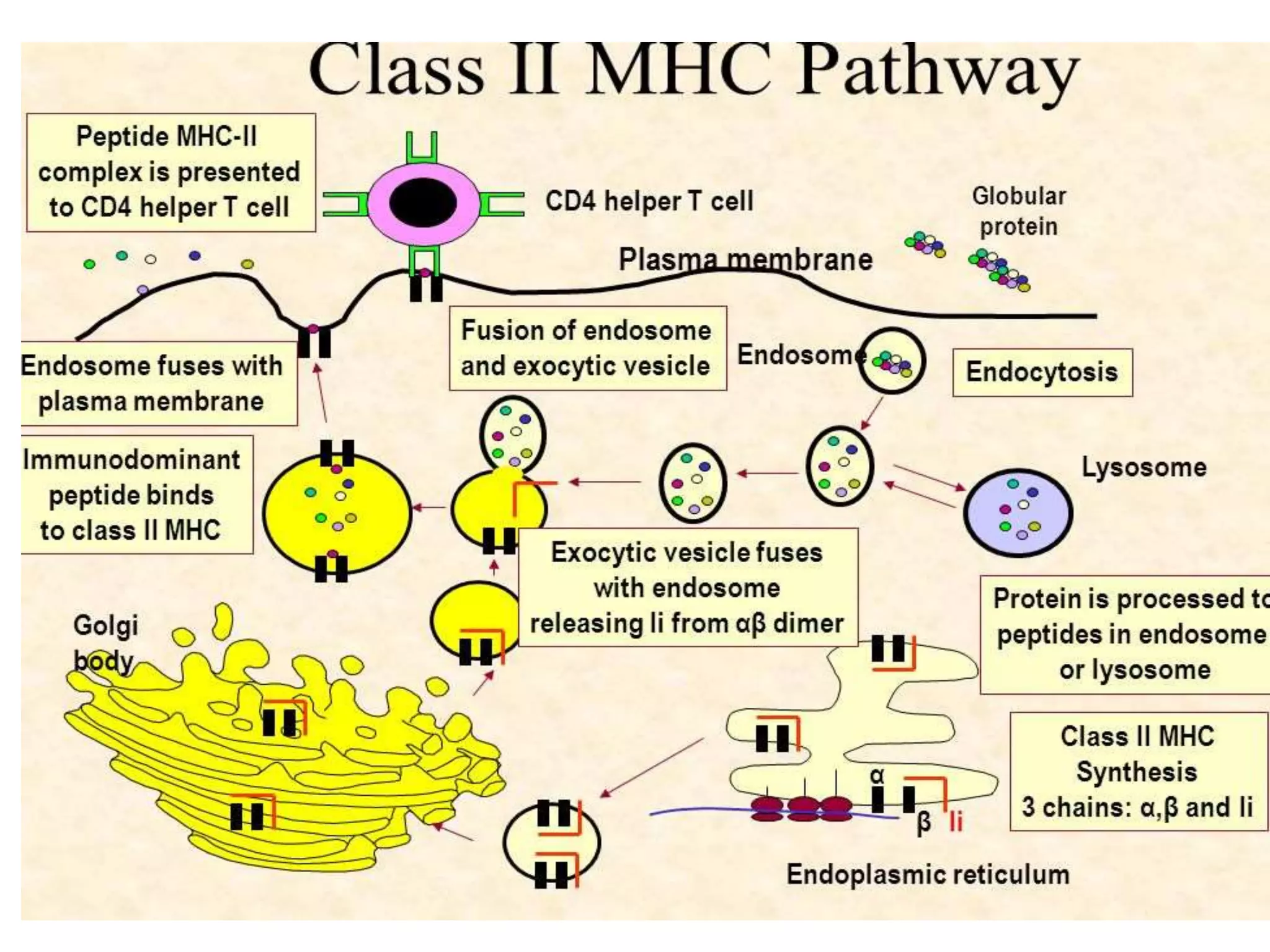
•In the ER lumen MHC-II complex interacts in invariant chain
•Invarient chain protects MHC-II from endogenous Ag and also guide its
movement
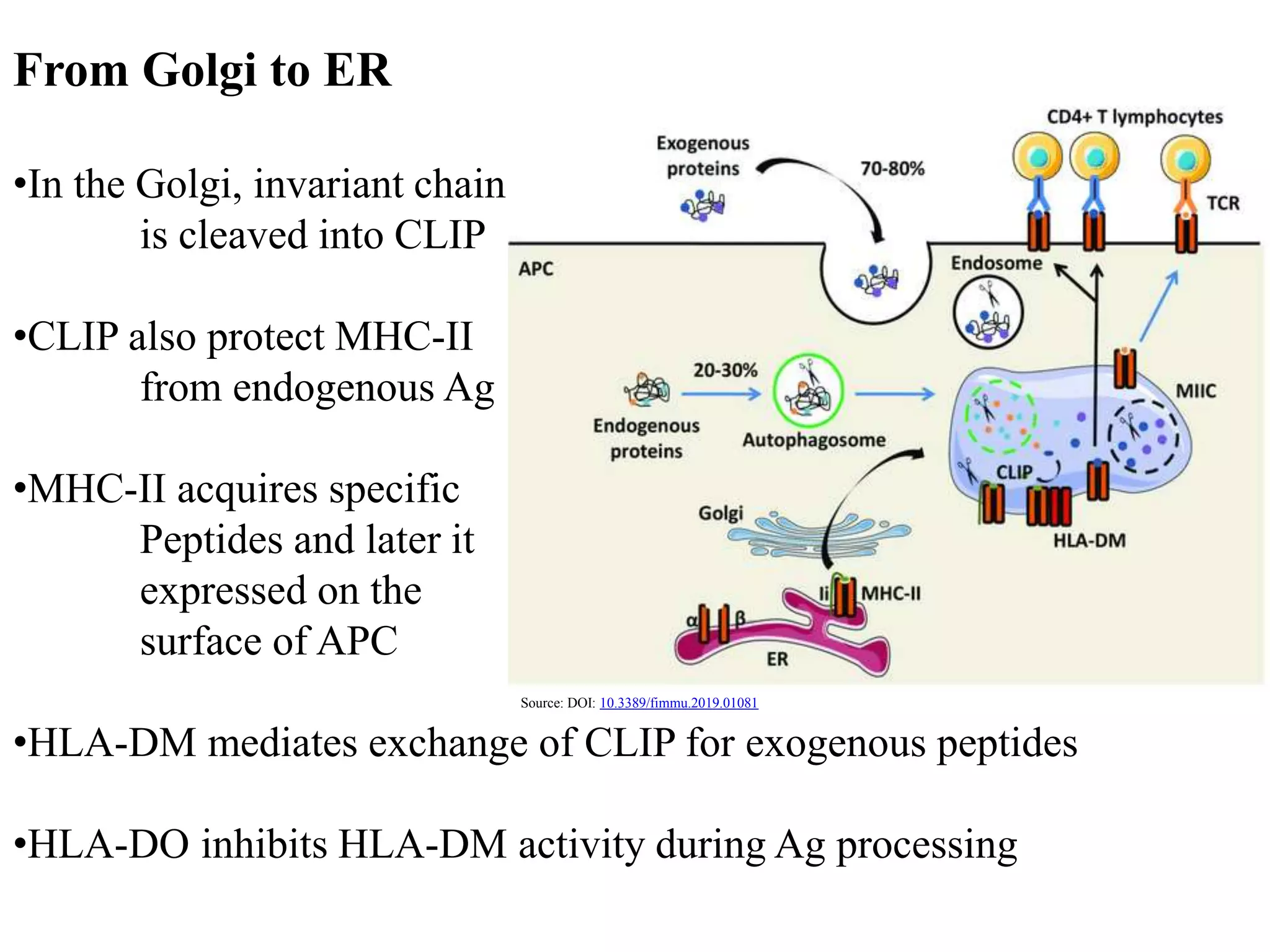
From Golgi to ER
•In the Golgi, invariant chain
is cleaved into CLIP
•CLIP also protect MHC-II
from endogenous Ag
•MHC-II acquires specific
Peptides and later it
expressed on the
surface of APC
•HLA-DM mediates exchange of CLIP for exogenous peptides
•HLA-DO inhibits HLA-DM activity during Ag processing
Source: DOI: 10.3389/fimmu.2019.01081
Graft rejection response
•If MHC of donor and recipient is nearly identical then rejection
response do not occur
•Foreign tissues contain Ag presenting cells which express different
MHC and therefore in host MHC is recognized as a foreign Ag
•Tc cells provide immediate rejection response whereas major response is
provided by Th cells
•To prevent graft rejection response immune suppressive drugs are given
to the recipient
(i.e Glucocorticoids and corticosteroids- Negatively regulates PIP2
signaling pathways, Rapamycin-Inhibits mTor activity and therefore
blocks immune cell activation, Clyclosporin- Inhibits activation of T-
lymphocytes)
Note:
•Immunosuppressive drugs make the individual immune compromised
•Host become highly susceptible for infection
•After immunosuppressive therapy , rejection response is not occur (if in
case it occur, it is due to minor histocompatibility genes present on ‘Y’
chromosome and Mitochondrial genome (In males)
Acknowledgements
•Kuby, Immunology, V, VI & VII edition (W H freeman and company ,
New York )
•Lodish, VIII edition, Molecular cell biology (W H freeman and
company , New York )

MHC, STRUCTURE AND FUNCTION

  • 1.
    Major Histocompatibility Complex (MHC):Structure and functions Akshat Uniyal, Ph.D., Microbiology HNBGU, Srinagar (G), Uttrakhand
  • 2.
    MHC Molecules: Structureand function 1. First described by Peter Gorer (1936), as a blood group locus that controls the presence of Ag on the surface of Mouse erythrocytes 2. MHC, is a group of genes that code for protein found on the surface of cells that helps the immune system to recognize foreign substances 3. It is a surface glycoprotein expressed by nearly all nucleated cells, plays a crucial role in graft rejection and organ transplant and most important factor which determines the compatibility of tissues 4. Participates in the development of both humoral and cell mediated immunity 5. In humans it is also known as HLA (Human leukocyte antigen) and in mice it is called H2 complex
  • 3.
    7. The MHCis located in chromosome no. 6 in humans and chromose no.17 in mice 8. Each gene has an unusually large no. of alleles, thus its very rare for two individuals to have the same set of molecules which is collectively called tissue type 9. Nearly 10-15% MHC is identical in different individuals (Mono- zygotic twins express more then 90% identical MHC) 10. Two main types that code surface glycoprotein are, MHC-I &MHC- II 11. MHC also encodes a variety of protein such as compliment system, cytokines and enzymes that are called MHC-III
  • 4.
    Image source: ConferencePaper in Proceedings of the IEEE Symposium on Computer-Based Medical Systems · February 2006 DOI: 10.1109/CBMS.2006.115· Source: IEEE Xplore 12. Gene map of the human leukocyte antigen (HLA) region 13. The HLA region spans 4×10 6 nucleotides on chromosome 6p21.1 to p21.3, with class II, class III and class I genes located from the centromeric to the telomeric end
  • 5.
    14. MHC-I isencoded by K & D regions in mice and by the A, B and C loci in humans 15. The two chains of the class II MHC mol. are encoded by the IA and IE regions in mice and by DP, DQ and DR regions in humans 16. Class I & II have common structural features, while Class-III MHC is flanked by the class I and II region, and encodes molecules that are uncommon with class-I &II
  • 6.
    Organization of MHCin Human & Mice
  • 7.
    Properties 1. Genetic polymorphism-Multiplealleles are present for MHC -Diversity in MHC is due to polymorphism 2. Co-dominant in nature- Both maternal and paternal alleles are equally expressed -No-concept of dominant and recessive allele -One functional unit of MHC is known as haplotype (One from mother and one from father) 3. Representation of peptide Ag - Express antigenic peptides which interacts with T-lymphocytes
  • 8.
    Types of MHC MHCgenes are organized into regions encoding three class 1. MHC-I I. It encodes glycoprotein expressed on the surface of all nucleated cells, the gene product or MHC-I molecule’s function is presentation of peptide Ag to Tc cells II. In humans it includes 3 alleles, HLA-A, B & C III. The gene product is made up of 45 kD -heavy chain and a 12 kD β2-microglobulin (β2 M- it is a non-MHC gene product, required for stability of molecule)
  • 9.
    IV. 1 and2 domain contain close and peptide binding cleft V. 1 and 2 are variable domain and having polymorphism and interacts with TCR VI. 3 is constant domain (conserved)
  • 10.
    VII.3 interacts withCD8 molecule of Tc cells VIII.2 is glycosylated IX. 8-10 amino acids long peptide is expressed by MHC-I X. Hydrophobic residues should be present at C-terminal end of the peptide XI. Viral infection down-regulate β2M expression and therefore affects MHC-I expression XII.Endogenous Ag like cellular proteins, viral proteins is expressed by MHC-I
  • 11.
    2. MHC-II I. Itencodes glycoprotein expressed on antigen presenting cells (APC) including B-cells and dendritic cells and present Ag peptide to Th cell and thymic cells II. In humans it includes HLA-DP, DQ & DR genes III. gene product is made up of 33 kD -chain and 28 kD β-chain
  • 12.
    IV. 1 andβ1 are polymorphic (variable regions) V. 2 and β2 are constant or conserved VI. 1 and β1 contains open and peptide binding clefts, it interacts with 13-18 amino acid long peptides Ag VII.Hydrophobic residues are present in throughout the peptides VIII.Β2 interacts with CD4 molecule of Th cell IX. 1, 2 and β1 are glycosylated (exogenous Ag like secretor protein, membrane protein, bacterial toxins is represented by MHC-II)
  • 13.
    Source: Thymus: TheSite for Development of Cellular Immunity February 2018 Resonance 23(2):197-217 DOI: 10.1007/s12045-018-0605-3 Saved from bio1152.nicerweb.com
  • 14.
    [Bellanti, JA (Ed).Immunology IV: Clinical Applications in Health and Disease. I Care Press, Bethesda, MD, 2012] Interaction of MHC with peptide Ag
  • 15.
    3. MHC-III i. Itdoes not participate in Ag presentation ii. MHC-III genes encodes compliment proteins, heat shock proteins, cytokines, TNF- etc. iii. It is highly expressed in hepatocytes
  • 16.
    MHC- ANTIGEN PRESENTATION 1.Cytosolic pathway •Occurs in all nucleated cells •Endogenous Ag is processed •Endogenous Ag is degraded by cytosolic proteolytic system (20S/19S- 26S) with the help of Ubiquitin protein •Ubiquitination- process involved an isopeptide bond formation between (ubiquitin) Glycine----Lysine (Target protein), and this bond can be only break by deubiquitin enzymes •Ubiquitin is a type of post translational modification in which ubiquitin protein is covalently attached to the target protein
  • 17.
    It’s a threestep process 1) E-1 Activating enzymes • E1s are ubiquitin-activating enzymes that activate Ub in an ATP-dependent manner, resulting in the formation of a thioester linkage between Ub and the E1 protein • Cleaves ubiquitin to expose Glycine residues 2) E-2 conjugating enzyme transfer the Ub from the E1 to the E2 itself and bring target protein closer to each other 3) E-3 Ligase confer substrate specificity and responsible for ligating ubiquitin on traget Ag Source: DOI: 10.5897/IJMMS2013.0890
  • 18.
    •After ubiquitination targetprotein is degraded by proteosomal complex made up of Lmp2, 7 and 10 Source: DOI: 10.1159/000068624 •Ubiquitination of protein is responsible for degradation but it can also alter the actvity of subcellular localization of target protein •Generated fragments of peptides moves towards the ER
  • 19.
    MHC-I processing inER Source: DOI: 10.1007/s00424-005-1420-8
  • 20.
    1. In theER lumen - heavy chain interact with calnexin (promote proper folding of the -polypeptide ) 2. -2 macroglobulin interacts with -chain and Calnexin is replaced with calreticulin. (Calreticulin also cause proper folding) 3. ABC transporter known as TAP (trasporter associated with Ag processing) is present on the ER membrane and interacts with incoming peptides having hydrophobic residues on C-terminal end 4. TAPASIN helps in MHC interaction with TAP, whereas ERP-57 stabilizes MHC-I interaction 5. MHC-I acquires incoming peptides and is later expressed on the surface of Ag-presenting cells
  • 21.
    2. Endocytic pathway •Occursin professional APC and thymic epithelial cells •Exogenous Ag. i.e Bacterial toxin, plasma membrane protein, secreted proteins etc •Endocytic pathway is pH dependent processing of Ag •Ag is transported to lysosome by endocytosis •In lysosome Ag is degraded by proteases •In the ER lumen MHC-II complex interacts in invariant chain •Invarient chain protects MHC-II from endogenous Ag and also guide its movement
  • 24.
    From Golgi toER •In the Golgi, invariant chain is cleaved into CLIP •CLIP also protect MHC-II from endogenous Ag •MHC-II acquires specific Peptides and later it expressed on the surface of APC •HLA-DM mediates exchange of CLIP for exogenous peptides •HLA-DO inhibits HLA-DM activity during Ag processing Source: DOI: 10.3389/fimmu.2019.01081
  • 25.
    Graft rejection response •IfMHC of donor and recipient is nearly identical then rejection response do not occur •Foreign tissues contain Ag presenting cells which express different MHC and therefore in host MHC is recognized as a foreign Ag •Tc cells provide immediate rejection response whereas major response is provided by Th cells •To prevent graft rejection response immune suppressive drugs are given to the recipient (i.e Glucocorticoids and corticosteroids- Negatively regulates PIP2 signaling pathways, Rapamycin-Inhibits mTor activity and therefore blocks immune cell activation, Clyclosporin- Inhibits activation of T- lymphocytes)
  • 26.
    Note: •Immunosuppressive drugs makethe individual immune compromised •Host become highly susceptible for infection •After immunosuppressive therapy , rejection response is not occur (if in case it occur, it is due to minor histocompatibility genes present on ‘Y’ chromosome and Mitochondrial genome (In males)
  • 27.
    Acknowledgements •Kuby, Immunology, V,VI & VII edition (W H freeman and company , New York ) •Lodish, VIII edition, Molecular cell biology (W H freeman and company , New York )