IDENTIFICATION OF
ALGAE
B. LOKESHWARI
II M. Sc MICROBIOLOGY
SACRED HEART COLLEGE (AUTONOMOUS)
TIRUPATTUR
IDENTIFICATION OF ALGAE
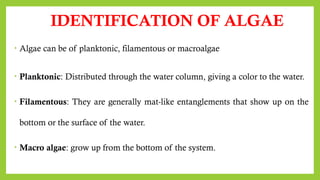
• Algae can be of planktonic, filamentous or macroalgae
• Planktonic: Distributed through the water column, giving a color to the water.
• Filamentous: They are generally mat-like entanglements that show up on the
bottom or the surface of the water.
• Macro algae: grow up from the bottom of the system.
PLANKTONIC (DISCOLORATNIO OR SCUM FORMING)
ALGAE
FILAMENTOUS (MAT-FORMING) ALGAE
PLANT-LIKE MACROALGAE
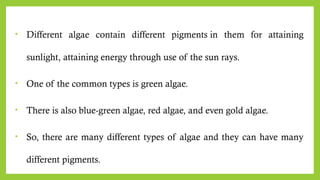
• Different algae contain different pigments in them for attaining
sunlight, attaining energy through use of the sun rays.
• One of the common types is green algae.
• There is also blue-green algae, red algae, and even gold algae.
• So, there are many different types of algae and they can have many
different pigments.
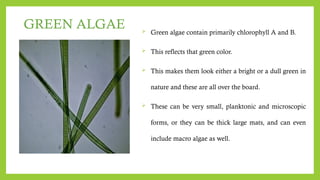
GREEN ALGAE  Green algae contain primarily chlorophyll A and B.
 This reflects that green color.
 This makes them look either a bright or a dull green in
nature and these are all over the board.
 These can be very small, planktonic and microscopic
forms, or they can be thick large mats, and can even
include macro algae as well.
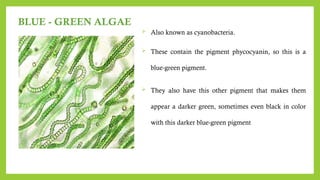
BLUE - GREEN ALGAE
 Also known as cyanobacteria.
 These contain the pigment phycocyanin, so this is a
blue-green pigment.
 They also have this other pigment that makes them
appear a darker green, sometimes even black in color
with this darker blue-green pigment
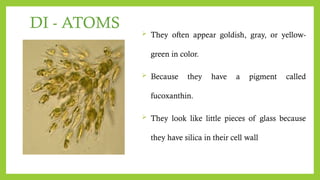
DI - ATOMS  They often appear goldish, gray, or yellow-
green in color.
 Because they have a pigment called
fucoxanthin.
 They look like little pieces of glass because
they have silica in their cell wall
IDENTIFICATION OF ALGAE BASED ON FEEL
• By feeling the algae, actually getting in there and grabbing it and smelling it.
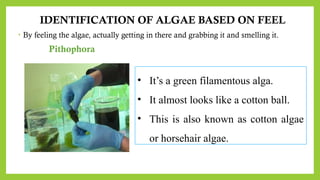
Pithophora
• It’s a green filamentous alga.
• It almost looks like a cotton ball.
• This is also known as cotton algae
or horsehair algae.
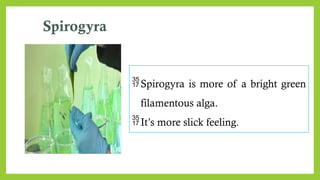
Spirogyra
Spirogyra is more of a bright green
filamentous alga.
It’s more slick feeling.
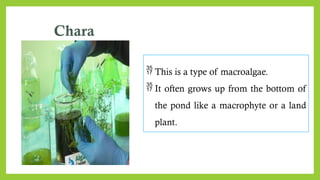
Chara
 This is a type of macroalgae.
 It often grows up from the bottom of
the pond like a macrophyte or a land
plant.
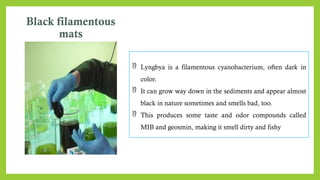
Black filamentous
mats
 Lyngbya is a filamentous cyanobacterium, often dark in
color.
 It can grow way down in the sediments and appear almost
black in nature sometimes and smells bad, too.
 This produces some taste and odor compounds called
MIB and geosmin, making it smell dirty and fishy
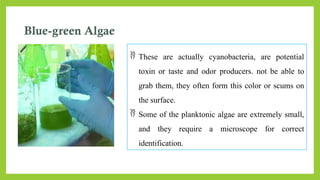
Blue-green Algae
 These are actually cyanobacteria, are potential
toxin or taste and odor producers. not be able to
grab them, they often form this color or scums on
the surface.
 Some of the planktonic algae are extremely small,
and they require a microscope for correct
identification.
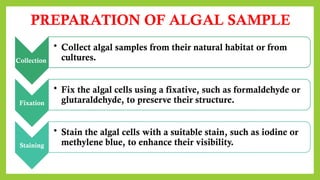
PREPARATION OF ALGAL SAMPLE
Collection
• Collect algal samples from their natural habitat or from
cultures.
Fixation
• Fix the algal cells using a fixative, such as formaldehyde or
glutaraldehyde, to preserve their structure.
Staining
• Stain the algal cells with a suitable stain, such as iodine or
methylene blue, to enhance their visibility.
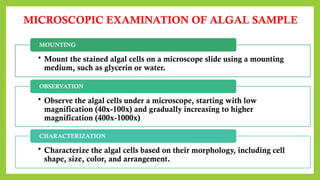
MICROSCOPIC EXAMINATION OF ALGAL SAMPLE
• Mount the stained algal cells on a microscope slide using a mounting
medium, such as glycerin or water.
MOUNTING
• Observe the algal cells under a microscope, starting with low
magnification (40x-100x) and gradually increasing to higher
magnification (400x-1000x)
OBSERVATION
• Characterize the algal cells based on their morphology, including cell
shape, size, color, and arrangement.
CHARACTERIZATION
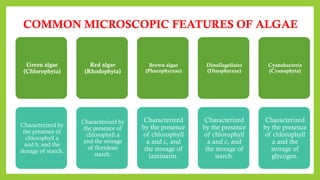
COMMON MICROSCOPIC FEATURES OF ALGAE
Green algae
(Chlorophyta)
Characterized by
the presence of
chlorophyll a
and b, and the
storage of starch.
Red algae
(Rhodophyta)
Characterized by
the presence of
chlorophyll a
and the storage
of floridean
starch.
Brown algae
(Phaeophyceae)
Characterized
by the presence
of chlorophyll
a and c, and
the storage of
laminarin.
Dinoflagellates
(Dinophyceae)
Characterized
by the presence
of chlorophyll
a and c, and
the storage of
starch.
Cyanobacteria
(Cyanophyta)
Characterized
by the presence
of chlorophyll
a and the
storage of
glycogen.
Identification and examination of Algae.

Identification and examination of Algae.

  • 1.
    IDENTIFICATION OF ALGAE B. LOKESHWARI IIM. Sc MICROBIOLOGY SACRED HEART COLLEGE (AUTONOMOUS) TIRUPATTUR
  • 2.
    IDENTIFICATION OF ALGAE •Algae can be of planktonic, filamentous or macroalgae • Planktonic: Distributed through the water column, giving a color to the water. • Filamentous: They are generally mat-like entanglements that show up on the bottom or the surface of the water. • Macro algae: grow up from the bottom of the system.
  • 3.
    PLANKTONIC (DISCOLORATNIO ORSCUM FORMING) ALGAE FILAMENTOUS (MAT-FORMING) ALGAE PLANT-LIKE MACROALGAE
  • 4.
    • Different algaecontain different pigments in them for attaining sunlight, attaining energy through use of the sun rays. • One of the common types is green algae. • There is also blue-green algae, red algae, and even gold algae. • So, there are many different types of algae and they can have many different pigments.
  • 5.
    GREEN ALGAE Green algae contain primarily chlorophyll A and B.  This reflects that green color.  This makes them look either a bright or a dull green in nature and these are all over the board.  These can be very small, planktonic and microscopic forms, or they can be thick large mats, and can even include macro algae as well.
  • 6.
    BLUE - GREENALGAE  Also known as cyanobacteria.  These contain the pigment phycocyanin, so this is a blue-green pigment.  They also have this other pigment that makes them appear a darker green, sometimes even black in color with this darker blue-green pigment
  • 7.
    DI - ATOMS They often appear goldish, gray, or yellow- green in color.  Because they have a pigment called fucoxanthin.  They look like little pieces of glass because they have silica in their cell wall
  • 8.
    IDENTIFICATION OF ALGAEBASED ON FEEL • By feeling the algae, actually getting in there and grabbing it and smelling it. Pithophora • It’s a green filamentous alga. • It almost looks like a cotton ball. • This is also known as cotton algae or horsehair algae.
  • 9.
    Spirogyra Spirogyra is moreof a bright green filamentous alga. It’s more slick feeling.
  • 10.
    Chara  This isa type of macroalgae.  It often grows up from the bottom of the pond like a macrophyte or a land plant.
  • 11.
    Black filamentous mats  Lyngbyais a filamentous cyanobacterium, often dark in color.  It can grow way down in the sediments and appear almost black in nature sometimes and smells bad, too.  This produces some taste and odor compounds called MIB and geosmin, making it smell dirty and fishy
  • 12.
    Blue-green Algae  Theseare actually cyanobacteria, are potential toxin or taste and odor producers. not be able to grab them, they often form this color or scums on the surface.  Some of the planktonic algae are extremely small, and they require a microscope for correct identification.
  • 13.
    PREPARATION OF ALGALSAMPLE Collection • Collect algal samples from their natural habitat or from cultures. Fixation • Fix the algal cells using a fixative, such as formaldehyde or glutaraldehyde, to preserve their structure. Staining • Stain the algal cells with a suitable stain, such as iodine or methylene blue, to enhance their visibility.
  • 14.
    MICROSCOPIC EXAMINATION OFALGAL SAMPLE • Mount the stained algal cells on a microscope slide using a mounting medium, such as glycerin or water. MOUNTING • Observe the algal cells under a microscope, starting with low magnification (40x-100x) and gradually increasing to higher magnification (400x-1000x) OBSERVATION • Characterize the algal cells based on their morphology, including cell shape, size, color, and arrangement. CHARACTERIZATION
  • 15.
    COMMON MICROSCOPIC FEATURESOF ALGAE Green algae (Chlorophyta) Characterized by the presence of chlorophyll a and b, and the storage of starch. Red algae (Rhodophyta) Characterized by the presence of chlorophyll a and the storage of floridean starch. Brown algae (Phaeophyceae) Characterized by the presence of chlorophyll a and c, and the storage of laminarin. Dinoflagellates (Dinophyceae) Characterized by the presence of chlorophyll a and c, and the storage of starch. Cyanobacteria (Cyanophyta) Characterized by the presence of chlorophyll a and the storage of glycogen.