DR.SAKHER-ALKHADERI
CONSULTANT RADIOLOGIST AMC
18/8/2015
Imaging OfImaging of aortic
dissection
INTRODUCTION
OBJECTIVES
2-Early diagnosis of Aortic dissection based on the imaging criteria
3-Differentiate between true & false lumen
4-Recognize the imaging features which help in management
decision
1-Differentiate the 3 types of acute aortic syndrome
Classification of Acute Aortic Syndrome
Typical Aortic Dissection, Intramural Hematoma and
Penetrating Aortic Ulcer.
Aortic Dissection (AD) definition
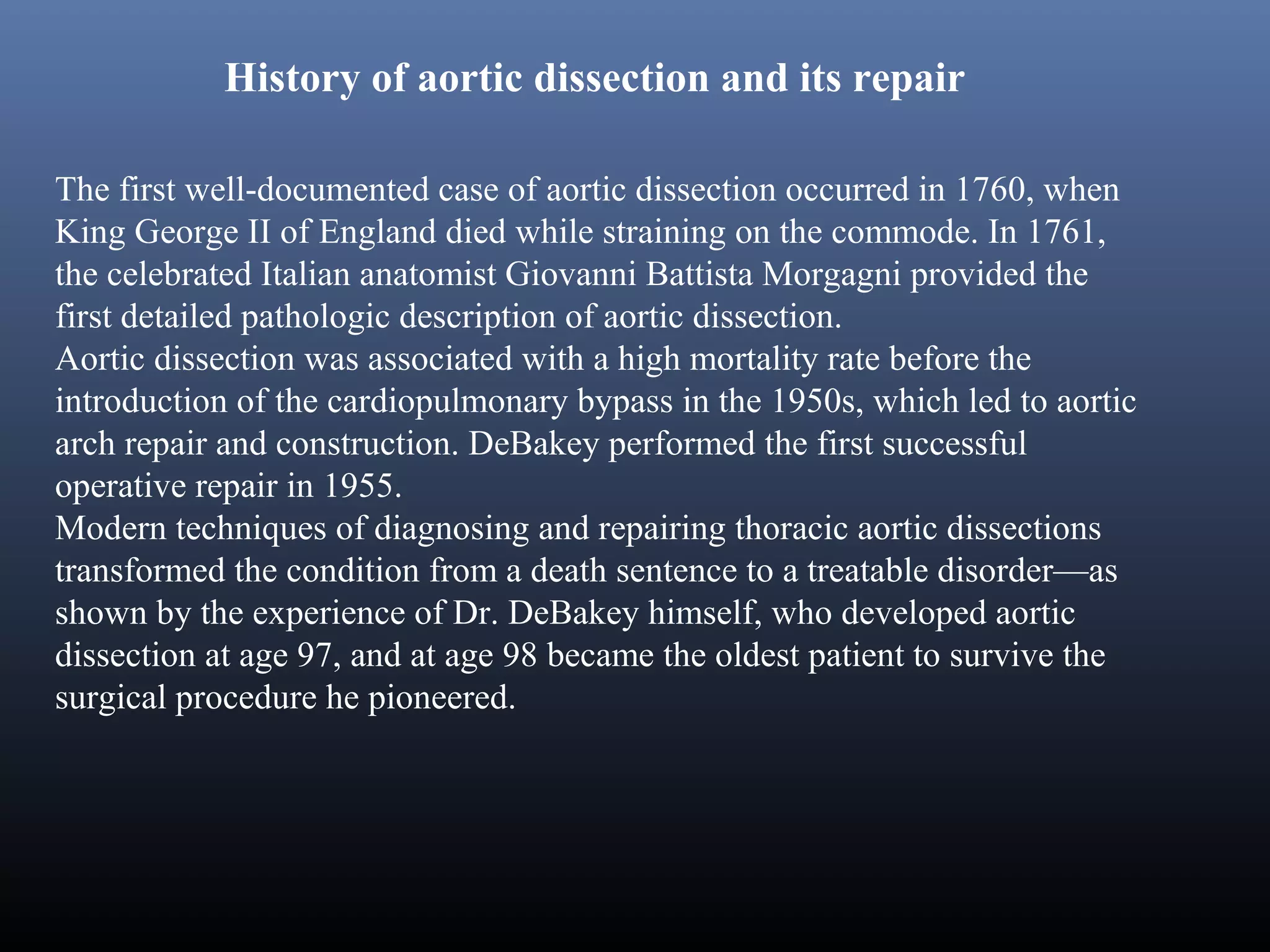
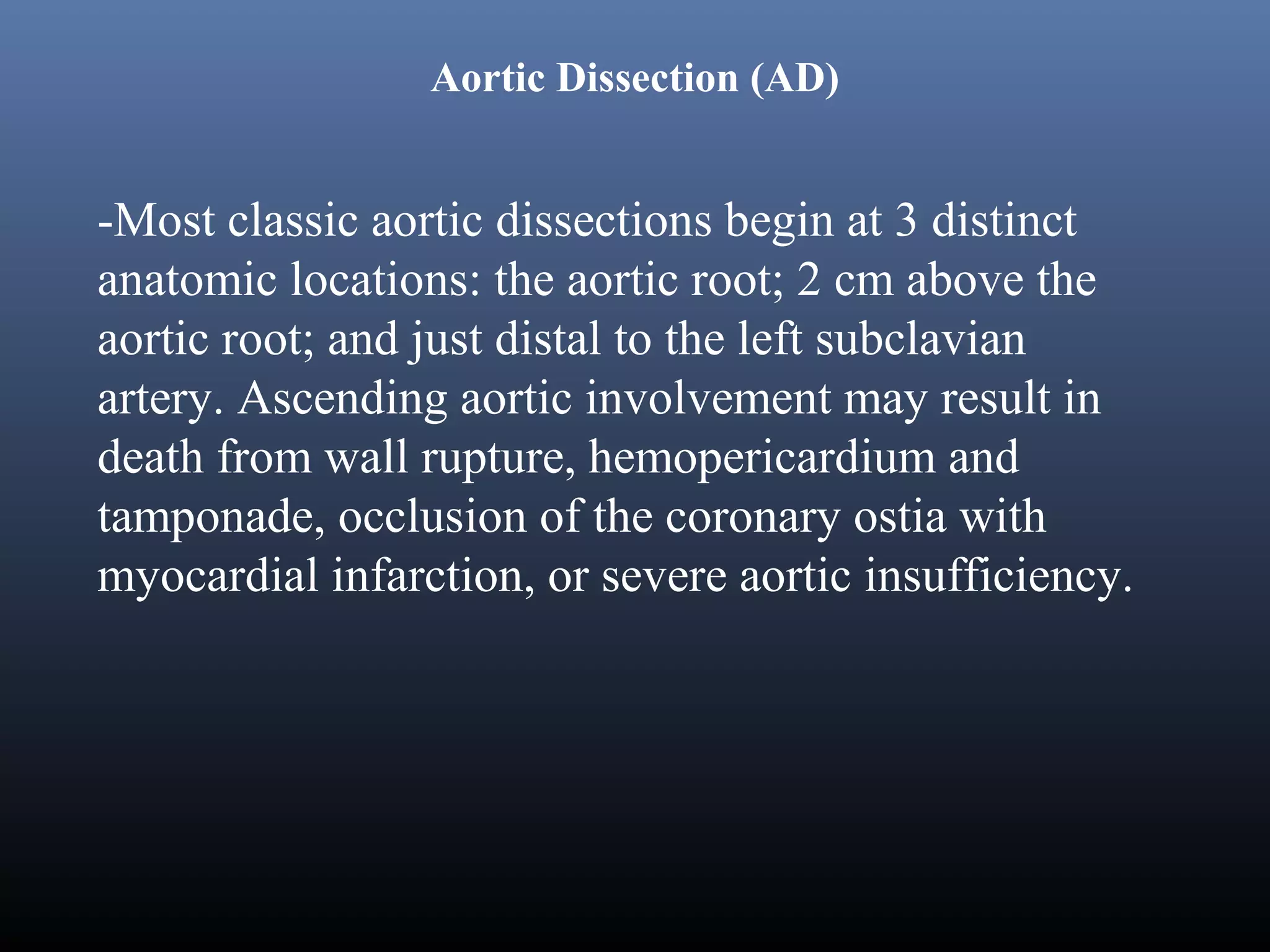
Classic aortic dissection is a longitudinal split or partition in the media of the aorta. An intimal tear
connects the media with the aortic lumen, and an exit tear creates a true and a false lumen. The smaller
true lumen is lined by intima, and the false lumen is lined by media. Typically, flow in the false lumen
is slower than in the true lumen, and the false lumen often becomes aneurysmal when subjected to
systemic pressure. An acute aortic dissection is considered chronic at 2 weeks. The dissection usually
stops at an aortic branch vessel or at the level of an atherosclerotic plaque.[1, 2]
Diagram illustrates events leading to aortic dissection from formation of entrance tear and exit tear of intima to splitting of aortic media and
formation of intimomedial flap. Blood under pressure dissects media longitudinally, and double-channel aorta is formed with blood filling both
true and false lumens.
History of aortic dissection and its repair
King George II of EnglandDr. DeBakey
History of aortic dissection and its repair
The first well-documented case of aortic dissection occurred in 1760, when
King George II of England died while straining on the commode. In 1761,
the celebrated Italian anatomist Giovanni Battista Morgagni provided the
first detailed pathologic description of aortic dissection.
Aortic dissection was associated with a high mortality rate before the
introduction of the cardiopulmonary bypass in the 1950s, which led to aortic
arch repair and construction. DeBakey performed the first successful
operative repair in 1955.
Modern techniques of diagnosing and repairing thoracic aortic dissections
transformed the condition from a death sentence to a treatable disorder—as
shown by the experience of Dr. DeBakey himself, who developed aortic
dissection at age 97, and at age 98 became the oldest patient to survive the
surgical procedure he pioneered.
Signs and symptoms
Sudden onset of severe chest pain that often has a tearing or ripping quality (classic symptom)
Chest pain may be mild
Anterior chest pain: Usually associated with anterior arch or aortic root dissection
Neck or jaw pain: With aortic arch involvement and extension into the great vessels
Tearing or ripping intrascapular pain: May indicate dissection involving the descending aorta
No pain in about 10% of patients
Syncope
Cerebrovascular accident (CVA) symptoms (eg, hemianesthesia, and hemiparesis, hemiplegia) [1]
Altered mental status
Numbness and tingling, pain, or weakness in the extremities
Horner syndrome (ie, ptosis, miosis, anhidrosis)
Dyspnea
Hemoptysis
Dysphagia
Flank pain (with renal artery involvement
Abdominal pain (with abdominal aorta involvement)
Fever
Anxiety and premonitions of death
Risk factors for aortic dissection
-Long-standing hypertension
-Male
-Advanced age
-Prior cardiac surgery
-Known aortic aneurysm or prior dissection
-Cardiac catheterization/surgery
-Connective tissue disorders- Marfan’s syndrome
-Ehlers−Danlos syndrome
-Bicuspid aortic valve, Coarctation of the aorta, Hereditary
thoracic aortic disease, Vascular inflammation ,Deceleration
injury ,Cocaine, Peripartum
Classification
Classic Aortic Dissection is the most common
entity causing an acute aortic syndrome (70%).
Incidence: 1-10 : 100.000
mostly men
hypertension > 70%
Type A mortality 1-2% per hour after onset of
symptoms, total up to 90% non-treated, 40%
when treated.
1 year survival Type B up to 85% if medically
treated (5 year > 70%)
Aortic Dissection (AD)
Management decisions are based on the following
information:
Type A or Type B
Place of entry & re-entry
Side branches involved, originating from true / false
lumen
Organs at risk (1/3 of mortality is caused by organ
failure)
Complications (rupture, coronary occlusion, aortic
insufficiency, neurological )
Diameters of true and false lumina at: proximal and
distal landing zones, at entry and at minimum
Iliac vessel turtuosity.
Aortic Dissection (AD)
-Most classic aortic dissections begin at 3 distinct
anatomic locations: the aortic root; 2 cm above the
aortic root; and just distal to the left subclavian
artery. Ascending aortic involvement may result in
death from wall rupture, hemopericardium and
tamponade, occlusion of the coronary ostia with
myocardial infarction, or severe aortic insufficiency.
Aortic Dissection (AD)
Radiography
Mediastinal widening is the most
common plain radiographic finding
in aortic dissection; it is noted in
80% of patients
Radiography
Irregular aortic contour
Other radiographic findings include the following:
Double aortic knob sign (present in 40% of patients)
Diffuse enlargement of the aorta with poor definition or
irregularity of the aortic contour
Inward displacement of aortic wall calcification by more
than 10 mm
Tracheal displacement to the right
Pleural effusion (more common on the left side; suggests
leakage)
Pericardial effusion
Cardiac enlargement
Displacement of a nasogastric tube
Left apical opacity
Radiography
Inward displacement of aortic wall calcification
by more than 10 mm
Radiography
Radiography
Double density knob sign
Computed Tomography
The sensitivity of CT for aortic dissection is 87-94%, and the specificity is 92-
100%.
Multidetector CT may be performed with 1-2.5 mm collimation. Initial nonenhanced
CT is used for the diagnosis of acute hemorrhage and aortic rupture. This is followed
by helical CT performed approximately 25-30 seconds after the injection of contrast
material. Nonionic contrast material (120-135 mL) is power injected via a peripheral
intravenous site at a rate of 3-4 mL/s.
Usually, scanning is performed from the thoracic inlet to the common
femoral arteries. When a dissection is identified, repeat scanning may be
performed to obtain delayed images of the false lumen and aortic branches.
Multiplanar reformation images are obtained in sagittal, coronal, oblique
sagittal,
Computed Tomography
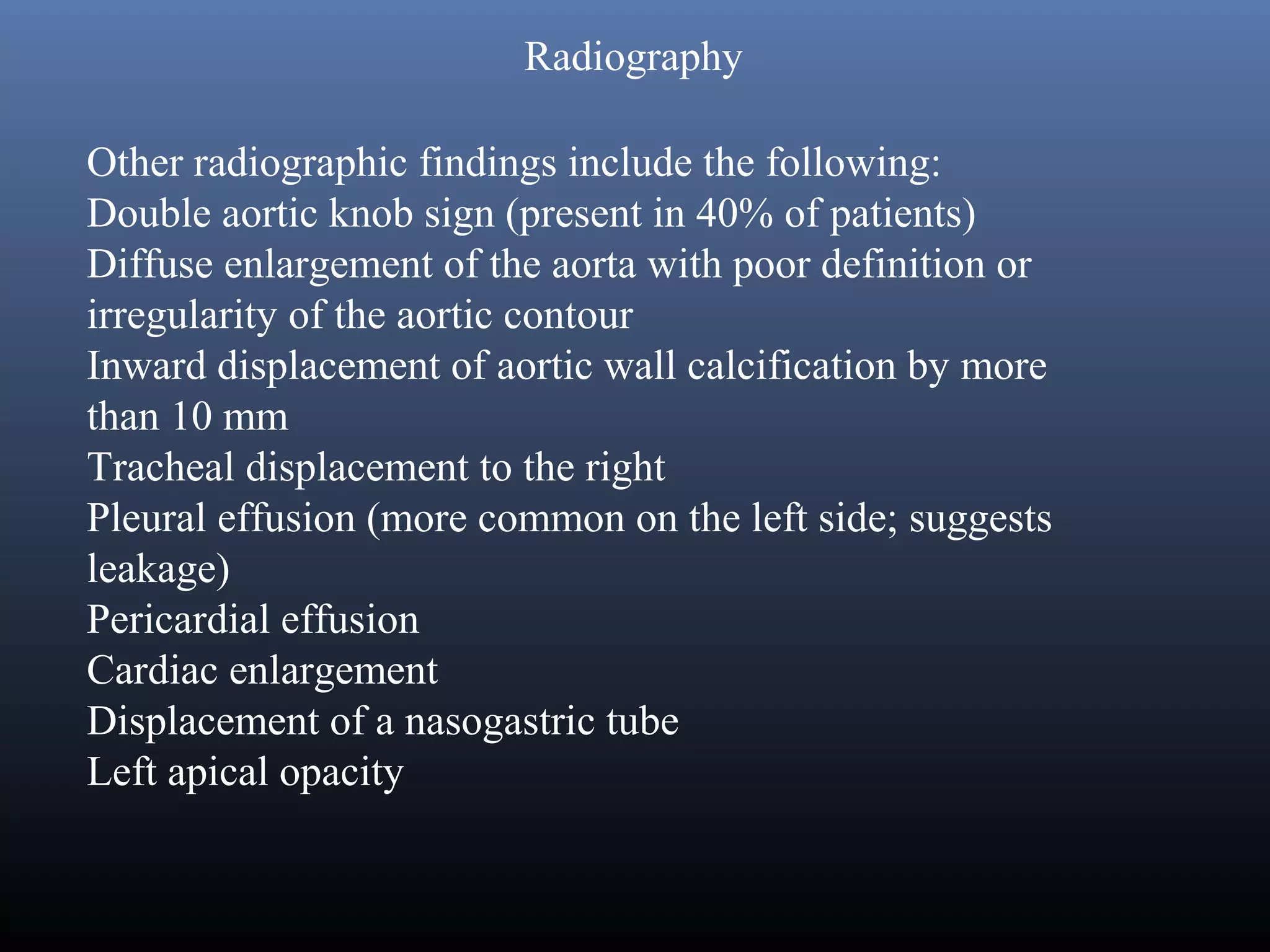
Typical CT findings in acute dissection include the following:
-Detection of intimal flap which separates two lumina in the
involved part .
True lumen:
Surrounded by calcifications (if present)
Smaller than false lumen
Usually origin of celiac trunk, SMA and right renal artery
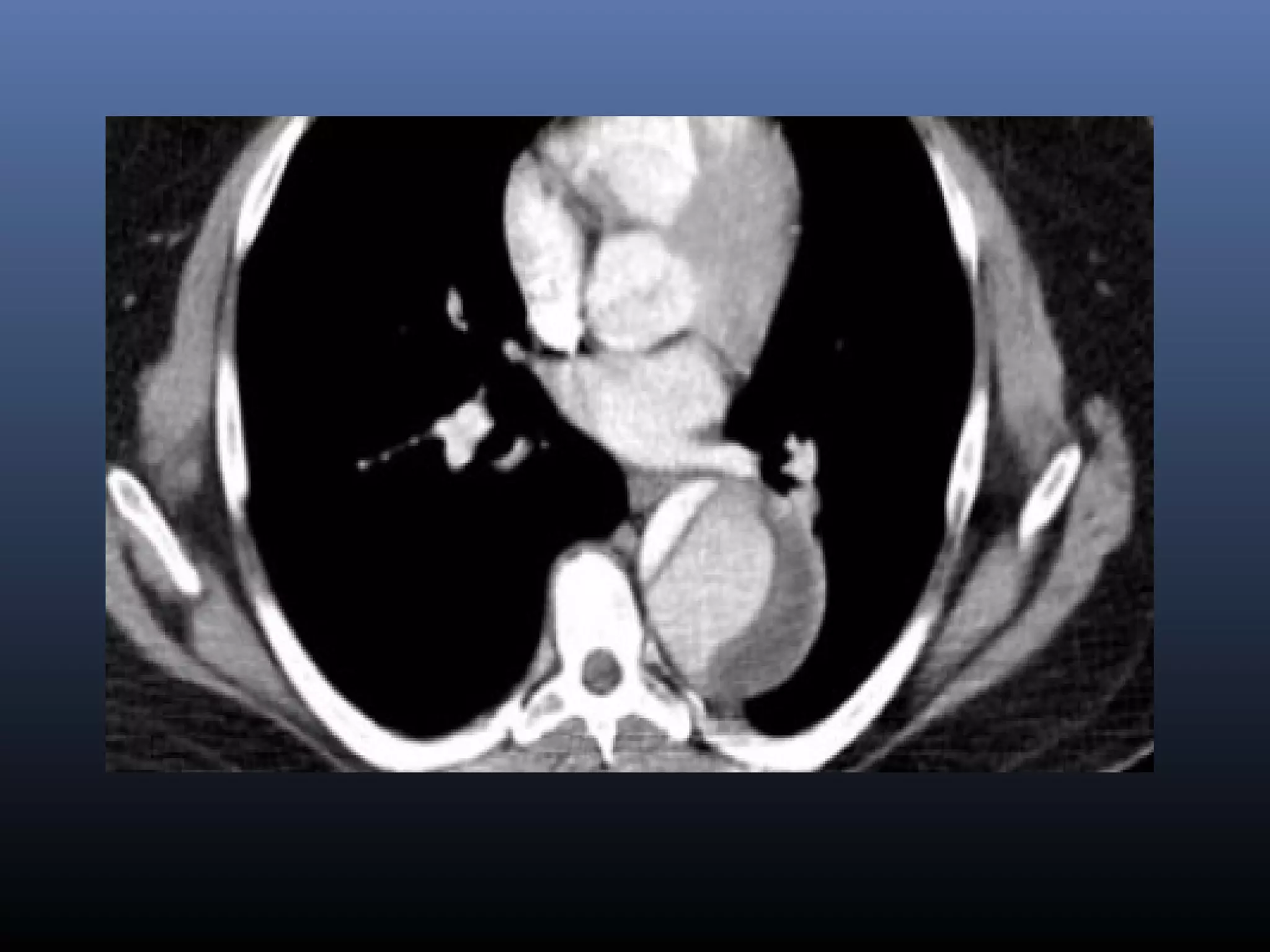
False lumen:
Flow or occluded by thrombus (chronic).
Delayed enhancement
Wedges around true lumen (beak-sign)
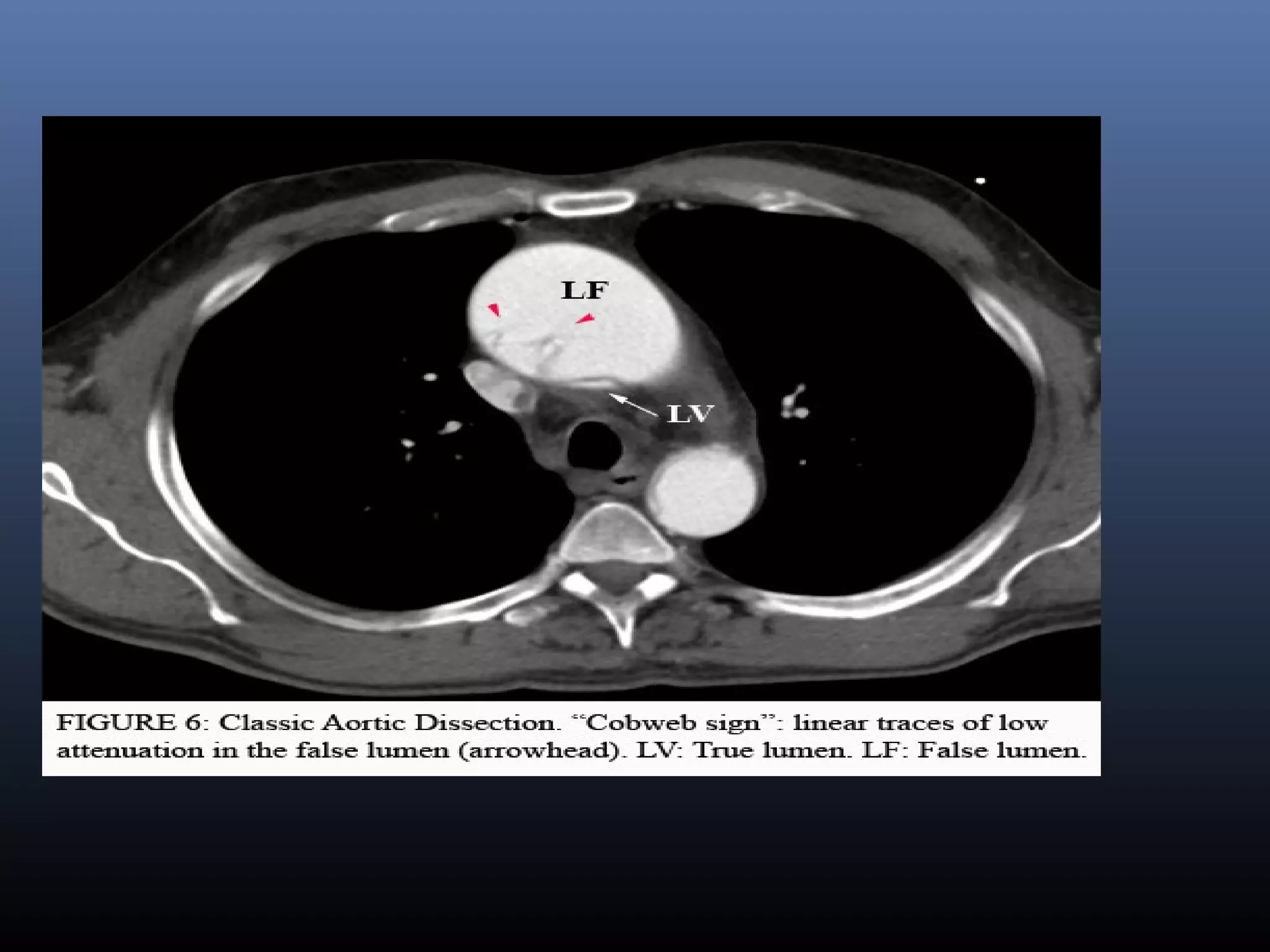
Collageneous media-remnants (cobwebs)
Larger than true lumen
Circular configuration (persistent systolic pressure)
Outer curve of the arch
Usually origin of left renal artery
Surrounds true lumen in Type A dissection
Stanford type A
typical aortic
dissection.
Sequential
contrast-enhanced
CT scans show a
the beak sign
(arrow), a wedge
of hematoma is
thought to create a
space for the
development of
the false lumen
Contrast-enhanced CT
scans of Stanford type
A typical aortic
dissection show
atherosclerotic
calcification in the
outer wall aortic lumen
indicating which is the
true lumen
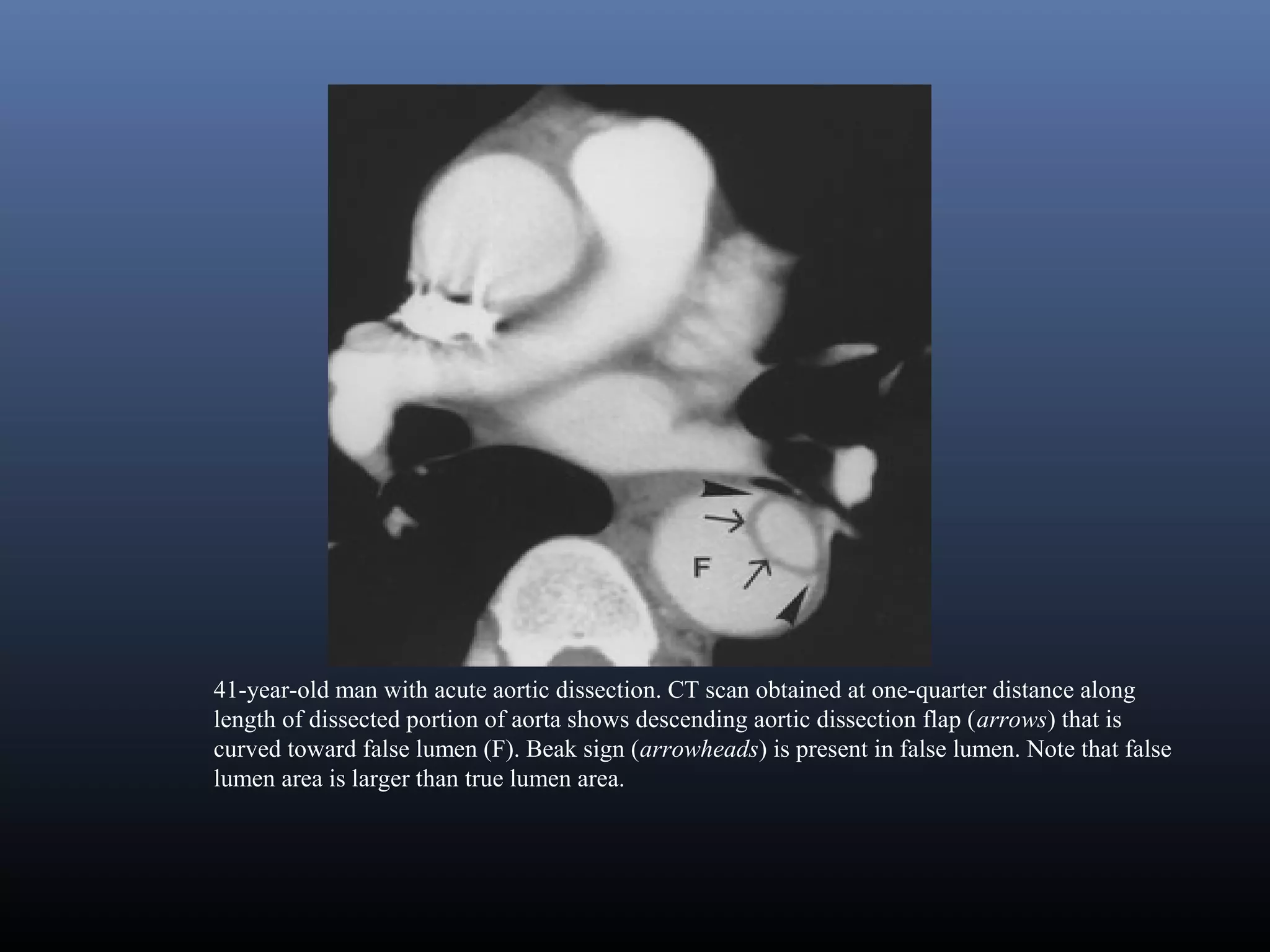
41-year-old man with acute aortic dissection. CT scan obtained at one-quarter distance along
length of dissected portion of aorta shows descending aortic dissection flap (arrows) that is
curved toward false lumen (F). Beak sign (arrowheads) is present in false lumen. Note that false
lumen area is larger than true lumen area.
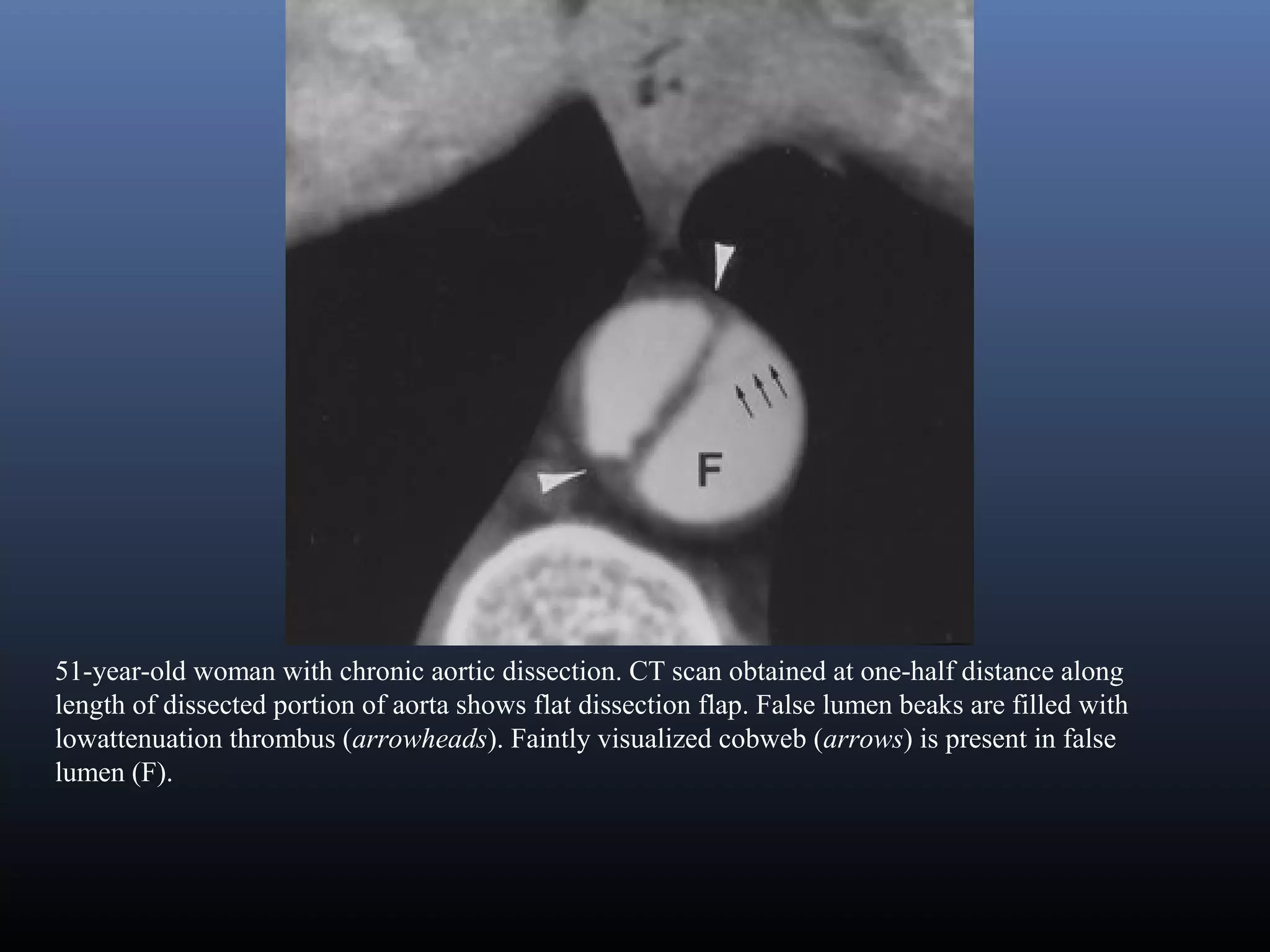
51-year-old woman with chronic aortic dissection. CT scan obtained at one-half distance along
length of dissected portion of aorta shows flat dissection flap. False lumen beaks are filled with
lowattenuation thrombus (arrowheads). Faintly visualized cobweb (arrows) is present in false
lumen (F).
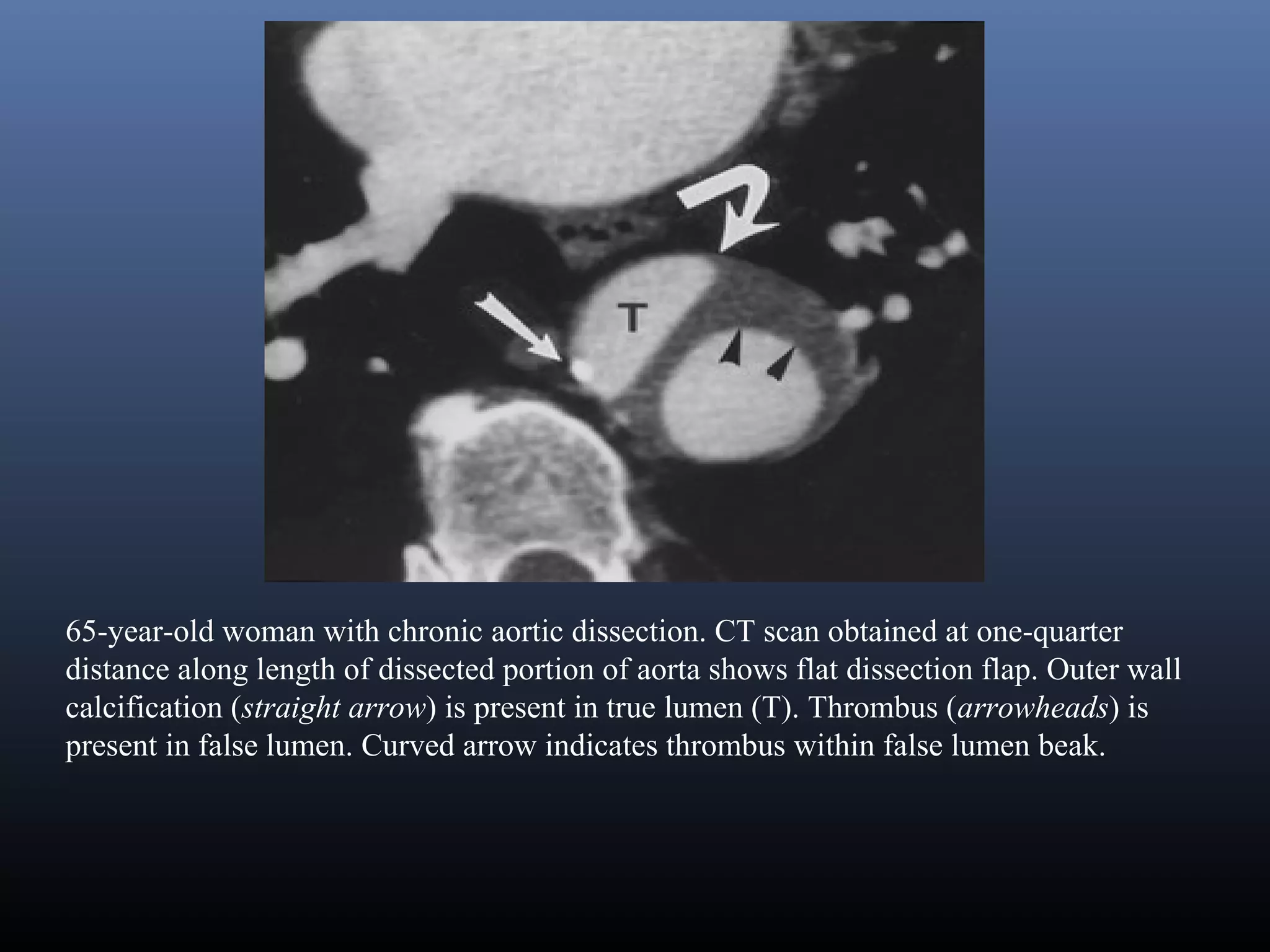
65-year-old woman with chronic aortic dissection. CT scan obtained at one-quarter
distance along length of dissected portion of aorta shows flat dissection flap. Outer wall
calcification (straight arrow) is present in true lumen (T). Thrombus (arrowheads) is
present in false lumen. Curved arrow indicates thrombus within false lumen beak.
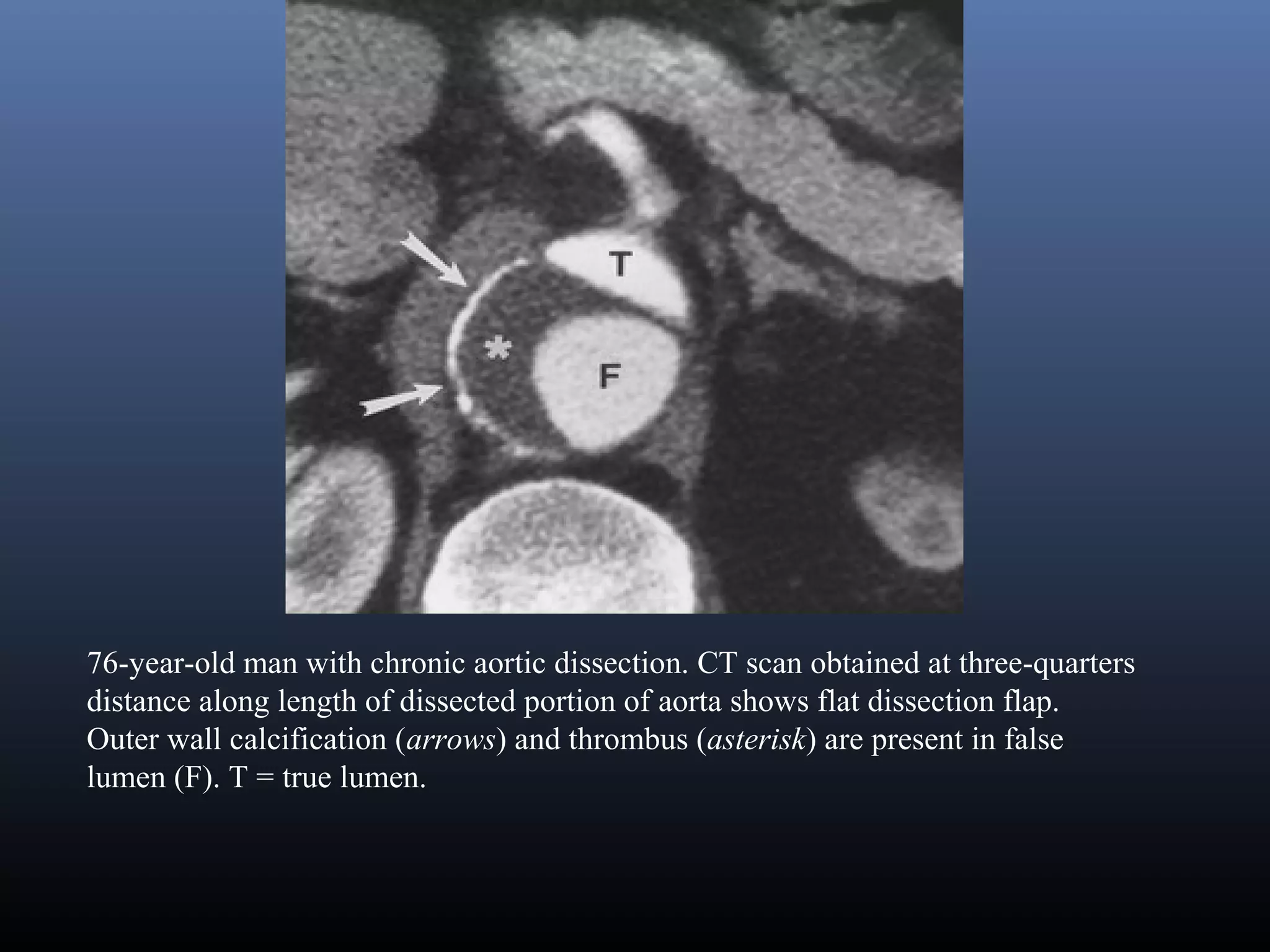
76-year-old man with chronic aortic dissection. CT scan obtained at three-quarters
distance along length of dissected portion of aorta shows flat dissection flap.
Outer wall calcification (arrows) and thrombus (asterisk) are present in false
lumen (F). T = true lumen.
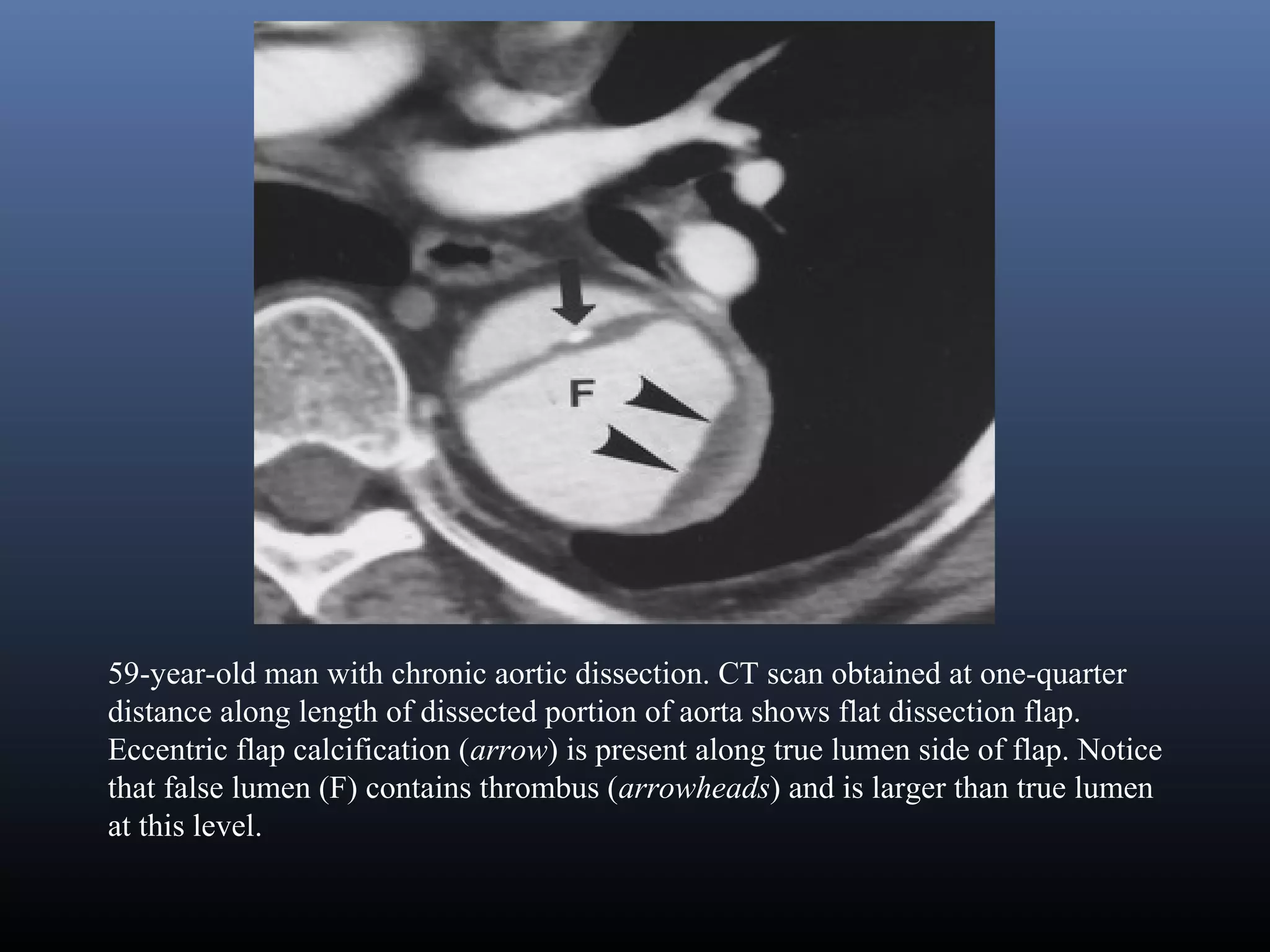
59-year-old man with chronic aortic dissection. CT scan obtained at one-quarter
distance along length of dissected portion of aorta shows flat dissection flap.
Eccentric flap calcification (arrow) is present along true lumen side of flap. Notice
that false lumen (F) contains thrombus (arrowheads) and is larger than true lumen
at this level.
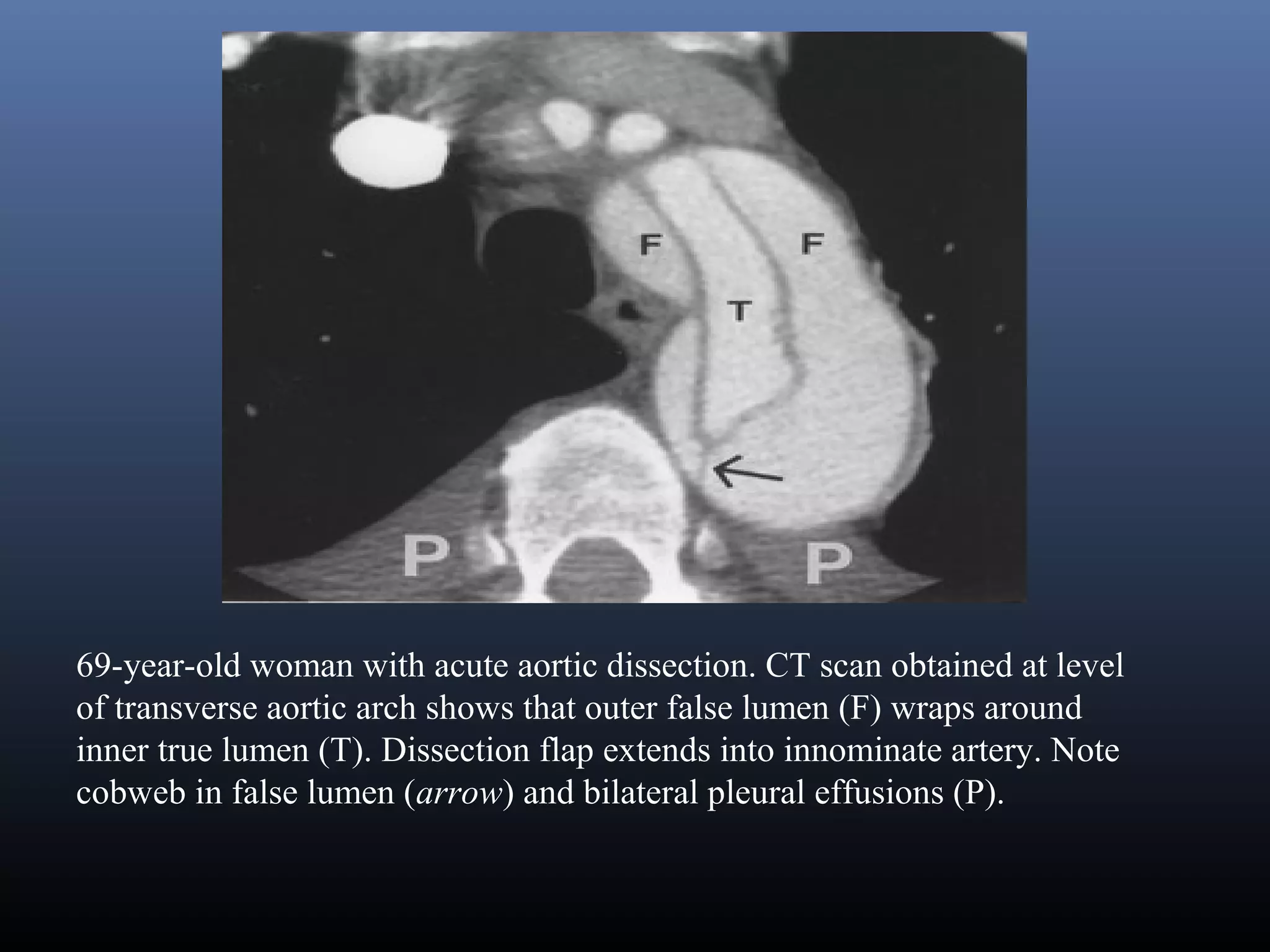
69-year-old woman with acute aortic dissection. CT scan obtained at level
of transverse aortic arch shows that outer false lumen (F) wraps around
inner true lumen (T). Dissection flap extends into innominate artery. Note
cobweb in false lumen (arrow) and bilateral pleural effusions (P).
Axial double-inversion-recovery
MR images (TR/TE, 1875/18;
inversion time, 150 msec) of 37-
year-old man with Marfan
syndrome. Image shows classic
aortic dissection with double-
channel aorta. True lumen (straight
arrow) is smaller than false lumen
(curved arrow). High-velocity flow
in true lumen causes signal void.
Slower flow with higher signal can
be seen in false lumen.
Dissection into brachiocephalic arteries
Aortic dissection involving brachiocephalic
branches.
Dissection into abdominal arteries
61-year-old man with
symptoms of right
hemispheric stroke who was
found to have marked blood
pressure discrepancy
between arms and
hypertension. Urgent CT
scan (not shown) revealed
type A aortic dissection.
Patient went into asystole
and died 15 hr after
imaging. Axial CT scan
shows dissection continuing
along right wall of
abdominal aorta (arrow).
No enhancement of right
kidney parenchyma was
present.
Dissection into abdominal arteries
The celiac trunk, SMA and right renal artery flow usually
originates from the true lumen.
Dissection into abdominal arteries
Left renal artery flow mostly originates from the false
lumen.
Impaired perfusion of end-organs can be due to 2 mechanisms:
1) static = continuing dissection in the feeding artery (usually
treated by stenting)
2) dynamic = dissection flap hanging in front of ostium like a
curtain (usually treated with fenestration).
When no end-organs are compromised and there is sufficient
perfusion, dissection can be left alone.
Rupture into pericardium and thoracic
cavity
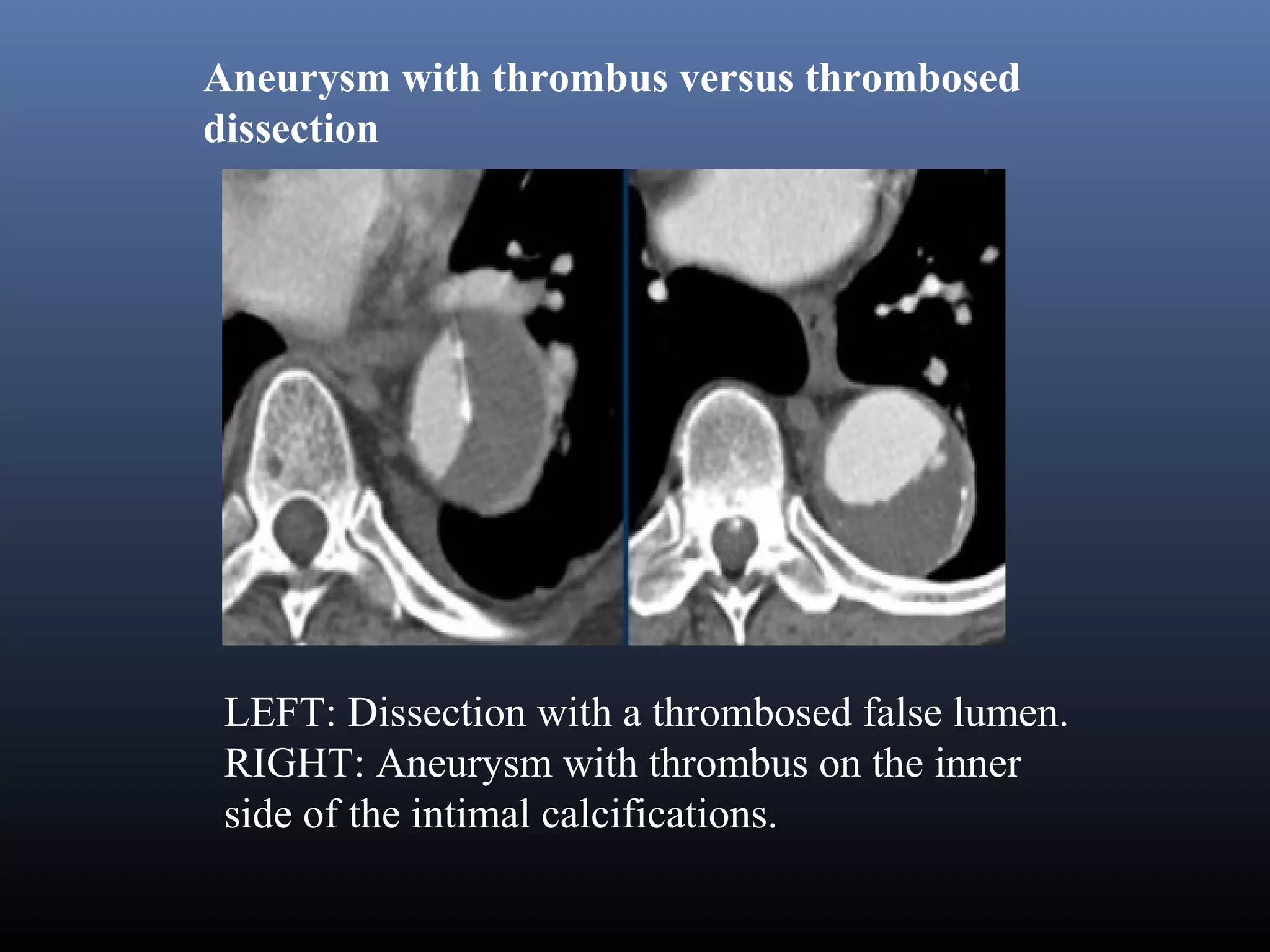
Aneurysm with thrombus versus thrombosed
dissection
LEFT: Dissection with a thrombosed false lumen.
RIGHT: Aneurysm with thrombus on the inner
side of the intimal calcifications.
Intramural Hematoma
Brief facts:
Spontaneous hemorrhage caused by rupture of vasa vasorum in media
13% of dissections, usually no pulse deficit
Difficult to distinguish from thrombosed AD
Can proceed to classic dissection (16-47%)
Long time to diagnosis: usually overlooked due to lack of non-enhanced
scan
Mortality at 1 year after dismission ~ 25%
Intramural Hematoma
What the clinician needs to know
Type A or Type B
Regression of aortic ? to normal in 80% of patients
Predictors of mortality:
- Ascending Aorta > 5 cm ?
- IMH thickness > 2 cm
- Pericardial effusion (to less extend pleural effusion)
IMH may persist or evolve into aneurysm or PAU
Associated PAU - worse prognostic outcome
6-year-old man with concurrent intramural hematoma
involving ascending aorta and communicating
dissection involving descending aorta. Axial
unenhanced CT scan shows hyperdense crescentic
hematoma in wall of ascending aorta (white arrow)
with eccentric narrowing of lumen, type A intramural
hematoma. Small intramural hematoma (arrowhead)
is also noted at left lateral aspect of proximal
descending aorta. High-attenuation dissection flap
(black arrow) is seen in descending aorta.
Axial contrast-enhanced CT scan obtained at
same level as A shows wall thickening in
ascending and descending aorta, but high-
attenuation intramural hematoma is less
obvious. Classic intimomedial flap (arrow)
dividing true and false lumens in descending
aorta is more conspicuous after contrast
administration. Note irregular margin of flap
on false lumen side. Intramural hematoma
(arrowhead) is seen along lateral wall of false
lumen.
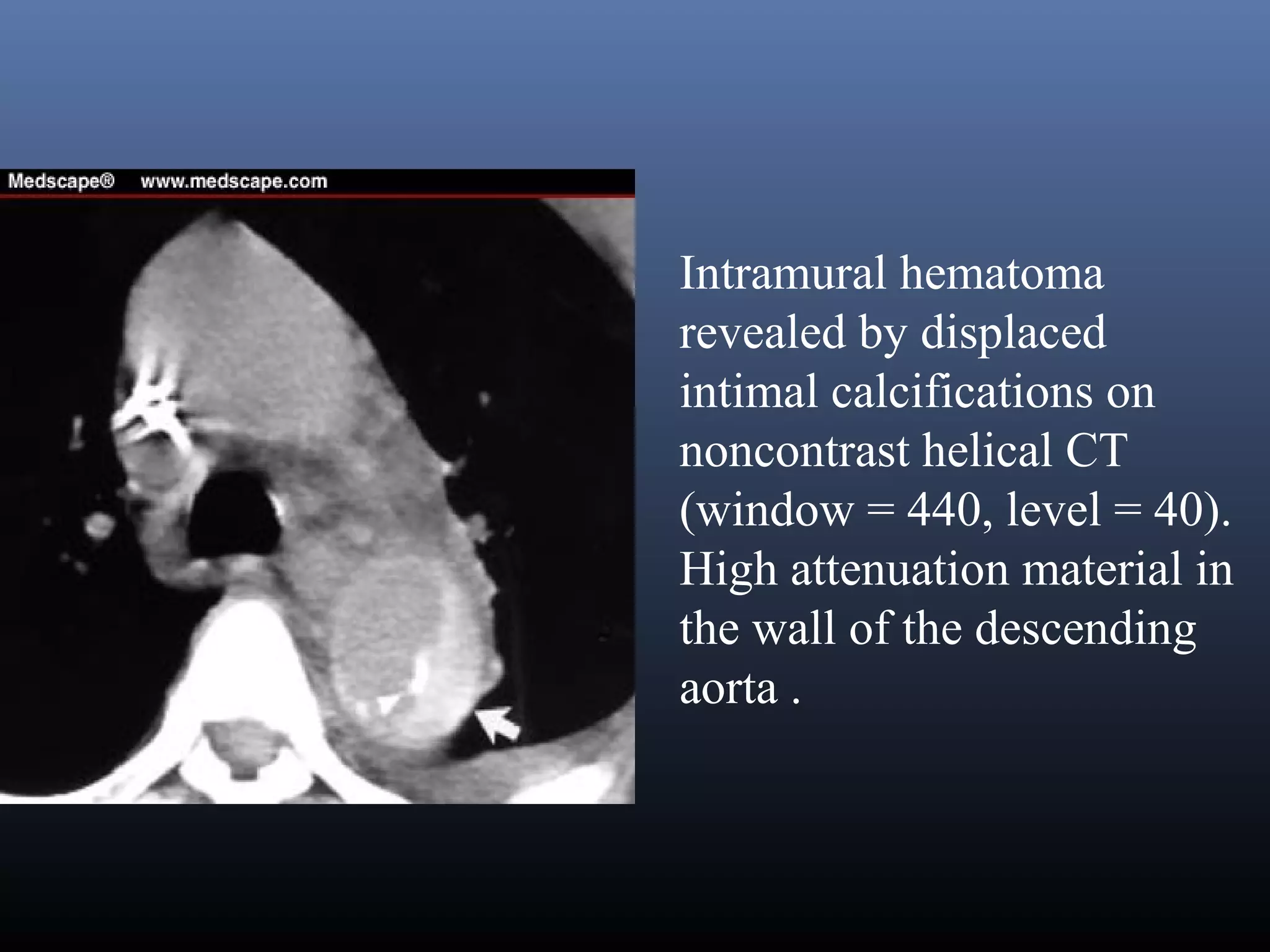
Intramural hematoma
revealed by displaced
intimal calcifications on
noncontrast helical CT
(window = 440, level = 40).
High attenuation material in
the wall of the descending
aorta .
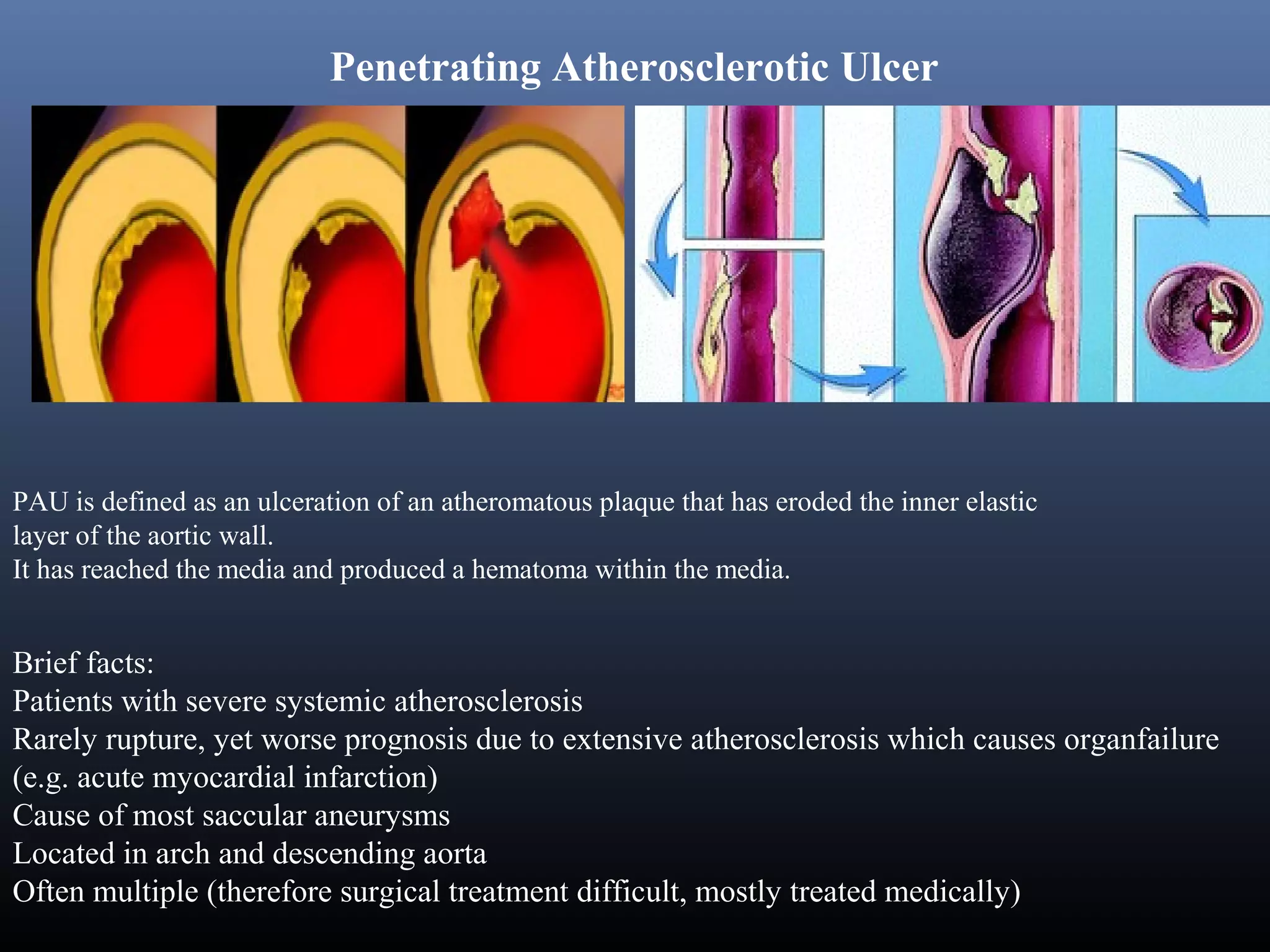
Penetrating Atherosclerotic Ulcer
PAU is defined as an ulceration of an atheromatous plaque that has eroded the inner elastic
layer of the aortic wall.
It has reached the media and produced a hematoma within the media.
Brief facts:
Patients with severe systemic atherosclerosis
Rarely rupture, yet worse prognosis due to extensive atherosclerosis which causes organfailure
(e.g. acute myocardial infarction)
Cause of most saccular aneurysms
Located in arch and descending aorta
Often multiple (therefore surgical treatment difficult, mostly treated medically)
Penetrating Atherosclerotic Ulcer
What the clinician needs to know
Type A or Type B
Single or multiple
Associated IMH (if not present, be cautious to mention PAU, clinical symptoms might not be
caused by PAU, which is probably stable)
Possibility of endovascular treatment
Typical illustration of PAU, focal outpouchings of contrast, separating extensive intimal calcifications
Complications
The complications of a Penetrating Atherosclerotic Ulcer include:
Saccular aneurysm formation
Compression of nearby structures
Rupture
However most patients have a poor prognosis because of generalized atherosclerosis leading to diffuse
organ failure.
Penetrating Atherosclerotic Ulcer
58-year-old woman
presenting with severe back
pain and penetrating
atherosclerotic ulcer of
aorta. Contrast-enhanced
CT scan obtained at level
corresponding to A shows
ulcer (arrow) filling with
contrast material. Note that
intramural hematoma
presents as eccentric low-
attenuation thickening of
aortic wall.
THE END

Imaging of Aortic Dissection

  • 1.
  • 2.
  • 3.
    OBJECTIVES 2-Early diagnosis ofAortic dissection based on the imaging criteria 3-Differentiate between true & false lumen 4-Recognize the imaging features which help in management decision 1-Differentiate the 3 types of acute aortic syndrome
  • 4.
    Classification of AcuteAortic Syndrome Typical Aortic Dissection, Intramural Hematoma and Penetrating Aortic Ulcer.
  • 5.
    Aortic Dissection (AD)definition Classic aortic dissection is a longitudinal split or partition in the media of the aorta. An intimal tear connects the media with the aortic lumen, and an exit tear creates a true and a false lumen. The smaller true lumen is lined by intima, and the false lumen is lined by media. Typically, flow in the false lumen is slower than in the true lumen, and the false lumen often becomes aneurysmal when subjected to systemic pressure. An acute aortic dissection is considered chronic at 2 weeks. The dissection usually stops at an aortic branch vessel or at the level of an atherosclerotic plaque.[1, 2] Diagram illustrates events leading to aortic dissection from formation of entrance tear and exit tear of intima to splitting of aortic media and formation of intimomedial flap. Blood under pressure dissects media longitudinally, and double-channel aorta is formed with blood filling both true and false lumens.
  • 6.
    History of aorticdissection and its repair King George II of EnglandDr. DeBakey
  • 7.
    History of aorticdissection and its repair The first well-documented case of aortic dissection occurred in 1760, when King George II of England died while straining on the commode. In 1761, the celebrated Italian anatomist Giovanni Battista Morgagni provided the first detailed pathologic description of aortic dissection. Aortic dissection was associated with a high mortality rate before the introduction of the cardiopulmonary bypass in the 1950s, which led to aortic arch repair and construction. DeBakey performed the first successful operative repair in 1955. Modern techniques of diagnosing and repairing thoracic aortic dissections transformed the condition from a death sentence to a treatable disorder—as shown by the experience of Dr. DeBakey himself, who developed aortic dissection at age 97, and at age 98 became the oldest patient to survive the surgical procedure he pioneered.
  • 8.
    Signs and symptoms Suddenonset of severe chest pain that often has a tearing or ripping quality (classic symptom) Chest pain may be mild Anterior chest pain: Usually associated with anterior arch or aortic root dissection Neck or jaw pain: With aortic arch involvement and extension into the great vessels Tearing or ripping intrascapular pain: May indicate dissection involving the descending aorta No pain in about 10% of patients Syncope Cerebrovascular accident (CVA) symptoms (eg, hemianesthesia, and hemiparesis, hemiplegia) [1] Altered mental status Numbness and tingling, pain, or weakness in the extremities Horner syndrome (ie, ptosis, miosis, anhidrosis) Dyspnea Hemoptysis Dysphagia Flank pain (with renal artery involvement Abdominal pain (with abdominal aorta involvement) Fever Anxiety and premonitions of death
  • 9.
    Risk factors foraortic dissection -Long-standing hypertension -Male -Advanced age -Prior cardiac surgery -Known aortic aneurysm or prior dissection -Cardiac catheterization/surgery -Connective tissue disorders- Marfan’s syndrome -Ehlers−Danlos syndrome -Bicuspid aortic valve, Coarctation of the aorta, Hereditary thoracic aortic disease, Vascular inflammation ,Deceleration injury ,Cocaine, Peripartum
  • 10.
  • 11.
    Classic Aortic Dissectionis the most common entity causing an acute aortic syndrome (70%). Incidence: 1-10 : 100.000 mostly men hypertension > 70% Type A mortality 1-2% per hour after onset of symptoms, total up to 90% non-treated, 40% when treated. 1 year survival Type B up to 85% if medically treated (5 year > 70%) Aortic Dissection (AD)
  • 12.
    Management decisions arebased on the following information: Type A or Type B Place of entry & re-entry Side branches involved, originating from true / false lumen Organs at risk (1/3 of mortality is caused by organ failure) Complications (rupture, coronary occlusion, aortic insufficiency, neurological ) Diameters of true and false lumina at: proximal and distal landing zones, at entry and at minimum Iliac vessel turtuosity. Aortic Dissection (AD)
  • 13.
    -Most classic aorticdissections begin at 3 distinct anatomic locations: the aortic root; 2 cm above the aortic root; and just distal to the left subclavian artery. Ascending aortic involvement may result in death from wall rupture, hemopericardium and tamponade, occlusion of the coronary ostia with myocardial infarction, or severe aortic insufficiency. Aortic Dissection (AD)
  • 14.
    Radiography Mediastinal widening isthe most common plain radiographic finding in aortic dissection; it is noted in 80% of patients
  • 15.
  • 16.
    Other radiographic findingsinclude the following: Double aortic knob sign (present in 40% of patients) Diffuse enlargement of the aorta with poor definition or irregularity of the aortic contour Inward displacement of aortic wall calcification by more than 10 mm Tracheal displacement to the right Pleural effusion (more common on the left side; suggests leakage) Pericardial effusion Cardiac enlargement Displacement of a nasogastric tube Left apical opacity Radiography
  • 17.
    Inward displacement ofaortic wall calcification by more than 10 mm Radiography
  • 18.
  • 19.
    Computed Tomography The sensitivityof CT for aortic dissection is 87-94%, and the specificity is 92- 100%. Multidetector CT may be performed with 1-2.5 mm collimation. Initial nonenhanced CT is used for the diagnosis of acute hemorrhage and aortic rupture. This is followed by helical CT performed approximately 25-30 seconds after the injection of contrast material. Nonionic contrast material (120-135 mL) is power injected via a peripheral intravenous site at a rate of 3-4 mL/s. Usually, scanning is performed from the thoracic inlet to the common femoral arteries. When a dissection is identified, repeat scanning may be performed to obtain delayed images of the false lumen and aortic branches. Multiplanar reformation images are obtained in sagittal, coronal, oblique sagittal,
  • 20.
    Computed Tomography Typical CTfindings in acute dissection include the following: -Detection of intimal flap which separates two lumina in the involved part . True lumen: Surrounded by calcifications (if present) Smaller than false lumen Usually origin of celiac trunk, SMA and right renal artery
  • 21.
    False lumen: Flow oroccluded by thrombus (chronic). Delayed enhancement Wedges around true lumen (beak-sign) Collageneous media-remnants (cobwebs) Larger than true lumen Circular configuration (persistent systolic pressure) Outer curve of the arch Usually origin of left renal artery Surrounds true lumen in Type A dissection
  • 24.
    Stanford type A typicalaortic dissection. Sequential contrast-enhanced CT scans show a the beak sign (arrow), a wedge of hematoma is thought to create a space for the development of the false lumen
  • 25.
    Contrast-enhanced CT scans ofStanford type A typical aortic dissection show atherosclerotic calcification in the outer wall aortic lumen indicating which is the true lumen
  • 29.
    41-year-old man withacute aortic dissection. CT scan obtained at one-quarter distance along length of dissected portion of aorta shows descending aortic dissection flap (arrows) that is curved toward false lumen (F). Beak sign (arrowheads) is present in false lumen. Note that false lumen area is larger than true lumen area.
  • 30.
    51-year-old woman withchronic aortic dissection. CT scan obtained at one-half distance along length of dissected portion of aorta shows flat dissection flap. False lumen beaks are filled with lowattenuation thrombus (arrowheads). Faintly visualized cobweb (arrows) is present in false lumen (F).
  • 31.
    65-year-old woman withchronic aortic dissection. CT scan obtained at one-quarter distance along length of dissected portion of aorta shows flat dissection flap. Outer wall calcification (straight arrow) is present in true lumen (T). Thrombus (arrowheads) is present in false lumen. Curved arrow indicates thrombus within false lumen beak.
  • 32.
    76-year-old man withchronic aortic dissection. CT scan obtained at three-quarters distance along length of dissected portion of aorta shows flat dissection flap. Outer wall calcification (arrows) and thrombus (asterisk) are present in false lumen (F). T = true lumen.
  • 33.
    59-year-old man withchronic aortic dissection. CT scan obtained at one-quarter distance along length of dissected portion of aorta shows flat dissection flap. Eccentric flap calcification (arrow) is present along true lumen side of flap. Notice that false lumen (F) contains thrombus (arrowheads) and is larger than true lumen at this level.
  • 34.
    69-year-old woman withacute aortic dissection. CT scan obtained at level of transverse aortic arch shows that outer false lumen (F) wraps around inner true lumen (T). Dissection flap extends into innominate artery. Note cobweb in false lumen (arrow) and bilateral pleural effusions (P).
  • 36.
    Axial double-inversion-recovery MR images(TR/TE, 1875/18; inversion time, 150 msec) of 37- year-old man with Marfan syndrome. Image shows classic aortic dissection with double- channel aorta. True lumen (straight arrow) is smaller than false lumen (curved arrow). High-velocity flow in true lumen causes signal void. Slower flow with higher signal can be seen in false lumen.
  • 37.
    Dissection into brachiocephalicarteries Aortic dissection involving brachiocephalic branches.
  • 38.
  • 39.
    61-year-old man with symptomsof right hemispheric stroke who was found to have marked blood pressure discrepancy between arms and hypertension. Urgent CT scan (not shown) revealed type A aortic dissection. Patient went into asystole and died 15 hr after imaging. Axial CT scan shows dissection continuing along right wall of abdominal aorta (arrow). No enhancement of right kidney parenchyma was present. Dissection into abdominal arteries
  • 40.
    The celiac trunk,SMA and right renal artery flow usually originates from the true lumen. Dissection into abdominal arteries Left renal artery flow mostly originates from the false lumen. Impaired perfusion of end-organs can be due to 2 mechanisms: 1) static = continuing dissection in the feeding artery (usually treated by stenting) 2) dynamic = dissection flap hanging in front of ostium like a curtain (usually treated with fenestration). When no end-organs are compromised and there is sufficient perfusion, dissection can be left alone.
  • 41.
    Rupture into pericardiumand thoracic cavity
  • 42.
    Aneurysm with thrombusversus thrombosed dissection LEFT: Dissection with a thrombosed false lumen. RIGHT: Aneurysm with thrombus on the inner side of the intimal calcifications.
  • 43.
    Intramural Hematoma Brief facts: Spontaneoushemorrhage caused by rupture of vasa vasorum in media 13% of dissections, usually no pulse deficit Difficult to distinguish from thrombosed AD Can proceed to classic dissection (16-47%) Long time to diagnosis: usually overlooked due to lack of non-enhanced scan Mortality at 1 year after dismission ~ 25%
  • 44.
    Intramural Hematoma What theclinician needs to know Type A or Type B Regression of aortic ? to normal in 80% of patients Predictors of mortality: - Ascending Aorta > 5 cm ? - IMH thickness > 2 cm - Pericardial effusion (to less extend pleural effusion) IMH may persist or evolve into aneurysm or PAU Associated PAU - worse prognostic outcome
  • 45.
    6-year-old man withconcurrent intramural hematoma involving ascending aorta and communicating dissection involving descending aorta. Axial unenhanced CT scan shows hyperdense crescentic hematoma in wall of ascending aorta (white arrow) with eccentric narrowing of lumen, type A intramural hematoma. Small intramural hematoma (arrowhead) is also noted at left lateral aspect of proximal descending aorta. High-attenuation dissection flap (black arrow) is seen in descending aorta. Axial contrast-enhanced CT scan obtained at same level as A shows wall thickening in ascending and descending aorta, but high- attenuation intramural hematoma is less obvious. Classic intimomedial flap (arrow) dividing true and false lumens in descending aorta is more conspicuous after contrast administration. Note irregular margin of flap on false lumen side. Intramural hematoma (arrowhead) is seen along lateral wall of false lumen.
  • 46.
    Intramural hematoma revealed bydisplaced intimal calcifications on noncontrast helical CT (window = 440, level = 40). High attenuation material in the wall of the descending aorta .
  • 47.
    Penetrating Atherosclerotic Ulcer PAUis defined as an ulceration of an atheromatous plaque that has eroded the inner elastic layer of the aortic wall. It has reached the media and produced a hematoma within the media. Brief facts: Patients with severe systemic atherosclerosis Rarely rupture, yet worse prognosis due to extensive atherosclerosis which causes organfailure (e.g. acute myocardial infarction) Cause of most saccular aneurysms Located in arch and descending aorta Often multiple (therefore surgical treatment difficult, mostly treated medically)
  • 48.
    Penetrating Atherosclerotic Ulcer Whatthe clinician needs to know Type A or Type B Single or multiple Associated IMH (if not present, be cautious to mention PAU, clinical symptoms might not be caused by PAU, which is probably stable) Possibility of endovascular treatment Typical illustration of PAU, focal outpouchings of contrast, separating extensive intimal calcifications Complications The complications of a Penetrating Atherosclerotic Ulcer include: Saccular aneurysm formation Compression of nearby structures Rupture However most patients have a poor prognosis because of generalized atherosclerosis leading to diffuse organ failure.
  • 49.
    Penetrating Atherosclerotic Ulcer 58-year-oldwoman presenting with severe back pain and penetrating atherosclerotic ulcer of aorta. Contrast-enhanced CT scan obtained at level corresponding to A shows ulcer (arrow) filling with contrast material. Note that intramural hematoma presents as eccentric low- attenuation thickening of aortic wall.
  • 50.