NAME :-----
HTNO: 12ABBBBB
Image Processing
GUIDE: XXXXX
Image Processing
Abstract
 Main aim of Image processing is to extract important data from images. Using this
extracted information description, interpretation and understanding of the scene can
be provided by the machine. Main point of image processing is to modify images in
to desired manner. This system allows users to take hard copy of the image using
printer routines and provides option for users to store file in to disk in different
formats. In other words image processing is called as altering and analyzing pictorial
information of images. In our daily life we come across different type of image
processing best example of image processing in our daily life is our brain sensing lot
of images when we see images with eyes and processing is done is very less time.
What is Image Processing ?
 Image processing is a method to perform some operations on an image , in order to
get an enhanced image or to extract some useful information from it.
 It is a type of signal dispensation in which input is image, like video frame or
photograph and output may be image or characteristics associated with that image.
Includes:
 Image display and printing
 Image editing and manipulation
 Image enhancement
 Feature detection
 Image compression
Applications of image processing
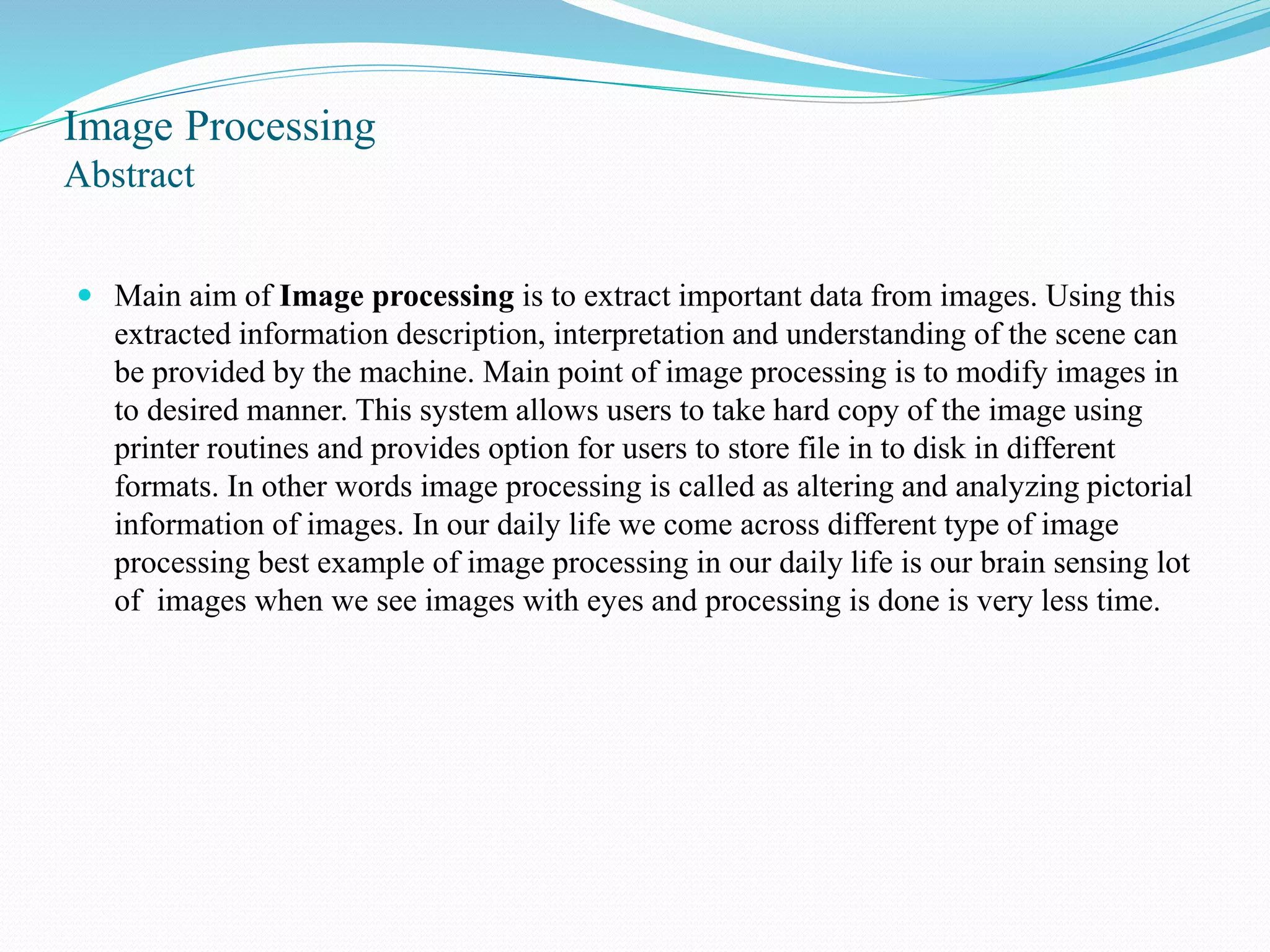
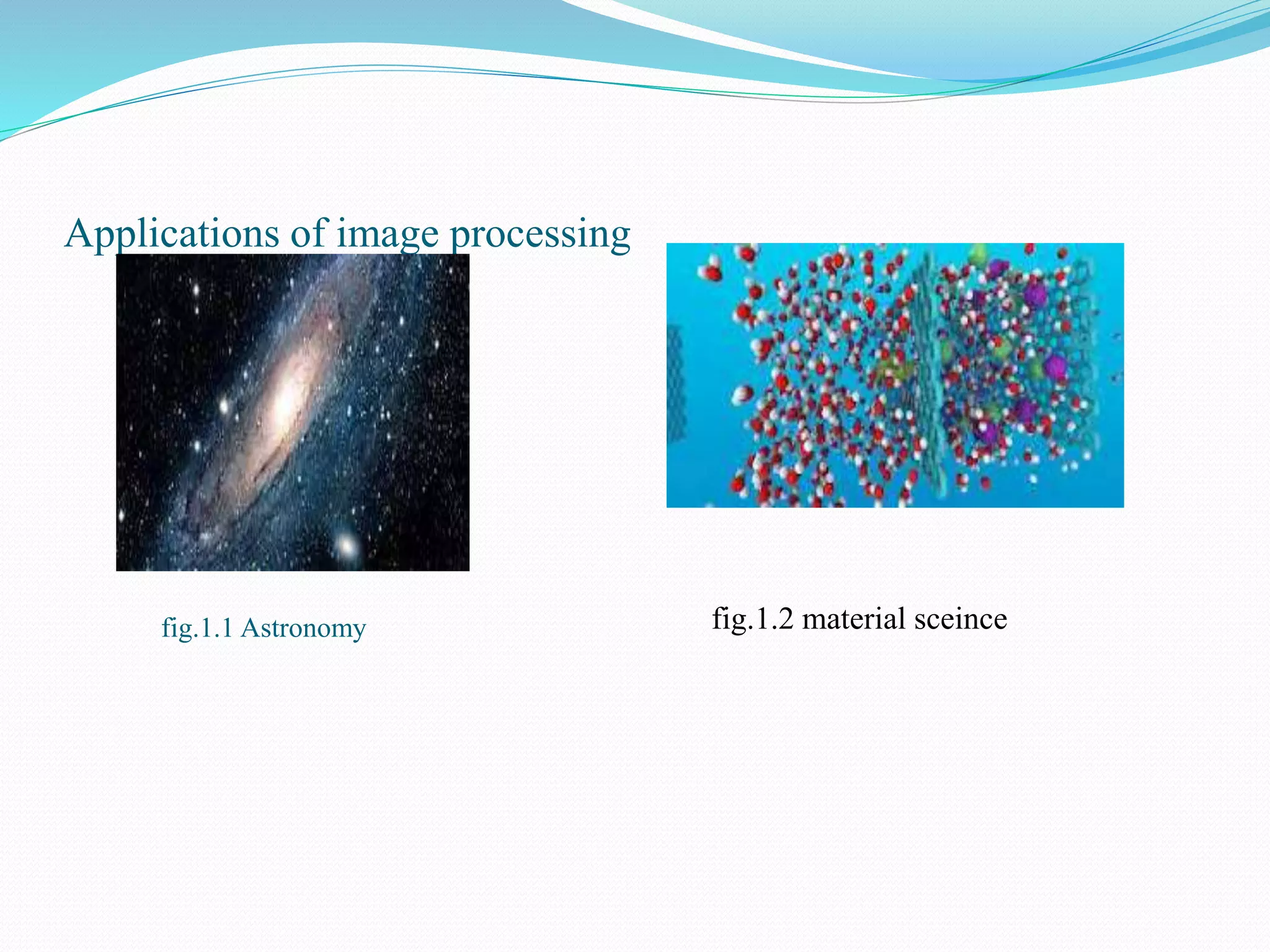
fig.1.1 Astronomy fig.1.2 material sceince
Fig.2.1 Medicine
fig.2.2 Bio-metric
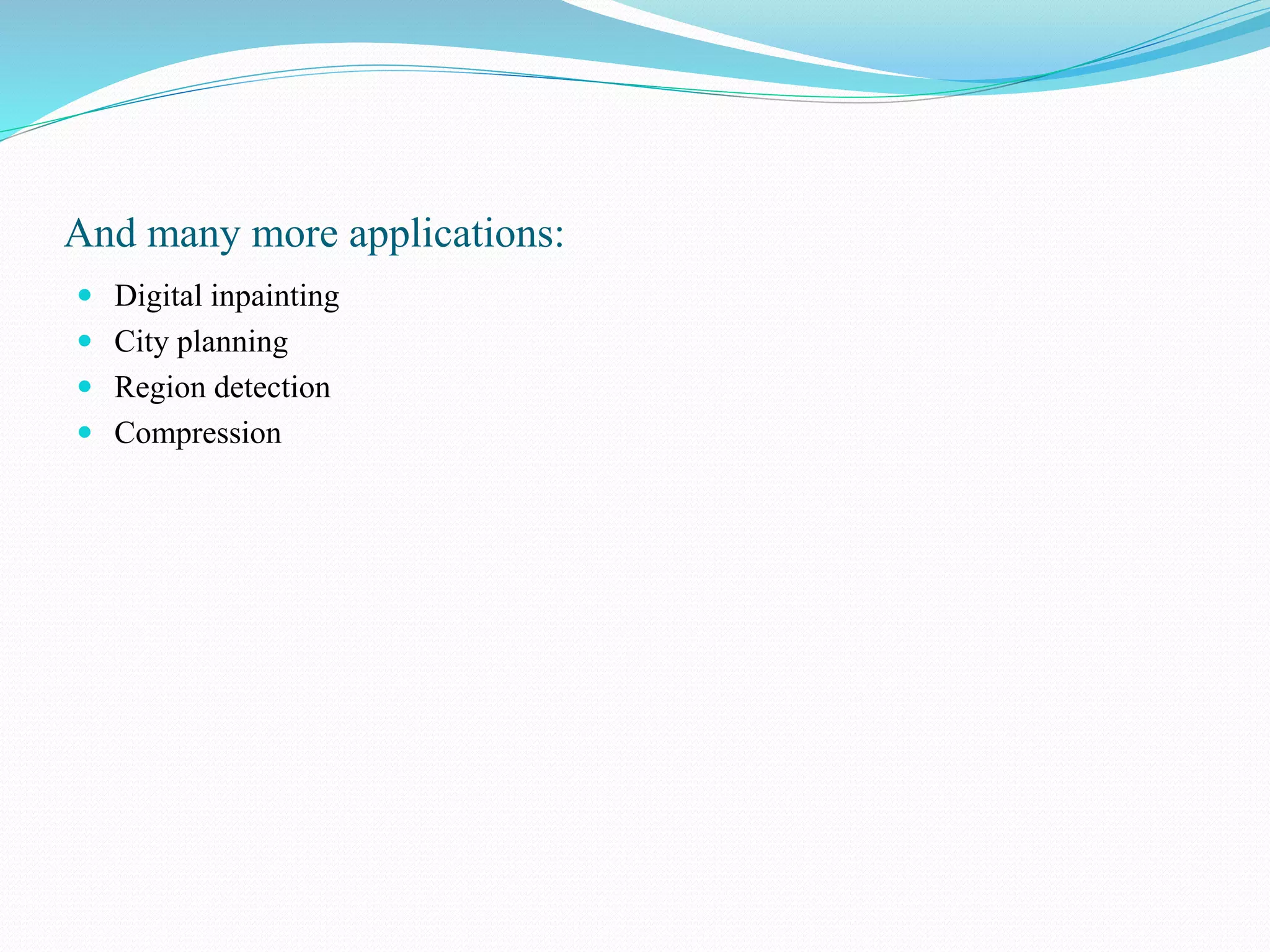
fig.3.4 personal photos
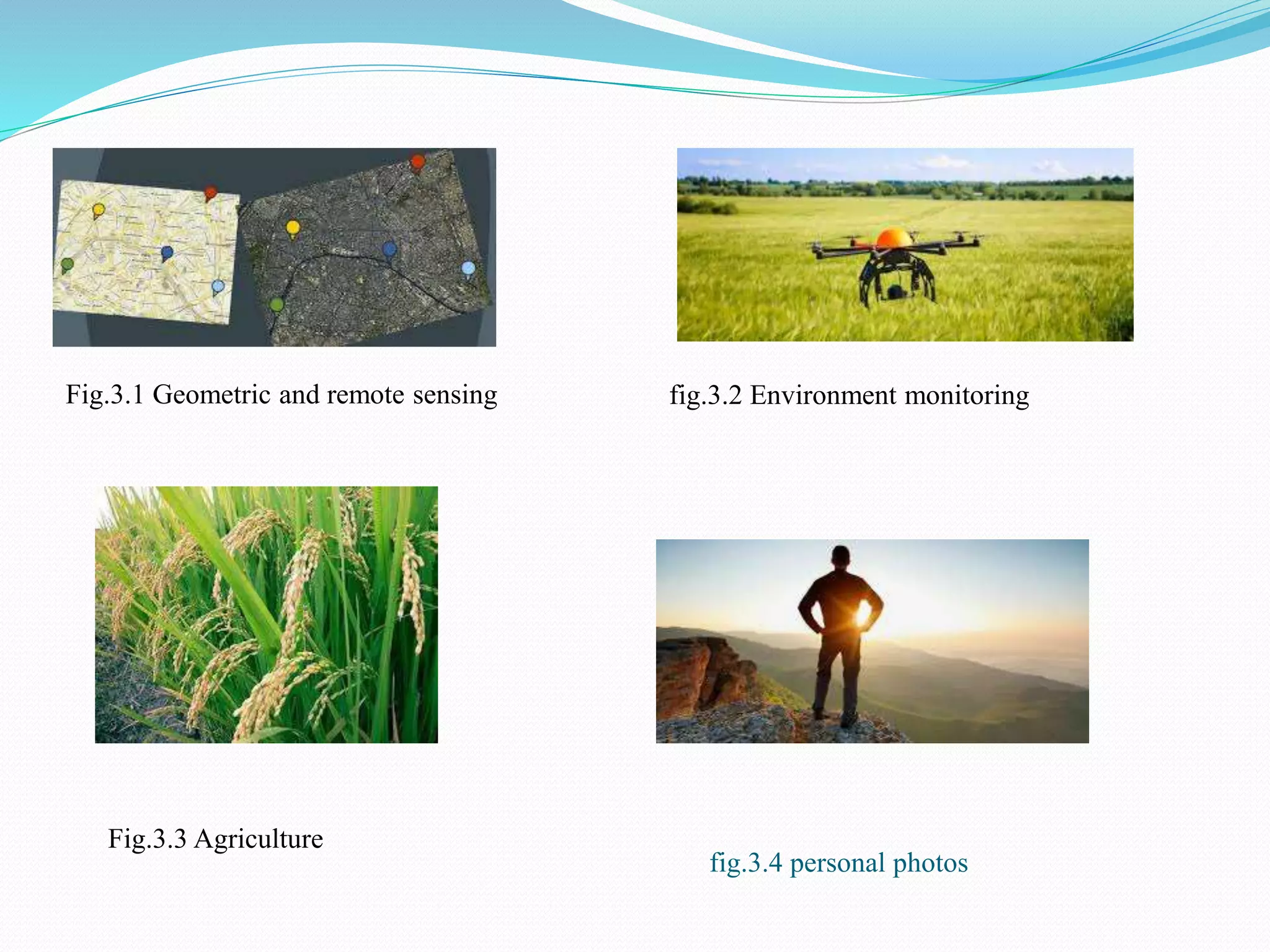
Fig.3.1 Geometric and remote sensing fig.3.2 Environment monitoring
Fig.3.3 Agriculture
Let’s look at some examples
Examples:
 Face detection
 Noise removal
 Contrast enhancement
Fig.4.3Contrast enhancement
Fig.4.1 Face detection fig.4.2 Noise removal
And many more applications:
 Digital inpainting
 City planning
 Region detection
 Compression
What are essential for image processing
 Signal processing: An image is a 2D/3D signal , hence knowing signal
processing will introduce you to the process which you need to apply on an
image for specific task such as filtering or convolution.
 Matrix theory and linear algebra : As an image is a matrix, knowing matrix
theory will give an analtical point of view in image processing such us
applications of singular value decomposition in image processing.
 Probability theory: As many applications of image processing are dealing
with probabilistic system hence knowing probability theory will bring you
new ideas such as makrov chain .
Purpose of Image Processing
 Visualization - Observe the objects that are not visible.
 Image sharpening and restoration - To create a better image.
 Image retrieval - Seek for the image of interest.
 Measurement of pattern – Measures various objects in an image.
 Image Recognition – Distinguish the objects in an image.
Types
 Analog Image Processing
 Digital Image Processing
Components of Image Processing
 Image Sensors
 Image Displays
 Image Processing
 Software(Open CV,Matlab,CIMG)
 Image Processing Hardware
 Memory
Future
 We all are in midst of revolution ignited by fast development in computer
technology and imaging.
 Against common belief, computers are not able to match humans in calculation
related to image processing and analysis.
 But with increasing sophistication and power of the modern computing,
computation will go beyond conventional, Von Neumann sequential architecture and
would contemplate the optical execution too.
Advantages
 This one is more accurate than the overlapping method because it is based upon
minutia.
 It is an interactive method for recognizing fingerprints.
Disadvantages
 It is more time consuming as compared to the former.
 More complex program.
Conclusion
• Using image processing techniques, we can sharpen the images, contrast to
make a graphic display more useful for display, reduce amount of memory
requirement for storing image in for mation, etc., due to such techniques, image
processing is applied in recognition of images´ as in factory floor quality
assurance systems; image enhancement', as in satellite reconnaissance systems;
image synthesis´ as in law enforcement suspect identification systems, and
image construction´ as in plastic surgery design systems.
Reference
 www.studymafia.org
Thanks

Image Processing By SAIKIRAN PANJALA

  • 1.
    NAME :----- HTNO: 12ABBBBB ImageProcessing GUIDE: XXXXX
  • 2.
    Image Processing Abstract  Mainaim of Image processing is to extract important data from images. Using this extracted information description, interpretation and understanding of the scene can be provided by the machine. Main point of image processing is to modify images in to desired manner. This system allows users to take hard copy of the image using printer routines and provides option for users to store file in to disk in different formats. In other words image processing is called as altering and analyzing pictorial information of images. In our daily life we come across different type of image processing best example of image processing in our daily life is our brain sensing lot of images when we see images with eyes and processing is done is very less time.
  • 3.
    What is ImageProcessing ?  Image processing is a method to perform some operations on an image , in order to get an enhanced image or to extract some useful information from it.  It is a type of signal dispensation in which input is image, like video frame or photograph and output may be image or characteristics associated with that image. Includes:  Image display and printing  Image editing and manipulation  Image enhancement  Feature detection  Image compression
  • 4.
    Applications of imageprocessing fig.1.1 Astronomy fig.1.2 material sceince
  • 5.
  • 6.
    fig.3.4 personal photos Fig.3.1Geometric and remote sensing fig.3.2 Environment monitoring Fig.3.3 Agriculture
  • 7.
    Let’s look atsome examples
  • 8.
    Examples:  Face detection Noise removal  Contrast enhancement
  • 9.
    Fig.4.3Contrast enhancement Fig.4.1 Facedetection fig.4.2 Noise removal
  • 10.
    And many moreapplications:  Digital inpainting  City planning  Region detection  Compression
  • 11.
    What are essentialfor image processing  Signal processing: An image is a 2D/3D signal , hence knowing signal processing will introduce you to the process which you need to apply on an image for specific task such as filtering or convolution.  Matrix theory and linear algebra : As an image is a matrix, knowing matrix theory will give an analtical point of view in image processing such us applications of singular value decomposition in image processing.  Probability theory: As many applications of image processing are dealing with probabilistic system hence knowing probability theory will bring you new ideas such as makrov chain .
  • 12.
    Purpose of ImageProcessing  Visualization - Observe the objects that are not visible.  Image sharpening and restoration - To create a better image.  Image retrieval - Seek for the image of interest.  Measurement of pattern – Measures various objects in an image.  Image Recognition – Distinguish the objects in an image.
  • 13.
    Types  Analog ImageProcessing  Digital Image Processing
  • 14.
    Components of ImageProcessing  Image Sensors  Image Displays  Image Processing  Software(Open CV,Matlab,CIMG)  Image Processing Hardware  Memory
  • 15.
    Future  We allare in midst of revolution ignited by fast development in computer technology and imaging.  Against common belief, computers are not able to match humans in calculation related to image processing and analysis.  But with increasing sophistication and power of the modern computing, computation will go beyond conventional, Von Neumann sequential architecture and would contemplate the optical execution too.
  • 16.
    Advantages  This oneis more accurate than the overlapping method because it is based upon minutia.  It is an interactive method for recognizing fingerprints.
  • 17.
    Disadvantages  It ismore time consuming as compared to the former.  More complex program.
  • 18.
    Conclusion • Using imageprocessing techniques, we can sharpen the images, contrast to make a graphic display more useful for display, reduce amount of memory requirement for storing image in for mation, etc., due to such techniques, image processing is applied in recognition of images´ as in factory floor quality assurance systems; image enhancement', as in satellite reconnaissance systems; image synthesis´ as in law enforcement suspect identification systems, and image construction´ as in plastic surgery design systems.
  • 19.
  • 20.