FUNDAMENTALS OF DIGITAL IMAGE
PROCESSING
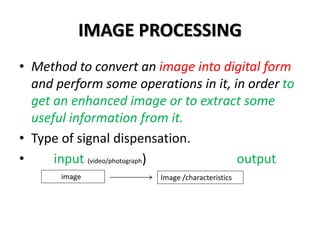
IMAGE PROCESSING
• Method to convert an image into digital form
and perform some operations in it, in order to
get an enhanced image or to extract some
useful information from it.
• Type of signal dispensation.
• input (video/photograph) output
image Image /characteristics
• Technology of applying a number of computer
algorithms to process digital images.
• In image processing system usually images are
treated as 2D signals.
Purpose of image processing
• Visualization
– -observe the object that are not visible.
• Image sharpening and restoration
– -to create a better image.
• Image retrieval
– -seek for the image of interest.
• Measurement of pattern
– -measures various objects in an image.
• Image recognition
– -distinguish the objects in an image.
VISUALIZATION
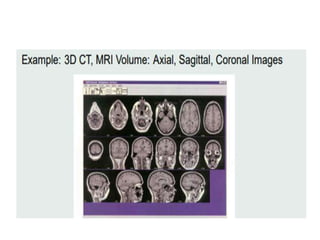
• Visualization is any technique in creating
images while image processing uses signals for
which the result in an image.
IMAGE SHARPENING AND
RESTORATION
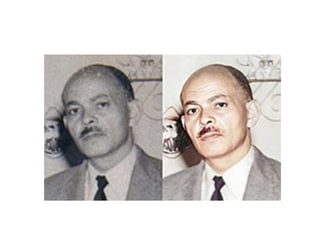
• The purpose of image restoration is to
"compensate for" or "undo" defects which
degrade an image.
• Degradation comes in many forms such as
motion blur, noise, and camera misfocus.
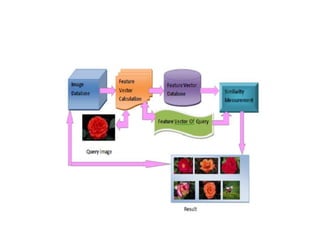
Image retrieval
• The image retrieval system is used for
retrieving images related to the user request
from the database.
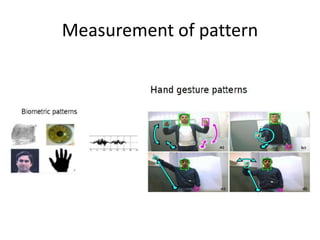
Measurement of pattern
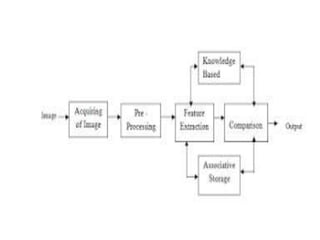
• Image pattern recognition is the problem of exploring
how to recognize image patterns.
• An image pattern recognition system generally consists
of four parts:
• a camera that acquires the image samples to be
classified,
• an image preprocessor that improves the qualities of
images,
• a feature extraction mechanism that gains
discriminative features from images for recognition,
• and a classification scheme that classifies the image
samples based on the extracted features.
Image recognition
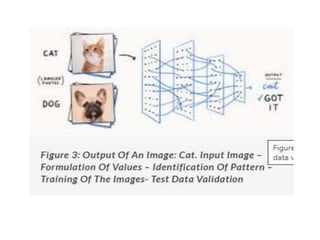
• Image recognition is the process of identifying
an object or a feature in an image or video. It
is used in many applications like defect
detection, medical imaging, and security
surveillance.
ADVANTAGES
• Improves visual quality of an image and
distribution of intensity.
• It can easily process a degraded image of
uncoverable objects.
• It can process an image in such a way that the
result is more suitable than the original image.
• An image can be easily modified using a
number of techniques.
• The image compression technique reduces the
amount of data required to represent a digital
image.
• Mathematical and logical operations can be
performed on an image like addition,subtraction
etc.
• The image segmentation is used to detect
discontinuity, the presence or absence of specific
anomolies like missing components or broken
connection path.
DISADVANTAGES
• Requires so much storage and processing
power.
• Progress in this field depends on development
of digital computers and supporting
technologies like data storage,display and
transmission.
• Effect of environmental conditions may
degrade the image quality.
• It involves various types of redundancy like
data redundancy and inter pixel redundancy.
• Segmentation of non trivial image is very
difficult.
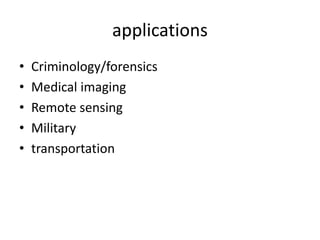
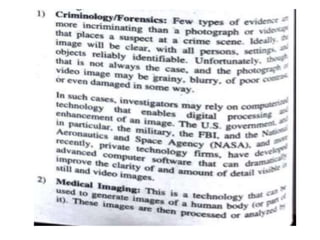
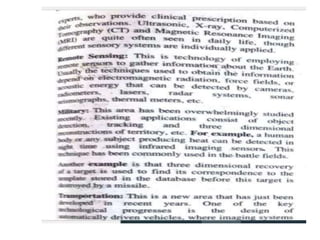
applications
• Criminology/forensics
• Medical imaging
• Remote sensing
• Military
• transportation
2.FUNDAMENTALS OF DIGITAL IMAGE PROCESSING.pptx

2.FUNDAMENTALS OF DIGITAL IMAGE PROCESSING.pptx

  • 1.
    FUNDAMENTALS OF DIGITALIMAGE PROCESSING
  • 2.
    IMAGE PROCESSING • Methodto convert an image into digital form and perform some operations in it, in order to get an enhanced image or to extract some useful information from it. • Type of signal dispensation. • input (video/photograph) output image Image /characteristics
  • 3.
    • Technology ofapplying a number of computer algorithms to process digital images. • In image processing system usually images are treated as 2D signals.
  • 5.
    Purpose of imageprocessing • Visualization – -observe the object that are not visible. • Image sharpening and restoration – -to create a better image. • Image retrieval – -seek for the image of interest. • Measurement of pattern – -measures various objects in an image. • Image recognition – -distinguish the objects in an image.
  • 6.
    VISUALIZATION • Visualization isany technique in creating images while image processing uses signals for which the result in an image.
  • 8.
    IMAGE SHARPENING AND RESTORATION •The purpose of image restoration is to "compensate for" or "undo" defects which degrade an image. • Degradation comes in many forms such as motion blur, noise, and camera misfocus.
  • 10.
    Image retrieval • Theimage retrieval system is used for retrieving images related to the user request from the database.
  • 12.
  • 13.
    • Image patternrecognition is the problem of exploring how to recognize image patterns. • An image pattern recognition system generally consists of four parts: • a camera that acquires the image samples to be classified, • an image preprocessor that improves the qualities of images, • a feature extraction mechanism that gains discriminative features from images for recognition, • and a classification scheme that classifies the image samples based on the extracted features.
  • 14.
    Image recognition • Imagerecognition is the process of identifying an object or a feature in an image or video. It is used in many applications like defect detection, medical imaging, and security surveillance.
  • 16.
    ADVANTAGES • Improves visualquality of an image and distribution of intensity. • It can easily process a degraded image of uncoverable objects. • It can process an image in such a way that the result is more suitable than the original image. • An image can be easily modified using a number of techniques.
  • 17.
    • The imagecompression technique reduces the amount of data required to represent a digital image. • Mathematical and logical operations can be performed on an image like addition,subtraction etc. • The image segmentation is used to detect discontinuity, the presence or absence of specific anomolies like missing components or broken connection path.
  • 18.
    DISADVANTAGES • Requires somuch storage and processing power. • Progress in this field depends on development of digital computers and supporting technologies like data storage,display and transmission. • Effect of environmental conditions may degrade the image quality.
  • 19.
    • It involvesvarious types of redundancy like data redundancy and inter pixel redundancy. • Segmentation of non trivial image is very difficult.
  • 20.
    applications • Criminology/forensics • Medicalimaging • Remote sensing • Military • transportation