SILAH AYSHA K S

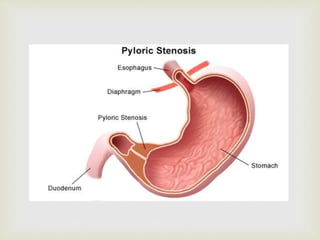
 Hypertrophy of musculature of pyloric antrum,
especially the circular muscle fibres
 Failure of pylorus to relax.
 Gastric outlet obstruction
 Duodenum is normal.
 Increased risk if newborn gets erythromycin or
azithromycin in first 14 days after birth.
INFANTILE HYPERTROPHIC
PYLORIC STENOSIS


 It is postulated that abnormal innervation of the
muscular layer leads to failure of relaxation of the
pyloric muscle, increased synthesis of growth
factors, and subsequent hypertrophy, hyperplasia,
and obstruction.
 Erythromycin has a prokinetic effect on gastric
muscle contraction.
ETIOLOGY

 Common in first born males(4:1)
 Incidence: 4 in 1000 live births
 Familial link found.
 Seen between 3rd and 6th weeks of age , time taken by
the hypertrophied muscle to cause complete
obstruction
CLINICAL FEATURES

 Vomiting – forcible, projectile and non-bilious,
may occur after every feed or only after some feed.
 Despite stomach distension, affected infants seem to
have an insatiable appetite and may cry
inconsolably.
 Constipation
 Dehydration
 Loss of weight
SYMPTOMS


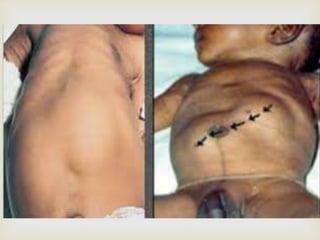
 Visible gastric peristalsis
 Palpable lump of hypertrophied pylorus , better felt
from left side, as a mobile, smooth, firm, olive like
mass , with all borders made out, moves with
respiration, with impaired resonance on percussion.
 Electrolyte imbalance(hyponatremic, hypokalemic,
metabolic alkalosis with paradoxic aciduria)
SIGNS

 VGP and mass is better seen and felt
 Vomiting is regurgitant
 Anorexia common
In premature infants,

 Biochemical assessment(pH>7.45, Cl- 3mEq/L)
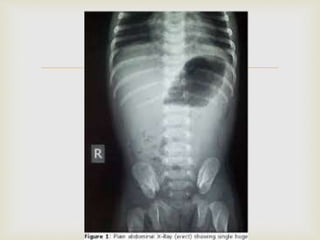
 X ray Abdomen
 USG- doughnut sign,
pylorus > 4 mm thickness,(normal<2mm)
pyloric canal > 14 mm,(normal<10mm)
cervix sign on long axis,
target sign on short axis.
INVESTIGATIONS


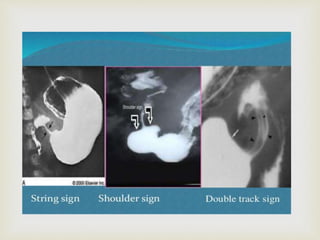
 Barium meal, not usually done. If done, shows string
sign/railroad track sign/double track sign with pyloric
obstruction.


 Gastroesophageal reflux (non projectile,no weight
loss)
 Viral gastroenteritis(not in <6wks old, diarrhea)
 Duodenal atresia (bilious vomiting)
 Adrenal crisis(hyperkalemic acidosis)
 High intestinal obstruction( eg: volvulus
neonatorum)
 Intracranial haemorrhage
DIFFERENTIAL
DIAGNOSIS

 Correction of dehydration and electrolyte imbalance.
 Intravenous fluid therapy is begun with 0.45–0.9%
saline, in 5–10% dextrose, with the addition of
potassium chloride in concentrations of 30–
50mEq/L until the infant is rehydrated and the
serum bicarbonate concentration is less than
30mEq/dL, which implies that the alkalosis has been
corrected.
 Most infants can be rehydrated within 24 hours
TREATMENT

 Surgery –
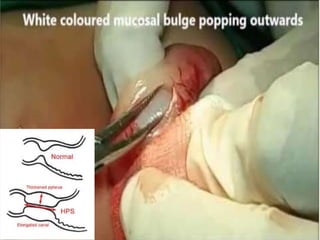
1. Ramstedt’s operation- After laparotomy,
hypertrophied muscle is cut out along the whole
length adequately until mucosa bulges out.
Muscosa not opened.
2. Laparoscopic pyloromyotomy
 Oral feeds reintroduced in 8-12 hrs, post-op vomiting
resolves in 24 hrs.


 Postoperative pyrexia
 Gastroenteritis
 Electrolyte imbalance
COMPLICATIONS OF
SURGERY

THANK YOU

IHPS

  • 1.
  • 2.
      Hypertrophy ofmusculature of pyloric antrum, especially the circular muscle fibres  Failure of pylorus to relax.  Gastric outlet obstruction  Duodenum is normal.  Increased risk if newborn gets erythromycin or azithromycin in first 14 days after birth. INFANTILE HYPERTROPHIC PYLORIC STENOSIS
  • 3.
  • 4.
      It ispostulated that abnormal innervation of the muscular layer leads to failure of relaxation of the pyloric muscle, increased synthesis of growth factors, and subsequent hypertrophy, hyperplasia, and obstruction.  Erythromycin has a prokinetic effect on gastric muscle contraction. ETIOLOGY
  • 5.
      Common infirst born males(4:1)  Incidence: 4 in 1000 live births  Familial link found.  Seen between 3rd and 6th weeks of age , time taken by the hypertrophied muscle to cause complete obstruction CLINICAL FEATURES
  • 6.
      Vomiting –forcible, projectile and non-bilious, may occur after every feed or only after some feed.  Despite stomach distension, affected infants seem to have an insatiable appetite and may cry inconsolably.  Constipation  Dehydration  Loss of weight SYMPTOMS
  • 7.
  • 8.
      Visible gastricperistalsis  Palpable lump of hypertrophied pylorus , better felt from left side, as a mobile, smooth, firm, olive like mass , with all borders made out, moves with respiration, with impaired resonance on percussion.  Electrolyte imbalance(hyponatremic, hypokalemic, metabolic alkalosis with paradoxic aciduria) SIGNS
  • 9.
      VGP andmass is better seen and felt  Vomiting is regurgitant  Anorexia common In premature infants,
  • 10.
      Biochemical assessment(pH>7.45,Cl- 3mEq/L)  X ray Abdomen  USG- doughnut sign, pylorus > 4 mm thickness,(normal<2mm) pyloric canal > 14 mm,(normal<10mm) cervix sign on long axis, target sign on short axis. INVESTIGATIONS
  • 11.
  • 12.
      Barium meal,not usually done. If done, shows string sign/railroad track sign/double track sign with pyloric obstruction.
  • 13.
  • 14.
      Gastroesophageal reflux(non projectile,no weight loss)  Viral gastroenteritis(not in <6wks old, diarrhea)  Duodenal atresia (bilious vomiting)  Adrenal crisis(hyperkalemic acidosis)  High intestinal obstruction( eg: volvulus neonatorum)  Intracranial haemorrhage DIFFERENTIAL DIAGNOSIS
  • 15.
      Correction ofdehydration and electrolyte imbalance.  Intravenous fluid therapy is begun with 0.45–0.9% saline, in 5–10% dextrose, with the addition of potassium chloride in concentrations of 30– 50mEq/L until the infant is rehydrated and the serum bicarbonate concentration is less than 30mEq/dL, which implies that the alkalosis has been corrected.  Most infants can be rehydrated within 24 hours TREATMENT
  • 16.
      Surgery – 1.Ramstedt’s operation- After laparotomy, hypertrophied muscle is cut out along the whole length adequately until mucosa bulges out. Muscosa not opened. 2. Laparoscopic pyloromyotomy  Oral feeds reintroduced in 8-12 hrs, post-op vomiting resolves in 24 hrs.
  • 17.
  • 18.
      Postoperative pyrexia Gastroenteritis  Electrolyte imbalance COMPLICATIONS OF SURGERY
  • 19.