Hypovolemic 
Shock 
Abdullatiff Sami AL-Rashed 
Block 3.2 
Collage of Medicine, KFU 
Al-Ahsa, Saudi Arabia
Presentation Outline
The Case 
Mustafa a 22 years old Saudi medical student was 
driving his car at a speed of 145 Km/Hour without 
fastened his seatbelt when he was involved in a single-vehicle 
automobile accident. 
When attended to by Red Crescent emergency team 
personnel, no information was available about the time 
of the accident 
When attended to by Red Crescent emergency team 
personnel, no information was available about the time 
of the accident
The Case 
He was found to be agitated and complaining of 
abdominal pain. His airway was patent 
At the scene, he was breathing at 32 breaths/ min 
with BP of 90/60 mmHg and a pulse of 130 Bpm. 
At the scene, he was breathing at 32 breaths/ min 
with BP of 90/60 mmHg and a pulse of 130 Bpm. 
He was placed in a hard cervical collar on a back 
board and transported to the emergency room 
He was placed in a hard cervical collar on a back 
board and transported to the emergency room
The Case 
Upon arrival his vital signs were the same, with 
temp. of 36 C. His abdomen was markedly 
distended. His hands and feet were cold, his legs 
mottled. 
A NG tube revealed green liquid. A urinary catheter 
revealed dark yellow urine. His Hb is 7. His FAST 
examination is positive in Morrison’s Pouch. 
A NG tube revealed green liquid. A urinary catheter 
revealed dark yellow urine. His Hb is 7. His FAST 
examination is positive in Morrison’s Pouch.
The Questions
IInnttrroodduuccttiioonn
Hypovolemic Shock 
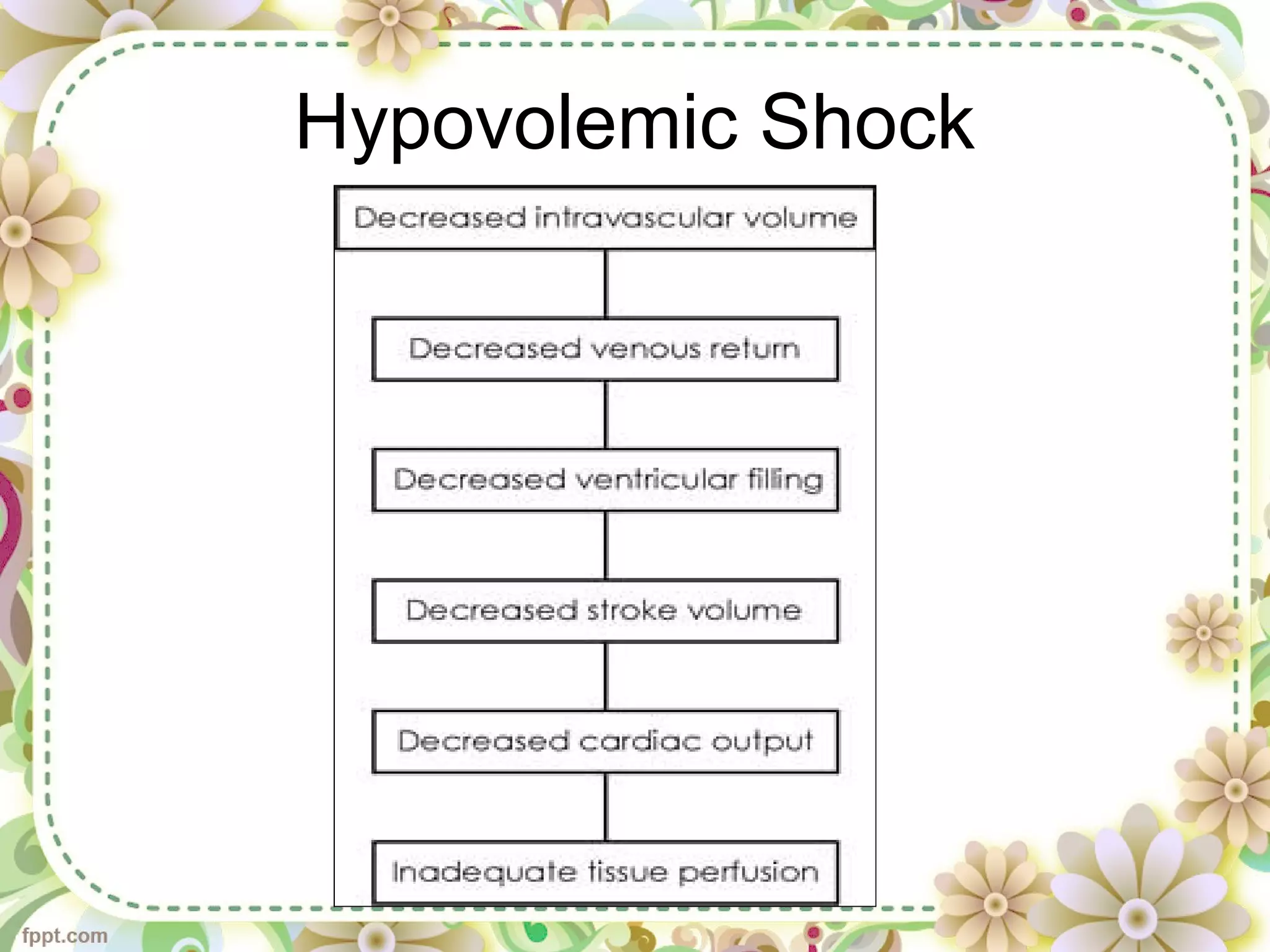
• Hypovolemic shock is an emergency condition in 
which severe blood and fluid loss make the heart 
unable to pump enough blood to the body due to 
decreased preload. 
• The diminished preload decreases the CO and the 
SVR increases in an effort to compensate for the 
diminished CO and maintain perfusion to the vital 
organs. 
• It leads to multiple organs failure.
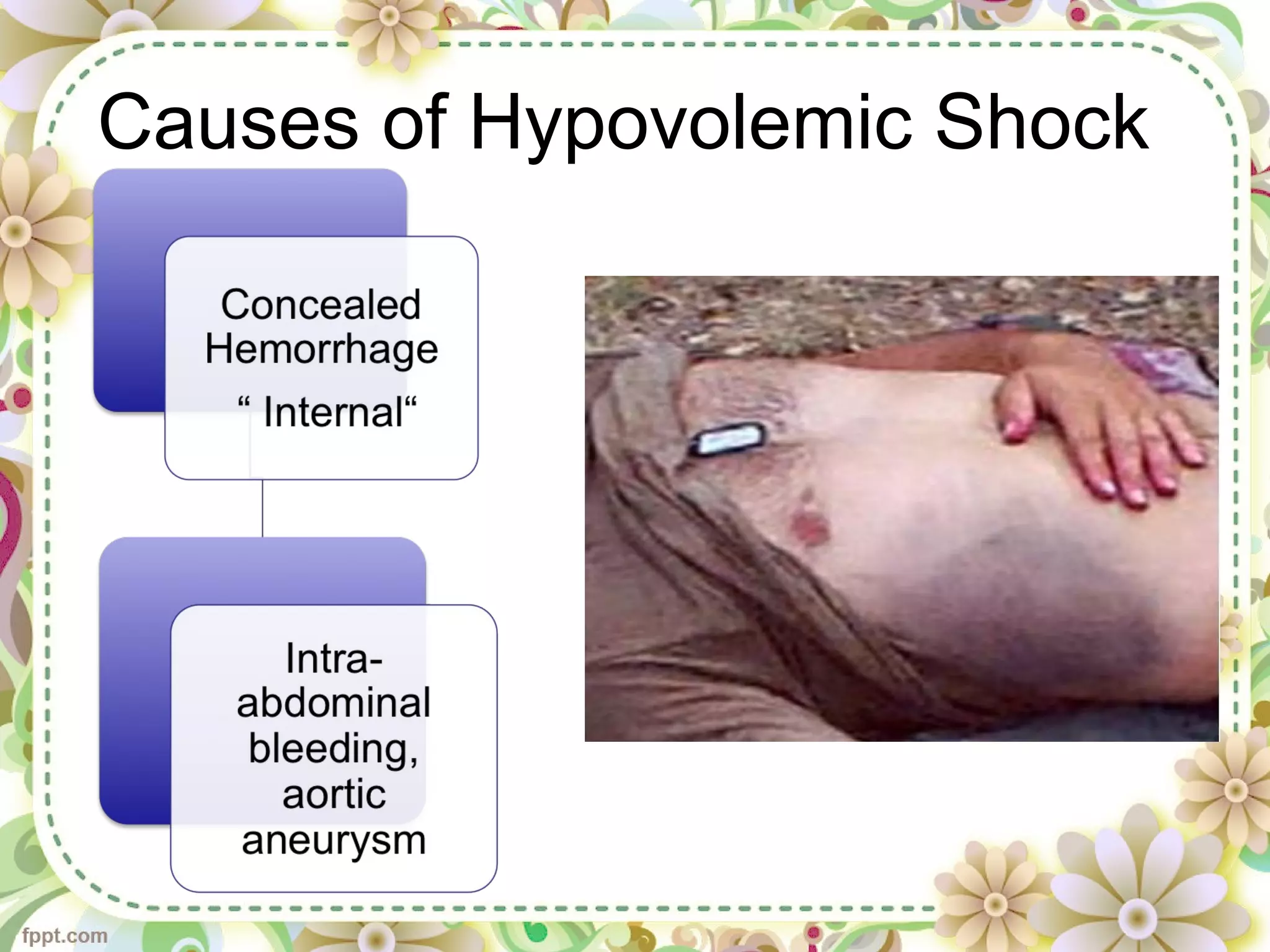
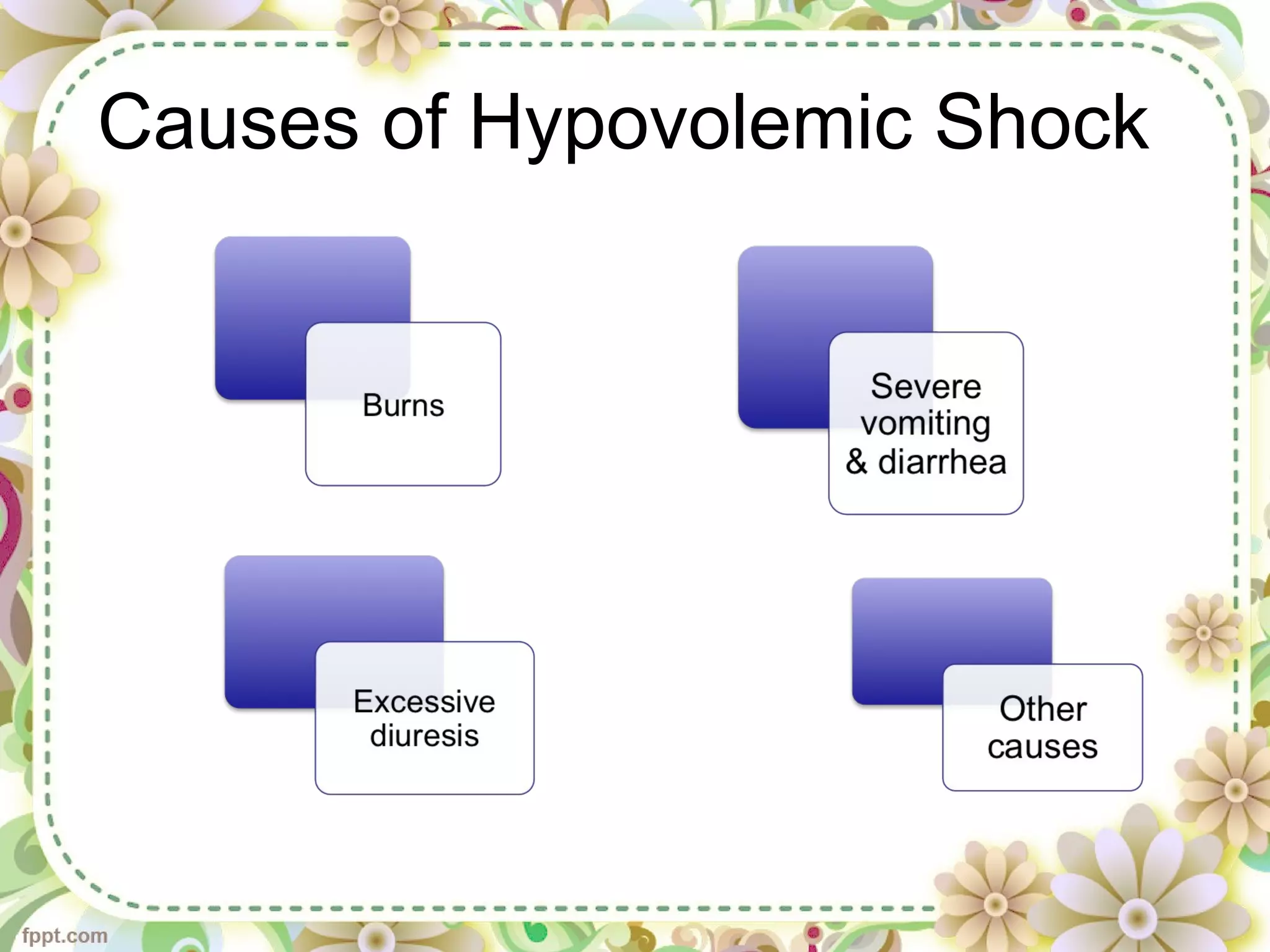
Causes of Hypovolemic Shock
Classification
3/ What acid/base category 
would be expected.
The Answer 
• The effect of fluid loss on acid-base balance is 
variable. 
• Although many patients maintain a normal 
extracellular pH, either metabolic acidosis or 
metabolic alkalosis can occur. 
• Lactate acidosis is common in cases of 
hypovolemic shock.
The Answer 
• Lactic acidosis , considered a type of metabolic acidosis, is 
a physiological condition characterized by low pH in body 
tissues and blood (acidosis) accompanied by the buildup of 
lactate. 
• Lactic acidosis is characterized by lactate levels >5 mmol/L 
and serum pH <7.35. 
• Type A lactic acidosis is the most common type of lactic 
acidosis in hypovolemic shock
4/ What is the effect of this 
kind of shock on kidneys, 
heart, lungs, brain, and 
intestines.
Kidneys 
• The urine output will decrease do to renal 
hypoperfusion. 
Blood loss 750- 
1500ml 
Blood loss 1500- 
2000 
Blood loss >2000 
Urinary output mildly 
affected 
Urinary output 
mildly/severely 
affected. 
Severe oliguria or 
anuria
Heart 
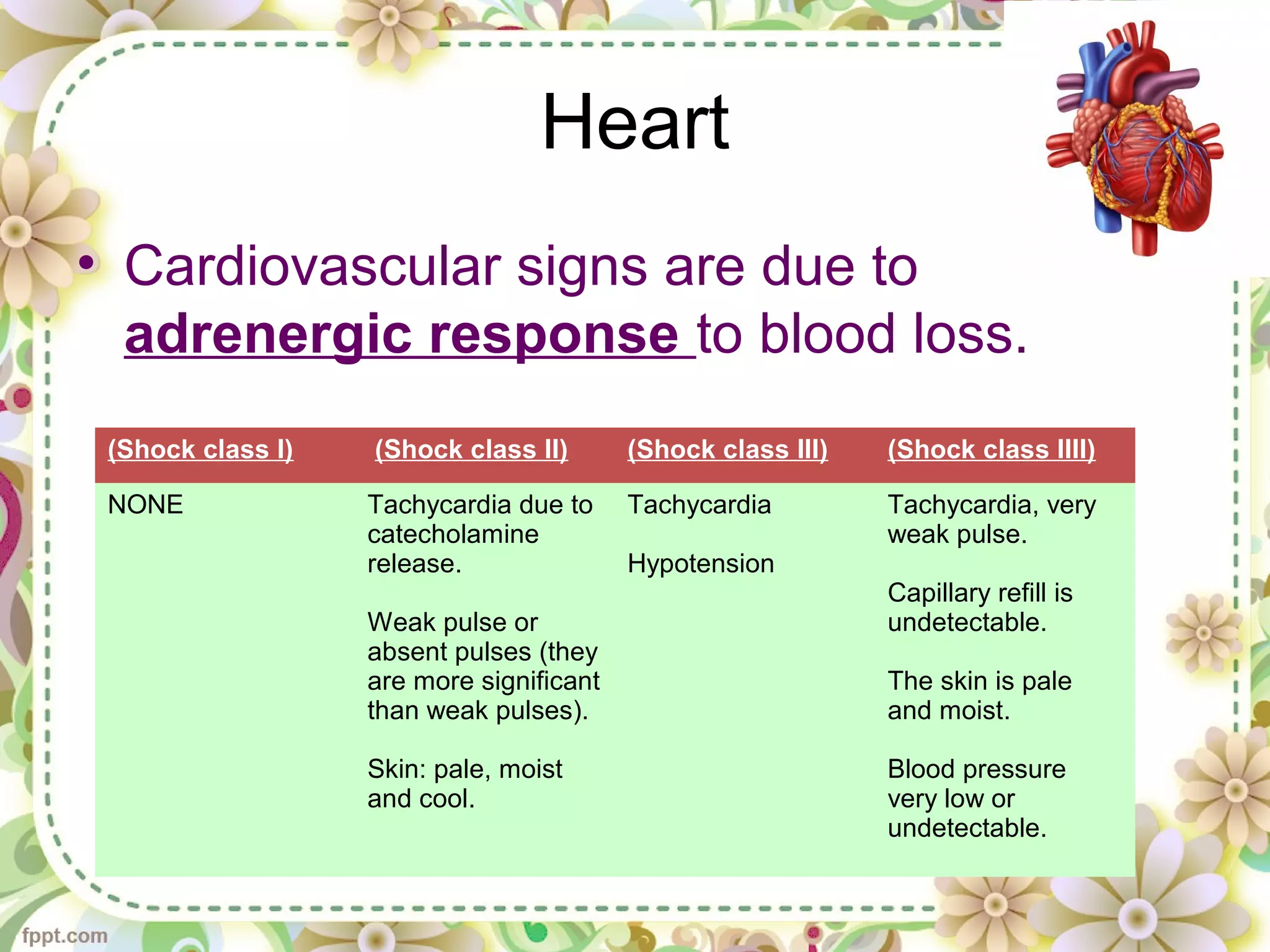
• Cardiovascular signs are due to 
adrenergic response to blood loss. 
(Shock class I) (Shock class II) (Shock class III) (Shock class IIII) 
NONE Tachycardia due to 
catecholamine 
release. 
Weak pulse or 
absent pulses (they 
are more significant 
than weak pulses). 
Skin: pale, moist 
and cool. 
Tachycardia 
Hypotension 
Tachycardia, very 
weak pulse. 
Capillary refill is 
undetectable. 
The skin is pale 
and moist. 
Blood pressure 
very low or 
undetectable.
Lungs 
• Tachypnoea due to central nervous 
system chemoreceptor stimulation by a 
decreased pH and hypoxia.
Brain 
• Symptoms are duo to cerebral 
hypoperfusion and acidosis. 
(Shock class I) (Shock class II) (Shock class III) (Shock class IIII) 
None or 
orthostatic 
dizziness. 
Restlessness, 
anxiety, 
agitation. 
Anxiety, 
confusion. 
Confusion, 
drowsiness, 
and coma
Intestine 
• Decreased intestinal motility due to intestinal 
hypoperfusion. 
• This leads to bilious aspirate “Green liquid in 
Nasogastric tube aspirate”
5/ What would be the cardiac 
output.
The Answer 
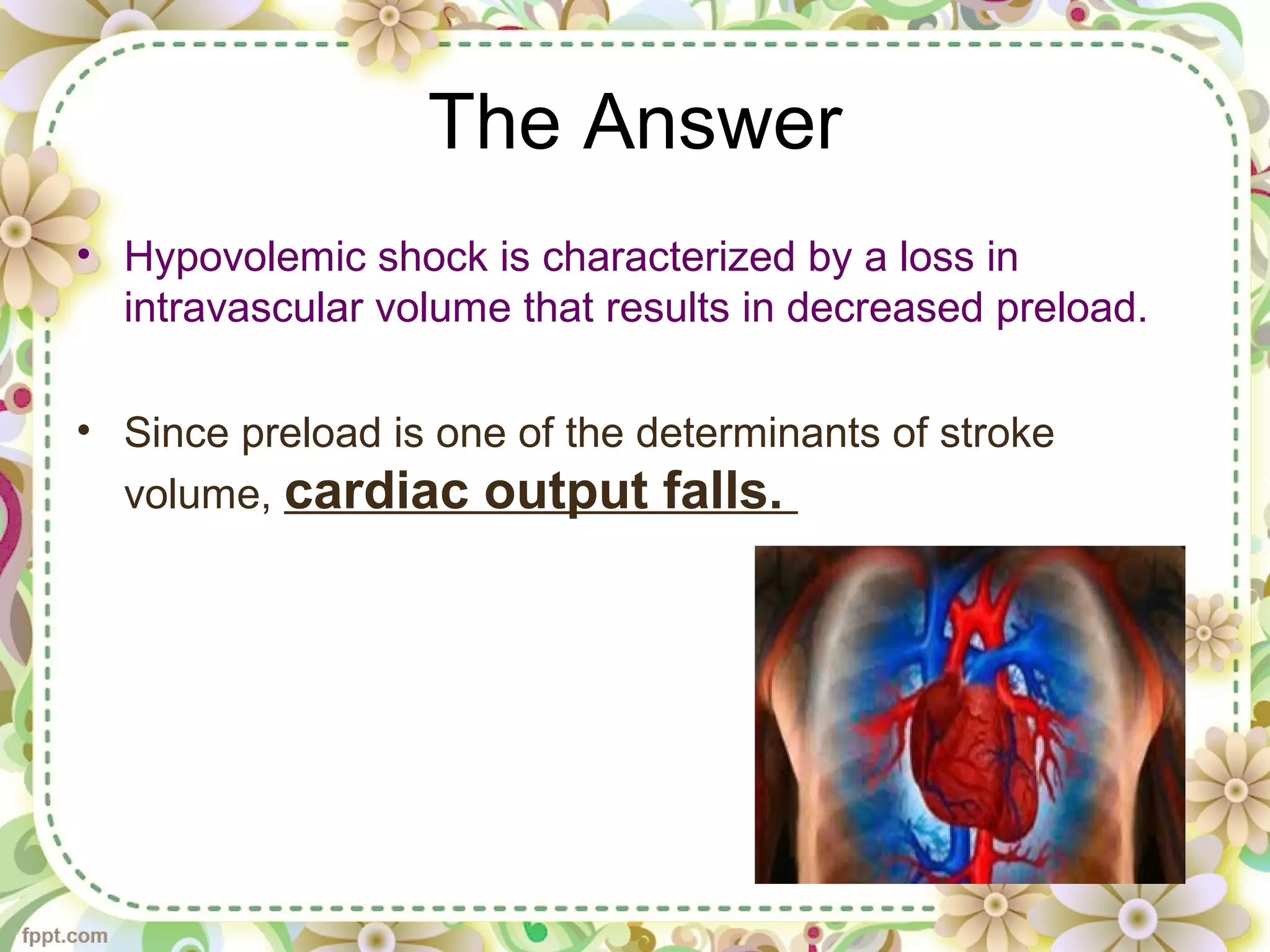
• Hypovolemic shock is characterized by a loss in 
intravascular volume that results in decreased preload. 
• Since preload is one of the determinants of stroke 
volume, cardiac output falls.
The Answer 
• The initial hemodynamic abnormality of fluid loss 
activates the compensatory mechanisms under 
neuroendocrine control, which maintain adequate central 
perfusion despite the fall in cardiac output. 
• However, systemic vasoconstriction may lead to tissue 
ischemia, hypoxia, and eventually to altered cellular 
function and global organ dysfunction.
Hypovolemic Shock
Hypovolemic Shock

Hypovolemic Shock

  • 1.
    Hypovolemic Shock AbdullatiffSami AL-Rashed Block 3.2 Collage of Medicine, KFU Al-Ahsa, Saudi Arabia
  • 2.
  • 3.
    The Case Mustafaa 22 years old Saudi medical student was driving his car at a speed of 145 Km/Hour without fastened his seatbelt when he was involved in a single-vehicle automobile accident. When attended to by Red Crescent emergency team personnel, no information was available about the time of the accident When attended to by Red Crescent emergency team personnel, no information was available about the time of the accident
  • 4.
    The Case Hewas found to be agitated and complaining of abdominal pain. His airway was patent At the scene, he was breathing at 32 breaths/ min with BP of 90/60 mmHg and a pulse of 130 Bpm. At the scene, he was breathing at 32 breaths/ min with BP of 90/60 mmHg and a pulse of 130 Bpm. He was placed in a hard cervical collar on a back board and transported to the emergency room He was placed in a hard cervical collar on a back board and transported to the emergency room
  • 5.
    The Case Uponarrival his vital signs were the same, with temp. of 36 C. His abdomen was markedly distended. His hands and feet were cold, his legs mottled. A NG tube revealed green liquid. A urinary catheter revealed dark yellow urine. His Hb is 7. His FAST examination is positive in Morrison’s Pouch. A NG tube revealed green liquid. A urinary catheter revealed dark yellow urine. His Hb is 7. His FAST examination is positive in Morrison’s Pouch.
  • 6.
  • 7.
  • 8.
    Hypovolemic Shock •Hypovolemic shock is an emergency condition in which severe blood and fluid loss make the heart unable to pump enough blood to the body due to decreased preload. • The diminished preload decreases the CO and the SVR increases in an effort to compensate for the diminished CO and maintain perfusion to the vital organs. • It leads to multiple organs failure.
  • 9.
  • 10.
  • 11.
  • 12.
  • 13.
    3/ What acid/basecategory would be expected.
  • 14.
    The Answer •The effect of fluid loss on acid-base balance is variable. • Although many patients maintain a normal extracellular pH, either metabolic acidosis or metabolic alkalosis can occur. • Lactate acidosis is common in cases of hypovolemic shock.
  • 15.
    The Answer •Lactic acidosis , considered a type of metabolic acidosis, is a physiological condition characterized by low pH in body tissues and blood (acidosis) accompanied by the buildup of lactate. • Lactic acidosis is characterized by lactate levels >5 mmol/L and serum pH <7.35. • Type A lactic acidosis is the most common type of lactic acidosis in hypovolemic shock
  • 16.
    4/ What isthe effect of this kind of shock on kidneys, heart, lungs, brain, and intestines.
  • 17.
    Kidneys • Theurine output will decrease do to renal hypoperfusion. Blood loss 750- 1500ml Blood loss 1500- 2000 Blood loss >2000 Urinary output mildly affected Urinary output mildly/severely affected. Severe oliguria or anuria
  • 18.
    Heart • Cardiovascularsigns are due to adrenergic response to blood loss. (Shock class I) (Shock class II) (Shock class III) (Shock class IIII) NONE Tachycardia due to catecholamine release. Weak pulse or absent pulses (they are more significant than weak pulses). Skin: pale, moist and cool. Tachycardia Hypotension Tachycardia, very weak pulse. Capillary refill is undetectable. The skin is pale and moist. Blood pressure very low or undetectable.
  • 19.
    Lungs • Tachypnoeadue to central nervous system chemoreceptor stimulation by a decreased pH and hypoxia.
  • 20.
    Brain • Symptomsare duo to cerebral hypoperfusion and acidosis. (Shock class I) (Shock class II) (Shock class III) (Shock class IIII) None or orthostatic dizziness. Restlessness, anxiety, agitation. Anxiety, confusion. Confusion, drowsiness, and coma
  • 21.
    Intestine • Decreasedintestinal motility due to intestinal hypoperfusion. • This leads to bilious aspirate “Green liquid in Nasogastric tube aspirate”
  • 22.
    5/ What wouldbe the cardiac output.
  • 23.
    The Answer •Hypovolemic shock is characterized by a loss in intravascular volume that results in decreased preload. • Since preload is one of the determinants of stroke volume, cardiac output falls.
  • 24.
    The Answer •The initial hemodynamic abnormality of fluid loss activates the compensatory mechanisms under neuroendocrine control, which maintain adequate central perfusion despite the fall in cardiac output. • However, systemic vasoconstriction may lead to tissue ischemia, hypoxia, and eventually to altered cellular function and global organ dysfunction.
  • 25.