HYPOVOLEMIC
SHOCK.
GROUP 2
Definition and causes.
 Definition of Hypovolemic Shock
 Hypovolemic shock is a serious and potentially life-threatening medical condition characterized by a significant
decrease in the total circulating blood volume. This decrease in blood volume can be caused by both blood loss
and/or fluid loss, leading to a state where the body's organs and tissues are deprived of an adequate blood supply,
resulting in impaired oxygen delivery and potential organ failure. Hypovolemic shock results from a loss of more
than 20% of the body’s blood volume or fluid content.
 Causes of Hypovolemic Shock
 The causes of hypovolemic shock can be attributed to several factors, including:
 1. Blood Loss: Significant loss of blood, whether due to trauma, injury, or internal bleeding, can lead to
hypovolemic shock. This can result from events such as severe external injuries, internal hemorrhage, or
gastrointestinal bleeding.
 2. Fluid Loss: Loss of fluids from the body, such as in cases of severe dehydration, severe vomiting, or diarrhea,
can also contribute to hypovolemic shock.
 3. Severe Burns: Extensive burns can lead to plasma and fluid loss and subsequent hypovolemic shock, as the
body's ability to retain fluids is compromised.
 4. Other Causes: Certain medical conditions or situations, such as severe dehydration, heatstroke, or excessive
sweating, can also lead to a decrease in blood volume and potentially result in hypovolemic shock.
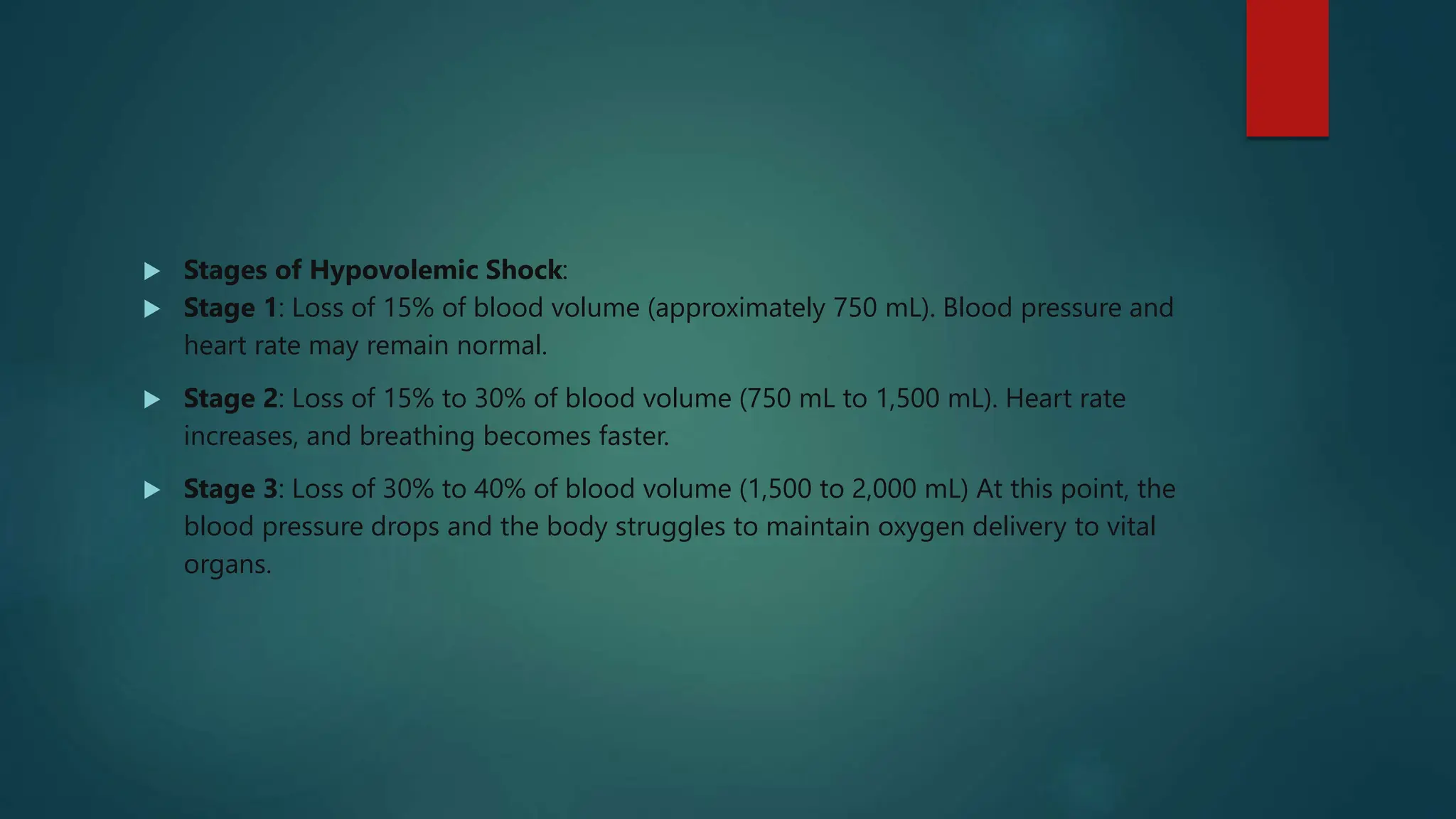
 Stages of Hypovolemic Shock:
 Stage 1: Loss of 15% of blood volume (approximately 750 mL). Blood pressure and
heart rate may remain normal.
 Stage 2: Loss of 15% to 30% of blood volume (750 mL to 1,500 mL). Heart rate
increases, and breathing becomes faster.
 Stage 3: Loss of 30% to 40% of blood volume (1,500 to 2,000 mL) At this point, the
blood pressure drops and the body struggles to maintain oxygen delivery to vital
organs.
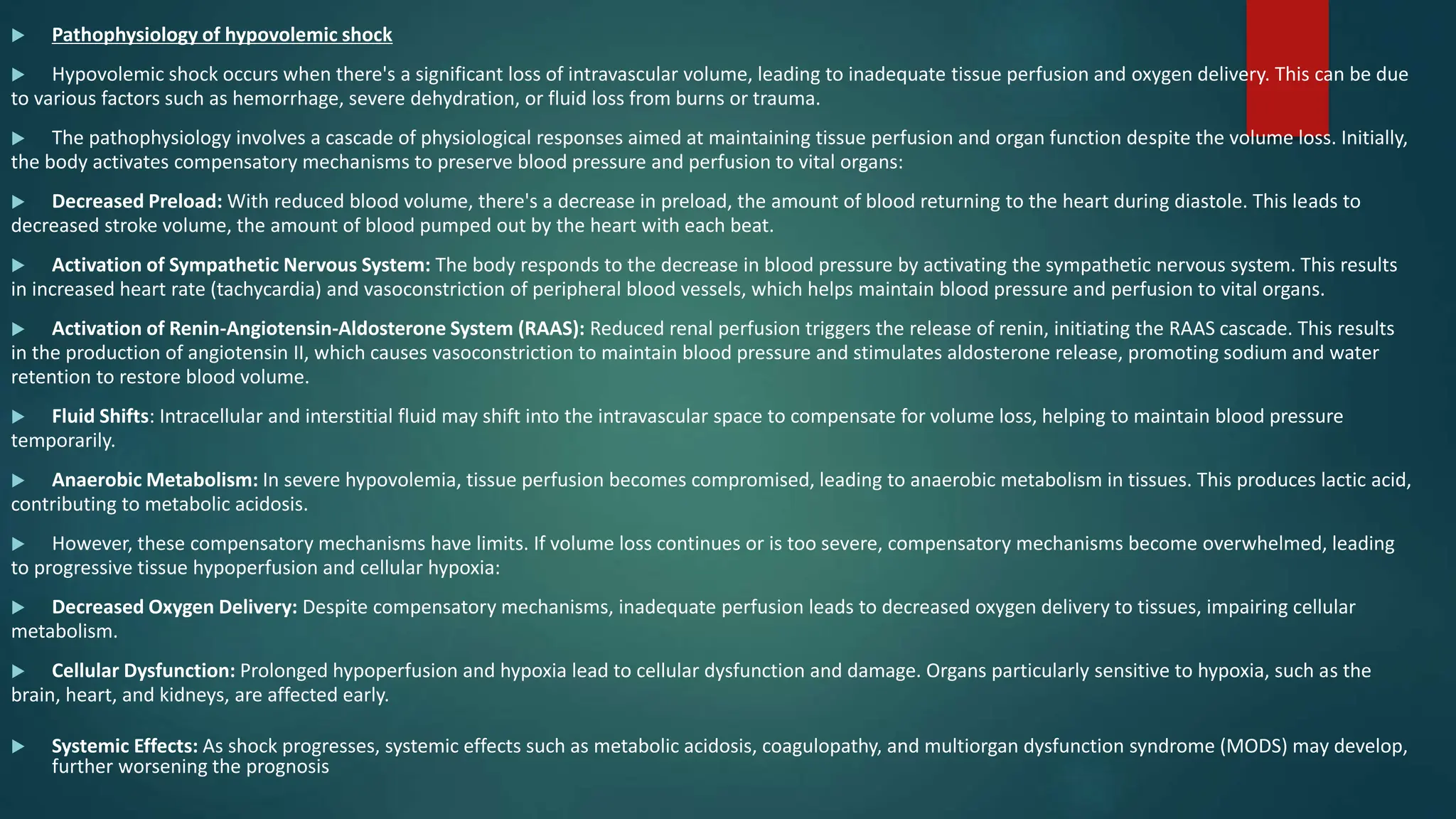
 Pathophysiology of hypovolemic shock
 Hypovolemic shock occurs when there's a significant loss of intravascular volume, leading to inadequate tissue perfusion and oxygen delivery. This can be due
to various factors such as hemorrhage, severe dehydration, or fluid loss from burns or trauma.
 The pathophysiology involves a cascade of physiological responses aimed at maintaining tissue perfusion and organ function despite the volume loss. Initially,
the body activates compensatory mechanisms to preserve blood pressure and perfusion to vital organs:
 Decreased Preload: With reduced blood volume, there's a decrease in preload, the amount of blood returning to the heart during diastole. This leads to
decreased stroke volume, the amount of blood pumped out by the heart with each beat.
 Activation of Sympathetic Nervous System: The body responds to the decrease in blood pressure by activating the sympathetic nervous system. This results
in increased heart rate (tachycardia) and vasoconstriction of peripheral blood vessels, which helps maintain blood pressure and perfusion to vital organs.
 Activation of Renin-Angiotensin-Aldosterone System (RAAS): Reduced renal perfusion triggers the release of renin, initiating the RAAS cascade. This results
in the production of angiotensin II, which causes vasoconstriction to maintain blood pressure and stimulates aldosterone release, promoting sodium and water
retention to restore blood volume.
 Fluid Shifts: Intracellular and interstitial fluid may shift into the intravascular space to compensate for volume loss, helping to maintain blood pressure
temporarily.
 Anaerobic Metabolism: In severe hypovolemia, tissue perfusion becomes compromised, leading to anaerobic metabolism in tissues. This produces lactic acid,
contributing to metabolic acidosis.
 However, these compensatory mechanisms have limits. If volume loss continues or is too severe, compensatory mechanisms become overwhelmed, leading
to progressive tissue hypoperfusion and cellular hypoxia:
 Decreased Oxygen Delivery: Despite compensatory mechanisms, inadequate perfusion leads to decreased oxygen delivery to tissues, impairing cellular
metabolism.
 Cellular Dysfunction: Prolonged hypoperfusion and hypoxia lead to cellular dysfunction and damage. Organs particularly sensitive to hypoxia, such as the
brain, heart, and kidneys, are affected early.
 Systemic Effects: As shock progresses, systemic effects such as metabolic acidosis, coagulopathy, and multiorgan dysfunction syndrome (MODS) may develop,
further worsening the prognosis
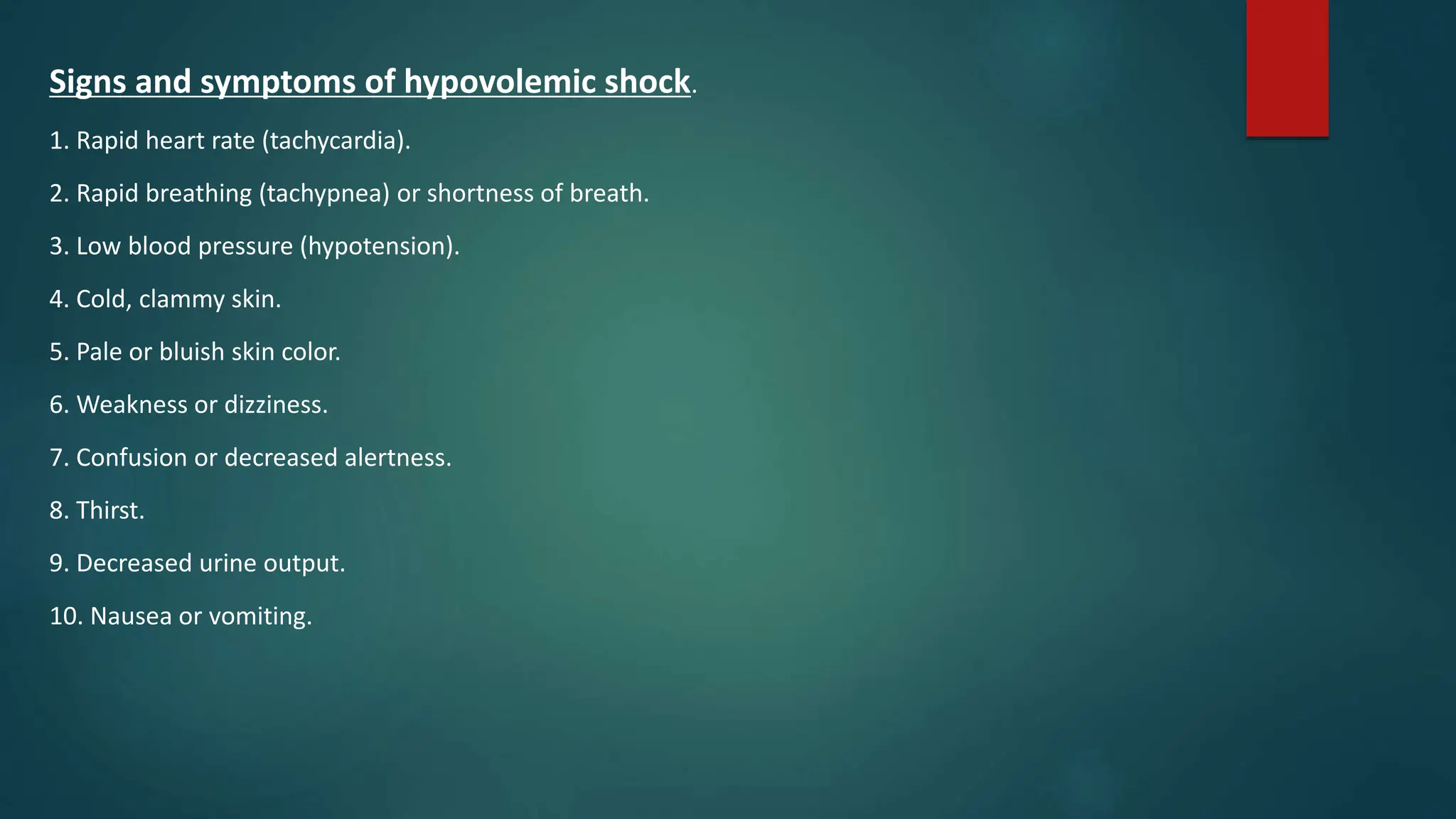
Signs and symptoms of hypovolemic shock.
1. Rapid heart rate (tachycardia).
2. Rapid breathing (tachypnea) or shortness of breath.
3. Low blood pressure (hypotension).
4. Cold, clammy skin.
5. Pale or bluish skin color.
6. Weakness or dizziness.
7. Confusion or decreased alertness.
8. Thirst.
9. Decreased urine output.
10. Nausea or vomiting.
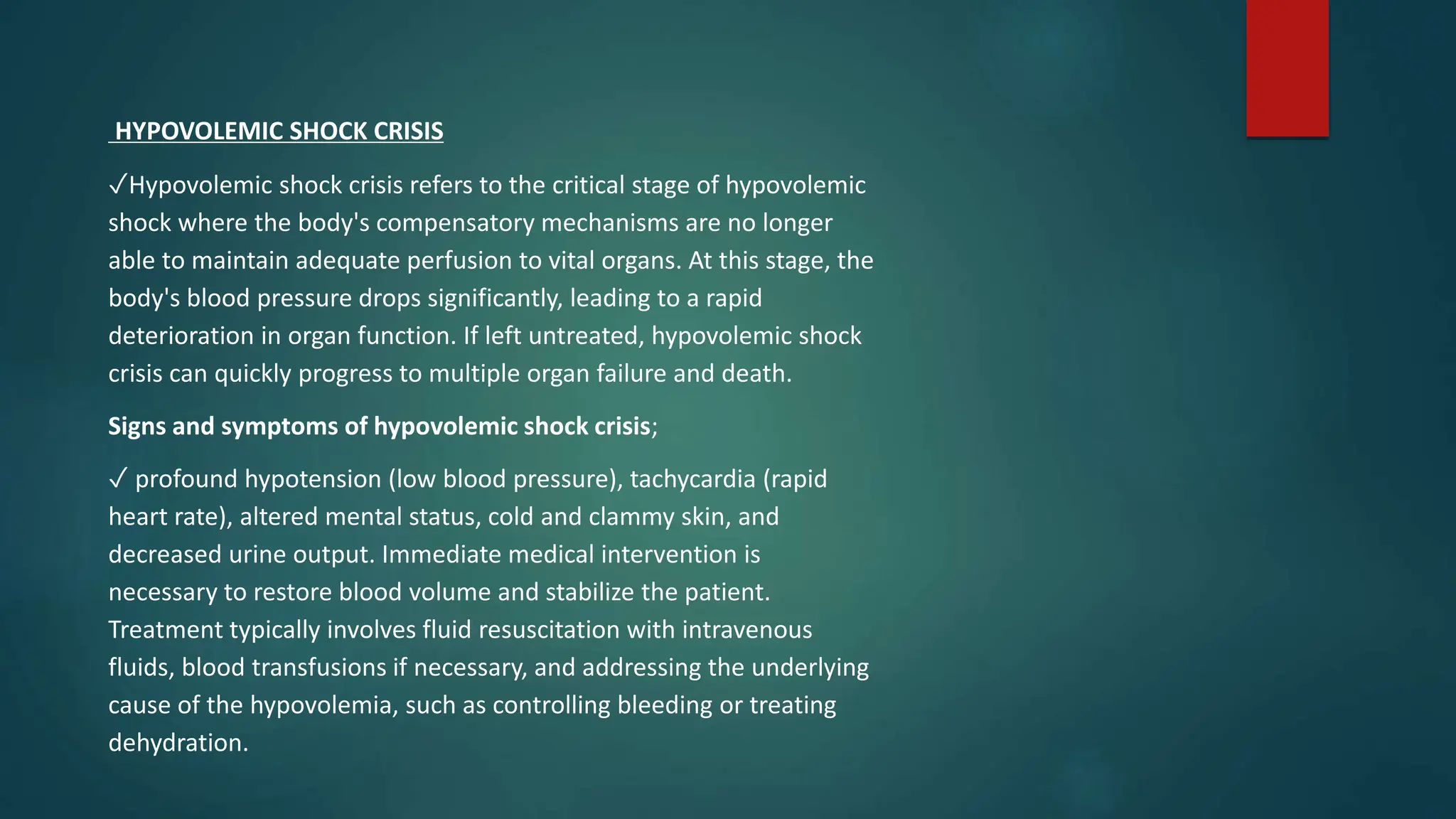
HYPOVOLEMIC SHOCK CRISIS
✓Hypovolemic shock crisis refers to the critical stage of hypovolemic
shock where the body's compensatory mechanisms are no longer
able to maintain adequate perfusion to vital organs. At this stage, the
body's blood pressure drops significantly, leading to a rapid
deterioration in organ function. If left untreated, hypovolemic shock
crisis can quickly progress to multiple organ failure and death.
Signs and symptoms of hypovolemic shock crisis;
✓ profound hypotension (low blood pressure), tachycardia (rapid
heart rate), altered mental status, cold and clammy skin, and
decreased urine output. Immediate medical intervention is
necessary to restore blood volume and stabilize the patient.
Treatment typically involves fluid resuscitation with intravenous
fluids, blood transfusions if necessary, and addressing the underlying
cause of the hypovolemia, such as controlling bleeding or treating
dehydration.
Compensatory mechanisms in hypovolemic shock crisis
✓ profound hypotension (low blood pressure), tachycardia (rapid heart rate), altered
mental status, cold and clammy skin, and decreased urine output. Immediate medical
intervention is necessary to restore blood volume and stabilize the patient. Treatment
typically involves fluid resuscitation with intravenous fluids, blood transfusions if
necessary, and addressing the underlying cause of the hypovolemia, such as
controlling bleeding or treating dehydration.
During the hypovolemic shock crisis, the body attempts to compensate for the loss of
blood volume by increasing the blood flow to vital organs.
The body activates several compensatory mechanisms to maintain blood pressure and
perfusion to vital organs. These mechanisms are aimed at increasing cardiac output
and redistributing blood flow. Some key compensatory mechanisms include:
✓Sympathetic Nervous System Activation: The sympathetic nervous system is
activated, leading to the release of catecholamines (such as epinephrine and
norepinephrine). This results in increased heart rate (tachycardia) and peripheral
vasoconstriction, which helps maintain blood pressure.
✓Renin-Angiotensin-Aldosterone System (RAAS) Activation: Reduced blood flow to the kidneys stimulates the release
of renin, which leads to the production of angiotensin II. Angiotensin II causes vasoconstriction and stimulates the
release of aldosterone, which promotes sodium and water retention to increase blood volume.
✓Antidiuretic Hormone (ADH) Release: Also known as vasopressin, ADH is released from the pituitary gland in
response to decreased blood volume. ADH causes the kidneys to reabsorb more water, reducing urine output and
helping to maintain blood volume.
✓Increase in Myocardial Contractility: Catecholamines released during shock increase the strength of myocardial
contractions, which helps maintain cardiac output despite reduced blood volume.
✓Redistribution of Blood Flow: Blood flow is redirected away from non-vital organs, such as the skin and
gastrointestinal tract, and towards essential organs like the heart, brain, and kidneys. This redistribution helps ensure
an adequate supply of oxygen and nutrients to these critical organs.
Nursing assessment of a patient with hypovolemic Shock.
HISTORY: A thorough history of the patient’s presenting problem may reveal risk factors for hypovolemic shock. Patients
experiencing significant blood loss because of gastric hemorrhage or liver or splenic rupture from trauma require a rapid
replacement of circulating volume to prevent the consequences of hypovolemia.
PHYSICAL FINDINGS: Patients with hypovolemic shock have the following signs and symptoms caused by poor organ
perfusion:
• Altered mentation, ranging from lethargy to unresponsiveness
• Rapid and deep respirations, which gradually become labored and shallower as the patient’s condition deteriorates
• Cool and clammy skin, with weak and thready pulses
• Tachycardia from activation of the sympathetic nervous system
• Hypotension
• Decreased urine output; urine is dark and concentrated because the kidneys are conserving fluid.ce pooling of blood in
the extremities.
Nursing diagnosis
1.Decreased Cardiac Output related to decreased circulating volume and inadequate tissue
perfusion as evidenced by hypotension and weak peripheral pulses.
2.Deficient Fluid Volume related to excessive fluid loss as evidenced by decreased blood
pressure and decreased urine output.
3.Anxiety related to modifications in medical status, fear of dying and unfamiliar
surroundings secondary to hypovolemia as evidenced by uncertainty, difficulties
concentrating, increased alertness, increased inquiry, and sympathetic stimulation.
4.Ineffective Tissue Perfusion related to reduced stroke volume, reduced preload, impaired
venous return, and significant loss of blood secondary to hypovolemia as evidenced by
changed mental status, cold, clammy skin, pallid complexion, cyanosis, prolonged capillary
refill, vertigo, deep respirations, and a feeble, thready pulse.
5.Risk for Infection related to compromised immune response and potential exposure to
pathogens during treatment as evidenced by decreased white blood cell count and invasive
procedure.
6. Risk for impaired gas exchange.
Nursing planning and goals.
 The client will maintain adequate cardiac output, as evidenced by strong peripheral
pulses, systolic BP within 20 mm Hg of baseline, HR 60 to 100 beats per minute with
a regular rhythm, urinary output of 30 ml/hr or greater, warm and dry skin, and
normal level of consciousness.
 The client will be normovolemic as evidenced by HR 60 to 100 beats per minute,
systolic BP greater than or equal to 90 mm Hg, absence of orthostasis, urinary
output greater than 30ml/hr, and normal skin turgor.
 The client will experience a decrease in anxiety levels.
 The client will experience improved gas exchange as evidenced by improved
respiration rate and depth.
Nursing interventions.
1.Decreased Cardiac Output:
Monitor vital signs, including blood pressure, heart rate, and oxygen saturation, frequently to assess cardiac function.
Administer intravenous fluids, blood products, or vasopressors as prescribed to restore and maintain adequate circulating
blood volume.
Position the patient in a semi-Fowler’s position to optimize venous return and cardiac output.
Provide supplemental oxygen as needed to support oxygenation and cardiac function.
Monitor the patient’s vital signs frequently, including blood pressure, heart rate, and oxygen saturation levels.
Administer intravenous fluids and blood products as prescribed to restore circulating volume and improve tissue perfusion.
Position the patient in a supine position with the legs elevated, if tolerated, to promote venous return and improve cardiac
output.
Administer prescribed vasopressor medications, such as norepinephrine or dopamine, to increase blood pressure and
improve cardiac function.
Continuously monitor cardiac rhythm and assess for signs of cardiac compromises, such as chest pain or dysrhythmias.
2.Ineffective Tissue Perfusion:
Assess the patient’s skin color, temperature, capillary refill, and peripheral pulses regularly.
Elevate the patient’s legs to promote venous return and improve tissue perfusion.
Administer fluids intravenously to restore intravascular volume and improve tissue perfusion.
Collaborate with the healthcare team to monitor laboratory values, such as hemoglobin and hematocrit, to guide fluid and
blood product replacement.
3.Risk for Impaired Gas Exchange:
 Monitor the patient’s respiratory status, including respiratory rate, depth, and oxygen saturation.
Administer supplemental oxygen as prescribed to maintain adequate oxygenation.
Assist the patient with deep breathing exercises and provide pain management to minimize respiratory effort and improve
gas exchange.
Collaborate with the healthcare team to obtain arterial blood gases and pulse oximetry readings to assess oxygenation
and guide interventions.
4.Anxiety:
 Provide a calm and reassuring environment to help alleviate anxiety.
 Use therapeutic communication techniques to provide emotional support and address the patient’s concerns.
 Educate the patient and family about the condition, treatment, and progress to promote understanding and reduce
anxiety.
 Offer relaxation techniques, such as guided imagery or deep breathing exercises, to help the patient manage anxiety.
5.Deficient Fluid Volume:
 Assess the patient’s fluid balance by monitoring intake and output, including urine output, and measuring daily weights.
 Administer intravenous fluids, such as crystalloids or colloids, as prescribed to restore fluid volume and maintain
adequate hydration.
 Monitor electrolyte levels regularly and provide appropriate replacement based on laboratory results and the patient’s
clinical status.
 Assess for signs of fluid overload, such as crackles in the lungs or peripheral edema, and adjust fluid therapy accordingly.
 Collaborate with a registered dietitian to develop a nutrition plan that supports fluid and electrolyte balance during
recovery.
6.Risk for Infection:
 Implement strict infection control measures, including proper hand hygiene and adherence to aseptic techniques
during invasive procedures.
 Monitor the patient’s temperature regularly and assess for signs of infection, such as increased white blood cell count
or localized redness and swelling.
 Administer prescribed prophylactic antibiotics as ordered to prevent infection, especially if the patient has an open
wound or surgical site.
 Educate the patient and family/caregivers about the importance of maintaining good hygiene and seeking prompt
medical attention for any signs of infection.
 Collaborate with the healthcare team to ensure timely evaluation and management of any signs of systemic infection.
Nursing Evaluation for Hypovolemic Shock:
 Improved cardiac output as evidenced by stabilized vital signs and adequate tissue perfusion.
 Restoration of effective tissue perfusion demonstrated by improved skin color, temperature, capillary refill, and peripheral
pulses.
 Maintained or improved gas exchange demonstrated by normal or improved respiratory rate, depth, and oxygen saturation.
 Reduced anxiety levels are evidenced by the patient’s ability to remain calm and participate in the care process.
 The patient’s cardiac output improves, as evidenced by stable blood pressure, improved peripheral pulses, and increased
tissue perfusion.
 The patient’s fluid volume is restored, with improved blood pressure and urine output within normal range.
 The patient remains free from infection or shows signs of infection resolution with appropriate interventions.
 The patient and family/caregivers actively engage in self-care strategies and seek appropriate support when needed.
Complications of hypovolemic shock.
Some of the potential complications include:
1. Organ failure: Severe reduction in blood volume can lead to inadequate perfusion of vital organs such as the kidneys, liver, and
brain, potentially causing organ dysfunction or failure.
2. Acute respiratory distress syndrome (ARDS): Hypovolemic shock can lead to insufficient oxygen delivery to the lungs, resulting in
ARDS, a condition characterized by severe respiratory failure.
3. Cardiac complications: Inadequate blood volume can strain the heart, leading to arrhythmias (irregular heartbeats), myocardial
infarction (heart attack), or cardiac arrest.
4. Kidney injury: Reduced blood flow to the kidneys can cause acute kidney injury (AKI) or renal failure, leading to electrolyte
imbalances and fluid retention.
5. Neurological complications: Decreased blood flow to the brain can result in neurological deficits, including confusion, seizures, o
coma.
6. Metabolic acidosis: Hypovolemic shock can lead to an imbalance in the body's acid-base status, resulting in metabolic acidosis,
which can impair organ function.
7. Compartment syndrome: In cases of trauma leading to hypovolemic shock, increased pressure within muscle compartments can
lead to compartment syndrome, causing tissue damage and potentially requiring surgical intervention.
8. Death: If left untreated, hypovolemic shock can be fatal due to the failure of multiple organ systems.
THE END OF HYPOVOLEMIC SHOCK.

HYPOVOLEMIC SHOCK.management in nursing pptx

  • 1.
  • 2.
    Definition and causes. Definition of Hypovolemic Shock  Hypovolemic shock is a serious and potentially life-threatening medical condition characterized by a significant decrease in the total circulating blood volume. This decrease in blood volume can be caused by both blood loss and/or fluid loss, leading to a state where the body's organs and tissues are deprived of an adequate blood supply, resulting in impaired oxygen delivery and potential organ failure. Hypovolemic shock results from a loss of more than 20% of the body’s blood volume or fluid content.  Causes of Hypovolemic Shock  The causes of hypovolemic shock can be attributed to several factors, including:  1. Blood Loss: Significant loss of blood, whether due to trauma, injury, or internal bleeding, can lead to hypovolemic shock. This can result from events such as severe external injuries, internal hemorrhage, or gastrointestinal bleeding.  2. Fluid Loss: Loss of fluids from the body, such as in cases of severe dehydration, severe vomiting, or diarrhea, can also contribute to hypovolemic shock.  3. Severe Burns: Extensive burns can lead to plasma and fluid loss and subsequent hypovolemic shock, as the body's ability to retain fluids is compromised.  4. Other Causes: Certain medical conditions or situations, such as severe dehydration, heatstroke, or excessive sweating, can also lead to a decrease in blood volume and potentially result in hypovolemic shock.
  • 3.
     Stages ofHypovolemic Shock:  Stage 1: Loss of 15% of blood volume (approximately 750 mL). Blood pressure and heart rate may remain normal.  Stage 2: Loss of 15% to 30% of blood volume (750 mL to 1,500 mL). Heart rate increases, and breathing becomes faster.  Stage 3: Loss of 30% to 40% of blood volume (1,500 to 2,000 mL) At this point, the blood pressure drops and the body struggles to maintain oxygen delivery to vital organs.
  • 4.
     Pathophysiology ofhypovolemic shock  Hypovolemic shock occurs when there's a significant loss of intravascular volume, leading to inadequate tissue perfusion and oxygen delivery. This can be due to various factors such as hemorrhage, severe dehydration, or fluid loss from burns or trauma.  The pathophysiology involves a cascade of physiological responses aimed at maintaining tissue perfusion and organ function despite the volume loss. Initially, the body activates compensatory mechanisms to preserve blood pressure and perfusion to vital organs:  Decreased Preload: With reduced blood volume, there's a decrease in preload, the amount of blood returning to the heart during diastole. This leads to decreased stroke volume, the amount of blood pumped out by the heart with each beat.  Activation of Sympathetic Nervous System: The body responds to the decrease in blood pressure by activating the sympathetic nervous system. This results in increased heart rate (tachycardia) and vasoconstriction of peripheral blood vessels, which helps maintain blood pressure and perfusion to vital organs.  Activation of Renin-Angiotensin-Aldosterone System (RAAS): Reduced renal perfusion triggers the release of renin, initiating the RAAS cascade. This results in the production of angiotensin II, which causes vasoconstriction to maintain blood pressure and stimulates aldosterone release, promoting sodium and water retention to restore blood volume.  Fluid Shifts: Intracellular and interstitial fluid may shift into the intravascular space to compensate for volume loss, helping to maintain blood pressure temporarily.  Anaerobic Metabolism: In severe hypovolemia, tissue perfusion becomes compromised, leading to anaerobic metabolism in tissues. This produces lactic acid, contributing to metabolic acidosis.  However, these compensatory mechanisms have limits. If volume loss continues or is too severe, compensatory mechanisms become overwhelmed, leading to progressive tissue hypoperfusion and cellular hypoxia:  Decreased Oxygen Delivery: Despite compensatory mechanisms, inadequate perfusion leads to decreased oxygen delivery to tissues, impairing cellular metabolism.  Cellular Dysfunction: Prolonged hypoperfusion and hypoxia lead to cellular dysfunction and damage. Organs particularly sensitive to hypoxia, such as the brain, heart, and kidneys, are affected early.  Systemic Effects: As shock progresses, systemic effects such as metabolic acidosis, coagulopathy, and multiorgan dysfunction syndrome (MODS) may develop, further worsening the prognosis
  • 5.
    Signs and symptomsof hypovolemic shock. 1. Rapid heart rate (tachycardia). 2. Rapid breathing (tachypnea) or shortness of breath. 3. Low blood pressure (hypotension). 4. Cold, clammy skin. 5. Pale or bluish skin color. 6. Weakness or dizziness. 7. Confusion or decreased alertness. 8. Thirst. 9. Decreased urine output. 10. Nausea or vomiting.
  • 6.
    HYPOVOLEMIC SHOCK CRISIS ✓Hypovolemicshock crisis refers to the critical stage of hypovolemic shock where the body's compensatory mechanisms are no longer able to maintain adequate perfusion to vital organs. At this stage, the body's blood pressure drops significantly, leading to a rapid deterioration in organ function. If left untreated, hypovolemic shock crisis can quickly progress to multiple organ failure and death. Signs and symptoms of hypovolemic shock crisis; ✓ profound hypotension (low blood pressure), tachycardia (rapid heart rate), altered mental status, cold and clammy skin, and decreased urine output. Immediate medical intervention is necessary to restore blood volume and stabilize the patient. Treatment typically involves fluid resuscitation with intravenous fluids, blood transfusions if necessary, and addressing the underlying cause of the hypovolemia, such as controlling bleeding or treating dehydration.
  • 7.
    Compensatory mechanisms inhypovolemic shock crisis ✓ profound hypotension (low blood pressure), tachycardia (rapid heart rate), altered mental status, cold and clammy skin, and decreased urine output. Immediate medical intervention is necessary to restore blood volume and stabilize the patient. Treatment typically involves fluid resuscitation with intravenous fluids, blood transfusions if necessary, and addressing the underlying cause of the hypovolemia, such as controlling bleeding or treating dehydration. During the hypovolemic shock crisis, the body attempts to compensate for the loss of blood volume by increasing the blood flow to vital organs. The body activates several compensatory mechanisms to maintain blood pressure and perfusion to vital organs. These mechanisms are aimed at increasing cardiac output and redistributing blood flow. Some key compensatory mechanisms include: ✓Sympathetic Nervous System Activation: The sympathetic nervous system is activated, leading to the release of catecholamines (such as epinephrine and norepinephrine). This results in increased heart rate (tachycardia) and peripheral vasoconstriction, which helps maintain blood pressure.
  • 8.
    ✓Renin-Angiotensin-Aldosterone System (RAAS)Activation: Reduced blood flow to the kidneys stimulates the release of renin, which leads to the production of angiotensin II. Angiotensin II causes vasoconstriction and stimulates the release of aldosterone, which promotes sodium and water retention to increase blood volume. ✓Antidiuretic Hormone (ADH) Release: Also known as vasopressin, ADH is released from the pituitary gland in response to decreased blood volume. ADH causes the kidneys to reabsorb more water, reducing urine output and helping to maintain blood volume. ✓Increase in Myocardial Contractility: Catecholamines released during shock increase the strength of myocardial contractions, which helps maintain cardiac output despite reduced blood volume. ✓Redistribution of Blood Flow: Blood flow is redirected away from non-vital organs, such as the skin and gastrointestinal tract, and towards essential organs like the heart, brain, and kidneys. This redistribution helps ensure an adequate supply of oxygen and nutrients to these critical organs.
  • 9.
    Nursing assessment ofa patient with hypovolemic Shock. HISTORY: A thorough history of the patient’s presenting problem may reveal risk factors for hypovolemic shock. Patients experiencing significant blood loss because of gastric hemorrhage or liver or splenic rupture from trauma require a rapid replacement of circulating volume to prevent the consequences of hypovolemia. PHYSICAL FINDINGS: Patients with hypovolemic shock have the following signs and symptoms caused by poor organ perfusion: • Altered mentation, ranging from lethargy to unresponsiveness • Rapid and deep respirations, which gradually become labored and shallower as the patient’s condition deteriorates • Cool and clammy skin, with weak and thready pulses • Tachycardia from activation of the sympathetic nervous system • Hypotension • Decreased urine output; urine is dark and concentrated because the kidneys are conserving fluid.ce pooling of blood in the extremities.
  • 10.
    Nursing diagnosis 1.Decreased CardiacOutput related to decreased circulating volume and inadequate tissue perfusion as evidenced by hypotension and weak peripheral pulses. 2.Deficient Fluid Volume related to excessive fluid loss as evidenced by decreased blood pressure and decreased urine output. 3.Anxiety related to modifications in medical status, fear of dying and unfamiliar surroundings secondary to hypovolemia as evidenced by uncertainty, difficulties concentrating, increased alertness, increased inquiry, and sympathetic stimulation. 4.Ineffective Tissue Perfusion related to reduced stroke volume, reduced preload, impaired venous return, and significant loss of blood secondary to hypovolemia as evidenced by changed mental status, cold, clammy skin, pallid complexion, cyanosis, prolonged capillary refill, vertigo, deep respirations, and a feeble, thready pulse. 5.Risk for Infection related to compromised immune response and potential exposure to pathogens during treatment as evidenced by decreased white blood cell count and invasive procedure. 6. Risk for impaired gas exchange.
  • 11.
    Nursing planning andgoals.  The client will maintain adequate cardiac output, as evidenced by strong peripheral pulses, systolic BP within 20 mm Hg of baseline, HR 60 to 100 beats per minute with a regular rhythm, urinary output of 30 ml/hr or greater, warm and dry skin, and normal level of consciousness.  The client will be normovolemic as evidenced by HR 60 to 100 beats per minute, systolic BP greater than or equal to 90 mm Hg, absence of orthostasis, urinary output greater than 30ml/hr, and normal skin turgor.  The client will experience a decrease in anxiety levels.  The client will experience improved gas exchange as evidenced by improved respiration rate and depth.
  • 12.
    Nursing interventions. 1.Decreased CardiacOutput: Monitor vital signs, including blood pressure, heart rate, and oxygen saturation, frequently to assess cardiac function. Administer intravenous fluids, blood products, or vasopressors as prescribed to restore and maintain adequate circulating blood volume. Position the patient in a semi-Fowler’s position to optimize venous return and cardiac output. Provide supplemental oxygen as needed to support oxygenation and cardiac function. Monitor the patient’s vital signs frequently, including blood pressure, heart rate, and oxygen saturation levels. Administer intravenous fluids and blood products as prescribed to restore circulating volume and improve tissue perfusion. Position the patient in a supine position with the legs elevated, if tolerated, to promote venous return and improve cardiac output. Administer prescribed vasopressor medications, such as norepinephrine or dopamine, to increase blood pressure and improve cardiac function. Continuously monitor cardiac rhythm and assess for signs of cardiac compromises, such as chest pain or dysrhythmias. 2.Ineffective Tissue Perfusion: Assess the patient’s skin color, temperature, capillary refill, and peripheral pulses regularly. Elevate the patient’s legs to promote venous return and improve tissue perfusion. Administer fluids intravenously to restore intravascular volume and improve tissue perfusion. Collaborate with the healthcare team to monitor laboratory values, such as hemoglobin and hematocrit, to guide fluid and blood product replacement.
  • 13.
    3.Risk for ImpairedGas Exchange:  Monitor the patient’s respiratory status, including respiratory rate, depth, and oxygen saturation. Administer supplemental oxygen as prescribed to maintain adequate oxygenation. Assist the patient with deep breathing exercises and provide pain management to minimize respiratory effort and improve gas exchange. Collaborate with the healthcare team to obtain arterial blood gases and pulse oximetry readings to assess oxygenation and guide interventions. 4.Anxiety:  Provide a calm and reassuring environment to help alleviate anxiety.  Use therapeutic communication techniques to provide emotional support and address the patient’s concerns.  Educate the patient and family about the condition, treatment, and progress to promote understanding and reduce anxiety.  Offer relaxation techniques, such as guided imagery or deep breathing exercises, to help the patient manage anxiety. 5.Deficient Fluid Volume:  Assess the patient’s fluid balance by monitoring intake and output, including urine output, and measuring daily weights.  Administer intravenous fluids, such as crystalloids or colloids, as prescribed to restore fluid volume and maintain adequate hydration.  Monitor electrolyte levels regularly and provide appropriate replacement based on laboratory results and the patient’s clinical status.
  • 14.
     Assess forsigns of fluid overload, such as crackles in the lungs or peripheral edema, and adjust fluid therapy accordingly.  Collaborate with a registered dietitian to develop a nutrition plan that supports fluid and electrolyte balance during recovery. 6.Risk for Infection:  Implement strict infection control measures, including proper hand hygiene and adherence to aseptic techniques during invasive procedures.  Monitor the patient’s temperature regularly and assess for signs of infection, such as increased white blood cell count or localized redness and swelling.  Administer prescribed prophylactic antibiotics as ordered to prevent infection, especially if the patient has an open wound or surgical site.  Educate the patient and family/caregivers about the importance of maintaining good hygiene and seeking prompt medical attention for any signs of infection.  Collaborate with the healthcare team to ensure timely evaluation and management of any signs of systemic infection.
  • 15.
    Nursing Evaluation forHypovolemic Shock:  Improved cardiac output as evidenced by stabilized vital signs and adequate tissue perfusion.  Restoration of effective tissue perfusion demonstrated by improved skin color, temperature, capillary refill, and peripheral pulses.  Maintained or improved gas exchange demonstrated by normal or improved respiratory rate, depth, and oxygen saturation.  Reduced anxiety levels are evidenced by the patient’s ability to remain calm and participate in the care process.  The patient’s cardiac output improves, as evidenced by stable blood pressure, improved peripheral pulses, and increased tissue perfusion.  The patient’s fluid volume is restored, with improved blood pressure and urine output within normal range.  The patient remains free from infection or shows signs of infection resolution with appropriate interventions.  The patient and family/caregivers actively engage in self-care strategies and seek appropriate support when needed.
  • 16.
    Complications of hypovolemicshock. Some of the potential complications include: 1. Organ failure: Severe reduction in blood volume can lead to inadequate perfusion of vital organs such as the kidneys, liver, and brain, potentially causing organ dysfunction or failure. 2. Acute respiratory distress syndrome (ARDS): Hypovolemic shock can lead to insufficient oxygen delivery to the lungs, resulting in ARDS, a condition characterized by severe respiratory failure. 3. Cardiac complications: Inadequate blood volume can strain the heart, leading to arrhythmias (irregular heartbeats), myocardial infarction (heart attack), or cardiac arrest. 4. Kidney injury: Reduced blood flow to the kidneys can cause acute kidney injury (AKI) or renal failure, leading to electrolyte imbalances and fluid retention. 5. Neurological complications: Decreased blood flow to the brain can result in neurological deficits, including confusion, seizures, o coma. 6. Metabolic acidosis: Hypovolemic shock can lead to an imbalance in the body's acid-base status, resulting in metabolic acidosis, which can impair organ function. 7. Compartment syndrome: In cases of trauma leading to hypovolemic shock, increased pressure within muscle compartments can lead to compartment syndrome, causing tissue damage and potentially requiring surgical intervention. 8. Death: If left untreated, hypovolemic shock can be fatal due to the failure of multiple organ systems.
  • 17.
    THE END OFHYPOVOLEMIC SHOCK.