Hypersensitivity

Classification
Hypersensitivity reactions are classified
 into four types:
type I, type II, type III (immediate
 reactions)
type IV (delayed reactions)
Type I Hypersensitivity

               Allergens

Inhalants: Pollen grains, Fungal allergens
Injectants: drugs
Contact: Antiseptic spray
Type I hypersensitivity is known as immediate or
       hypersensitivity. The reaction may involve:

■ Skin        (urticaria and eczema),
■ Eyes                (conjunctivitis),
■ Nasopharynx (rhinorrhea, rhinitis),
■ Bronchopulmonary tissues (asthma)
■ Gastrointestinal tract (gastroenteritis).
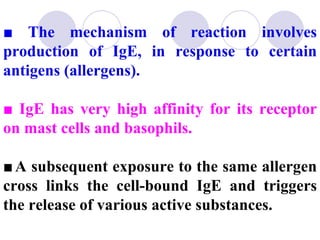
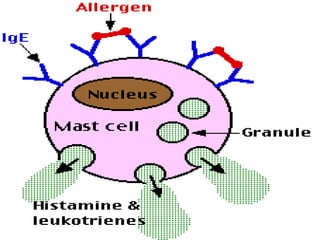
■ The mechanism of reaction involves
production of IgE, in response to certain
antigens (allergens).

■ IgE has very high affinity for its receptor
on mast cells and basophils.

■ A subsequent exposure to the same allergen
cross links the cell-bound IgE and triggers
the release of various active substances.
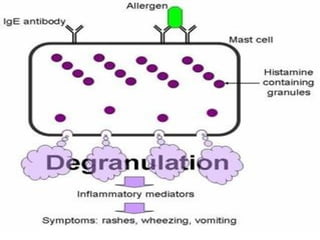
     Cross-linking of IgE Fc-receptor is
    important in mast cell triggering. Mast
    cell degranulation is preceded by
    increased Ca++ influx, which is a
    crucial process.
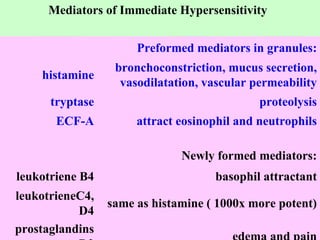
Mediators of Immediate Hypersensitivity


                                               Preformed mediators in granules:
Hypersensitivity Table 1 Mediators of I

                                           bronchoconstriction, mucus secretion,
                histamine
                                            vasodilatation, vascular permeability
                    tryptase                                          proteolysis
                      ECF-A                    attract eosinophil and neutrophils

                                                       Newly formed mediators:
     leukotriene B4                                          basophil attractant
    leukotrieneC4,
                                          same as histamine ( 1000x more potent)
               D4
    prostaglandins
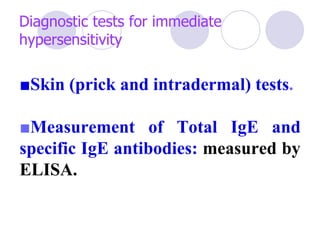
Diagnostic tests for immediate
hypersensitivity

■Skin (prick and intradermal) tests.

■Measurement of Total IgE and
specific IgE antibodies: measured by
ELISA.
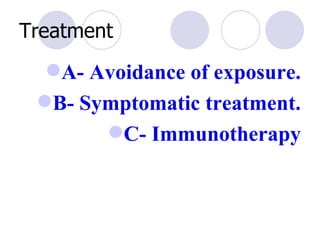
Treatment
  A- Avoidance of exposure.
 B- Symptomatic treatment.
       C- Immunotherapy
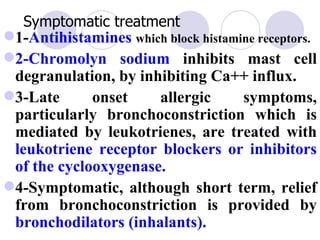
Symptomatic treatment
1-Antihistamines which block histamine receptors.
2-Chromolyn sodium inhibits mast cell
 degranulation, by inhibiting Ca++ influx.
3-Late      onset    allergic       symptoms,
 particularly bronchoconstriction which is
 mediated by leukotrienes, are treated with
 leukotriene receptor blockers or inhibitors
 of the cyclooxygenase.
4-Symptomatic, although short term, relief
 from bronchoconstriction is provided by
 bronchodilators (inhalants).
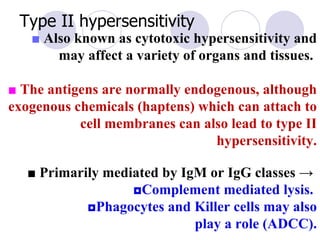
Type II hypersensitivity
   ■ Also known as cytotoxic hypersensitivity and
       may affect a variety of organs and tissues.

■ The antigens are normally endogenous, although
exogenous chemicals (haptens) which can attach to
           cell membranes can also lead to type II
                                hypersensitivity.

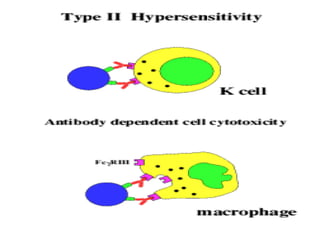
   ■ Primarily mediated by IgM or IgG classes →
                   ◘Complement mediated lysis.
            ◘Phagocytes and Killer cells may also
                             play a role (ADCC).
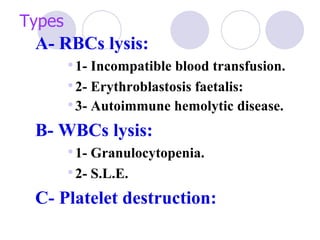
Types
 A- RBCs lysis:
         1- Incompatible blood transfusion.
         2- Erythroblastosis faetalis:
         3- Autoimmune hemolytic disease.
 B- WBCs lysis:
         1- Granulocytopenia.
         2- S.L.E.
 C- Platelet destruction:
Type III Hypersensitivity (immune
           (complex hypersensitivity


■ It is mediated by soluble immune
complexes. They are mostly of the IgG,
although IgM may also be involved.
■ The antigen may be:
        ■ exogenous (chronic bacterial, viral
        or parasitic infections).
        ■ endogenous (non-organ specific
        autoimmunity: e.g. (SLE).
Mehanism
■   The Ag is soluble and not attached to the organ
    involved.

■ Soluble Ag-antibody complexes which pentrate
  the enothelium of blood vessel and deposited on
  the vascular basement membrane.

■ This will stimulate the complement and
 chemotactic factors like C5a is released which
 attract neutrophils which infitrate the area and
 release lysosomal enzymes leading to destruction
 of the basement membrane.
Types
:Arthus reaction -1
:Serum sickness -2
:Hypersensitivity pneumonitis -3
:Posstreptococcal glomerulonephritis -4
Autoimmune disease: RA , SLE -5
Type IV Hypersensitivity

■ Type IV hypersensitivity is also known as cell
mediated or delayed type hypersensitivity.

■ The classical example of this hypersensitivity is
tuberculin (Montoux) reaction which peaks 48
hours after the injection of antigen (PPD or old
tuberculin). The lesion is characterized by
induration and erythema.
■ Mechanisms of damage in delayed hypersensitivity
include T lymphocytes and monocytes and/or
macrophages. Cytotoxic T cells cause direct damage
whereas Th1 cells secrete cytokines which activate
cytotoxic T cells and recruit and activate monocytes and
macrophages, which cause the bulk of the damage. The
delayed hypersensitivity lesions mainly contain monocytes
and a few T cells.

■ Major lymphokines involved in delayed hypersensitivity
reaction include monocyte chemotactic factor, Il-2,
interferon-gamma, TNF alpha/beta, etc.

Hypersensitivity

  • 1.
    Hypersensitivity Classification Hypersensitivity reactions areclassified into four types: type I, type II, type III (immediate reactions) type IV (delayed reactions)
  • 2.
    Type I Hypersensitivity Allergens Inhalants: Pollen grains, Fungal allergens Injectants: drugs Contact: Antiseptic spray
  • 3.
    Type I hypersensitivityis known as immediate or hypersensitivity. The reaction may involve: ■ Skin (urticaria and eczema), ■ Eyes (conjunctivitis), ■ Nasopharynx (rhinorrhea, rhinitis), ■ Bronchopulmonary tissues (asthma) ■ Gastrointestinal tract (gastroenteritis).
  • 4.
    ■ The mechanismof reaction involves production of IgE, in response to certain antigens (allergens). ■ IgE has very high affinity for its receptor on mast cells and basophils. ■ A subsequent exposure to the same allergen cross links the cell-bound IgE and triggers the release of various active substances.
  • 5.
    Cross-linking of IgE Fc-receptor is important in mast cell triggering. Mast cell degranulation is preceded by increased Ca++ influx, which is a crucial process.
  • 8.
    Mediators of ImmediateHypersensitivity Preformed mediators in granules: Hypersensitivity Table 1 Mediators of I bronchoconstriction, mucus secretion, histamine vasodilatation, vascular permeability tryptase proteolysis ECF-A attract eosinophil and neutrophils Newly formed mediators: leukotriene B4 basophil attractant leukotrieneC4, same as histamine ( 1000x more potent) D4 prostaglandins
  • 9.
    Diagnostic tests forimmediate hypersensitivity ■Skin (prick and intradermal) tests. ■Measurement of Total IgE and specific IgE antibodies: measured by ELISA.
  • 10.
    Treatment A-Avoidance of exposure. B- Symptomatic treatment. C- Immunotherapy
  • 11.
    Symptomatic treatment 1-Antihistamines whichblock histamine receptors. 2-Chromolyn sodium inhibits mast cell degranulation, by inhibiting Ca++ influx. 3-Late onset allergic symptoms, particularly bronchoconstriction which is mediated by leukotrienes, are treated with leukotriene receptor blockers or inhibitors of the cyclooxygenase. 4-Symptomatic, although short term, relief from bronchoconstriction is provided by bronchodilators (inhalants).
  • 12.
    Type II hypersensitivity ■ Also known as cytotoxic hypersensitivity and may affect a variety of organs and tissues. ■ The antigens are normally endogenous, although exogenous chemicals (haptens) which can attach to cell membranes can also lead to type II hypersensitivity. ■ Primarily mediated by IgM or IgG classes → ◘Complement mediated lysis. ◘Phagocytes and Killer cells may also play a role (ADCC).
  • 14.
    Types A- RBCslysis:  1- Incompatible blood transfusion.  2- Erythroblastosis faetalis:  3- Autoimmune hemolytic disease. B- WBCs lysis:  1- Granulocytopenia.  2- S.L.E. C- Platelet destruction:
  • 15.
    Type III Hypersensitivity(immune (complex hypersensitivity ■ It is mediated by soluble immune complexes. They are mostly of the IgG, although IgM may also be involved. ■ The antigen may be: ■ exogenous (chronic bacterial, viral or parasitic infections). ■ endogenous (non-organ specific autoimmunity: e.g. (SLE).
  • 16.
    Mehanism ■ The Ag is soluble and not attached to the organ involved. ■ Soluble Ag-antibody complexes which pentrate the enothelium of blood vessel and deposited on the vascular basement membrane. ■ This will stimulate the complement and chemotactic factors like C5a is released which attract neutrophils which infitrate the area and release lysosomal enzymes leading to destruction of the basement membrane.
  • 17.
    Types :Arthus reaction -1 :Serumsickness -2 :Hypersensitivity pneumonitis -3 :Posstreptococcal glomerulonephritis -4 Autoimmune disease: RA , SLE -5
  • 18.
    Type IV Hypersensitivity ■Type IV hypersensitivity is also known as cell mediated or delayed type hypersensitivity. ■ The classical example of this hypersensitivity is tuberculin (Montoux) reaction which peaks 48 hours after the injection of antigen (PPD or old tuberculin). The lesion is characterized by induration and erythema.
  • 19.
    ■ Mechanisms ofdamage in delayed hypersensitivity include T lymphocytes and monocytes and/or macrophages. Cytotoxic T cells cause direct damage whereas Th1 cells secrete cytokines which activate cytotoxic T cells and recruit and activate monocytes and macrophages, which cause the bulk of the damage. The delayed hypersensitivity lesions mainly contain monocytes and a few T cells. ■ Major lymphokines involved in delayed hypersensitivity reaction include monocyte chemotactic factor, Il-2, interferon-gamma, TNF alpha/beta, etc.