Hypersensitivity
 Definition
 Types-
 1. IgE- mediated hypersensitivity (type I)
 2. Antibody- mediated hypersensitivity (type II)
 3. Immune complex- mediated hypersensitivity (type
III)
 4. Delayed-type hypersensitivity (type IV)
 Increase immune response is termed as hypersensitivity
or allergy.
 When immune system work fast then it is required.
 Types-
 1. immediate hypersensitivity
 2. delayed-type hypersensitivity (DTH)
Immediate
hypersensitivity
Delay-type
hypersensitivity
Its response is very early, with
in 12 hours of antigen attacks.
Its response in little slow, it
takes 24-48 hours.
By antigen-antibody complex
or by reactive antibody forms.
By reactive TH cell, antigen
presenting cell present antigen
to TH cell
 1. IgE mediated (type-I) hypersensitivity
 2. Antibody-mediated (type-II)
hypersensitivity
 3. Immune complex-mediated (type-III)
hypersensitivity
 4. Delayed-type hypersensitivity (DTH)
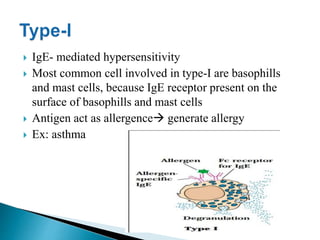
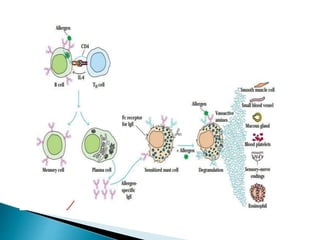
 IgE- mediated hypersensitivity
 Most common cell involved in type-I are basophills
and mast cells, because IgE receptor present on the
surface of basophills and mast cells
 Antigen act as allergence generate allergy
 Ex: asthma
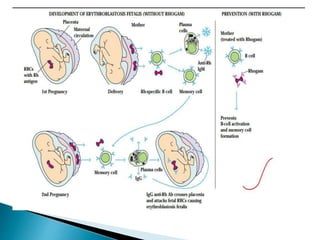
 Antibody-mediated hypersensitivity
 IgG & IgE
 Compliment protein play important
role in type-II
 Compliment immediated destruction.
 ADCC (NKC) response because due
to the receptor of IgE & complex
protein present on the surface of
antigen.
 Ex: auto immune hemolytic cell
Erythroblastosis fetalis
 Immune complex-mediated hypersensitivity.
 The reaction of antibody with antigen generates
immune complexes.
 Large amounts of immune complexes can lead to
tissue-damaging type III hypersensitivity reactions.
 Delayed-type hypersensitivity
 When some subpopulations of activated TH cells
encounter certain types antigens, they secrete cytokines
that induce a localized inflammatory reaction.
 Generally the T cells activated during the sensitization
phase are CD4+, primarily of the TH1 subtype.
 But in a few cases CD8+ cells have also been shown to
induce a DTH response.
Hypersensitivity
Hypersensitivity

Hypersensitivity

  • 1.
  • 2.
     Definition  Types- 1. IgE- mediated hypersensitivity (type I)  2. Antibody- mediated hypersensitivity (type II)  3. Immune complex- mediated hypersensitivity (type III)  4. Delayed-type hypersensitivity (type IV)
  • 3.
     Increase immuneresponse is termed as hypersensitivity or allergy.  When immune system work fast then it is required.  Types-  1. immediate hypersensitivity  2. delayed-type hypersensitivity (DTH)
  • 4.
    Immediate hypersensitivity Delay-type hypersensitivity Its response isvery early, with in 12 hours of antigen attacks. Its response in little slow, it takes 24-48 hours. By antigen-antibody complex or by reactive antibody forms. By reactive TH cell, antigen presenting cell present antigen to TH cell
  • 5.
     1. IgEmediated (type-I) hypersensitivity  2. Antibody-mediated (type-II) hypersensitivity  3. Immune complex-mediated (type-III) hypersensitivity  4. Delayed-type hypersensitivity (DTH)
  • 6.
     IgE- mediatedhypersensitivity  Most common cell involved in type-I are basophills and mast cells, because IgE receptor present on the surface of basophills and mast cells  Antigen act as allergence generate allergy  Ex: asthma
  • 8.
     Antibody-mediated hypersensitivity IgG & IgE  Compliment protein play important role in type-II  Compliment immediated destruction.  ADCC (NKC) response because due to the receptor of IgE & complex protein present on the surface of antigen.  Ex: auto immune hemolytic cell Erythroblastosis fetalis
  • 10.
     Immune complex-mediatedhypersensitivity.  The reaction of antibody with antigen generates immune complexes.  Large amounts of immune complexes can lead to tissue-damaging type III hypersensitivity reactions.
  • 12.
     Delayed-type hypersensitivity When some subpopulations of activated TH cells encounter certain types antigens, they secrete cytokines that induce a localized inflammatory reaction.  Generally the T cells activated during the sensitization phase are CD4+, primarily of the TH1 subtype.  But in a few cases CD8+ cells have also been shown to induce a DTH response.