Staging of Cancer

            By
   El-Said Abdel-Hady,
   MSc, PhD, MRCOG,
   Mansoura University.
Objectives
   Screening for cancer.
   Staging of cancer.
   Methods of staging of cancer
    Clinical methods
    Radiological methods
    Pathological methods
What is cancer?
   Uncontrolled cellular proliferation :
    cancer cells divide without control.

   Local invasion:
    cancer cells invade nearby tissues.

   Distant metastasis:
    cancer cells spread through the blood stream
    and lymphatic system to other parts of the body.
Stages of cancer
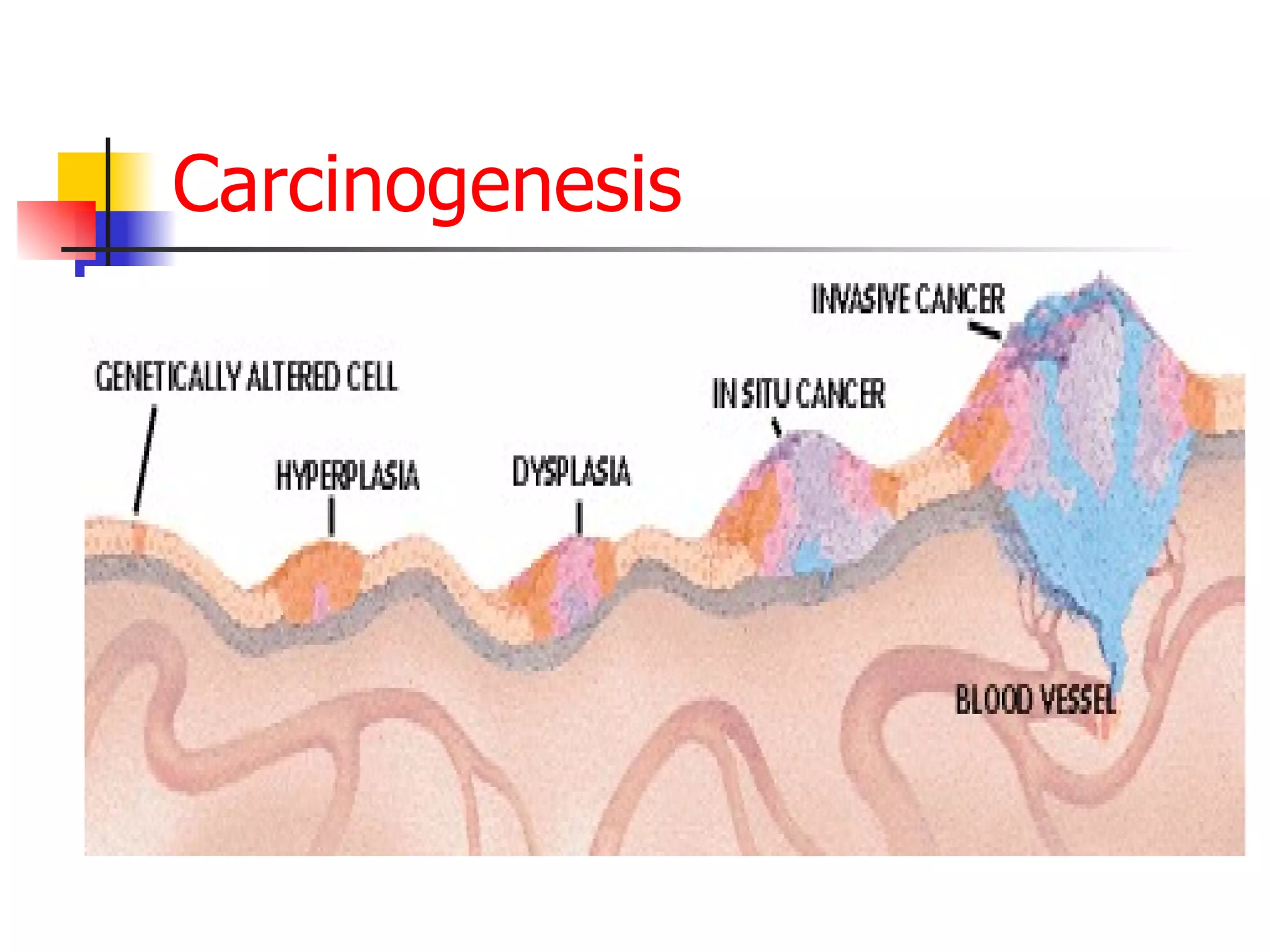
   In situ cancer
       Early cancer that has not invaded the basement
        membrane of tissue in which it developed.

   Invasive cancer
       Cancer that has spread beyond the BM and is
        growing into surrounding healthy tissues.
       It is usually divided into 4 stages.
       TNM (T:Tumour size, L: Lymph node status and
        M: Metastasis) is used for breast cancer.
Carcinogenesis
What is screening for cancer?
   Screening is testing asymptomatic women for the
    detection of precancerous/early invasive cancers.

   Screening tests should be non-invasive, cheap
    and effective in detecting precancerous lesions.

   Screening is effective in reducing mortality due to
    cervical (Pap smear) and breast cancers
    (mammography).
Screening for cancer breast
   Breast self examination.

   Mammography.
Breast Self Examination
   About 80% of patients with breast cancer
    discover the malignant tumor by
    themselves.

   It is important therefore to teach women
    how to perform a breast self examination.
Breast Self Examination
Screening for breast cancer
   Mammographic screening in asymptomatic
    women has reduced breast cancer mortality
    rates among women aged 40 to 74 years.

   In the USA, mammographic screeening
    every one to two years in women aged
    40 to 74 years is recommended.
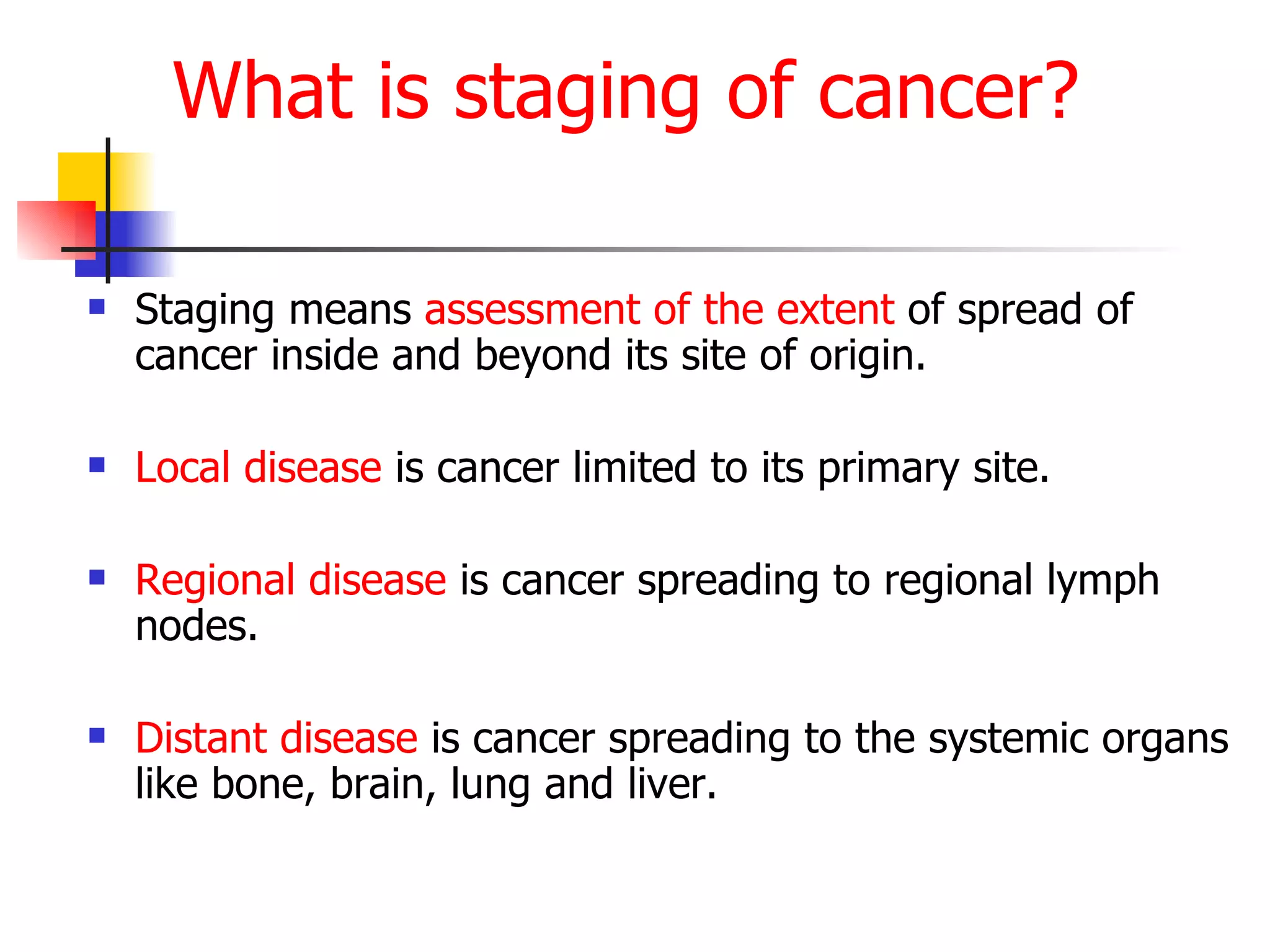
What is staging of cancer?

   Staging means assessment of the extent of spread of
    cancer inside and beyond its site of origin.

   Local disease is cancer limited to its primary site.

   Regional disease is cancer spreading to regional lymph
    nodes.

   Distant disease is cancer spreading to the systemic organs
    like bone, brain, lung and liver.
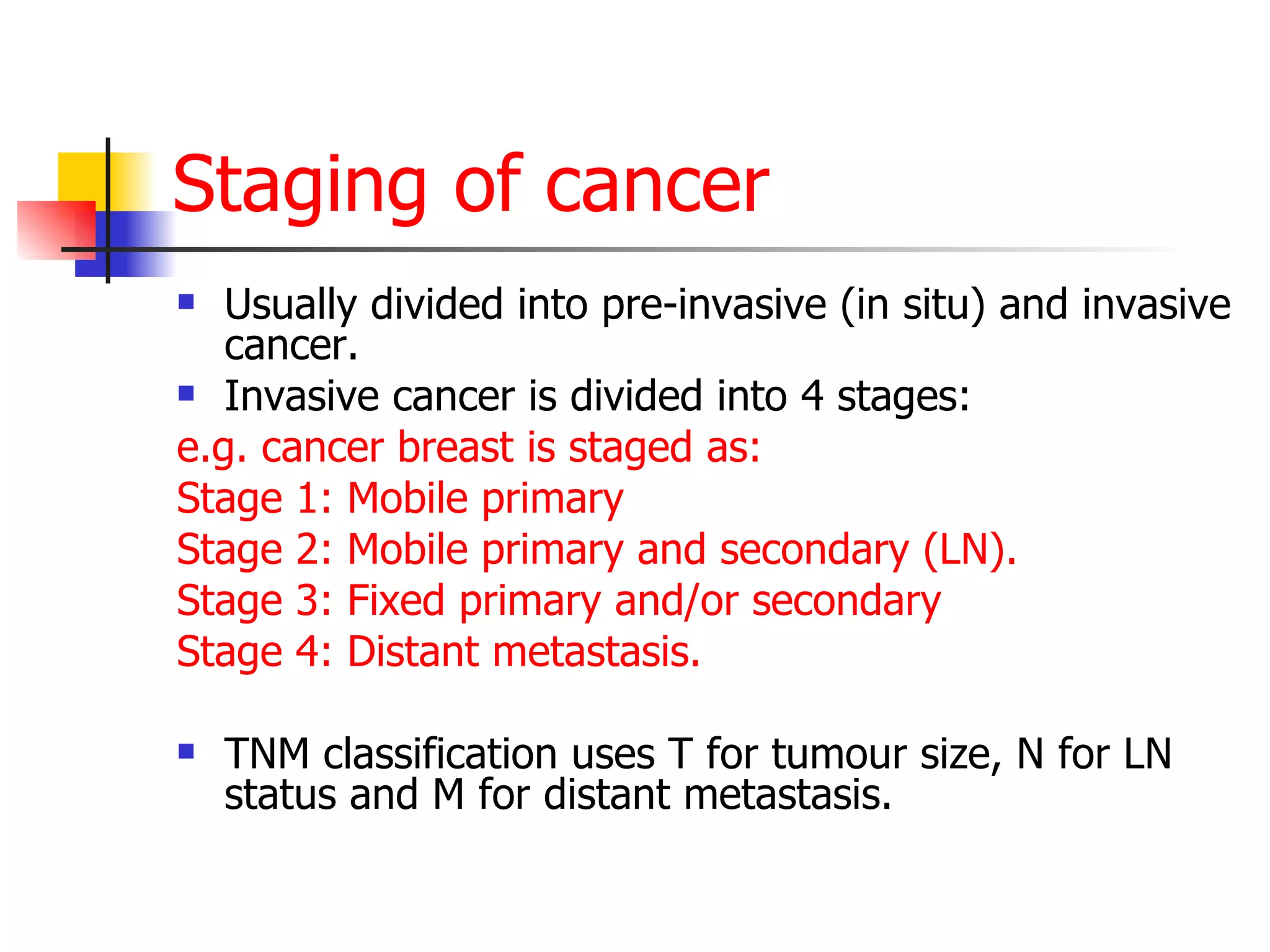
Staging of cancer
  Usually divided into pre-invasive (in situ) and invasive
   cancer.
 Invasive cancer is divided into 4 stages:

e.g. cancer breast is staged as:
Stage 1: Mobile primary
Stage 2: Mobile primary and secondary (LN).
Stage 3: Fixed primary and/or secondary
Stage 4: Distant metastasis.

   TNM classification uses T for tumour size, N for LN
    status and M for distant metastasis.
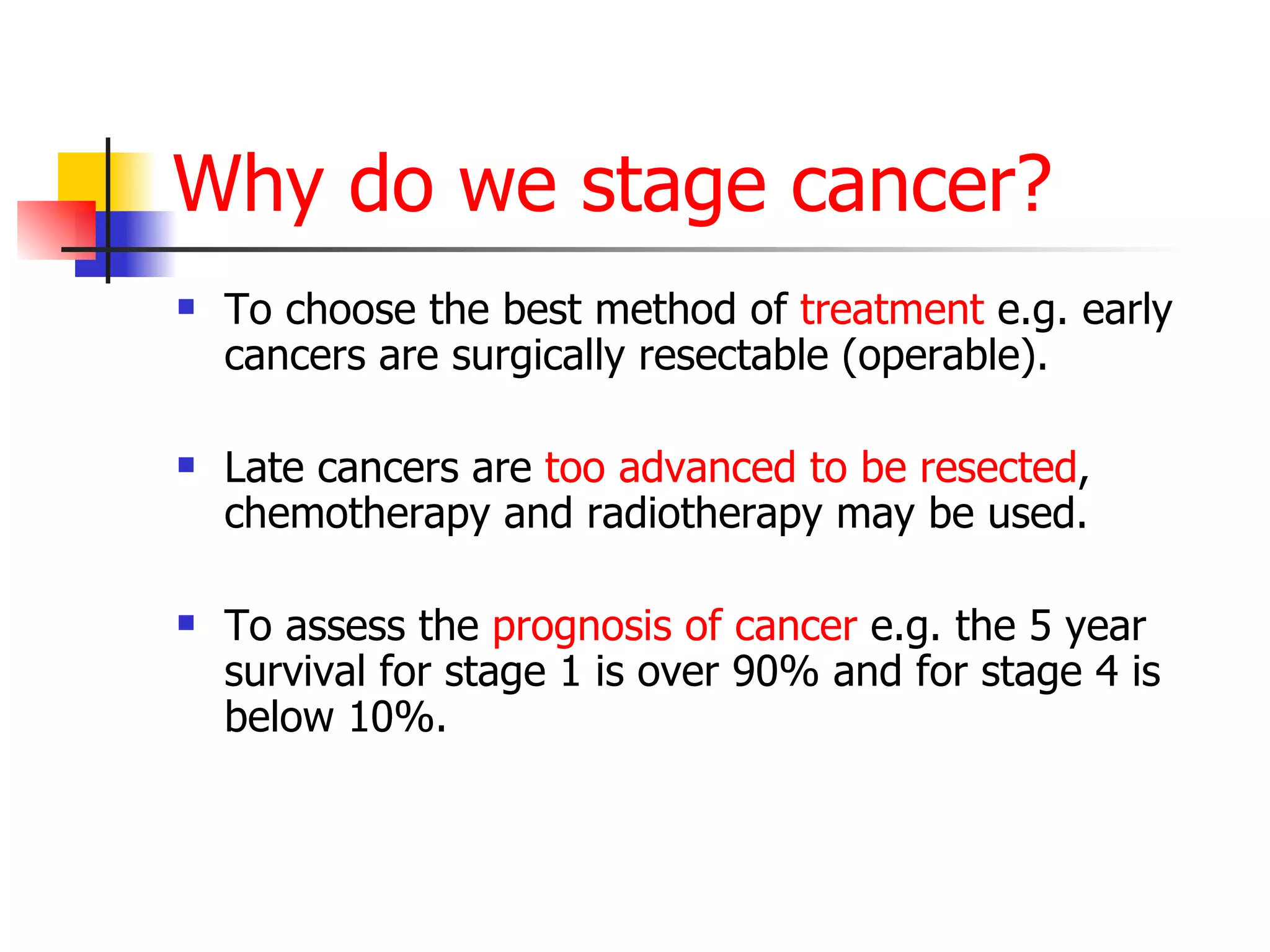
Why do we stage cancer?
   To choose the best method of treatment e.g. early
    cancers are surgically resectable (operable).

   Late cancers are too advanced to be resected,
    chemotherapy and radiotherapy may be used.

   To assess the prognosis of cancer e.g. the 5 year
    survival for stage 1 is over 90% and for stage 4 is
    below 10%.
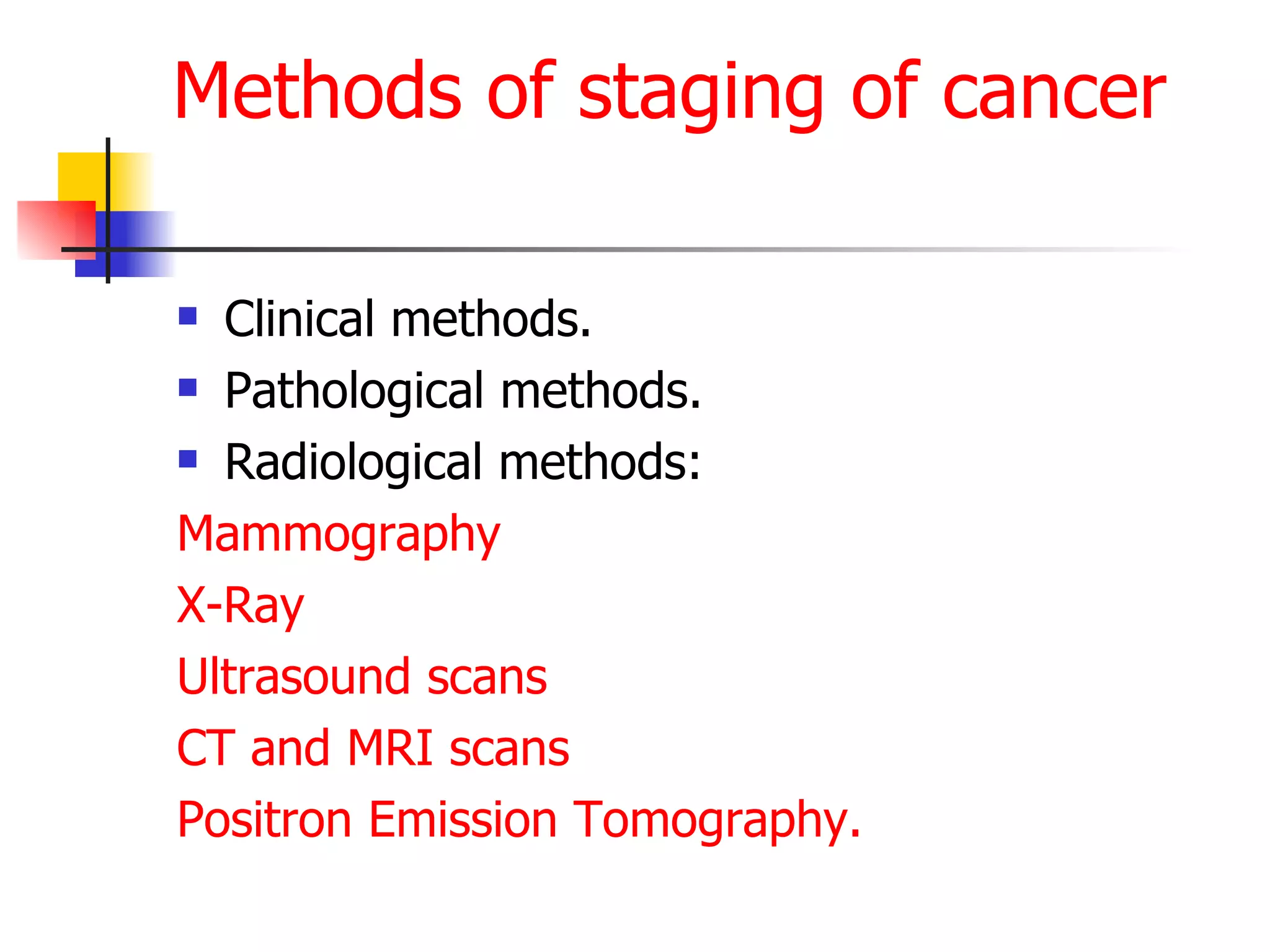
Methods of staging of cancer

 Clinical methods.
 Pathological methods.

 Radiological methods:

Mammography
X-Ray
Ultrasound scans
CT and MRI scans
Positron Emission Tomography.
Clinical methods.
   Examination of the cancer bearing site for:
   Size (T): largest diameter of cancer.
   Mobility : Mobile or immobile (fixed ) cancers.
   Skin overlying cancer: intact, edematous, ulcerated.

   Examination of draining lymph nodes (N): enlarged,
    mobile, fixed, matted together.

   Examination of distant organs for metastasis into: bones,
    brain, lung and liver.
Pathological methods.

   The final diagnosis of cancer is based upon
    histo-pathological examination.


   Fine needle aspiration cytology or true-cut
    tissue biopsy can diagnose invasive cancer.

   Resected tumours and lymph nodes must be
    subjected to histo-pathological examination.
Radiological methods
   Mammography
   Plain X ray
   Ultrasound scan
   CT/MRI scan
   Isotopic scanning

    The use of radiological investigations must be
     tailored according to the nature of cancer.
Mammography

   Mammography uses
    a low-dose x-ray
    system to examine
    the breasts.
Mammography


   Used as a screening or a
    diagnostic tool to detect early
    breast cancer.

   Can detect abnormal areas of
    density, mass, or calcification
    that may indicate the
    presence of cancer.
Screening Mammogram
   Mammography can show changes in the
    breast up to two years before a patient
    or physician can feel them.

   Screening mammography is done
    annually beginning at age 40.
Screening Mammogram

   Women who have had breast cancer
    and those who are at increased risk due
    to a genetic history should begin
    screening before age 40.
Diagnostic Mammogram
   Diagnostic mammography is used to
    evaluate a patient with abnormal clinical
    findings, such as a breast lump that have
    been found by the woman or her doctor.
Diagnostic Mammogram
   Diagnostic mammography may also be
    done after an abnormal screening
    mammography in order to determine
    the cause of the area of concern on the
    screening exam.
Plain X rays
   A chest X-ray is
    often used to
    determine whether
    the cancer has
    spread to the lungs.
Bone survey, skull metastasis
Ultrasound of the breast
   Cancer           Cyst
CT scans

   Chest CT Scan. This image shows a 5 mm
    tumor in the right cardiophrenic lymph node

   This image shows a 1 cm tumor in the right
    retrocrural lymph node.
CT scans
   Abdominal CT Scan.

   Liver metastasis     LN metastasis
MRI scans
PET scans

   Positron Emission Tomography.

   PET scans are still in the experimental phase, and are
    one of the newest breast cancer diagnostic techniques.

   A small amount of radioactive material is injected.

   Active cells, which often indicate rapid cancer growth,
    take up the radioactive material.
Normal PET scan
PET scan showing abnormal
lymph nodes
PET in woman with breast cancer
that has spread to bones
Conclusion
   Screening mammography can detect
    precancerous changes in the breast.

   Staging of cancer requires clinical and
    radiological investigations.

   Histopathological examination of tumour tissue
    is the only confirmation of malignancy.
Thank you.
   El-Said Abdel-Hady.

Staging of cancer

  • 1.
    Staging of Cancer By El-Said Abdel-Hady, MSc, PhD, MRCOG, Mansoura University.
  • 2.
    Objectives  Screening for cancer.  Staging of cancer.  Methods of staging of cancer Clinical methods Radiological methods Pathological methods
  • 3.
    What is cancer?  Uncontrolled cellular proliferation : cancer cells divide without control.  Local invasion: cancer cells invade nearby tissues.  Distant metastasis: cancer cells spread through the blood stream and lymphatic system to other parts of the body.
  • 4.
    Stages of cancer  In situ cancer  Early cancer that has not invaded the basement membrane of tissue in which it developed.  Invasive cancer  Cancer that has spread beyond the BM and is growing into surrounding healthy tissues.  It is usually divided into 4 stages.  TNM (T:Tumour size, L: Lymph node status and M: Metastasis) is used for breast cancer.
  • 5.
  • 6.
    What is screeningfor cancer?  Screening is testing asymptomatic women for the detection of precancerous/early invasive cancers.  Screening tests should be non-invasive, cheap and effective in detecting precancerous lesions.  Screening is effective in reducing mortality due to cervical (Pap smear) and breast cancers (mammography).
  • 7.
    Screening for cancerbreast  Breast self examination.  Mammography.
  • 8.
    Breast Self Examination  About 80% of patients with breast cancer discover the malignant tumor by themselves.  It is important therefore to teach women how to perform a breast self examination.
  • 9.
  • 10.
    Screening for breastcancer  Mammographic screening in asymptomatic women has reduced breast cancer mortality rates among women aged 40 to 74 years.  In the USA, mammographic screeening every one to two years in women aged 40 to 74 years is recommended.
  • 11.
    What is stagingof cancer?  Staging means assessment of the extent of spread of cancer inside and beyond its site of origin.  Local disease is cancer limited to its primary site.  Regional disease is cancer spreading to regional lymph nodes.  Distant disease is cancer spreading to the systemic organs like bone, brain, lung and liver.
  • 12.
    Staging of cancer  Usually divided into pre-invasive (in situ) and invasive cancer.  Invasive cancer is divided into 4 stages: e.g. cancer breast is staged as: Stage 1: Mobile primary Stage 2: Mobile primary and secondary (LN). Stage 3: Fixed primary and/or secondary Stage 4: Distant metastasis.  TNM classification uses T for tumour size, N for LN status and M for distant metastasis.
  • 13.
    Why do westage cancer?  To choose the best method of treatment e.g. early cancers are surgically resectable (operable).  Late cancers are too advanced to be resected, chemotherapy and radiotherapy may be used.  To assess the prognosis of cancer e.g. the 5 year survival for stage 1 is over 90% and for stage 4 is below 10%.
  • 14.
    Methods of stagingof cancer  Clinical methods.  Pathological methods.  Radiological methods: Mammography X-Ray Ultrasound scans CT and MRI scans Positron Emission Tomography.
  • 15.
    Clinical methods.  Examination of the cancer bearing site for:  Size (T): largest diameter of cancer.  Mobility : Mobile or immobile (fixed ) cancers.  Skin overlying cancer: intact, edematous, ulcerated.  Examination of draining lymph nodes (N): enlarged, mobile, fixed, matted together.  Examination of distant organs for metastasis into: bones, brain, lung and liver.
  • 16.
    Pathological methods.  The final diagnosis of cancer is based upon histo-pathological examination.  Fine needle aspiration cytology or true-cut tissue biopsy can diagnose invasive cancer.  Resected tumours and lymph nodes must be subjected to histo-pathological examination.
  • 17.
    Radiological methods  Mammography  Plain X ray  Ultrasound scan  CT/MRI scan  Isotopic scanning The use of radiological investigations must be tailored according to the nature of cancer.
  • 18.
    Mammography  Mammography uses a low-dose x-ray system to examine the breasts.
  • 19.
    Mammography  Used as a screening or a diagnostic tool to detect early breast cancer.  Can detect abnormal areas of density, mass, or calcification that may indicate the presence of cancer.
  • 20.
    Screening Mammogram  Mammography can show changes in the breast up to two years before a patient or physician can feel them.  Screening mammography is done annually beginning at age 40.
  • 21.
    Screening Mammogram  Women who have had breast cancer and those who are at increased risk due to a genetic history should begin screening before age 40.
  • 22.
    Diagnostic Mammogram  Diagnostic mammography is used to evaluate a patient with abnormal clinical findings, such as a breast lump that have been found by the woman or her doctor.
  • 23.
    Diagnostic Mammogram  Diagnostic mammography may also be done after an abnormal screening mammography in order to determine the cause of the area of concern on the screening exam.
  • 24.
    Plain X rays  A chest X-ray is often used to determine whether the cancer has spread to the lungs.
  • 25.
  • 26.
    Ultrasound of thebreast  Cancer Cyst
  • 27.
    CT scans  Chest CT Scan. This image shows a 5 mm tumor in the right cardiophrenic lymph node  This image shows a 1 cm tumor in the right retrocrural lymph node.
  • 28.
    CT scans  Abdominal CT Scan.  Liver metastasis LN metastasis
  • 29.
  • 30.
    PET scans  Positron Emission Tomography.  PET scans are still in the experimental phase, and are one of the newest breast cancer diagnostic techniques.  A small amount of radioactive material is injected.  Active cells, which often indicate rapid cancer growth, take up the radioactive material.
  • 31.
  • 32.
    PET scan showingabnormal lymph nodes
  • 33.
    PET in womanwith breast cancer that has spread to bones
  • 34.
    Conclusion  Screening mammography can detect precancerous changes in the breast.  Staging of cancer requires clinical and radiological investigations.  Histopathological examination of tumour tissue is the only confirmation of malignancy.
  • 35.
    Thank you.  El-Said Abdel-Hady.