GUIDED BY-
Dr. CHANDA VERMA
SUBMITTED BY-
OMPRAKASH PATEL
(M.Sc. 1ST sem.)
INTRODUCTION
FORMATION OF CARBOCATION
STRUCTURE OF CARBOCATION
STABILITY OF CARBOCATION
APPLICATION
REFERENCES
 An organic species which has a carbon
atom bearing only six electrons in its
outermost shell and has a positive
charge is called carbocation.
 The positively charged carbon of
carbocation is sp2 hybridized.
 The unhybridized p-orbital remains
vacant.
 They are highly reactive and act as
reaction intermediate.
 They are also called carbonium ion.
 A carbocation is an organic molecule, an
intermediate, that forms as a result of the
loss of two valence electrons, normally
shared electrons, from a carbon atom
that already has four bonds.
 This leads to the formation of a carbon
atom bearing a positive charge and three
bonds instead of four. The whole
molecule holding the positively charged
carbon atom is referred to as
a carbocation intermediate.
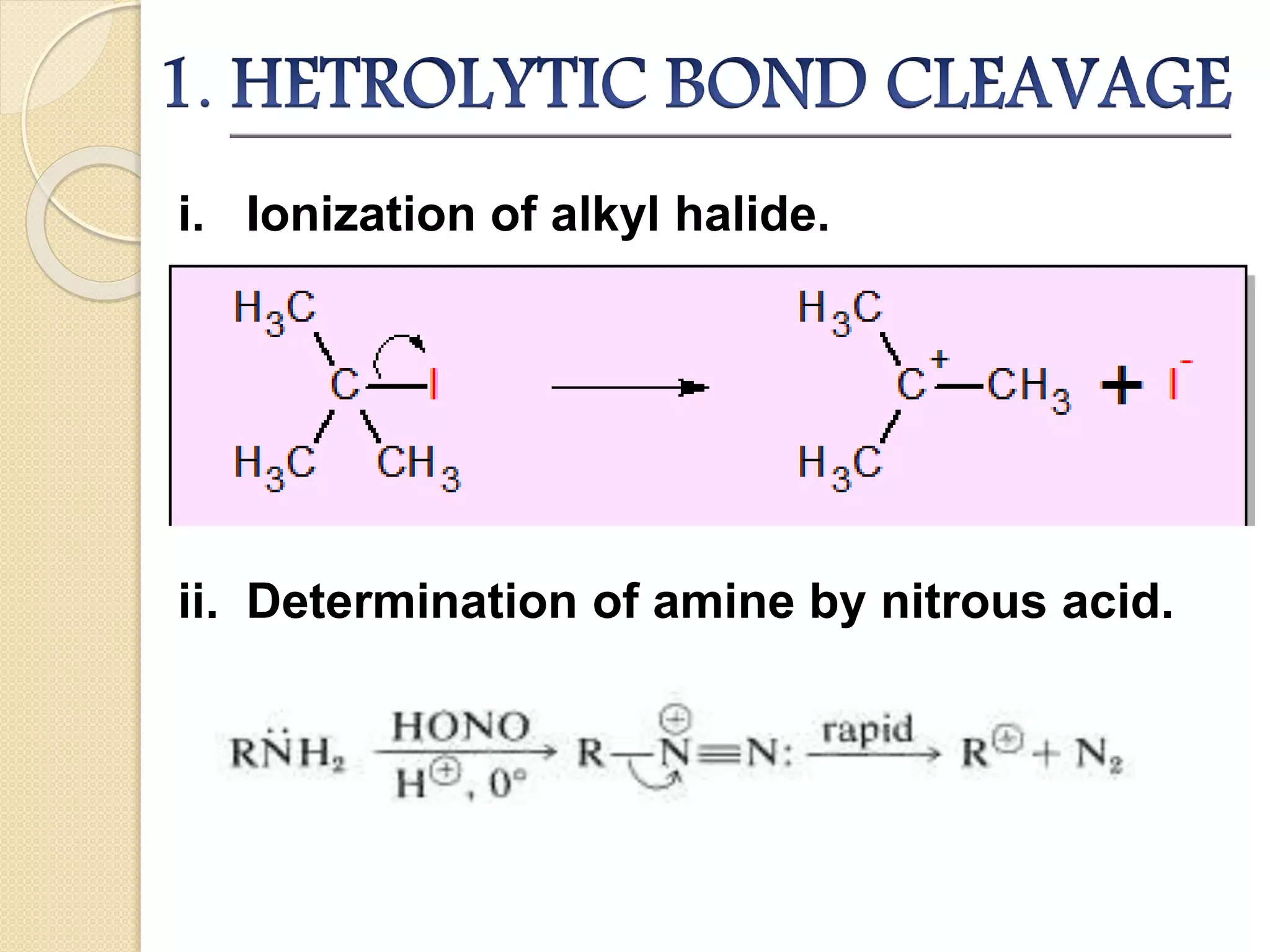
HETEROLYTIC
BOND
CLEAVAGE
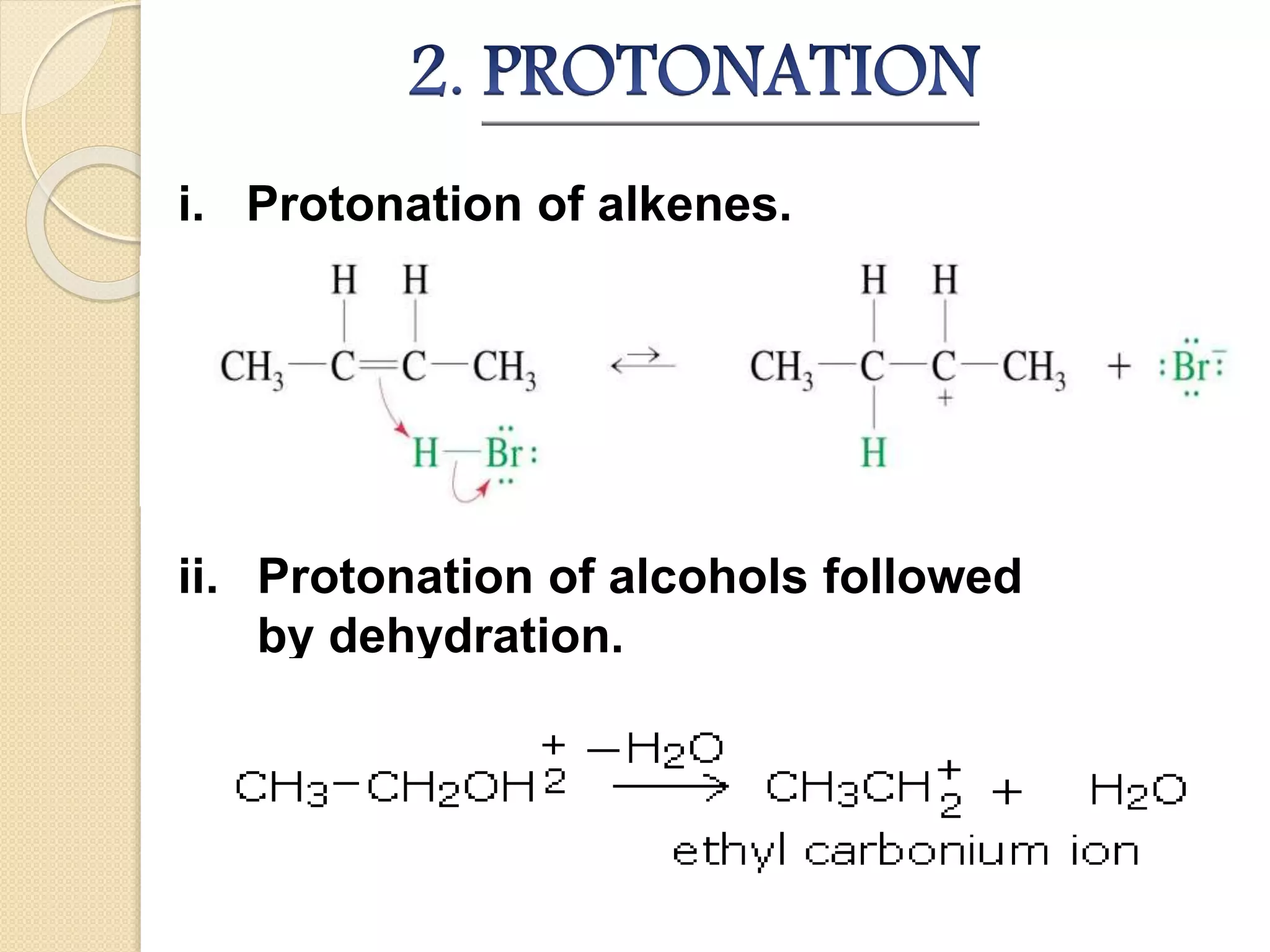
PROTONATION
i. Ionization of alkyl halide.
ii. Determination of amine by nitrous acid.
i. Protonation of alkenes.
ii. Protonation of alcohols followed
by dehydration.
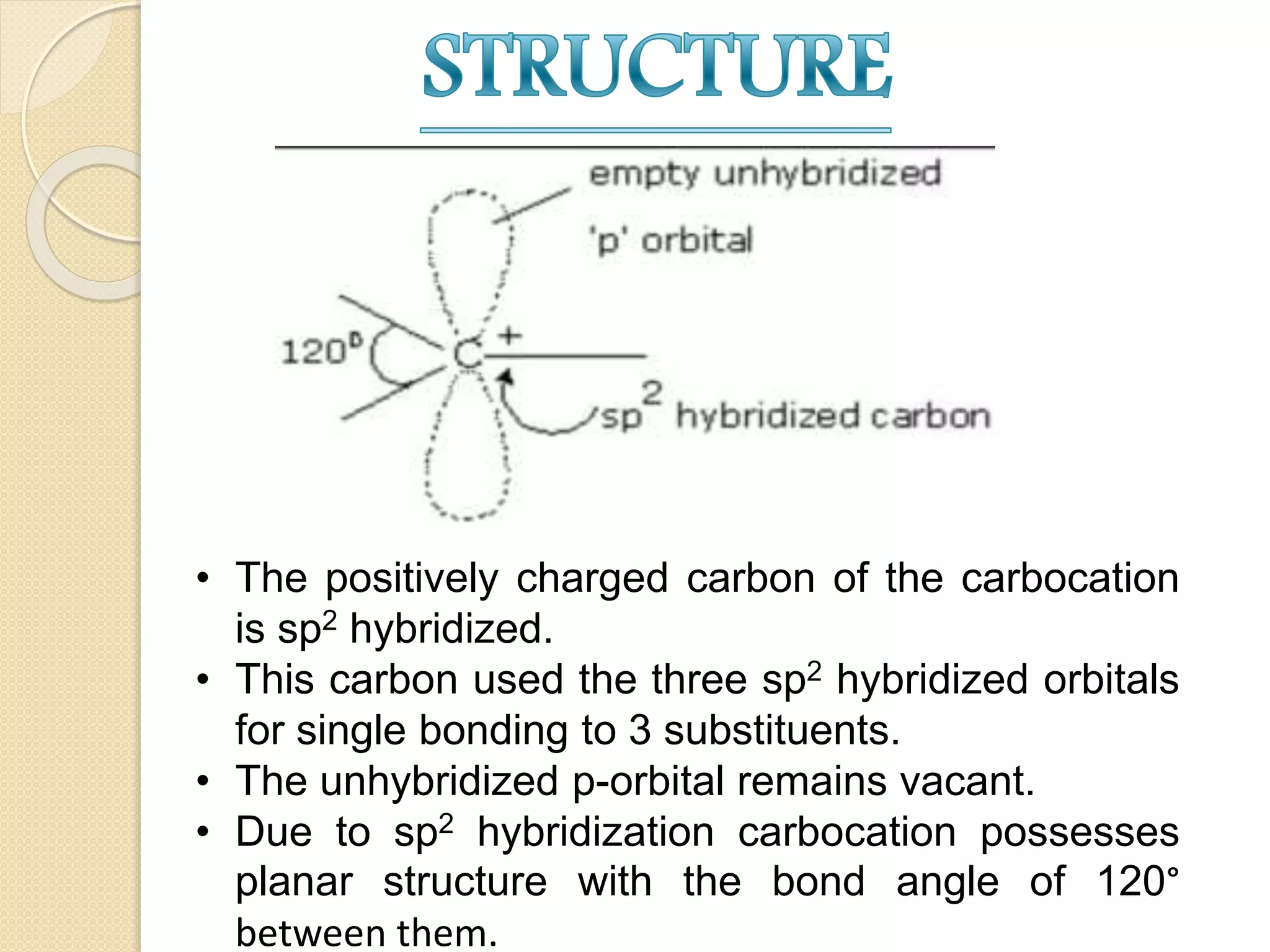
• The positively charged carbon of the carbocation
is sp2 hybridized.
• This carbon used the three sp2 hybridized orbitals
for single bonding to 3 substituents.
• The unhybridized p-orbital remains vacant.
• Due to sp2 hybridization carbocation possesses
planar structure with the bond angle of 120°
between them.
STABILITY
INDUCTIVE
EFFECT (+I)
RESONANCE
EFFECT
HYPERCONJUGATIO
N
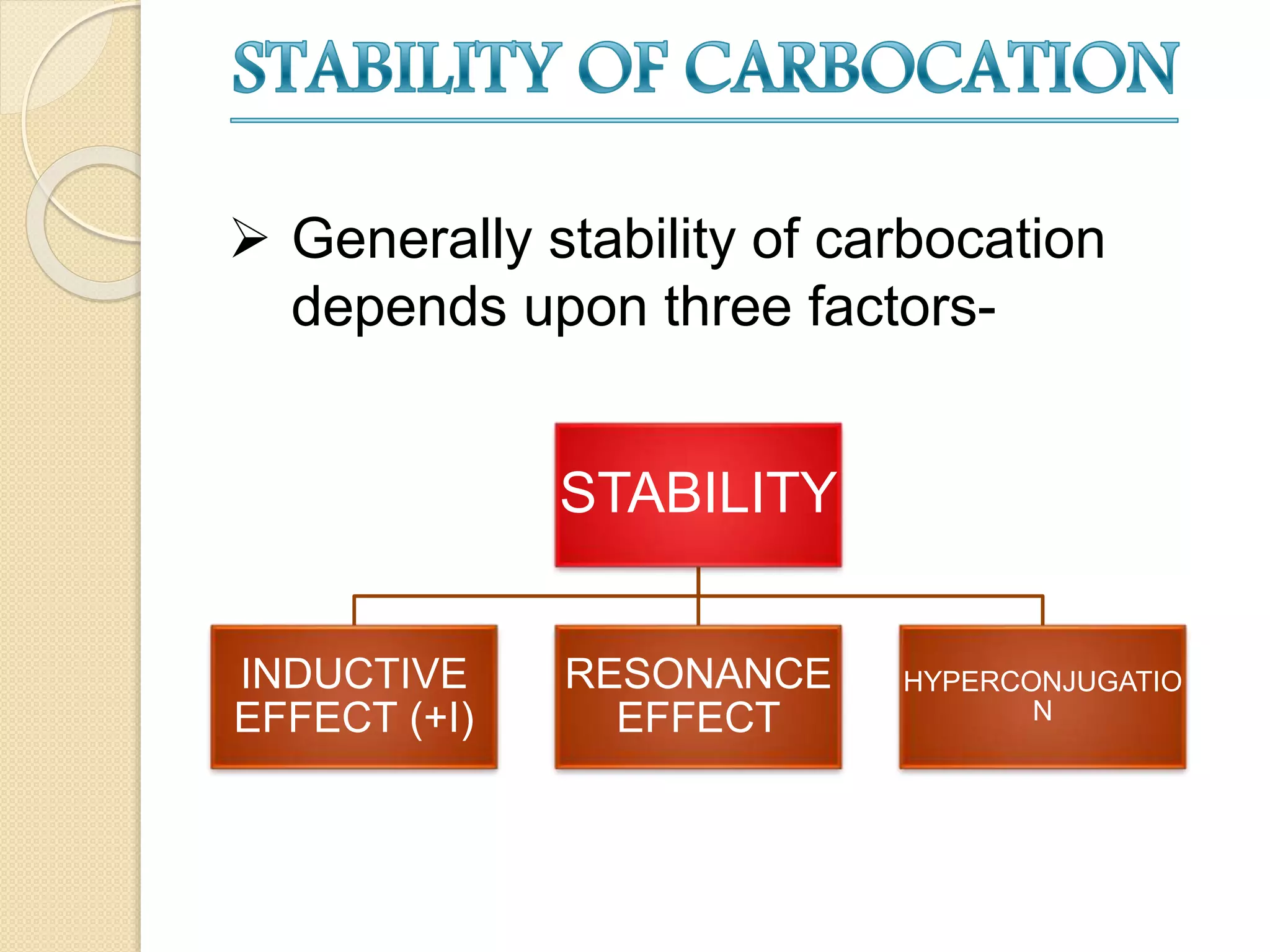
 Generally stability of carbocation
depends upon three factors-
i. Stability of alkyl carbocation.
Order of stability due to +I
Effect-
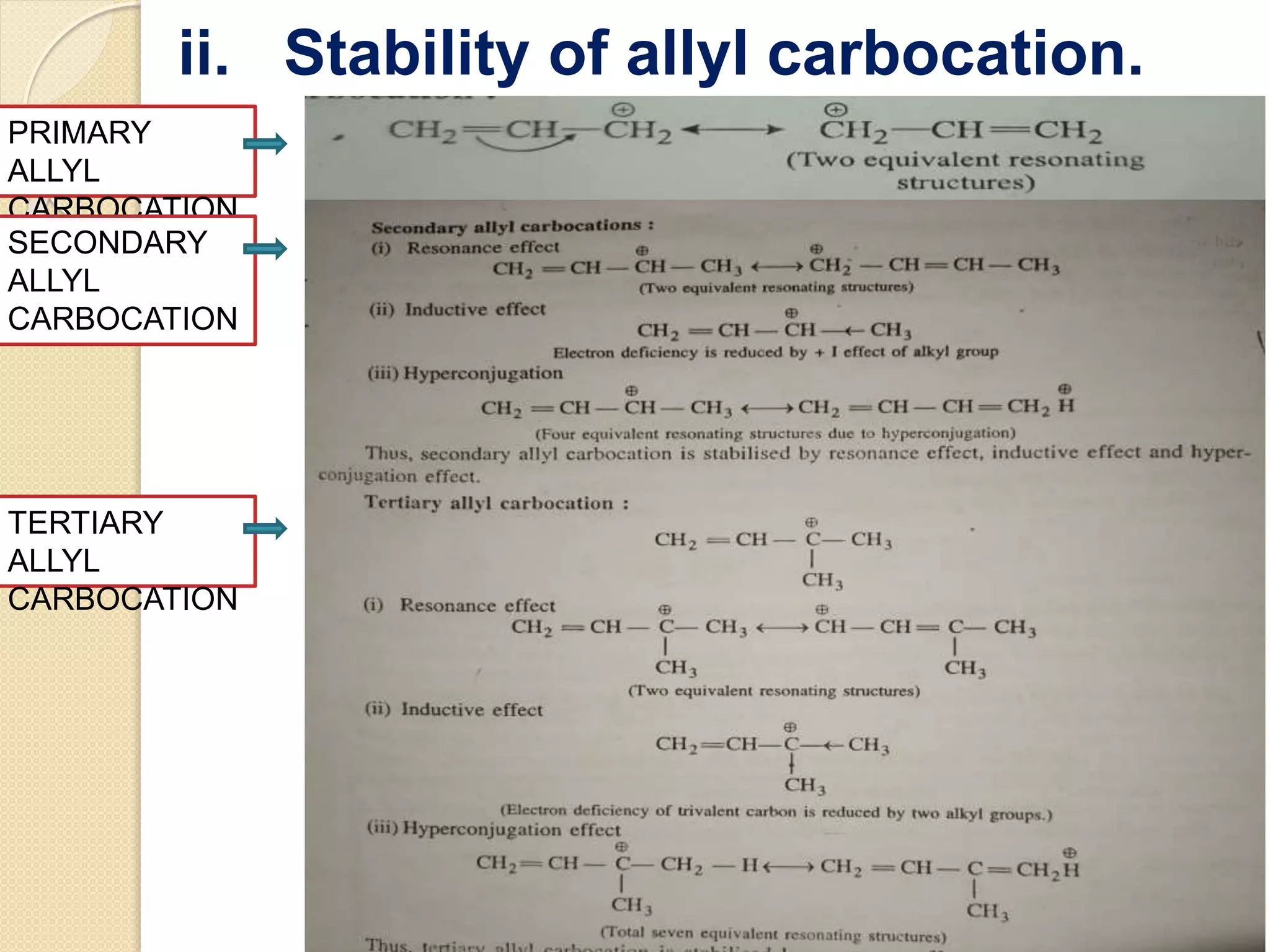
ii. Stability of allyl carbocation.
PRIMARY
ALLYL
CARBOCATION
TERTIARY
ALLYL
CARBOCATION
SECONDARY
ALLYL
CARBOCATION
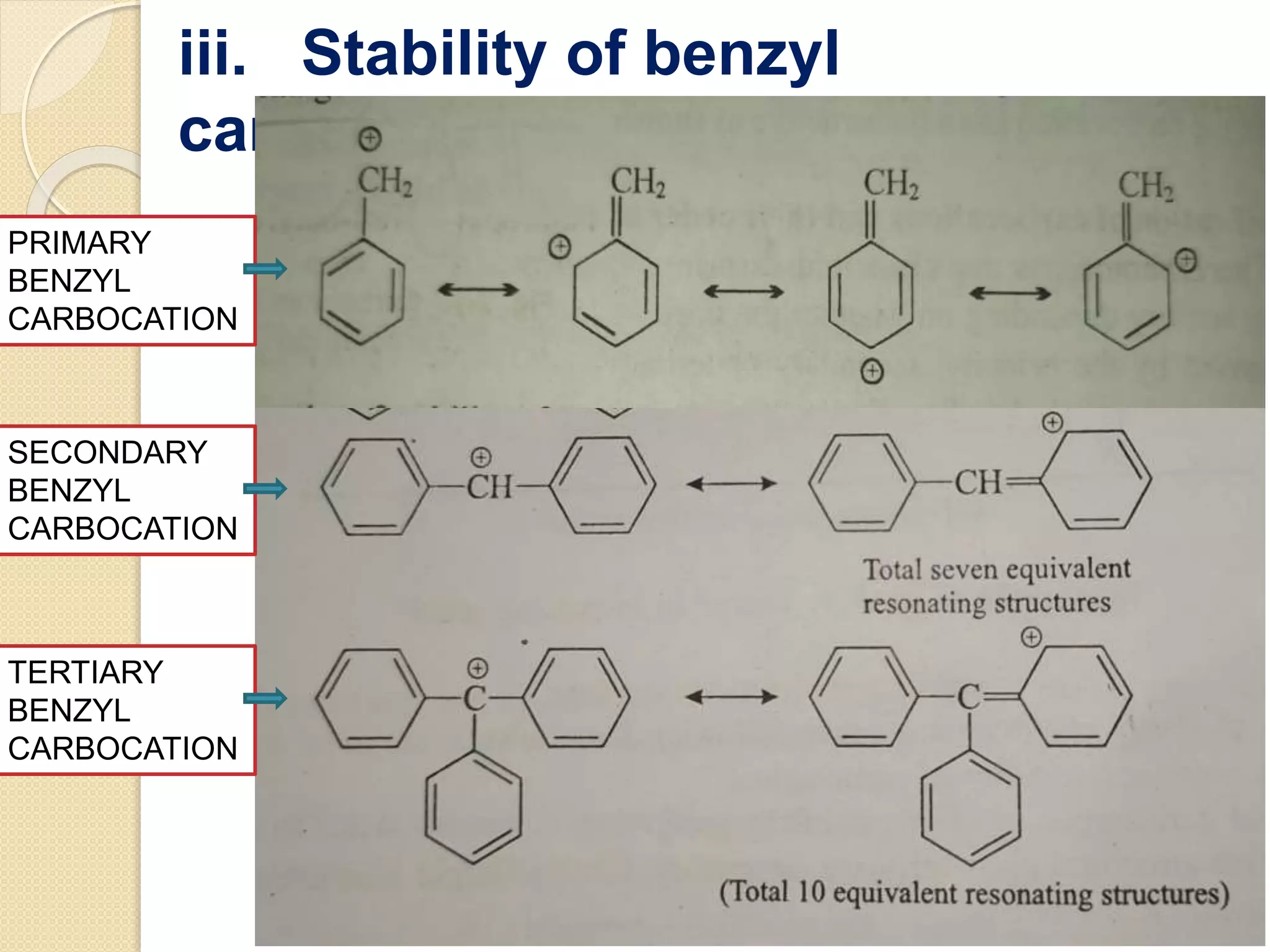
iii. Stability of benzyl
carbocation.
PRIMARY
BENZYL
CARBOCATION
TERTIARY
BENZYL
CARBOCATION
SECONDARY
BENZYL
CARBOCATION
The rule states that with the addition of a protic
acid HX to an asymmetric alkene, the acid
hydrogen (H) gets attached to the carbon with
more hydrogen substituents, and the halide (X)
group gets attached to the carbon with more alkyl
substituents. Alternatively, the rule can be stated
that the hydrogen atom is added to the carbon with
the greatest number of hydrogen atoms while the
X component is added to the carbon with the least
number of hydrogen atoms.
 https://socratic.org/questions/how-is-
carbocation-formed
 https://en.wikipedia.org › wiki › Carbocation
 https://www.britannica.com › science ›
carbocation
 Book- Advanced organic chemistry, By Dr.
Jagdamba Singh & Dr. L.D.S. Yadav, Page no.- 243-
249, Edition-2019.
Carbocation ppt

Carbocation ppt

  • 1.
    GUIDED BY- Dr. CHANDAVERMA SUBMITTED BY- OMPRAKASH PATEL (M.Sc. 1ST sem.)
  • 2.
    INTRODUCTION FORMATION OF CARBOCATION STRUCTUREOF CARBOCATION STABILITY OF CARBOCATION APPLICATION REFERENCES
  • 3.
     An organicspecies which has a carbon atom bearing only six electrons in its outermost shell and has a positive charge is called carbocation.  The positively charged carbon of carbocation is sp2 hybridized.  The unhybridized p-orbital remains vacant.  They are highly reactive and act as reaction intermediate.  They are also called carbonium ion.
  • 4.
     A carbocationis an organic molecule, an intermediate, that forms as a result of the loss of two valence electrons, normally shared electrons, from a carbon atom that already has four bonds.  This leads to the formation of a carbon atom bearing a positive charge and three bonds instead of four. The whole molecule holding the positively charged carbon atom is referred to as a carbocation intermediate.
  • 5.
  • 6.
    i. Ionization ofalkyl halide. ii. Determination of amine by nitrous acid.
  • 7.
    i. Protonation ofalkenes. ii. Protonation of alcohols followed by dehydration.
  • 8.
    • The positivelycharged carbon of the carbocation is sp2 hybridized. • This carbon used the three sp2 hybridized orbitals for single bonding to 3 substituents. • The unhybridized p-orbital remains vacant. • Due to sp2 hybridization carbocation possesses planar structure with the bond angle of 120° between them.
  • 9.
  • 10.
    i. Stability ofalkyl carbocation. Order of stability due to +I Effect-
  • 11.
    ii. Stability ofallyl carbocation. PRIMARY ALLYL CARBOCATION TERTIARY ALLYL CARBOCATION SECONDARY ALLYL CARBOCATION
  • 12.
    iii. Stability ofbenzyl carbocation. PRIMARY BENZYL CARBOCATION TERTIARY BENZYL CARBOCATION SECONDARY BENZYL CARBOCATION
  • 14.
    The rule statesthat with the addition of a protic acid HX to an asymmetric alkene, the acid hydrogen (H) gets attached to the carbon with more hydrogen substituents, and the halide (X) group gets attached to the carbon with more alkyl substituents. Alternatively, the rule can be stated that the hydrogen atom is added to the carbon with the greatest number of hydrogen atoms while the X component is added to the carbon with the least number of hydrogen atoms.
  • 15.
     https://socratic.org/questions/how-is- carbocation-formed  https://en.wikipedia.org› wiki › Carbocation  https://www.britannica.com › science › carbocation  Book- Advanced organic chemistry, By Dr. Jagdamba Singh & Dr. L.D.S. Yadav, Page no.- 243- 249, Edition-2019.