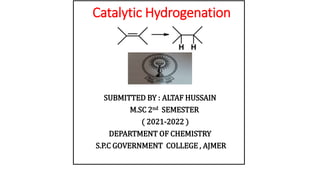
Catalytic Hydrogenation
SUBMITTED BY : ALTAF HUSSAIN
M.SC 2nd SEMESTER
( 2021-2022 )
DEPARTMENT OF CHEMISTRY
S.P.C GOVERNMENT COLLEGE , AJMER
 CONTENTS
 DEFINATION
 TYPE
 MECHANISM
 FACTOR AFFECT THE HYDROGENATION REACTION
 ADVANTAGE
 LIMITATIONS
 APPLICATION
Catalytic hydrogenation
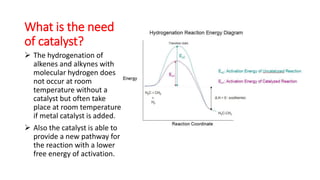
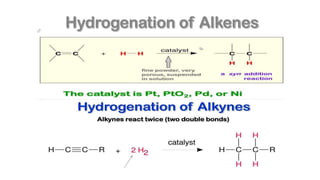
 The addition of hydrogen to an unsaturated compound in the
presence of catalyst to obtain saturated compound is called catalytic
hydrogenation.
 The hydrogenation is a addition reaction.
 The Hydrogenation is reduce double and triple bond in hydrocarbons.
 The hydrogenation of alkenes is an exothermic reaction.
What is the need
of catalyst?
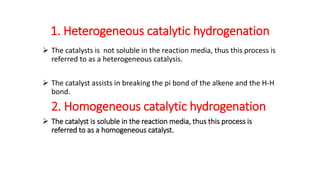
 The hydrogenation of
alkenes and alkynes with
molecular hydrogen does
not occur at room
temperature without a
catalyst but often take
place at room temperature
if metal catalyst is added.
 Also the catalyst is able to
provide a new pathway for
the reaction with a lower
free energy of activation.
Catalyst used in catalytic hydrogenation
reaction are of following:-
1. Palladium (Pd)
2. Adam's catalyst (platinum dioxide, PtO2)
3. Raney nickel
4. Copper chromite (Cu2Cr2O5)
5. Rhodium(Rh)
6. Ruthenium (Ru)
7. Trimethylamine (N(CH3)3)
1. Heterogeneous catalytic hydrogenation
 The catalysts is not soluble in the reaction media, thus this process is
referred to as a heterogeneous catalysis.
 The catalyst assists in breaking the pi bond of the alkene and the H-H
bond.
2. Homogeneous catalytic hydrogenation
 The catalyst is soluble in the reaction media, thus this process is
referred to as a homogeneous catalyst.
Mechanism of catalytic hydrogenation
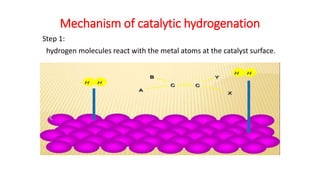
Step 1:
hydrogen molecules react with the metal atoms at the catalyst surface.
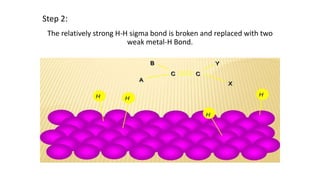
Step 2:
The relatively strong H-H sigma bond is broken and replaced with two
weak metal-H Bond.
Step 3:
the pi bond of the alkene interacts with the metal catalyst weakening
the bond.
Step 4:
A hydrogen atom is transferred from the catalyst surface to one of the
carbons of the double bond
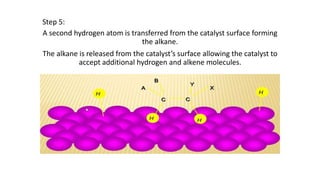
Step 5:
A second hydrogen atom is transferred from the catalyst surface forming
the alkane.
The alkane is released from the catalyst’s surface allowing the catalyst to
accept additional hydrogen and alkene molecules.
Factor affect the hydrogenation reaction are;
1. Catalyst surface
2. Temperature
3. Pressure
1. Catalyst surface
 The speed of a hydrogenation will depend on the type and amount
on active surface available.
 Increasing the ratio of catalyst to the substance undergoing
hydrogenation usually increase the speed of the hydrogenation.
 The reaction takes places on the surface of the catalyst thus the rate
of the reaction is proportional to the surface area of the catalyst
2. Pressure
 The rate of reaction is generally increased by increasing pressure
because a gas phase is usually present and increased pressure gives
increased concentration.
 This is the simple application of the mass-action law, or le chatelier
principle.
3. Temperature
 Increasing temperature has adverse affect on catalyst.
So the catalyst activity decreases and resultant rate of reaction
decreases.
Advantages and disadvantages
 Relatively low reaction temperatures
 Relatively high specificity
 Far more easily studied from chemical and mechanistic aspects
 Far more active
 Generally far more selective for single product
Disadvantages
 More difficult for achieving product/catalyst separations.
Applications
 Hydrogenation is used in many industrial applications.
Ex: hydrogenation is used to convert alkenes into alkanes(paraffins) and
cycloalkanes.
 It is also used to prepare vegetable ghee from vegetable oil.
 Margarine is a semi-solid butter substitute created from vegetable
oil.
Catalytic Hydrogenation

Catalytic Hydrogenation

  • 1.
    Catalytic Hydrogenation SUBMITTED BY: ALTAF HUSSAIN M.SC 2nd SEMESTER ( 2021-2022 ) DEPARTMENT OF CHEMISTRY S.P.C GOVERNMENT COLLEGE , AJMER
  • 2.
     CONTENTS  DEFINATION TYPE  MECHANISM  FACTOR AFFECT THE HYDROGENATION REACTION  ADVANTAGE  LIMITATIONS  APPLICATION
  • 3.
    Catalytic hydrogenation  Theaddition of hydrogen to an unsaturated compound in the presence of catalyst to obtain saturated compound is called catalytic hydrogenation.  The hydrogenation is a addition reaction.  The Hydrogenation is reduce double and triple bond in hydrocarbons.  The hydrogenation of alkenes is an exothermic reaction.
  • 4.
    What is theneed of catalyst?  The hydrogenation of alkenes and alkynes with molecular hydrogen does not occur at room temperature without a catalyst but often take place at room temperature if metal catalyst is added.  Also the catalyst is able to provide a new pathway for the reaction with a lower free energy of activation.
  • 5.
    Catalyst used incatalytic hydrogenation reaction are of following:- 1. Palladium (Pd) 2. Adam's catalyst (platinum dioxide, PtO2) 3. Raney nickel 4. Copper chromite (Cu2Cr2O5) 5. Rhodium(Rh) 6. Ruthenium (Ru) 7. Trimethylamine (N(CH3)3)
  • 6.
    1. Heterogeneous catalytichydrogenation  The catalysts is not soluble in the reaction media, thus this process is referred to as a heterogeneous catalysis.  The catalyst assists in breaking the pi bond of the alkene and the H-H bond. 2. Homogeneous catalytic hydrogenation  The catalyst is soluble in the reaction media, thus this process is referred to as a homogeneous catalyst.
  • 8.
    Mechanism of catalytichydrogenation Step 1: hydrogen molecules react with the metal atoms at the catalyst surface.
  • 9.
    Step 2: The relativelystrong H-H sigma bond is broken and replaced with two weak metal-H Bond.
  • 10.
    Step 3: the pibond of the alkene interacts with the metal catalyst weakening the bond.
  • 11.
    Step 4: A hydrogenatom is transferred from the catalyst surface to one of the carbons of the double bond
  • 12.
    Step 5: A secondhydrogen atom is transferred from the catalyst surface forming the alkane. The alkane is released from the catalyst’s surface allowing the catalyst to accept additional hydrogen and alkene molecules.
  • 13.
    Factor affect thehydrogenation reaction are; 1. Catalyst surface 2. Temperature 3. Pressure 1. Catalyst surface  The speed of a hydrogenation will depend on the type and amount on active surface available.  Increasing the ratio of catalyst to the substance undergoing hydrogenation usually increase the speed of the hydrogenation.  The reaction takes places on the surface of the catalyst thus the rate of the reaction is proportional to the surface area of the catalyst
  • 14.
    2. Pressure  Therate of reaction is generally increased by increasing pressure because a gas phase is usually present and increased pressure gives increased concentration.  This is the simple application of the mass-action law, or le chatelier principle. 3. Temperature  Increasing temperature has adverse affect on catalyst. So the catalyst activity decreases and resultant rate of reaction decreases.
  • 15.
    Advantages and disadvantages Relatively low reaction temperatures  Relatively high specificity  Far more easily studied from chemical and mechanistic aspects  Far more active  Generally far more selective for single product Disadvantages  More difficult for achieving product/catalyst separations.
  • 16.
    Applications  Hydrogenation isused in many industrial applications. Ex: hydrogenation is used to convert alkenes into alkanes(paraffins) and cycloalkanes.  It is also used to prepare vegetable ghee from vegetable oil.  Margarine is a semi-solid butter substitute created from vegetable oil.