A type of chemical bond in which a hydrogen atom that has a
covalent link with one of the electronegative atoms (F, N, O) forms
an electrostatic link with another electronegative atom in the same
or another molecule.
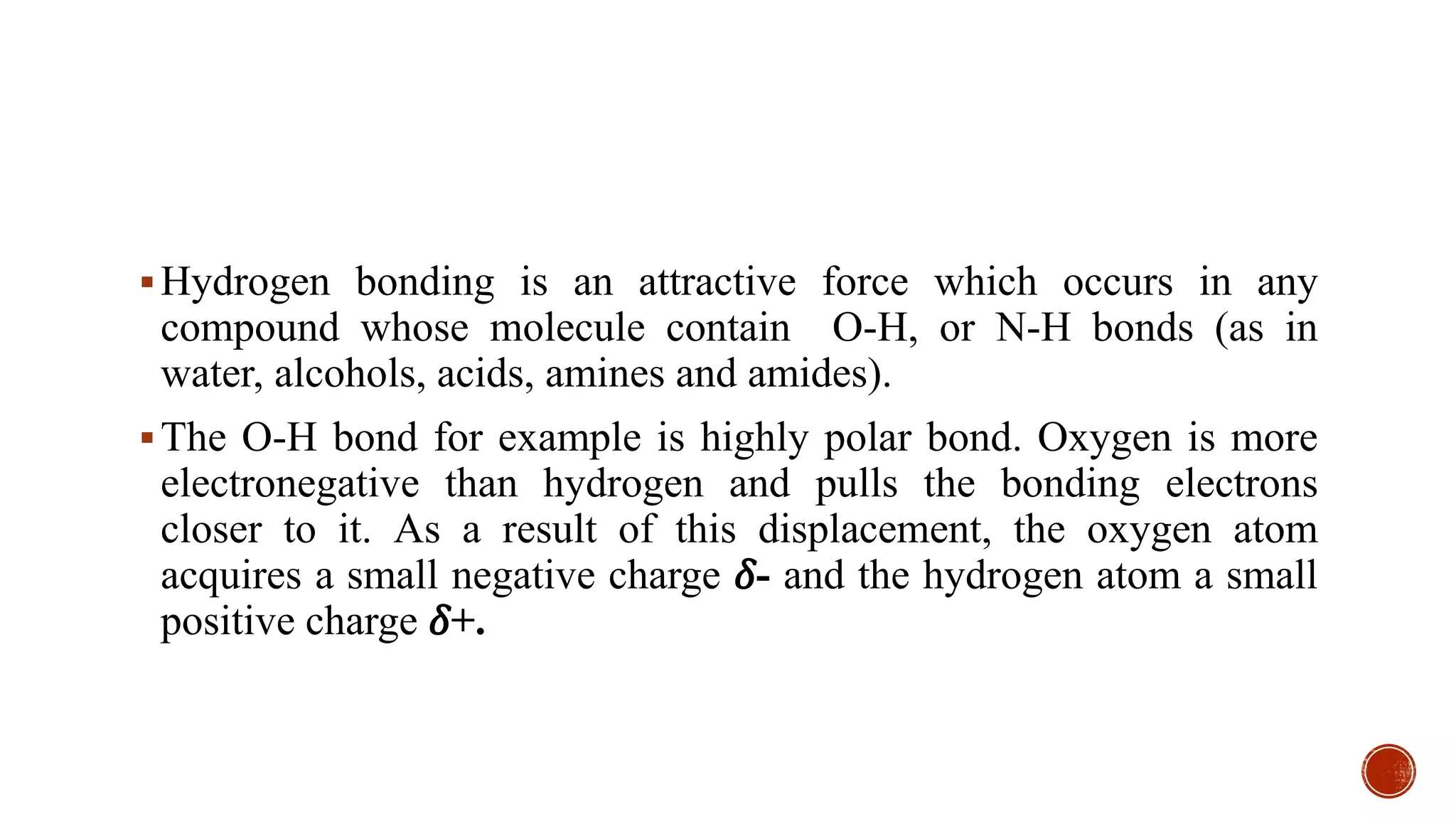
Hydrogen bonding is an attractive force which occurs in any
compound whose molecule contain O-H, or N-H bonds (as in
water, alcohols, acids, amines and amides).
The O-H bond for example is highly polar bond. Oxygen is more
electronegative than hydrogen and pulls the bonding electrons
closer to it. As a result of this displacement, the oxygen atom
acquires a small negative charge 𝛿- and the hydrogen atom a small
positive charge 𝛿+.
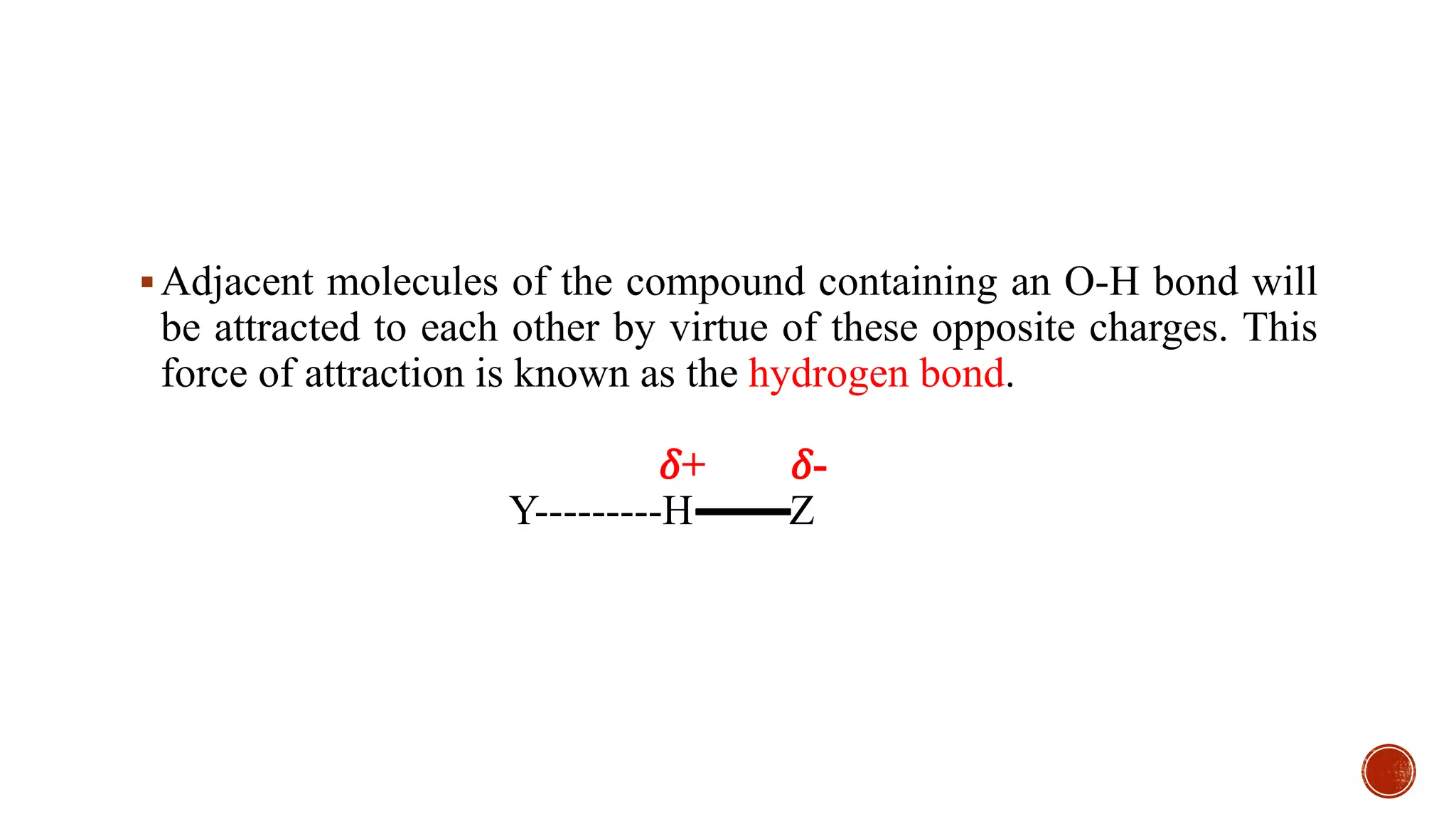
Adjacent molecules of the compound containing an O-H bond will
be attracted to each other by virtue of these opposite charges. This
force of attraction is known as the hydrogen bond.
𝛿+ 𝛿-
Y---------H Z
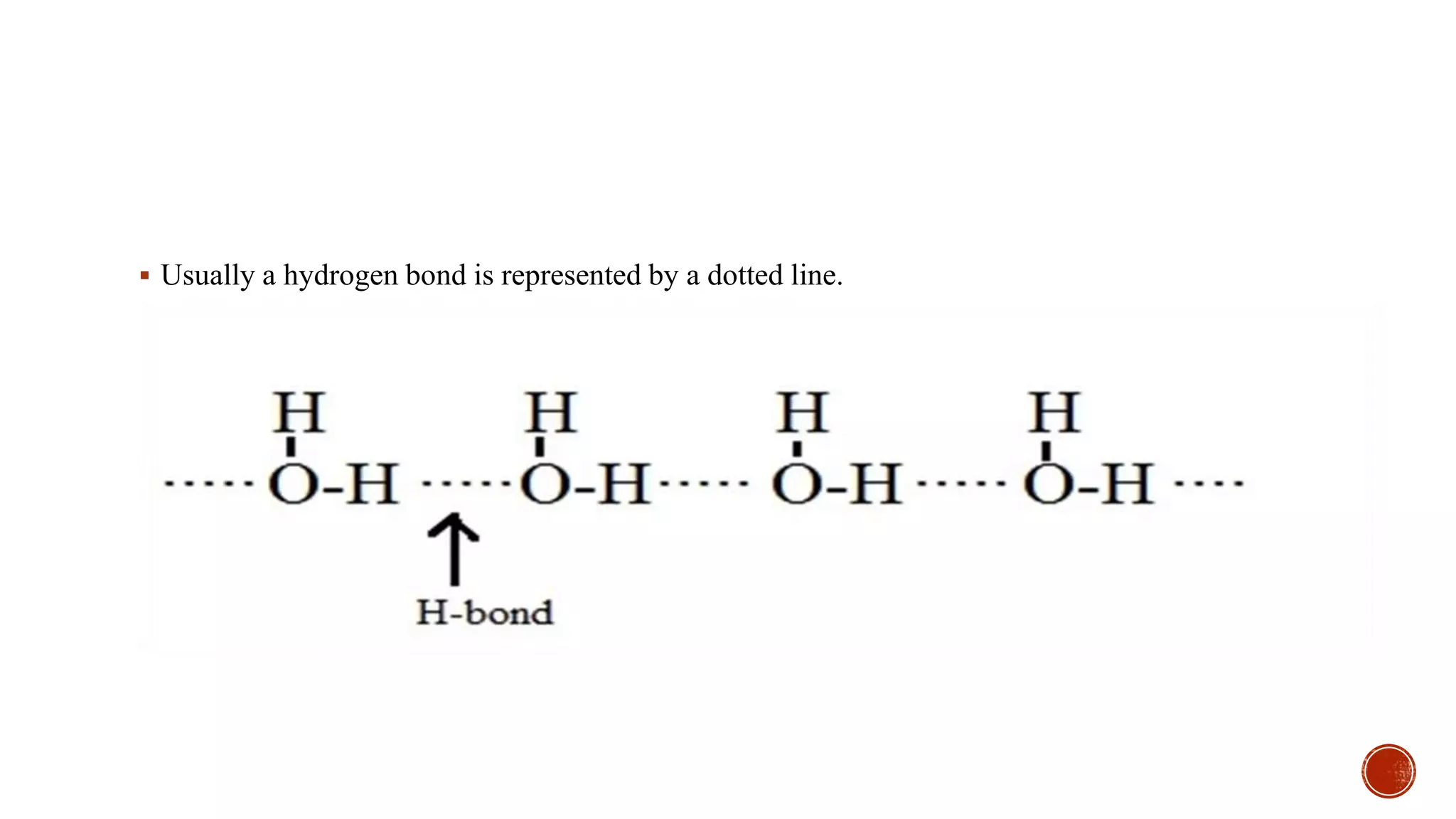
 Usually a hydrogen bond is represented by a dotted line.
The strength of the hydrogen bonds (5-10 kcal per bond) are much
less than the strengths of ordinary covalent bonds. However, they
have a very significant effect on the physical properties(boiling
points, solubility) of organic compounds.
 It is understandable that substances having nearly the same molecular weights,
have the same boiling point. The boiling points of alkanes and ethers of
comparable molecular weights are not far apart, but the boiling points of
alcohols having almost equal molecular weights are considerably higher.
MW 44 ,-45 cͦ MW 46,-25 cͦ MW 46,+78 cͦ
Ethanol forms hydrogen bonds. extra energy in the form of heat is
required to break the hydrogen bonds holding the molecules
together before it can be volatilized. Propane and dimethyl ether do
not form hydrogen bonds and therefore have low boiling points.
 A hydrogen bonded substance is usually soluble In another hydrogen bonded
substance. For example, alcohols are soluble in water but alkanes are not. This
is because a nonpolar alkane molecule cannot break into the hydrogen bonded
sequence in water. It cannot replace the hydrogen bonds that would have to be
broken to let it in.
Thus alcohols of low molecular weight are water soluble. However,
when the alkyl group is four or more carbons in length the alkane
nature of the molecule predominates and water solubilities falls off
sharply. Alcohols containing more than seven carbons are insoluble
in water.

hydrogen bonding.pptx

  • 2.
    A type ofchemical bond in which a hydrogen atom that has a covalent link with one of the electronegative atoms (F, N, O) forms an electrostatic link with another electronegative atom in the same or another molecule.
  • 3.
    Hydrogen bonding isan attractive force which occurs in any compound whose molecule contain O-H, or N-H bonds (as in water, alcohols, acids, amines and amides). The O-H bond for example is highly polar bond. Oxygen is more electronegative than hydrogen and pulls the bonding electrons closer to it. As a result of this displacement, the oxygen atom acquires a small negative charge 𝛿- and the hydrogen atom a small positive charge 𝛿+.
  • 4.
    Adjacent molecules ofthe compound containing an O-H bond will be attracted to each other by virtue of these opposite charges. This force of attraction is known as the hydrogen bond. 𝛿+ 𝛿- Y---------H Z
  • 5.
     Usually ahydrogen bond is represented by a dotted line.
  • 6.
    The strength ofthe hydrogen bonds (5-10 kcal per bond) are much less than the strengths of ordinary covalent bonds. However, they have a very significant effect on the physical properties(boiling points, solubility) of organic compounds.
  • 7.
     It isunderstandable that substances having nearly the same molecular weights, have the same boiling point. The boiling points of alkanes and ethers of comparable molecular weights are not far apart, but the boiling points of alcohols having almost equal molecular weights are considerably higher. MW 44 ,-45 cͦ MW 46,-25 cͦ MW 46,+78 cͦ
  • 8.
    Ethanol forms hydrogenbonds. extra energy in the form of heat is required to break the hydrogen bonds holding the molecules together before it can be volatilized. Propane and dimethyl ether do not form hydrogen bonds and therefore have low boiling points.
  • 9.
     A hydrogenbonded substance is usually soluble In another hydrogen bonded substance. For example, alcohols are soluble in water but alkanes are not. This is because a nonpolar alkane molecule cannot break into the hydrogen bonded sequence in water. It cannot replace the hydrogen bonds that would have to be broken to let it in.
  • 10.
    Thus alcohols oflow molecular weight are water soluble. However, when the alkyl group is four or more carbons in length the alkane nature of the molecule predominates and water solubilities falls off sharply. Alcohols containing more than seven carbons are insoluble in water.