(A) WHAT IS BIOPOLYMER INTERACTION? DESCRIBE
VARIOUSTYPES OF BINDING PROCESS IN BIOLOGICAL
CELL.
(B) DISCUSSTHE BIOPOLYMER INTERACTION INTERMS OF
THE FOLLOWING: 10
(I) ELECTROSTATIC FORCE
(II) HYDROPHOBIC FORCES
(III) DISPERSION-FORCE INTERACTION
(IV) HYDROGEN BONDING
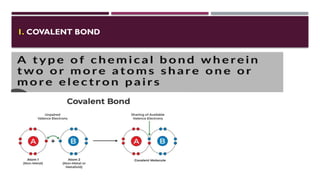
1. COVALENT BOND
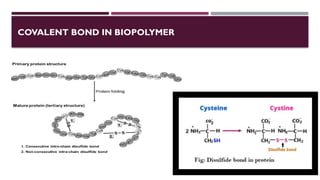
COVALENT BOND IN BIOPOLYMER
2. NON – COVALENT BONDS
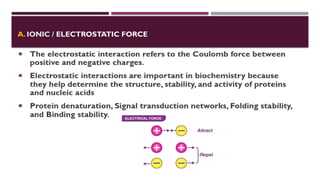
A. IONIC / ELECTROSTATIC FORCE
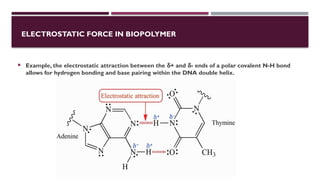
ELECTROSTATIC FORCE IN BIOPOLYMER
 Example, the electrostatic attraction between the + and - ends of a polar covalent N-H bond
δ δ
allows for hydrogen bonding and base pairing within the DNA double helix.
B. VANDER WAALS FORCE
 ▪︎named after Dutch physicist Johannes Diderik van der Waals
 fundamental part of many fields, including polymer science, supramolecular
chemistry, and structural biology
 ▪︎
These interactions are distance – dependent and can occur between atoms or
molecules.
 VDW interactions are weaker than other molecular interactions, usually having
an energy range of 4–8 kJ /mole
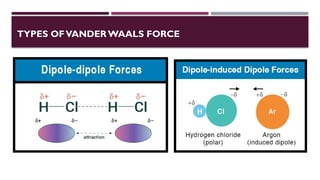
TYPES OFVANDER WAALS FORCE
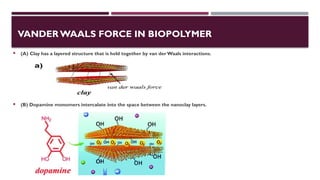
VANDER WAALS FORCE IN BIOPOLYMER
 (A) Clay has a layered structure that is held together by van der Waals interactions.
 (B) Dopamine monomers intercalate into the space between the nanoclay layers.
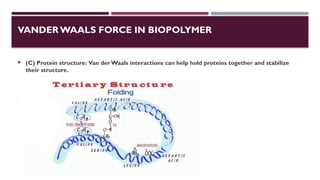
VANDER WAALS FORCE IN BIOPOLYMER
 (C) Protein structure: Van der Waals interactions can help hold proteins together and stabilize
their structure.
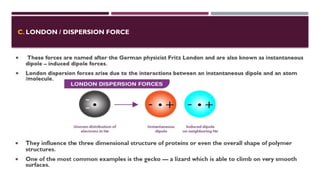
C. LONDON / DISPERSION FORCE
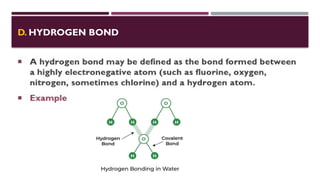
D. HYDROGEN BOND
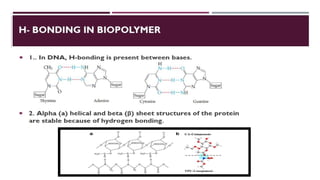
H- BONDING IN BIOPOLYMER
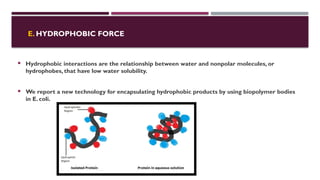
E. HYDROPHOBIC FORCE
 Hydrophobic interactions are the relationship between water and nonpolar molecules, or
hydrophobes, that have low water solubility.
 We report a new technology for encapsulating hydrophobic products by using biopolymer bodies
in E. coli.
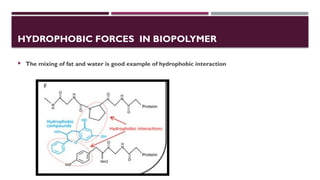
HYDROPHOBIC FORCES IN BIOPOLYMER
 The mixing of fat and water is good example of hydrophobic interaction

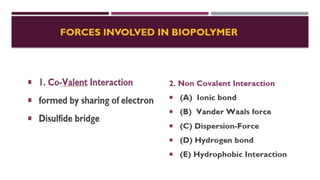
Forces involved in biopolymer interaction

  • 2.
    (A) WHAT ISBIOPOLYMER INTERACTION? DESCRIBE VARIOUSTYPES OF BINDING PROCESS IN BIOLOGICAL CELL. (B) DISCUSSTHE BIOPOLYMER INTERACTION INTERMS OF THE FOLLOWING: 10 (I) ELECTROSTATIC FORCE (II) HYDROPHOBIC FORCES (III) DISPERSION-FORCE INTERACTION (IV) HYDROGEN BONDING
  • 5.
  • 6.
    COVALENT BOND INBIOPOLYMER
  • 7.
    2. NON –COVALENT BONDS
  • 8.
    A. IONIC /ELECTROSTATIC FORCE
  • 9.
    ELECTROSTATIC FORCE INBIOPOLYMER  Example, the electrostatic attraction between the + and - ends of a polar covalent N-H bond δ δ allows for hydrogen bonding and base pairing within the DNA double helix.
  • 10.
    B. VANDER WAALSFORCE  ▪︎named after Dutch physicist Johannes Diderik van der Waals  fundamental part of many fields, including polymer science, supramolecular chemistry, and structural biology  ▪︎ These interactions are distance – dependent and can occur between atoms or molecules.  VDW interactions are weaker than other molecular interactions, usually having an energy range of 4–8 kJ /mole
  • 11.
  • 12.
    VANDER WAALS FORCEIN BIOPOLYMER  (A) Clay has a layered structure that is held together by van der Waals interactions.  (B) Dopamine monomers intercalate into the space between the nanoclay layers.
  • 13.
    VANDER WAALS FORCEIN BIOPOLYMER  (C) Protein structure: Van der Waals interactions can help hold proteins together and stabilize their structure.
  • 14.
    C. LONDON /DISPERSION FORCE
  • 15.
  • 16.
    H- BONDING INBIOPOLYMER
  • 17.
    E. HYDROPHOBIC FORCE Hydrophobic interactions are the relationship between water and nonpolar molecules, or hydrophobes, that have low water solubility.  We report a new technology for encapsulating hydrophobic products by using biopolymer bodies in E. coli.
  • 18.
    HYDROPHOBIC FORCES INBIOPOLYMER  The mixing of fat and water is good example of hydrophobic interaction