







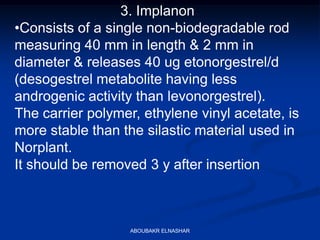





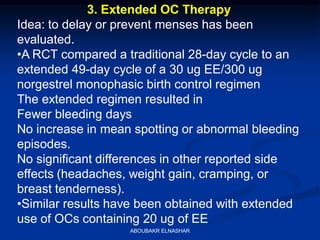

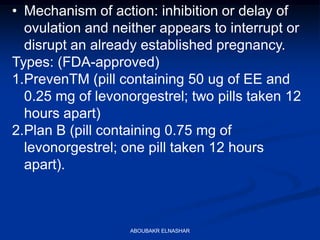









This document summarizes the evolution of hormonal contraceptives, including their mechanisms of action, modifications over time to dosage and delivery methods, and advantages and disadvantages. It describes the approval and characteristics of early oral contraceptives, followed by developments in injectables, patches, rings, IUDs and implants. Newer progestins were designed to reduce side effects while maintaining efficacy. Extended and low-dose regimens aim to improve tolerability. Emergency contraception effectively prevents pregnancy when used shortly after intercourse. Hormonal contraceptive use is associated with a small increased risk of breast cancer, though this risk decreases after stopping use.


