Mittal College Of Nursing
Ajmer
A Presentation On
Temporary Contraceptive Method
Methods of Contraception
 Contraception is the prevention of conc
eption by methods other than abstinenc
e , its used to limit the size of family
( birth control )
or
( Family planning)
Ideal Contraception
An ideal contraception should fulfill the foll
owing:
 Highly efficient
 Free from unwanted side effect
 Absolute safety
 Simplicity of use
 Reversible
 Well tolerated
Methods of Contraception
The following is an overview of the curren
tly available methods of contraception:
There are two methods of cobtraception
1. Temporary
2. Permanent
Temporary Method
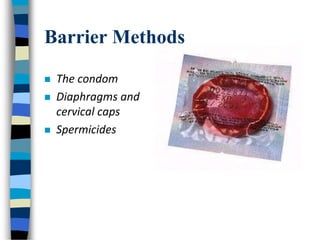
Barrier Methods
 The condom
 Diaphragms and
cervical caps
 Spermicides
Hormonal Methods
 Oral contraceptives
 Injectable contraceptives
 Implants
Other Methods
 Intra uterine devices
 Periodic abstinence/
NFP natural family
Planning ( I. e safe
period )
 Sterilization
IUCDs
Barrier Methods
The condom
 Simple
 Effective methods of contraception- 98% su
ss rate
 Without side effects
 Available
 Reduce the risk of STDs including the acqui
immune deficiency syndrome ( AIDS)
 40 MILLION COUPLES RELY ON CONDO
GLOBALLY
Diaphragms and Cervical Caps
and The Sponge
 The diaphragms and cervical caps should be u
sed with spermicide
 Failure rate 5-10 %
 The sponge is known in the U.K and the USA
 Advantage of the sponge in that it can be left f
or 24 hours in the vagina ,besides that one siz
e fits all women
 Success rate 85- 95 %
Diaphragm
Spermicides
 In the form of creams, gel aerosols, melt
ing suppositories and foaming tablets
 Used alone
 Failure rate 10- 15 %
Hormonal Methods
 Oral contraception
three types:
 Combined monophasic pill: most commonly us
ed ( combination of estrogen and progestogen
)
 Triphasic combined pill : estrogen and progest
ogen but the ratio varies during the month to
mimic the natural hormonal pattern in the men
strual cycle
 Progestogen only pill : mini pill
Combined Oral Contraceptives
Advantages
 These are simple to use and highly effe
ctive
 No special preparation is necessary bef
ore intercourse
 The pill may relieve irregular menstrual
periods, cramps and premenstrual tensi
on
Combined Oral Contraceptives
Advantages (continue….)
 Less likely to get cancer of the uterus
 Less suffering from ovarian cysts
 Much less likely to suffer from ectopic pr
egnancy
 Fewer attacks of rheumatoid arthritis
Disadvantages:
 Some women have difficulty rememberi
ng to take their daily pill
 Some women experience side effects s
uch as nausea, breast tenderness or , w
eight gain or loss, headache , depressio
n and spotting or bleeding between men
strual periods
Disadvantages
 The estrogen -containing contraceptives
present increased risk of serious disord
ers due to blood clotting in some wome
n ( low dose is recommended)
 A woman should not take the combined
pill while breast -feeding an infant
Progestogen Only Pill ( mini pill)
 Has higher failure rate than combined pi
ll
 Suitable for lactating mother
Action
 By the interference with the passage of
sperm through the cervical mucous, als
o affect the endometrium making it less
suitable for implantation of the embryo
Side Effects
 Headache
 Nausea
 Intermittent bleeding
 Thrombosis
 Hypertension
further research under taken to devel
op a once month pill
Injectable Contraceptives
 Has proven to be highly effective metho
d of fertility regulation
 The most widely available injectable con
traceptive in the U.K , Germany , New Z
ealand , Sweden and many countries all
over the world
Injectable Contraceptives
 Contents: synthetic progesterone, adm
inistered once every three months
 Side effects: headache, dizziness, weig
ht gain , menstrual disturbances, no life
threatening complications such as CV ef
fects seen with Ocs.
Implants
 The recent development in the field of h
ormonal contraception
 Six capsules which are implanted under
the skin of the arm and provide contrace
ption for five years
 It should be put in the place by a trained
health worker and at the end of the five
years the capsules can be removed
Implants
 Proper aseptic techniques should be us
ed during insertion and removal to avoid
infection at the site of implant
Implants Side Effects
 Irregular bleeding in the first few months
followed by amenorrhea
 Norplants are non-biodegradable
( biodegradable = absorbed by the body
)
 A two rod, 18 month implant is being de
veloped as well
IUDs
 These are plastic or metal devices which
are placed in the uterus to prevent pregn
ancy
 More than 60 million women around the
world use IUDs
 Common available IUDs :lippes loop
copper T
copper 7
Multi load
Nova T
Side Effects of IUDs
 Expulsion
 Perforation
 Heavy and prolonged bleeding
P.S
Superiority of copper released IUDs over
plastic devices in the terms of perforation,
expulsion, and continuation rate
Conclusion
 The world population is around 6 billion , f
our hundred million couples are practicing
a family planning, many couples around th
e world who are motivated to practice fami
ly planning lack the sources or the method
s suitable for their needs.
 At least one method may be suitable for ea
ch couple at any given time in order to pla
n their families avoid unwanted pregnancy
.
THANQ

Contraceptives

  • 1.
    Mittal College OfNursing Ajmer A Presentation On Temporary Contraceptive Method
  • 2.
    Methods of Contraception Contraception is the prevention of conc eption by methods other than abstinenc e , its used to limit the size of family ( birth control ) or ( Family planning)
  • 3.
    Ideal Contraception An idealcontraception should fulfill the foll owing:  Highly efficient  Free from unwanted side effect  Absolute safety  Simplicity of use  Reversible  Well tolerated
  • 4.
    Methods of Contraception Thefollowing is an overview of the curren tly available methods of contraception: There are two methods of cobtraception 1. Temporary 2. Permanent
  • 5.
  • 6.
    Barrier Methods  Thecondom  Diaphragms and cervical caps  Spermicides
  • 7.
    Hormonal Methods  Oralcontraceptives  Injectable contraceptives  Implants
  • 9.
    Other Methods  Intrauterine devices  Periodic abstinence/ NFP natural family Planning ( I. e safe period )  Sterilization
  • 10.
  • 11.
    Barrier Methods The condom Simple  Effective methods of contraception- 98% su ss rate  Without side effects  Available  Reduce the risk of STDs including the acqui immune deficiency syndrome ( AIDS)  40 MILLION COUPLES RELY ON CONDO GLOBALLY
  • 12.
    Diaphragms and CervicalCaps and The Sponge  The diaphragms and cervical caps should be u sed with spermicide  Failure rate 5-10 %  The sponge is known in the U.K and the USA  Advantage of the sponge in that it can be left f or 24 hours in the vagina ,besides that one siz e fits all women  Success rate 85- 95 %
  • 13.
  • 14.
    Spermicides  In theform of creams, gel aerosols, melt ing suppositories and foaming tablets  Used alone  Failure rate 10- 15 %
  • 15.
    Hormonal Methods  Oralcontraception three types:  Combined monophasic pill: most commonly us ed ( combination of estrogen and progestogen )  Triphasic combined pill : estrogen and progest ogen but the ratio varies during the month to mimic the natural hormonal pattern in the men strual cycle  Progestogen only pill : mini pill
  • 16.
    Combined Oral Contraceptives Advantages These are simple to use and highly effe ctive  No special preparation is necessary bef ore intercourse  The pill may relieve irregular menstrual periods, cramps and premenstrual tensi on
  • 17.
    Combined Oral Contraceptives Advantages(continue….)  Less likely to get cancer of the uterus  Less suffering from ovarian cysts  Much less likely to suffer from ectopic pr egnancy  Fewer attacks of rheumatoid arthritis
  • 18.
    Disadvantages:  Some womenhave difficulty rememberi ng to take their daily pill  Some women experience side effects s uch as nausea, breast tenderness or , w eight gain or loss, headache , depressio n and spotting or bleeding between men strual periods
  • 19.
    Disadvantages  The estrogen-containing contraceptives present increased risk of serious disord ers due to blood clotting in some wome n ( low dose is recommended)  A woman should not take the combined pill while breast -feeding an infant
  • 20.
    Progestogen Only Pill( mini pill)  Has higher failure rate than combined pi ll  Suitable for lactating mother
  • 21.
    Action  By theinterference with the passage of sperm through the cervical mucous, als o affect the endometrium making it less suitable for implantation of the embryo
  • 22.
    Side Effects  Headache Nausea  Intermittent bleeding  Thrombosis  Hypertension further research under taken to devel op a once month pill
  • 23.
    Injectable Contraceptives  Hasproven to be highly effective metho d of fertility regulation  The most widely available injectable con traceptive in the U.K , Germany , New Z ealand , Sweden and many countries all over the world
  • 24.
    Injectable Contraceptives  Contents:synthetic progesterone, adm inistered once every three months  Side effects: headache, dizziness, weig ht gain , menstrual disturbances, no life threatening complications such as CV ef fects seen with Ocs.
  • 25.
    Implants  The recentdevelopment in the field of h ormonal contraception  Six capsules which are implanted under the skin of the arm and provide contrace ption for five years  It should be put in the place by a trained health worker and at the end of the five years the capsules can be removed
  • 26.
    Implants  Proper aseptictechniques should be us ed during insertion and removal to avoid infection at the site of implant
  • 27.
    Implants Side Effects Irregular bleeding in the first few months followed by amenorrhea  Norplants are non-biodegradable ( biodegradable = absorbed by the body )  A two rod, 18 month implant is being de veloped as well
  • 28.
    IUDs  These areplastic or metal devices which are placed in the uterus to prevent pregn ancy  More than 60 million women around the world use IUDs  Common available IUDs :lippes loop copper T copper 7 Multi load Nova T
  • 30.
    Side Effects ofIUDs  Expulsion  Perforation  Heavy and prolonged bleeding P.S Superiority of copper released IUDs over plastic devices in the terms of perforation, expulsion, and continuation rate
  • 31.
    Conclusion  The worldpopulation is around 6 billion , f our hundred million couples are practicing a family planning, many couples around th e world who are motivated to practice fami ly planning lack the sources or the method s suitable for their needs.  At least one method may be suitable for ea ch couple at any given time in order to pla n their families avoid unwanted pregnancy .
  • 32.