
Hormonal 
Contraceptives 
Alternative name: 
Birth-control pills
 World wide used 
 Convenient method 
 Inexpensive 
 Reversible 
 Easy and simple to use with minimum side effects 
 Readily available 
 Can be administered by non-healthcare personnel. 
 Pills are safe and effective when taken properly 
 Pills are over 99% effective
Types of hormonal methods of contraception 
There are several different types hormonal methods of birth 
control. The differences among them involve 
 the type of hormone, 
 the amount of hormone, and 
 the way the hormone enters a woman's body. 
 The hormones can be estrogen and/or progesterone. These 
hormones may be taken orally (taken by mouth), implanted into 
body tissue, injected under the skin, absorbed from a patch on 
the skin, or placed in the vagina. The mode of delivery 
determines whether the hormonal exposure is continuous or 
intermittent.
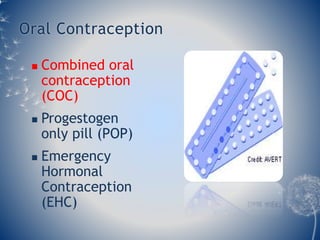
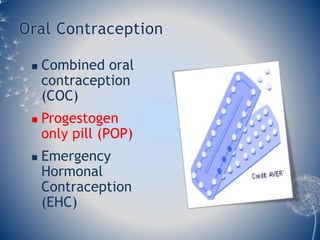
Oral Contraception 
 Combined oral 
contraception 
(COC) 
 Progestogen 
only pill (POP) 
 Emergency 
Hormonal 
Contraception 
(EHC)
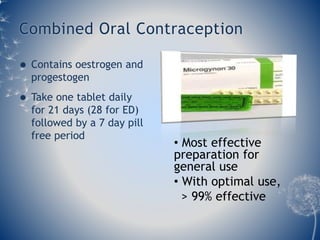
Combined Oral Contraception 
 Contains oestrogen and 
progestogen 
 Take one tablet daily 
for 21 days (28 for ED) 
followed by a 7 day pill 
free period 
• Most effective 
preparation for 
general use 
• With optimal use, 
> 99% effective
Combined Oral Contraception 
 Monophasic 
 fixed amount of an oestrogen and a progestogen 
in each active tablet 
 Biphasic/Triphasic 
 varying amounts of the two hormones according 
to the stage of the cycle 
 ED (every day) 
 includes 7 days of placebo tablets
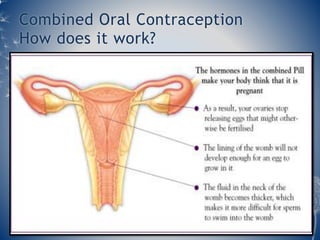
Combined Oral Contraception 
How does it work?
Oral Contraception 
 Combined oral 
contraception 
(COC) 
 Progestogen 
only pill (POP) 
 Emergency 
Hormonal 
Contraception 
(EHC)
Progestogen only pill 
 Contains one active ingredient - 
progesterone 
 Taken continuously – no break 
 Offers an alternative when oestrogens 
are contraindicated 
 Efficacy dependent on the 
meticulousness of the user
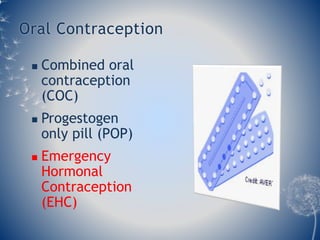
Oral Contraception 
 Combined oral 
contraception 
(COC) 
 Progestogen 
only pill (POP) 
 Emergency 
Hormonal 
Contraception 
(EHC)
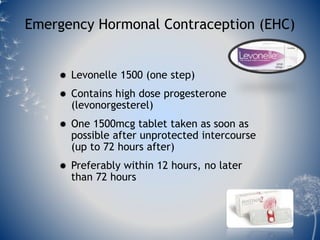
Emergency Hormonal Contraception (EHC) 
 Levonelle 1500 (one step) 
 Contains high dose progesterone 
(levonorgesterel) 
 One 1500mcg tablet taken as soon as 
possible after unprotected intercourse 
(up to 72 hours after) 
 Preferably within 12 hours, no later 
than 72 hours
Emergency Hormonal Contraception 
 Taking the dose as soon as possible increases 
efficacy 
 Available from: 
 A & E 
 GP 
 Walk in Centres 
 Family Planning Clinics 
 Sexual Health Clinics 
 Community Pharmacies
When is EHC indicated? 
 Unprotected sexual intercourse 
 Reduced efficacy of other forms of 
contraception: 
 Torn, leaking condom 
 Missed pills 
 Late implant or injection 
 Detached contraceptive patch
How does EHC work? 
 Dependent on point in the menstrual 
cycle 
 Either prevents or delays ovulation, 
prevents fertilisation or prevents 
implantation of the fertilised egg into 
the uterus. 
 Clinical opinion is that EHC is not an 
abortifacient (a substance that induces 
abortion)
Side effects 
 Nausea, vomiting 
 stomach cramps or bloating 
 diarrhea 
 constipation 
 gingivitis (swelling of the gum tissue) 
 increased or decreased appetite 
 weight gain or weight loss 
 brown or black skin patches 
 acne 
 hair growth in unusual places 
 bleeding or spotting 
between menstrual periods 
 changes in menstrual flow 
 painful or missed periods 
 breast tenderness, 
enlargement, or discharge 
 swelling, redness, irritation, 
burning, or itching of the 
vagina 
 white vaginal discharge
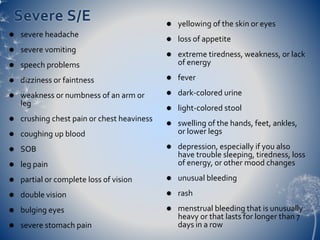
Severe S/E 
 severe headache 
 severe vomiting 
 speech problems 
 dizziness or faintness 
 weakness or numbness of an arm or 
leg 
 crushing chest pain or chest heaviness 
 coughing up blood 
 SOB 
 leg pain 
 partial or complete loss of vision 
 double vision 
 bulging eyes 
 severe stomach pain 
 yellowing of the skin or eyes 
 loss of appetite 
 extreme tiredness, weakness, or lack 
of energy 
 fever 
 dark-colored urine 
 light-colored stool 
 swelling of the hands, feet, ankles, 
or lower legs 
 depression, especially if you also 
have trouble sleeping, tiredness, loss 
of energy, or other mood changes 
 unusual bleeding 
 rash 
 menstrual bleeding that is unusually 
heavy or that lasts for longer than 7 
days in a row
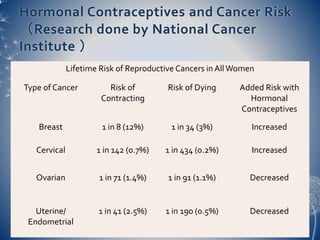
Hormonal Contraceptives and Cancer Risk 
(Research done by National Cancer 
Institute ) 
Lifetime Risk of Reproductive Cancers in All Women 
Type of Cancer Risk of 
Contracting 
Risk of Dying Added Risk with 
Hormonal 
Contraceptives 
Breast 1 in 8 (12%) 1 in 34 (3%) Increased 
Cervical 1 in 142 (0.7%) 1 in 434 (0.2%) Increased 
Ovarian 1 in 71 (1.4%) 1 in 91 (1.1%) Decreased 
Uterine/ 
Endometrial 
1 in 41 (2.5%) 1 in 190 (0.5%) Decreased
References 
 http://www.contracept.org/hormonal.php 
 http://www.medicinenet.com/hormonal_methods_ 
of_birth_control/page2.htm
Hormonal contraceptives

Hormonal contraceptives

  • 1.
    Hormonal Contraceptives Alternativename: Birth-control pills
  • 2.
     World wideused  Convenient method  Inexpensive  Reversible  Easy and simple to use with minimum side effects  Readily available  Can be administered by non-healthcare personnel.  Pills are safe and effective when taken properly  Pills are over 99% effective
  • 3.
    Types of hormonalmethods of contraception There are several different types hormonal methods of birth control. The differences among them involve  the type of hormone,  the amount of hormone, and  the way the hormone enters a woman's body.  The hormones can be estrogen and/or progesterone. These hormones may be taken orally (taken by mouth), implanted into body tissue, injected under the skin, absorbed from a patch on the skin, or placed in the vagina. The mode of delivery determines whether the hormonal exposure is continuous or intermittent.
  • 4.
    Oral Contraception Combined oral contraception (COC)  Progestogen only pill (POP)  Emergency Hormonal Contraception (EHC)
  • 5.
    Combined Oral Contraception  Contains oestrogen and progestogen  Take one tablet daily for 21 days (28 for ED) followed by a 7 day pill free period • Most effective preparation for general use • With optimal use, > 99% effective
  • 6.
    Combined Oral Contraception  Monophasic  fixed amount of an oestrogen and a progestogen in each active tablet  Biphasic/Triphasic  varying amounts of the two hormones according to the stage of the cycle  ED (every day)  includes 7 days of placebo tablets
  • 7.
    Combined Oral Contraception How does it work?
  • 8.
    Oral Contraception Combined oral contraception (COC)  Progestogen only pill (POP)  Emergency Hormonal Contraception (EHC)
  • 9.
    Progestogen only pill  Contains one active ingredient - progesterone  Taken continuously – no break  Offers an alternative when oestrogens are contraindicated  Efficacy dependent on the meticulousness of the user
  • 10.
    Oral Contraception Combined oral contraception (COC)  Progestogen only pill (POP)  Emergency Hormonal Contraception (EHC)
  • 11.
    Emergency Hormonal Contraception(EHC)  Levonelle 1500 (one step)  Contains high dose progesterone (levonorgesterel)  One 1500mcg tablet taken as soon as possible after unprotected intercourse (up to 72 hours after)  Preferably within 12 hours, no later than 72 hours
  • 12.
    Emergency Hormonal Contraception  Taking the dose as soon as possible increases efficacy  Available from:  A & E  GP  Walk in Centres  Family Planning Clinics  Sexual Health Clinics  Community Pharmacies
  • 13.
    When is EHCindicated?  Unprotected sexual intercourse  Reduced efficacy of other forms of contraception:  Torn, leaking condom  Missed pills  Late implant or injection  Detached contraceptive patch
  • 14.
    How does EHCwork?  Dependent on point in the menstrual cycle  Either prevents or delays ovulation, prevents fertilisation or prevents implantation of the fertilised egg into the uterus.  Clinical opinion is that EHC is not an abortifacient (a substance that induces abortion)
  • 15.
    Side effects Nausea, vomiting  stomach cramps or bloating  diarrhea  constipation  gingivitis (swelling of the gum tissue)  increased or decreased appetite  weight gain or weight loss  brown or black skin patches  acne  hair growth in unusual places  bleeding or spotting between menstrual periods  changes in menstrual flow  painful or missed periods  breast tenderness, enlargement, or discharge  swelling, redness, irritation, burning, or itching of the vagina  white vaginal discharge
  • 16.
    Severe S/E severe headache  severe vomiting  speech problems  dizziness or faintness  weakness or numbness of an arm or leg  crushing chest pain or chest heaviness  coughing up blood  SOB  leg pain  partial or complete loss of vision  double vision  bulging eyes  severe stomach pain  yellowing of the skin or eyes  loss of appetite  extreme tiredness, weakness, or lack of energy  fever  dark-colored urine  light-colored stool  swelling of the hands, feet, ankles, or lower legs  depression, especially if you also have trouble sleeping, tiredness, loss of energy, or other mood changes  unusual bleeding  rash  menstrual bleeding that is unusually heavy or that lasts for longer than 7 days in a row
  • 17.
    Hormonal Contraceptives andCancer Risk (Research done by National Cancer Institute ) Lifetime Risk of Reproductive Cancers in All Women Type of Cancer Risk of Contracting Risk of Dying Added Risk with Hormonal Contraceptives Breast 1 in 8 (12%) 1 in 34 (3%) Increased Cervical 1 in 142 (0.7%) 1 in 434 (0.2%) Increased Ovarian 1 in 71 (1.4%) 1 in 91 (1.1%) Decreased Uterine/ Endometrial 1 in 41 (2.5%) 1 in 190 (0.5%) Decreased
  • 18.
    References  http://www.contracept.org/hormonal.php  http://www.medicinenet.com/hormonal_methods_ of_birth_control/page2.htm